
REVIEW · GOLDEN TRIANGLE TOURS
10 Days Private Golden Triangle Tour with Amritsar and Rishikesh
This tour stitches big sights and spiritual stops into one practical circuit. You get the classic Golden Triangle, plus Amritsar and Rishikesh, so your trip has both palace walls and riverfront energy. It is private, with local guides moving you city to city without stress.
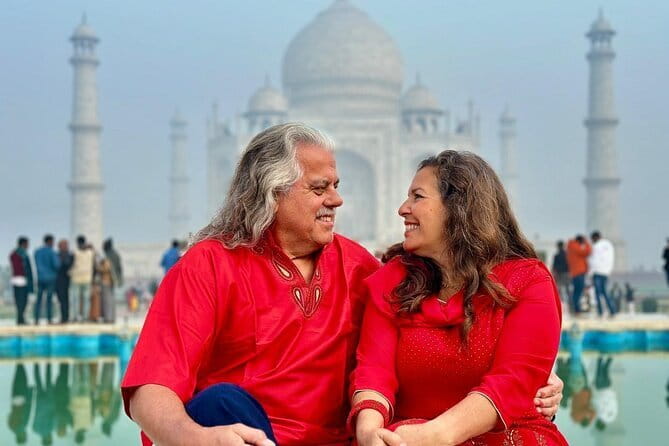
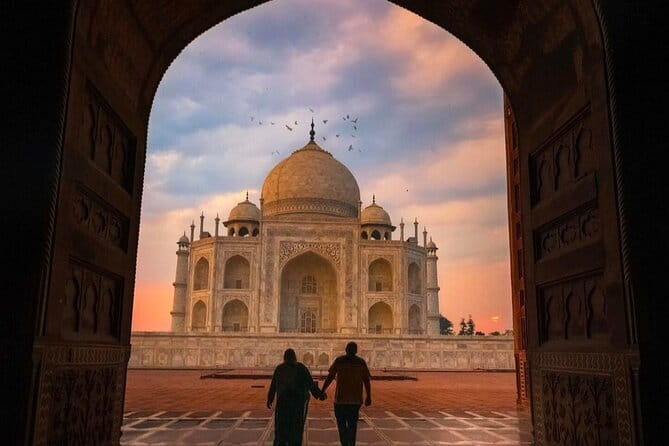
I love the way the trip handles the Taj Mahal twice, with time built in for a calmer sunset view and then a sunrise visit. I also love the small comfort wins, like the battery bus ride to and from the Taj parking area, plus bottled water during the drives. Your days are full, but you are not stuck figuring logistics.
One consideration: monument entry fees are not consistently included, and photography or camera charges may also be extra. Also, you will spend real time in the car between cities, so this is not a package for folks who hate long drives.
In This Review
- Key highlights you will feel right away
- The Route: Golden Triangle plus Amritsar and Rishikesh, not a rush job
- Agra: Fort walls, Baby Taj, Mehtab Bagh, and a sunset Taj Mahal viewpoint
- Taj Mahal at sunrise, Fatehpur Sikri, and Chand Baori on the way to Jaipur
- Jaipur palace circuit: Amber Palace, City Palace, Jantar Mantar, and Hawa Mahal
- Jaipur temples and viewpoints: Jal Mahal photos, Birla Mandir lattice, and Galtaji’s monkey temple
- Delhi in one day: Qutub Minar, Lotus Temple, Jama Masjid, Humayun’s Tomb, and Chandni Chowk
- Amritsar: Golden Temple time and the Wagah border ceremony
- Rishikesh: Ram Jhula, Lakshman Jhula, an ashram visit, and Triveni Ghat
- Price and Logistics: What you pay for, what to budget, and how to make it worth it
- Should you book this private Golden Triangle plus Amritsar and Rishikesh tour?
- FAQ
- Is this a private tour?
- What is included in the price?
- Are monument entry tickets included?
- How many hotel nights are included?
- What vehicle will you ride in?
- When does the Wagah border ceremony start?
- Where does the tour start?
Key highlights you will feel right away
- Two chances for the Taj Mahal: sunset viewpoint time and a sunrise visit, so you can enjoy different light.
- Private vehicle by group size: sedan, wagon, or minivan, based on how many of you travel.
- UNESCO sights in major cities: Taj Mahal, Agra Fort, Fatehpur Sikri, Qutub Minar, and Jantar Mantar.
- Agra to Jaipur through off-the-beaten-stepwells: Chand Baori is a classic stop for cool photos and scale.
- Amritsar and Wagah with timing: Golden Temple time, then a border ceremony that starts in the late afternoon.
- Rishikesh feels spiritual, not just scenic: bridges, an ashram visit, and major ghats along the Ganges.
Golden Triangle itineraries, three to eight days
The Route: Golden Triangle plus Amritsar and Rishikesh, not a rush job
This is a smart way to see North India if you are first-time focused. The big cities are spaced out so you get to actually look, not just pose in front of things and sprint to the next bus. The private setup matters because it keeps you flexible when crowds or traffic get cranky.
You start in Delhi, then move to Agra and Jaipur for the Golden Triangle highlights. After that, the vibe shifts to Amritsar for the Golden Temple and then to Rishikesh for Ganges life. That change of pace is the main reason this tour feels more complete than a straight Delhi-Agra-Jaipur loop.
Agra: Fort walls, Baby Taj, Mehtab Bagh, and a sunset Taj Mahal viewpoint
Agra is where the trip starts showing its teeth, in a good way. You check into your hotel, then you get an active stretch of sights before the day opens up with leisure time. The key move here is that you do not wait until the last minute for Taj views.
Agra Fort is your opening UNESCO-style experience. It connects to Mughal power and major emperors, and it gives you a sense of scale before you stare at a single marble monument. If you like history that feels physical, the fort layout helps you understand how these sites functioned as real power centers.
Then you hit Itmad-ud-Daula, often nicknamed Baby Taj. That nickname is not just internet chatter. The tomb’s style is refined enough that it feels like a smaller, more delicate cousin to the Taj Mahal, and it is a nice reset after the fort.
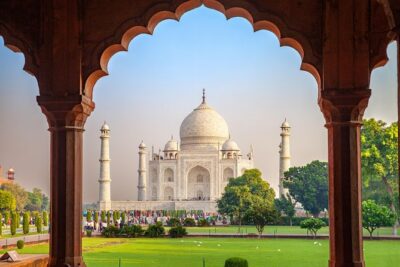
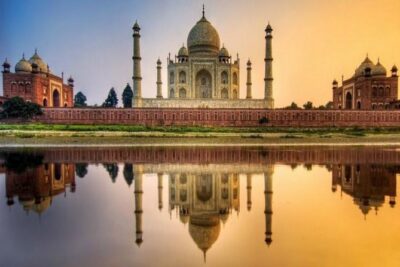
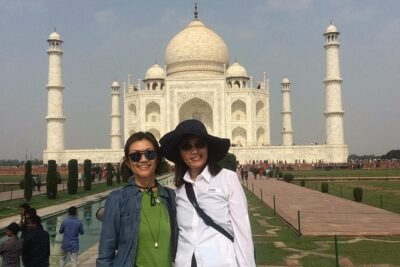
The Taj Mahal stop is designed for sunset calm. You go to a Taj Mahal sunset view point across the river, away from some of the heaviest crowd pressure. If you are the kind of person who thinks pictures look better when you breathe first, this timing is a gift.
Mehtab Bagh is the final garden note. It is a restored Mughal garden area across from the main Taj zone, and it works well if you want slower walking and wide angles. Even if you only spend a short time there, you leave Agra feeling like you saw the Taj from more than one perspective.
Taj Mahal at sunrise, Fatehpur Sikri, and Chand Baori on the way to Jaipur
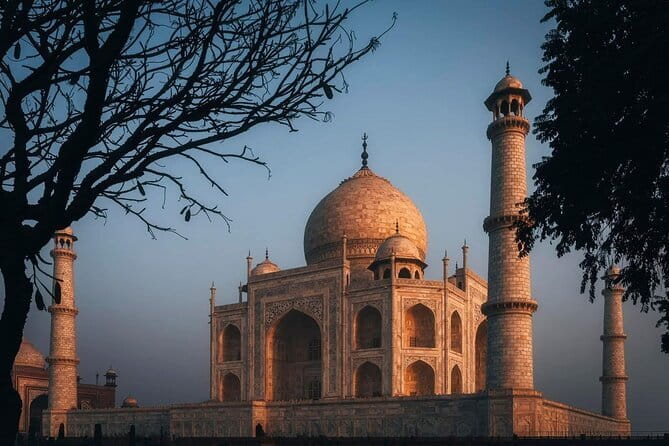
The second major Agra day is built around the Taj Mahal at sunrise. Sunrise matters because the light turns the marble into something softer and more dimensional. It also tends to feel less like a queue simulator, so you can actually watch the building settle into the morning.
After the sunrise Taj, you head to Fatehpur Sikri, the former Mughal capital. It is one of those places where you can quickly see why an empire would plant its identity there, with architecture that still feels planned rather than random. The tour gives you time to walk and take it in instead of just rushing through doorways.
Then you do something fun and very photogenic: Chand Baori, the deep stepwell near Abhaneri. Stepwells are not just quirky Indian architecture, they are functional cooling and water systems that became public gathering points. Seeing the depth and the tight geometry in person helps the mind stop treating history like a textbook.
When you reach Jaipur, the focus shifts from Mughal monuments to Rajput palaces and city-scale symbolism. Your arrival comes with hotel check-in and an overnight stay, which is important because Jaipur sightseeing is going to be active the next stretch.
More of Rishikesh and Haridwar
- Private Haridwar and Rishikesh Day Tour from Delhi- All Inclusive★ 5.0 · 357 reviews
- Private Day Trip to Haridwar and Rishikesh from Delhi by Car★ 5.0 · 43 reviews
- Full-Day Private Tour in Rishikesh & Haridwar★ 5.0 · 32 reviews
- Moderate Himalayan Treks Near Rishikesh From Delhi★ 5.0 · 21 reviews
- 6-Day Rishikesh & Haridwar Spiritual Tour from Delhi★ 5.0 · 12 reviews
Jaipur palace circuit: Amber Palace, City Palace, Jantar Mantar, and Hawa Mahal
Jaipur is where this tour balances big-ticket icons with the kind of stops that make your photos look different from everyone else’s. You start with a quick Jaipur stepwell stop near Amber Fort, Panna Meena ka Kund. It is compact, but it adds texture to a city that loves geometry.
Amber Palace is the highlight stop for palace drama. It is former capital territory, tied to Raja Man Singh I, and the tour includes a guided walk through palaces, squares, and monuments. The setting helps you understand why fort-palaces became a visual language of power.
You also get a photo stop at Jal Mahal, the palace sitting on Man Sagar Lake. You do not spend all day there, but it is timed for quick views, so you can capture the floating look without losing the day. If you love water reflections in your travel photos, this is worth the brief time.
City Palace follows, the ceremonial and administrative seat of the Maharaja of Jaipur. It gives you a central anchor for the day, and it also helps connect the city to its royal governance. The tour then continues to Jantar Mantar, a UNESCO-listed astronomical instrument complex. It is one of the few sightseeing places where you are looking at tools that were meant to measure the sky, not just impress visitors.
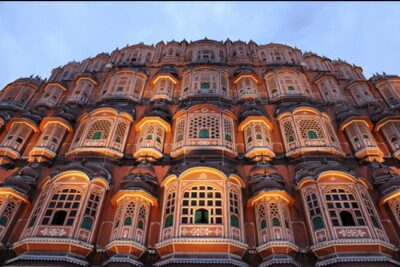
Hawa Mahal is next, the Palace of Breeze, built with pink and red sandstone and designed with a five-storey pyramid shape. Even if you only spend a short time here, it is the kind of stop that teaches you what Jaipur is about at street level. The tour also includes Albert Hall Museum as an additional cultural stop, which is a nice option if you want a break from forts and temples.
Jaipur temples and viewpoints: Jal Mahal photos, Birla Mandir lattice, and Galtaji’s monkey temple
Not every Jaipur day has to be all palaces. This tour gives you a second set of stops that feel more local and more walkable.
Birla Mandir is a standout for its white marble latticework. It is dedicated to Lord Vishnu, and the look is clean and intricate in a way that photographs surprisingly well. If you like architecture that feels detailed even when it is simple in layout, you will enjoy this stop.
Then you go to Galtaji Temple, also called the Monkey Temple. It has pools and a more maze-like feel, and the name is not subtle. The tour keeps this to a manageable visit length, so you are not stuck in a long stretch where you just want to move on.
After these temple visits, the tour moves back toward Delhi for the overnight stay. That shift is practical because Delhi gives you a big mix of modern memorials, Mughal-era monuments, and old-city markets, all on one day.
Delhi in one day: Qutub Minar, Lotus Temple, Jama Masjid, Humayun’s Tomb, and Chandni Chowk
Delhi is a city where you can feel multiple eras inside a single day. This tour threads them together without turning you into a speed-walker with no time to look up.
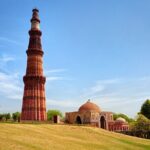
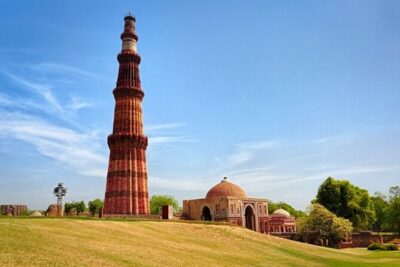
Qutub Minar anchors the UNESCO experience, with its tall tower history tied to Qutub-ud-din Aibak. It is a perfect first stop because it sets the visual style for later Mughal-era structures, even if you do not consciously compare them. From there, you visit Lotus Temple, famous for its flower-like shape and its open access across religions.
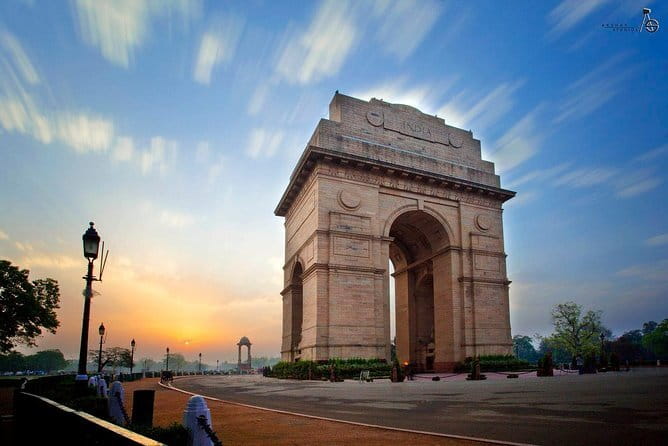
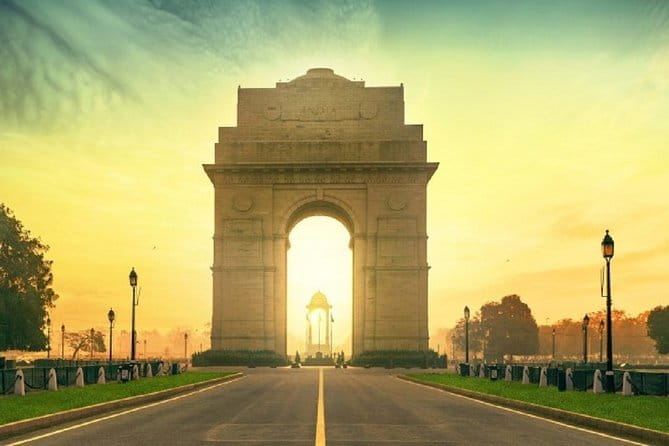
India Gate is a quick but meaningful stop. It is a war memorial and also a common picnic spot, so you get a sense of how locals use city space. If you like people-watching, this kind of stop gives you breathing room.
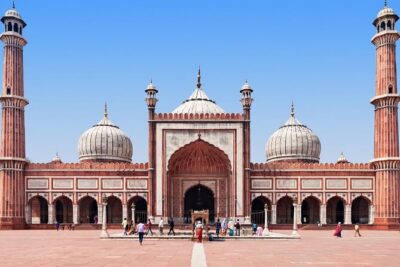
Jama Masjid comes next, one of the largest mosques in Delhi, built by Shah Jahan in the 1600s. It is a heavy, serious stop, and it helps you understand Delhi’s layers of faith and power. Nearby you also make time for Agrasen Ki Baoli, the stepwell, which adds that same stair-and-depth feeling you saw at other stepwell sites.
Humayun’s Tomb gives you a Mughal-style architectural lesson. Then you end in Chandni Chowk, where the tour finally turns into sensory overload in the best way. Expect a busy market area with spices, dried fruit, silver jewelry, and vibrant saris, plus narrow streets full of tiny shops.
If you hate crowds, you may want to plan your shopping pace carefully. But if you love a real street market moment, Chandni Chowk is the kind of place that makes Delhi feel alive.
Amritsar: Golden Temple time and the Wagah border ceremony
Amritsar is where the tour changes tone again, from architecture to ritual and community. You arrive and check in, with an overnight stay, which is a good buffer if travel days have already tired you out.
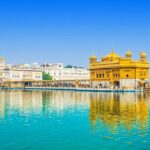
The Golden Temple, Sri Harimandir Sahib, is the main religious stop. The tour emphasizes that it is a symbol of human brotherhood and equality, and that everyone is welcome regardless of caste or creed. You spend a few hours here, which matters because this is not a one-photo stop, it is a place you need time to sit with.
Then comes Wagah Border for the flag down ceremony. The schedule is very specific: preparation begins at 3:00 pm, and the ceremony starts at 5:00 pm. That timing affects your planning, so you will want to treat the afternoon as event-focused rather than sightseeing-free.
The practical benefit of including Wagah is that it turns a border story into a real moment you can witness. The drawback is that you will likely need patience for the crowd rhythm and waiting time around the ceremony area.
Rishikesh: Ram Jhula, Lakshman Jhula, an ashram visit, and Triveni Ghat
Rishikesh is the spiritual splash at the end, and it is handled well here. You arrive, check in, and stay overnight, which helps you avoid trying to do everything in one day.
The tour includes Ram Jhula, an iron suspension bridge over the Ganges. It is close enough to town for easy walking and it gives you that postcard angle people come for, but it also feels like part of daily river life.
Parmarth Niketan Ashram is another key stop. It is founded in 1942, and it sits along the Ganges with the Himalayas in the background. The tour keeps this to a short visit, but the location is what makes it memorable. Even if you are not there for a spiritual program, you still get the setting.
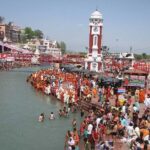
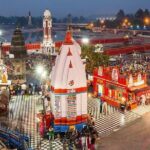
Triveni Ghat is the big ghat moment, described as the biggest and most famous ghat in Rishikesh. It is crowded with devotees who take ritual baths, so it is not quiet sightseeing. If you want to see Ganges life as people experience it, this is where you do it.
Lakshman Jhula closes the day with another bridge crossing. Together, these river spots help you understand why Rishikesh is more than a day trip. It is a whole mood, and the tour gives you enough time to feel the river shift your attention.
Price and Logistics: What you pay for, what to budget, and how to make it worth it
At $588.46 per person for roughly 10 days, you are paying for a private, driver-led route plus guided sightseeing. The value sits in the “less mental load” part of travel: transport is handled, pickup and drop-off are arranged, and you are not piecing together city-to-city logistics from scratch.
You also get practical inclusions that add up fast. Your tour includes a private air-conditioned vehicle with driver, hotel or airport pickup and drop-off, and all sightseeing with private local guides. Battery bus rides for the Taj Mahal parking zone are included, along with bottled mineral water during journeys.
Daily breakfast is included if you book the option that covers hotels. You also get 9 nights of accommodation when that hotel option is selected. In other words, you are paying for the whole framework, not just for point-to-point transfers.
Here is what you should budget separately. Monument entry, camera still, movie, and video fees are not included. The stop list shows some items marked free and others not included, but to avoid surprises, I suggest budgeting for entrances anyway, especially for major monuments.
The other logistical reality is drive time. North India road travel between Delhi, Agra, Jaipur, and then onwards takes commitment. The good news is the private driver and vehicle make those hours less painful than self-navigating. Still, if you hate sitting in a car, you may find this pace tiring.
One more detail that matters if you are traveling in a group: the vehicle size changes with group size. For 1 to 2 people it is a 4-seater sedan, for 3 to 4 it is a 6-seater wagon, and for 5 to 10 it is a 10-seater minivan. That helps you plan comfort and luggage space.
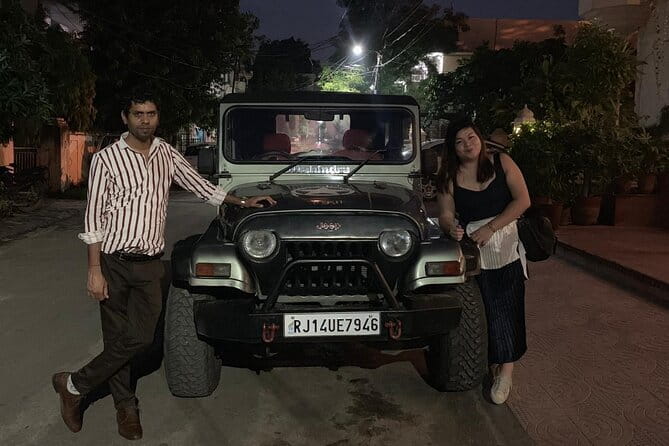
If you want a small confidence boost, this tour is associated with drivers like Surendra and Vinod, and with a planner named Gopal in coordination notes. In Amritsar, a guide named Vijay is also mentioned for knowledge and friendliness. You might not get the same team, but the names are a hint that the company invests in people, not just paperwork.
Should you book this private Golden Triangle plus Amritsar and Rishikesh tour?
Book it if you want a first-timer friendly route with private transport and local guides that keep the story straight. Book it if you care about seeing the Taj Mahal at both sunset and sunrise, because that design choice makes the monument feel less repetitive. And book it if you want a meaningful shift from palace and fort walls to the Golden Temple and the Ganges.
Skip it if you are trying to travel only by minimal car time. This is a city-hopping tour, and you will trade hours on the road for the chance to see multiple regions in one trip. Also, if you hate paying extra for monument entries, you should plan your budget carefully since entry and camera fees are not included.
If you like structure but still want breathing room, you will probably like this setup. It gives you icons, plus a few stops that add texture, like Chand Baori and the river ghats.
FAQ
Is this a private tour?
Yes. This is a private tour, meaning only your group participates.
What is included in the price?
The tour includes private transportation with an air-conditioned vehicle and driver, hotel or airport pickup and drop-off, private local guides for sightseeing, daily breakfast (when booked with the hotel option), bottled mineral water during journeys, and battery bus rides to and from the Taj Mahal parking lot up to the monument.
Are monument entry tickets included?
Monument entry is listed as not included, and camera still/movie/video fees are also listed as not included. Some stops show admission as free, but you should still plan for potential extra entry costs.
How many hotel nights are included?
If you book the option that includes hotels, the tour provides 9 nights of accommodation, with daily hotel breakfast.
What vehicle will you ride in?
It depends on group size. A 4-seater sedan is used for groups of 1 or 2, a 6-seater wagon for groups of 3 or 4, and a 10-seater minivan for groups of 5 to 10.
When does the Wagah border ceremony start?
The ceremony timing is described as preparation at 3:00 pm, with the flag down ceremony starting at 5:00 pm.
Where does the tour start?
The meeting point is Indira Gandhi Intl Airport in New Delhi, India.
If you want, tell me your travel month and group size. I can help you estimate the extra monument budget and whether the sunrise Taj plan fits your style.
Amritsar, More Reviewed Visits
Rishikesh and Haridwar, More Days


The Golden Triangle, Longer and Shorter




Recently reviewed across New Delhi
- Golden Triangle – Delhi Agra and Jaipur
★ 5.0 · 10 reviews - Taj Mahal & Agra Tour by Indian Bullet Train All Inclusive
★ 4.5 · 10 reviews - Private Tour in Mehrauli Archaeological Park & Qutub Minar
★ 5.0 · 10 reviews - Old & New Delhi Tour
★ 5.0 · 10 reviews - From Delhi : Taj Mahal & Agra Fort Tour by Luxury Express Train
★ 5.0 · 10 reviews - Delhi Shopping Tour: Top Bazaars, Crafts & Souvenir Finds
★ 5.0 · 10 reviews
Golden Triangle Tours, compared.
 ★ 5.03-Days Private Golden Triangle Tour: Delhi, Agra & Jaipur by CarFrom $1271,098 reviews
 ★ 5.03-Day Delhi, Agra and Jaipur Private Tour – India Golden TriangleFrom $110812 reviews
 ★ 5.0Four-Day Private Luxury Golden Triangle Tour to Agra and Jaipur From New DelhiFrom $160807 reviews
 ★ 5.05 Nights 6 Days Private Golden Triangle Tour – Delhi Agra JaipurFrom $240574 reviews
 ★ 5.04 Days Golden Triangle TourFrom $146499 reviews
 ★ 5.0Private Car and Drive for Golden Triangle (4N/5D)From $167451 reviews
 ★ 5.0Private Golden Triangle Tour Delhi Agra Jaipur ( Top Rated )From $148436 reviews
 ★ 5.03-Day Private Luxury Golden Triangle Tour to Agra and Jaipur From New DelhiFrom $164424 reviews
Browse the lists this tour appears in