
REVIEW · GOLDEN TRIANGLE TOURS
14 Days Golden Triangle with Wildlife Safari & Heritage Rajasthan
Golden Triangle plus wildlife, with real breathing space. This private route strings together Delhi, Agra, Jaipur, and the safari regions around Ranthambore and Jhalana, with door-to-door A/C transfers and local guides.
I also like how the schedule builds in variety, from sunrise monument time to stepwells and lake views. One thing to plan for is that major monument entry fees are marked as not included, so your on-site budget can add up on top of the tour price.
In This Review
- Key Highlights You’ll Care About
- Private Vehicle Days That Actually Feel Private
- Delhi’s Old City Energy, Temple Stops, and the Step Well Moment
- Agra: Taj Mahal Sunrise, Fort Walls, and the Baby Taj Stop
- Fatehpur Sikri, Chand Baori, and Two Ranthambore Safaris
- Jaipur: Monkey Temple Energy, City Icons, and Jhalana Wildlife
- Udaipur by Lake Pichola, City Palace Views, and Bagore Ki Haveli
- Jodhpur Forts and Museums, Plus a Bishnoi Village Day
- Pushkar Ritual Atmosphere and Mandawa’s Painted Havelis
- Price and Logistics: What $835.72 Really Buys You
- Who Should Book This Route, and Who Might Feel Overbooked
- Final Call: Should You Book This 14-Day Safari and Heritage Tour?
- FAQ
- Where does the tour start and end?
- Is this a private tour or shared group?
- What kind of vehicle do I use during the tour?
- Is hotel accommodation included?
- Is breakfast included?
- Are monument entrance fees included?
- What safari access is included?
- Do you get a battery bus to the Taj Mahal area?
- Do you include bottled water during travel?
- Can I cancel for a full refund?
Key Highlights You’ll Care About

- Door-to-door A/C transport every day, with vehicles sized to your group
- Sunrise Taj Mahal with a guided inside visit (about 2 hours)
- Two safari sessions at Ranthambore plus Jhalana Safari Park for a second wildlife chance
- Private local guides for the big sights, not just a scripted bus tour
- Battery bus to the Taj Mahal area to save your legs for the walking parts
- Water during drives so you stay comfortable on long road legs
Golden Triangle itineraries, three to eight days
Private Vehicle Days That Actually Feel Private
This is a private tour, meaning only your group participates, and you get sightseeing with private local guides. In real life, that matters for small adjustments, like slowing down for photos or spending a little longer where you’re getting the best story.
Transport is also practical. You’ll ride in an air-conditioned car or van based on your group size, with a 4-seater sedan for 1-2 people, a 6-seater wagon for 3-4 people, and a 10-seater minivan for 5-10. That reduces the “sardine effect” and keeps your day moving.
Pickup and drop-off are part of the package, and you start at Indira Gandhi International Airport in New Delhi. If you’re the type who hates last-minute coordination, this is the kind of service you’ll appreciate.
Delhi’s Old City Energy, Temple Stops, and the Step Well Moment

Day 1 is a classic Delhi mix: ceremonial calm, then streets that feel like you’re right inside the city’s pulse. You land at Terminal 3, meet the driver and tour representative, and head to your hotel. From there, the plan points you toward Gurdwara Bangla Sahib, Agrasen ki Baoli, and evening free time.
Gurdwara Bangla Sahib is a good first stop because it’s peaceful and welcoming, and it helps you get oriented fast. Agrasen ki Baoli is a stepwell, and even though it’s short, it’s the kind of place that makes you look up and notice how people built for water and shade in a city that can get harsh.
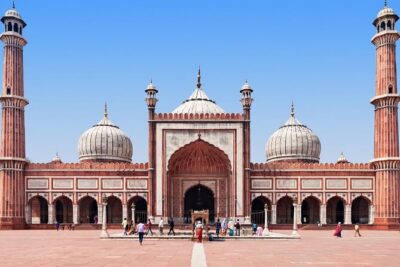
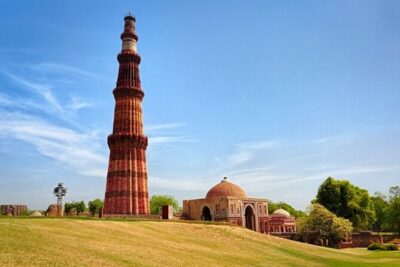
Day 2 turns into a “greatest hits” day for architecture and Mughal-era landmarks. You’ll see Qutub Minar (UNESCO, tall and iconic), then Lotus Temple (free and open to everyone, built in 1986). Next come India Gate, Jama Masjid, Humayun’s Tomb, and then the shopping chaos of Chandni Chowk.
Here’s the practical part: you’re moving through neighborhoods with very different vibes. If you like structure, this works well. If you dislike crowds, plan your pace, because Chandni Chowk is busy and you’ll want breaks.
Agra: Taj Mahal Sunrise, Fort Walls, and the Baby Taj Stop
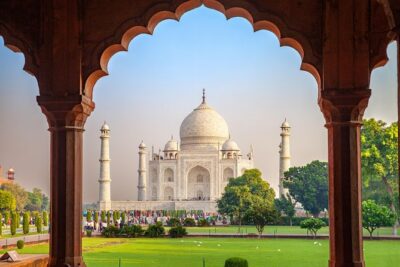
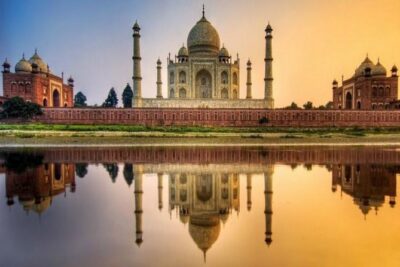
Agra is where the route becomes intensely photogenic. Day 3 is the drive from Delhi to Agra (about 222 km, around 4 hours), check-in, and then a circuit of major Mughal-era sites. The centerpiece is the Taj Mahal, plus Agra Fort and Itmad-ud-Daula, often nicknamed the Baby Taj.
One of the best value moves here is how the itinerary spreads the Taj area across two days. Day 4 is built around sunrise viewing, plus about a 2-hour guided visit inside the Taj Mahal. Day 3 also includes Mehtab Bagh for a sunset view across the Yamuna, which gives you a different angle without repeating the same photo set.
Agra Fort is another “don’t rush this” stop. You’ll get the big walls and museum feel, and it’s tied to multiple Mughal rulers, so your guide can stitch the timeline together in a way you won’t get from a quick audio guide.
If you’re trying to manage energy, sunrise Taj is worth it. It’s early. But it’s also the kind of moment where the schedule pays off, because you’re not just checking a box. You’re seeing the monument under better light, and you can still enjoy the rest of the day.
- Old & New Delhi City Tour – Half or Full Day Options Available★ 5.0 · 4,811 reviews
- Taj Mahal Tour from Delhi by Express Train (Viator Award Winner)★ 5.0 · 2,849 reviews
- Same Day Taj Mahal, Fort & Baby Taj Tour from Delhi by Car★ 4.9 · 2,534 reviews
- From Delhi: Taj Mahal and Agra Fort Private Sunrise Tour★ 4.9 · 2,270 reviews
- Sunrise Taj Mahal, Agra Fort & Baby Taj Tour from Delhi by Car★ 5.0 · 2,243 reviews
Fatehpur Sikri, Chand Baori, and Two Ranthambore Safaris
Day 4 after the sunrise Taj moves you into Rajasthan history territory with Fatehpur Sikri and Chand Baori. Fatehpur Sikri is the Mughal “City of Victory,” built in the late 1500s, and it served as the empire’s capital for about a decade. It’s the sort of stop where you’ll want your guide’s storytelling, because the layout can look confusing if you don’t know what you’re seeing.
Chand Baori is the stepwell detour you’ll remember. It extends roughly 30 meters into the ground and is one of the largest and deepest stepwells in India, which makes it a strong contrast to the big, monumental stonework of the forts and tombs. If you like architecture details, this is a great inclusion.
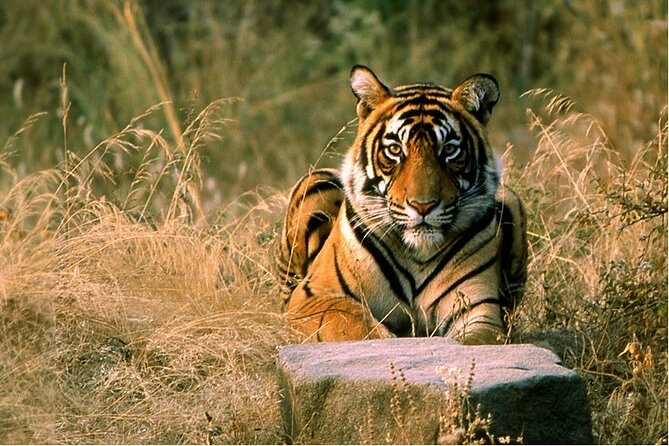
Then you head toward Ranthambore National Park area, check in, and the wildlife part starts on Day 5. You get two safari windows, a morning safari (about 3 hours) and an evening safari (about 3 hours). Ranthambore is known for tiger sightings, but the real win for you is having two chances instead of one.
You’ll also ride in a canter or jeep for the safari, and the park entrance for Ranthambore Safari Park is included. That takes the guesswork out for you, and it keeps the wildlife day from turning into a scavenger hunt for tickets.
A quick consideration: wildlife days are weather dependent in practice, and you’ll want flexible expectations about what you see. Still, the structure here gives you better odds than a single outing.
Jaipur: Monkey Temple Energy, City Icons, and Jhalana Wildlife
After Ranthambore, Day 6 brings you to Jaipur and two temple stops before the wildlife side kicks in. You’ll visit Galtaji Temple, also called the Monkey Temple. It’s famous for its complex structure and three sacred pools, which is why it’s more than a quick photo stop.
Then you move to Birla Mandir, a Hindu temple located on elevated ground. After that, you check in at your Jaipur hotel and the plan includes Jhalana Safari Lodge in the evening, followed by a safari at Jhalana Safari Park.
Day 7 is your big Jaipur sightseeing day. It starts with Panna Meena ka Kund, another stepwell. Then you’ll visit the Jaipur district sightseeing area with palaces, squares, and monuments, followed by a photo stop at Jal Mahal on Man Sagar Lake.
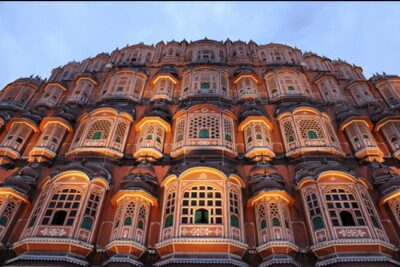
The main trio for many people is City Palace, Jantar Mantar, and Hawa Mahal. City Palace is the former administrative and ceremonial seat of the Maharaja of Jaipur, built in 1721, and you’ll also have time to see the museum-like collections there. Jantar Mantar is UNESCO-listed and features nineteen astronomical instruments built by Sawai Jai Singh II. Hawa Mahal, the Palace of Breeze, finishes the day with its five-storey pyramid shape and red and pink sandstone look.
What to keep in mind: Jaipur can mean lots of uphill walking and heat. Your guide and the private pacing help, but I’d still plan water habits and comfortable shoes. This itinerary is designed to keep you moving, so you’ll want to move comfortably too.
Udaipur by Lake Pichola, City Palace Views, and Bagore Ki Haveli

Day 8 is a long drive from Jaipur to Udaipur (around 8 hours). You arrive, check in, and the plan gives you time for local markets and dinner at your preferred restaurant. That free time is a smart reset after temple and fort days.
Day 9 focuses on Udaipur’s “water and palaces” theme. Lake Pichola is first, with the option to take a private boat ride around the lake with a stop near Jagmandir Palace island. Then you visit City Palace on the lakefront for views and collections, plus Jagdish Temple in the City Palace complex area.
Bagore Ki Haveli Museum is also in the mix, and you can skip it if you’d rather move on. That’s a nice design choice because it respects how people travel. If you’re museumed-out, you’re not forced to stay.
Here’s how to enjoy Udaipur on this schedule: plan for photo stops that turn into longer pauses. Lake light changes fast, and City Palace overlooks the lake, so it helps to slow down for the viewpoint moments instead of trying to race through.
Jodhpur Forts and Museums, Plus a Bishnoi Village Day

Day 10 drives early to Jodhpur (about 6 hours), then checks you into your hotel and takes you to the Clock Tower market area. It’s a good first taste because it mixes local shopping streets with the city’s landmark feel.
Day 11 is a full Jodhpur culture-and-landscape day. You’ll start with Mehrangarh Fort, a former palace turned museum with weapons, paintings, and royal palanquins. Then you visit Umaid Bhawan Museum, described as one of the world’s largest private residences and built with golden-yellow sandstone. Jaswant Thada is next, a marble cenotaph and mausoleum for Marwar kings.
The day finishes with an excursion to the Bishnoi village, recommended as a popular choice. You’ll spend about 3 hours there and enjoy the local flavor with local women. Then you return to your hotel in the evening.
Practical note: this is a lot of stone and steps in one day. If you’re the kind of person who loves museums and forts, you’ll have a great time. If you’re not, make sure you pace your fort time and leave space for viewpoint breaks.
Pushkar Ritual Atmosphere and Mandawa’s Painted Havelis
Day 12 brings you to Pushkar after a drive. You check in and then visit Brahma Temple, described as famous for mythology and architecture, and you spend time at Pushkar Lake and Brahma Ghat. The ghat area is connected to prayers for happiness and tributes for the dead souls, so it feels more ritual than tourist.
Day 13 moves you to Mandawa. This is your quieter heritage send-off. You explore the village, including Francisco-painted havelies, and then you have time to wander the village area in the evening.
Mandawa works well as a closing chapter because it’s not as intense as the big-city forts. It gives you a chance to see artful facades, courtyards, and smaller-scale heritage details without the same pressure to rush between major monuments.
Price and Logistics: What $835.72 Really Buys You
At $835.72 per person, the biggest value is that you’re buying a lot of coordination and guiding, not just a list of sights. The tour includes private air-conditioned transport with a driver, hotel or airport pick-up and drop-off, private local guides for sightseeing, and daily breakfast when you choose the hotel-included option.
You also get small but meaningful inclusions that add up in comfort. There are bottles of mineral water during journeys, and the plan includes the battery bus ride to and from Taj Mahal parking up to the Taj Mahal monument. That last one is a big deal if you don’t want to spend your best Taj energy on long walks at peak crowds.
Wildlife is also treated as real logistics, not wishful thinking. You have Ranthambore Safari Park entrance included with canter or jeep, plus Jhalana Safari Park entrance included. Even if wildlife sightings are never guaranteed, having the rides planned into your days reduces the risk of last-minute “sold out” stress.
Where you should budget extra is crystal clear: monument entrance fees are not included, and the tour also says any meals besides included breakfasts are not included. That means you should plan a daily cash or card budget for entries at Taj Mahal, Qutub Minar, forts, tombs, and other sights marked as not included. Tips for driver and guide are also not included.
Hotel quality can vary with your option, and the overview suggests 3 to 5 star accommodation style depending on booking choice. If you want that lift in comfort, pick the hotel-inclusive option.
Who Should Book This Route, and Who Might Feel Overbooked
This tour fits best if you want a structured Golden Triangle with real guided time at major monuments and a serious wildlife commitment. If you care about history, architecture, and landmark storytelling, the private guide approach works well across Delhi, Agra, and Jaipur.
It also suits you if you want more than one wildlife day. Two safari times at Ranthambore plus Jhalana gives you extra chances and variety, not just a single “tick the tiger box” outing.
You might feel overbooked if you hate early starts or long car days. The itinerary includes multiple road legs, including Delhi to Agra and Jaipur to Udaipur, plus sunrise Taj on a tight schedule. If your travel style is slow and spontaneous, you may want a lighter version.
Final Call: Should You Book This 14-Day Safari and Heritage Tour?
I’d recommend booking if you want the classic north India route with hands-on guiding and wildlife built into the core plan. The best parts for value are the private transfers, the guided sunrise Taj Mahal, the two Ranthambore safari windows, and the extra Jhalana wildlife stop.
I’d think twice if your budget is tight for monument fees on top of the tour price, because not all major sites are included. Also, if you’re not a fan of packed days, this schedule is designed to cover a lot, so you’ll want to travel with energy.
If you’re ready for a mix of Mughal icons, stepwells, palace cities, and safari time, this itinerary is a strong match.
FAQ
Where does the tour start and end?
The meeting point is Indira Gandhi International Airport in New Delhi. The trip ends with a drive back to New Delhi on Day 14.
Is this a private tour or shared group?
It’s a private tour/activity, and only your group will participate.
What kind of vehicle do I use during the tour?
You travel in a private air-conditioned vehicle with a driver. It’s a 4-seater sedan for groups of 1 or 2, a 6-seater wagon for groups of 3 or 4, and a 10-seater minivan for groups of 5 to 10.
Is hotel accommodation included?
13 nights of accommodation is included only if you book the option that includes hotels.
Is breakfast included?
If you book the hotel-included option, you get a daily hotel breakfast.
Are monument entrance fees included?
No. Monument entrance fees are listed as not included. Some activities in the plan also show admission ticket not included.
What safari access is included?
Ranthambore Safari Park entrance with canter or jeep is included, and Jhalana Safari Park entrance is included.
Do you get a battery bus to the Taj Mahal area?
Yes. The tour includes a battery bus ride to and from the Taj Mahal parking lot up to the Taj Mahal monument.
Do you include bottled water during travel?
Yes. Bottles of mineral water are included during journeys.
Can I cancel for a full refund?
Yes. Free cancellation is available. You can cancel up to 24 hours in advance of the experience start time for a full refund.
The Golden Triangle, Longer and Shorter




Recently reviewed across New Delhi
- Golden Triangle – Delhi Agra and Jaipur
★ 5.0 · 10 reviews - Taj Mahal & Agra Tour by Indian Bullet Train All Inclusive
★ 4.5 · 10 reviews - Private Tour in Mehrauli Archaeological Park & Qutub Minar
★ 5.0 · 10 reviews - Old & New Delhi Tour
★ 5.0 · 10 reviews - From Delhi : Taj Mahal & Agra Fort Tour by Luxury Express Train
★ 5.0 · 10 reviews - Delhi Shopping Tour: Top Bazaars, Crafts & Souvenir Finds
★ 5.0 · 10 reviews
Golden Triangle Tours, compared.
 ★ 5.03-Days Private Golden Triangle Tour: Delhi, Agra & Jaipur by CarFrom $1271,098 reviews
 ★ 5.03-Day Delhi, Agra and Jaipur Private Tour – India Golden TriangleFrom $110812 reviews
 ★ 5.0Four-Day Private Luxury Golden Triangle Tour to Agra and Jaipur From New DelhiFrom $160807 reviews
 ★ 5.05 Nights 6 Days Private Golden Triangle Tour – Delhi Agra JaipurFrom $240574 reviews
 ★ 5.04 Days Golden Triangle TourFrom $146499 reviews
 ★ 5.0Private Car and Drive for Golden Triangle (4N/5D)From $167451 reviews
 ★ 5.0Private Golden Triangle Tour Delhi Agra Jaipur ( Top Rated )From $148436 reviews
 ★ 5.03-Day Private Luxury Golden Triangle Tour to Agra and Jaipur From New DelhiFrom $164424 reviews
Browse the lists this tour appears in