

REVIEW · GOLDEN TRIANGLE TOURS
3-Day Delhi, Agra and Jaipur Private Tour – India Golden Triangle
Old Delhi to Taj sunrise in 3 days.
This private Golden Triangle trip strings together the big-ticket sights with a real driver, air-conditioned comfort, and local guiding. You move fast, but not randomly, and the pacing helps you see why Delhi, Agra, and Jaipur each feel so different.
What I really like is the combination of major monuments plus street-level moments. The rickshaw ride through Chandni Chowk gives you texture, not just photos, and the sunrise Taj Mahal start means you’re there while the place is still waking up. The guiding quality seems to hit a sweet spot too, with names like Varun Gupta in Agra for Taj, and Kamran or Karma in Jaipur earning repeated praise for clear explanations.
One consideration: the schedule is full, and Day 2 starts early at 6:00 AM for the Taj Mahal. If you’re not a morning person, build in extra patience, water, and comfy shoes.
In This Review
- Key highlights you’ll actually feel on this tour
- The value question: is $176.72 a fair deal for this Golden Triangle?
- Delhi in one day: Jama Masjid, Chandni Chowk rickshaw, and the big-photo monuments
- The Taj Mahal morning: how a 6:00 AM start changes everything
- Jaipur landmarks: City Palace, Jantar Mantar, and the wind-and-water photo moments
- The guides and drivers: why this trip feels personal in a private setup
- What’s included, what you’ll likely pay extra for, and how to plan meals
- Logistics that affect your day: timing, driving distance, and walking
- Should you book this Golden Triangle private tour?
Key highlights you’ll actually feel on this tour

- Chandni Chowk rickshaw ride through narrow lanes and spice-market energy
- Taj Mahal sunrise timing with a pre-dawn hotel pickup at 6:00 AM
- Agra Fort visit after breakfast so the day stays balanced
- Fatehpur Sikri stop on the road to Jaipur, with several hours there
- Jaipur viewpoints without rushing inside at Jal Mahal and Hawa Mahal photo stops
- Guides and drivers earn repeat compliments for easy English and punctual service (like Varun Gupta, Kamran, Karma, Kishor, Vinny, Danish, and drivers such as Zeeshan and Raja)
Golden Triangle itineraries, three to eight days
The value question: is $176.72 a fair deal for this Golden Triangle?

At $176.72 per person, you’re paying for three things at once: private transportation, guided sightseeing, and two hotel nights. That matters in India because getting between Delhi, Agra, and Jaipur can eat time fast when you’re doing it on your own, especially with traffic and ticket lines.
This tour also tries to remove friction. You get pickup options in Delhi and an air-conditioned car with a driver, plus bottled water and soft drinks during the drive. Entrance fees are included only if the option you choose covers them, so it’s worth checking what’s included in your booking to avoid surprise add-ons once you’re on site.
For me, the best value is that you’re not only seeing “the names” on a map. You’re also getting guided context for the big monuments and at least one hands-on style moment in Old Delhi. That turns the trip from a checklist into a story you can follow.
Delhi in one day: Jama Masjid, Chandni Chowk rickshaw, and the big-photo monuments
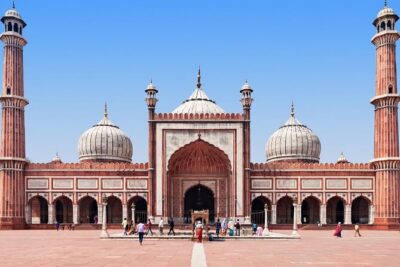
Day 1 starts with a pickup around 9:00 AM, then you begin with Jama Masjid. Plan for about two hours here. It’s one of those places where you notice scale immediately, and a good guide helps you understand what you’re looking at so it doesn’t stay just decorative. Even the approach matters, because you’re already moving between Old Delhi and New Delhi rhythms.
Then comes Chandni Chowk, and this is where the tour earns points for feeling lived-in. You’ll ride a rickshaw through the old lanes, then explore the market streets on foot for around 1.5 hours. You’ll pass stalls connected to daily life, and the shopping area is known for spices and dried goods, which adds a sensory layer to the day.
Next is the Red Fort, but note the nuance. You visit it from the outside for about an hour. The tour explanation you’ll hear is that a large portion is held by the Indian Army, so you get viewpoints and photos rather than a full inside circuit. If you’re expecting a complete Red Fort walk-through, mentally adjust. Still, from the right angles, it’s powerful.
After that, you head to Humayun’s Tomb for about an hour. This stop helps you shift from Delhi’s street energy into Mughal-era design. Expect your guide to connect the garden layout and architecture to what comes later at major sites like the Taj.
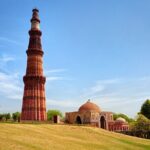
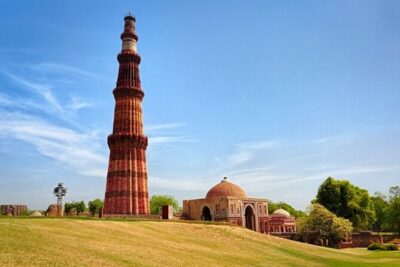
The rest of Delhi Day 1 is a mix of short photo drives and one more “wow from the outside” stop. You’ll pass India Gate and Parliament House for pictures and background, then you’ll visit Qutub Minar (about one hour). Qutub Minar is part of the Qutb complex, so your guide’s context makes it easier to see the site as a whole rather than one tall landmark.
Finally, you wrap up with Lotus Temple for about 30 minutes. It’s a more modern counterpoint to the Mughal buildings. If you like variety, this ending works well. If you prefer staying purely in historical Old Delhi, you might feel the tone shift quickly, but it keeps the day from becoming all one style.
Practical tip: wear shoes you can handle. Delhi days often involve uneven ground and lots of walking between stops, even when the driving is efficient.
The Taj Mahal morning: how a 6:00 AM start changes everything
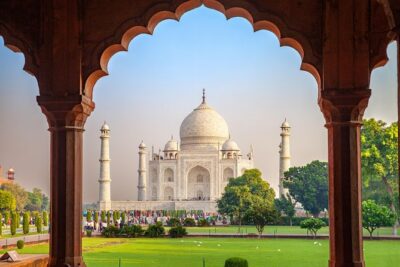
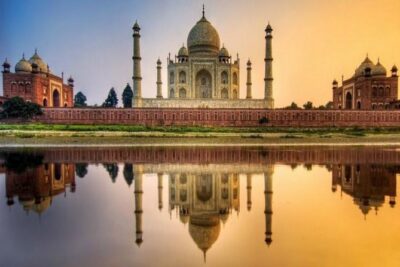
Day 2 is built around an early 6:00 AM hotel pickup for the Taj Mahal. The big advantage isn’t just “sunrise” for the photo. It’s light, temperature, and crowd levels. When you arrive early, you can actually take your time and notice details instead of racing to beat the next wave of buses.
You’ll have about two hours at the Taj Mahal. Expect your guide to talk through the marble work, symmetry, and the broader Mughal story connected to this monument. The tour then brings you back to the hotel, and you’re looking at breakfast plus checkout before the next fort.
After that, you go to Agra Fort for about an hour. Agra Fort is a different kind of experience than the Taj. Instead of being all about white-marble romance, it’s about power, walls, and the feel of a ruling center. Having this stop after sunrise helps you balance emotion with context.
Then you hit the road to Jaipur. On the way, you stop at Fatehpur Sikri for about five hours. That’s a long enough window that you can actually get your head around the site rather than treating it like a quick photo stop. The tour frames it as a Mughal site founded in the 16th century, so your guide will likely help connect it to the same cultural timeline that runs through the Taj and Agra Fort.
If you’re the kind of traveler who likes to learn while moving, this structure works. You see one signature highlight, then you get a fort stop, then a major historical complex. Your brain stays engaged instead of just going into autopilot.
Jaipur, a few more ways to see it
- 3-Days Private Golden Triangle Tour: Delhi, Agra & Jaipur by Car★ 5.0 · 1,098 reviews
- 3-Day Delhi, Agra and Jaipur Private Tour – India Golden Triangle★ 5.0 · 812 reviews
- Four-Day Private Luxury Golden Triangle Tour to Agra and Jaipur From New Delhi★ 5.0 · 807 reviews
- Jaipur Day Trip from Delhi by Car or Train – All Inclusive★ 5.0 · 663 reviews
- Jaipur City Private Day Tour from Delhi by Car – All Inclusive★ 5.0 · 589 reviews
Jaipur landmarks: City Palace, Jantar Mantar, and the wind-and-water photo moments

Day 3 starts after breakfast and shifts into Jaipur. You’ll begin with Jal Mahal, the Palace on the Lake, for about 30 minutes. Entrance is prohibited, so treat this as a framing and photography stop. You’ll still get strong views, and it’s worth being ready to pause for picture angles instead of trying to rush.
Next is City Palace for about two hours. This is one of those monuments where the guide explanation can make a big difference. You’ll learn that the palace dates to Jaipur’s founding era, tied to Maharaja Sawai Jai Singh II, and that he moved his court from Amber to Jaipur in 1727. That date helps you place Jaipur not as a random stop, but as a planned capital with serious architectural and political intent.
Then you’ll visit Jantar Mantar for about an hour. You’re looking at an observatory with astronomical instruments built by Sawai Jai Singh II and completed in 1734. The trick here is to slow down. It can look abstract until you understand what each piece was used for, and a good guide helps you translate “weird metal shapes” into functional science.
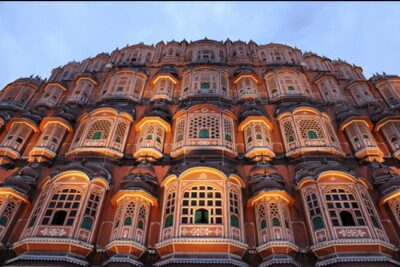
After Jantar Mantar, you go to Hawa Mahal, the Palace of Winds, for about an hour. Entrance is prohibited here too, so it’s another “see and photograph” moment. Still, the exterior is distinctive for a reason: that honeycomb facade of windows isn’t just decoration, it ties into how breezes could move through the design.
This day is carefully stacked. You’re not spending half your time waiting around indoors, and you’re getting both “look at it” icons and “understand it” stops with Jantar Mantar and City Palace.
Toward the end, you’ll get a photography stop at Patrika Gate. Then the tour ends around 2:00 PM. From there, you can depart from Jaipur Airport or have the driver take you back to Delhi, depending on your plan.
Comfort note: Jaipur can feel warmer than Delhi in parts of the day, and outdoor photo stops mean you’ll want water and sunscreen.
The guides and drivers: why this trip feels personal in a private setup
Because this is a private tour, the human factor matters a lot. The praise patterns are clear: guides are praised for easy English, patience, and explanations that make the monuments easier to understand.
In Agra, names like Varun Gupta show up repeatedly for the Taj Mahal experience, with mentions of him being funny and professional, and helping with photos. In Jaipur, Kamran and Karma are praised for friendly, knowledgeable guiding and taking extra effort with families. Vipin also gets a memorable mention for passion and even singing, so if you like lively guiding energy, that’s a good sign.
In Delhi, you’ll see names like Danish referenced for Old Delhi pacing, with patience and helpfulness. In general, drivers get very practical credit too. Zeeshan gets called out for punctuality and a comfortable car with great AC, and Raja is mentioned as well. That kind of comfort is not a luxury detail in India. It directly affects how enjoyable the day feels when you’re out sightseeing for hours.
My advice: when you’re in the car, use the time. Ask simple questions like what a monument symbolizes, why it was built when it was, or how today’s city evolved. With guides who speak clearly, those quick chats can turn into mini-lessons.
What’s included, what you’ll likely pay extra for, and how to plan meals
Here’s what the tour description supports as included:
- Private transportation with a driver
- Private local guides for the sightseeing
- Entrance fees for monuments if your option includes them
- Bottled mineral water and soft drinks during journeys
- Breakfast for two days
- Two nights’ 3-star or 5-star accommodation in Agra and Jaipur, with breakfast
- Pickup and drop-off in Delhi are included, with airport pickup and drop-off also mentioned
Not included:
- Tips or gratuities
- Personal expenses
Meal reality: the day includes a lunch break on Day 1 after Humayun’s Tomb, but only breakfasts are guaranteed as part of the package. If you’re someone who hates decision fatigue, you might want to eat at consistent spots that your guide recommends during breaks, but the exact lunch cost is on you.
If you’re sensitive to travel stomach issues, stick to places that are busy and follow your own comfort rules. A good guide can help steer you toward options, but the package itself does not guarantee specific meals besides breakfast.
Logistics that affect your day: timing, driving distance, and walking
A three-day Golden Triangle by road is efficient, but you should expect a lot of motion. The tour is designed with clear anchor times: 9:00 AM pickup to start Delhi Day 1, 6:00 AM pickup for Taj sunrise on Day 2, and an ending around 2:00 PM on Day 3 in Jaipur.
Walking load is moderate to high depending on the stop. Delhi’s Old City parts like Jama Masjid and Chandni Chowk involve more foot time than the driven landmarks. In Jaipur, City Palace and Jantar Mantar involve steady walking inside and around courtyards, while Jal Mahal and Hawa Mahal are more about exterior views and photos.
Also, plan for short photo windows. Some stops note entrance is prohibited, like Jal Mahal and Hawa Mahal, so you’ll want to be ready with your camera settings rather than waiting for “the perfect moment” at the end.
If you can, keep one small day bag with water, a hat, and a light layer. Temperatures and sun exposure can shift quickly across open-air monuments.
Should you book this Golden Triangle private tour?
I’d book this if you want a private version of the classic Delhi, Agra, Jaipur route with less hassle and more guided context. The best selling points for me are the Chandni Chowk rickshaw ride for street-level atmosphere, and the sunrise Taj Mahal timing that makes the monument feel human-sized instead of rushed.
You might skip or look for another option if you dislike early mornings, because Day 2 begins at 6:00 AM. Also, if you expect full Red Fort and full access at Jal Mahal or Hawa Mahal, you’ll need to adjust expectations since those are described as outside or photo-based stops due to restricted access.
A quick value check before you pay: confirm whether your booking includes monument entrance fees. If it does, this tour looks like solid value for a guided, door-to-door style itinerary. If not, compare the listed entrance fees at each stop against the price to decide if it still feels fair for you.
If your travel style is “I want the big sights, but I also want to understand them,” this private Golden Triangle route is a strong match.
The Pink City, More Reviewed Days





The Golden Triangle, Longer and Shorter

Recently reviewed across New Delhi
- Golden Triangle – Delhi Agra and Jaipur
★ 5.0 · 10 reviews - Taj Mahal & Agra Tour by Indian Bullet Train All Inclusive
★ 4.5 · 10 reviews - Private Tour in Mehrauli Archaeological Park & Qutub Minar
★ 5.0 · 10 reviews - Old & New Delhi Tour
★ 5.0 · 10 reviews - From Delhi : Taj Mahal & Agra Fort Tour by Luxury Express Train
★ 5.0 · 10 reviews - Delhi Shopping Tour: Top Bazaars, Crafts & Souvenir Finds
★ 5.0 · 10 reviews
Golden Triangle Tours, compared.
 ★ 5.03-Days Private Golden Triangle Tour: Delhi, Agra & Jaipur by CarFrom $1271,098 reviews
 ★ 5.03-Day Delhi, Agra and Jaipur Private Tour – India Golden TriangleFrom $110812 reviews
 ★ 5.0Four-Day Private Luxury Golden Triangle Tour to Agra and Jaipur From New DelhiFrom $160807 reviews
 ★ 5.05 Nights 6 Days Private Golden Triangle Tour – Delhi Agra JaipurFrom $240574 reviews
 ★ 5.04 Days Golden Triangle TourFrom $146499 reviews
 ★ 5.0Private Car and Drive for Golden Triangle (4N/5D)From $167451 reviews
 ★ 5.0Private Golden Triangle Tour Delhi Agra Jaipur ( Top Rated )From $148436 reviews
 ★ 5.03-Day Private Luxury Golden Triangle Tour to Agra and Jaipur From New DelhiFrom $164424 reviews
Browse the lists this tour appears in