

REVIEW · GOLDEN TRIANGLE TOURS
3-Day Private Golden Triangle Tour: Delhi, Agra & Jaipur
Golden Triangle, minus the headache. This private 3-day loop strings together Delhi, Agra, and Jaipur with an AC car pickup and live guides at the sights. It is built for travelers who want big-ticket monuments without bouncing between taxis all day.
I also really like the 6 AM sunrise Taj Mahal plan, plus the way the guide helps you get set up for the best photo spots. I like that Day 1 in Delhi mixes UNESCO sites, a major mosque, and real market time in Chandni Chowk.
The only real drawback is that the schedule is tight, with very early departures and some stops that are photo only. If you dislike being steered toward shops or a set place to eat during the day, keep your choices firm and go with what you actually want.
In This Review
- Quick hits before you go
- Why this Golden Triangle route makes sense in 3 days
- Day 1 Delhi: Humayun’s Tomb, Qutub Minar, Akshardham, Jama Masjid, Chandni Chowk
- Delhi market time, mosque areas, and the one thing to watch
- Day 2 Agra: Sunrise Taj Mahal at 6 AM plus Agra Fort and Fatehpur Sikri
- Day 3 Jaipur: Amber Palace, Jal Mahal photos, Jantar Mantar, Hawa Mahal
- Price and logistics: what you really get for the cost
- Who this private Golden Triangle tour fits best
- Timing tips so you do not feel rushed
- Should you book this 3-day Golden Triangle private tour?
- FAQ
- Where does the pickup happen for this tour?
- How long is the Golden Triangle tour?
- Is this a private tour?
- What transportation is included?
- Are monument entrance fees included?
- Does the tour include meals?
- Are water bottles and umbrellas included?
- What time is Taj Mahal scheduled?
- Can you enter Jal Mahal and Hawa Mahal?
- Is there free cancellation?
Quick hits before you go
- Private AC car pickup from Delhi, Noida, Gurgaon, Ghaziabad, Faridabad, then door-to-door driving between cities
- Sunrise Taj Mahal at 6 AM, timed for photos, with a guide helping you choose spots
- Delhi highlights in one day: Humayun’s Tomb, Qutub Minar, Akshardham, Jama Masjid, and Chandni Chowk
- Chandni Chowk by tuk-tuk or rickshaw so you can cover more ground without walking in every inch of traffic
- Jaipur photo stops at Jal Mahal and Hawa Mahal, since entrance is prohibited at both buildings
- Monument entrance fees are included only depending on the option you select, so double-check before you pay up front
Golden Triangle itineraries, three to eight days
Why this Golden Triangle route makes sense in 3 days
You are looking at the classic India circuit for a reason. Delhi gives you political history and layered Mughal-era monuments. Agra is the concentrated face of Mughal power, with the Taj Mahal and massive fort walls. Jaipur adds Rajput architecture and geometry, especially around Amber and the observatory at Jantar Mantar.
The practical win here is pacing. This is not “see one thing each day and call it sightseeing.” You will move constantly, but the itinerary is grouped by location and timed for the big anchors. That matters, because travel time between cities can eat a lot of your energy if you are doing it independently.
Also, this is a private tour/activity, meaning it is just your group, not a random shared bus with strangers. The included chauffeur-driven AC transportation helps you stay functional for the long days.
Day 1 Delhi: Humayun’s Tomb, Qutub Minar, Akshardham, Jama Masjid, Chandni Chowk
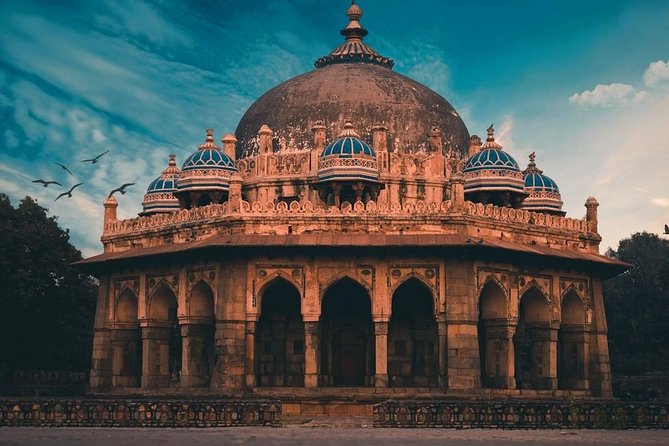
Delhi day starts strong with Humayun’s Tomb. It is a UNESCO World Heritage Site and is often described as one of the first garden-tomb styles in India. The guide’s framing is usually helpful here, because the tomb is not just a pretty structure, it is a blueprint of how royal Mughal funerary architecture evolved after Humayun.
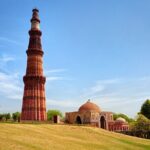
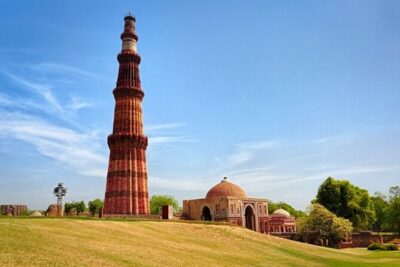
Next up is Qutub Minar, also UNESCO. It is a tall minaret built in 1192 with bricks, and it sits within the Qutub complex in Mehrauli. If you want a sense of Delhi’s long timeline, this is where the stones help you do it quickly, without needing extra side trips.
Then comes Swaminarayan Akshardham. Even though it was constructed in 2005, the architecture is built to feel much older. You get a modern scale with traditional-looking detail, which is an interesting contrast after the older UNESCO monuments.
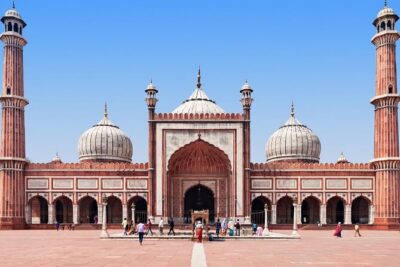
After that, you hit Jama Masjid, one of the world’s largest mosques, built in 1656 with help from 5000 workers. It faces the Red Fort area and sits in the middle of Chandni Chowk, so you are already in the neighborhood where street life is the main event.
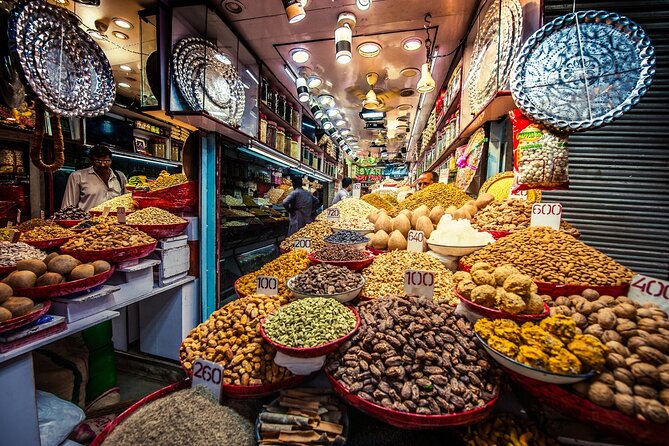
From here the day turns hands-on with Pasar Chandni Chowk, famous as Asia’s biggest and oldest market from the 17th century. Chandni Chowk is also called chandni chowk because it is lit all the time. There is even mention of special flea bazaars on Sundays, which gives the market a seasonal feel even if you do not plan around it.
A smart extra stop is the 1921 Tomb of the Unknown Soldiers, with the names of 13,300 Indian army servicemen carved on the walls who died in World War I. This is a quiet moment in the day that makes the monuments feel more grounded and human.
You also tour the planned New Delhi architecture associated with Sir Edwin Lutyens and Herbert Baker, created over a large central area in 1929. Since they also shaped much of New Delhi, it helps you understand why certain government-area buildings feel so deliberate and connected.
The day closes around Gandhi Smriti, marking the place where Gandhi spent much of his life and where he was assassinated. You get a clear historical anchor for the city, which helps when Delhi monuments start to blend together.
Practical note: You will likely do well with a comfortable pace here, but you should still expect a long walking loop mixed with multiple photo moments.
Delhi market time, mosque areas, and the one thing to watch
Chandni Chowk is one of the most fun parts of this itinerary because it is not just stone monuments. You get a real market experience, and you are taken through it by tuk-tuk or rickshaw. That is a good deal because the traffic and crowds can be exhausting on foot.
At the same time, I’d keep an eye on how free you feel during the market segment. In one version of this kind of tour, the Delhi guide experience included being taken to stores or a set restaurant, which is not everyone’s favorite. Your best move is simple: if you want snacks, shop at your speed, and say no politely to anything you did not ask for.
Jaipur, a few more ways to see it
- Jaipur Day Trip from Delhi by Car or Train – All Inclusive★ 5.0 · 663 reviews
- Jaipur City Private Day Tour from Delhi by Car – All Inclusive★ 5.0 · 589 reviews
- Private Golden Triangle Tour Delhi Agra Jaipur ( Top Rated )★ 5.0 · 436 reviews
- 3-Day Private Luxury Golden Triangle Tour to Agra and Jaipur From New Delhi★ 5.0 · 424 reviews
- 4-Days Private Golden Triangle Tour: Delhi, Agra & Jaipur by Car★ 5.0 · 406 reviews
Day 2 Agra: Sunrise Taj Mahal at 6 AM plus Agra Fort and Fatehpur Sikri
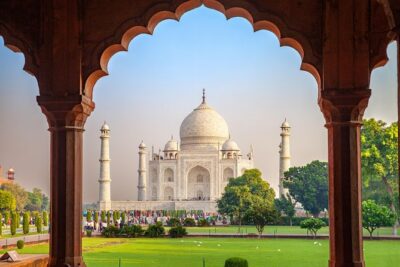
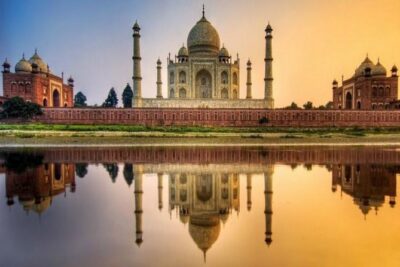
Day 2 is the star of the show because of the 6 AM Taj Mahal sunrise plan. The early pickup and the guide’s help with photo spots are key, because the Taj is more than an icon. Light changes fast in the morning, and the angle makes a huge difference in how the marble looks.
You get a window to watch the Taj come into view, then you can take photos without the later-day crowds feeling like the main attraction. Even if you have seen pictures already, seeing it in real morning light is what makes this stop land.
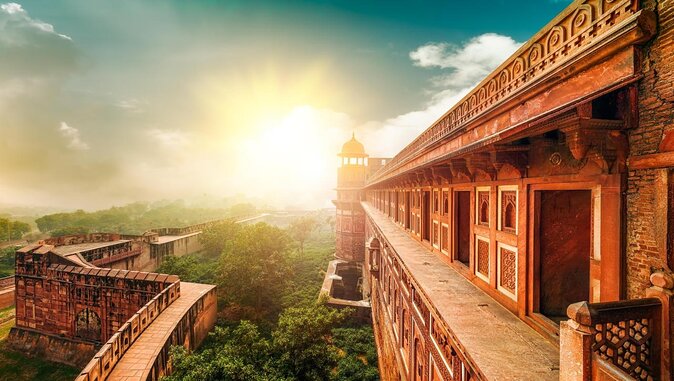
After Taj Mahal, you move to Agra Fort, another UNESCO site. The fort is significant because it is tied to the Mughal emperors, with early Mughal rulers living there until 1638, before the capital shifted to Delhi. This is a good pairing after the Taj because you go from a monument of love to the fortress that shows how power actually worked.
Then you continue on the way to Jaipur with a stop at Fatehpur Sikri. The itinerary sets aside about 4 hours, and it is described as a small city founded as the Mughal capital in 1571 by Emperor Akbar. This is one of those places where you can feel the rise-and-shift of empire in the empty space, not just in what is standing.
Tip for your photos: wear something breathable, because the outdoor portions can get hot even when you start early the day before with sunrise plans.
Day 3 Jaipur: Amber Palace, Jal Mahal photos, Jantar Mantar, Hawa Mahal
Jaipur day starts with Amber Palace, and you get around 2 hours there. Amber Fort is located in Amer, about 11 kilometers from Jaipur, so it is an easy win for your first stop. This is a place where the architecture feels built for looking impressive from a distance, and the scale helps you understand why it was chosen for royal life.
Then you take in Jal Mahal, the Palace on Lake. Entrance is prohibited at this building, but you can take great pictures of it. This kind of stop is a reminder that not every famous sight is meant for roaming. Sometimes the best value is just framing the structure with the right vantage point.
Next is Jantar Mantar, also known as an observatory. The itinerary notes it as a collection of nineteen architectural astronomical instruments built by Rajput king Sawai Jai Singh II and completed in 1734. Even with limited time, this is one of the clearer ways to see how mathematics and architecture came together in Jaipur.
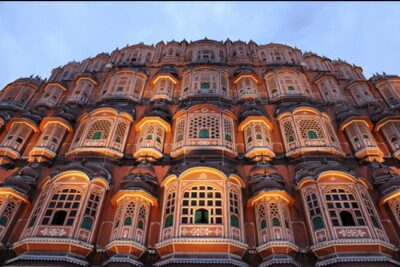
After that comes Hawa Mahal, or Palace of Winds. Again, entrance is prohibited, but you can take pictures of the exterior. The façade is the point here, and you will likely get the best results by stepping back and letting the honeycombed windows do the talking.
Finally, your Jaipur sightseeing wraps around 2 PM. If your departure is from Jaipur, you can head to Jaipur Airport. If your departure is from New Delhi, you travel back, with arrival noted around 8 PM for onward plans.
Price and logistics: what you really get for the cost
The headline price listed is $5.00 per person, which is extremely low compared with typical private touring costs. That said, the itinerary also notes that monument entrance fees depend on the option selected. So you should treat the low price as a starting point, then verify what you are actually paying for.
Here is what you can rely on from the package details:
- Hotel or airport pickup in Delhi
- Air-conditioned transportation with a chauffer
- Live tour guides at the sites
- Tuk-tuk or rickshaw ride at Chandni Chowk
- Complimentary water bottles and umbrellas
- Mobile ticket
- Group discounts (if applicable based on your group size)
What you should budget separately for:
- Accommodations
- Meals
- Tips and gratuities
- Any entrance fees that are not covered under your selected option
Value-wise, I think this tour works best when you want the structure of a guided plan and you do not want to manage tickets and timings yourself across three cities. If you already love independent travel and you are comfortable organizing taxis plus entry tickets on your own, you might compare costs carefully. But if you want someone to handle the sequencing and guide narration, this can feel like a bargain.
Also, the fact that a driver and guide are part of the experience is not a small detail in India. It reduces time wasted figuring out where to go next.
Who this private Golden Triangle tour fits best
This is a strong fit if you:
- Want a private format, not a group bus
- Prefer live guidance at multiple monuments rather than reading solo
- Care about being timed well for key moments like sunrise at Taj Mahal
- Appreciate transport included between Delhi, Agra, and Jaipur in a comfortable AC car
In terms of standout service, the itinerary’s feedback includes names like Ishaan as a tour guide in Agra and Amit as the driver moving between Delhi, Agra, and Jaipur. That is exactly the kind of reliability you want on a multi-day route, because smooth handoffs make the day feel controlled instead of chaotic.
Who might not love it:
- You want total freedom to wander without any direction during market hours
- You dislike early mornings, since Taj Mahal is set for about 6 AM
- You prefer entrance access to every major site, since Jal Mahal and Hawa Mahal are photo only in this plan
Timing tips so you do not feel rushed
This tour uses time like a tool. Taj Mahal sunrise is non-negotiable, so plan to be ready for an early pickup. Day 1 runs many stops with short time windows per site, so your best approach is to decide in advance what photos and angles matter most to you.
Bring layers if you get cold on early mornings, then you can adjust later when the day warms up. And since water and umbrellas are included, you can focus on comfort instead of hunting for supplies.
Should you book this 3-day Golden Triangle private tour?
I’d book it if your goal is the classic Golden Triangle with guided monument time, smooth city-to-city driving, and a schedule that hits the big names without you micromanaging. The mix of UNESCO stops in Delhi, Taj Mahal sunrise in Agra, and Jaipur’s Amber and observatory gives you variety in architecture and theme.
I would pause and compare if entrance fees are a big deal for you, because the package says monument entrance fees vary by option. Also, if you know you do not like being pushed toward shop stops, go in with a clear plan for what you want to do during Chandni Chowk time.
If you want a one-ride, one-plan way to see Delhi, Agra, and Jaipur at a quality level, this private tour design is a good match.
FAQ
Where does the pickup happen for this tour?
Pickup is offered from anywhere in Delhi, Noida, Gurgaon, Ghaziabad, Faridabad.
How long is the Golden Triangle tour?
The duration is approximately 3 days.
Is this a private tour?
Yes. It is listed as a private tour/activity, so only your group participates.
What transportation is included?
You get air-conditioned transportation with a chauffeur, plus a tuk-tuk or rickshaw ride at Chandni Chowk in Delhi.
Are monument entrance fees included?
Monument entrance fees are included depending on the option selected.
Does the tour include meals?
No. Meals are not included.
Are water bottles and umbrellas included?
Yes. Complimentary water bottles and umbrellas are included.
What time is Taj Mahal scheduled?
Taj Mahal is scheduled for sunrise at around 6 AM.
Can you enter Jal Mahal and Hawa Mahal?
Entrance is prohibited at both Jal Mahal and Hawa Mahal, but you can take pictures.
Is there free cancellation?
Yes, you can cancel for a full refund up to 24 hours in advance of the experience start time.
The Pink City, More Reviewed Days





The Golden Triangle, Longer and Shorter

Recently reviewed across New Delhi
- Golden Triangle – Delhi Agra and Jaipur
★ 5.0 · 10 reviews - Taj Mahal & Agra Tour by Indian Bullet Train All Inclusive
★ 4.5 · 10 reviews - Private Tour in Mehrauli Archaeological Park & Qutub Minar
★ 5.0 · 10 reviews - Old & New Delhi Tour
★ 5.0 · 10 reviews - From Delhi : Taj Mahal & Agra Fort Tour by Luxury Express Train
★ 5.0 · 10 reviews - Delhi Shopping Tour: Top Bazaars, Crafts & Souvenir Finds
★ 5.0 · 10 reviews
Golden Triangle Tours, compared.
 ★ 5.03-Days Private Golden Triangle Tour: Delhi, Agra & Jaipur by CarFrom $1271,098 reviews
 ★ 5.03-Day Delhi, Agra and Jaipur Private Tour – India Golden TriangleFrom $110812 reviews
 ★ 5.0Four-Day Private Luxury Golden Triangle Tour to Agra and Jaipur From New DelhiFrom $160807 reviews
 ★ 5.05 Nights 6 Days Private Golden Triangle Tour – Delhi Agra JaipurFrom $240574 reviews
 ★ 5.04 Days Golden Triangle TourFrom $146499 reviews
 ★ 5.0Private Car and Drive for Golden Triangle (4N/5D)From $167451 reviews
 ★ 5.0Private Golden Triangle Tour Delhi Agra Jaipur ( Top Rated )From $148436 reviews
 ★ 5.03-Day Private Luxury Golden Triangle Tour to Agra and Jaipur From New DelhiFrom $164424 reviews
Browse the lists this tour appears in