

REVIEW · GOLDEN TRIANGLE TOURS
3 Days Golden Triangle Private Tour
Three days, three cities, minimal planning. This private Golden Triangle setup strings together major sights across Delhi, Agra, and Jaipur with live guidance and smooth logistics. You get a smart mix of UNESCO monuments, classic architecture, and Old Delhi streets.
I especially love the flexible time slots idea, because it helps you match the tour flow to your energy and the day’s pace. Second, I like that you’re not stuck doing homework, the guide handles the storytelling while you focus on seeing. One thing to consider: you’ll be in a car a lot, and the schedule is tight, so comfortable shoes and a realistic attitude for early starts matter.
In This Review
- Key points before you go
- Golden Triangle, built for people who hate planning
- Choosing the right option, so you pay for what you actually want
- Day 1 in Delhi: UNESCO monuments plus Old Delhi contrasts
- Qutub Minar, Lotus Temple, and the grand capital views
- Agrasen Ki Baoli and Humayun’s Tomb
- Chandni Chowk, Jama Masjid, and the rikshaw ride
- Red Fort and the road to Agra
- Agra on Day 2: Taj Mahal inside time, Agra Fort, and the Baby Taj
- Taj Mahal early start and guided time inside
- Agra Fort and Itmad-ud-Daula
- Chand Baori, Abhaneri, and the stepwell effect
- Driving to Jaipur, then a full night
- Jaipur on Day 3: City Palace, Jantar Mantar, Hawa Mahal, and Jal Mahal
- Panna Meena ka Kund and Jal Mahal
- City Palace: the ceremonial heart
- Jantar Mantar UNESCO and the math behind the views
- Hawa Mahal quick stop
- Back to Delhi, or drop at Jaipur airport
- Guides and comfort: what makes the tour feel smooth
- Price and value: is $20 per person a good deal?
- Who this tour suits best
- Should you book this 3-day Golden Triangle private tour?
- FAQ
- How long is the Golden Triangle private tour?
- Is pickup and drop-off included?
- Do I need to pay for monument tickets?
- What type of transportation is used?
- Is this tour private or shared?
- Are meals included?
- Can I cancel for a full refund?
- What if weather is bad?
Key points before you go
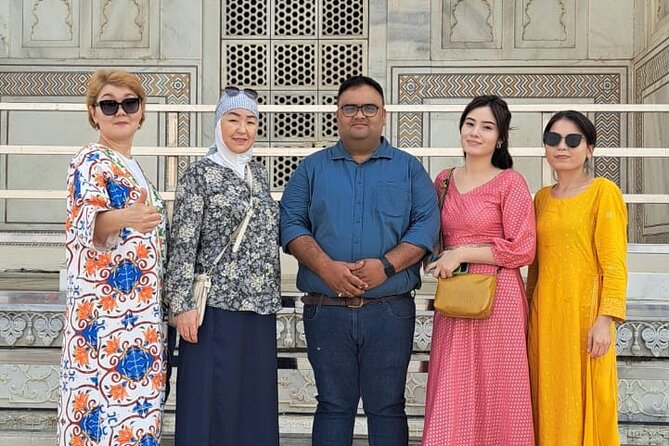
- Private group, your pace: Only your group participates, so the stops and timing feel more personal than on a big bus.
- Guide in each city: You get live interpretation for the monuments, so the sites connect instead of feeling like random photos.
- UNESCO-heavy days: Expect multiple World Heritage stops, including Qutub Minar, Humayun’s Tomb, Taj Mahal, Agra Fort, and Jantar Mantar.
- Taj Mahal with an early plan: The tour is built for a sunrise-style experience, then guided time inside.
- Car comfort matters: Air-conditioned private vehicle transport with fuel, tolls, and parking handled during the tour.
- Real Old Delhi texture: Chandni Chowk, Jama Masjid, and a short rikshaw ride put you close to the street-life side of Delhi.
Golden Triangle itineraries, three to eight days
Golden Triangle, built for people who hate planning
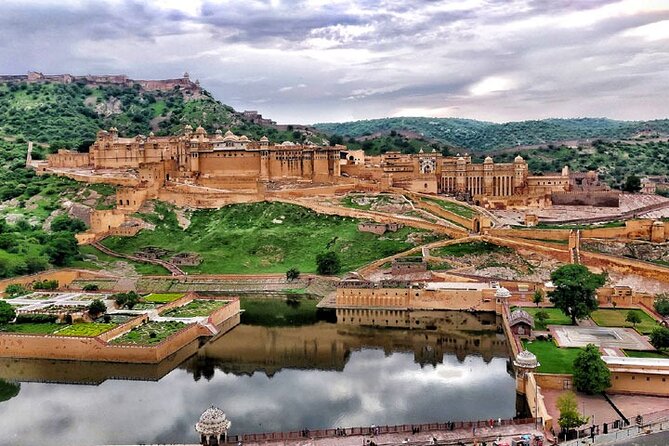
The biggest reason this 3-day Golden Triangle tour works is simple: it is structured like a guided checklist that still leaves room to breathe. You move from city to city with an AC car and a driver doing the navigation. Then you rely on a live guide to connect the why behind each monument, so you’re not just standing in front of pretty stone.
You’ll see the headline icons most people chase, like the Taj Mahal and Jantar Mantar, but the tour also threads in quieter, more specific stops. Places like Agrasen Ki Baoli and Itmad-ud-Daula add variety, because the Golden Triangle is not only forts and mausoleums.
The other strength is flexibility in how you start your day. Different time slots mean you’re not locked into one rigid routine from the first minute. That matters when you are trying to beat heat, avoid worst traffic windows, or simply match your travel rhythm.
Choosing the right option, so you pay for what you actually want
This tour is sold in different package styles, and that is a big deal for value. The description mentions choices like guide-only, a version with transportation, and a luxury package with hotel accommodation.
Here is how I’d think about it:
If you already booked your own hotels in Delhi, Agra, and Jaipur, you’ll likely want the option that keeps you moving but doesn’t duplicate lodging costs. If you want everything lined up, including accommodation, the luxury-style version is the easiest path. Either way, the base tour structure still focuses on the same core monuments.
Also pay attention to entrance tickets. The tour lists entrance tickets as included for monuments if you choose the all-inclusive setup, while some stops are marked as free. That means your final price can shift based on the option you select, so confirm what is included before you decide.
At $20 per person, the headline price feels low for a private 3-day loop with AC transport and live guides. The value becomes clearer once you see what’s included: pickup and drop-off assistance, private vehicle transport (with fuel, tolls, and parking), mineral water, and guide services. If you select the package that bundles hotel and entry tickets, you’re basically buying convenience plus on-the-ground expertise.
Day 1 in Delhi: UNESCO monuments plus Old Delhi contrasts
Day 1 is built to show Delhi in layers. You start with big, iconic landmarks, then shift into Old Delhi’s narrower streets later in the day. That pacing is smart, because it avoids the classic problem of doing only one kind of sightseeing in one day.
- Old & New Delhi City Tour – Half or Full Day Options Available★ 5.0 · 4,811 reviews
- Taj Mahal Tour from Delhi by Express Train (Viator Award Winner)★ 5.0 · 2,849 reviews
- Same Day Taj Mahal, Fort & Baby Taj Tour from Delhi by Car★ 4.9 · 2,534 reviews
- From Delhi: Taj Mahal and Agra Fort Private Sunrise Tour★ 4.9 · 2,270 reviews
- Sunrise Taj Mahal, Agra Fort & Baby Taj Tour from Delhi by Car★ 5.0 · 2,243 reviews
Qutub Minar, Lotus Temple, and the grand capital views
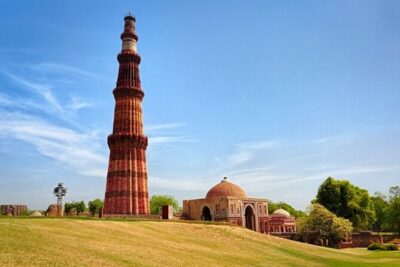
You begin at Qutub Minar, a UNESCO World Heritage site tied to the Delhi Sultanate. The description calls out the founder, Qutub Minar’s 1193 construction timeline, and even the idea that its design was influenced by the Minaret of Jam. You also get the key feature to look for: the spiral staircase inside.
Next is the Lotus Temple, known for its flower-like design and constructed in 1986. It is the kind of stop that breaks up the harder stone-and-fort mood, and it gives you a chance to reset while still seeing something unmistakably Delhi.
Then you pivot to the formal capital zone with India Gate, Parliament House, and Rashtrapati Bhavan. India Gate is a war memorial honoring British Indian soldiers. What I like about including these three together is that they show Delhi’s different face, from Mughal-era storytelling later on to modern national symbolism.
Agrasen Ki Baoli and Humayun’s Tomb
After the government and memorial sights, you visit Agrasen Ki Baoli, a medieval stepwell. You get a real sense of scale from the measurements: about 60 meters long and 15 meters wide. It’s a short stop, but it’s memorable because it feels older and more grounded than many landmark photo stops.
Then comes Humayun’s Tomb, another UNESCO site with ticket included. You get the core historical anchor: the monument was ordered in 1558 by Empress Bega Begum, Humayun’s chief consort. Humayun’s Tomb is often treated like a “prequel” to later Mughal design, so it helps you see how styles evolved as the empire’s architecture matured.
Chandni Chowk, Jama Masjid, and the rikshaw ride
Late in the day, Delhi shifts gears into Old Delhi. Chandni Chowk is described as a central shopping district where you’ll find dried fruit, spices, silver jewelry, and saris. The value here is not that you must shop. It’s that you get the street layout and the sensory rhythm, which makes the earlier monuments feel more connected to how people live today.
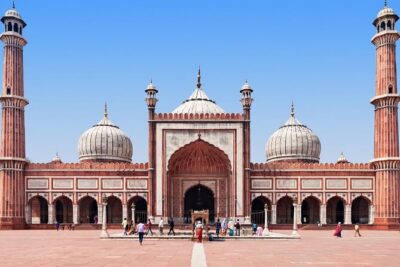
Right after that is Jama Masjid, a major Mughal-era mosque built between 1650 and 1656 by Shah Jahan. You spend about an hour and the ticket is included. This stop is a good reminder that Delhi’s great architecture is not only about rulers and empires, it also functions as a living place of worship.
Then you take a rikshaw tour in Old Delhi for about 30 minutes. This is one of those simple moments that adds motion and perspective. If you like photos, this is also often when guides help you position for shots, and the feedback on guides for this tour style has been strong on that front.
Red Fort and the road to Agra
You finish Delhi’s sightseeing with Red Fort, a medieval fort that served as the principal Mughal home for nearly 200 years until 1856. The stop is shorter, but it closes the loop on the Mughal thread that you started with Qutub Minar and Humayun’s Tomb.
Then it is time to drive to Agra via the Yamuna Expressway. You get a large block of travel time, and the schedule includes time for lunch at a nearby restaurant. That lunch is not listed as included, so plan to pay for it yourself.
When you arrive in Agra, you check into your hotel and the rest of the day is free. That free time is important. After a packed first day, you need a chance to recover, eat at your own speed, and avoid turning the trip into a nonstop sprint.
Agra on Day 2: Taj Mahal inside time, Agra Fort, and the Baby Taj
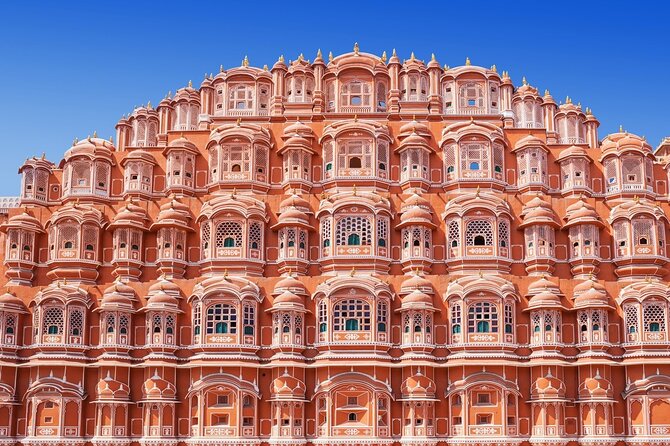
Day 2 is the big one. It centers on the Taj Mahal, then adds two forts and garden-scale architecture so you can see multiple sides of Mughal craft.
Taj Mahal early start and guided time inside
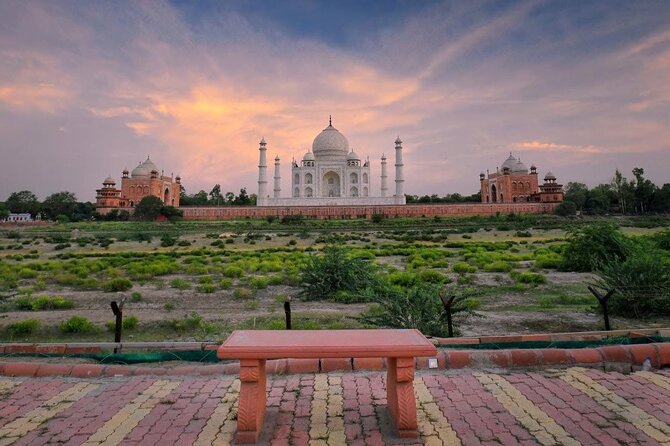
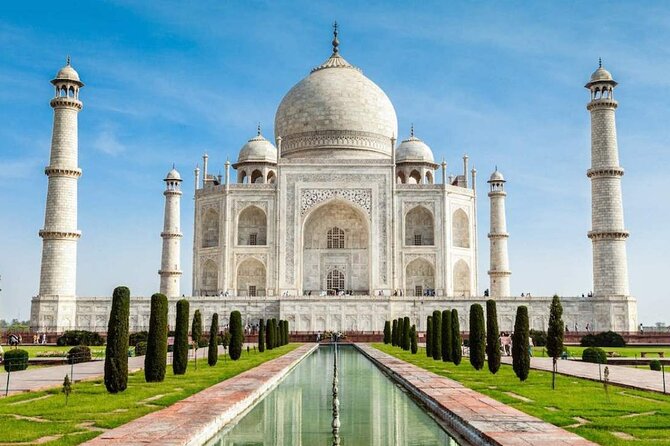
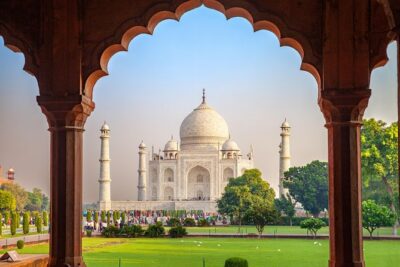
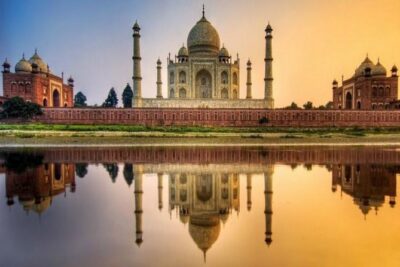
The day begins with an early plan aimed at sunrise viewing. The tour describes it as a guided Taj Mahal experience, with about two hours inside. That matters because the Taj can be overwhelming if you walk in with no context. A good guide turns the visit into a focused walk, pointing out design choices rather than letting you get lost in a sea of photo angles.
You also get enough time to slow down. Two hours is not just a quick look. It is a chance to notice symmetry, materials, and the way the complex works as a designed whole.
Agra Fort and Itmad-ud-Daula
After Taj Mahal, you visit Agra Fort, a UNESCO World Heritage site with ticket included. The description emphasizes the past and architecture, plus time to explore flats and structure details. This is the point where you see power in a different form. The Taj Mahal is romance and monumentality. Agra Fort is defense, administration, and the daily reality of rule.
Next is Itmad-ud-Daula, often called the Baby Taj. You get about 30 minutes and ticket included. The short duration works because this monument is detailed. It’s one of those stops where you don’t want to rush, but you also don’t want it to swallow your day.
Chand Baori, Abhaneri, and the stepwell effect
Then comes a detour that many Golden Triangle itineraries skip: Chand Baori in Abhaneri. This is a huge, elaborate stepwell from the 8th and 9th centuries, with 3,500 steps. The tour gives you about an hour.
This stop changes your mental map. After Taj Mahal and fort walls, the stepwell gives you geometry, repetition, and a different kind of historical engineering. It’s also a good place to stretch your legs if you’ve been sitting in the car for a while.
Driving to Jaipur, then a full night
At the end of Day 2, you drive to Jaipur and check into your hotel. The schedule allocates a long block for this transition, then you spend the night in Jaipur. The value of this structure is that Day 3 in Jaipur is also packed, so you want to arrive with at least some recovery time.
Jaipur on Day 3: City Palace, Jantar Mantar, Hawa Mahal, and Jal Mahal
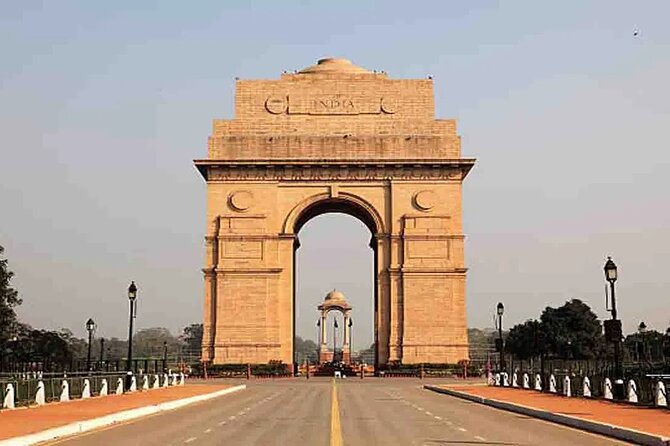
Day 3 focuses on Jaipur’s most recognizable sights, but it also includes a couple of stops that give variety beyond palace walls.
Panna Meena ka Kund and Jal Mahal
You start with Panna Meena ka Kund, a stepwell near Amber Fort. The stop is short, about 15 minutes, but it keeps the theme of Jaipur as a city where water architecture and design matter.
Then you visit Jal Mahal, the palace in the center of Man Sagar Lake. It is about 30 minutes and ticket included. The description notes that Maharaja Jai Singh II expanded and refurbished it in the 18th century. Even if you focus on photos, it is a good break from the palace-and-observatory rhythm of the later stops.
City Palace: the ceremonial heart
Next is the City Palace of Jaipur, a ceremonial and official residence built starting in 1721. You get about an hour, with ticket included. This is one of the best places to understand that Jaipur’s monuments aren’t just pretty backdrops. They were designed for power, events, and governance.
If you like a slow pace, City Palace gives you space to wander and absorb the layout without feeling rushed.
Jantar Mantar UNESCO and the math behind the views
Then comes Jantar Mantar, a UNESCO World Heritage site built in 1734 by Sawai Jai Singh II and described as an array of astronomical instruments. You get about an hour and ticket included.
This stop is great value for people who think architecture is only about decoration. Jantar Mantar is about measurement, sky knowledge, and design. A guide helps here, because otherwise it can feel like a set of odd structures with no story.
Hawa Mahal quick stop
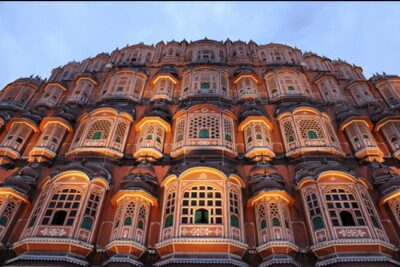
You finish Jaipur sightseeing with Hawa Mahal, the Palace of Wind. It is described as made of red and pink sandstone and includes a short stop, about 15 minutes, with admission listed as free.
Hawa Mahal is a photo magnet, so keep your expectations realistic. In a short time, you won’t take in everything. But as a final Jaipur stop, it works because it ties the color and design theme together.
Back to Delhi, or drop at Jaipur airport
The final leg is a drive of about five hours back to Delhi, or you can be dropped at the Jaipur airport. This is where you’ll want to be mentally ready to shift from sightseeing mode into travel mode. It is also a reminder that this is a fast, high-impact trip, not a slow cultural retreat.
Guides and comfort: what makes the tour feel smooth
This tour’s success seems to hinge on two things: the guide service and the way the day is timed.
I noticed in the supplied feedback that guides like Azhar, Ajahar (spelled that way in the notes), Mohammed Kadir, Rahul, Prya, and Arbab receive repeat praise for helping with history explanations and for being genuinely kind and helpful. In practical terms, that is what you want in a trip like this. When you have limited time, a guide who can explain quickly and answer questions makes each stop feel less like a checklist.
Comfort also matters. The tour includes an air-conditioned private vehicle during the tour period, plus mineral water bottles. You can’t eliminate long drives between Delhi, Agra, and Jaipur, but you can reduce discomfort, and that is what the AC transport does.
And one more detail: because this is a private tour, you’re not splitting attention between many unrelated groups. That tends to make questions easier and timing more flexible.
Price and value: is $20 per person a good deal?
The headline price is $20 per person, but value is not just the number. It is what you get for that number, and how easily you can reproduce it on your own.
You’re paying for:
- Pickup and drop-off assistance
- A private AC vehicle with fuel, tolls, and parking
- Live tour guide service in each city for the monuments
- Mineral water
- Entrance tickets of monuments if you choose the all-inclusive option
- Breakfast and dinner listed as included (2 each)
- Hotel accommodation listed for the hotel option
So if you pick a package that includes both hotels and entrance tickets, you’re effectively bundling the hard-to-organize parts: driving, timing, and guided interpretation.
The main reason to be careful is option selection. If you choose a guide-only package and then expect all entrances and hotels to be covered, you may end up paying extra. The tour description also mentions different time slots and different styles like guide-only and luxury with hotels, so double-check what your version includes before you commit.
Who this tour suits best
This is ideal for you if:
- You want a highly efficient Golden Triangle with minimal planning
- You like big-ticket sights with built-in context from a guide
- You prefer a private group setup over large buses
- You want the comfort of AC transport during the long stretches
It might be less ideal if:
- You hate early starts, because the Taj Mahal part is planned around sunrise-style timing
- You want lots of downtime in each city, because the schedule is packed and movement is frequent
Should you book this 3-day Golden Triangle private tour?
Yes, with a smart checklist.
Book it if you want a guided, monument-focused sweep that covers the main UNESCO hits across Delhi, Agra, and Jaipur, while keeping logistics manageable. The combination of live guide service, private AC transport, and a structure that includes Old Delhi street experiences, like Chandni Chowk and Jama Masjid, makes it feel more complete than a basic icon-only package.
Hold off if you’re the type who wants deep, slow exploration without driving days between stops. This tour is built for seeing a lot in three days, and that can feel intense.
If you do book, choose the option that matches your situation. Make sure you confirm whether entrance tickets and hotel accommodation are included in your chosen package, and plan your shoes and energy level for a schedule that moves.
FAQ
How long is the Golden Triangle private tour?
The tour runs for 3 days (approx.), covering Delhi, Agra, and Jaipur.
Is pickup and drop-off included?
Yes. Pickup and drop-off assistance is included.
Do I need to pay for monument tickets?
Entrance tickets are included if you choose the all-inclusive option. Some stops are listed as free, while others include tickets.
What type of transportation is used?
You travel in an air-conditioned private vehicle, including fuel, toll, and parking charges during the tour.
Is this tour private or shared?
It is private. Only your group participates.
Are meals included?
The package lists breakfast (2) and dinner (2) as included.
Can I cancel for a full refund?
Yes. You can cancel up to 24 hours in advance for a full refund.
What if weather is bad?
The experience requires good weather. If it is canceled due to poor weather, you are offered a different date or a full refund.
The Golden Triangle, Longer and Shorter




Recently reviewed across New Delhi
- Golden Triangle – Delhi Agra and Jaipur
★ 5.0 · 10 reviews - Taj Mahal & Agra Tour by Indian Bullet Train All Inclusive
★ 4.5 · 10 reviews - Private Tour in Mehrauli Archaeological Park & Qutub Minar
★ 5.0 · 10 reviews - Old & New Delhi Tour
★ 5.0 · 10 reviews - From Delhi : Taj Mahal & Agra Fort Tour by Luxury Express Train
★ 5.0 · 10 reviews - Delhi Shopping Tour: Top Bazaars, Crafts & Souvenir Finds
★ 5.0 · 10 reviews
Golden Triangle Tours, compared.
 ★ 5.03-Days Private Golden Triangle Tour: Delhi, Agra & Jaipur by CarFrom $1271,098 reviews
 ★ 5.03-Day Delhi, Agra and Jaipur Private Tour – India Golden TriangleFrom $110812 reviews
 ★ 5.0Four-Day Private Luxury Golden Triangle Tour to Agra and Jaipur From New DelhiFrom $160807 reviews
 ★ 5.05 Nights 6 Days Private Golden Triangle Tour – Delhi Agra JaipurFrom $240574 reviews
 ★ 5.04 Days Golden Triangle TourFrom $146499 reviews
 ★ 5.0Private Car and Drive for Golden Triangle (4N/5D)From $167451 reviews
 ★ 5.0Private Golden Triangle Tour Delhi Agra Jaipur ( Top Rated )From $148436 reviews
 ★ 5.03-Day Private Luxury Golden Triangle Tour to Agra and Jaipur From New DelhiFrom $164424 reviews
Browse the lists this tour appears in