
REVIEW · GOLDEN TRIANGLE TOURS
3 Days Golden Triangle Tour
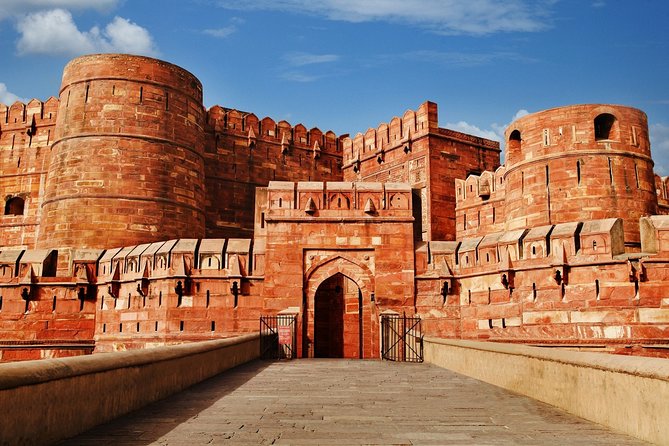
Golden Triangle, planned for you. This 3-day tour is interesting because it bundles hotel + transport + guided sightseeing across Delhi, Agra, and Jaipur, so you spend less time figuring out logistics. I also like that you get a different guide in each city, which keeps the commentary sharp and city-specific. One thing to watch: the Taj Mahal is closed for all visitors on Friday, so your exact travel dates matter.
On top of that, you start early (8:00 am), get pickup and drop-off, and cover major stops like Humayun’s Tomb, Qutub Minar, the Taj Mahal, Agra Fort, and Jaipur’s Amer Fort and Hawa Mahal without doing a spreadsheet. It is a classic Golden Triangle hit list, but the value comes from how tightly it is packaged: 2 nights’ accommodation with daily breakfast, plus air-conditioned private vehicle transfers and a professional private tour guide.
If you do decide to book, I’d suggest planning for meals on your own because lunch and dinner are not included. Also make sure the entrance-ticket choice is right for you, since monument admission is included only if you select the option that covers it.
In This Review
- Key Things That Make This Tour Work
- Golden Triangle, Minus the Headache: How the Format Feels
- Day 1 in Delhi: UNESCO and Imperial Icons, Then Old Delhi Markets
- Humayun’s Tomb and the Mughal-era Start
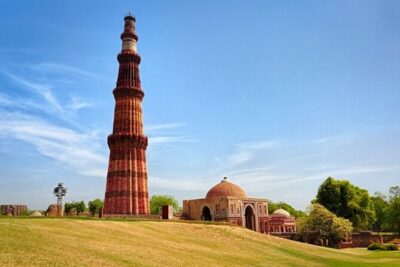
- Qutub Minar’s Height and Material Detail
- India Gate, Rashtrapati Bhavan, and Lutyens’ Delhi
- Jama Masjid and the Old Delhi Shift
- Chandni Chowk as Your Real-Life Delhi Reward
- Day 2 in Agra: Taj Mahal Day, Fort Views, and Fatehpur Sikri
- Taj Mahal: The Main Event, With a Date Warning
- Agra Fort: Red Sandstone Meets Marble Decorations
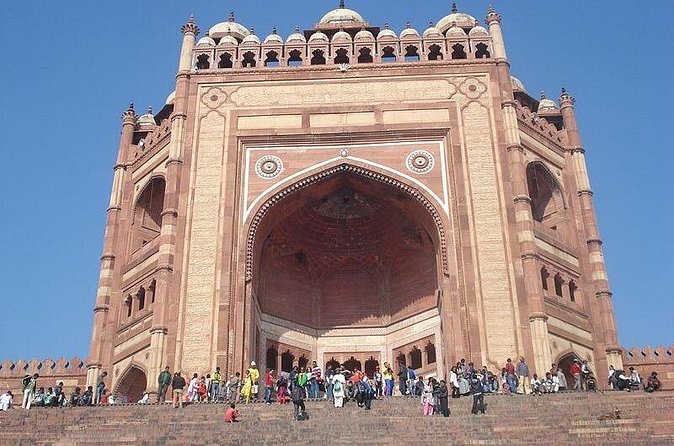
- Fatehpur Sikri: A Short-lived Capital You Can Feel
- Day 3 in Jaipur: Amer’s Fort Life, Palaces, Hawa Mahal, and Jantar Mantar
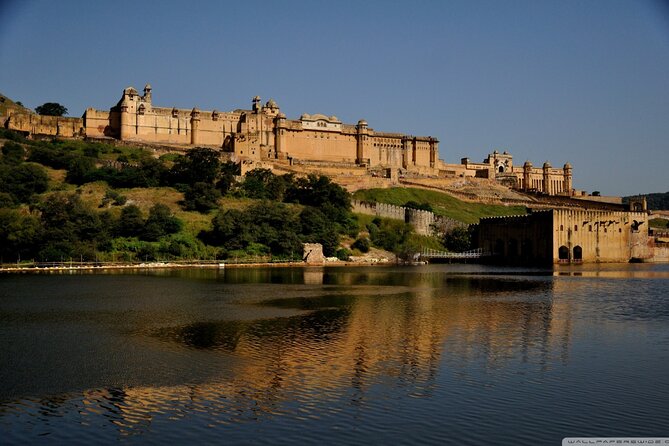
- Amber Palace (Amer Fort): The Fort That Defines the View
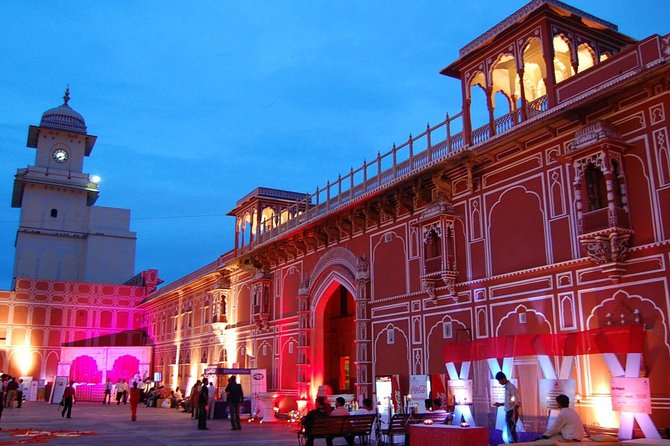
- City Palace: Where the Maharaja Ruled
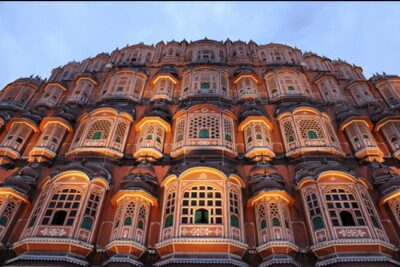
- Hawa Mahal: The Palace of Wind, Five Floors of Icon
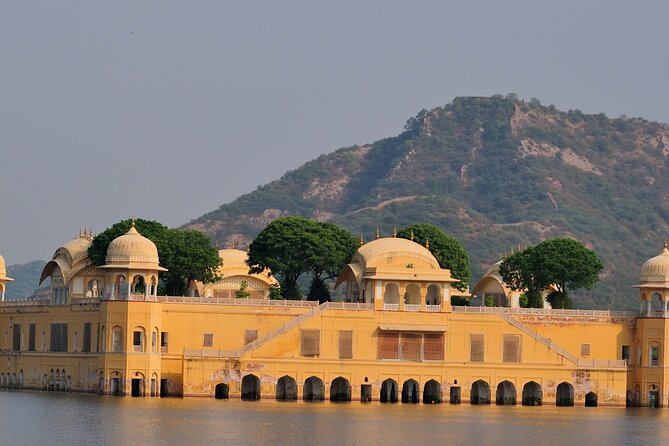
- Jal Mahal: A Lake-side Pause
- Jantar Mantar: Astronomical Instruments in Masonry
- Guides in Each City: The Real Secret to a Smooth Trip
- Tickets and Skip-the-Line: What You Should Confirm Before You Go
- Hotel Nights and Pacing: Two Nights, One Busy Triangle
- Price and Value at $181: What You Get, What to Budget
- Who Should Book This 3-Day Golden Triangle Tour?
- Should You Book It
- FAQ
- What time does the tour start?
- Are hotel pickup and drop-off included?
- Is accommodation included for the full 3 days?
- Are monument entrance fees included?
- Is the Taj Mahal always open?
- Can I cancel and get a refund?
Key Things That Make This Tour Work
- City-by-city guiding with professional private tour guides for focused commentary in Delhi, Agra, and Jaipur
- Hotel pickup and drop-off plus an air-conditioned private vehicle for comfortable transfers
- Two nights of twin-share accommodation with daily breakfasts if you choose the hotel-included option
- A big best-of list across UNESCO-era Delhi sights, Mughal landmarks in Agra, and Jaipur’s signature forts and palaces
- Taj Mahal date sensitivity since it is closed to visitors on Fridays
Golden Triangle itineraries, three to eight days
Golden Triangle, Minus the Headache: How the Format Feels
This is the type of tour that makes sense when you want the headlines of India’s Golden Triangle without constantly re-planning your day. You get round-trip support through pickup and drop-off, plus transport by air-conditioned private vehicle. That matters because these cities are not “walk out the door and see everything” places. Time on the road is real, and this format tries to protect your sightseeing time.
The other smart piece is how the tour is structured around a guide for each city. Instead of one person trying to cover everything from first stop to last stop, you get local context while you’re in each place. It is also easier to ask questions when the guide is right there, moving with you from monument to monument.
You should still keep expectations grounded. This is three days and a long list of sights. You will see a lot, but you are not doing “slow travel” here. If your travel style is to linger for hours at one site, you may find the pace a bit firm.
Day 1 in Delhi: UNESCO and Imperial Icons, Then Old Delhi Markets
Day 1 is all about Delhi contrasts, from UNESCO-listed Mughal-era grandeur to the older lanes of Old Delhi.
Humayun’s Tomb and the Mughal-era Start
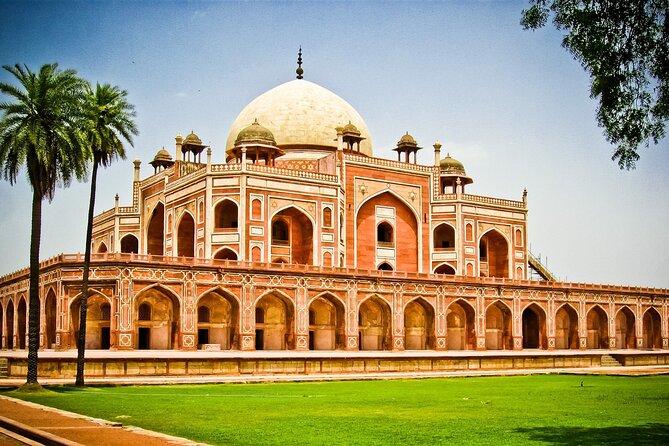
You begin with Humayun’s Tomb, a UNESCO heritage site. The key idea here is that it is presented as an epitome of beauty and described as the first of its kind to be built, which gives you a historical anchor for the rest of the Mughal-themed stops.
A practical note: this is a popular monument area, so going early helps you get your bearings before the day thickens. Even without getting into extra rules, the best approach is simple, dress comfortably and be ready for steady walking within each site area.
- Old & New Delhi City Tour – Half or Full Day Options Available★ 5.0 · 4,811 reviews
- Taj Mahal Tour from Delhi by Express Train (Viator Award Winner)★ 5.0 · 2,849 reviews
- Same Day Taj Mahal, Fort & Baby Taj Tour from Delhi by Car★ 4.9 · 2,534 reviews
- From Delhi: Taj Mahal and Agra Fort Private Sunrise Tour★ 4.9 · 2,270 reviews
- Sunrise Taj Mahal, Agra Fort & Baby Taj Tour from Delhi by Car★ 5.0 · 2,243 reviews
Qutub Minar’s Height and Material Detail
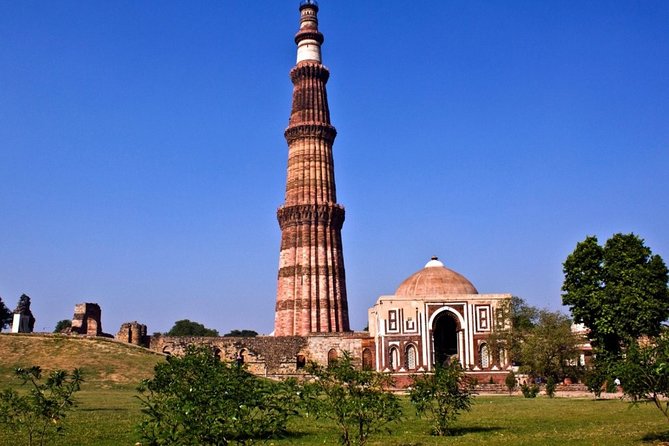
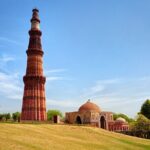
Next is Qutub Minar, a 73 m high tower made of red sandstone and marble. You are also told it is one of the most famous historical landmarks in India and noted as the highest brick minaret in the world. That is exactly the kind of detail that makes a stop feel more than just a photo moment.
This is a great place for your guide to do their job. When someone explains why the material and scale matter, you start seeing the monument as an engineering achievement, not only a skyline view.
India Gate, Rashtrapati Bhavan, and Lutyens’ Delhi
Then you move through central Delhi with India Gate, made by Edwin Lutyens in 1921. It is described as a memorial for members of the erstwhile British Indian Army who sacrificed. Nearby, you also pass Rashtrapati Bhavan, tied to Lutyens and Baker-inspired imperial architecture and built as the residence of the Viceroy and Governor General.
This section works well if you like “how cities got built” context. These landmarks show how Delhi layers different eras on top of each other. It can feel like you are watching the city evolve, even in a single day.
Jama Masjid and the Old Delhi Shift
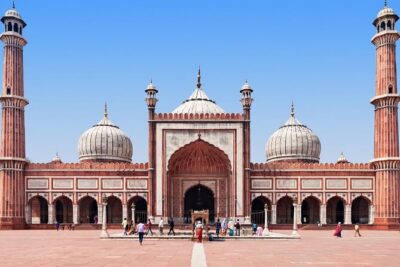
After that, you shift gears to Jama Masjid, built between 1650 and 1656 by Mughal emperor Shah Jahan. This stop gives you the Old Delhi feel that contrasts with the wide avenues of central Delhi.
One practical consideration: big religious sites can mean crowd flow and changing footpaths. Go with a patient mindset and let your guide handle timing.
Chandni Chowk as Your Real-Life Delhi Reward
You wrap day 1 at Chandni Chowk, described as a busy shopping area in the heart of Old Delhi, with markets full of spices, dried fruit, silver jewelry, and vivid saris.
This is where the tour becomes more than monuments. It gives you a taste of daily trade and local color. Even if you do not buy anything, you get that sensory sense of place.
Day 2 in Agra: Taj Mahal Day, Fort Views, and Fatehpur Sikri
Day 2 is built around Agra’s core Mughal highlights.
Taj Mahal: The Main Event, With a Date Warning
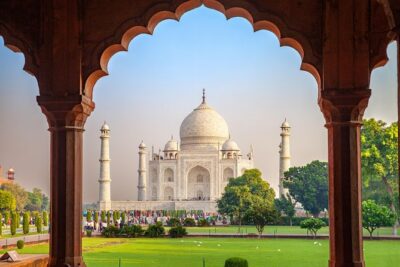
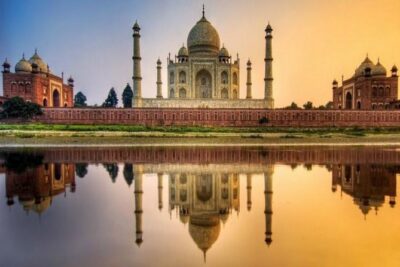
The star stop is the Taj Mahal, described as a mausoleum in white marble, built between 1631 and 1653 under Shah Jahan. If you want one monument that defines the Golden Triangle, this is it.
But I have to stress the one caution that can change your whole trip: Taj Mahal is closed for all visitors on Friday. If your dates land on a Friday, you should expect the tour plan to be impacted. This is not a minor detail. It can flip your value from a dream monument day to a schedule scramble.
Also, even when open, this is a high-attention site. Your best move is to keep your photo expectations realistic and focus on the guide’s explanation of what you are looking at.
Agra Fort: Red Sandstone Meets Marble Decorations
Next you visit Agra Fort, described as a massive fort built with red sandstone in the 16th century by Akbar, with later marble decorations added by Shah Jahan. It is also located on the bank of the Yamuna river, which helps you understand why it is positioned where it is.
This is a great counterbalance to the Taj Mahal. Instead of pure beauty, you get the sense of a fortified power center. The colors alone, red sandstone against lighter stone details, also make it visually easy to track.
Fatehpur Sikri: A Short-lived Capital You Can Feel
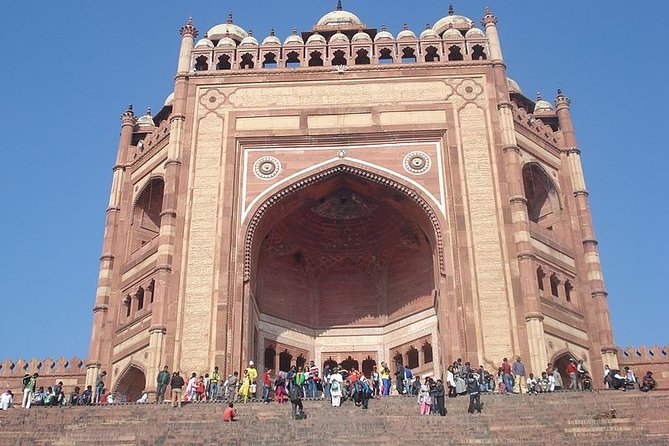
Then comes Fatehpur Sikri, an ancient fortified city 40 km west of Agra. It is described as a short-lived Mughal capital between 1572 and 1585 during Akbar’s reign. The “short-lived capital” angle makes it intriguing because you can imagine a place designed for authority that did not last forever.
A stop like this works best when you can zoom out and ask, why did they build here, and why did it change? A guide helps you hold the storyline in your head without needing to research every stone.
Day 3 in Jaipur: Amer’s Fort Life, Palaces, Hawa Mahal, and Jantar Mantar
Jaipur day is where the tour leans into Rajasthan-style landmarks.
Amber Palace (Amer Fort): The Fort That Defines the View
You start with Amber Palace, also referred to as Amer Fort. It is described as one of Rajasthan’s most famous forts, originally the capital before Jaipur, built in 1592 by Raja Man Singh. The distance from Jaipur (about 11 km) is not huge, but it does mean the transfer is part of your day.
Fort days are sometimes tiring, but this one has built-in variety. You get a sense of power and residence, and then the tour moves you quickly into palaces and city monuments.
City Palace: Where the Maharaja Ruled
Next is the City Palace of Jaipur, located in the Pink City. It is described as where the Maharaja reigned, and it includes named parts like Chandra Mahal and Mubarak Mahal.
Even with limited time, a named complex can be easier to appreciate. When you hear what spaces were used for, the palace stops feel less like random buildings and more like a functional set.
Hawa Mahal: The Palace of Wind, Five Floors of Icon
Then you see Hawa Mahal, described as the Palace of Wind. It is a five-storey palace built in 1799 by Maharaja, with the monument known for its distinctive identity in Jaipur.
If you like quick iconic stops, this is ideal. If you prefer deep, slow exploration, take a moment to let your guide frame it. It helps you understand why it is so recognizable.
Jal Mahal: A Lake-side Pause
You also stop at Jal Mahal, located in the middle of Man Sagar Lake, described as a palace 4 km from Jaipur on the Amer Jaipur road.
Even though the listed time is short, this works as a visual reset between fort and palace stops. It is the kind of scene that changes your photo style, from architectural angles to water setting.
Jantar Mantar: Astronomical Instruments in Masonry
Finally, you visit Jantar Mantar in Jaipur, described as an astronomical observation site built in the early 18th century with about 20 main fixed instruments. The big takeaway is that it is explained as monumental examples in masonry of known instruments.
This is a smart ending because it switches your brain from “palace and fort” to “science in stone.” It is also the kind of site where a guide can make simple ideas click, even if you are not an astronomy person.
Guides in Each City: The Real Secret to a Smooth Trip
The tour’s most praised element is how well the guides handle the day. In the examples shared for this tour, guides like Gaurav Kashyap in Delhi, Abdul Qadir in Agra, and Bipin in Jaipur are mentioned as knowledgeable and able to accommodate different needs, including elderly parents. The pattern is consistent: guides answer questions quickly and adjust to the group’s comfort levels.
Here is why that matters to you. In the Golden Triangle, your biggest risk is not getting lost, it is getting bored or frustrated. A good guide prevents both by keeping the route understandable and the stops meaningful. Also, when you have an older family member, timing and pacing are everything. A guide who can adapt helps you keep the trip from turning into “everybody hurry, everybody suffer.”
If you want to get the most out of the tour, ask your guide early. Request quick context for each stop, and ask one question that connects two sites. That turns a checklist into a story.
Tickets and Skip-the-Line: What You Should Confirm Before You Go
The tour includes a promise of skip-the-line entry to all monuments, and it also lists monument entrance fees as included only if you select the option that covers admissions. So here is the practical takeaway:
- If you want the most stress-free experience, choose the option that includes monument entrance fees.
- If you rely on skip-the-line access, confirm that the ticket option is aligned with that benefit.
One more date-specific reality check: Taj Mahal is closed on Fridays. Even if other parts of the schedule are intact, this closure is the one ticket-related issue that can change the feel of day 2.
Hotel Nights and Pacing: Two Nights, One Busy Triangle
You get 2 nights accommodation in a twin-share setup with breakfast, but only if you picked the option that includes hotels. That structure is what makes the price feel reasonable. You are not just paying for entry fees and sightseeing, you are also paying to sleep in the middle of the trip.
Still, be honest about pacing. Three days across three major cities means you will be moving. The upside is that the tour handles the transfers by air-conditioned private vehicle. The downside is you are unlikely to do long, unscheduled detours unless your guide builds them in.
If you hate being rushed, you can counter it by using micro-pauses. Spend a few minutes at the start of each stop, let your guide talk, then decide if you want extra time at viewpoints or shops.
Price and Value at $181: What You Get, What to Budget
At $181 per person, the headline value is that the tour bundles many costly items into one package: hotel for two nights (depending on option), transfers by private air-conditioned vehicle, a professional private guide, and hotel pickup and drop-off. There are also taxes included in the price.
What is not included is equally important. The tour lists lunch and dinner as not included, plus drinks. So you should budget daily meal costs on top.
Also, monument entrance fees are included only when you choose the admissions-included option. If you skip that, you might pay more separately at sites. Either way, your budget should reflect those decisions.
If you want “maximum convenience for the money,” this is one of the better ways to package the Golden Triangle. You are paying to remove friction: getting to each landmark, getting a guide, and getting the overnight pieces handled.
Who Should Book This 3-Day Golden Triangle Tour?
This one fits best if you:
- Want the big-name highlights across Delhi, Agra, and Jaipur without stitching together multiple tours
- Appreciate a private guide with guidance at each city’s main monuments
- Prefer pickup and drop-off plus air-conditioned private transport
- Plan to handle your own lunch and dinner
It may not be your match if you:
- Travel on a Friday and specifically want the Taj Mahal on day 2
- Like long free time where you roam far beyond a set route
- Have very strict needs for a slower pace at each stop
Should You Book It
I think you should book if you want the Golden Triangle’s main sights in a format that keeps your brain free for enjoying the monuments. The biggest win is the guided, private, city-by-city structure paired with two nights of accommodation and transfers handled for you.
If you do book, double-check two things before payment:
1) Whether your dates include a Friday, since Taj Mahal closure is a game-changer.
2) Whether you selected the option that includes monument entrance fees, so the day does not turn into surprise payments.
FAQ
What time does the tour start?
The tour start time is 8:00 am.
Are hotel pickup and drop-off included?
Yes. Hotel pickup and drop-off are included.
Is accommodation included for the full 3 days?
You get 2 nights of accommodation on a twin-share basis with breakfast, but this is only included if you book with the option that includes hotels.
Are monument entrance fees included?
Monument entrance fees are included only if you choose the option that includes admissions. If you do not choose that option, the stop descriptions indicate admission tickets may not be included.
Is the Taj Mahal always open?
No. The Taj Mahal is closed for all visitors on Friday.
Can I cancel and get a refund?
You can cancel up to 6 days in advance of the experience for a full refund. If you cancel 2 to 6 days before, you receive a 50% refund, and less than 2 days before is not refundable.
The Golden Triangle, Longer and Shorter




Recently reviewed across New Delhi
- Golden Triangle – Delhi Agra and Jaipur
★ 5.0 · 10 reviews - Taj Mahal & Agra Tour by Indian Bullet Train All Inclusive
★ 4.5 · 10 reviews - Private Tour in Mehrauli Archaeological Park & Qutub Minar
★ 5.0 · 10 reviews - Old & New Delhi Tour
★ 5.0 · 10 reviews - From Delhi : Taj Mahal & Agra Fort Tour by Luxury Express Train
★ 5.0 · 10 reviews - Delhi Shopping Tour: Top Bazaars, Crafts & Souvenir Finds
★ 5.0 · 10 reviews
Golden Triangle Tours, compared.
 ★ 5.03-Days Private Golden Triangle Tour: Delhi, Agra & Jaipur by CarFrom $1271,098 reviews
 ★ 5.03-Day Delhi, Agra and Jaipur Private Tour – India Golden TriangleFrom $110812 reviews
 ★ 5.0Four-Day Private Luxury Golden Triangle Tour to Agra and Jaipur From New DelhiFrom $160807 reviews
 ★ 5.05 Nights 6 Days Private Golden Triangle Tour – Delhi Agra JaipurFrom $240574 reviews
 ★ 5.04 Days Golden Triangle TourFrom $146499 reviews
 ★ 5.0Private Car and Drive for Golden Triangle (4N/5D)From $167451 reviews
 ★ 5.0Private Golden Triangle Tour Delhi Agra Jaipur ( Top Rated )From $148436 reviews
 ★ 5.03-Day Private Luxury Golden Triangle Tour to Agra and Jaipur From New DelhiFrom $164424 reviews
Browse the lists this tour appears in