
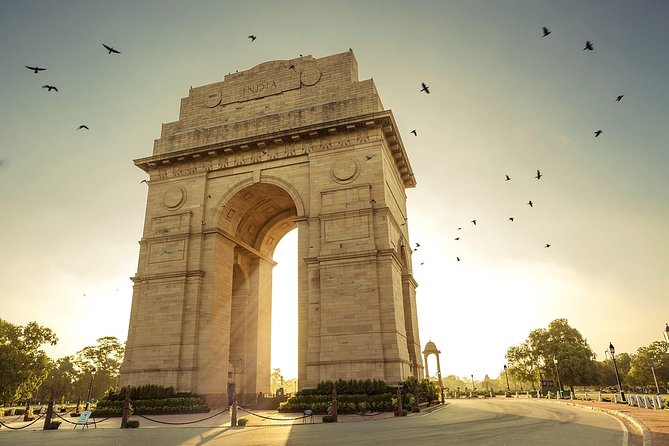
REVIEW · GOLDEN TRIANGLE TOURS
5 Days Golden Triangle Tour. Delhi-Agra-Jaipur-Delhi
Golden Triangle trips can feel like a checklist. This one balances big monuments with a calmer, guided pace across Delhi, Agra, and Jaipur. You’ll ride in a private air-conditioned car, get a city guide, and hit the main sights with smart timing instead of sprinting all day.
What I like most is the private, air-conditioned transport that keeps travel days from turning into a sweaty guessing game. I also like that your plan builds in the must-see moments, including a sunrise-style Taj Mahal visit that fits the lighting and the crowd rhythm. One thing to consider: monument entry fees are not included for many stops, so you should budget extra, and confirm what is included for hotel nights.
In This Review
- Key points before you go
- A 5-day Golden Triangle plan that keeps you moving, not frazzled
- Price and what you’re really paying for at $300 per person
- Your Delhi Day 1: Old Delhi classics plus UNESCO and modern calm
- Jama Masjid, then a rickshaw ride that hits the senses
- Humayun’s Tomb and the idea of Mughal gardens
- Raj Ghat, then Qutub Minar for the vertical wow factor
- Lotus Temple for a modern spiritual reset
- Day 2 Delhi evening: Birla Mandir and a chance to see worship in action
- Jaipur Day 3: Amber Palace, City Palace, and Jantar Mantar in one connected arc
- Amber Palace for Rajput grandeur
- Jal Mahal photo stop, short and sweet
- City Palace and the royal complex feel
- Jantar Mantar: science-looking architecture
- Day 4 Abhaneri’s Chand Baori and Agra Fort for the non-cookie-cutter edge
- Chand Baori step well: 3,500 steps and a deep sense of scale
- Agra Fort for Mughal-era power behind stone walls
- Day 5 Taj Mahal at sunrise: the light, the timing, and how to enjoy 2 hours
- The guide factor: why Prashant and Vishal come up again and again
- What to budget and plan for day-to-day
- Should you book this Golden Triangle tour?
- FAQ
- What cities does the 5-day Golden Triangle tour cover?
- How long is the tour?
- Is pickup offered?
- Is this a private tour?
- Will I travel in an air-conditioned vehicle?
- Are monument tickets included?
- Are hotel stays included?
- Is there a city guide and other included items?
- Does the tour provide a mobile ticket?
- What is the cancellation policy?
Key points before you go

- Air-conditioned private car keeps the long city-to-city days comfortable and predictable
- A guide-in-the-driver-seat helps you understand what you’re seeing, not just where to stand for photos
- Old Delhi to modern Delhi in one day gives you a real sense of how the city changes street to street
- Jaipur sights that connect palace power to scientific landmarks like Jantar Mantar
- Day 5 focuses on the Taj, with a sunrise time slot built into the schedule
Golden Triangle itineraries, three to eight days
A 5-day Golden Triangle plan that keeps you moving, not frazzled
If you’re visiting North India for the first time, a Golden Triangle route is the fastest way to grasp the region’s layers. This version does it in about 5 days, starting in Delhi and ending back in Delhi, with stops that cover Mughal-era highlights, Rajput architecture, and the famous UNESCO sites in Agra.
The tour is set up as a private experience, so you’re not trapped in the loud, slow rhythm of a big group. You also have that go-at-your-own-pace feeling because you’re in a private car with a guide who can pace the day around questions and timing. That matters when Delhi traffic is doing its own thing.
Price and what you’re really paying for at $300 per person

At about $300 per person for the 5-day experience, you’re paying for the structure and the logistics: private transportation, a city tour guide, and packaged drinking water. The plan also states that all fees and taxes are included, which can make budgeting easier on the road.
But monument tickets are a separate line item. The schedule marks several sights as admission not included, even though some other stops are free or marked as free on the day plan. So the best way to think about value here is simple: you’re getting the guide, the car, and the curated route, then you handle most individual entries.
There’s one more check you should do before you commit. The description says three-star hotels with breakfast are included, but the pricing breakdown also lists accommodation as not included. That doesn’t mean the deal is bad, it means you need to confirm what your exact booking includes for hotel nights and breakfast.
Your Delhi Day 1: Old Delhi classics plus UNESCO and modern calm
Day 1 is a full Delhi sampler with a mix of religion, history, and iconic city views. It’s packed, but it’s also logical: you start with one of India’s grand mosque experiences, then move into the markets, then pivot to Mughal gardens and memorial sites, and finish with two major landmarks that feel totally different from each other.
Jaipur, a few more ways to see it
- Jaipur Day Trip from Delhi by Car or Train – All Inclusive★ 5.0 · 663 reviews
- Jaipur City Private Day Tour from Delhi by Car – All Inclusive★ 5.0 · 589 reviews
- Private Golden Triangle Tour Delhi Agra Jaipur ( Top Rated )★ 5.0 · 436 reviews
- 3-Day Private Luxury Golden Triangle Tour to Agra and Jaipur From New Delhi★ 5.0 · 424 reviews
- 4-Days Private Golden Triangle Tour: Delhi, Agra & Jaipur by Car★ 5.0 · 406 reviews
Jama Masjid, then a rickshaw ride that hits the senses
You begin at Jama Masjid, described as the largest mosque in India, with a courtyard that can hold more than 25,000 people. Arrive ready to soak in scale. Even if you’re not religious, the architecture and courtyard feel like walking into a city within a city.
Next comes Chandni Chowk, reached via a short rickshaw ride. The plan targets the market’s 17th-century roots under Shah Jahan, and this is one of those moments where you learn fast how Delhi commerce works. If you tend to overpack on tours, this is the day to keep things light, because the market streets can be crowded and full of visual noise.
Humayun’s Tomb and the idea of Mughal gardens
After Old Delhi, you move to Humayun’s Tomb, the tomb of Mughal emperor Humayun. It’s called the first garden-tomb on the Indian subcontinent, and it’s a UNESCO Heritage Site. This stop is a breather in the best way: it shifts the feel from market energy to designed space and symmetry.
A practical note: Humayun’s Tomb is marked admission not included on the day plan, so you’ll want to plan for that cost if it applies to your booking.
Raj Ghat, then Qutub Minar for the vertical wow factor
You continue to Raj Ghat, the resting place of Mahatma Gandhi. It’s a quieter stop than the bazaars, and it gives the day a moral and historical anchor.
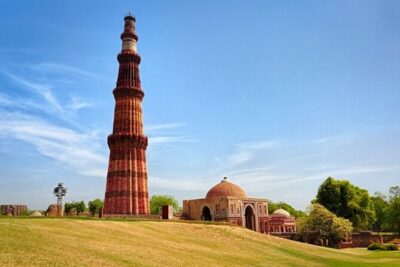
Then you head to Qutub Minar, noted as the tallest brick minaret in the world. If you like architecture with a strong silhouette, this is one of the best ways to understand Delhi’s skyline influence. The height is the point here, even before you start reading details.
Lotus Temple for a modern spiritual reset
You end with the Lotus Temple, a Bahá’í House of Worship open to all regardless of religion. This is a nice contrast stop after Qutub Minar because the atmosphere flips from ancient stone and towering minarets to a calm, geometric space.
This temple is marked free on the plan, which is always a nice bonus when your budget is already thinking about monument tickets.
Day 2 Delhi evening: Birla Mandir and a chance to see worship in action

Day 2 is lighter, and that’s a good thing. In the evening, you can visit Birla Mandir to attend an evening ceremony. The temple is dedicated to Lord Vishnu (Narayan) and Lakshmi, goddess of wealth, and the timing here is what makes it feel different from daytime sightseeing.
This is the kind of stop that works well if you like culture in motion rather than culture behind glass. The plan marks the Birla Mandir visit as free, so your main decision is whether the ceremony timing fits what you want that evening.
Jaipur Day 3: Amber Palace, City Palace, and Jantar Mantar in one connected arc

Jaipur on Day 3 is a day of big visuals, and it’s also a day that connects different sides of Rajput power. You start with the fortified palace world, then you get a quick water-and-photo moment, then you move into the city’s royal heart, and finish with Jantar Mantar, which looks like art but is about measuring the sky.
Amber Palace for Rajput grandeur
You visit Amber Palace, described as the principal tourist attraction in Jaipur. It was the residence of Rajput Maharajas and their families, and the architecture is shaped by Mughal influence. This isn’t just a pretty palace. It’s a way to understand how wealth and defense and status all lived in the same space.
Amber Palace is marked admission not included in the schedule, so budget for the entry fee.
Jal Mahal photo stop, short and sweet
Jal Mahal is a drive-past with an optional 10-minute picture stop. This is a helpful reminder that not every “highlight” has to take a full chunk of your day. If you like water views, grab the quick photos and keep moving, because the day still has major indoor and outdoor highlights.
The plan marks this as free for the picture stop.
City Palace and the royal complex feel
Next is the City Palace of Jaipur, established alongside the city by Maharaja Sawai Jai Singh II. The complex includes multiple buildings, courtyards, galleries, and more. You’ll feel the royal presence here, but in a more grounded way than the fortress palaces, because the complex ties directly to how Jaipur functioned.
City Palace is marked admission not included, so again, plan for tickets.
Jantar Mantar: science-looking architecture
You finish with Jantar Mantar, described as an equinoctial sundial with a gigantic triangular gnomon and quadrant elements. If you’ve ever wondered how people measured time and the sky before smartphones, this place makes the logic visible.
The schedule marks it admission not included, so it’s another likely ticket cost. For me, that’s worth planning for because it’s not the kind of sightseeing you can fake at home.
Day 4 Abhaneri’s Chand Baori and Agra Fort for the non-cookie-cutter edge
If your Golden Triangle route usually stays on only the headline monuments, Day 4 adds a smart curveball. It also sets you up for Agra with a different kind of “wow” before you even reach the Taj.
Chand Baori step well: 3,500 steps and a deep sense of scale
You visit Chand Baori in Abhaneri, a step well made of 3,500 narrow steps over 13 stories. It extends about 30 meters into the ground, which is the kind of detail that makes you pause and look twice.
The schedule marks this as admission not included, so it’s another ticket to budget for. But the pay-off is real because step wells feel special on the ground, not just in photos.
Agra Fort for Mughal-era power behind stone walls
Then you head to Agra Fort, a UNESCO World Heritage Site built between 1565 and 1573 for Mughal emperor Akbar. This fort is more about atmosphere than quick photo stops. You feel the strategic intent of the walls and design, and it rounds out Agra beyond just the Taj Mahal spotlight.
Agra Fort is marked admission not included in the plan. Plan your time and energy for more walking, since fort complexes can cover ground.
Day 5 Taj Mahal at sunrise: the light, the timing, and how to enjoy 2 hours
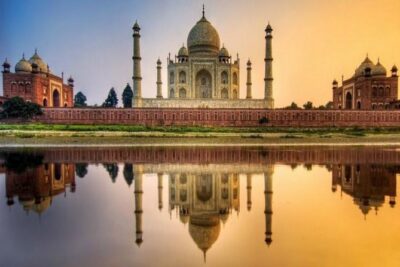
Day 5 is built around Taj Mahal, with a sunrise visit. The plan emphasizes that early light turns the dome a soft golden color, which is exactly the kind of effect that makes the Taj look different from normal daytime photos.
The visit time is about 2 hours. With that window, you’ll get time to see the main complex from key angles, take photos, and still step back and actually look at details instead of racing.
Monument admission is marked not included, so budget for entry. Also, sunrise means an early start, so set yourself up the night before with easy packing. If you’re the type to fumble with passports and tickets, do that prep early and keep your bag simple.
The guide factor: why Prashant and Vishal come up again and again
One of the biggest practical wins in this kind of tour is having a guide who handles the human side, not just the facts. In the feedback tied to this experience, guides such as Prashant and Vishal are repeatedly described as going out of their way for safety, logistics, and communication.
You’ll feel that most when the day gets complicated, like when traffic is chaotic or you want help with timing for a major photo moment. One notable example from the provided details is support around organizing a photo shoot at the Taj, which can make a difference if you care about getting the right timing without stress.
What to budget and plan for day-to-day
Because monument tickets are often not included, I recommend treating this tour as a package plus pay-as-you-go entries. The schedule marks some stops as free, including Jama Masjid, the Chandni Chowk rickshaw experience, Raj Ghat, Lotus Temple, Birla Mandir, and the Jal Mahal picture stop, but many big-ticket sites are marked as admission not included.
Also keep this in mind: the tour includes an air-conditioned vehicle, packaged drinking water, and a city tour guide. Those add real comfort and reduce hassle. You still want personal cash for small purchases and extra snacks, and you should wear comfortable shoes, because several stops are on foot.
Should you book this Golden Triangle tour?
Book it if you want a private, well-paced way to cover Delhi, Agra, and Jaipur without building a route from scratch. The mix of Old Delhi markets, UNESCO landmarks, Rajput palaces, and the sunrise Taj makes this a good fit for first-timers who want big hits with a guide’s context.
Skip or adjust if you hate early mornings, or if you want a plan that includes monument entry fees for everything with no extra budgeting. Also, because the details mention both hotel inclusion and hotel exclusion, confirm your exact package before you pay, so you know whether accommodation and breakfast are included for your dates.
If you do book, you’ll get the best experience by coming in with one priority per city. Delhi for context, Jaipur for palaces and science landmarks, Agra for the Taj moment, and then enjoy the ride between them.
FAQ
What cities does the 5-day Golden Triangle tour cover?
It follows a route that includes Delhi, Agra, and Jaipur, with the trip starting in Delhi and ending back in Delhi.
How long is the tour?
The duration is about 5 days (approx.).
Is pickup offered?
Yes, pickup is offered.
Is this a private tour?
Yes. It is a private tour/activity, so only your group will participate.
Will I travel in an air-conditioned vehicle?
Yes. Transportation is provided in a comfortable air-conditioned private car.
Are monument tickets included?
Monument tickets are not included according to the tour’s listed exclusions. Some specific stops are marked free or included on the day plan, but many major sites are listed as admission not included.
Are hotel stays included?
The description mentions accommodation in three-star hotels with breakfast, but the exclusions list says accommodation is not included. You should confirm what applies to your specific booking.
Is there a city guide and other included items?
Yes. A city tour guide is included, along with all fees and taxes, private transportation, and packaged drinking water.
Does the tour provide a mobile ticket?
Yes. A mobile ticket is included.
What is the cancellation policy?
Free cancellation is available up to 24 hours in advance for a full refund. If canceled less than 24 hours before the start time, the amount paid is not refunded. If it’s canceled due to poor weather, you’ll be offered a different date or a full refund.
The Pink City, More Reviewed Days





The Golden Triangle, Longer and Shorter

Recently reviewed across New Delhi
- Golden Triangle – Delhi Agra and Jaipur
★ 5.0 · 10 reviews - Taj Mahal & Agra Tour by Indian Bullet Train All Inclusive
★ 4.5 · 10 reviews - Private Tour in Mehrauli Archaeological Park & Qutub Minar
★ 5.0 · 10 reviews - Old & New Delhi Tour
★ 5.0 · 10 reviews - From Delhi : Taj Mahal & Agra Fort Tour by Luxury Express Train
★ 5.0 · 10 reviews - Delhi Shopping Tour: Top Bazaars, Crafts & Souvenir Finds
★ 5.0 · 10 reviews
Golden Triangle Tours, compared.
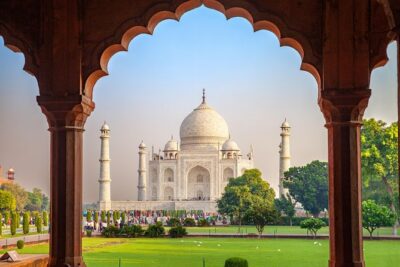 ★ 5.03-Days Private Golden Triangle Tour: Delhi, Agra & Jaipur by CarFrom $1271,098 reviews
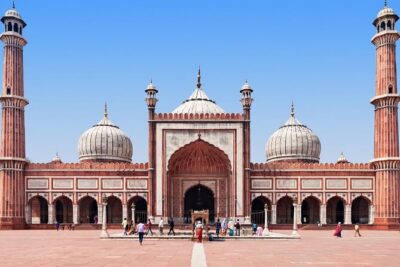 ★ 5.03-Day Delhi, Agra and Jaipur Private Tour – India Golden TriangleFrom $110812 reviews
 ★ 5.0Four-Day Private Luxury Golden Triangle Tour to Agra and Jaipur From New DelhiFrom $160807 reviews
 ★ 5.05 Nights 6 Days Private Golden Triangle Tour – Delhi Agra JaipurFrom $240574 reviews
 ★ 5.04 Days Golden Triangle TourFrom $146499 reviews
 ★ 5.0Private Car and Drive for Golden Triangle (4N/5D)From $167451 reviews
 ★ 5.0Private Golden Triangle Tour Delhi Agra Jaipur ( Top Rated )From $148436 reviews
 ★ 5.03-Day Private Luxury Golden Triangle Tour to Agra and Jaipur From New DelhiFrom $164424 reviews
Browse the lists this tour appears in