
REVIEW · CAMEL SAFARIS AND DESERT CAMPS
Become a Desert Nomad – Overnight Camel Safari in the Wild
A night in the Thar Desert turns Rajasthan into something you feel, not just see. This safari mixes desert time with quick cultural stops, then caps it with a 2-hour camel ride and a meal cooked over a bonfire. You get real “camp life” choices, either a dome tent or sleeping under the sky.
I especially like the way this trip is set up for comfort without making it “hotel style.” The schedule flows from Jaisalmer into the sand dunes, meals are included, and you start and end right at the meeting point. One possible drawback is that night temperatures can drop fast in the desert, so you will want warm layers even if blankets are provided.
Another thing I really like is the human side of it. Your camp team handles the cooking on open flame, and you have the option to learn simple Indian cooking techniques while dinner is being prepared. The main consideration is timing and stamina: day 1 includes a long stretch of driving plus short sightseeing stops before the camel safari.
In This Review
- Key Things I’d Prioritize Before You Go
- Desert Nomad Style: Your Sleeping Options Decide the Whole Mood
- Getting Going From Hotel Fifu: The Drive Turns Into the Story
- The Big Camel Moment: 2 Hours at Sunset With One Camel Each
- Dinner by Open Flame: Cooking Class Energy Without the Pressure
- Morning in the Desert: Chai, Breakfast, and a Quiet Sunrise
- Price and Logistics: Why This $62.41 Can Be a Good Deal
- Who Should Book This Camel Safari (and Who Might Skip It)
- Should You Book Become a Desert Nomad? My Practical Take
Key Things I’d Prioritize Before You Go
- One camel per person for clear views during the sunset ride, without constant scrambling for the best angle.
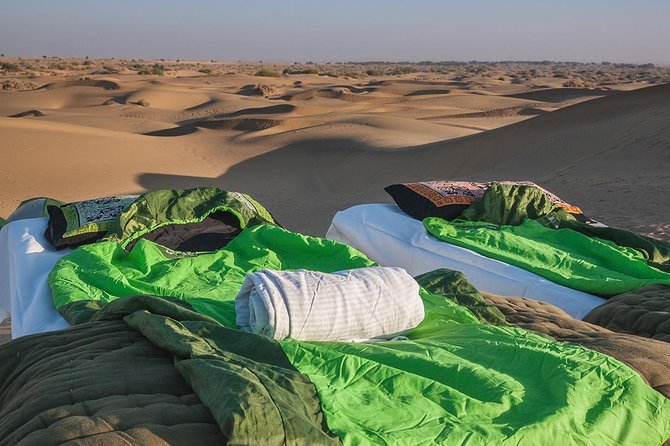
- Sleep under stars or in a dome tent so you can choose how “wild” you want it to feel.
- Fire-cooked dinner and included breakfast so you are not hunting for food after a full day.
- Short cultural stops en route (Kuldhara and Khaba Fort) that add story without taking over the whole trip.
- Warm campfire time plus tea and snacks to keep you comfortable while the desert cools down.
Other dune camps, tent by tent
Desert Nomad Style: Your Sleeping Options Decide the Whole Mood
This safari gives you a real choice, and it matters. You can sleep in a provided dome tent, or you can sleep directly under the stars. If you pick the tent, you get a little extra protection from wind and temperature swings. If you pick the stars, you trade shelter for that open-sky feeling, where the night feels bigger.
Either way, you are not dealing with complicated gear lists. The experience includes the overnight camp setup, plus tea, snacks, and bottled water. At night, you will likely feel the cold more than you expect, because desert nights cool down quickly.
If you want my practical advice, plan for layers. One review specifically flagged that it can be cold and suggested bringing your own extra warmth even though blankets are available. That is smart thinking. Think long pants, a warm sweater or jacket, and something to cover your legs or feet before you settle in.
Getting Going From Hotel Fifu: The Drive Turns Into the Story
The day starts at Hotel Fifu (opposite Nagarpalika, Postal Colony, Jaisalmer). If you arrange hotel pickup, it is within a 3 km radius from the city center, and then you assemble at the meeting point. The tour begins at 1:30 pm, which is a great time of day because you get afternoon sightseeing plus evening desert.
The first stop after the group meets is Kuldhara Abandoned Village, a village founded in the 13th century and abandoned in the 19th century, most likely due to water shortages. This stop is short, about 20 minutes, so you will get a quick sense of place rather than a long guided walk. The payoff is atmosphere. Even in a short visit, you can feel why people built settlements where water mattered, and what happens when it disappears.
Next comes Khaba Fort, another quick stop (about 20 minutes). It sits on a hill overlooking the area, so it is more about views and photo angles than structured museum time. The fort stop also helps you transition from the “city edges” into the more remote feeling you get once you head closer to the dunes.
Then you reach the point where the desert part truly begins. The ride to the camel starting area uses a jeep, and from there you start your two-hour camel safari at sunset. This sequencing is one of the nicer touches: you do not get dropped straight into the dunes without any context, and you also do not spend your whole day in slow sightseeing.
A small consideration: day 1 is long. You are moving and stopping, and the full desert moment is later in the afternoon. If you are sensitive to travel fatigue, pack water snacks for your own comfort, even though tea, snacks, and bottled water are included.
The Big Camel Moment: 2 Hours at Sunset With One Camel Each
The highlight is the camel ride. You get a two-hour camel ride through the Thar Desert, timed for sunset, and the experience is designed around one camel per person. That matters because it typically means you are not stuck in a crowded line fighting for space, and you are more likely to get unobstructed desert views.
What you should expect from a camel ride in sand is not a smooth ride like a city bus. It is a slow, rhythmic motion, and you will feel the camel’s steps through the ground. That can be fun if you are ready for it. If you are expecting something ultra comfortable, set expectations now. Bring a good attitude and hold on like you mean it.
Because the safari is described as remote and secluded sand dunes, you should feel like you are truly away from the road. This is where the “wild” in the experience kicks in. You see the dunes stretch out and, with luck, the light softens everything into warm colors as the sun drops.
Also, sunset timing means your best photos are likely around the middle to late part of the ride. Wear something you can move in, and consider sunglasses if you get sun glare. If you get cold easily, keep your outer layer handy for the ride back to camp.
- Non-Touristic overnight Camel Safari★ 5.0 · 526 reviews
- Overnight Camel Safari – Sleeping under the Stars★ 5.0 · 390 reviews
- Adventure non touristic camel safari★ 5.0 · 300 reviews
- Overnight Desert Safari Tour Package★ 5.0 · 255 reviews
- Overnight Camel Safari (remote And Isolated)★ 5.0 · 170 reviews
Dinner by Open Flame: Cooking Class Energy Without the Pressure
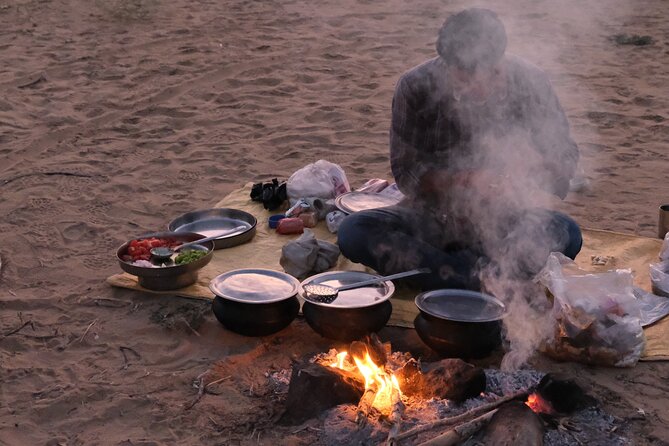
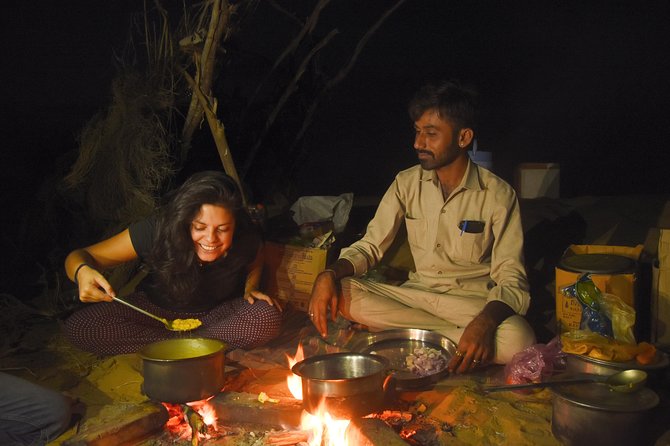
After the camel safari, you reach camp for dinner and fire time. Dinner is included, and it is cooked over an open flame. This is exactly the kind of meal that feels different from a standard restaurant dinner, because the process and smell are part of the experience.
You also have the option to learn a bit about Indian cooking techniques while preparing dinner on the bonfire. The way it is described is practical: you are not forced into a long formal class, but you can participate during the cooking. If you like food and you want a hands-on moment, this is a big value add.
Here is how to get the most out of it. Pay attention to what is happening while they cook, especially steps that involve timing and heat control. Even if you do not become a “chef,” you will come away with a better sense of how simple ingredients turn into something that tastes like it belongs in Rajasthan.
Dinner is also a social moment. After you eat, you can relax by the campfire. If you choose to sleep under the sky, the camp vibe often feels even more connected, because you spend more time looking up than inside a tent.
One more practical note based on feedback: the food is a strong point. People describe it as good, and the overall organization is often praised. In other words, this is not a scramble dinner at the end of a bad day. The team seems to run it like a planned evening, which is exactly what you want when the day ends in the desert.
Morning in the Desert: Chai, Breakfast, and a Quiet Sunrise
Day 2 begins early enough to catch the desert wake-up. You will rise to sounds of camels chewing grass and birds singing, with local staff chanting while preparing chai and breakfast. That gives the morning a calm, grounded feeling, not a rushed grab-and-go vibe.
You also get time to enjoy a magnificent sunrise in the desert. Sunrise can be the moment that makes the whole trip feel worthwhile, because the light changes fast and the dunes look different every few minutes.
Breakfast is included, and it is part of the same camp setup. This is also one of the reasons the safari feels complete. You are not only out there for the sunset spectacle. You get the start of the day too, which is when the desert feels most peaceful.
Because the itinerary data is focused on the included activities, I would plan your morning around sunrise, chai, and breakfast. If you are hoping for lots of extra rides or activities beyond what is listed, keep your expectations aligned with the core structure: the main camel ride is the two-hour sunset safari.
Price and Logistics: Why This $62.41 Can Be a Good Deal
At $62.41 per person for a roughly two-day experience, this safari can be excellent value, mainly because it stacks several things into one price.
You get:
- Round-trip transportation from Jaisalmer (with pickup and dropoff within 3 km radius from city center)
- Jeep transport to the camel start area
- A two-hour camel safari with one camel per person
- Dinner plus breakfast
- Tea, snacks, and bottled water
- Sleep under the stars or in a dome tent
- A cooking option connected to preparing dinner on a bonfire
- English and Hindi speaking driver/guide
On a typical trip, you might pay separately for the camel ride, evening meal, and transportation. Here, those are bundled. That bundling is what often keeps the total cost reasonable.
What is not included is also clear: alcohol beverages and entry tickets for monuments, plus travel insurance. If you plan to visit additional sights separately, factor in monument entry costs. Otherwise, you are mostly covered for the core desert experience and the included meals.
One more practical point: the trip is described as private for your group. Private does not always mean you are traveling alone, but it does mean you will not be mixed into a random crowd. That can make the experience feel more controlled and calm, especially during the camp dinner and the timing around the camel safari.
Who Should Book This Camel Safari (and Who Might Skip It)
This safari is a strong fit if you want:
- A desert night that feels real, not packaged like a day trip
- A camel sunset ride with clear time in the dunes
- Included meals and an overnight camp setup with warmth options
- A bit of cultural context en route through Kuldhara Abandoned Village and Khaba Fort
It is also a good choice if you like food and you are curious about cooking on a bonfire. The optional cooking participation can turn dinner from something you eat into something you learn.
You might consider a different option if:
- You hate cold nights and are unwilling to bring warm layers
- You dislike rides that are part road, part jeep, part camel, because it is a moving schedule
- You expect lots of activities beyond the listed camel safari, camp dinner, and sunrise morning
Overall, this feels best for couples, friends, and small groups who want a grounded desert experience with solid organization and good food at the center.
Should You Book Become a Desert Nomad? My Practical Take
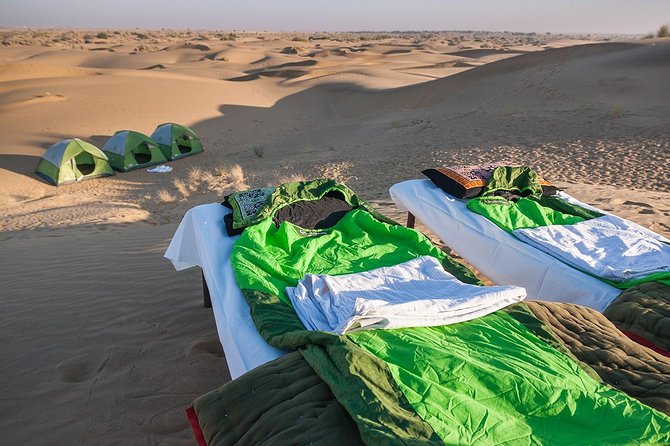
Book it if you want the combo of camel riding, camp dinner by open flame, and an honest overnight in the Thar Desert. The strongest signals are the way the evening is organized and how people describe the food, plus the fact that it is set up with enough blankets for comfort, even though the desert can still get cold.
Skip it or choose a different format if you are looking for a fully luxury stay. This is desert camping, with real night temperatures and a focus on the sand, not spa comforts.
If you do book, come prepared with warm layers for night and a positive attitude for the camel ride. Then lean into what makes this experience work: sunset dunes, a fire-cooked meal, and sunrise chai before you head back to Jaisalmer.
Nights in the Thar


Recently reviewed across Jaisalmer
- Jaisalmer Luxury Overnight Camping
★ 5.0 · 11 reviews - Experience Authentic Desert Villages & Sunset Camel Safari
★ 5.0 · 11 reviews - Dazzling Half Day Tour of Camel & Desert Safari with Sunset
★ 5.0 · 11 reviews - Private Full Day Tour of Jaisalmer with Guide
★ 5.0 · 11 reviews - Jaisalmer Walking Tour: A Stroll Through Time and Culture
★ 5.0 · 11 reviews - 1-Night and 2-Days Thar Desert Safari Tour
★ 5.0 · 12 reviews
Camel Safaris and Desert Camps, compared.
 ★ 5.0Non-Touristic overnight Camel SafariFrom $44526 reviews
 ★ 5.0Overnight Camel Safari – Sleeping under the StarsFrom $37390 reviews
 ★ 5.0Adventure non touristic camel safariFrom $24300 reviews
 ★ 5.0Overnight Desert Safari Tour PackageFrom $38255 reviews
 ★ 5.02-Day Thar Desert ExperienceFrom $9190 reviews
 ★ 5.0Overnight Camel Safari (remote And Isolated)From $64170 reviews
 ★ 5.0Desert Camel Safari Day Tour In JodhpurFrom $24161 reviews
 ★ 5.0Half-Day Sunset Camel Safari in RajasthanFrom $34160 reviews
Browse the lists this tour appears in