

REVIEW · TAJ MAHAL TOURS AND TICKETS
Delhi Agra Jaipur & Varanasi Tour – Taj Mahal & Ganga Aarti
A week in North India can fly by, fast, and worth it. This private tour strings together Delhi, Jaipur, Agra, and holy Varanasi with private guides and Ganga Aarti at sunset, so you spend less time figuring things out and more time seeing real places. I like that your days are built around guided sightseeing with hotel pickup, plus 6 nights with breakfast. One possible drawback is the pace: it is sightseeing-heavy and includes long drive days, so you will want comfy shoes and a realistic expectation that you will be on the move.
What makes it feel workable is the structure. You get private transportation in a sedan or SUV, AC train tickets for the Delhi-Varanasi leg, and a real route that makes sense geographically. Also, keep your dates in mind for Taj Mahal, because it has a weekly closure for Friday prayer, and you do not want that to derail your plans.
In This Review
- Key things I’d watch for
- How the 7-day Golden Circuit plus Varanasi actually works
- Delhi first: Red Fort, Jama Masjid, Qutub Minar, and a solid orientation day
- The Jaipur transfer and Amber Fort, plus a break at Jal Mahal
- Jaipur on full display: Hawa Mahal, City Palace, Jantar Mantar, Albert Hall
- Agra day: Taj Mahal timing, Baby Taj, Agra Fort, and Mehtab Bagh
- Varanasi: Sarnath morning context, Ganga Aarti at sunset, and sunrise on the ghats
- The train back to Delhi and the final Mughal-modern mix on day seven
- Comfort, guides, and what that means for your day-to-day
- Value check: is $366.16 per person worth it?
- Should you book this Delhi Agra Jaipur and Varanasi tour?
- FAQ
- What cities are included in this tour?
- How long is the tour?
- What is included in the price?
- Are monument entry tickets included?
- Is Ganga Aarti included?
- Are boat rides on the Ganges included?
- What kind of train tickets are included?
- Can I cancel for a full refund?
Key things I’d watch for
- Private, not group-by-default, so your schedule can be more flexible than typical big-bus tours
- 6 breakfasts included, which really helps when mornings start early
- Monuments are mostly not included, so you should budget for entry tickets
- Long drive segments between cities, especially after a full day of sights
- Sunset Ganga Aarti is included, while some river boat time may be optional or extra
Still choosing your Taj Mahal ticket? Compare these

How the 7-day Golden Circuit plus Varanasi actually works
This is a true route tour. You start in Delhi, then head to Jaipur, continue to Agra for the Mughal highlights, and finally go to Varanasi for the river rituals. The key value is that you are not bouncing around with random transfers. Instead, you get pickup, private transport, and guided time built into each stop.
You also get a mix of big-ticket icons and “still impressive, but less exhausting to visit.” In Delhi, that means you are hitting major Mughal and early Islamic-era landmarks. In Jaipur, you see palaces, observatories, and temple stops without feeling like you only chase one type of sight. In Agra, the Taj Mahal is obviously the headline, but you also get the surrounding Mughal sites that give context. Then Varanasi shifts the mood into something more intimate, with sunrise river views and a sunset Aarti ceremony.
The tour is private, so it is best if you want comfort and clear logistics more than you want a party-like group vibe. And because you are traveling by both road and train, it can feel like one smooth journey rather than separate mini-trips.
Delhi first: Red Fort, Jama Masjid, Qutub Minar, and a solid orientation day
Your Delhi day is an efficient Old Delhi to Southern Delhi sweep. You start with a pickup, then check in for an overnight stay, which matters because you will want sleep before the next city jump.
- Red Fort (Lal Qila): This is the Mughal power base, commissioned in the 1600s under Shah Jahan. Even if you do not get inside every structure, the fort walls and scale are the point. It sets the tone for Delhi as an imperial capital, not just modern streets.
- Jama Masjid: One of the largest mosques in India, built by Shah Jahan and known for its grand courtyard feel. What I like about pairing this with the Red Fort is that you see two sides of Mughal Delhi architecture back-to-back.
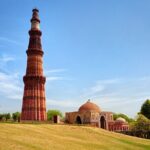
- Qutub Minar: This is the tall tower of victory, connected to the early Delhi Sultanate era. The height and craftsmanship make it a natural closer for your first day.
If you want to make this day easier on yourself, do it this way: keep your first stop photo-focused, but let the later stops be more about details. At Jama Masjid, look at how the architecture shapes movement through the courtyard. At Qutub Minar, notice the repeating storeys and the historical layering, because it helps later when you start seeing Mughal-era masterpieces.
One more practical note: admission fees are not included, so if you plan to go inside, you should factor that into your daily budget.
The Jaipur transfer and Amber Fort, plus a break at Jal Mahal
Day two is the “get in the car” day. After breakfast, you drive to Jaipur and arrive around mid-afternoon. That timing is helpful. You avoid landing in the city and having to do an all-day sprint on arrival.
Then you head to Amber Fort, which is one of the best-preserved fort complexes in the region and was the royal capital for years before Jaipur became the planned city. Amber Fort feels like a place you can spend real time in, because the fort is more than one building. It is a whole royal environment, designed around defense, ceremony, and status.
After that, you get Jal Mahal. This palace sits in the lake area (Man Sagar Lake). Even with a short stop, it is visually memorable because it is surrounded by water and feels slightly unreal against the Rajasthan landscape. It also gives you a lighter moment after the density of fort walls and courtyards.
A good way to handle this day’s rhythm is to treat Amber Fort as your main workout and let Jal Mahal be your “reset.” If you try to sprint through everything with the same intensity, you will feel it later.
Other one-day Agra runs out of Delhi
- 2 Days Overnight Taj Mahal & Agra Tour From Delhi★ 5.0 · 743 reviews
- Delhi to Agra Taj Mahal Private Day Trip by Superfast Train★ 5.0 · 708 reviews
- Private Taj Mahal & Agra Day Tour by Superfast Train From Delhi★ 5.0 · 580 reviews
- 5 Nights 6 Days Private Golden Triangle Tour – Delhi Agra Jaipur★ 5.0 · 574 reviews
- Private Golden Triangle Tour Delhi Agra Jaipur ( Top Rated )★ 5.0 · 436 reviews
Jaipur on full display: Hawa Mahal, City Palace, Jantar Mantar, Albert Hall
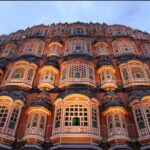
The Jaipur sightseeing day is a greatest-hits program, but it is paced across different styles of landmarks. You start with Hawa Mahal, the Palace of Wind, and its five-storey crown-like silhouette. It is famous for how the building’s form relates to airflow and street life, so even a quick visit is worth it for the exterior impact.
Then you move into City Palace, the royal residence complex. This is one of those places where it helps to know you are not only looking at beauty. The layout and design reflect how the royal family organized power, administration, and display.
Next is Jantar Mantar, the astronomical instruments site built under Sawai Jai Singh II and completed in 1734. This is not just “old science.” The instruments are built to measure time and celestial patterns in ways that were practical for navigation and ritual. If you like seeing how people used math before modern tech, this stop will land well.
You also have Albert Hall Museum. The building itself, built in 1876 as a concert hall, gives you a taste of British-era architectural influence, while the museum format shifts you from monuments to curated collections.
For a softer finish, there is Birla Mandir, a white marble temple built in 1988, and Monkey Temple at Galta near the Aravali hills. The Monkey Temple stop is short, but it provides greenery and viewpoints that feel like a breath of fresh air compared to palace interiors.
A practical tip: bring water and plan your photo stops. Jaipur can be bright and dry, and you do not want to waste your energy searching for shade at the exact moment you reach a key viewpoint.
Agra day: Taj Mahal timing, Baby Taj, Agra Fort, and Mehtab Bagh
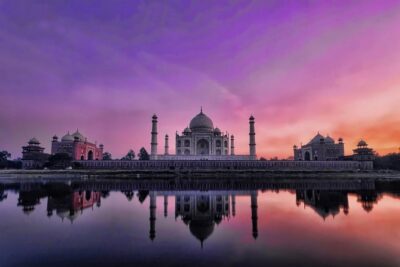
Agra is where the trip earns its name recognition. You start with the Taj Mahal, and this is the stop that needs the most planning. The Taj is the world’s most photographed monument for a reason, but you will get a better experience if you treat it like an unfolding story rather than a single photo spot.
Also note the weekly closure for Friday prayer, which can affect which day you can see it. If your trip lands on a Friday, you may need to adjust your timing or expectations so you do not end up disappointed.
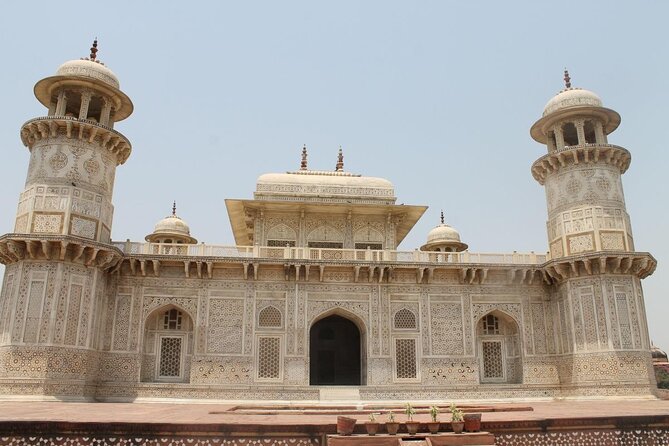
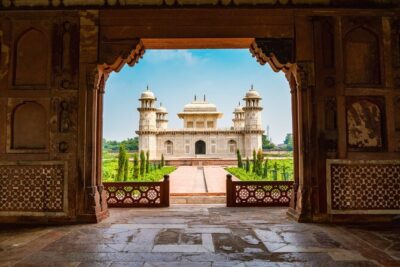
After the Taj, you visit Itmad-ud-Daula, often called the Baby Taj. This Mughal mausoleum is a smart follow-up because it lets you see an earlier, more intricate step in the same decorative language. Then you move to Agra Fort, built for Akbar in the late 1500s and later tied to Mughal residences. The fort adds a darker, power-focused angle to the Taj’s romance.
Finally, you end with Mehtab Bagh, a charbagh garden complex across the Yamuna River. Even if you only get a brief visit, the garden setting helps you understand why the Taj Mahal feels framed from certain angles.
If you want to enjoy this day more, pace your pace. It is tempting to rush between the top sights. Instead, give yourself one slow moment inside or around each major stop, so your brain registers what you are seeing.
Varanasi: Sarnath morning context, Ganga Aarti at sunset, and sunrise on the ghats
Varanasi is not like the other cities on this route. It is more active, more sensory, and less about tidy museum pacing. The itinerary gives you both context and ceremony.
You start with Sarnath. That helps because it anchors the day beyond just river life. It gives you a foothold in the region’s religious importance before you head deeper into Varanasi itself.
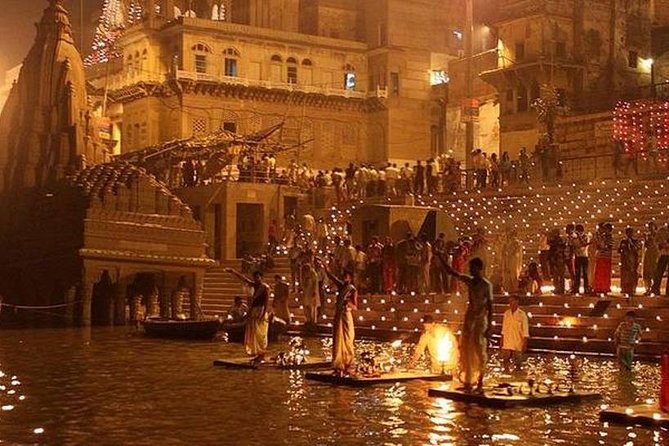
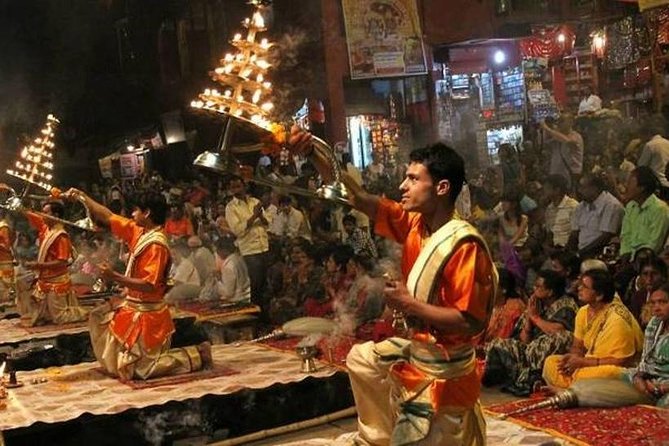
Then comes Ganga Aarti with a sunset cruise on the Ganges. This is one of the most valuable included experiences on the whole trip because it is not only sightseeing. It is a ritual with oil lamps and a shared rhythm along the river. The cruise format also matters because it changes your viewpoint from street-level to river-level, where you can take in the scale of the ghats.
Day six adds a morning river experience. You meet your guide early for a boat cruise on the Ganges that focuses on sunrise and views of historical ghats. The data suggests admission for the sunrise boat ride is not included, so you should be ready for that potential extra cost or confirm what is covered for your exact departure. Then you head to Dashashwamedh Ghat, one of the most well-known ghats, where the energy is easy to feel.
You also visit Bharat Kala Bhavan, an art and architecture museum with paintings and Hindu and Buddhist sculptures, plus archaeological materials. This stop gives you a break from the constant river movement and adds cultural depth before you travel back.
The train back to Delhi and the final Mughal-modern mix on day seven
After Varanasi, you ride by train back toward Delhi. That is a smart trade. Road travel would be long, so using train time helps you keep the trip on track without draining the whole day.
On your final Delhi morning, you get a classic trio:
- Humayun’s Tomb, a major Mughal mausoleum you get to see early, which is great because morning light helps with photos and appreciation.
- India Gate, a war memorial with names tied to First World War and third Anglo-Afghan War history.
- Lotus Temple, the striking lotus-shaped modern religious building.
This final day is a nice reset after Varanasi. You get spiritual architecture, then national memorial symbolism, then a modern faith structure that still feels grounded in design and structure rather than pure monument sightseeing.
If you have energy left after so much moving around, spend your last hour slowing down near one of these sites. It is the small pause at the end that makes the whole trip feel like a complete story.
Comfort, guides, and what that means for your day-to-day
The tour includes private local tour guides for sightseeing and private transportation in a sedan or SUV. In plain terms, that means fewer language gaps, less waiting, and more clarity about where you are going next.
Accommodation is in 3, 4, or 5 star hotels depending on your option, with breakfast included for six mornings. That breakfast detail matters because these cities can be breakfast-to-sunset sightseeing. When your day starts with food that is handled for you, you spend less mental energy and more time enjoying the place.
One standout from real traveler feedback: the driving and guide support can be very steady and safe. A driver named Siri got praised for staying calm, patient, and careful on the road. That kind of reliability is not glamorous, but it makes a big difference when you are crossing traffic and planning around time-sensitive sights.
Also, remember that admission fees for monuments are not included. Some specific stops may show free entry for certain points, but the overall rule is clear. If you want inside access at the big name sites, budget for it upfront so you are not doing math in your head at the ticket window.
Value check: is $366.16 per person worth it?
At $366.16 per person for a 7-day, multi-city private-style route, the value comes from what you are not doing yourself:
- Private transportation across several city-to-city legs
- Guided sightseeing each day
- Six nights accommodation with breakfast
- AC train tickets included for the Varanasi to Delhi leg
- Pickup and drop-off at your hotel or airport
- Taxes and service charges covered in the package price
Where the value can drop is also predictable. If you add up monument entry tickets for the big attractions, you will spend more than the base price. And because this is a fast itinerary, you might feel like you are always in motion, especially if you dislike long car days after a full sightseeing stretch.
So my practical recommendation is simple. If you want a guided, logistics-managed route across four major cities, this can be good value. If you want a slow, flexible experience with long free time in each city, you will likely want to build your own plan instead.
Should you book this Delhi Agra Jaipur and Varanasi tour?
I would book it if your priority is a smooth path through North India with minimal friction. The included sunset Ganga Aarti plus major Mughal stops in Delhi and Agra is a strong combo. You also get context stops like Sarnath and the museum time in Varanasi, which helps the trip feel more than a checklist.
I would think twice if you hate tight pacing or you know you get worn out by long drives. This tour is designed to cover a lot, and the days can feel full.
If you decide to book, do two things to protect your experience. First, double-check your dates around the weekly Friday prayer closure for Taj Mahal, so you do not arrive expecting the perfect timing. Second, bring a realistic budget for monument entry fees, since the tour price does not cover them.
FAQ
What cities are included in this tour?
You visit New Delhi, Jaipur, Agra, and Varanasi during the 7-day route.
How long is the tour?
It runs for about 7 days.
What is included in the price?
The package includes private transportation, sightseeing with private local tour guides, AC first class or second class train tickets, hotel accommodation with breakfast (6 breakfasts), hotel or airport pickup and drop-off, and taxes and service charges.
Are monument entry tickets included?
No. Entry or admission fees for monuments are not included.
Is Ganga Aarti included?
Yes. The sunset Ganga Aarti experience with cruise is marked as included in the plan.
Are boat rides on the Ganges included?
A Varanasi boat ride is listed as optional and not included. The sunrise river boat cruise on day six is also shown as Admission Ticket Not Included.
What kind of train tickets are included?
The tour includes AC first class or second class train tickets.
Can I cancel for a full refund?
Yes, you can cancel up to 24 hours in advance for a full refund. If you cancel less than 24 hours before the start time, the amount paid is not refunded.
The Golden Triangle, Longer and Shorter




Delhi to Agra and Back in a Day



The Taj Mahal, More Reviewed Tours


Recently reviewed across New Delhi
- Golden Triangle – Delhi Agra and Jaipur
★ 5.0 · 10 reviews - Taj Mahal & Agra Tour by Indian Bullet Train All Inclusive
★ 4.5 · 10 reviews - Private Tour in Mehrauli Archaeological Park & Qutub Minar
★ 5.0 · 10 reviews - Old & New Delhi Tour
★ 5.0 · 10 reviews - From Delhi : Taj Mahal & Agra Fort Tour by Luxury Express Train
★ 5.0 · 10 reviews - Delhi Shopping Tour: Top Bazaars, Crafts & Souvenir Finds
★ 5.0 · 10 reviews
Taj Mahal Tours and Tickets, compared.
 ★ 5.0Same Day Taj Mahal, Agra Fort & Baby Taj Tour from Delhi by CarFrom $624,304 reviews
 ★ 5.0Full Day Taj Mahal, Agra Fort & Baby Taj Tour from Delhi by CarFrom $623,647 reviews
 ★ 4.9Taj Mahal & Agra Private Day Trip with TransfersFrom $43,181 reviews
 ★ 5.0Taj Mahal Tour from Delhi by Express Train (Viator Award Winner)From $752,849 reviews
 ★ 4.9Same Day Taj Mahal, Fort & Baby Taj Tour from Delhi by CarFrom $502,534 reviews
 ★ 4.9Taj Mahal and Agra Fort Private Sunrise TourFrom $592,270 reviews
 ★ 5.0Sunrise Taj Mahal, Agra Fort & Baby Taj Tour from Delhi by CarFrom $622,243 reviews
 ★ 4.9Taj Mahal Sunrise, Baby Taj & Agra Fort Day TourFrom $102,020 reviews
Browse the lists this tour appears in