
REVIEW · GOLDEN TRIANGLE TOURS
Explore Private Tour The Golden Triangle Done Differently
This Golden Triangle feels personal from day one. It is built around a private guide, Raju Singh, who helps shape the trip around what you actually want to see, including stops most first-time routes skip. I love the mix of iconic sights and quieter experiences, and I like that the day structure keeps moving without feeling rushed when you hit traffic.
Two things I especially like: you start with practical airport and hotel pickup, and you get an expert driver who handles Delhi and Rajasthan traffic calmly. One possible drawback to plan for is that lunch and dinner are not included, so you will want to budget extra meals each day.
In This Review
- Key highlights you will feel on the road
- A Golden Triangle that actually feels different
- Price and what makes it feel worth the $224.71
- The driving and pickup rhythm that keeps days smooth
- New Delhi first day: Lodhi Garden, Lotus Temple, and Humayun’s Tomb
- Lodhi Garden, the city’s breathing space
- Lotus Temple, open to everyone
- Humayun’s Tomb, gardens as part of the design
- The Agra-side story: Baby Taj, the Black Taj, then the Taj Mahal
- Tomb of Itimad-ud-Daulah, the Baby Taj
- The Black Taj, myth and what you can actually verify
- Taj Mahal, the Diana seat photo moment
- Fatehpur Sikri and Abhaneri, where the crowds thin out
- Fatehpur Sikri’s Victory Gate
- Jodha Bai’s Palace in Fatehpur Sikri
- Abhaneri Stepwell, a classic reason to slow down
- Jaipur with texture: Galtaji, royal cenotaphs, and local shopping time
- Galtaji Temple, the Monkey Temple water experience
- Gaitore Ki Chhatriyan, royal cenotaphs
- Jaipur time for wishes, crafts, and buying with guidance
- City Palace, Amber Fort, and the Water Palace at the right moment
- City Palace of Jaipur
- Amber Fort with big views and long walkways
- Water Palace, the summer residence feel
- What your guide adds beyond the map
- Who this tour suits best
- Should you book this Golden Triangle done differently?
- FAQ
- How long is the Golden Triangle tour?
- What meals are included in the tour price?
- Is pickup included?
- Is this tour private?
- Are monument admission tickets included?
- What accommodation is used in Delhi?
- What level of fitness do I need?
- What are the operating hours for the tour?
- Can I cancel for a full refund?
Key highlights you will feel on the road
- Private guiding with real flexibility so your wishlist can influence what you prioritize
- Pickup and transfers at the start and help getting back out on the final morning
- Breakfast included for 7 mornings, with lunch and dinner chosen on the day
- Off-beat stops like Lodhi Garden, the Black Taj story, Abhaneri stepwell, and Galtaji Monkey Temple
- Many major monument tickets included, while a few stops are listed as free entry
Golden Triangle itineraries, three to eight days



A Golden Triangle that actually feels different
The classic Golden Triangle is Delhi, Agra, and Jaipur, but most tours treat it like a check-the-box stamp. This one is different because the guide’s goal is not only to get you to the monuments, it is to match the trip to your pace and interests.
I like that the route does not ignore the big names. You will still see the Taj Mahal, Humayun’s Tomb, and Amber Fort. But the tour also threads in places that make the story of India feel larger than the postcard version, including a garden escape inside Delhi and two Agra-area tombs that frame the Taj Mahal with context. You get more meaning per stop, and less time wasted asking your guide what to do next.
The private setup matters too. In a crowd, you often end up moving when the group moves. Here, you can slow down for photos, spend extra minutes on a detail you care about, or get out of the heat when you need to. That is how this tour stays comfortable even when the schedule is busy.
Price and what makes it feel worth the $224.71
At about $224.71 per person, you are not just paying for a seat in a bus. You are paying for the private guiding and the driving time across a long route, plus support that reduces stress in a complex place to navigate on your own.
Here is what you can count on from the tour structure:
- Breakfast is included each morning (7 breakfasts total)
- Pickup is offered, including arrival collection from the airport and transfers at the end
- Admission tickets are included for many stops, not just one or two
- You receive a mobile ticket, which cuts down on paperwork and lost information
Where costs can creep up: lunch and dinner are not included. That is common on this kind of tour, but it still matters. You will want to decide ahead of time what kind of meals you want, whether you are aiming for local street-style options or quieter restaurant settings, and how you want to handle dietary needs.
If you are traveling in a group, the tour also notes group discounts, which can improve value. And if you want a step up from the minimum accommodation in Delhi, the tour indicates upgrades can be negotiated, so you might adjust comfort without abandoning the plan.
The driving and pickup rhythm that keeps days smooth
A lot of Golden Triangle frustration comes from timing. You land, you transfer, you fight traffic, you arrive late, then you rush at the monuments. This tour aims to reduce that chaos.
On arrival, your guide will collect you and drive you to your Delhi accommodation. If you are joining from another tour, you will arrange a meeting place that works. On the final day, you also get help getting to the airport or train, which is the kind of small detail that saves real energy on departure day.
In real terms, this means:
- you spend less time figuring out transport
- you can start seeing things sooner
- your time inside each site is guided, not just self-directed wandering
It also helps that Raju is described as an excellent driver, punctual, and courteous, with local knowledge that makes busy cities feel manageable. Even if you have been to India before, that kind of driving confidence matters.
- Full-Day Jaipur Private Sightseeing Tour by Car with Guide★ 5.0 · 472 reviews
- Pink City Cooking Class★ 5.0 · 452 reviews
- Private Elephant Sanctuary★ 5.0 · 390 reviews
- Private Full Day Jaipur Sightseeing Tour By Tuk Tuk★ 5.0 · 382 reviews
- Private Guided Half Day Tour Jaipur★ 5.0 · 371 reviews
New Delhi first day: Lodhi Garden, Lotus Temple, and Humayun’s Tomb
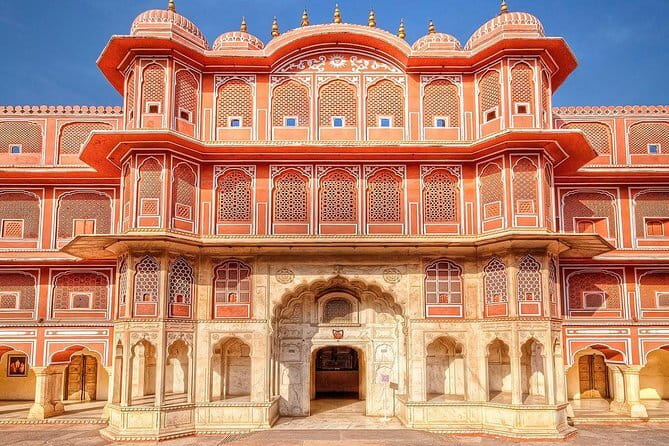
Your Delhi start blends calm greens, major spiritual architecture, and a landmark that anchors Mughal-era garden design.
Lodhi Garden, the city’s breathing space
You begin with Lodhi Garden, a maintained 90-acre green area in the middle of the city. This is the kind of stop that resets you. You go from flight fatigue or early-city movement into shade, pathways, and a slower pace. It is also a useful way to get your bearings fast without feeling like you are trapped in a traffic jam.
Lotus Temple, open to everyone
Then comes the Lotus Temple, the Bahai temple known for its architecture and the fact that people of all faiths are welcome. This is a good choice for first-time visitors because it feels welcoming and visually easy to understand even if you do not know the religion. It also tends to be a stop where you can pause, observe, and take in the atmosphere without rushing.
Humayun’s Tomb, gardens as part of the design
Next is Humayun’s Tomb, built in the 1500s by his widow. The site is described as an engineering masterpiece for its time, using red sandstone and marble. The real value here is not only the tomb itself, it is how the surrounding gardens connect the idea of power to planned space.
What you might consider: this day is full, and Delhi light can shift quickly. If you are sensitive to heat, plan to pace yourself and take breaks when you need them. With private guiding, you can usually adjust, but you will still be moving through three distinct stops.
The Agra-side story: Baby Taj, the Black Taj, then the Taj Mahal
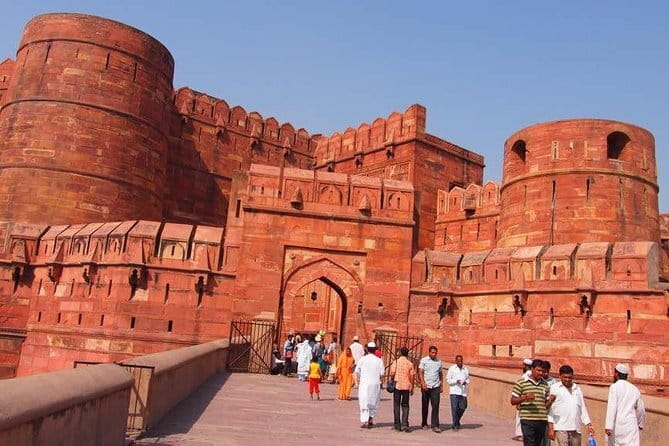
This part of the trip is where the Golden Triangle earns its reputation. But this tour adds two layers before you reach the main act, so the Taj Mahal does not feel like a standalone photo opportunity.
Tomb of Itimad-ud-Daulah, the Baby Taj
You will visit Itimad-ud-Daulah, often called the Baby Taj. It is built from marble and linked to the idea of being a draft or inspiration for the Taj Mahal. If you like architectural details, this stop can be extra rewarding because it helps you understand what the later work refined and expanded.
A practical note: with marble monuments, the lighting changes how carvings read. If you care about detail photos, wear a camera strap or keep your phone steady, and be ready to capture small patterns rather than only wide views.
The Black Taj, myth and what you can actually verify
Across the river, you also go to the Black Taj, the Tomb of Shah Nawaz Khan. This stop is built around the contrast between myth and truth, with guidance that helps you separate stories from what you can see and understand. You are essentially learning how rumors form, and why local storytelling matters, even when it gets messy.
The payoff is that by the time you reach the Taj Mahal, you will be looking with more context. You will not just see a famous building, you will understand why people connect it to larger themes.
Taj Mahal, the Diana seat photo moment
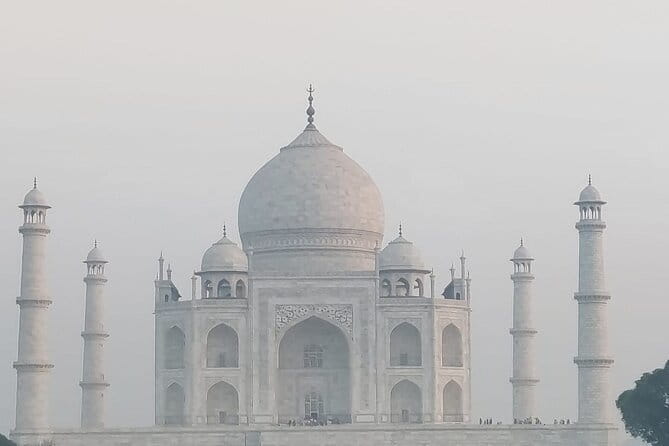
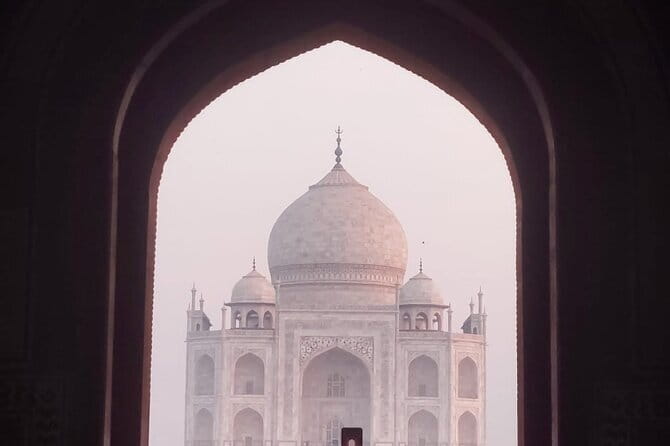
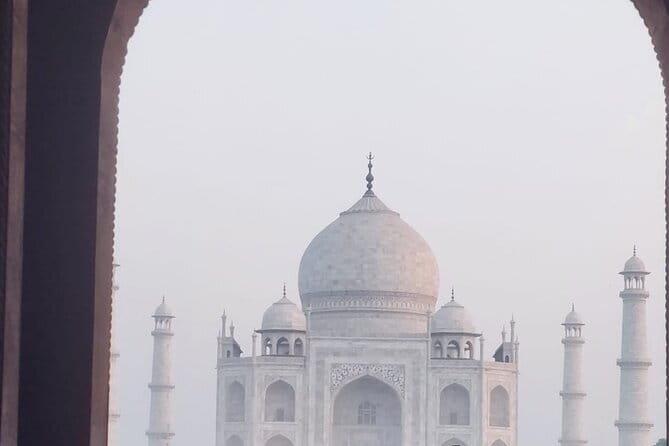
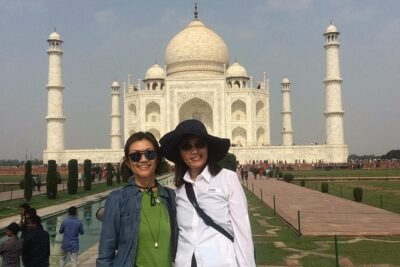
Finally, you reach the Taj Mahal. The tour even calls out a specific photo moment, the so-called Diana seat, where you can get your picture taken. The Taj Mahal is still the Taj Mahal, meaning plan for crowds and give yourself time to see it from multiple angles.
What I like about doing it after the prior tomb visits is that the Taj Mahal feels less like a stop you rush through. Instead, it becomes the result of an evolving style and the culmination of the story you just started to understand.
Fatehpur Sikri and Abhaneri, where the crowds thin out
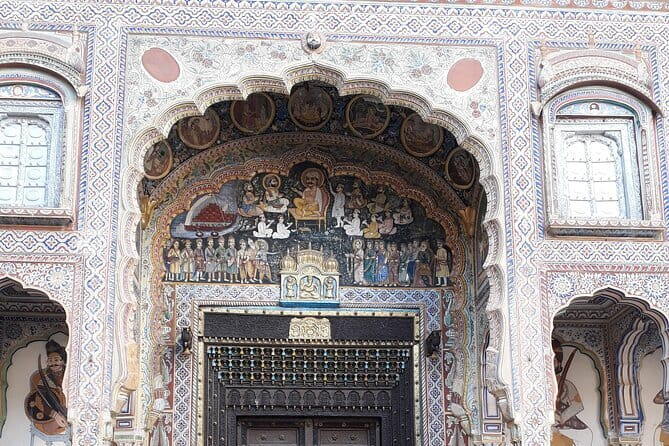
After Agra, the route shifts into places that feel more like discoveries than scheduled sightseeing.
Fatehpur Sikri’s Victory Gate
You will visit Fatehpur Sikri, including the Victory Gate, commissioned after a victory in Gujarat in the late 1500s. This is the kind of stop that works well with a good guide because the gate is not just a gate. It is a clue that you are looking at a site shaped by political ambition, not only religion and art.
Ticket notes also show some stops are listed as free entry, which can reduce pressure on your day budget if you are keeping track.
Jodha Bai’s Palace in Fatehpur Sikri
Then comes Jodha Bai’s Palace, the largest palace there. It is described as a fusion of Hindu and Persian architecture, built with red sandstone in 1569. If you notice how styles blend, this is a satisfying place to connect the architecture to the historical mix that produced it.
Abhaneri Stepwell, a classic reason to slow down
You end with Abhaneri, visiting an 8th-century stepwell. This is a short stop, but it is memorable because stepwells are both practical and artistic, shaped for water needs and community life.
Consider this: stepwells can be visually dramatic, but also uneven. Wear shoes you trust, and do not rush your photos if you are climbing down or moving around.
Jaipur with texture: Galtaji, royal cenotaphs, and local shopping time
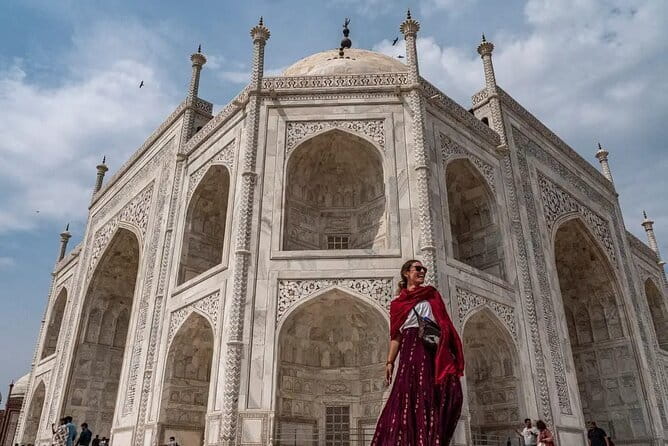
Jaipur is where the trip becomes more than monuments. It becomes more about how people live, shop, and remember the past.
Galtaji Temple, the Monkey Temple water experience
You visit Galtaji Temple, also called the Monkey Temple. The tour describes spring water flowing through narrow crevices into a series of pools and water tanks where pilgrims bathe, and temples built to honor the water flow.
This stop is special because it feels like an ongoing ritual, not only a landmark. If you enjoy watching devotion in action, this will land well. If you prefer quieter sightseeing with minimal interaction, you can still appreciate the architecture and the story, but you might choose your moments for photos.
Gaitore Ki Chhatriyan, royal cenotaphs
Next is Gaitore Ki Chhatriyan, the cenotaphs for the royal kings and queens of Jaipur. The key is what they represent: a royal memory landscape. The structure and setting make it easier to understand how power and legacy were physically marked.
Jaipur time for wishes, crafts, and buying with guidance
Then you get time in Jaipur for hidden finds, plus shopping and the chance to ask how items are made. That kind of guided shopping time can save you from the tourist trap version of shopping, because your guide can steer you toward items worth buying and help you understand what you are paying for.
A practical consideration: shopping time can move fast. If you have specific items in mind, tell your guide early so your schedule matches your reality.
City Palace, Amber Fort, and the Water Palace at the right moment
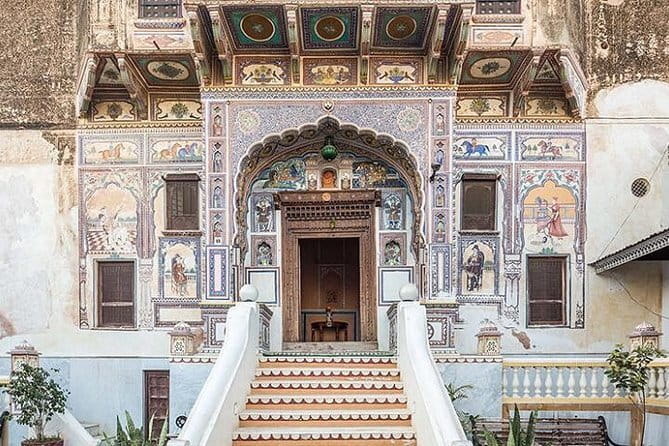
This is the Jaipur closer, and it balances grand palace space with something more seasonal and scenic.
City Palace of Jaipur
You visit the City Palace, with about two hours there. It is described simply as beautiful, but that matters. This is not only about one building, it is about how the palace complex signals Jaipur’s royal identity in layout and design.
Amber Fort with big views and long walkways
Then it is Amber Fort, with ramparts, gates, and cobbled streets. Amber Fort is one of those places where you either love the walking and views or you want to go slower. The tour advises moderate physical fitness, and it is fair to say you should plan for uneven ground and some steep or extended movement.
If you are traveling with anyone who gets sore easily, you will want breaks. Private guiding is your friend here, because you can request slower pacing without feeling like you are holding up a bus group.
Water Palace, the summer residence feel
Finally, you see the Water Palace, described as the summer residence for the Jaipur Royal family. The tour suggests you can see it while having lunch or watching the sunset, which is a smart planning idea because light changes everything for palace photography.
What you might consider: sunset plans depend on timing and energy. If you want this to be your best photo hour, prioritize rest earlier in the day so you are not too tired when the light gets good.
What your guide adds beyond the map
Raju is repeatedly described as accommodating, safety-focused, and enthusiastic about India’s history, food, and culture. The real value in that, for you, is not only trivia. It is decision-making help.
A good private guide can:
- handle timing when streets get messy
- steer you toward local food and dining settings even though meals are not included
- help you interpret what you are seeing so monuments feel connected, not random
This tour also hints at a pattern: Raju seems to have the right contacts to make the day flow, whether that is arranging practical stops or helping with the kinds of experiences that pop up when you ask.
And because the tour is private, you are not stuck following the loudest voice in the group.
Who this tour suits best
This is a strong fit if:
- you want the Golden Triangle but not the exact same cookie-cutter pace
- you value a guide who can explain what you are seeing and adjust where needed
- you like mixing major monuments with quieter, story-driven stops
- you prefer private pickup and driving support rather than figuring everything out solo
It is less ideal if:
- you hate adding costs for meals since lunch and dinner are not included
- you want a fully walk-free experience, because sites like Amber Fort involve physical movement
- you want a fixed schedule with no flexibility, since the guide is set up to accommodate wishes
Should you book this Golden Triangle done differently?
If your goal is to see Delhi, Agra, and Jaipur, but you also want the trip to feel guided, thoughtful, and adaptable, I think you will like this. The combination of major icons plus less typical stops like Lodhi Garden, the Black Taj story, Abhaneri stepwell, and Galtaji gives you more than a photo checklist.
The biggest reason to book is the match between the route and the guide’s approach: private, safety-minded, and organized, with a focus on making each day work for you. Just go in knowing lunches and dinners are on you, and plan comfortable shoes for forts and tombs.
If that sounds like your style, this tour is the kind of Golden Triangle experience that feels less like sightseeing and more like understanding.
FAQ
How long is the Golden Triangle tour?
The tour runs for about 8 days.
What meals are included in the tour price?
Breakfast is included each morning, for 7 breakfasts. Lunch and dinner are not included.
Is pickup included?
Yes. Pickup is offered, including collection from the airport on the first day and help getting to the airport or train on the last day.
Is this tour private?
Yes. It is a private tour/activity, and only your group participates.
Are monument admission tickets included?
Many admissions are listed as included, including stops such as Lotus Temple, Humayun’s Tomb, Itimad-ud-Daulah, Black Taj, Taj Mahal, City Palace, and Amber Fort. Some stops are listed as free entry, such as Lodhi Garden, Fatehpur Sikri, and Abhaneri.
What accommodation is used in Delhi?
The tour notes Red Fox in Delhi as the minimum standard for base level accommodation, and it says a step up can be negotiated.
What level of fitness do I need?
The tour notes a moderate physical fitness level. Some sites involve walking around forts and within historic complexes.
What are the operating hours for the tour?
The meeting hours are listed as 7:00 AM to 9:00 PM, Monday through Sunday.
Can I cancel for a full refund?
Yes, there is free cancellation. You can cancel up to 24 hours in advance for a full refund.
The Golden Triangle, Longer and Shorter




Recently reviewed across Jaipur
- 6-Night Royal Rajasthan: Private Tour from Jaipur, India
★ 5.0 · 10 reviews - Jaipur Nahargarh Sunset and Night Lights Tour
★ 5.0 · 10 reviews - Jaipur Full Day Heritage of Pink City Tour By Tuk Tuk With Chai
★ 5.0 · 10 reviews - Private Jaipur Sightseeing Tour by Tuk-Tuk
★ 5.0 · 10 reviews - Explore Jaipur at Night with Patrika Gate
★ 5.0 · 10 reviews - Jaipur walking tour.
★ 5.0 · 10 reviews
Golden Triangle Tours, compared.
 ★ 5.03-Days Private Golden Triangle Tour: Delhi, Agra & Jaipur by CarFrom $1271,098 reviews
 ★ 5.03-Day Delhi, Agra and Jaipur Private Tour – India Golden TriangleFrom $110812 reviews
 ★ 5.0Four-Day Private Luxury Golden Triangle Tour to Agra and Jaipur From New DelhiFrom $160807 reviews
 ★ 5.05 Nights 6 Days Private Golden Triangle Tour – Delhi Agra JaipurFrom $240574 reviews
 ★ 5.04 Days Golden Triangle TourFrom $146499 reviews
 ★ 5.0Private Car and Drive for Golden Triangle (4N/5D)From $167451 reviews
 ★ 5.0Private Golden Triangle Tour Delhi Agra Jaipur ( Top Rated )From $148436 reviews
 ★ 5.03-Day Private Luxury Golden Triangle Tour to Agra and Jaipur From New DelhiFrom $164424 reviews
Browse the lists this tour appears in