
REVIEW · AGRA DAY TRIPS FROM DELHI
Golden Triangle Tour: Private Delhi Agra Jaipur 5 Nights 6 Days
Golden Triangle can be a log-jam. This private Delhi, Agra, Jaipur 5-night tour keeps it moving with hotel pickup and different local guides in each city.
I like the control you get. You choose what to enter because entrance fees aren’t included, so you can spend your time and money where you care most.
One thing to plan for: you’ll likely add entrance tickets (about USD 70 per person on average), and a couple key sights close on set weekdays, like the Taj Mahal on Friday.
In This Review
- Key highlights worth your attention
- Why this Golden Triangle tour feels easier than DIY
- Day 1 in Delhi: airport pickup and a smooth start
- Day 2: Mughal Delhi highlights, plus modern landmarks you can actually enjoy
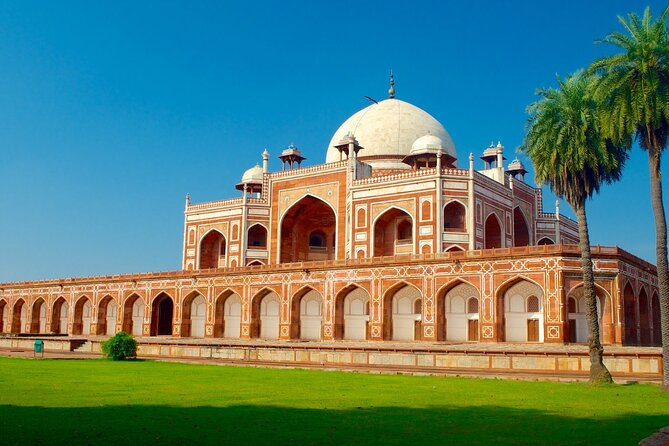
- Humayun’s Tomb, the garden-tomb that set a pattern
- Jama Masjid, Delhi’s big mosque with serious presence
- Qutub Minar, classic Delhi vertical drama
- Lotus Temple, a calmer break from the crowds
- India Gate and Raj Ghat, short stops with real weight
- Day 3 in Agra: Taj Mahal and Agra Fort without distractions
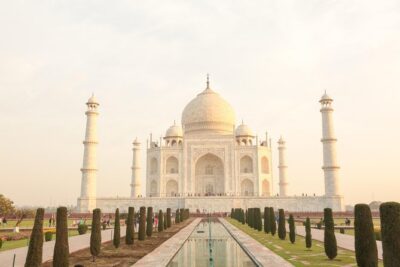
- Taj Mahal, plan your time and your entry decision
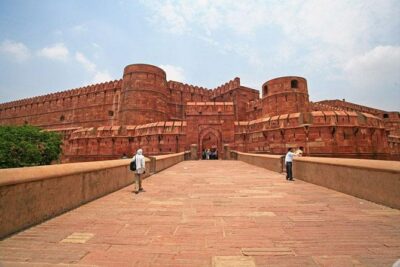
- Agra Fort, where the Mughal story turns from romantic to political
- Day 4: Fatehpur Sikri and Chand Baori, the quiet side of the Golden Triangle
- Fatehpur Sikri and Panch Mahal, Mughal architecture on a grand scale
- Chand Baori stepwell, a geometry lesson you’ll feel in your legs
- Day 5 in Jaipur: Hawa Mahal, City Palace, Jal Mahal, Jantar Mantar, Amber Fort
- Hawa Mahal, short stop, big payoff
- City Palace, Mughal and Rajput mix inside the walled city
- Jal Mahal, quick lake-side beauty
- Jantar Mantar, monumental astronomy instruments
- Amber Fort, your final big monument day
- Day 6: Jaipur to Delhi airport or hotel drop
- Guides and private transport: what you’re really paying for
- Entrance fees and closures: your real budget check
- Hotels and meals: how to keep the trip relaxed
- Who this private Golden Triangle tour suits best
- Should you book Golden Triangle Tour: Private Delhi Agra Jaipur 5 Nights 6 Days?
- FAQ
- What is included in the Golden Triangle tour price?
- Are entrance tickets included?
- How long is the tour?
- Which monuments have closure days I should know about?
- Is hotel pickup and airport transfer included?
- Will I have a guide during the trip?
- What kind of vehicle will I ride in?
- What is the cancellation policy?
Key highlights worth your attention
- Private door-to-door transfers from the airport and between hotels, plus a comfortable car for the whole route
- A different live guide in each city, so you get multiple expert viewpoints, not one generic script
- Flexible sightseeing choices since entry costs aren’t included in the tour price
- Dramatic “greatest hits” days, with Humayun’s Tomb, Jama Masjid, Qutub Minar, and the Taj Mahal on the schedule
- Jaipur set pieces that actually teach something, including Jantar Mantar’s monumental astronomy instruments
Other one-day Agra runs out of Delhi
Why this Golden Triangle tour feels easier than DIY
The Golden Triangle is popular for a reason, but it can also feel like a homework assignment if you plan it yourself. On this tour, you get a simple rhythm: you arrive, someone handles the logistics, and you move city to city in a private vehicle. That matters, because India’s road time and ticket lines can eat up a day faster than you expect.
What makes this setup work is the blend of guided structure and personal choice. You’ll have an English-speaking guide for sightseeing days, and then you still get to decide what you actually go inside. Since entrance tickets are not included, you’re not stuck paying for every single monument just because it exists on a checklist.
And yes, you’re paying for convenience here. But the value comes from what you avoid: negotiating rides, hunting for opening hours, and trying to translate the “how do I get there” part while you’re already tired from travel.
Day 1 in Delhi: airport pickup and a smooth start
Day 1 begins with pickup from Delhi Airport and a transfer to your Delhi hotel. After that, you’re free to settle in at your own pace.
This first step is more important than it sounds. Delhi is big, and arriving with no plan often means traffic, uncertainty, and that first-night fatigue. Starting with a direct transfer helps you get your bearings fast, so you’re ready for a full sightseeing day the next morning.
You also get one of those small logistics wins that makes a trip feel well-run: water bottles are provided, and the transport includes fuel, tolls, and state tax.
Day 2: Mughal Delhi highlights, plus modern landmarks you can actually enjoy
This is a packed day, but it’s also a smart mix. You get early Mughal-era storytelling, grand Islamic architecture, and a few landmarks that give Delhi its modern shape.
Golden Triangle itineraries, three to eight days
- 3-Days Private Golden Triangle Tour: Delhi, Agra & Jaipur by Car★ 5.0 · 1,098 reviews
- 3-Day Delhi, Agra and Jaipur Private Tour – India Golden Triangle★ 5.0 · 812 reviews
- Four-Day Private Luxury Golden Triangle Tour to Agra and Jaipur From New Delhi★ 5.0 · 807 reviews
- 4 Days Golden Triangle Tour★ 5.0 · 499 reviews
- Private Car and Drive for Golden Triangle (4N/5D)★ 5.0 · 451 reviews
Humayun’s Tomb, the garden-tomb that set a pattern
Humayun’s Tomb is often described as the first garden-tomb on the Indian subcontinent, and it’s a perfect opener. It’s close to other historic areas, so the whole stop feels anchored in the older fabric of Delhi. Plan about an hour here to take in the symmetry and the garden layout before you move on.
Entry tickets are not included, so if you’re trying to control costs, you can weigh how much you want to go in versus just view the complex from key angles.
Jama Masjid, Delhi’s big mosque with serious presence
Jama Masjid is one of India’s largest mosques, built by Shah Jahan between 1650 and 1657. Even if you keep your time short, you’ll feel its scale. It’s also an excellent place to pick up context on how Mughal power expressed itself through religious architecture.
This stop is about 30 minutes, but dress matters. The tour advises respectful attire for mosques and temples, so keep that in mind for your morning outfit.
Qutub Minar, classic Delhi vertical drama
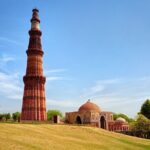
Qutub Minar rises to about 73 meters and is tied to Qutub-ud-Din Aibak’s legacy in the late 1100s. The stop is timed at about an hour. If you’re the kind of person who likes details like inscriptions, foundations, and why this site mattered, you’ll appreciate having a guide here.
Entry tickets are not included, so treat Qutub Minar as your “if I’m paying for one big indoor ticket, this is it” moment.
Lotus Temple, a calmer break from the crowds
The Lotus Temple is free and gives you a reset. It’s a Baháʼí House of Worship dedicated in December 1986, known for its flowerlike shape. You’ll have about an hour, which is enough time to wander slowly and enjoy the contrast after the heavier Mughal monuments.
India Gate and Raj Ghat, short stops with real weight
India Gate (Delhi Memorial) is free and built as a sandstone arch commemorating troops of British India who died in wars from 1914 to 1919. You’ll have about 20 minutes.
Raj Ghat is also free. It marks the cremation spot of Mohandas Karamchand Gandhi and sits on the Yamuna river’s side. It’s a quick 30-minute stop that can land emotionally, especially if you’ve been reading or thinking about India’s modern history.
Practical tip: This is a day where you’ll want comfortable shoes and water. Even with private transport, walking between sites adds up.
Day 3 in Agra: Taj Mahal and Agra Fort without distractions
This is your signature day. The schedule is simple: Taj Mahal first, then Agra Fort.
Taj Mahal, plan your time and your entry decision
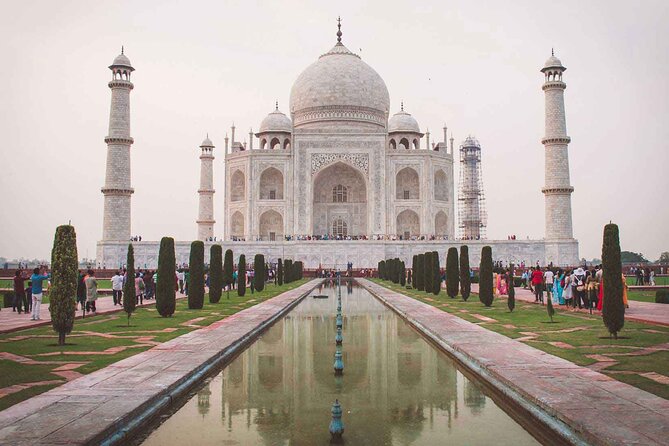
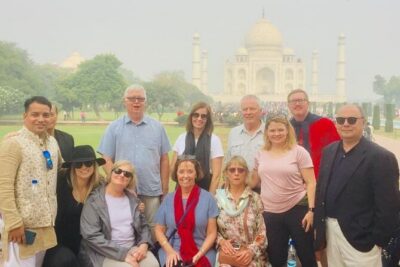
The Taj Mahal is an ivory-white marble mausoleum on the Yamuna’s south bank, commissioned in 1632 by Shah Jahan. Your visit is timed at about 3 hours, which is enough time to see key viewpoints and take breaks without feeling rushed.
Entrance tickets are not included, and the Taj Mahal closes every Friday. If your trip date lands on a Friday, the tour provider will have to handle that, either by adjusting timing or swapping sights. Check your dates early so you can plan your priorities.
Agra Fort, where the Mughal story turns from romantic to political
Agra Fort is UNESCO-listed and served as the main residence of Mughal emperors until 1638, when the capital shifted to Delhi. You’ll have about 45 minutes.
This stop is not just “another fort.” It’s your chance to connect the Taj Mahal’s grandeur with the real power behind it. Entrance tickets are not included here either, so again, decide how important fort interiors are to you versus exterior viewpoints.
Day 4: Fatehpur Sikri and Chand Baori, the quiet side of the Golden Triangle
This day is where the tour adds variety. Instead of repeating major Delhi-Agra-Jaipur icons, you head toward sites that show older layers of the empire’s reach and engineering.
Fatehpur Sikri and Panch Mahal, Mughal architecture on a grand scale
Fatehpur Sikri is in Agra district, and the stop description points to key structures like Panch Mahal. Even though the tour day is only about an hour at this stop, it’s still a worthwhile visit if you want to understand how Mughal planners built a city-like complex.
Entrance tickets are not included, but the time allocation makes it easier to be selective. You can focus on what you find most meaningful: layout, courtyard life, or the architecture itself.
Chand Baori stepwell, a geometry lesson you’ll feel in your legs
Chand Baori in Abhaneri is known as one of the oldest and most popular stepwells, built in the 9th century AD. The stop is timed at about 30 minutes.
If you like visual patterns and photos that actually look different from every other landmark, this is a strong add. Also, it’s visually compact in time, so you’re not sacrificing your full day budget to one stop. Entrance tickets are not included.
Day 5 in Jaipur: Hawa Mahal, City Palace, Jal Mahal, Jantar Mantar, Amber Fort
Jaipur is where the tour shines for variety. You get quick icons, plus a couple stops that explain how rulers thought about the world, not just how they looked.
Hawa Mahal, short stop, big payoff
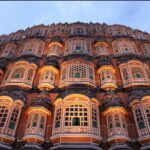
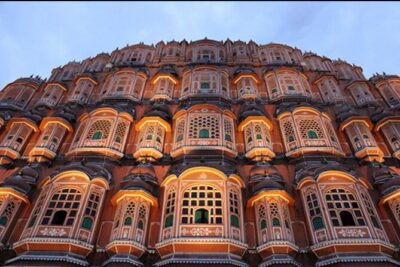
Hawa Mahal, the Palace of Breeze, is free and described as a five-storey building built without a foundation. The architecture is known for a curved style that leans at an 87-degree angle and a pyramidal shape.
You only have about 15 minutes, so treat it as a “get the shape in your brain” stop. If you’re hoping for lingering interior time, this schedule won’t be built for that, but it’s still a classic first visual.
City Palace, Mughal and Rajput mix inside the walled city
The City Palace Complex is about an hour. It’s located in the walled city and is described as a fusion of Mughal and Rajput architecture. Entrance tickets are not included.
This is the stop where a guide really helps. Without some explanation, you can walk past details and miss why the layout and style matter.
Jal Mahal, quick lake-side beauty
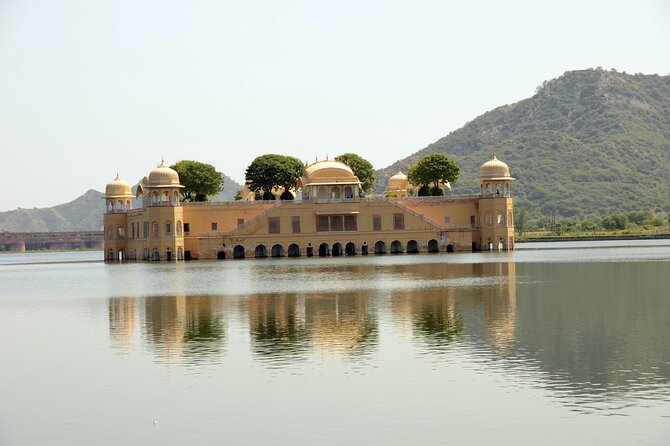
Jal Mahal sits in Man Sagar Lake. The palace was constructed in 1699 and later renovated and expanded in the 18th century. Your time here is short, about 15 minutes, and it’s free.
This is more of a photo-and-brief-walk stop than a long exploration. Still, it provides a pleasing break from the heavier fort and palace energy.
Jantar Mantar, monumental astronomy instruments
Jantar Mantar is about an hour and includes some twenty fixed instruments. It’s free? No, entrance tickets are not included. It’s also one of the places where you’ll appreciate learning what you’re looking at, because the structures can feel cryptic until someone frames the purpose.
This stop is a good reminder that the Golden Triangle isn’t only about palaces and tombs. It’s also about how people measured the sky.
Amber Fort, your final big monument day
Amer Fort, also called Amber Fort, is a UNESCO World Heritage site overlooking Maota Lake. It’s commissioned by Raja Man Singh I in the 16th century, and your visit is timed at about an hour.
Entrance tickets are not included. Since this is the last major sight before the return travel back toward Delhi, you’ll want to pace yourself during the day so you still have energy.
Day 6: Jaipur to Delhi airport or hotel drop
On Day 6, you transfer from Jaipur to Delhi Airport or to a hotel, with a travel time listed at about 5 hours. That timing matters. You’re not doing another sight-heavy day, so you can leave with fewer stress points and more time to handle your flight or final arrangements.
Entrance tickets are free here since it’s a transfer day, but your focus should be simple: confirm pickup time the night before and keep essentials within reach in the car.
Guides and private transport: what you’re really paying for
This is a private tour, meaning only your group participates. That changes the feel of each stop. You’re not competing for space, not rushing because other groups are waiting, and not constantly checking if your driver understood your plan.
You’ll travel in a comfortable private car, with vehicle type depending on group size:
- 1 to 2 people: sedan car like Swift Dezire or similar
- 3 to 4 people: SUV like Maruti Ertiga or Toyota Innova
- 5 to 10 people: a 12-seater mini van like Tempo Traveller
That matters because you’re more comfortable, especially on longer road legs like Jaipur to Delhi. It also keeps everyone together, which reduces the small but constant friction that happens when different people take different rides.
On top of that, the tour uses an English-speaking guide for sightseeing day only. Also, the guide in each city is different, which can be a real benefit. You get perspectives that fit the local sites rather than one guide stretching every explanation across three cities.
If you’re wondering about service quality, the reviews highlight the experience feeling smooth and punctual, and they even call out a driver named Mantun as a standout. That’s the kind of detail that signals someone actually cared about the daily execution, not just the printed schedule.
Entrance fees and closures: your real budget check
Here’s the honest math you should do before you book. The tour price is listed at $40.00 per person, but entrance tickets are not included, with an approximate total of USD 70 per person.
That can still be great value, depending on your entrance priorities and how much you like guided access. But you should treat it as two-part budgeting:
- Tour cost, which includes private transport, hotel breakfasts, and transfers
- Sight-only costs, mainly monument entrances
Also, watch closures:
- Taj Mahal is closed every Friday
- Delhi Red Fort, Lotus Temple, and Akshardham temple close every Monday
Since the schedule includes Lotus Temple on Day 2, a Monday itinerary could force an adjustment. It won’t ruin the trip, but it can change which free or paid stops you end up prioritizing. The best approach is to identify your “must-sees” and be flexible about the “nice-to-haves.”
Finally, respect matters at religious sites. The tour advises dressing respectfully for mosques and temples. Bring something that works quickly for you so you’re not scrambling when you arrive.
Hotels and meals: how to keep the trip relaxed
You get five nights in hotel accommodations with breakfast included, depending on the chosen hotel options. That’s a helpful baseline, because it removes one daily decision. Breakfast is included for five mornings, so you can start sightseeing without hunting for food.
Meals are not included beyond that, so you’ll want to plan for lunch and dinner breaks along the route. Private tours typically give you more freedom to eat when you want, but you should still budget time for it. On a multi-city itinerary, meals are not optional timing. They’re part of the pacing.
The tour’s pace is described as relaxed, and it mostly shows in the way the days are sized. You get a few major stops with clear time blocks, rather than trying to fit in ten monuments that all run together in your memory.
Who this private Golden Triangle tour suits best
This tour is a good match if you want the Golden Triangle highlights without turning your trip into logistics homework.
It’s especially good for:
- First-time visitors who would rather spend energy on sites, not directions
- Families or groups who want everyone together in one vehicle
- People who like structure but also want choice, especially around paid entrances
- Travelers who enjoy having local context for each city’s monuments
If you’re a hardcore budget traveler or you already know how to navigate tickets, opening days, and local transport on your own, you might find DIY cheaper. But if stress is your real budget, the private setup is often the better bargain.
Should you book Golden Triangle Tour: Private Delhi Agra Jaipur 5 Nights 6 Days?
If you want an easier Golden Triangle, I’d lean yes. The strongest reason is the mix of private transportation, hotel pickup and transfers, and local guidance that changes by city. Add the fact that you can choose what to enter because entrance fees aren’t included, and you get a trip that feels both guided and adjustable.
Before you commit, do two quick checks:
- Confirm your travel dates, especially if they hit a Friday for the Taj Mahal or a Monday for Delhi sites like Lotus Temple
- Budget entrance tickets on top of the tour price, since that’s where most extra spending comes from
If those two points line up with your priorities, this is a smart way to see Delhi, Agra, and Jaipur without the usual planning friction.
FAQ
What is included in the Golden Triangle tour price?
The tour includes private transportation, water bottles, an English-speaking guide for sightseeing day only, fuel, toll plaza, state tax, airport and hotel transfer, five nights of hotel with breakfast (if chosen hotel options), and breakfast for 5 days.
Are entrance tickets included?
No. Entrance tickets are not included, with an approximate additional cost of about USD 70 per person.
How long is the tour?
The tour runs for about 6 days and 5 nights, covering Delhi, Agra, and Jaipur.
Which monuments have closure days I should know about?
The Taj Mahal is closed every Friday. In Delhi, Red Fort, Lotus Temple, and Akshardham temple close every Monday.
Is hotel pickup and airport transfer included?
Yes. Pickup from the Delhi Airport on Day 1 and drop to Delhi Airport or hotel on Day 6 are included, along with transfers to your hotel after arrival.
Will I have a guide during the trip?
Yes, but it is for sightseeing day only. The guide in each city is different, and the tour includes an English-speaking guide for the sightseeing portion.
What kind of vehicle will I ride in?
It depends on your group size. For 1 to 2 people, it is by sedan car like Swift Dezire or similar. For 3 to 4 people, it is by SUV like Maruti Ertiga or Toyota Innova or similar. For 5 to 10 people, it is by a 12-seater mini van like Tempo Traveller.
What is the cancellation policy?
Free cancellation is available. You can cancel up to 24 hours in advance for a full refund. Within 24 hours of the start time, changes are not accepted and the amount paid is not refunded.
The Pink City, More Reviewed Days





The Golden Triangle, Longer and Shorter

Delhi to Agra and Back in a Day



Recently reviewed across New Delhi
- Golden Triangle – Delhi Agra and Jaipur
★ 5.0 · 10 reviews - Taj Mahal & Agra Tour by Indian Bullet Train All Inclusive
★ 4.5 · 10 reviews - Private Tour in Mehrauli Archaeological Park & Qutub Minar
★ 5.0 · 10 reviews - Old & New Delhi Tour
★ 5.0 · 10 reviews - From Delhi : Taj Mahal & Agra Fort Tour by Luxury Express Train
★ 5.0 · 10 reviews - Delhi Shopping Tour: Top Bazaars, Crafts & Souvenir Finds
★ 5.0 · 10 reviews
Agra Day Trips from Delhi, compared.
 ★ 5.02 Days Overnight Taj Mahal & Agra Tour From DelhiFrom $67743 reviews
 ★ 5.0Delhi to Agra Taj Mahal Private Day Trip by Superfast TrainFrom $170708 reviews
 ★ 5.0Private Taj Mahal & Agra Day Tour by Superfast Train From DelhiFrom $51580 reviews
 ★ 5.05 Nights 6 Days Private Golden Triangle Tour – Delhi Agra JaipurFrom $240574 reviews
 ★ 5.0Private Golden Triangle Tour Delhi Agra Jaipur ( Top Rated )From $148436 reviews
 ★ 5.0Taj Mahal Tour From Delhi to Agra Sightseeing by Private AC CarFrom $15403 reviews
 ★ 4.5Private Taj Mahal at Sunrise and Agra Day Tour from DelhiFrom $92373 reviews
 ★ 5.0Taj Mahal at Sunrise and Agra Day Tour from DelhiFrom $92335 reviews
Browse the lists this tour appears in