
REVIEW · GOLDEN TRIANGLE TOURS
Golden Triangle Tours
A Golden Triangle trip can feel rushed, but this one is built for rhythm. You move through Delhi, Agra, and Jaipur with a private setup, short guided stops, and a focus on the big sights like Qutub Minar, the Taj Mahal, and Amer Fort. I like that you get pickup support and a mobile ticket, so day-to-day logistics stay calmer.
Two things I especially like: first, you are not stuck guessing where to go next, because you have an English-speaking guide for key stops in Delhi and city touring support in Agra. Second, the trip format makes it easier to adjust on the fly, and the operator, Raj Kumar Gupta, is known for being responsive and flexible during planning. In past bookings, people specifically called out smooth English communication from guides like Nikhileshh, plus safe, punctual driving from folks such as Sunda, Jitendra, Himmat, and Arvind.
One consideration: several of the headline monuments list admission tickets as not included, so you will want to budget for entry fees on top of the $343 price.
In This Review
- Key highlights I’d plan around
- Delhi first night, then a day of icons you can actually manage
- Qutub Minar, India Gate, Humayun’s Tomb, Red Fort, Lotus Temple, Jama Masjid
- Taj Mahal day in Agra: big icons, shorter windows, smart context
- Fatehpur Sikri plus Chand Baori: the day that adds variety
- Jaipur’s Amer Fort and city sights: palaces plus the science of time
- Transport, timing, and tickets: how the trip stays smooth
- Who should book this Golden Triangle tour, and who might skip it
- Should you book this Delhi-Agra-Jaipur tour with Raj India Tours?
- FAQ
- How long is the Golden Triangle tour?
- Which places are included in the itinerary?
- Are entrance fees included for the monuments?
- Do you get pickup and drop-off?
- What is the minimum number of people needed to book?
- What is the cancellation policy if I change plans?
Key highlights I’d plan around
- Private group-only experience with only your party joining, which usually means more control over timing
- Hotel pickup and city touring support, including guide pickup in Agra to start the sightseeing day
- English-speaking guidance in Delhi, especially for the Qutub Minar area
- A classic but smart route, hitting Delhi, Agra, Fatehpur Sikri, and Jaipur in about 6 days
- Major sights with mixed ticket status, with some free stops and several paid-entry stops
Golden Triangle itineraries, three to eight days



Delhi first night, then a day of icons you can actually manage
Day 1 is basically a soft landing in New Delhi: you stay in a hotel for about 12 hours. That matters because the Golden Triangle is not a one-museum show. It is travel, jet lag (if you fly in), and then a packed set of monument days right after.
When you start Day 2, you already have your bearings. I also like that the itinerary threads together Mughal-era landmarks and religious sites in a logical loop, instead of sending you back and forth across the city all day.
Qutub Minar, India Gate, Humayun’s Tomb, Red Fort, Lotus Temple, Jama Masjid
Day 2 is where Delhi earns its reputation, without trying to do everything perfectly. You have time blocks that are short enough to keep the day moving, but long enough to get a real look when you slow down inside key spots.
Here’s how the day feels, stop by stop:
Qutub Minar
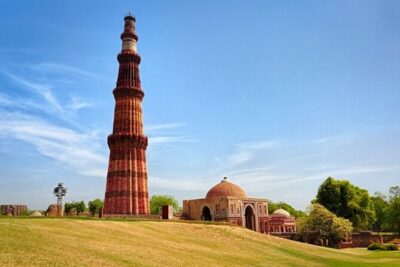
You start with a Qutub Minar visit where an English-speaking guide joins you for the tour. The stop is short (around 30 minutes), so your strategy is simple: arrive ready to see the details, then ask questions that match what you are noticing. This is a strong choice for a first Delhi day because it sets the historical tone fast.
India Gate (All India War Memorial)
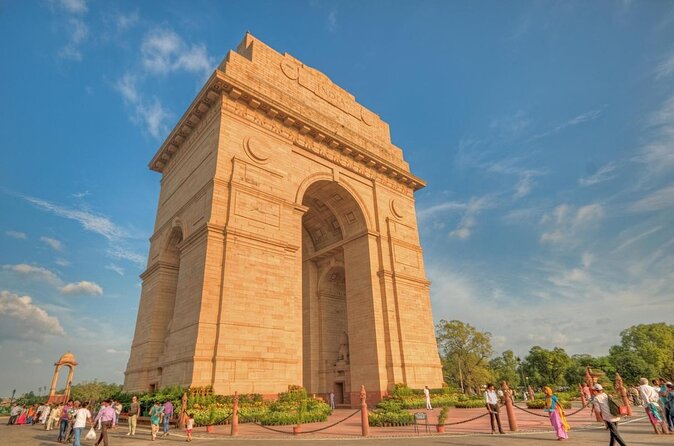
You then pause at India Gate along Rajpath. This is one of those stops that helps you understand modern Delhi’s layout and why the monuments matter in how people move through the city.
Humayun’s Tomb
Next is Humayun’s Tomb, around 30 minutes. It is often described as the first garden-tomb on the Indian subcontinent, and even with limited time, the layout helps you understand the Mughal design principles that show up again later in Agra.
Red Fort
You follow with Red Fort for about 45 minutes. That extra time compared to other stops helps. Red Fort is big, so if you have limited energy, focus on the main viewpoints and major architectural lines rather than trying to cover every corner.
Lotus Temple
Lotus Temple is included with admission listed as free in the plan, and your stop is about 30 minutes. I like adding one modern, calm-feeling place like this amid the older monuments because it gives your brain a reset before the more crowded areas.
Jama Masjid
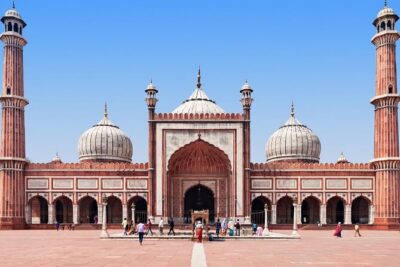
Finally, you reach Jama Masjid for about 30 minutes, with admission listed as free. This is a great closing note for Delhi day because it is monumental, active, and deeply connected to daily life in Old Delhi.
Possible drawback on Day 2: the schedule is tight. If you like long wandering time, you may feel the day compresses. For that reason, come with a few must-see priorities, and let the guide’s pace help you hit them.
Taj Mahal day in Agra: big icons, shorter windows, smart context
Day 3 is the classic Agra set, and the timing is built around seeing three major sights without burning the whole day. The plan also says the guide picks you up from your hotel and handles the city touring.
Taj Mahal
The Taj Mahal visit is about 2 hours, and admission tickets are not included. Two hours is enough to see it properly from multiple angles and spend time at the main viewing areas. If you are the type who likes photography and details, 2 hours gives you room to do both, not just walk past.
Practical tip: with admission not included, you will want to plan cashless options and any ticket queues in advance. The good news is that the rest of the trip structure keeps other logistics handled.
Agra Fort
You then do Agra Fort for about 1 hour. With that time, you can get a clear sense of why forts like this mattered for power and defense, plus how their layouts work.
Mehtab Bagh
The final stop is Mehtab Bagh for about 30 minutes. Even if you treat this like a viewpoint rather than a long visit, it is a nice way to end the Agra day because it gives you a different angle and mood.
- Full-Day Jaipur Private Sightseeing Tour by Car with Guide★ 5.0 · 472 reviews
- Pink City Cooking Class★ 5.0 · 452 reviews
- Private Elephant Sanctuary★ 5.0 · 390 reviews
- Private Full Day Jaipur Sightseeing Tour By Tuk Tuk★ 5.0 · 382 reviews
- Private Guided Half Day Tour Jaipur★ 5.0 · 371 reviews
Fatehpur Sikri plus Chand Baori: the day that adds variety
Day 4 gives you a break from the big city pattern. Fatehpur Sikri is about 2 hours, with admission listed as free. Then you move to Chand Baori, the famous stepwell outside Abhaneri, for about 30 minutes, with admission not included.
Fatehpur Sikri
This is a Mughal imperial complex that reads like a whole world in miniature. Two hours is a realistic window if you want to see the main areas without feeling trapped by one viewpoint. Admission listed as free also helps your budget here, since you already expect some paid entries elsewhere.
Chand Baori (Stepwell)
Chand Baori is the visual curveball of the itinerary. The plan notes it extends about 30 meters into the ground and is one of the deeper, larger stepwells in India. For just 30 minutes, you can still get a strong visual grasp, especially if you pause where you can see the repeating geometry down the steps.
If you care about photos, this is one of the best short stops in the itinerary because it rewards standing still. If you do not, it still works as a breathing space between forts and palaces.
Jaipur’s Amer Fort and city sights: palaces plus the science of time
Day 5 is your Jaipur peak day, and it packs the most iconic heritage stops. The structure is good because it balances one huge fort, two major palace complexes, and one practical-to-fascinating landmark.
Amber Fort
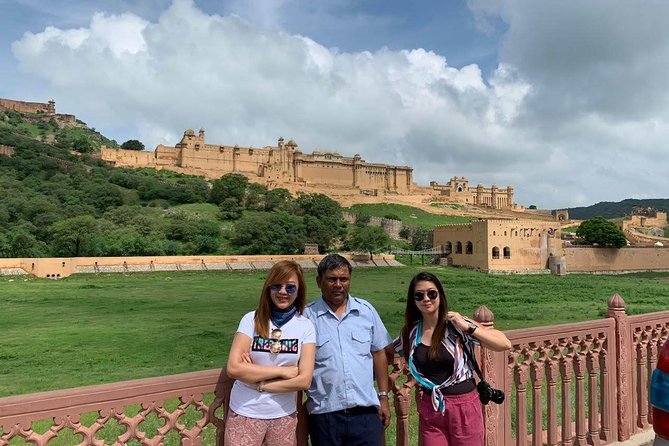
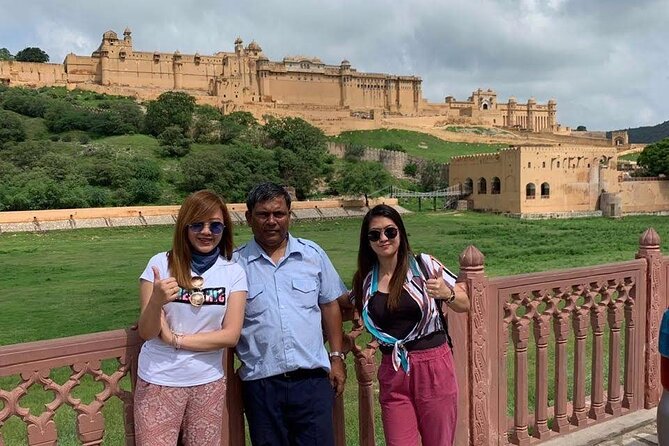
You start at Amer Fort for about 1 hour 30 minutes. Admission is listed as not included. This is the heavy hitter of the day. With that time, you can enjoy the key sections, see the defensive walls and palace-style rooms, and understand why Amber Fort is such a defining Jaipur image.
Jal Mahal
Next comes Jal Mahal for about 10 minutes, with admission listed as free. This stop is short by design. You mainly get the visual idea of the palace sitting in the Man Sagar Lake. It is ideal if you want a quick scenic pause that does not eat your whole day.
City Palace of Jaipur
Then you move into the City Palace for about 1 hour 30 minutes. Admission is not included. This is where Jaipur feels less like a single monument and more like a functioning cultural center tied to the royal story.
Jantar Mantar
After that, you visit Jantar Mantar for about 30 minutes, admission not included. It is a collection of astronomical instruments built by Sawai Jai Singh II, and it includes the world’s largest stone sundial. I love this type of stop because it turns sightseeing into problem-solving. Even in a short window, you get that sense of humans building tools to measure time and the sky.
Hawa Mahal
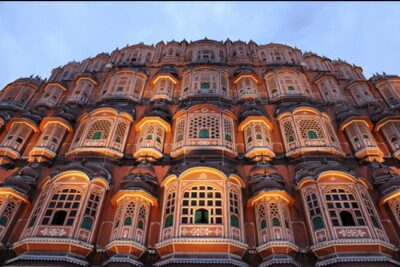
The itinerary includes Hawa Mahal as a stop, though it does not specify an admission status. Either way, it is one of those monuments you can appreciate fast because the facade does most of the talking. Think of it as Jaipur’s signature silhouette, next to the City Palace area.
Transport, timing, and tickets: how the trip stays smooth
This is a private tour/activity, meaning only your group participates. That is a real advantage in India, where shared schedules can create delays or force you to compromise on priorities. With a private setup, you spend less time negotiating the day and more time matching it to your pace.
Pickup is listed as offered, and the plan also mentions the guide picking you up from the hotel for Agra day. That reduces the classic pain point of self-guided Golden Triangle travel, where you end up spending half your day coordinating rides.
A second practical win is the mobile ticket. You still need to keep an eye on what is included and what is not, but it typically saves time at check points.
Now, about tickets and the $343 price. The itinerary clearly marks some sights as admission ticket free (for example Lotus Temple and Jama Masjid in Delhi, and Fatehpur Sikri and Jal Mahal on later days). But several headline items show admission as not included, including Qutub Minar, Humayun’s Tomb, Red Fort, Taj Mahal, Agra Fort, Mehtab Bagh, Amber Fort, City Palace, and Jantar Mantar. So the true cost depends on which paid-entry sites you plan to prioritize.
In other words, the tour price feels like a base for transport, guiding, and routing. Your final total should include entry fees. If you want maximum value, tell your guide your priorities early, then decide how you want to spend on the paid monuments.
One small logistics note: the plan lists a start time of 12:00 am. That is likely a placeholder, or a date-based system entry. I recommend you confirm your actual pickup time by message well before departure, so nobody is standing around waiting.
Who should book this Golden Triangle tour, and who might skip it
This tour makes sense if you want a clean route through Delhi, Agra, and Jaipur with guided structure and private transport. It is also a good fit if you like the classic icons but want help stitching them into a plan.
It is also a strong choice for people who appreciate safe, punctual driving. Multiple experiences highlight that the driver setup can make the trip feel controlled, with people mentioning being never late and never lost, which matters a lot when you are crisscrossing across different parts of the cities.
You might reconsider if you prefer long, slow museum time. Several stops are around 30 minutes to 1 hour, so it is more “see and understand” than “wander for hours.” Also, the tour is not recommended for travelers with heart problems, so you should take that seriously.
If you travel with a friend or partner, the minimum of 2 Pax works in your favor. Solo travelers likely need to find a compatible pair or choose a different format.
Should you book this Delhi-Agra-Jaipur tour with Raj India Tours?
If your goal is a classic Golden Triangle with minimal planning stress, I think this is a solid option. You get private routing, guide support at key points, and a route that includes major landmarks plus one useful variety day with Fatehpur Sikri and Chand Baori.
I would book if:
- You want private group-only guiding and transport between cities.
- You are okay treating some stops as shorter “high-impact” visits.
- You are ready to budget for paid entries at major sites like the Taj Mahal and forts.
I would ask questions first if:
- You are trying to keep costs tight, because admission fees are not included for many major monuments.
- You have health concerns that could be impacted by long days and vehicle time.
- You prefer very early starts or very late finishes, since the plan lists a 12:00 am start and you will want your real pickup timing confirmed.
FAQ
How long is the Golden Triangle tour?
The tour is listed as 6 days (approx.), with sightseeing days in Delhi, Agra, and Jaipur plus a hotel night on Day 1 and an airport drop off on Day 6.
Which places are included in the itinerary?
You visit New Delhi, Qutub Minar, Humayun’s Tomb, Red Fort, Lotus Temple, Jama Masjid, Agra (including the Taj Mahal and Agra Fort), Mehtab Bagh, Fatehpur Sikri, Chand Baori, Amber Fort, Jal Mahal, City Palace of Jaipur, Jantar Mantar, and a stop at Hawa Mahal.
Are entrance fees included for the monuments?
Not always. Some stops list admission tickets as free, while many others list admission tickets as not included, including major sites like the Taj Mahal, Agra Fort, and Amer Fort.
Do you get pickup and drop-off?
Pickup is offered, and the plan also notes that the guide picks you up from the hotel for the Agra city tour. On Day 6, you get drop off at Delhi or Jaipur airport.
What is the minimum number of people needed to book?
The tour requires at least 2 Pax (two people).
What is the cancellation policy if I change plans?
You can cancel up to 3 days in advance of the experience for a full refund. If you cancel less than 3 days before the start time, the amount paid is not refunded.
The Golden Triangle, Longer and Shorter




Recently reviewed across Jaipur
- 6-Night Royal Rajasthan: Private Tour from Jaipur, India
★ 5.0 · 10 reviews - Jaipur Nahargarh Sunset and Night Lights Tour
★ 5.0 · 10 reviews - Jaipur Full Day Heritage of Pink City Tour By Tuk Tuk With Chai
★ 5.0 · 10 reviews - Private Jaipur Sightseeing Tour by Tuk-Tuk
★ 5.0 · 10 reviews - Explore Jaipur at Night with Patrika Gate
★ 5.0 · 10 reviews - Jaipur walking tour.
★ 5.0 · 10 reviews
Golden Triangle Tours, compared.
 ★ 5.03-Days Private Golden Triangle Tour: Delhi, Agra & Jaipur by CarFrom $1271,098 reviews
 ★ 5.03-Day Delhi, Agra and Jaipur Private Tour – India Golden TriangleFrom $110812 reviews
 ★ 5.0Four-Day Private Luxury Golden Triangle Tour to Agra and Jaipur From New DelhiFrom $160807 reviews
 ★ 5.05 Nights 6 Days Private Golden Triangle Tour – Delhi Agra JaipurFrom $240574 reviews
 ★ 5.04 Days Golden Triangle TourFrom $146499 reviews
 ★ 5.0Private Car and Drive for Golden Triangle (4N/5D)From $167451 reviews
 ★ 5.0Private Golden Triangle Tour Delhi Agra Jaipur ( Top Rated )From $148436 reviews
 ★ 5.03-Day Private Luxury Golden Triangle Tour to Agra and Jaipur From New DelhiFrom $164424 reviews
Browse the lists this tour appears in