
REVIEW · JAIPUR PINK CITY TOURS
Heritage Culture and History Walking Tour in Jaipur
Jaipur clicks into place on foot. This walk strings together astronomy, palaces, temples, and street markets in one easy loop. I like that it feels guided and structured, without turning your day into a museum crawl.
Two things I especially like are the temple-focused storytelling and the way the guide handles questions. You get stops like Govind Devji Temple with the aarti ceremony, plus multiple major landmarks along the route.
One consideration: most of the big sights are not included in the $20 price, so you will budget entrance fees on top of the tour cost. Plan on paying for Jantar Mantar, City Palace, Hawa Mahal, and Isarlat Sargasooli separately.
In This Review
- Quick reasons this Jaipur heritage walk works
- Walking from Jantar Mantar to royal Jaipur, in one smart circuit
- Jantar Mantar, where Jaipur shows off science
- City Palace: royal power explained through architecture
- Govind Devji Temple and the aarti ceremony
- Chandi Ki Taksal and the market side of Jaipur
- Mandir Shri Ram Chandra Ji: a peaceful break
- Hawa Mahal, seen from the outside on purpose
- Mandir Shree Laxminarayan ji and temple architecture you can feel
- Johri Bazar and Katla Purohit Ji Ka, where Jaipur shops with history
- Isarlat Sargasooli tower: the panoramic finish
- Price and ticket reality: $20 plus entrance fees
- Guides who answer hard questions, and keep it friendly
- Who should book this Jaipur heritage culture walk
- Should you book this tour?
- FAQ
- What is the duration of the Heritage Culture and History Walking Tour in Jaipur?
- What does the $20 price include?
- Which entrance tickets are not included?
- Which stops have free admission?
- Where does the tour start and end?
- Is this tour private?
Quick reasons this Jaipur heritage walk works
- Jantar Mantar first, with astronomy explained through Raja Sawai Jai Singh II’s vision
- City Palace + temple stops in one efficient route, with aarti time at Govind Devji
- Outside-only views of Hawa Mahal, which keeps things moving without adding extra time inside
- Markets with context, including Chandi Ki Taksal, Johri Bazar, and Katla Purohit Ji Ka
- Photo-friendly finish at Isarlat Sargasooli for panoramic views
- Strong guide support, with an English and Spanish written guide plus a water bottle
Jaipur, a few more ways to see it

Walking from Jantar Mantar to royal Jaipur, in one smart circuit
This tour is built for people who want the highlights, but also want the meaning behind them. You start at Jantar Mantar, then steadily work your way through royal power, Hindu worship spaces, and the markets that keep the city lively.
The pacing is also a big deal. At about 2 hours 25 minutes, you get enough time to look closely and hear the stories, without the day feeling drained. It is a private setup, so your group stays together, and your guide can adjust how fast you move.
And yes, you will be walking. Comfortable shoes matter here. Also, since you will pay some entrances separately, keep the listed INR ticket amounts in mind when planning your budget.
Jantar Mantar, where Jaipur shows off science

Your tour kicks off at Jantar Mantar at the ticket counter area. Before you even wander the grounds, you get key context about Raja Sawai Jai Singh II and the way he imagined astronomy as something you could literally measure with instruments.
What makes this stop special is how it changes your mental image of Jaipur. Instead of thinking only palaces and forts, you start seeing the city as a place where rulers invested in observation, math, and precision. The astronomical instruments are not just props, the explanations make them feel like a working system.
Practical note: Jantar Mantar entrance is 200 INR and is not included. You should expect to handle that ticket at the site. The time at this first stop is about 20 minutes, so it helps to arrive ready to focus, not to browse slowly.
City Palace: royal power explained through architecture
From Jantar Mantar, you walk to the City Palace of Jaipur, another major cornerstone of the day. This stop is only about 20 minutes, so the goal is not to cover every room, it is to understand what the complex represents and how it reflects the royal family’s story.
You learn how the palace works as a statement. Think of it as more than a residence, it is a symbol of authority, taste, and control of public life. Even if you have seen palace photos before, having the architecture framed with the right background changes how you look at details like how spaces connect and how the complex was designed to project status.
The main drawback is simply cost and time. City Palace admission is 1000 INR and is not included. If you are the type who wants to linger for longer than a guided 20-minute slice, you may feel a little rushed.
- Full-Day Jaipur Private Sightseeing Tour by Car with Guide★ 5.0 · 472 reviews
- Pink City Cooking Class★ 5.0 · 452 reviews
- Private Elephant Sanctuary★ 5.0 · 390 reviews
- Private Full Day Jaipur Sightseeing Tour By Tuk Tuk★ 5.0 · 382 reviews
- Private Guided Half Day Tour Jaipur★ 5.0 · 371 reviews
Govind Devji Temple and the aarti ceremony
Next comes a quieter, more spiritual rhythm at Govind Devji Temple. The highlight here is the chance to witness the aarti ceremony, which brings the worship practice into your senses, not just your ears.
This is also where the guide’s role matters most. When someone explains what you are seeing in real time, the ceremony becomes easier to follow. You are not stuck guessing the meaning of gestures or timing. The atmosphere is meant to feel serene, and the tour gives you about 20 minutes in this stop.
A small practical thing to keep in mind: temple schedules can be timing-sensitive, and the experience can feel different depending on what is happening when you arrive. The tour gives this stop as part of the route, but the overall feel is tied to the moment.
Chandi Ki Taksal and the market side of Jaipur
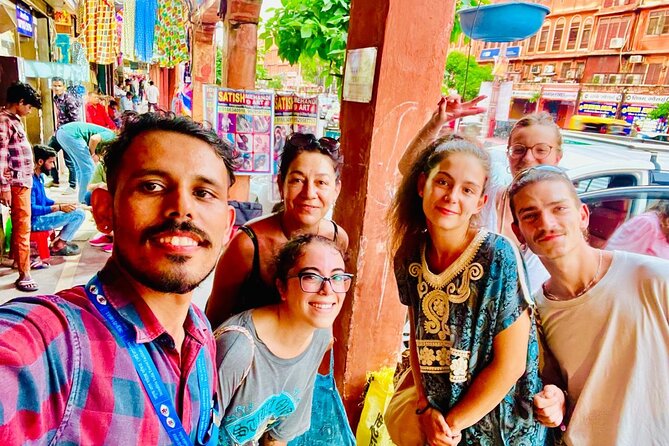
After the temple, the tour shifts into everyday Jaipur at Chandi Ki Taksal, a local bazaar that has been around since the 17th century. This is a very different kind of learning. Instead of royal architecture or ceremonial space, you see how goods and crafts move through the city.
The tour keeps this stop respectful and low-pressure. You are welcome to explore, but buying is not the point. In my view, that is the right approach, because the value here is in noticing what the area does and how it reflects local trade culture.
This segment is described as a stroll through the area, with the focus on experiencing the setting. If you like people-watching and street texture, you will probably enjoy this part more than you expect.
Mandir Shri Ram Chandra Ji: a peaceful break
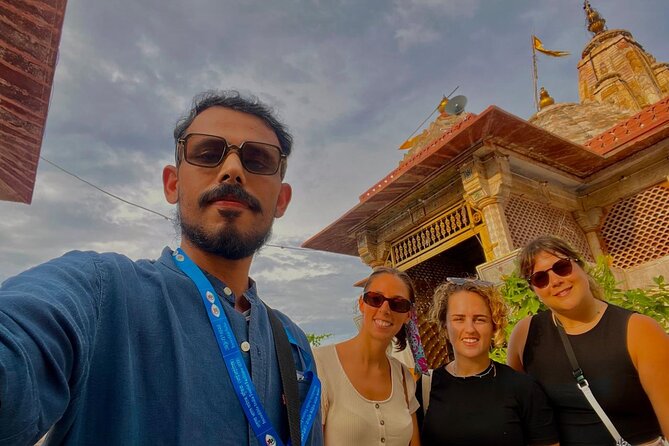
Then you reach Mandir Shri Ram Chandra Ji, dedicated to Lord Rama. You get about 20 minutes, and it is listed as admission free for this stop.
This is a good counterbalance to the louder market energy. Temples here work like reset buttons. Even when you are not catching every detail of the rituals, you can usually feel the shift in pace and tone.
One small drawback is that this is not an all-day temple circuit. You will not get hours of slow worship time. But it fits well in a structured 2.5-hour loop.
Hawa Mahal, seen from the outside on purpose

You walk by Hawa Mahal, also known as the Palace of Wind. Importantly, the tour is designed so you do not go inside. You get about 15 minutes to admire the facade and learn the architectural story behind it.
This outside-only plan makes sense if your goal is to see more of the city without spending extra time queued up or moving slowly through indoor sections. The facade is dramatic on its own, and a guide can point out what to notice so you are not just taking a quick photo and moving on.
Cost note: Hawa Mahal entrance is 200 INR and is not included. Since you do not go inside, you are not paying for entry here as part of the experience time, but the tour listing still tags it as ticketed. If you want to confirm whether you are expected to buy anything, ask your guide at the start.
Mandir Shree Laxminarayan ji and temple architecture you can feel
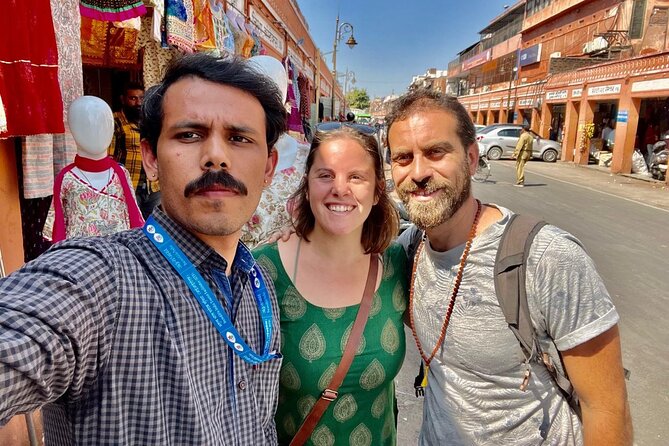
The next temple stop is Mandir Shree Laxminarayan ji, dedicated to Lord Vishnu and Goddess Laxmi. You get about 25 minutes, and it is listed as admission free.
Why this stop works in the middle of a walking day is simple: you get time to slow down. The architecture and spiritual significance are part of the explanation, so you can connect what you see with what it means in Hindu culture. It is also a chance to regroup mentally before you move back into the markets.
Because this is a longer stop than some others, it is a nice moment to ask questions. If you are curious about how worship practices differ by temple, this is the time.
Johri Bazar and Katla Purohit Ji Ka, where Jaipur shops with history
After the final temple, you move into the market maze. First up is Johri Bazar, known for jewelry and handicrafts. Then you stroll the narrow streets of Katla Purohit Ji Ka, described as a historic market area with strong local character.
These segments are about more than shopping. You are guided to notice what kinds of goods dominate, how street life flows, and how these markets have become part of the city’s identity.
The practical trade-off is that markets can be less predictable than monuments. Crowds, shop hours, and how long you personally want to browse can stretch time. The good news is that the tour is built to keep you moving so you still end at the scenic tower with time for photos.
If you do plan to buy something, the tour signals that you are welcome to explore at your own discretion. Just keep an eye on time and your budget.
Isarlat Sargasooli tower: the panoramic finish
The tour closes at Isarlat Sargasooli, a historic tower with panoramic views. It is described as built in the 18th century, and your guide will share significance and architectural features as you approach.
This is a smart finish. You start with a science-minded landmark, then move through royal and religious sites, then end by looking out over the city. It helps you connect the pieces. You see how the neighborhoods and streets fit together, which is exactly what you want after hours of close-up details.
Ticket note: Isarlat Sargasooli entrance is 200 INR and is not included. Your time here is about 10 minutes, so it helps to decide quickly where you want to stand for the best view and photos.
Price and ticket reality: $20 plus entrance fees
On paper, the tour price is $20 for a 2 hours 25 minutes guided walk. That is a strong base price, especially because the tour includes a water bottle and an English and Spanish written guide.
But here is the practical truth: several key stops carry separate entrance tickets. The ones listed as not included are:
- Jantar Mantar: 200 INR
- City Palace: 1000 INR
- Hawa Mahal: 200 INR
- Isarlat Sargasooli: 200 INR
Add those up and you are planning for about 1,600 INR in entrances on top of the $20. City Palace is the main cost driver. If your budget is tight, you might feel it, but you are buying access to major Jaipur landmarks, not just street viewpoints.
Also note that at least two temple stops are listed as free: Mandir Shri Ram Chandra Ji and Mandir Shree Laxminarayan ji. Those can help balance the ticket load.
Value wise, I think this tour hits a sweet spot if you want a guided overview with multiple major stops in one afternoon, rather than paying for a separate guide per monument.
Guides who answer hard questions, and keep it friendly
The big reason this walk gets strong praise is the guide. People highlight guides who are friendly, speak excellent English, and can answer detailed questions about history, religion, and daily life in Jaipur.
Some groups specifically mention guides who are PhD students, and that shows up in the way the explanations can get technical when you ask. Even better, guides are described as patient, including when someone wants time for shopping or just needs a slower moment.
There is also a sense that your interests shape the experience. Guides may ask what topics you care about and then adjust the storytelling style. That makes a difference when you are choosing between a generic highlight tour and something that feels like it is built around you.
Who should book this Jaipur heritage culture walk
This is a strong fit if you:
- Want multiple landmarks plus markets in a single route
- Like history tied to religious practice, not just dates
- Prefer a guided pace that is structured but not rushed
- Want a tour where the guide can handle questions, not just deliver a script
It is less perfect if you:
- Want long, unhurried time inside palaces or museums. The stops are short by design.
- Have a very tight entrance-fee budget, since City Palace alone is costly.
If you are with kids, it can also work well because the stops are varied and the guide tends to keep it engaging. The pace also avoids the problem of having only one long indoor attraction.
Should you book this tour?
I would book it if you want an efficient, story-driven way to understand Jaipur from Jantar Mantar’s science to Isarlat Sargasooli’s city views, with temple time and local markets in between. The $20 base price is a good deal, especially with the included water bottle and bilingual written guide.
If the separate entrance fees make you hesitate, do the math first and decide if City Palace is a must for you. If it is, this tour can feel like a practical shortcut to seeing the big anchors in one guided loop.
FAQ
What is the duration of the Heritage Culture and History Walking Tour in Jaipur?
The tour lasts about 2 hours 25 minutes.
What does the $20 price include?
The tour includes a water bottle and an English and Spanish written guide.
Which entrance tickets are not included?
Not included tickets are Jantar Mantar (200 INR), City Palace (1000 INR), Hawa Mahal (200 INR), and Isarlat Sargasooli (200 INR).
Which stops have free admission?
Mandir Shri Ram Chandra Ji and Mandir Shree Laxminarayan ji are listed as having free admission.
Where does the tour start and end?
It starts at Jantar Mantar (Malve Nagar, J.D.A. Market, Kanwar Nagar, Jaipur) and ends at Isarlat Sargasooli near Sarkasuli in the Aatish Market area.
Is this tour private?
Yes. It is listed as a private tour/activity, meaning only your group participates.
The Pink City, More Reviewed Days


Recently reviewed across Jaipur
- 6-Night Royal Rajasthan: Private Tour from Jaipur, India
★ 5.0 · 10 reviews - Jaipur Nahargarh Sunset and Night Lights Tour
★ 5.0 · 10 reviews - Jaipur Full Day Heritage of Pink City Tour By Tuk Tuk With Chai
★ 5.0 · 10 reviews - Private Jaipur Sightseeing Tour by Tuk-Tuk
★ 5.0 · 10 reviews - Explore Jaipur at Night with Patrika Gate
★ 5.0 · 10 reviews - Jaipur walking tour.
★ 5.0 · 10 reviews
Jaipur Pink City Tours, compared.
 ★ 4.9Private Full Day Sightseeing Tour By Car with GuideFrom $41,839 reviews
 ★ 5.03-Hour Morning Bike Tour of JaipurFrom $321,253 reviews
 ★ 5.03-Days Private Golden Triangle Tour: Delhi, Agra & Jaipur by CarFrom $1271,098 reviews
 ★ 5.03-Day Delhi, Agra and Jaipur Private Tour – India Golden TriangleFrom $110812 reviews
 ★ 5.0Four-Day Private Luxury Golden Triangle Tour to Agra and Jaipur From New DelhiFrom $160807 reviews
 ★ 4.8Private Sightseeing Day Tour with Guide by CarFrom $5773 reviews
 ★ 5.0Jaipur Day Trip from Delhi by Car or Train – All InclusiveFrom $116663 reviews
 ★ 5.0Jaipur City Private Day Tour from Delhi by Car – All InclusiveFrom $10589 reviews
Browse the lists this tour appears in