
REVIEW · JAIPUR PINK CITY TOURS
Jaipur Heritage Walk – Artisans | Bazaars | Culinary | Temples (Awarded)
Jaipur feels like it comes to life on foot. This heritage walk threads you through the Pink City’s tight lanes, artisan work, and market scenes, with temple time and local snacks along the way.
I love the way the tour mixes hands-on crafts with real daily shopping, from metal beating to bangle making at Maniharo Ka Rasta. I also like that you get a clear sense of Jaipur’s layout, starting at Golcha Cinema and the walled-city gates before the route fans out into bazaars and bazaars-with-a-purpose.
One thing to plan for: you’ll be walking narrow streets and colorful markets, so wear comfortable shoes and be ready for crowds and uneven sidewalks in busy areas.
In This Review
- Key things I think you’ll care about
- Starting at Golcha Cinema and Mapping Jaipur’s Walled City
- Metal Beaters, Paani Puri Wholesale, and Ayurveda in the Narrow Lanes
- The Royal Gate Entry and the Logic of Jaipur’s Streets
- Sodhya Halwai Bridal Market and Mohanthal Tasting
- Maniharo Ka Rasta and Bangle Making From Sealing Wax
- Tripolia Bazar Flower Market, Spices, and Isarlat Sargasooli
- Masala Chai, Two Tastings, Water, and a Real Souvenir
- How the Timing and Small Group Size Shape the Experience
- What You’ll Learn, Beyond the Photos
- Who Should Book This Walk, and Who Might Skip It
- Should You Book the Jaipur Heritage Walk
- FAQ
- How long is the Jaipur Heritage Walk?
- What is the price per person?
- Where does the tour start and end?
- Is the tour ticketed, or do I need to pay admissions?
- What is included in the price?
- Are food tastings and chai included?
- How big is the group?
- Is the tour near public transportation?
- Is the tour weather-dependent?
Key things I think you’ll care about
- Small group size (max 15) keeps the pace human and makes it easier to hear your English-speaking city explorer.
- Artisan demos include metal beating and bangle making, not just window shopping.
- Two food tastings plus chai give you an easy way to try Jaipur flavors without hunting.
- Old gates and heritage lanes help you understand Jaipur’s planning instead of just checking boxes.
- Bridal market watch at Sodhya Halwai is a fun, visual detour into wedding-day culture.
- Tripolia Bazar ending at the flower market puts a fragrant, local note on the finish.
Room for one more plate? These walks too


Starting at Golcha Cinema and Mapping Jaipur’s Walled City
Your walk begins at Golcha Cinema, in the Chaura Rasta area near New Gate, a good sign that you’re entering the real Pink City street network rather than meeting somewhere bland and far away. Early on, you get grounded in the idea of Jaipur as a planned city shaped by its walled layout and its gates. The tour specifically starts by pointing you to the importance of the seven gates of Jaipur, which helps everything you see later make more sense.
You’ll also visit a local priest family living in a heritage mansion. That kind of stop matters because it shifts the story from monuments to people. You’re not just looking at old architecture, you’re seeing how religious life and family routines continue in historic spaces.
The timing here is short, about 15 minutes, and it’s included. This is a smart opening, because it gives you context before the route turns into close-up market walking.
Metal Beaters, Paani Puri Wholesale, and Ayurveda in the Narrow Lanes

After you get the big-picture structure, the tour moves into the small, busy threads that make Jaipur feel like a working city. You step into narrow by-lanes for several quick hits, and the total time in this section is around 45 minutes.
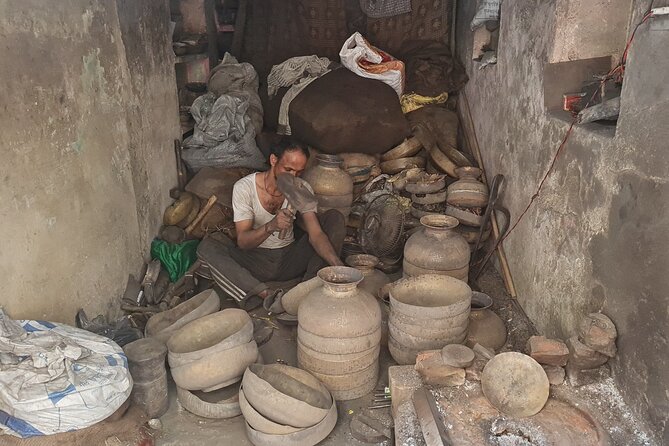
You’ll see a community of metal beaters. This is one of the most visually satisfying parts of the experience because the work is physical and repeated, and you get a sense of how craft gets handed down through families over generations. Watching this kind of labor up close beats reading about it later, especially if you care about how everyday objects get made.
Then comes a practical food angle: a wholesale market linked to a popular Indian snack, paani puri. Even if you don’t take a full meal here, you’ll understand the scale of how these items move through the city and why the markets matter to daily life.
Next, you visit an Ayurveda center. You don’t need to be an expert to appreciate this. It’s a window into traditional health thinking and how it sits in the same neighborhoods as shopping and artisan work.
There’s also a heritage-lane moment that connects the streets to a famous visitor: the lanes were once visited by Prince Charles. That doesn’t change the street life, but it gives you a “how the world noticed this place” thread as you walk.
This whole lane section is ticket-free, which is a nice value bonus. More time stays focused on the sights and sounds that you came for.
The Royal Gate Entry and the Logic of Jaipur’s Streets
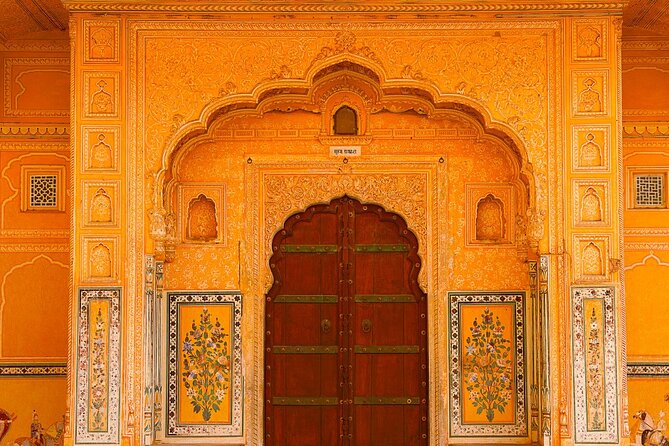
At some point you’ll reach a big heritage gate that also functions as an entry gate for the residence of Jaipur’s royal family. This is a useful scene because it reminds you that the city’s layout is not random. Jaipur’s geometry shows up in how neighborhoods relate to each other and how movement gets channeled.
Even without formal museum-style explanations, a gate like this does something simple and important: it helps you picture how a walled city controls access. When you connect that idea to the earlier lesson about the city’s gates, the walk starts to feel like a guided interpretation, not just a checklist.
Also, this is the kind of stop that works well for photos, as long as you keep an eye on foot traffic. The structure and symmetry of Jaipur’s older spaces are photogenic, and a gate gives you a strong frame without needing a ticket.
Jaipur, a few more ways to see it
- Jaipur: Private Full Day Sightseeing Tour By Car with Guide★ 4.9 · 1,839 reviews
- 3-Hour Morning Bike Tour of Jaipur★ 5.0 · 1,253 reviews
- Jaipur: Private Sightseeing Day Tour with Guide by Car★ 4.8 · 773 reviews
- Jaipur: Full-Day City Tour with Car, Guide & Skip-the-Line★ 4.8 · 512 reviews
- Full-Day Jaipur Private Sightseeing Tour by Car with Guide★ 5.0 · 472 reviews
Sodhya Halwai Bridal Market and Mohanthal Tasting
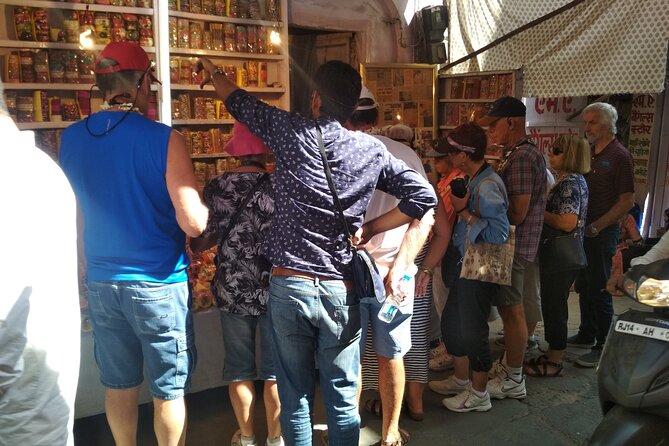
If you like color, you’ll enjoy the stop at Sodhya Halwai, tied to one of Jaipur’s bridal markets. This is where you can see brides shopping for traditional wedding dress, and the energy is different from the artisan lanes. Instead of tools and metals, you’re looking at fabrics, coordinated styles, and the social rhythm of a wedding-focused shopping area.
You’ll also try a classic sweet: mohanthal. This is the kind of tasting that feels grounded, not touristy. It gives you a sense of what local households and ceremonies treat as special.
The time here is about 15 minutes. That’s long enough to watch the shopping scene and take the tasting, but short enough that the tour keeps its flow. It’s a good pattern for a 2.5-hour experience, because you don’t want to get stuck too long in any one crowd.
This portion is ticket-free as well. In plain terms, it’s a high-value cultural stop: you get visual culture, plus a food hit, with no extra admission cost mentioned.
Maniharo Ka Rasta and Bangle Making From Sealing Wax
At Maniharo Ka Rasta, the walk shifts into wrist-level craft. You’ll see bangle making artisans and watch a live demo of making traditional bangles from sealing wax.
This is where you’ll likely slow down, because the process is hands-on and step-by-step. Sealing wax sounds unexpected if you’re used to modern factory production, so it’s a neat way to understand that craft techniques can be traditional yet still precise. The demo format also gives you something simple to do while you’re there: watch the stages, ask questions if your guide invites them, and pay attention to how tools and heat shape the final result.
The stop is about 15 minutes and ticket-free, which again keeps the value strong. This is also a great segment for anyone who enjoys crafts but worries about long workshops. You get the key parts without losing half a day.
Tripolia Bazar Flower Market, Spices, and Isarlat Sargasooli
The finish route goes through Tripolia Bazar, including the oldest flower market of Jaipur and a spice market. This is one of those endings that feels like real life, not a staged souvenir corridor. Flowers and spices bring different senses to the walk: color for the eyes, smell for the nose, and the steady rhythm of sellers who are doing their jobs like any other day.
Along the way you’ll pass by Isarlat Sargasooli, noted as one of the taller minarets in the area. Even if you’re not going inside anything, these vertical landmarks help you orient yourself. After hours of low-to-mid street levels, a tall minaret is an easy “look up” moment that makes the city feel bigger.
You end at the florist market at Choti Chaupar, near the Tripolia Bazar area. That’s a strong closer because it lands you in a neighborhood where the goods are right there in front of you, and you can keep looking after the tour ends if you feel like it.
The Tripolia Bazar segment is about 20 minutes, ticket-free, and it sets up a nice flow from crafts and bridal shopping into everyday market trade.
Masala Chai, Two Tastings, Water, and a Real Souvenir
This walk is built around food in small, smart doses. You get two local food tasting opportunities and you’ll also be able to enjoy a hot cup of masala chai. That combination is practical in Jaipur. Markets can wear you out, and chai is a simple reset that fits right into the street pace.
You also receive packaged drinking water, which matters because this walk is long enough to make hydration worth prioritizing.
One more included perk: a souvenir from local artisans. The goal here is not to sell you something overpriced, but to give you a connection to what you just watched being made. If you care about crafts, this is a nice way to take something home that relates directly to the artisan stops.
What’s not included is meals during the program. That means the tastings are meant to be snacks, not a full lunch. If you’re sensitive to low blood sugar, you’ll probably want to plan a proper meal before or after your walk.
How the Timing and Small Group Size Shape the Experience
The full experience runs about 2 hours 30 minutes. That length is a sweet spot. It’s long enough to cover several very different pieces of Jaipur, but short enough that you won’t feel stuck all day in crowds or heat.
The group limit is 15 travelers, which is a big deal on narrow lanes. Smaller groups typically mean your guide can manage movement more comfortably, and you can actually hear explanations without shouting across people’s shoulders.
You’ll also get a mobile ticket, which is convenient if you don’t want to juggle paper in your daypack. The meeting point is near public transportation, so you can usually build this into a bigger Jaipur plan without extra transfers.
One more practical upside shows up in the reviews: guides like Nidhi and Ani are praised for explaining what’s happening, including in temples, and for pacing that works even when you pause for photos or shopping. That matters because Jaipur rewards curiosity, and you don’t want a tour that treats curiosity like a disruption.
What You’ll Learn, Beyond the Photos
This walk is not just about seeing pretty corners. It teaches you how to read Jaipur.
Early context about the walled city and the gates gives you a framework. Then craft stops, like metal beaters and bangle making, teach you that Jaipur’s culture is active, not just preserved. The bazaars teach you how wedding shopping, food markets, flowers, and spices all share the same street system.
Temple time is part of the experience too, and guides have been praised for explaining what’s happening so you’re not standing there guessing. Even if you’re not deeply religious, temple visits can become far more meaningful when you understand basic etiquette and what you’re observing.
If you care about authenticity, this route also avoids being only about monuments. It’s built around the city’s everyday flow, which is usually where the most memorable details hide.
Who Should Book This Walk, and Who Might Skip It
I think this tour is a great fit if you:
- Want an intro to Jaipur’s Old City that focuses on markets and artisans
- Like food tastings that are built into the schedule
- Enjoy craft demos more than museum rooms
- Want some temple context without a long guided worship experience
It might be less ideal if you:
- Want a big monument itinerary with long interior visits
- Dislike walking on uneven pavement and through busy lanes
- Prefer a tour that is mostly air-conditioned or mostly vehicle-based
Bring comfortable walking shoes. Jaipur’s street surfaces can be unpredictable, and the tour is designed around foot movement in close quarters. Also, keep your expectations realistic: the stops are short, so you’ll be learning by sampling and watching, not by spending hours in one workshop.
Should You Book the Jaipur Heritage Walk
For the price, I’d call this a strong value if your goal is to get a feel for Jaipur through artisan work, street markets, and simple food culture. At about $30.04 per person for a 2.5-hour walk with an English-speaking guide, water, two tastings, chai, and an artisan souvenir, it’s not just a stroll. It’s structured access to places you would likely miss if you were wandering on your own.
Book it if you like city texture, small cultural moments, and learning how the city is organized. Consider skipping only if you’re looking for major monument tickets and long interior sightseeing.
FAQ
How long is the Jaipur Heritage Walk?
It runs for about 2 hours 30 minutes.
What is the price per person?
The price is $30.04 per person.
Where does the tour start and end?
It starts at Golcha Cinema on Chaura Rasta Road near New Gate, Bapu Bazar, and ends at the Flower Market area at Choti Chaupar in Tripolia Bazar (Modikhana).
Is the tour ticketed, or do I need to pay admissions?
Some admissions are included, and some stops are ticket-free. Golcha Cinema includes an admission ticket, while the market and artisan areas listed are admission-free.
What is included in the price?
Included items are packaged drinking water, an English-speaking city explorer, two local food tasting opportunities, and a souvenir from local artisans.
Are food tastings and chai included?
Yes. You get two local food tastings, and you’ll also have a hot cup of masala chai as part of the experience.
How big is the group?
The maximum group size is 15 travelers.
Is the tour near public transportation?
Yes, the meeting point is near public transportation.
Is the tour weather-dependent?
Yes. The experience requires good weather, and if it’s canceled due to poor weather, you’ll be offered a different date or a full refund.
The Pink City, More Reviewed Days


Eating Across Jaipur



Recently reviewed across Jaipur
- 6-Night Royal Rajasthan: Private Tour from Jaipur, India
★ 5.0 · 10 reviews - Jaipur Nahargarh Sunset and Night Lights Tour
★ 5.0 · 10 reviews - Jaipur Full Day Heritage of Pink City Tour By Tuk Tuk With Chai
★ 5.0 · 10 reviews - Private Jaipur Sightseeing Tour by Tuk-Tuk
★ 5.0 · 10 reviews - Explore Jaipur at Night with Patrika Gate
★ 5.0 · 10 reviews - Jaipur walking tour.
★ 5.0 · 10 reviews
Jaipur Pink City Tours, compared.
 ★ 4.9Private Full Day Sightseeing Tour By Car with GuideFrom $41,839 reviews
 ★ 5.03-Hour Morning Bike Tour of JaipurFrom $321,253 reviews
 ★ 5.03-Days Private Golden Triangle Tour: Delhi, Agra & Jaipur by CarFrom $1271,098 reviews
 ★ 5.03-Day Delhi, Agra and Jaipur Private Tour – India Golden TriangleFrom $110812 reviews
 ★ 5.0Four-Day Private Luxury Golden Triangle Tour to Agra and Jaipur From New DelhiFrom $160807 reviews
 ★ 4.8Private Sightseeing Day Tour with Guide by CarFrom $5773 reviews
 ★ 5.0Jaipur Day Trip from Delhi by Car or Train – All InclusiveFrom $116663 reviews
 ★ 5.0Jaipur City Private Day Tour from Delhi by Car – All InclusiveFrom $10589 reviews
Browse the lists this tour appears in