
REVIEW · JAIPUR PINK CITY TOURS
Jaipur: Instagram Tour of The Top Photography Spots
Jaipur, photographed like a friend with a plan. This private, 8-hour loop is built around iconic viewpoints and photo-minded guidance, so you get more keepers than just point-and-shoot selfies. One thing to consider: it packs a lot in, so you’ll do some walking between major stops.
What makes it work in real life is the team energy. Guides like Neeraj, Khalid, and Baba are praised for keeping things friendly, taking an active role with photos, and sharing context so the shots mean something. And the ride matters too, with drivers called out as patient and smooth, like Salman, who even got a James Bond style compliment in one review.
In This Review
- Key things I’d watch for
- A photo-first route through Jaipur icons
- Pickup and the air-conditioned chauffeur plan
- Patrika Gate and Jawahar Circle Park: color and carvings to start
- Birla Mandir and the Pink City mindset
- Albert Hall Museum and Ram Niwas Garden: Indo-Saracenic photo fuel
- Hawa Mahal: jharokhas, light, and tight facade frames
- Jantar Mantar and the City Palace complex: geometry with a purpose
- Jal Mahal from the roadside: water, hills, and the right angle
- Gaitor Ki Chhatriyan, Panna Meena ka Kund, and Hathi Gaon stops
- Amber Fort: the big payoff with guided time
- Lunch, shopping, and why the pacing feels fair
- Price and value: why $30 can make sense
- Who this tour is perfect for
- Should you book this Jaipur photography tour
- FAQ
- How long is the Jaipur Instagram photography tour?
- What’s included for pickup and drop-off?
- Is this a private tour?
- What language is the driver?
- Is bottled water provided?
- Is the vehicle air-conditioned?
- Are entrance fees and meals included?
- Can I cancel for a refund?
Key things I’d watch for
Private air-conditioned car with a chauffeur so you’re not wrestling traffic between photo targets.
Photo stops at big Jaipur signatures like Hawa Mahal, Jantar Mantar, and Jal Mahal.
Hands-on photo help from guides mentioned by name, including Neeraj, Khalid, and Baba.
Skip-the-ticket-line so you spend more time shooting than waiting.
A flexible pace within an 8-hour day, including shopping and a lunch break.
Comfort shoes are not optional since there are multiple walk sections.
Jaipur, a few more ways to see it

A photo-first route through Jaipur icons
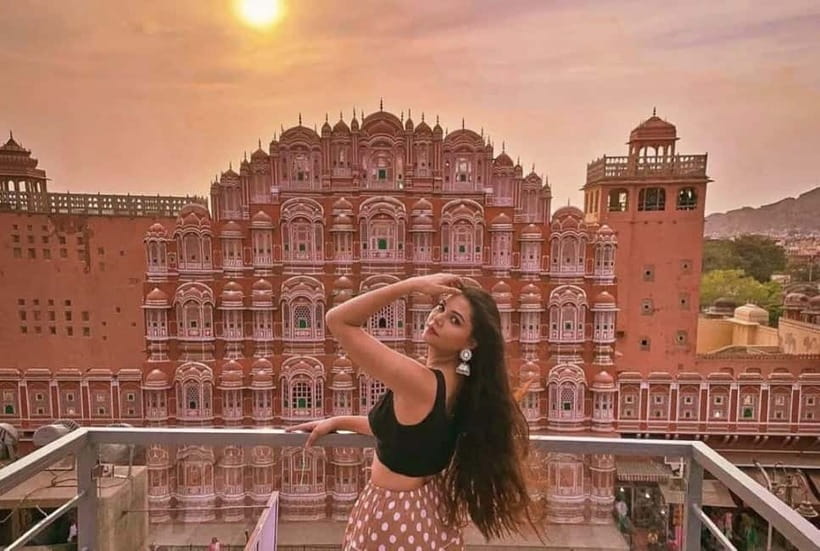
This is a day designed for composition. You go from one memorable backdrop to the next, with guided stops and enough time at each place to frame photos rather than just glance and leave. If Jaipur is your one or only day, this format helps you cover the main visual hits without spending your time figuring out directions.
I also like that the experience is private. That means you can pause when the light looks good, slow down if you need it, and ask for help when you want a specific angle. In reviews, guides are directly praised for taking photos when asked, and for giving creative suggestions for better results than a basic standing pose.
The tour’s focus stays on landmarks that look dramatic in photos: ornate gates, palace facades, astronomy geometry, and the Water Palace at Jal Mahal with the hills in the background.
Pickup and the air-conditioned chauffeur plan
Good tours start before you even leave your hotel. This one includes pickup and drop-off from your accommodation, airport, or railway station. If you arrive through the airport or train station, the driver will be holding a sign with your name and waiting for your arrival.
Once you’re in the car, you’re riding comfortably in an air-conditioned vehicle. That matters in Rajasthan when you’re bouncing between open courtyards and sunny facades. Bottled water is included too, which is a small thing that keeps the day from feeling brittle.
Because it’s private, you’re not sharing the ride with a crowd. That helps when you want quick stop-and-shoot moments. It also tends to make the guide’s photo guidance feel more personal rather than rushed.
Patrika Gate and Jawahar Circle Park: color and carvings to start
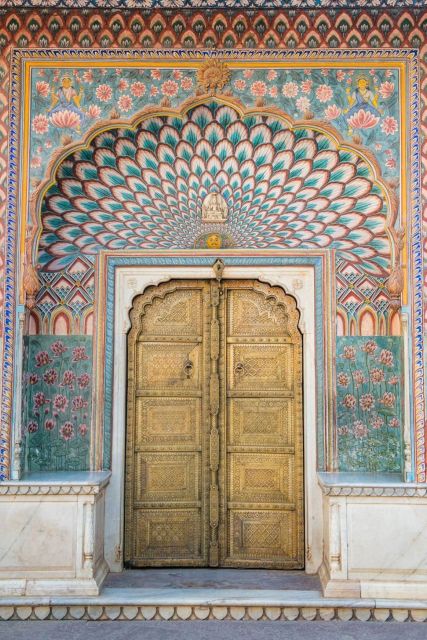
You start at Patrika Gate, which serves as an entrance to Jawahar Circle Park. This stop is specifically described as one of Jaipur’s photographed spots, and the details matter: the gate is famous for its architecture, vibrant colors, and intricate carvings meant to symbolize Rajasthani culture.
This is a smart opener. It gives you a high-impact photo subject right away, with strong visual texture that works even if you’re still waking up after travel. Plus, the gate is an easy way to set your photo style for the day. You can test angles, zoom, and your preferred framing before you hit the more crowded landmarks later.
Expect a photo stop plus a walk time here. So, if you’re carrying a camera bag, keep it light. You’ll be grateful halfway through the day.
- Full-Day Jaipur Private Sightseeing Tour by Car with Guide★ 5.0 · 472 reviews
- Pink City Cooking Class★ 5.0 · 452 reviews
- Private Elephant Sanctuary★ 5.0 · 390 reviews
- Private Full Day Jaipur Sightseeing Tour By Tuk Tuk★ 5.0 · 382 reviews
- Private Guided Half Day Tour Jaipur★ 5.0 · 371 reviews
Birla Mandir and the Pink City mindset
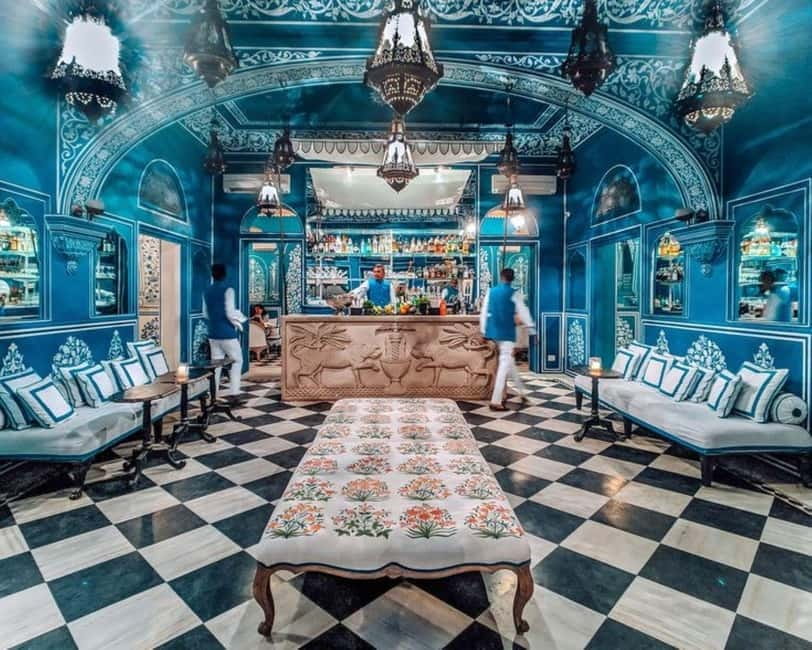
Next you head to Birla Mandir Temple in the heart of the Pink City. Since this is a guided, photo-friendly stop, the value isn’t just the destination. It’s the way you move through the area with direction, instead of roaming without a plan.
Pink City areas photograph well when you catch the right rhythm between building lines and street views. Birla Mandir adds a temple focal point, which gives your photo set more variety than palace-only images. It also helps your gallery tell a story, from ornate entrances to sacred landmarks tucked into historic streets.
You’ll also get guided time and walking, so be ready for a bit of moving around. If you’re hoping for purely static tripod shots, this won’t be that kind of day. It’s more hands-on than museum-lounge.
Albert Hall Museum and Ram Niwas Garden: Indo-Saracenic photo fuel
After you’ve built up momentum, the tour shifts into architecture you can really sink your camera into. Albert Hall Museum is the oldest museum of the state and functions as the state museum of Rajasthan. The building is also described as a fine example of Indo-Saracenic architecture.
That combination is a gift for photographers. Museums often mean symmetrical facades, stone detail, and strong shapes that hold up in wide shots and close-ups. You get time to click pictures with the museum as a backdrop, which is exactly what you want when you’re building an Instagram-ready set.
From there, you relax in Ram Niwas Garden. I love this kind of built-in break because it stops the day from becoming a photo grind. Even if you’re not sitting the whole time, the garden gives your eyes and feet a breather while you keep access to a pleasant setting.
Hawa Mahal: jharokhas, light, and tight facade frames
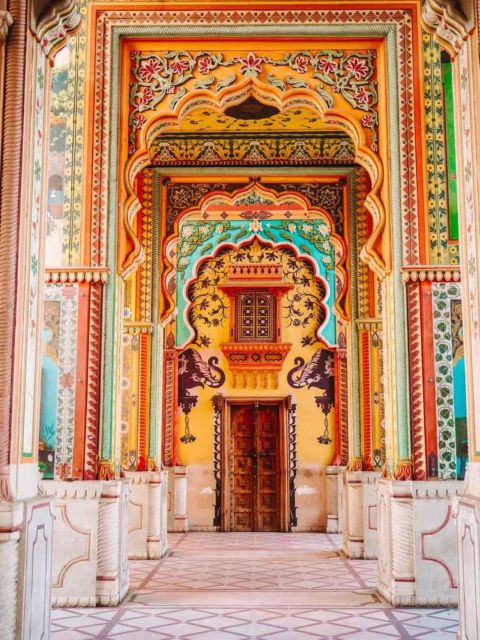
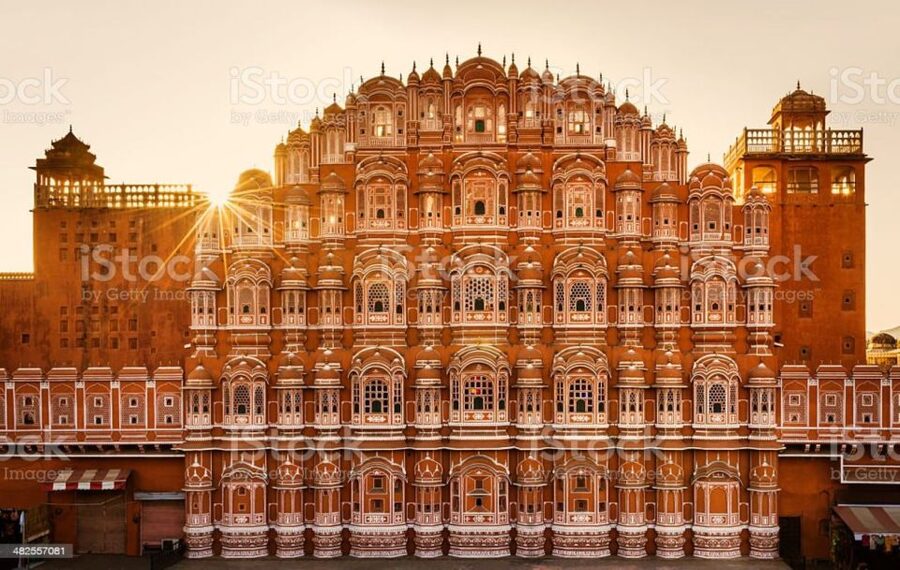
Then comes Hawa Mahal, the iconic “Palace of the Winds.” It was built in the 18th century by Rajput King Sawai Pratap Singh, and it’s considered a prime example of Rajasthan’s architectural heritage. The facade is known for the jharokhas, and the spot is praised for offering many photography opportunities.
This is one of those places where your best shots come from detail. Instead of trying to capture the whole building in one frame, you’ll get more satisfying results by focusing on repeating shapes and the rhythm of windows. Hawa Mahal also rewards changes in angle, so if your guide suggests shifting position, take the hint.
You’ll have a photo stop plus time to visit with a guided tour and some walking. If crowds are present, the private setup helps you manage it better since you’re not stuck with a large group’s movement pace.
Jantar Mantar and the City Palace complex: geometry with a purpose
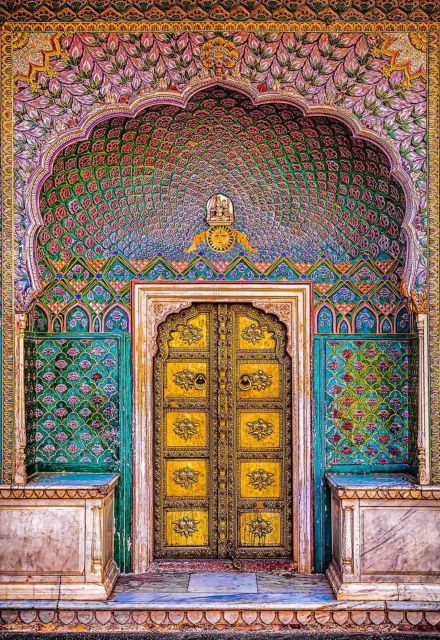
Next up is Jantar Mantar, an astronomical observatory constructed by Maharaja Jai Singh of Jaipur in 1724. Astronomy observatories might not sound like an obvious photo win at first, but the site’s purpose creates a strong visual: stone instruments, precise forms, and a sense of order.
This is where guided context adds value. When a guide connects the landmark to what it was built to do, you start photographing with meaning instead of just decoration. Reviews also highlight that guides like Khalid and Baba bring history and context so the stops don’t become a checklist of pretty sights.
After Jantar Mantar, you move to the City Palace and its complex, which includes multiple buildings, courtyards, galleries, restaurants, and offices for the Museum Trust. Photo-wise, it’s a mix of broad courtyard views and architectural angles. It’s also a place where you can slow down for a few frames, because you’re not just looking at a single facade.
Jal Mahal from the roadside: water, hills, and the right angle
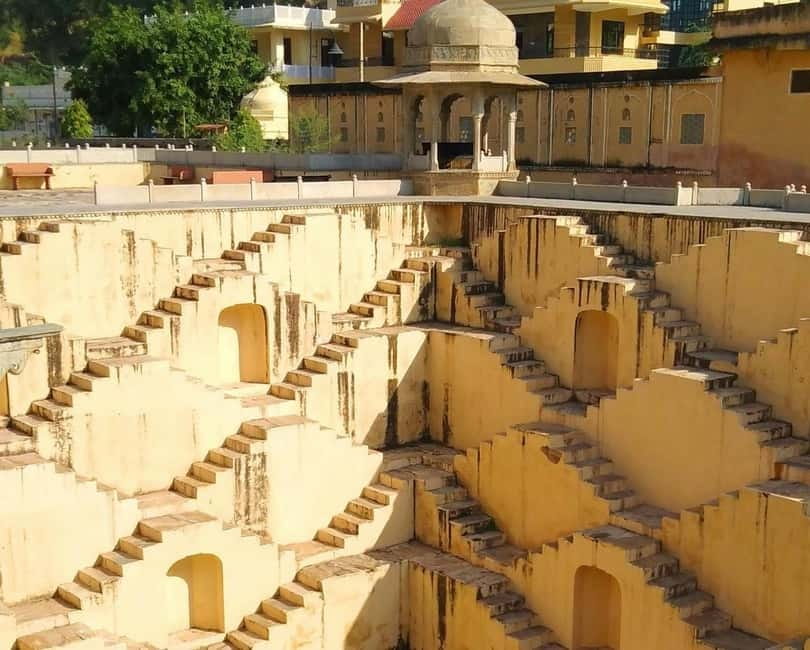
Finally, the tour reaches Jal Mahal, the Water Palace in the middle of Man Sagar Lake. The described photo advantage is clear: you can take amazing pictures from a staying point at the side of the road, with the hills in the background and the palace in view.
This is an important detail. It means you’re not hunting for a tricky access plan that might not be possible. Instead, you’re positioned for the classic composition: water surface in the foreground, palace as the focal point, hills adding depth.
For a lot of people, Jal Mahal is the moment that makes the gallery feel “Jaipur specific.” It’s not just another stone wall photo. It’s a landscape-like scene built around water and elevation, even if you’re viewing it from the road.
Gaitor Ki Chhatriyan, Panna Meena ka Kund, and Hathi Gaon stops
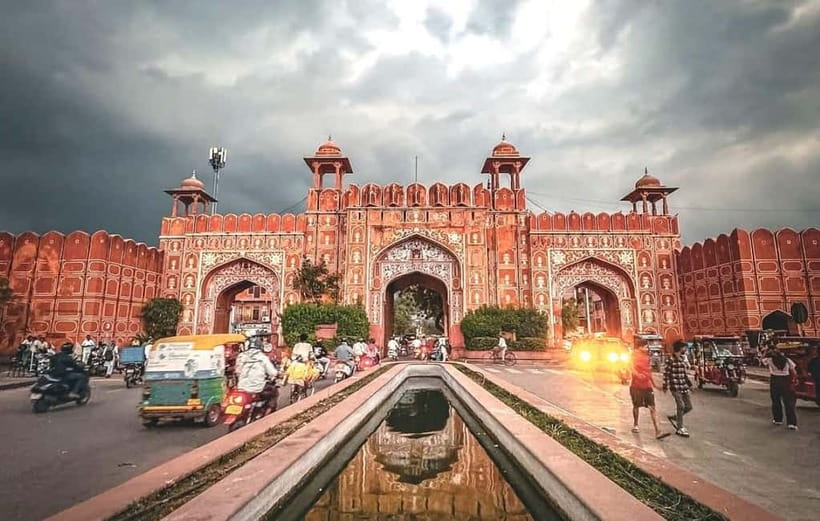
After the main cluster of palace and observatory sites, the day continues with more distinct visuals.
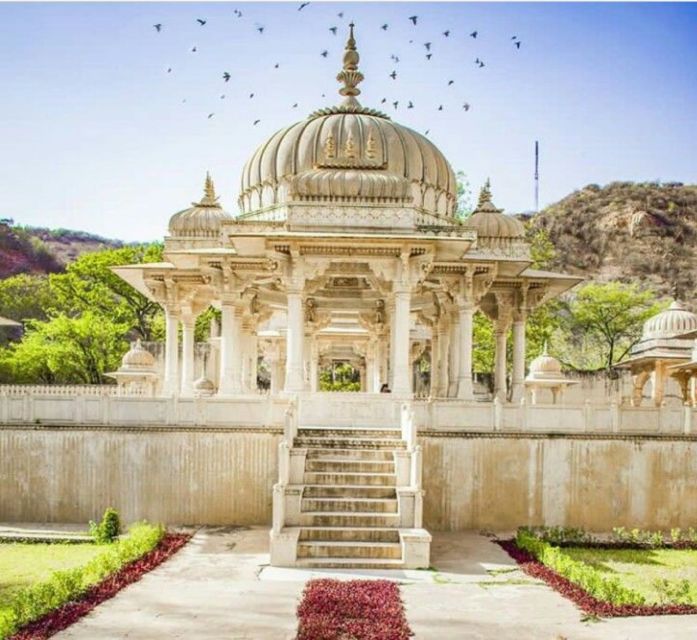
You’ll stop at Gaitor Ki Chhatriyan for a photo stop, visit, and a short walk. Then Panna Meena ka Kund gets its own short photo and visit time. Finally, you reach Hathi Gaon, with about an hour for photo stop and visit.
I like this block because it prevents your day from becoming one long loop of the same architectural style. These sites each add a different texture to your photos. Also, because the tour keeps visits time-bounded, you’re less likely to burn out before the most famous finale.
One practical tip: treat your camera settings like a routine. If you’re switching between shaded and sunny areas, your guide’s movement and your walking rhythm will be fast. You’ll get better results by not overthinking every shot. Pick a simple approach and let the architecture and light do the work.
Amber Fort: the big payoff with guided time
Your day ends with Amber Fort, including a photo stop, visit, guided tour, sightseeing, and about 1.5 hours of walking time. This is the kind of stop that makes a photography tour feel worth it. You get time to look, time to shoot, and time to understand what you’re seeing.
Amber Fort also acts like a final montage for your gallery. By the time you get here, your eye is already trained on patterns, symmetry, and ornate details from earlier stops. That means you’re not arriving as a beginner. You’re arriving as someone who can pick a shot faster.
Because there’s a guided tour component, you also get context rather than just a quick glance at walls and towers. That matters if you’re building a personal travel story instead of collecting random landmark photos.
Lunch, shopping, and why the pacing feels fair
Between major sites, the tour includes time for free exploration and food planning. There’s a segment with free time, shopping, and an arts and crafts market visit, plus a break time that includes lunch break and free time.
Meals expenses are not included, so use this time to grab something nearby based on your own preferences. If you want a stress-free day, come prepared with a little cash for food and small purchases. Shopping is part of the schedule, so think of it as a chance to buy a souvenir that fits your style, not a mandatory spend.
One real-world consideration: the order and flow can change a bit. In one review, the route order differed from the written sequence but was described as positive because it added spontaneity. Translation: you’re on a private plan, so the guide may adjust to keep your experience smooth.
Price and value: why $30 can make sense
At $30 per person for an 8-hour private tour with a chauffeur, air-conditioned vehicle, bottled water, pickup and drop-off, and taxes included, this is priced for value rather than luxury. What you are buying is time savings and planning help. You’re not paying for a full-day private car plus separate guides at multiple venues. You’re paying for a single coordinated route that hits major photo targets.
That said, entrance fees are not guaranteed as included. The tour notes that entrance fees at places not included in the package may need separate payment. So you should expect a bit of extra cost for tickets when required. Meals also cost extra.
Still, if you factor in private transport, language support, and skip-the-ticket-line handling, it can be a strong deal for people with limited time in Jaipur.
Who this tour is perfect for
This is a great match if you:
- Want a one-day Jaipur photo hit list without navigating alone
- Like guided context so the photos have meaning
- Prefer a private car setup that reduces stress and waiting
- Enjoy architecture, palace facades, and landmark details
It might be less ideal if you:
- Hate walking and prefer slow, long stays at fewer places
- Want guaranteed meals included in the price
- Need a very flexible schedule with no fixed site stops
Should you book this Jaipur photography tour
Book it if you want a structured photo day that saves planning time and gets you to key Jaipur locations with a chauffeur and English-speaking support. The guide-focused reviews matter here. Names like Neeraj, Khalid, and Baba show a pattern: they help with photos, offer creative ideas, and add context so your pictures feel earned.
Skip booking if you’re looking for a slow, lounging pace or if you’re already comfortable building your own route, timing, and photo stops. In that case, you might prefer a self-guided plan where you can linger longer without a schedule.
My final take: for $30 per person, the balance is strong as long as you budget for entrance fees that might be extra and wear shoes that can handle a lot of short walks.
FAQ
How long is the Jaipur Instagram photography tour?
The tour duration is 8 hours.
What’s included for pickup and drop-off?
Pickup and drop-off are included from your hotel, airport, or railway station. If you arrive by airport or train, the driver will be holding a sign with your name and will wait for you.
Is this a private tour?
Yes, it’s a private group.
What language is the driver?
The driver is listed as English.
Is bottled water provided?
Yes, bottled water is included.
Is the vehicle air-conditioned?
Yes, you get a private vehicle with air conditioning and a chauffeur.
Are entrance fees and meals included?
Meals are not covered. Entrance fees may also need to be paid separately for places not included in the package.
Can I cancel for a refund?
You can cancel up to 24 hours in advance for a full refund.
The Pink City, More Reviewed Days


Recently reviewed across Jaipur
- 6-Night Royal Rajasthan: Private Tour from Jaipur, India
★ 5.0 · 10 reviews - Jaipur Nahargarh Sunset and Night Lights Tour
★ 5.0 · 10 reviews - Jaipur Full Day Heritage of Pink City Tour By Tuk Tuk With Chai
★ 5.0 · 10 reviews - Private Jaipur Sightseeing Tour by Tuk-Tuk
★ 5.0 · 10 reviews - Explore Jaipur at Night with Patrika Gate
★ 5.0 · 10 reviews - Jaipur walking tour.
★ 5.0 · 10 reviews
Jaipur Pink City Tours, compared.
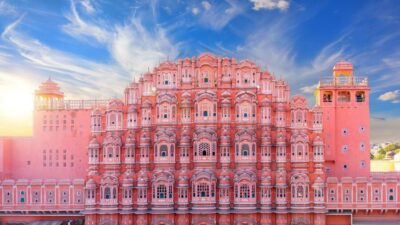 ★ 4.9Private Full Day Sightseeing Tour By Car with GuideFrom $41,839 reviews
 ★ 5.03-Hour Morning Bike Tour of JaipurFrom $321,253 reviews
 ★ 5.03-Days Private Golden Triangle Tour: Delhi, Agra & Jaipur by CarFrom $1271,098 reviews
 ★ 5.03-Day Delhi, Agra and Jaipur Private Tour – India Golden TriangleFrom $110812 reviews
 ★ 5.0Four-Day Private Luxury Golden Triangle Tour to Agra and Jaipur From New DelhiFrom $160807 reviews
 ★ 4.8Private Sightseeing Day Tour with Guide by CarFrom $5773 reviews
 ★ 5.0Jaipur Day Trip from Delhi by Car or Train – All InclusiveFrom $116663 reviews
 ★ 5.0Jaipur City Private Day Tour from Delhi by Car – All InclusiveFrom $10589 reviews
Browse the lists this tour appears in