
REVIEW · JODHPUR BLUE CITY TOURS
Jodhpur Blue City Heritage Walking Tour
Blue lanes, old water steps, great bites. In 2 to 3 hours, this private walk covers five landmark stops, and I especially love Clock Tower Market for local crafts and textiles, and the ghee ki kachori stop that makes a sweet, salty ending. The main thing to consider is simple, this is still a walking tour with some climbs and steps, and comfort depends on the weather.
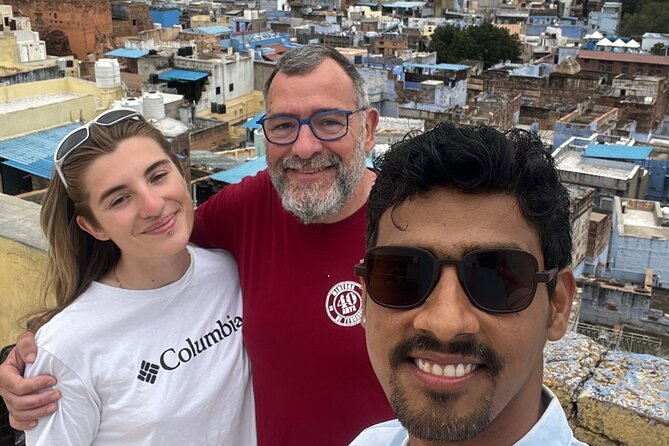
You get a guide who keeps it interactive and practical, with clear English support I associate with guides like Rahul and Prabhat Singh. The pace is relaxed enough that you can stop, look closely at details like carved windows, and ask questions without feeling rushed.
You’ll start near the Ghanta Ghar, Jodhpur’s clock tower area, then move through Toorji Ka Jhalra (built in 1740) and a 350-year-old Lord Krishna temple. A mobile ticket and bottled water are included, which helps you focus on the walk instead of logistics.
In This Review
- Key highlights at a glance
- Entering Jodhpur’s old town via the Clock Tower Market
- Toorji Ka Jhalra stepwell, architecture you can feel
- Pachetia Hill, blue houses and the best city view time
- Shri Gangshyam Ji Maharaj Mandir, Lord Krishna and 350-year-old art
- Naarayan Mishtan Bhandar, ending with ghee ki kachori
- Price and value for a 2 to 3 hour private walk
- Timing, meeting point, and how to make the route feel easy
- Who this tour suits best (and who should rethink it)
- A quick decision guide, should you book?
- FAQ
- How long is the Jodhpur Blue City Heritage Walking Tour?
- How much does it cost?
- Is it a private tour?
- Where do I meet for the tour?
- What is included in the tour price?
- Is there entry cost for all the stops?
- Does the tour use a mobile ticket?
- Is private transportation included?
- What if the weather is poor?
- What is the cancellation policy?
- When will I get confirmation after booking?
Key highlights at a glance
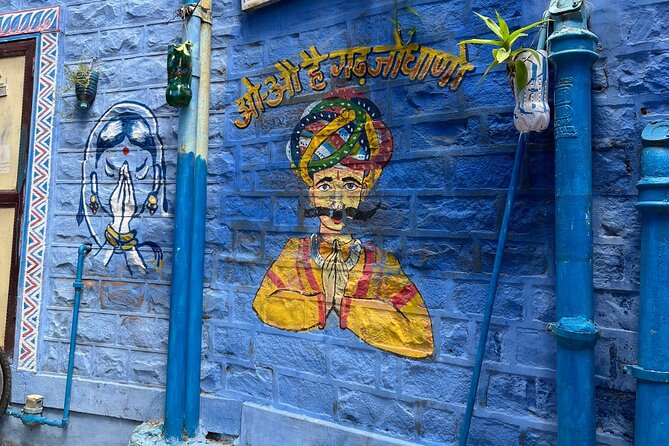
- Clock Tower Sardar market, one of the oldest market areas in Jodhpur’s old town
- Toorji Ka Jhalra, a landmark stepwell founded in 1740
- Pachetia Hill viewpoints with blue houses said to be 400 to 500 years old
- Shri Gangshyam Ji Maharaj Mandir, a 350-year-old Krishna temple with painted interiors
- Naarayan Mishtan Bhandar (Lal Bhatti Wale), finished with ghee ki kachori
The blue city, three more ways
Entering Jodhpur’s old town via the Clock Tower Market
This tour starts right in the center of the old city, near the clock tower area on Ghanta Ghar Road. Expect to find yourself in the thick of local life, where textiles and wooden handicrafts show up quickly once you’re close to the market lanes. The stop is about 15 minutes, so it works as a warm-up, not a long shopping detour.
What I like here is the way the market stop gives you context for everything that follows. When you see the craft work and learn what this market area has meant over the years, the city feels less like a set of monuments and more like a place people actually live in.
A small consideration: market streets can be lively and narrow. If you’re sensitive to crowds, choose a slower pace during this first segment and let your guide lead you through the most comfortable lanes.
Toorji Ka Jhalra stepwell, architecture you can feel
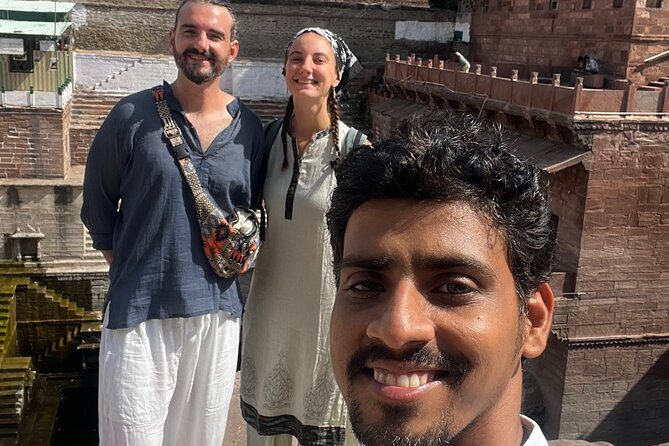
Next you head to Toorji Ka Jhalra, Toorji’s Step Well. This is one of the best-known stepwells in Jodhpur, and it is associated with Rani Toorji, wife of Abhay Singh, founded in 1740.
You’ll have around 15 minutes here. That may sound short, but stepwells are all about lines and levels, so you benefit from having someone point out what to look for while you’re standing in the right spot. Focus on the architecture, the way the design steps downward, and how the structure served an important purpose as a water body long before modern utilities.
One practical tip, stepwells can have uneven ground and stone edges. Wear shoes you trust, because your best photos and your best understanding both come from being able to step carefully without rushing.
Pachetia Hill, blue houses and the best city view time
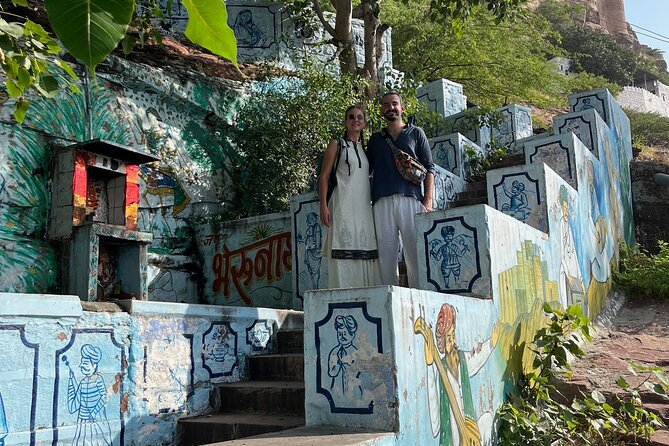
From the stepwell, you move toward Pachetia Hill, where the atmosphere changes. You’re aiming for viewpoints, but also for close-up glimpses of older blue houses around 400 to 500 years old. Your guide helps you recognize architectural details such as jharoka windows, plus pillars and columns that give these homes their distinctive look.
This stop is the longest on the walk, about 1 hour 10 minutes, and that extra time matters. It’s what turns the “blue city” label into something real. You’ll be able to look across rooftops, then turn your attention to the shapes and textures in the nearby houses.
If you’re planning photos, this is your best moment. I’d treat it like a slow photo walk, not a quick postcard run. Wait for the angle that shows the layers of homes and the carved features, because that’s where the charm is.
Weather matters a lot here too. Windy or rainy conditions can reduce how comfortable it is to linger on viewpoints. The tour requires good weather, and if weather is poor, you’ll be offered a different date or a full refund.
- Blue City Heritage Walking Tour With Pick Up & Drop Off★ 4.8 · 164 reviews
- Desert Camel Safari Day Tour In Jodhpur★ 5.0 · 161 reviews
- Private Guided Cooking Workshop Experience in Jodhphur★ 5.0 · 158 reviews
- Mehrangarh Fort and Blue City Historic Tour with Local Guide★ 5.0 · 134 reviews
- Jodhpur Overnight Stay in Desert with Camel Safari SR★ 5.0 · 126 reviews
Shri Gangshyam Ji Maharaj Mandir, Lord Krishna and 350-year-old art
Your next cultural stop is Shri Gangshyam Ji Maharaj Mandir, dedicated to Lord Krishna. The temple is described as about 350 years old, and it’s known for paintings and architectural craftsmanship.
You’ll spend around 15 minutes. That’s enough time to appreciate the interior artwork and the overall design without turning the visit into a long museum stop. If you like architecture that tells a story through color, pattern, and layout, this one is a good balance after the outdoor viewpoints.
A good way to enjoy this stop is to keep your eyes moving. Look at the paintings first, then shift to the surrounding architectural work, and then back again. Your understanding clicks faster when you see how the decoration frames the space.
Naarayan Mishtan Bhandar, ending with ghee ki kachori
Every good walking tour needs a payoff, and this one ends with food. The final stop is Naarayan Mishtan Bhandar, also known as Lal Bhatti Wale, a famous spot for ghee ki kachori.
Plan for about 10 minutes here. The highlight is the dessert stop, and the tour description also points to local food and snacks along the way, including sweet items plus things like kachori, samosa, and chai. In practice, this final stop gives you the most concrete marker of the experience, because it’s a specific, well-known place with a signature item.
If you’re trying to decide what to eat in Jodhpur, ghee ki kachori is a strong choice because it’s flavorful and easy to share. It also acts like a “story bookend,” since you’re going from markets, architecture, and temples into something everyday and edible.
Tip for comfort, the tour includes bottled water. Use it. Don’t save it for later if it helps you pace yourself on the walk.
Price and value for a 2 to 3 hour private walk
The price is listed as $11.24 per group (up to 2 people). That is a big part of the value story here. You’re not paying per person for a guide experience, you’re paying per small group, which makes it feel reasonable even if you’re traveling as a couple or solo.
The other value piece is that the tour actually combines multiple categories of “seeing” in one route. You get an old market introduction, a standout stepwell, a viewpoint and older neighborhood details, a historic temple, and a named food stop. Plus, bottled water is included.
Admission fees are also handled in the way the itinerary is presented. Clock Tower Market has an admission ticket included. The other listed stops are described as ticket free in the route information. That means you can budget the walk without worrying about surprise entry fees at every stop.
The trade-off is that you’re doing it on foot. If you’re hoping to cover maximum distance without any climbing or walking time, this tour won’t match that style. But if you want the old city at walking speed, with someone showing you what to notice, the format makes sense.
Timing, meeting point, and how to make the route feel easy
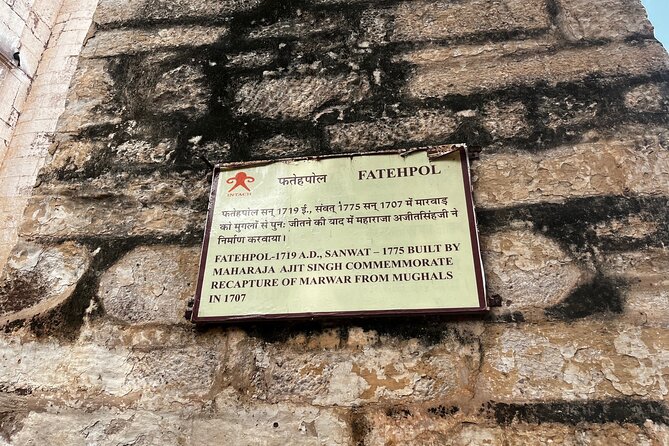
The tour runs about 2 to 3 hours. It’s listed as a private tour or activity, meaning only your group participates. That matters because you can move at a pace that works for you, especially during viewpoint time and the market lanes.
You meet near the clock tower area, at Golu gol gappe, close to Ghanta Ghar. The tour ends back at the meeting point, so you won’t need to figure out a second “where do we go now” puzzle.
Because there’s no private transportation included, plan to travel to the meeting point by public options. The tour information says it’s near public transportation, so that usually keeps things simple. But still, give yourself a little buffer time to arrive, locate the exact spot, and get comfortable before you start walking.
Pack for comfort. Even with a guided route, you’ll enjoy the tour more if your feet feel good. A light layer can also help, since Jodhpur weather can change through the day.
Who this tour suits best (and who should rethink it)
This is a strong fit if you want a guided walk that connects heritage spots with everyday city life. The market stop helps, because it places the “big sights” inside the rhythm of old town commerce.
It’s also a great match for people who like architecture details, such as carved windows like jharoka, plus columns and pillars on older blue houses. Pachetia Hill is especially good for that.
If you have trouble with hills, stone steps, or uneven ground, you might want to think carefully. The itinerary includes a viewpoint hill stop and a stepwell, and those are the types of places where mobility and footing matter most.
If your priority is a car-based tour, with long stops and minimal walking, then this won’t be your best choice. But if you’re okay with a real walking experience, this one is easy to recommend.
A quick decision guide, should you book?
Book this tour if you want a compact route that hits the essentials of Jodhpur’s old city: market energy, Toorji Ka Jhalra’s stone design, Pachetia Hill’s blue house views, a historic Krishna temple, and a finished-with-food ending at Naarayan Mishtan Bhandar.
Also book it if you like guides who talk in clear, practical terms and adapt to your interests. Guides like Rahul and Prabhat Singh are associated with strong English and helpful food recommendations, which makes a big difference on a walking route.
Skip it or pick another style if you want minimal walking, or if your schedule is locked when weather might be questionable. Since the tour needs good weather and walking comfort matters, the best day to go is the day Jodhpur feels friendly underfoot.
FAQ
How long is the Jodhpur Blue City Heritage Walking Tour?
The tour lasts about 2 to 3 hours.
How much does it cost?
It costs $11.24 per group, for up to 2 people.
Is it a private tour?
Yes. Only your group will participate.
Where do I meet for the tour?
The start point is Golu gol gappe72VF+WJF on Ghanta Ghar Rd, near Ghantaghar and the Clock Tower area in Jodhpur. The tour ends back at the same meeting point.
What is included in the tour price?
Bottled water is included. The Clock Tower Market stop lists an admission ticket as included.
Is there entry cost for all the stops?
Clock Tower Market lists an admission ticket included. Toorji Ka Jhalra, Pachetia Hill, Shri Gangshyam Ji Maharaj Mandir, and Naarayan Mishtan Bhandar are listed as admission ticket free in the route information (where applicable).
Does the tour use a mobile ticket?
Yes, the tour uses a mobile ticket.
Is private transportation included?
No. Private transportation is not included.
What if the weather is poor?
This experience requires good weather. If it is canceled due to poor weather, you will be offered a different date or a full refund.
What is the cancellation policy?
You can cancel for free up to 24 hours in advance for a full refund. If you cancel less than 24 hours before the start time, the amount paid will not be refunded.
When will I get confirmation after booking?
Confirmation is received at the time of booking, unless you book within 2 hours of travel. In that case, confirmation is received as soon as possible, subject to availability.
Jodhpur, Blue Lanes and a Big Fort


Recently reviewed across Jodhpur
- Jodhpur to Udaipur Drop with Stops at Ranakpur and Kumbhalgarh
★ 5.0 · 10 reviews - Bluecity tour by Mansingh
★ 5.0 · 10 reviews - BlueCity Breakfast Walk
★ 5.0 · 10 reviews - Jodhpur Half Day Heritage Tour
★ 5.0 · 11 reviews - Jodhpur: Private Mehrangarh Fort and Blue City Day Tour
★ 4.0 · 11 reviews - Private Full Day Jodhpur City and Bishnoi Villages Tour
★ 5.0 · 12 reviews
Jodhpur Blue City Tours, compared.
 ★ 5.0Private Jodhpur Blue City Tour with Hotel Pickup and Drop-offFrom $40461 reviews
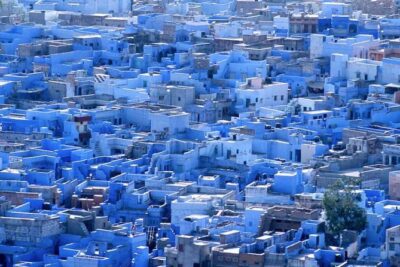 ★ 5.0Blue City Heritage Private Walking Tour With Pickup and Drop-OffFrom $11441 reviews
 ★ 5.0Private Jodhpur Blue City Walking Tour with GuideFrom $10321 reviews
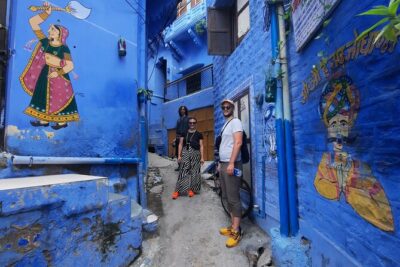 ★ 5.0Jodhpur Blue City Heritage Walking Guided TourFrom $13240 reviews
 ★ 4.8Blue City Heritage Walking Tour With Pick Up & Drop OffFrom $11164 reviews
 ★ 5.0Desert Camel Safari Day Tour In JodhpurFrom $24161 reviews
 ★ 5.0Mehrangarh Fort and Blue City Historic Tour with Local GuideFrom $35134 reviews
 ★ 5.0Jodhpur Overnight Stay in Desert with Camel Safari SRFrom $64126 reviews
Browse the lists this tour appears in