
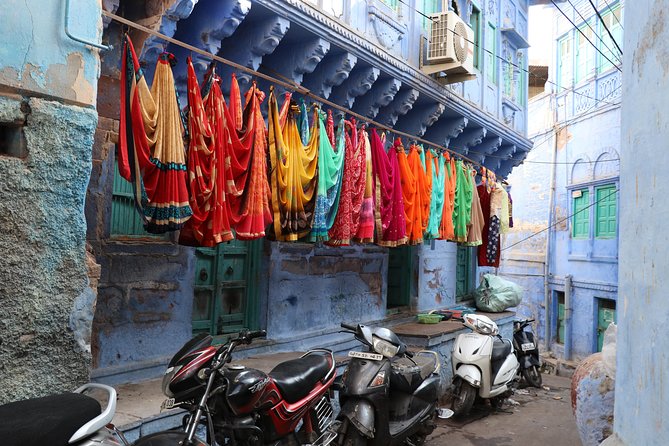
REVIEW · JODHPUR BLUE CITY TOURS
Jodhpur Heritage Walk
Jodhpur’s Old City can feel like a maze, so I like that this walk is guided from the first turn, not just a self-guided wander. You’ll spend about 3 to 4 hours learning how the city’s planning, monuments, and rainwater harvesting shaped daily life, then you can cap it with shopping and local bites.
Two things I really like: the tour is private, so your guide can slow down for questions and route changes, and it mixes “big history” with street-level culture like temples, lanes where people actually live, plus chances to taste snacks or sweets and even tea at a blue-painted house. One thing to consider is that this experience is weather-dependent, so if conditions are poor you may need to switch dates.
In This Review
- Key highlights to look for
- First steps in the Blue City: meeting at Ghanta Ghar
- What you’ll actually see: architecture, monuments, and city planning
- Why the guides make a difference in the lanes
- Market lanes and snack breaks that feel built in
- A home-style food option: masala chia on your terms
- How the 3 to 4 hours usually flow
- Price and value: about $26.67 for a private walk
- Who this tour is best for
- Practical tips so you enjoy the walk more
- Should you book the Jodhpur Heritage Walk?
- FAQ
- What is the duration of the Jodhpur Heritage Walk?
- Where does the tour start?
- Is this tour private?
- What ticket do I receive?
- Will we shop or eat during the walk?
- What happens if the weather is poor?
Key highlights to look for
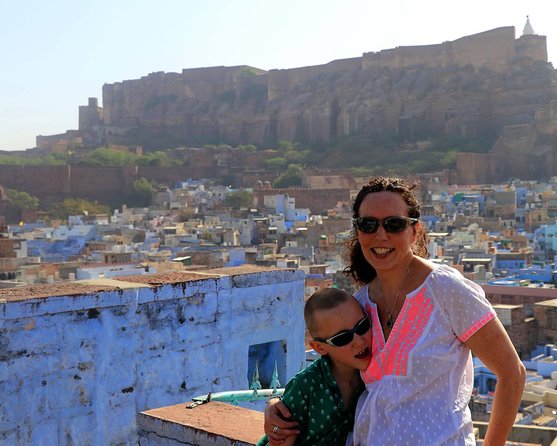
- Private, flexible pacing with only your group and personal attention
- Old City architecture explained, including vivid planning behind famous monuments
- Rainwater harvesting stories that connect water to design and routine
- Market time for shopping and snacks, so you’re not stuck only in quiet sights
- Optional home-style masala chia lesson, if you want a hands-on food moment
- Guides who talk beyond dates, including socioeconomic and political context when you ask
The blue city, three more ways
First steps in the Blue City: meeting at Ghanta Ghar
This tour starts near Ghanta Ghar, Clock Tower, by Sardar Market in the Old City. That matters more than it sounds, because Jodhpur’s historic core is all tight lanes and sudden turns, so starting in a recognizable public hub helps you stay oriented from the get-go.
A common start time is around 10 am. The tour ends back near the meeting point, so you are not stuck trying to figure out how to exit a maze on your own after a few hours of walking.
Because it’s private, the “pace” is not one-size-fits-all. If you want more photos, more questions, or extra time in a market lane, your guide can flex. And if you’d rather keep moving, you can do that too.
What you’ll actually see: architecture, monuments, and city planning
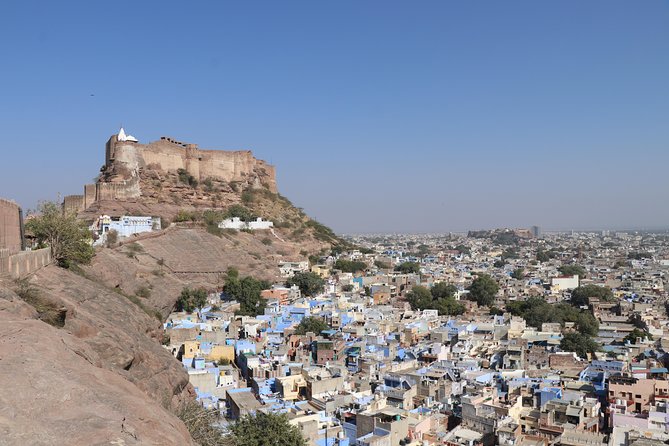
The heart of this walk is heritage, with a focus on architecture and the story behind Jodhpur’s distinctive look. Your guide leads you through areas where you can spot different architectural styles and then explains the logic behind them, not just what to look at.
You’ll also hear about the way the city was planned and established, including why certain monuments and public spaces ended up where they did. That big-picture framing turns “pretty buildings” into something you can recognize and interpret as you go. It’s especially helpful if you’re only in Jodhpur for a short time and you want context fast.
One of the most practical themes you’ll learn is rainwater harvesting. In Rajasthan, water is not an abstract concept. It influences where people build, how neighborhoods function, and what daily routines look like. When your guide connects that to the physical city, the heritage stops being museum-only and becomes real life history.
Why the guides make a difference in the lanes
From the strongest feedback on this walk, the guide is a big part of the value. You’ll see the difference in how they manage the flow of narrow streets, point out small details that would be easy to miss, and explain the connections between buildings and everyday life.
You may meet guides such as Prabhat (also shared as Pranhat in one account), Sabiya, or Rishi Jodha, and the common thread is engagement. Some guides go beyond standard sightseeing and bring in context, including how history connects with the city’s social and political shifts. That kind of explanation is why a heritage walk can feel like a conversation rather than a checklist.
If you care about learning how people shaped the city, ask your guide follow-up questions. This is one of those tours where questions can turn into detours that actually make sense, like when you want more detail on temples, havelis, or how old neighborhoods work.
- Blue City Heritage Walking Tour With Pick Up & Drop Off★ 4.8 · 164 reviews
- Desert Camel Safari Day Tour In Jodhpur★ 5.0 · 161 reviews
- Private Guided Cooking Workshop Experience in Jodhphur★ 5.0 · 158 reviews
- Mehrangarh Fort and Blue City Historic Tour with Local Guide★ 5.0 · 134 reviews
- Jodhpur Overnight Stay in Desert with Camel Safari SR★ 5.0 · 126 reviews
Market lanes and snack breaks that feel built in
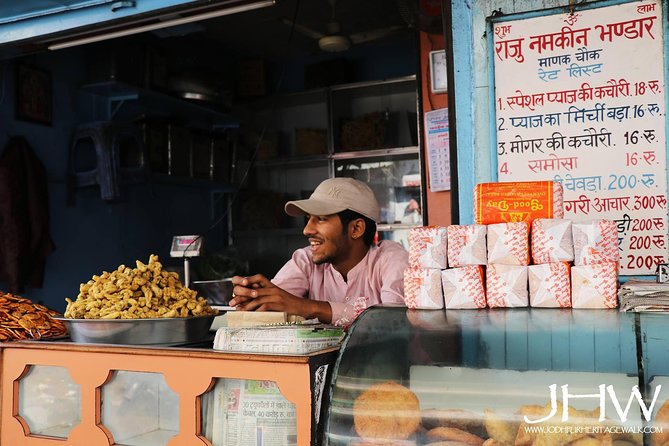
A smart thing about this tour is that it doesn’t treat markets as an add-on. It includes time to move through busy market areas where you can shop and try local snacks. That’s valuable because Jodhpur isn’t just monuments. It’s a working city with food, crafts, and street commerce happening right in the same lanes as heritage sights.
You can use this market window in two ways:
- If you love souvenirs, ask what to look for and how to recognize quality. The guide can help you avoid random impulse buys.
- If you’re more food-focused, treat snack time as part of your cultural reading, not a random stop. This is where your guide’s local context can help you understand what you’re eating and why it shows up here.
Some guides also include sweet and snack stops along the way, plus tea at a quaint blue-painted house. That kind of pause is more than a break. It gives you a calmer moment to look at the color theme of the Old City and catch your breath before moving deeper into the lanes.
A home-style food option: masala chia on your terms
If you’re interested in hands-on culture, the tour offers an optional home experience related to Indian spiced chai. You may be able to learn how to make India’s famously spiced masala chai in a local home.
This is a good option if you like food experiences that go a step beyond tasting. It also fits nicely if you want a memory tied to a smell, a spice mix, and the rhythm of how people make tea at home.
A practical note: because this is optional, whether you do it may depend on your schedule and the local setup on that day. If it’s a priority for you, ask your guide early so you can plan around it without feeling rushed.
How the 3 to 4 hours usually flow
The tour runs around 3 hours, with the timing described as approximately 3 to 4 hours. That window is short enough to fit into a half-day plan, but long enough to include a mix of architecture explanation, lane walking, and market time.
A typical flow feels like:
- Start near Ghanta Ghar and orient yourself in the Old City.
- Move through heritage areas where the guide points out architectural features and explains the planning and history behind them.
- Continue through market zones to shop and snack.
- Optionally add a home-style chai moment if you want it.
- Return to the starting area.
The best part is the balance. You get time to look at details, but you’re also moving through enough neighborhood life that the city doesn’t feel like a set of isolated photo spots.
Price and value: about $26.67 for a private walk
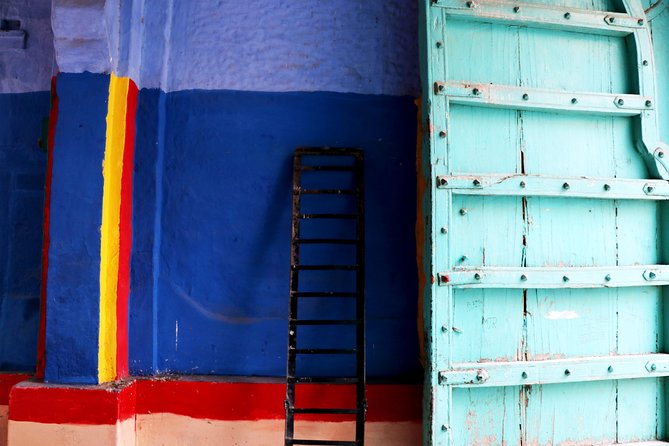
At $26.67 per person, this tour sits in a reasonable mid-range for a private walking experience. What makes it feel like value is that you’re not just paying for someone to walk beside you. You’re paying for the guide’s interpretation of architecture, water practices, and the logic of city planning.
Also, the tour has admission ticket free, so you’re not paying extra entry fees for monuments. That can matter in Rajasthan, where costs can stack quickly if you only choose ticketed sites.
You’ll also benefit from the “small time advantage.” With limited days in Jodhpur, a 3 to 4 hour guided format helps you get meaningful context without using up a whole day. If you book a time that matches your energy level, you can keep the rest of your day for fort views, markets on your own, or simply relaxing.
Who this tour is best for
This is a great match if you:
- Want an orientation to Jodhpur’s Old City fast
- Like learning with a guide, especially about how cities work, not just what they look like
- Enjoy markets and snacks as part of the experience
- Prefer private group attention over large-group schedules
It may be less ideal if:
- You hate walking on uneven pavement or in crowded narrow lanes
- You’re visiting in poor weather, since the experience requires good conditions
- You want a tour that is mostly ticketed monuments with long indoor time (this is street and heritage heavy)
Practical tips so you enjoy the walk more
A few things will help you have a smoother time. First, wear comfortable shoes, because heritage districts are often all stones, steps, and tight turns.
Second, bring a little extra patience for the lane rhythm. Even when the route is well planned, Old City streets can change quickly with foot traffic, shops, and daily routines.
Third, if you want the best answers, ask your guide what to notice. A good moment is when you see a detail like a doorway, facade, temple feature, or water-related structure. If you ask what it’s for, you’ll get more out of every stop.
Finally, if you’re aiming for the optional masala chai at home, confirm early so the timing doesn’t feel rushed.
Should you book the Jodhpur Heritage Walk?
If your goal is to understand Jodhpur beyond postcard photos, I think this is a smart booking. The private format helps a lot, and the tour’s mix of architecture, real city practices like rainwater harvesting, and market time for shopping and snacks gives you more than one kind of memory.
Book it if you want guided context in a short window and you like learning from guides who can explain more than facts, like how history connects to the city’s everyday life. Skip it only if you know you’ll struggle with walking, or if you’re visiting when the weather is likely to be rough.
FAQ
What is the duration of the Jodhpur Heritage Walk?
The walk lasts about 3 to 4 hours.
Where does the tour start?
It starts near Ghanta Ghar, Clock Tower, in the Sardar Market area (Ghantaghar Market, Jodhpur, Rajasthan 342001).
Is this tour private?
Yes. It’s a private tour/activity, and only your group will participate.
What ticket do I receive?
You get a mobile ticket.
Will we shop or eat during the walk?
The tour includes time to go through market areas, with chances to shop and try local snacks. Tea is also mentioned as part of the experience.
What happens if the weather is poor?
The experience requires good weather. If it’s canceled due to poor weather, you’ll be offered a different date or a full refund.
Jodhpur, Blue Lanes and a Big Fort


Recently reviewed across Jodhpur
- Jodhpur to Udaipur Drop with Stops at Ranakpur and Kumbhalgarh
★ 5.0 · 10 reviews - Bluecity tour by Mansingh
★ 5.0 · 10 reviews - BlueCity Breakfast Walk
★ 5.0 · 10 reviews - Jodhpur Half Day Heritage Tour
★ 5.0 · 11 reviews - Jodhpur: Private Mehrangarh Fort and Blue City Day Tour
★ 4.0 · 11 reviews - Private Full Day Jodhpur City and Bishnoi Villages Tour
★ 5.0 · 12 reviews
Jodhpur Blue City Tours, compared.
 ★ 5.0Private Jodhpur Blue City Tour with Hotel Pickup and Drop-offFrom $40461 reviews
 ★ 5.0Blue City Heritage Private Walking Tour With Pickup and Drop-OffFrom $11441 reviews
 ★ 5.0Private Jodhpur Blue City Walking Tour with GuideFrom $10321 reviews
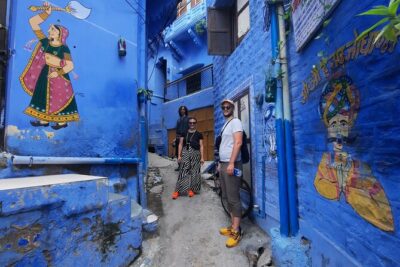 ★ 5.0Jodhpur Blue City Heritage Walking Guided TourFrom $13240 reviews
 ★ 4.8Blue City Heritage Walking Tour With Pick Up & Drop OffFrom $11164 reviews
 ★ 5.0Desert Camel Safari Day Tour In JodhpurFrom $24161 reviews
 ★ 5.0Mehrangarh Fort and Blue City Historic Tour with Local GuideFrom $35134 reviews
 ★ 5.0Jodhpur Overnight Stay in Desert with Camel Safari SRFrom $64126 reviews
Browse the lists this tour appears in