
REVIEW · AGRA DAY TRIPS FROM DELHI
Private 4-Day Golden Triangle Tour – Delhi Agra and Jaipur
Mughal landmarks in four days is a real test. This private Golden Triangle tour is built for first-timers, with hotel pickup and guided tours across Delhi, Agra, and Jaipur, so you spend less time figuring things out and more time seeing the sights. You also get a comfortable, air-conditioned ride between cities, which matters when the traffic and heat are doing their thing.
What I like most is the convenience of a private vehicle with an English-speaking driver. You get a smoother day when you are bouncing between Old Delhi and New Delhi, then heading to Agra via the Yamuna Expressway. I also like that there are guided stops in each city, so places like Jama Masjid and Humayun’s Tomb are not just photo ops, you learn what you are actually looking at.
One thing to consider: this route is full. You’ll move at a pace that favors “seeing a lot” over “slow travel,” and some days include longer sightseeing strings plus a major transfer like Delhi to Agra. If you want lots of downtime, you might feel a bit scheduled.
In This Review
- Key things that make this tour work well
- Private Golden Triangle Tour Value: Comfort, Timing, and Less Stress
- Day 1 in Delhi: Old Delhi Sights, Mughal Tombs, and Qutub Minar
- Day 2 from Taj Mahal Sunrise to Agra Fort and Fatehpur Sikri
- Day 3 Jaipur Icons: City Palace, Jantar Mantar, Hawa Mahal, and Albert Hall
- Day 4 Jaipur Beyond Postcards: Royal Gaitor, Jal Mahal, Stepwell, and Amer
- Price and Logistics: Is $270 a Good Deal for This Private Route?
- Your Driver, English-speaking, Makes the Difference
- What to Pack and How to Survive the Pace (Without Missing the Good Stuff)
- Who Should Book This Golden Triangle Tour (and Who Might Not)
- Should You Book This Private 4-Day Golden Triangle Tour?
- FAQ
- What cities are included in this tour?
- Is pickup from my hotel included?
- Will I have a private vehicle?
- Are guided tours included?
- Is the Taj Mahal visit part of this tour?
- Is there a restriction on the Taj Mahal?
- Does the price include entrance fees to monuments?
- Is accommodation included?
- Are meals included?
- What is the cancellation window?
Key things that make this tour work well
- Private door-to-door pickup and drop-off to avoid public transit stress
- English-speaking driver in an air-conditioned vehicle for city chaos and highway runs
- Guided sightseeing in each city, not just a driver who drops you off
- A sunrise Taj Mahal visit with time inside the monument
- 3 nights of hotel stay included when you choose the option with accommodation
- Offbeat add-ons like Panna Meena ka Kund stepwell and Royal Gaitor cenotaphs
Other one-day Agra runs out of Delhi
Private Golden Triangle Tour Value: Comfort, Timing, and Less Stress
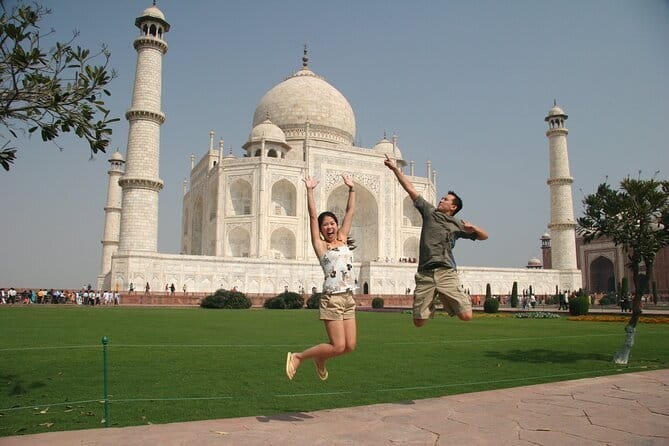
A Golden Triangle itinerary sounds simple on paper: Delhi, Agra, Jaipur. In reality, getting around is the part that can drain you. This tour is designed for the “I just want it to run” crowd, with hotel pickup, a private, air-conditioned car, and an English-speaking driver who handles the hard parts like routing and timing.
The value here is not just comfort. It is also mental energy. When you do not have to wrestle with buses, trains, ticket lines, and unclear meetups, you can focus on the destinations. And because it is private, it is only your group. That matters for flexibility, like adjusting your day if crowds or traffic shift.
You also get a guided layer at each stop. Delhi, Agra, and Jaipur are packed with big-name monuments, but without a guide, it is easy to miss the “why.” A good guide can connect the dots between Mughal-era architecture, Persian-style gardens, and the way later rulers shaped the city look.
Day 1 in Delhi: Old Delhi Sights, Mughal Tombs, and Qutub Minar
Day one is a classic Delhi mix, starting in Old Delhi and then sweeping through New Delhi landmarks and UNESCO sites. The big advantage of having a plan like this is that you do not spend your first day guessing where to go next.
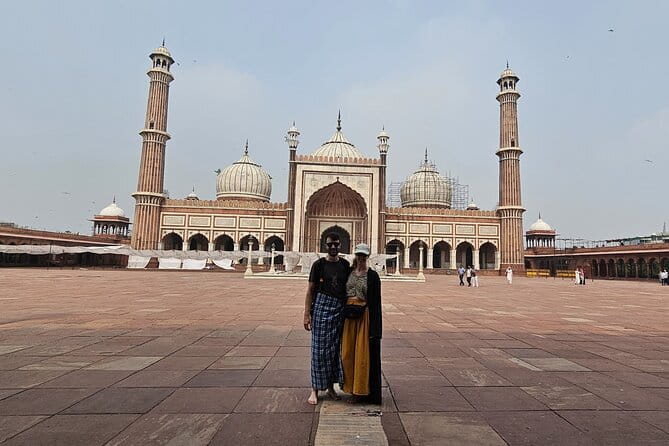
Jama Masjid takes you to the heart of Old Delhi. You spend about 30 minutes there, and the setting is a major draw: built by Mughal Emperor Shah Jahan between 1644 and 1658, it is described as one of the largest and most stunning mosques in India. If you want to understand Delhi beyond skyscrapers and flyovers, this is the place to start.
Next is Raj Ghat, the memorial to Mahatma Gandhi at the site of his cremation in 1948. The platform is simple, black marble, with an eternal flame. It is a short stop, but it adds context fast, especially if you are new to India’s modern history.
Then you move to India Gate, a war memorial with a 42-meter-high arch and inscriptions for over 13,000 soldiers. You also get Amar Jawan Jyoti, an eternal flame feature noted as part of the memorial. It is brief, but it helps you see how Delhi carries layers of past conflicts in stone and names.
The tour also includes Rashtrapati Bhavan and the Parliament House in New Delhi. Rashtrapati Bhavan is described as the President’s residence, designed by Sir Edwin Lutyens and completed in 1929, with grand dome and Mughal Gardens. The Parliament House is noted as completed in 1927 and designed by Lutyens and Herbert Baker, with a circular form tied to India’s democratic function. Even if you only look from outside, these buildings explain a lot about how the city was planned.
For Mughal architecture fans, Humayun’s Tomb is next. It is UNESCO listed and described as the tomb of Mughal Emperor Humayun, built in 1565. The standout is the Persian-style gardens and the grand dome. This is the kind of stop where a guide can point out design logic and symbolism so it clicks.
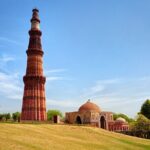
You finish with Lotus Temple and Qutub Minar. Lotus Temple is a Bahá’í House of Worship known for the lotus-inspired design with 27 marble petals, completed in 1986, open to all religions. Then Qutub Minar is framed as a UNESCO site and the tallest brick minaret in the world at 73 meters, built in 1193 by Qutb-ud-Din Aibak.
After a long day, you then drive to Agra. The transfer is estimated at about three hours via the Yamuna Expressway, which is exactly the kind of logistics relief that makes a private car worth it.
Practical note: the stop timing is tight, with many sites around 30 to 45 minutes. That is normal for a guided highlights tour. If you love photos, plan to use the minutes well, and keep your most important shots for the sites you care about most.
Day 2 from Taj Mahal Sunrise to Agra Fort and Fatehpur Sikri
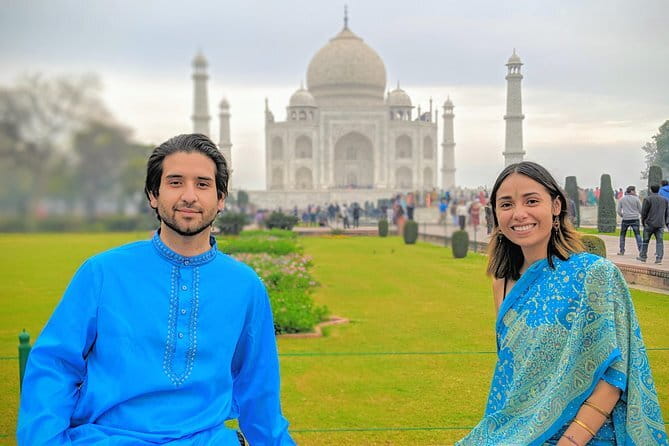
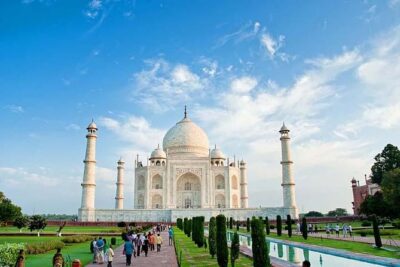
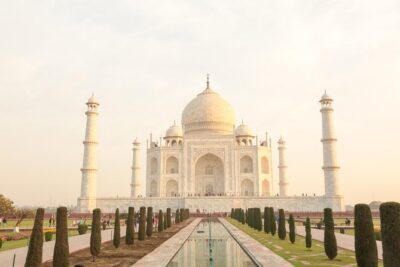
Day two is the peak bucket-list stretch. It starts with Taj Mahal at sunrise, then a guided visit inside for about two hours. The sunrise approach is part of the appeal, because it turns a famous place into something that feels like an event, not a checklist item.
Your guide then frames the monument in its Mughal context, noting it was built by Shah Jahan. That historical thread is useful because Taj Mahal can feel like pure beauty if no one explains what shaped the structure and the empire behind it.
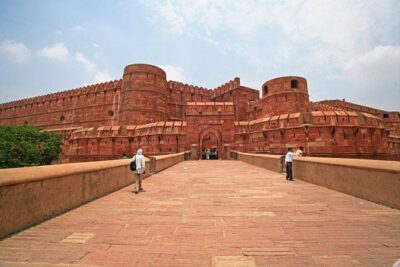
After Taj Mahal, you go to Agra Fort, a UNESCO World Heritage site. The tour description emphasizes palaces, balconies, and gardens, and it points out that the fort was once the main residence of the Mughal emperors. With a guide, Agra Fort works well because you can connect the defensive role of a fort with the lived-in, royal spaces.
Next is Itmad-ud-Daula, also called the “Baby Taj.” The tour description highlights it as a Mughal mausoleum in Agra, often referred to as a precursor to the Taj Mahal, with similar architectural elements. This stop is a great palate cleanser after the big one, because it shows a related style without the same overwhelming scale.
Then you head to Fatehpur Sikri, another UNESCO World Heritage site near Agra. It is described as built by Emperor Akbar in the 16th century, serving as the Mughal capital for a brief period. The big win here is variety: you go from major Mughal structures in Agra to a whole capital city complex.
You finish day two by driving to Jaipur. The plan is check-in and unwind on arrival, which is smart after a day that covers multiple UNESCO sites.
Important scheduling detail: the Taj Mahal is closed on Fridays for general viewing. If your dates land on Friday, the tour provider will need to shift the plan. Before you lock anything in, confirm what will happen on that day.
Golden Triangle itineraries, three to eight days
- 3-Days Private Golden Triangle Tour: Delhi, Agra & Jaipur by Car★ 5.0 · 1,098 reviews
- 3-Day Delhi, Agra and Jaipur Private Tour – India Golden Triangle★ 5.0 · 812 reviews
- Four-Day Private Luxury Golden Triangle Tour to Agra and Jaipur From New Delhi★ 5.0 · 807 reviews
- 4 Days Golden Triangle Tour★ 5.0 · 499 reviews
- Private Car and Drive for Golden Triangle (4N/5D)★ 5.0 · 451 reviews
Day 3 Jaipur Icons: City Palace, Jantar Mantar, Hawa Mahal, and Albert Hall
Jaipur day is the “you came for the visuals” half of the Golden Triangle. The route includes major highlights and then a museum stop, so the day is not only monuments.
Start with the City Palace. You have about an hour, and the description is clear about why it matters: built in 1721, it was the administrative and ceremonial seat of the Maharaja, and a hub for religious and cultural events. Even if you are not a history superfan, the guide helps you read the space as a power center, not just a pretty complex.
Then go to Jantar Mantar, a UNESCO World Heritage site built in 1734. The tour notes that it has nineteen astronomical instruments created by Rajput king Sawai Jai Singh II, founder of Jaipur. This is one of those stops that can feel surprising. You expect forts and palaces, but you get a big dose of science and measurement in stone. If you like “how did they do that” questions, this is a great use of guided time.
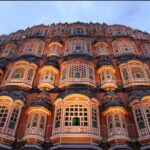
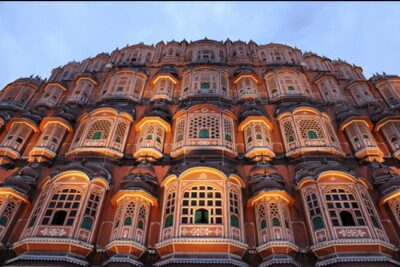
Hawa Mahal, the Palace of Breeze, comes next. It is described as a five-story pyramidal-shaped monument made of red and pink sandstone, built in 1799 by Sawai Pratap Singh. The quick highlight is the shape and the facade feel, and a guide can explain why that design works for airflow and viewing (without turning it into a lecture).
Finally, you visit Albert Hall Museum. The tour description says it was built in 1876 and is Rajasthan’s oldest museum, with an architectural mix of Indian and European influences. Inside, you get collections tied to art, textiles, sculptures, and historical artifacts. For many people, this museum stop is where the day clicks because it turns the region’s visual style into objects you can actually study.
The day is shorter than day two, so it is a nice rhythm break. Still, each stop is planned for about 45 to 60 minutes, so keep your energy up for walking and sun exposure.
Day 4 Jaipur Beyond Postcards: Royal Gaitor, Jal Mahal, Stepwell, and Amer
Day four shifts away from the biggest skyline names and adds places that feel more specific to Jaipur’s heritage.
Royal Gaitor Tumbas is the first stop. It is described as a historic site with royal cenotaphs of Jaipur’s Maharajas at the base of the Aravalli Hills. The tour also notes the intricate marble and sandstone tombs blend Rajput and Mughal design. This stop is a good choice if you like architecture that feels less “theme-park famous” and more tied to place.
Then you go to Jal Mahal, the palace in the middle of Man Sagar Lake. The tour description focuses on the look, that it appears to float on water, and it notes it was built in the 18th century by Maharaja Madho Singh I, blending Rajput and Mughal architecture. Your time here is short, about 15 minutes, so treat it like a quick visual reset.
After that, you visit Panna Meena ka Kund, a stepwell from the 16th century with a geometric design and multiple levels of stairs leading down to the water. The value of this stop is that it is not the typical palace-and-fort loop. It also adds a practical angle: this is infrastructure that shaped how people lived, not just status displays.
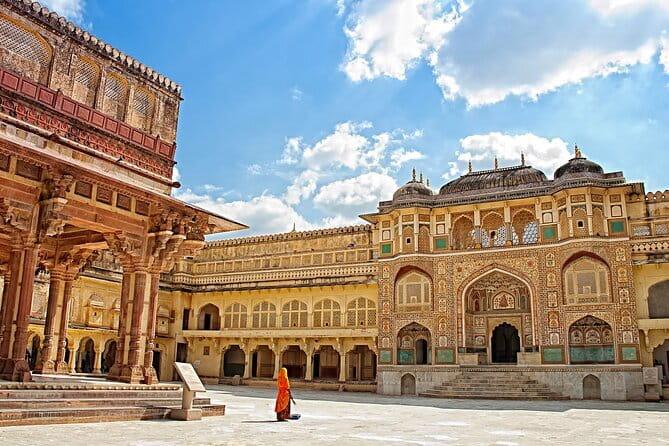
You finish with Amer, a historic town near Jaipur known for rich heritage and scenic beauty in the Aravalli Hills. The plan gives you around two hours to see heritage buildings, ancient temples, and traditional havelis. Amer is a strong closer because it gives you a “keep looking” mix of structures and streetscape moments, and you end the day with a better sense of how the wider region shaped Jaipur.
One caution on day four: Royal Gaitor is listed with a long duration, so build in patience. If you tend to get bored in long cemetery-like sites, ask your guide if they can focus your time on the most meaningful sections.
Price and Logistics: Is $270 a Good Deal for This Private Route?
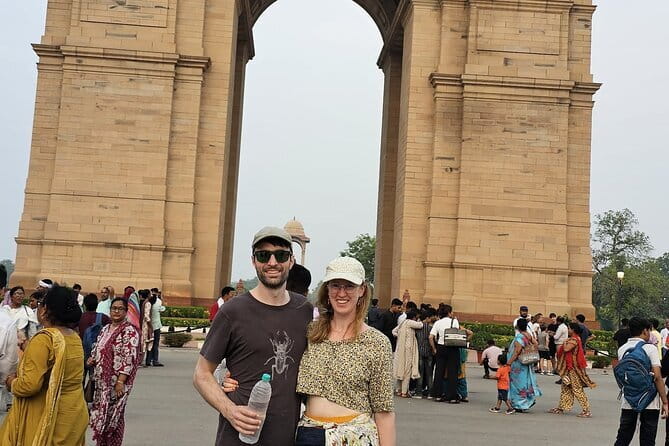
The price is $270 per person for a four-day private Golden Triangle tour, with hotel pickup included and mobile tickets. That is the baseline you are paying for the “private, guided, and chauffeured” setup, not just transport between cities.
Here is what the inclusion list suggests you get:
- Private local guides for sightseeing
- Daily hotel breakfast when you choose the option with hotels
- Hotel or airport pickup and drop-off
- Private, air-conditioned vehicle with an English-speaking driver
- Three nights accommodation when booking the hotel option
- Monument entrance fees and breakfast (3) listed as included
Meals are listed as not included. That does not mean you will be left without food options, it just means you should budget for lunches and dinners separately.
Because the stop-by-stop notes sometimes say admission tickets are not included while the package lists monument entrance fees as included, you should confirm coverage for each site before you arrive. This matters most for the Taj Mahal, since it is the key timed highlight.
So is it good value? For many first-timers, yes, because you are paying to remove the hardest part of India travel: figuring out the transit and sequencing. If you were planning a similar route on your own, the cost would shift to rides, entry fees you might not track well, and the risk of wasting time. Here, the structure is doing that work for you.
Your Driver, English-speaking, Makes the Difference
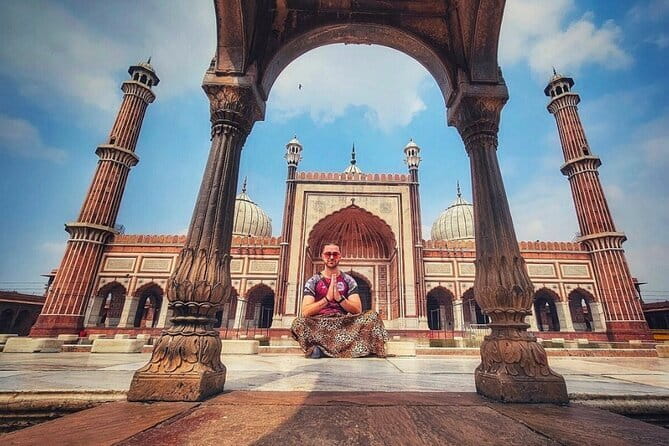
This kind of tour lives and dies on the driver. The plan calls for an English-speaking driver and a private vehicle built around passenger group size, which helps you feel “looked after” rather than handled.
The feedback names that show up alongside this tour style include drivers such as Ajit, Manoj, Vinodh (also noted as Vinodhji), and Amit Kasana. People also mention guides like Deepu. Across those stories, the praise is consistent: polite, professional driving, punctuality, and comfort-first decisions.
The practical side is timing. A great driver will help you avoid worst traffic and will suggest better time slots. That can change your whole day in Delhi and Jaipur, where crowds stack up fast around major sights.
Also, a good driver can be useful beyond the car. Some accounts mention help with where to eat and how to make sense of local food choices. That kind of guidance is not guaranteed, but it is the kind of added value that turns a sightseeing tour into a smoother trip.
What to Pack and How to Survive the Pace (Without Missing the Good Stuff)
This itinerary is not slow. That is not a flaw if you plan for it.
First, plan for early starts. Sunrise at the Taj Mahal means an alarm and some patience. If you are the kind of person who hates mornings, set yourself up with the simplest routine possible the night before.
Second, pack for religious sites. You will visit places like Jama Masjid and also the Lotus Temple, which is open to all religions. Comfortable, modest clothing is the easiest way to avoid hassle.
Third, expect walking in waves. Many stops are 30 to 45 minutes. You are not doing long hikes, but you are moving repeatedly.
Fourth, keep cash and small purchases in mind for the days when meals are not included. The tour handles monuments and transport. You will handle food.
Who Should Book This Golden Triangle Tour (and Who Might Not)
This tour is a strong match if you:
- Are visiting India for the first time and want a clear plan for Delhi, Agra, and Jaipur
- Prefer private logistics over trains and public transit
- Want guided context at major landmarks, including UNESCO sites
- Like the idea of seeing Taj Mahal at sunrise
- Want the ease of hotel pickup and an English-speaking driver
It may be less ideal if you:
- Want a lot of free time in each city to wander without a schedule
- Get cranky when you are in the car for long transfers like Delhi to Agra
- Are sensitive to timed closures, like Taj Mahal being closed on Fridays for general viewing
A good compromise is this: if you want to see the heavy hitters with fewer stress points, book it. If you want slow travel and deep off-the-map days, you might prefer a looser itinerary.
Should You Book This Private 4-Day Golden Triangle Tour?
Yes, if you want a clean, efficient first trip and you value private comfort. The structure makes sense: Delhi highlights, Agra’s big two, Jaipur’s signature architecture, then a day that adds stepwell and royal tomb flavor. The combination of guided stops and a capable driver helps you move through the Golden Triangle without turning the trip into a logistics project.
Before you pay, do two quick checks:
1) Confirm what monument entrance fees are included for the specific days you travel.
2) Confirm how the plan adjusts if your dates hit a Friday, since the Taj Mahal is closed for general viewing then.
If you confirm those points, this is the kind of tour that can make a first Golden Triangle trip feel smooth, not chaotic.
FAQ
What cities are included in this tour?
The tour covers New Delhi, Agra, and Jaipur, the classic Golden Triangle route.
Is pickup from my hotel included?
Yes. Hotel or airport pickup and drop-off are included.
Will I have a private vehicle?
Yes. The tour includes transport by a private, air-conditioned vehicle with an English-speaking driver.
Are guided tours included?
Yes. Guided sightseeing tours in each city are included with private local guides.
Is the Taj Mahal visit part of this tour?
Yes. The plan includes a sunrise visit to the Taj Mahal with a guided tour inside for about two hours.
Is there a restriction on the Taj Mahal?
Yes. The Taj Mahal is closed on Fridays for general viewing.
Does the price include entrance fees to monuments?
The inclusions list monument entrance fees as included. Some stop notes mention admission tickets separately, so you should confirm site-by-site coverage for your dates.
Is accommodation included?
It depends on the package you choose. The tour lists 3-nights accommodation and daily hotel breakfast when you book the option including hotels.
Are meals included?
Meals are not included. Breakfast is included if you choose the hotel option.
What is the cancellation window?
You can cancel up to 24 hours in advance for a full refund. Changes made less than 24 hours before the start time are not accepted.
The Pink City, More Reviewed Days





The Golden Triangle, Longer and Shorter

Delhi to Agra and Back in a Day



Recently reviewed across New Delhi
- Golden Triangle – Delhi Agra and Jaipur
★ 5.0 · 10 reviews - Taj Mahal & Agra Tour by Indian Bullet Train All Inclusive
★ 4.5 · 10 reviews - Private Tour in Mehrauli Archaeological Park & Qutub Minar
★ 5.0 · 10 reviews - Old & New Delhi Tour
★ 5.0 · 10 reviews - From Delhi : Taj Mahal & Agra Fort Tour by Luxury Express Train
★ 5.0 · 10 reviews - Delhi Shopping Tour: Top Bazaars, Crafts & Souvenir Finds
★ 5.0 · 10 reviews
Agra Day Trips from Delhi, compared.
 ★ 5.02 Days Overnight Taj Mahal & Agra Tour From DelhiFrom $67743 reviews
 ★ 5.0Delhi to Agra Taj Mahal Private Day Trip by Superfast TrainFrom $170708 reviews
 ★ 5.0Private Taj Mahal & Agra Day Tour by Superfast Train From DelhiFrom $51580 reviews
 ★ 5.05 Nights 6 Days Private Golden Triangle Tour – Delhi Agra JaipurFrom $240574 reviews
 ★ 5.0Private Golden Triangle Tour Delhi Agra Jaipur ( Top Rated )From $148436 reviews
 ★ 5.0Taj Mahal Tour From Delhi to Agra Sightseeing by Private AC CarFrom $15403 reviews
 ★ 4.5Private Taj Mahal at Sunrise and Agra Day Tour from DelhiFrom $92373 reviews
 ★ 5.0Taj Mahal at Sunrise and Agra Day Tour from DelhiFrom $92335 reviews
Browse the lists this tour appears in