
REVIEW · GOLDEN TRIANGLE TOURS
Private 4 Days Golden Triangle Tour From Delhi
Golden Triangle, tightly packed and worth it. You get private AC comfort, a real sunrise Taj Mahal focus, and a guided route that links Delhi, Agra, and Jaipur into one smooth story. I like how the plan mixes big-name Mughal landmarks with lived-in city stops like Chandni Chowk. One consideration: monument ticket coverage depends on your selected option, and a few sights are marked as admission not included.
If you want to see a lot without doing the hard work of planning, this tour has the right feel. Your chauffeur and guide handle the driving and timing, and you’ll get bottled water and umbrellas along the way, which matters more than it sounds in India.
In This Review
- Key things to know before you go
- Why This Private Golden Triangle Route Works in 4 Days
- Day 1 in Delhi: Old Delhi Mosques, Chandni Chowk, and Mughal Landmarks
- Jama Masjid: power, politics, and prayer architecture
- Chandni Chowk: where the city shows its teeth
- Red Fort: Mughal “zenith” energy
- Humayun’s Tomb: the garden tomb idea
- India Gate and Qutub Minar: monuments that anchor the city
- Lotus Temple: modern design between the old
- Day 2 to Agra: the “Mughal flavor” beyond the Taj
- Itmad-ud-Daula: intimate Mughal detail
- Mehtab Bagh: the river-side “Taj view” moment
- Day 3: Taj Mahal at Sunrise, then Fatehpur Sikri
- Taj Mahal: why sunrise changes the mood
- Fatehpur Sikri: imperial pause near Agra
- Day 4 in Jaipur: Hawa Mahal, Jantar Mantar, City Palace
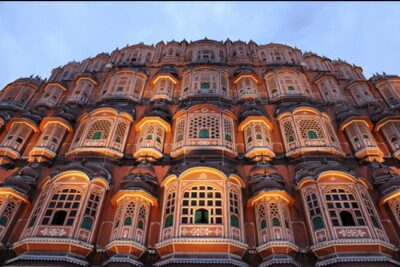
- Hawa Mahal: the five-storey “wind palace”
- Jal Mahal: palace on the water
- Jantar Mantar: astronomy made public
- City Palace of Jaipur: where styles meet
- Price and Value: Is $150 per Person a Fair Deal?
- What to Pack and How to Stay Comfortable on This Route
- Who This Tour Suits Best
- Should You Book This Private 4 Days Golden Triangle Tour from Delhi?
- FAQ
- What cities are included in the private 4-day Golden Triangle tour?
- What time is pickup on Day 1 in Delhi?
- Is the Taj Mahal sunrise visit included?
- Are monument tickets included in the tour price?
- Does the tour include hotel stays?
- Can I cancel for a full refund?
Key things to know before you go
- Private transport plus a dedicated guide means you can ask questions and move at a pace that fits your group.
- Old Delhi in one morning hits Jama Masjid and Chandni Chowk, then swings back to Mughal architecture with Humayun’s Tomb.
- Sunrise Taj Mahal is built into the schedule with an early start around 6:30 AM, plus time on-site for photos.
- Agra goes beyond the Taj with stops like Itmad-ud-Daula and (if you want) Mehtab Bagh across the river, noting admission is not included there.
- Jaipur balances glamour and science with Hawa Mahal and Jantar Mantar, then the City Palace complex.
- Guide quality stands out in real feedback, including names like Malik and Zeeshan, praised for making details click.
Golden Triangle itineraries, three to eight days
Why This Private Golden Triangle Route Works in 4 Days
The Golden Triangle is the classic India starter route for a reason. You’re not just ticking boxes. You’re watching three different chapters of the country line up: Delhi’s imperial layers, Agra’s Mughal craft, and Jaipur’s Rajput-era city planning and astronomy.
What makes this particular version practical is the rhythm. You start each day with a clear plan, then you spend your sightseeing time at major monuments instead of bouncing between random stops. That matters because the distances between Delhi, Agra, and Jaipur eat up daylight fast, and you want that time to count.
Also, the private setup is a genuine advantage. It’s not a long queue shuffle where you lose track of why a place matters. With a live guide and a chauffeur, you can keep the thread from Red Fort to Humayun’s Tomb to the Taj Mahal. It’s the difference between seeing buildings and understanding what you’re looking at.
The one “watch this” point is tickets. Some monuments are marked included, some are free, and some are not included. If you assume everything is covered and then arrive at a place where admission is separate, it can slow you down.
Day 1 in Delhi: Old Delhi Mosques, Chandni Chowk, and Mughal Landmarks
Your day starts with pickup at 9:00 AM from your hotel. The morning is built for impact: you hit Old Delhi first, then move into landmark Mughal architecture, then end the day with a quick transition toward Agra.
Jama Masjid: power, politics, and prayer architecture
You’ll visit Jama Masjid first. It’s described as a symbolic gesture of Islamic power across India, and it also had political significance during key periods of British rule. Even if you’re not a history deep-dive type, that mix helps you read the space. You’re not just looking at a big mosque, you’re seeing how authority was expressed in stone and scale.
Admission is not included here, so budget for the ticket if you’ve chosen a package that only covers “selected” fees.
- Old & New Delhi City Tour – Half or Full Day Options Available★ 5.0 · 4,811 reviews
- Taj Mahal Tour from Delhi by Express Train (Viator Award Winner)★ 5.0 · 2,849 reviews
- Same Day Taj Mahal, Fort & Baby Taj Tour from Delhi by Car★ 4.9 · 2,534 reviews
- From Delhi: Taj Mahal and Agra Fort Private Sunrise Tour★ 4.9 · 2,270 reviews
- Sunrise Taj Mahal, Agra Fort & Baby Taj Tour from Delhi by Car★ 5.0 · 2,243 reviews
Chandni Chowk: where the city shows its teeth
Next is Chandni Chowk, and the highlight is variety. You’re looking at everything from food and sweets (the kinds of choices can feel endless) to textiles like sarees with chikan and zari. This is one of those stops that makes Delhi feel real, not staged for tourists.
If you like browsing, this is a top moment of the trip. If you dislike crowds and bargaining, just take it slow. You can appreciate the energy without forcing yourself to navigate every alley.
Red Fort: Mughal “zenith” energy
Then comes the Red Fort, presented as the zenith of Mughal creativity under Shah Jahan. This stop works even if you only spend a portion of the site time, because the setting and scale do the heavy lifting. It’s also a strong lead-in to the next Mughal architecture stops later in the tour.
Humayun’s Tomb: the garden tomb idea
Humayun’s Tomb is included, and it’s called out as a landmark in the development of Mughal architecture. It’s also noted as the earliest extant example of the Mughal garden tomb style, with causeways and channels. That phrase about garden tomb design is a clue: you’ll get a sense of how space planning, water features, and symmetry create the mood.
If you’re someone who likes architecture details, this is one of the best-value stops on Day 1 because it gives you a framework you can later apply at the Taj Mahal.
India Gate and Qutub Minar: monuments that anchor the city
You’ll also see India Gate (free) briefly, which is a war memorial near Kartavya path, and then Qutub Minar (included). Qutub Minar is presented as a reminder of Islam’s presence in the area, with architectural variety compared to typical styles. It’s the kind of monument where even short time helps because the tower shape forces your attention upward.
Lotus Temple: modern design between the old
Finally, Lotus Temple is included as a free admission stop. The tour summary calls out its awesome architecture and historical importance. Whether you’re religious or not, the building’s form is the kind of thing you remember later when you’re thinking about Delhi’s mix of old and new.
At the end of the day you’ll drive to Agra and check into your hotel.
Day 2 to Agra: the “Mughal flavor” beyond the Taj
Day 2 is a morning transfer. After breakfast, you leave Delhi NCR around 9:00 AM in a comfortable AC vehicle. Then you check in to your hotel on arrival.
This is a good pacing choice. It avoids arriving in Agra, then immediately trying to cram in the Taj Mahal the same afternoon. That would feel rushed. Instead, Day 2 gives you context for what the Taj is building on.
Itmad-ud-Daula: intimate Mughal detail
Your first Agra stop is Itmad-ud-Daula (included). It’s described as a tomb constructed by Mughal queen Nur Jahan between 1622 and 1628, where her father Itimad Ud Daula was buried.
This is one of those places where you can appreciate craftsmanship because it’s not as mega-famous as the Taj. You get a chance to look for fine details and symbolism, which makes Day 3 feel even bigger when the Taj appears.
Mehtab Bagh: the river-side “Taj view” moment
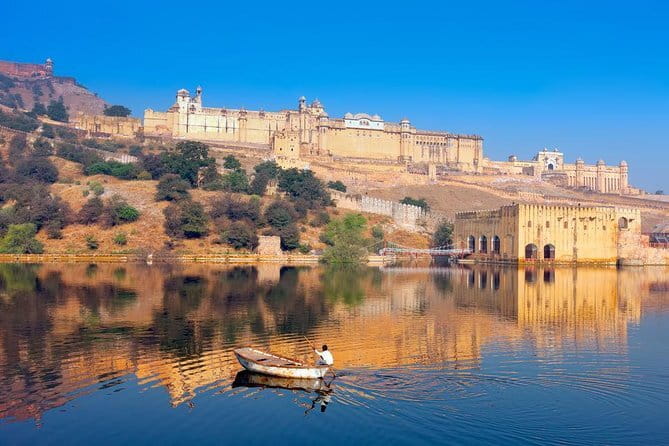
Then there’s Mehtab Bagh, described as a charbagh complex across the Yamuna River from the Taj Mahal complex and Agra Fort. It’s marked as admission not included.
This is a stop you’ll want if you like viewpoints and composition. Even when you’re not getting the full experience of paid access, the idea of being across from the Taj adds perspective. If you’re sensitive to extra costs, simply plan for the possibility of paying admission there, depending on your chosen package.
Day 3: Taj Mahal at Sunrise, then Fatehpur Sikri

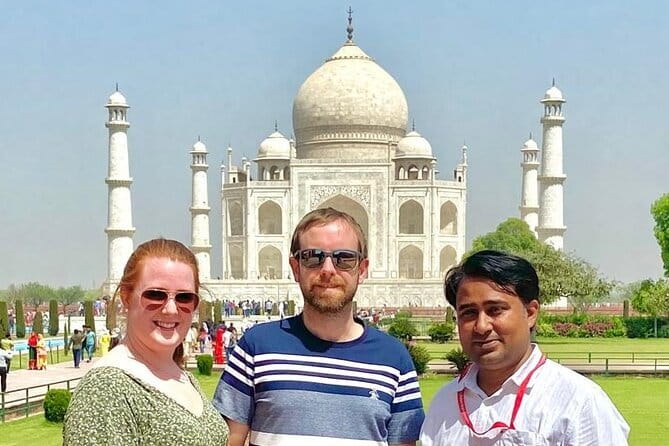
Day 3 is the reason many people book this route. You’ll start early, around 6:30 AM, with your guide and chauffeur taking you to the Taj Mahal. The goal is to witness it during sunrise and take memorable photos.
Taj Mahal: why sunrise changes the mood
The Taj Mahal stop is about 3 hours, and admission is included. The monument is described as an ivory-white marble mausoleum commissioned in 1632 by Shah Jahan. That date matters because it anchors the Taj in a particular moment of Mughal power and artistic focus.
Sunrise is not just a marketing gimmick. The light tends to feel softer, and the crowd energy can be easier to manage early in the day. You also get better odds of seeing the marble’s color shift instead of fighting glare.
Practical advice: keep your camera ready, and don’t spend all your time standing in one place. The Taj reads differently from different angles, especially when the gardens and surrounding space are part of your view.
Fatehpur Sikri: imperial pause near Agra
After the Taj, you’ll go to Fatehpur Sikri, described as a small city just west of Agra, founded in the 16th century. The architecture is red sandstone, and the tour highlights major gates and the Jama Masjid.
Admission is listed as free for this stop. That makes it a strong value add. You get a sense of how imperial city planning looked outside the famous sites you’ve already visited.
This is also a good day to slow down a bit. If you rush through Fatehpur Sikri, it can feel like you’re just walking between structures. If you pause and let the layout make sense, the “whole complex” idea starts to click.
Day 4 in Jaipur: Hawa Mahal, Jantar Mantar, City Palace
Day 4 shifts from Mughal monuments to Jaipur’s trademark mix of Rajput power and city design. You’ll explore Hawa Mahal, Jal Mahal, Jantar Mantar, City Palace, and Patrika Gate after breakfast. There’s also a scheduled lunch stop, with complimentary drinks not included.
Then you’ll continue to your sightseeing blocks in Jaipur.
Hawa Mahal: the five-storey “wind palace”
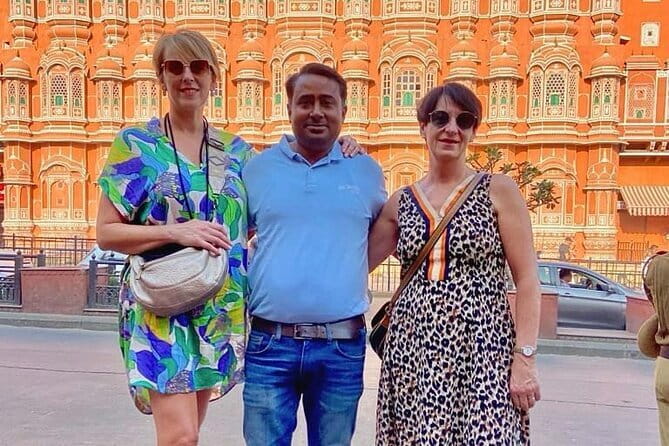
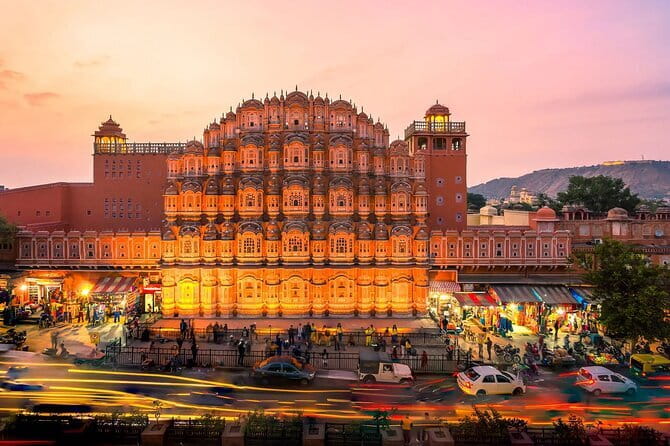
Hawa Mahal is free admission and is described as a five-storey building, tall without a foundation, with curved architecture leaning at an 87 degree angle and a pyramidal shape. Even if you’re not an engineer, those details help you understand why it’s so visually distinctive.
This stop works best if you think of it as an architectural trick. The building’s design is meant to shape views and ventilation. Take a few minutes to look at the façade and then figure out where the structure leads you.
Jal Mahal: palace on the water
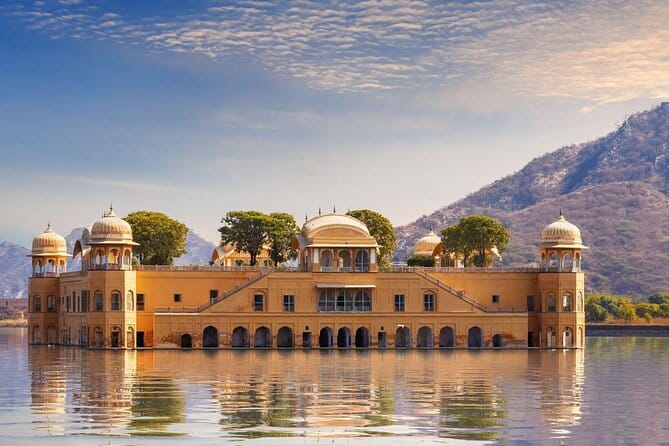
Jal Mahal is described as a palace in the middle of Man Sagar Lake, originally constructed around 1699, with free admission noted. It’s a quick “wow” stop, and it’s also a good reset after long museum-style moments.
Because you’re dealing with light, water, and angles, you might want to arrive with patience and not expect everything to look perfect from one spot.
Jantar Mantar: astronomy made public
Jantar Mantar is included and is described as an early 18th-century astronomical observation site with about 20 main fixed instruments. This is one of the most satisfying stops in Jaipur if you like science or hands-on learning.
It can be tempting to treat it like a photo stop. Instead, ask your guide how these instruments were intended to measure or track the sky. Even without a deep math background, it’s easier to appreciate when someone explains the purpose.
City Palace of Jaipur: where styles meet
Finally, you’ll visit the City Palace of Jaipur complex. It’s included, built by Maharaja Sawai Jai Singh II, and described as a fusion of Mughal and Rajput architecture. The complex is also still used for royal and administrative functions, as noted.
This is a good closer because it ties together the tour’s themes. You’ve seen imperial power expressed through monumental tombs, mosques, and forts. City Palace shows another channel, using design to communicate authority and control of city life.
Price and Value: Is $150 per Person a Fair Deal?
At $150 per person, you’re paying for more than a map. You’re paying for a setup that includes a private AC vehicle, a live tour guide, parking and fuel, and typically 3 nights of hotel stay with breakfast if you choose the hotel option.
Value also comes from what’s handled for you. The driving between Delhi NCR, Agra, and Jaipur can be stressful, especially when you’re trying to coordinate public transport and ticket lines. Here, your chauffeur and guide handle that friction.
The ticket piece is the main value variable. Monument tickets are included only if you choose the option with entrance fees. Some stops are listed as free anyway, like Chandni Chowk and India Gate, and others are included like Humayun’s Tomb and Taj Mahal. But Mehtab Bagh and Jama Masjid are explicitly marked as admission not included, so check what you’re selecting before you go.
If you’re the type who hates surprises at ticket gates, choose the entrance-fee option. If you’re traveling light and don’t mind paying a few admissions directly, you might still be fine with a lower-cost configuration.
What to Pack and How to Stay Comfortable on This Route
This route is busy. You’ll spend long stretches on your feet around major sites, plus time in the car as you move between Delhi, Agra, and Jaipur.
I’d pack for heat and crowds. That means comfortable walking shoes, a hat or cap, and sunscreen. Since the tour includes bottled water and umbrellas, you can keep your own load lighter, but basic sun protection still helps.
For photos, aim to start your big camera moments at the early slots. Sunrise at the Taj Mahal is the star photo window, and you’ll usually get better results if you’re ready before the first light changes.
Also, keep one flexible mindset. Even with a tight schedule, Delhi and Agra can bring traffic delays. A private chauffeur helps, but you should still expect “India time” and not plan a later activity that depends on the exact minute.
Who This Tour Suits Best
This is a great fit if you want a structured Golden Triangle in about 4 days, without doing the legwork of routing, transport, and guide coordination.
It’s especially good for:
- First-time visitors to India who want the big highlights with context
- Couples or small groups who prefer privacy and a guide who can answer questions
- Architecture and history lovers who will appreciate Mughal and Rajput contrasts
- Photo-minded travelers who care about the Taj Mahal at sunrise
It might be less ideal if you want a very slow travel pace, or if you hate early mornings. Sunrise in Agra is early enough to change how you feel about breakfast.
Should You Book This Private 4 Days Golden Triangle Tour from Delhi?
I’d book it if you want the Golden Triangle done in a way that feels guided, not chaotic. The biggest strengths are the private setup, the sunrise Taj Mahal focus, and the fact that the schedule includes more than just the headline monument stops.
Do a quick check before paying:
- Confirm whether you selected the option that includes entrance fees
- Note that some stops are marked free while a few are not included
- Make peace with a full itinerary day structure, because it’s built for maximizing a short window
If that matches your style, this is a solid way to experience Delhi, Agra, and Jaipur with less friction and more meaning per hour.
FAQ
What cities are included in the private 4-day Golden Triangle tour?
The tour covers New Delhi, Agra, and Jaipur.
What time is pickup on Day 1 in Delhi?
On Day 1, the chauffeur picks you up at 9:00 AM from your hotel.
Is the Taj Mahal sunrise visit included?
Yes. You go early in the morning around 6:30 AM to witness the Taj Mahal at sunrise, and Taj Mahal admission is listed as included.
Are monument tickets included in the tour price?
It depends on the option you choose. Monument tickets are included if you select the tour with entrance fees. Some stops are listed as free, while others show admission not included.
Does the tour include hotel stays?
It includes 3 nights hotel stay with breakfast if you choose the option that includes hotels.
Can I cancel for a full refund?
Yes. There is free cancellation, and you can cancel up to 24 hours in advance for a full refund. If you cancel less than 24 hours before the start time, you won’t get a refund.
The Golden Triangle, Longer and Shorter




Recently reviewed across New Delhi
- Golden Triangle – Delhi Agra and Jaipur
★ 5.0 · 10 reviews - Taj Mahal & Agra Tour by Indian Bullet Train All Inclusive
★ 4.5 · 10 reviews - Private Tour in Mehrauli Archaeological Park & Qutub Minar
★ 5.0 · 10 reviews - Old & New Delhi Tour
★ 5.0 · 10 reviews - From Delhi : Taj Mahal & Agra Fort Tour by Luxury Express Train
★ 5.0 · 10 reviews - Delhi Shopping Tour: Top Bazaars, Crafts & Souvenir Finds
★ 5.0 · 10 reviews
Golden Triangle Tours, compared.
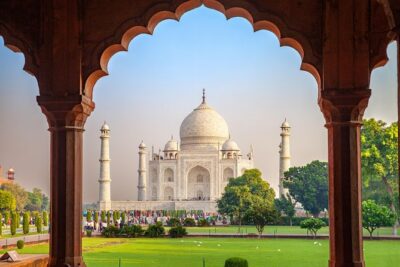 ★ 5.03-Days Private Golden Triangle Tour: Delhi, Agra & Jaipur by CarFrom $1271,098 reviews
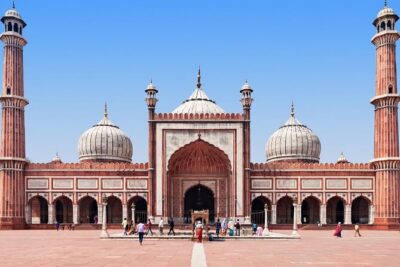 ★ 5.03-Day Delhi, Agra and Jaipur Private Tour – India Golden TriangleFrom $110812 reviews
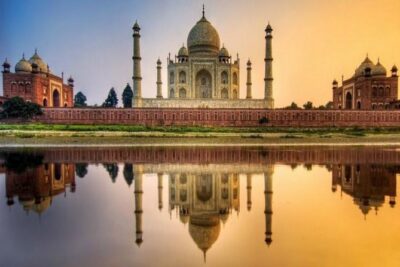 ★ 5.0Four-Day Private Luxury Golden Triangle Tour to Agra and Jaipur From New DelhiFrom $160807 reviews
 ★ 5.05 Nights 6 Days Private Golden Triangle Tour – Delhi Agra JaipurFrom $240574 reviews
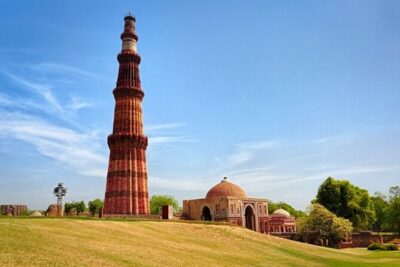 ★ 5.04 Days Golden Triangle TourFrom $146499 reviews
 ★ 5.0Private Car and Drive for Golden Triangle (4N/5D)From $167451 reviews
 ★ 5.0Private Golden Triangle Tour Delhi Agra Jaipur ( Top Rated )From $148436 reviews
 ★ 5.03-Day Private Luxury Golden Triangle Tour to Agra and Jaipur From New DelhiFrom $164424 reviews
Browse the lists this tour appears in