
REVIEW · GOLDEN TRIANGLE TOURS
Private 5 Days Golden Triangle Tour ( Delhi – Agra – Jaipur )
Delhi to Jaipur, with the hard parts handled. This private 5-day Golden Triangle tour strings together Delhi, Agra, and Jaipur with door-to-door ground transfers and admission tickets that are handled for you. You get a live guide giving context as you go, so the trip feels like a guided story rather than a checklist.
The tradeoff is a packed route. You cover a lot of famous stops, and many are timed tightly, plus you’ll spend real hours in the car between cities. If you love slow wandering and long lunches, you’ll need to treat this tour like a fast, focused route.
In This Review
- What This Tour Gets Right for a Delhi-Agra-Jaipur Trip
- Key Highlights That Make This One Worth Considering
- Day 1 in Delhi: Old Delhi Sights, Humayun’s Area, and Qutub Minar
- Pasar Chandni Chowk to Jama Masjid: Old Delhi by tuk-tuk
- Gurudwara Bangla Sahib: The tank legend and calm contrast
- Central Delhi monuments: The Unknown Soldier and the Lutyens-Baker complex
- Akshardham and Humayun’s Tomb: One route, two iconic styles
- Qutub Minar: UNESCO and the soaring centerpiece
- Day 2 to Agra: Fort Views and the calm before the Taj morning
- Agra Fort: 17th-century UNESCO and mixed art styles
- Itmad-ud-Daula: A quieter but meaningful Mughal stop
- Day 3: Taj Mahal at sunrise, Fatehpur Sikri on the way, then Jaipur
- Taj Mahal sunrise: more than a postcard
- Fatehpur Sikri en route: Mughal short-lived capital
- Drive to Jaipur and overnight
- Day 4 in Jaipur: Amber Fort, Hawa Mahal, City Palace, and Jal Mahal
- Amber Fort: Hindu-style architecture and a strong centerpiece
- Hawa Mahal: 953 windows and the logic of design
- City Palace: the royal seat turned museum space
- Jal Mahal: peace at the lake
- Day 5: A relaxed return day to Delhi, or a drop at Jaipur airport
- Price and Value: What $219 Per Person Really Covers
- The Guide Factor: What You Gain When Explanations Are Included
- Practical Tips So You Don’t Feel Rushed
- Should You Book This Private Golden Triangle Tour?
What This Tour Gets Right for a Delhi-Agra-Jaipur Trip
A Golden Triangle itinerary can be a puzzle. Distances are long, UNESCO sights have timed crowds, and forgetting one ticket or meeting point can turn a good day into a stressful one. This tour is designed to remove those friction points by bundling transport, a private guide, and monument entries.
The biggest practical win is that all admission tickets are included. That means you are not hunting for counters, paying a string of small fees, or waiting while someone negotiates lines on your behalf. It also keeps your day moving at a reasonable pace, even when popular sites get busy.
The second win is the private, live guide across the route. A good guide changes how you experience these places. Instead of staring at stone and guessing the meaning, you get the why behind what you’re seeing, from Old Delhi religious landmarks to Mughal-era architecture and Jaipur’s palace design.
Finally, the logistics are handled with an air-conditioned private vehicle and door-to-door pickups in the wider Delhi region. You also get complimentary water bottles and an umbrella, which sounds small until you hit heat or a surprise shower.
Golden Triangle itineraries, three to eight days
Key Highlights That Make This One Worth Considering
- Door-to-door pickup in Delhi-region cities (Delhi, Noida, Gurugram, Ghaziabad, Faridabad) within a 9 AM to 11 AM window
- Admission tickets included for major monuments, so you avoid extra cash and time-sinks
- Private live guide at the monuments, with clear explanations as you move from stop to stop
- Sunrise time at the Taj Mahal, with help finding strong photo angles
- An Old Delhi tuk-tuk ride through colorful bazaars, followed by major landmarks
- Choice of accommodation tiers (mid-range or high-end, with breakfast)
Day 1 in Delhi: Old Delhi Sights, Humayun’s Area, and Qutub Minar
Day 1 is built for orientation. You start in Delhi with pickup anywhere in the Delhi region covered by the tour, then ease into the story of the city.
Pasar Chandni Chowk to Jama Masjid: Old Delhi by tuk-tuk
After meeting your guide, you ride past the busy, color-filled bazaars of Old Delhi. The tuk-tuk ride is one of those moments that helps you understand the scale fast, because you see how streets feed markets, temples, and mosques without having to navigate it alone. It also gives your guide a chance to set expectations for what you’re about to see.
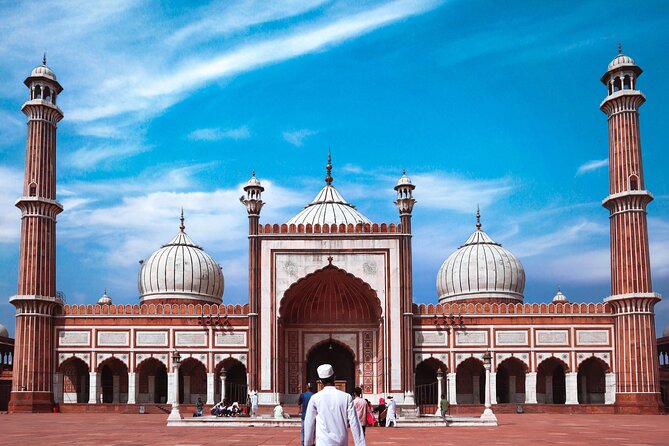
Then you head to Jama Masjid, India’s largest mosque. You’ll spend time in the red sandstone courtyard. It’s known for being built in 1656 with 5,000 workers, and standing there helps you grasp why it has such pull in Delhi’s religious and architectural story.
Why this matters: Jama Masjid isn’t just a single viewpoint. The courtyard lets you slow down a bit and actually take in the mosque’s structure and surrounding feel.
Jaipur, a few more ways to see it
- Jaipur Day Trip from Delhi by Car or Train – All Inclusive★ 5.0 · 663 reviews
- Jaipur City Private Day Tour from Delhi by Car – All Inclusive★ 5.0 · 589 reviews
- Private Golden Triangle Tour Delhi Agra Jaipur ( Top Rated )★ 5.0 · 436 reviews
- 3-Day Private Luxury Golden Triangle Tour to Agra and Jaipur From New Delhi★ 5.0 · 424 reviews
- 4-Days Private Golden Triangle Tour: Delhi, Agra & Jaipur by Car★ 5.0 · 406 reviews
Gurudwara Bangla Sahib: The tank legend and calm contrast
Next comes Gurudwara Bangla Sahib. The tour includes time to see it and learn the tradition tied to the tank. There’s a well-known legend that in 1664, the eighth Sikh Guru visited and cured people during smallpox and cholera epidemics by distributing water from the tank.
What I like about this stop: it’s a different rhythm from Old Delhi marketplaces. Even if you only have 30 minutes, it gives your day variety, and it’s a good pause before the more monument-heavy sections.
Central Delhi monuments: The Unknown Soldier and the Lutyens-Baker complex
The itinerary also includes time at the Tomb of the Unknown Soldier, where names of 13,300 Indian army servicemen carved on the wall honor those who died in the First World War. It’s quiet and heavy in theme, and it adds a respectful pause after the more sensory start of the day.
You’ll also see the government complex associated with Sir Edwin Lutyens and Herbert Baker. The tour notes an impressive 330-acre design space constructed in 1929 by those architects, and it’s a reminder that New Delhi is not just old-world glamour. It was planned, engineered, and built with serious ambition.
Akshardham and Humayun’s Tomb: One route, two iconic styles
Later, you’ll reach Swaminarayan Akshardham. It’s one of the biggest Hindu temple complexes, constructed in 2005 but designed to look like it has the weight of much older architecture. The vibe is grand and highly detailed.
Then comes Humayun’s Tomb, a UNESCO World Heritage Site and often described as India’s first garden tomb. It was built after Humayun’s death, and the itinerary highlights that Humayun’s wife’s intent was central to the project.
Here’s the practical consideration: the tour notes a choice-like flow around these two stops, with time set at about 30 minutes each. In real life, that can mean you prioritize one over the other depending on how the day runs.
Qutub Minar: UNESCO and the soaring centerpiece
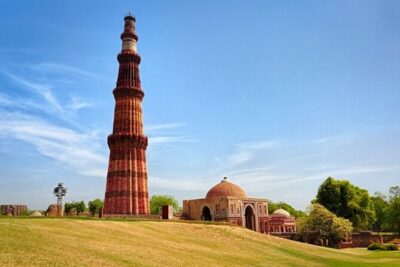
Finally, you visit Qutub Minar, part of the UNESCO Qutub complex. The itinerary notes it as the tallest minaret built up in 1192 with bricks, and it’s surrounded by enough ruins and context to make it more than a single photo moment.
Potential drawback: Day 1 is long on big names. If you get tired, the best move is to keep your walking efficient. Use your guide’s cues for where to stand for the best views, then move on.
Day 2 to Agra: Fort Views and the calm before the Taj morning
After breakfast, you drive about 3 hours toward Agra, the city famous for the Taj Mahal. On arrival, you meet your guide, and you get help with a hassle-free hotel check-in.
This matters because check-in chaos is a common way to lose half a day. Having someone coordinate that means you can actually settle in and still do two strong monument stops in the afternoon.
Agra Fort: 17th-century UNESCO and mixed art styles
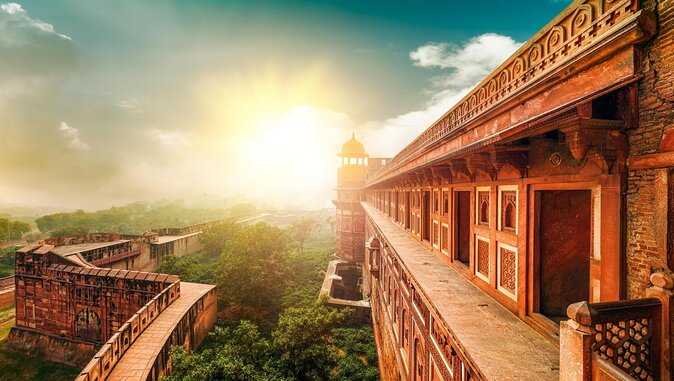
Your first Agra stop is Agra Fort, a UNESCO World Heritage Site from the 17th century. The tour describes it as a blend of Indian and Islamic art and architecture, and that blend shows up in the way the fort’s design balances form, defense, and ornament.
Why I think this pairs well with the Taj plan: Agra Fort gives you a sense of power and imperial layers before you face the most famous marble monument on the planet.
Itmad-ud-Daula: A quieter but meaningful Mughal stop
Next you visit Itmad-ud-Daula, also described as a UNESCO site from the 17th century with a blend of Indian and Islamic art and architecture. This stop tends to feel different from the huge fortress energy, and it’s a nice way to keep the day from becoming only one kind of monument.
Timing note: Day 2 does not center on the Taj Mahal. That’s smart, because the next morning’s Taj time is the big emotional and photo moment.
Day 3: Taj Mahal at sunrise, Fatehpur Sikri on the way, then Jaipur
Day 3 is the reason many people book this route. You get up early for sunrise at the Taj Mahal, with about 3 hours for exploration. The tour includes help from your guide to get photos from the best spots, which is useful when you’re tired and the light is changing fast.
Taj Mahal sunrise: more than a postcard
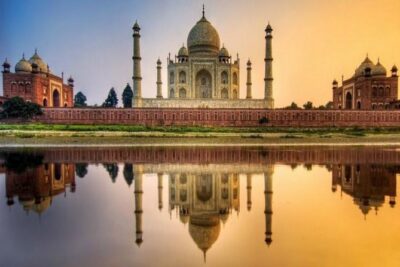
Sunrise is when the Taj Mahal shifts from a distant icon into a real building with depth. Marble catches light differently as the day starts, and you can see the structure more clearly. The guide support is also about angles and movement, so you spend time looking instead of wandering.
What I like about including the sunrise time: it reduces the urge to chase perfect photos. You still get great shots, but the focus becomes understanding the place.
Fatehpur Sikri en route: Mughal short-lived capital
After Taj, you head toward Jaipur. Along the way you stop at Fatehpur Sikri, described as a fortified ancient city about 40 km west of Agra. It’s famous as a short-lived Mughal capital between 1572 and a later period.
Your time here is listed as about 1 hour, so this is a “see the essentials” stop rather than an all-day exploration. But that’s often the right approach, because you’re trading time for momentum toward Jaipur.
Drive to Jaipur and overnight
Then you enjoy a drive of about 4 hours to Jaipur. When you arrive, your guide assists with hotel check-in, you freshen up, and you stay overnight.
Practical consideration: Day 3 is emotionally full and logistically full. Keep your expectations realistic: you’re seeing a lot, not fully mastering everything.
Day 4 in Jaipur: Amber Fort, Hawa Mahal, City Palace, and Jal Mahal
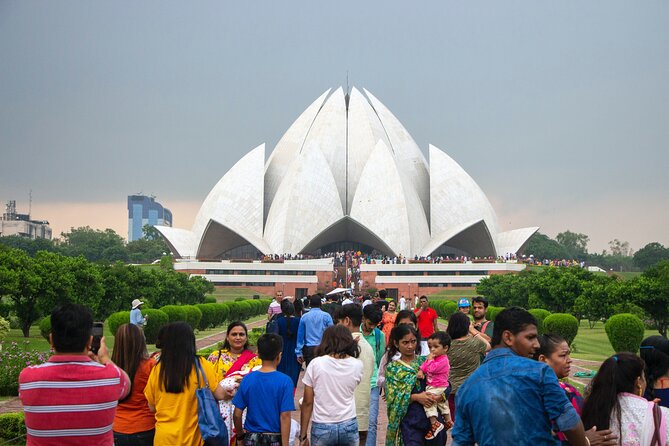
Jaipur is where the tour shifts from monumental power to palace design and city identity. After breakfast, you head out to the main sights.
Amber Fort: Hindu-style architecture and a strong centerpiece
You’ll visit Amer Fort (often called Amber Fort). The tour notes it as known for amazing artistic Hindu-style architecture. You’ll have around 2 hours here, enough time to move through key areas and get a real sense of scale.
Why I like this time allocation: two hours is often the sweet spot for forts. You can walk, look, and not feel like you’re speed-running.
Hawa Mahal: 953 windows and the logic of design
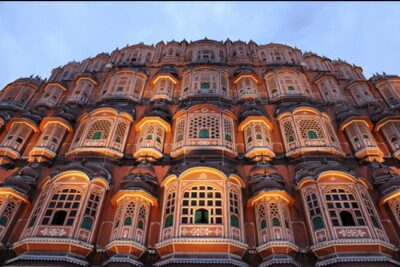
Next is Hawa Mahal, the Palace of Wind. The itinerary calls out the 953 windows and notes it was constructed in 1799 for royal ladies. Even if you only have about 1 hour, the windows and the facade geometry are memorable, and the design purpose becomes clear when you’re standing in front of it.
City Palace: the royal seat turned museum space
Then you go to City Palace of Jaipur. The tour describes patterned gardens and architecture at the center of the city, and explains it started as the Maharaja of Jaipur’s seat but now has museum space reserved in part of the complex. You get about 2 hours, which is helpful because palace complexes can be confusing without guidance.
Jal Mahal: peace at the lake
Finally, you stop at Jal Mahal, located in the middle of Man Sagar Lake. The itinerary describes it as Rajput-style architecture from the 17th century, and it gives you around 30 minutes. This stop is shorter, and it’s a different kind of moment. It’s the “breathe” part of Jaipur day.
Possible drawback: Day 4 is again built from major hits, and you’ll be moving between viewpoints and complexes. If your energy is limited, prioritize what interests you most, then let your guide handle the rest.
Day 5: A relaxed return day to Delhi, or a drop at Jaipur airport
Day 5 keeps it easy. The tour is described as a relaxing day where you start your journey back to Delhi, with about 4 hours of travel time. If you prefer, you can choose a drop-off at Jaipur airport.
This is a practical finale because you’re not cramming another palace right before you travel. It also helps if you have an afternoon or evening flight out, since the itinerary supports an airport drop option.
Price and Value: What $219 Per Person Really Covers
At $219 per person, this tour can look like a straightforward deal. But the value is not just the headline price. It’s what is bundled.
You get:
- All monument tickets included
- Private air-conditioned car and driver
- Private live guide at the monuments
- Four nights of hotel with breakfast (based on whether you choose 3-star mid-range or 5-star high-end)
- Door-to-door transfers with pickup in the Delhi-area cities covered
- Complimentary water bottles and an umbrella
Meals are not included, so you will still budget for lunch and dinner on your own. That said, the biggest hidden cost on a Golden Triangle is often the “messy extras”: entry fees, guide coordination, transport between cities, and the time lost to logistics. This tour tackles those head-on.
Also note that the tour says group discounts and private tour are part of the offer. In practice, private tours often get more cost-effective when you travel with people. If you’re going solo, it may still be worth it if you value having your own guide and car without sharing.
The Guide Factor: What You Gain When Explanations Are Included
One review detail that stuck with me is the praise for the Agra guide named Shain. The feedback highlights clear English, strong historical knowledge presented in a way that made sense, and help taking good pictures.
That’s not a small thing. When you visit the Taj Mahal, Qutub Minar, forts, and palaces, small guidance matters:
- where to stand for the best view,
- what to notice first,
- how to understand what you’re seeing instead of just photographing it.
This tour specifically includes that live guide support, so you are not forced to rely on apps or guesswork.
Practical Tips So You Don’t Feel Rushed
This itinerary is efficient. So your success depends on how you prepare.
- Be ready for early mornings. Sunrise at the Taj Mahal is a scheduled highlight, so sleep and breakfast timing matter.
- Plan for limited time at each stop. Many sites are 30 to 120 minutes, so keep your priorities tight and let your guide help you move smartly.
- Budget for meals. Meals are not included, so decide if you want street food, restaurants, or hotel dining and plan accordingly.
- Wear shoes you can walk in. Courtyards, forts, and palace areas mean real walking even when the clock says 30 to 60 minutes.
- Use the included water and umbrella. It’s simple, but it helps you stay comfortable without extra purchases.
Should You Book This Private Golden Triangle Tour?
I’d book this tour if you want a structured, guided Golden Triangle where major monuments are handled with tickets included and you get private transportation between Delhi, Agra, and Jaipur. It’s a strong fit for first-timers who want the essentials done well, without spending hours coordinating trains, entry times, and meeting points.
I’d pause before booking if you dislike packed schedules. Day 1 alone stacks several iconic sites in one run, and the entire route trades slow sightseeing for coverage. If you want deep, unhurried exploration at just one city, you might be happier with a longer, more city-by-city plan.
If you’re traveling with friends or family, the private format and included guide support can feel especially satisfying. And if you care about the Taj Mahal experience, the sunrise timing plus guide help with photo angles is the kind of value that’s hard to recreate on your own.
If you tell me your travel month and whether you prefer 3-star comfort or 5-star polish, I can suggest which parts of this route are most worth your focus.
The Pink City, More Reviewed Days





The Golden Triangle, Longer and Shorter

Recently reviewed across New Delhi
- Golden Triangle – Delhi Agra and Jaipur
★ 5.0 · 10 reviews - Taj Mahal & Agra Tour by Indian Bullet Train All Inclusive
★ 4.5 · 10 reviews - Private Tour in Mehrauli Archaeological Park & Qutub Minar
★ 5.0 · 10 reviews - Old & New Delhi Tour
★ 5.0 · 10 reviews - From Delhi : Taj Mahal & Agra Fort Tour by Luxury Express Train
★ 5.0 · 10 reviews - Delhi Shopping Tour: Top Bazaars, Crafts & Souvenir Finds
★ 5.0 · 10 reviews
Golden Triangle Tours, compared.
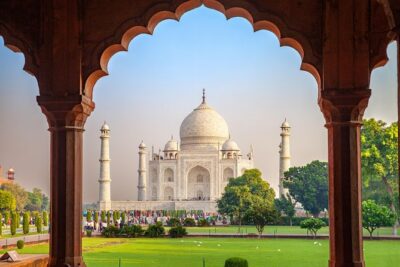 ★ 5.03-Days Private Golden Triangle Tour: Delhi, Agra & Jaipur by CarFrom $1271,098 reviews
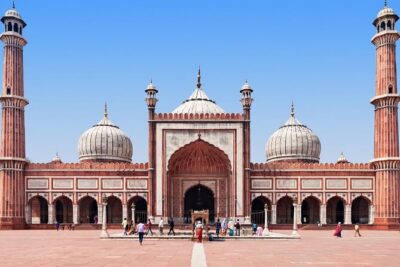 ★ 5.03-Day Delhi, Agra and Jaipur Private Tour – India Golden TriangleFrom $110812 reviews
 ★ 5.0Four-Day Private Luxury Golden Triangle Tour to Agra and Jaipur From New DelhiFrom $160807 reviews
 ★ 5.05 Nights 6 Days Private Golden Triangle Tour – Delhi Agra JaipurFrom $240574 reviews
 ★ 5.04 Days Golden Triangle TourFrom $146499 reviews
 ★ 5.0Private Car and Drive for Golden Triangle (4N/5D)From $167451 reviews
 ★ 5.0Private Golden Triangle Tour Delhi Agra Jaipur ( Top Rated )From $148436 reviews
 ★ 5.03-Day Private Luxury Golden Triangle Tour to Agra and Jaipur From New DelhiFrom $164424 reviews
Browse the lists this tour appears in