

REVIEW · JODHPUR BLUE CITY TOURS
Private Cooking Class in Jodhpur With Pick Up & Drop Off
A home-cooked Rajasthani meal beats a buffet. I love the private, hands-on format with clear English coaching from Dakshika, and I also love how smooth the pick-up and drop-off feels, including Clock Tower help for tight lanes. The one thing to consider is that this is in a home kitchen, so it works best for small groups and there is no big show or restaurant atmosphere.
You start by being welcomed, then you cook for real, not “watch and snack.” Expect chai to kick things off, followed by classic vegetarian plates like chapati, dal, and other regional favorites. If you’re hoping to control every detail or want a big multi-stop tour, this is more about cooking time than sightseeing time.
In This Review
- Key highlights you can count on
- From your hotel to a Jodhpur home kitchen
- Meet Dakshika, plus the family rhythm
- What you’ll cook: a Rajasthani vegetarian meal with real practice
- Expect chai at the start
- Then comes the bread practice, especially chapati
- Likely mains and sides: dal, kitchdi/kitchery, okra, potato dishes
- How the 3-hour lesson actually flows
- Dining, drinks, and what you take home
- Price and value: $20 for a private session that teaches skills
- Who this is best for (and who should choose another option)
- Should you book this Jodhpur private cooking class?
- FAQ
- What is the duration of the private cooking class in Jodhpur?
- Is the class lunch or dinner, and can I choose the time?
- Is the cooking class private, or is it shared with other people?
- What language is the instructor teaching in?
- Where does the class take place?
- What is included in the price?
- What if my hotel is on small streets?
- Is alcohol included?
- Where is the meeting point if I am not using hotel pick-up?
Key highlights you can count on

- Private coaching in English with plenty of time to ask Dakshika questions
- Chai first, then cooking, often with ginger and masala tea to set the tone
- Small, home-style kitchen workflow where you actually practice (especially chapati)
- Vegetarian Rajasthani dishes like dal, kitchdi/kitchery, okra curry, and potato preparations
- All the food you make gets eaten together right after cooking
- Special care for dietary needs, including gluten-free chapati requests from past participants
The blue city, three more ways
From your hotel to a Jodhpur home kitchen
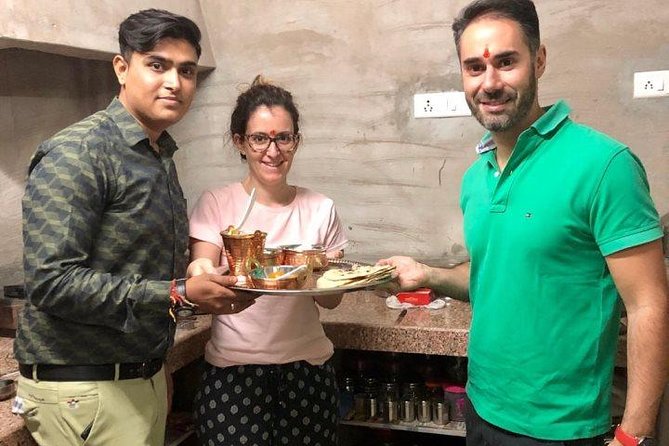
This class starts with transportation, and that matters in Jodhpur. You get pick-up from your selected hotel and then drive to the host house for the session. If your hotel sits on narrow streets, you may not be able to park close by. In that case, pick-up and drop-off can switch to the Clock Tower area, which is practical when lanes get tight.
There are two ways you’ll connect with the activity depending on where you’re staying. Your main option is hotel pick-up, but if you’re meeting separately, the meeting point is opposite Pal Haveli. Either way, the goal is the same: you arrive ready to cook, not chasing instructions around town.
One of the nicest details here is that you are not sent on a shopping expedition to “kill time.” You go straight to the cooking space. That keeps the 3 hours focused. And because the workspace is fully equipped, you can concentrate on the steps, not on hunting for tools, spices, or basics.
What it feels like: you’re traveling to someone’s home for a guided meal prep session, not a classroom. That brings a calm rhythm. You will be welcomed, oriented to the kitchen flow, and then you jump into chopping, mixing, rolling, and cooking as the lesson moves.
If your days in Jodhpur include fort runs or long walks in the heat, this is a great switch. It’s hands-on, but it’s indoors. You end with food in front of you, not a list of places you only half remember.
Meet Dakshika, plus the family rhythm
The teaching is led by Dakshika, and she is also the host. Based on what past participants experienced, she runs the class at a pace that lets you work, then checks in when you need help. Many people highlight that you do the cooking yourself, with guidance that is clear and step-by-step.
You may also meet Ray, who can handle transport. Some sessions involve a licensed car, and others have used a tuk-tuk for the ride. Either way, the transport seems to be part of the experience, handled with care so you don’t arrive flustered.
What makes this more than just a cooking demo is the family-style approach. Several participants mention feeling welcomed into a clean, well-organized home kitchen. That matters because you want to learn with confidence, not feel like you’re borrowing someone else’s space.
English instruction is included, and you’re encouraged to ask questions. Past participants specifically noted that dietary questions are taken seriously. One person with a celiac and severe allergy concerns felt they were treated with real attention, including gluten-free chapati handling.
In other words, this is not a one-size-fits-all class. It’s flexible around your needs, within the structure of what the kitchen can support.
You’ll also likely get cultural context as you cook. People mention talking about Indian and Rajasthani traditions, and even small extras like a traditional greeting ritual at arrival. That can make the class feel grounded in place, not copied from a generic itinerary.
What you’ll cook: a Rajasthani vegetarian meal with real practice

This is a vegetarian cooking class, designed around a traditional Rajasthani meal. You can choose lunch or dinner, so you’re not forced into one awkward time slot. The exact menu can vary by class, but the dishes described by past participants are very consistent in “core comfort foods.”
- Blue City Heritage Walking Tour With Pick Up & Drop Off★ 4.8 · 164 reviews
- Desert Camel Safari Day Tour In Jodhpur★ 5.0 · 161 reviews
- Private Guided Cooking Workshop Experience in Jodhphur★ 5.0 · 158 reviews
- Mehrangarh Fort and Blue City Historic Tour with Local Guide★ 5.0 · 134 reviews
- Jodhpur Overnight Stay in Desert with Camel Safari SR★ 5.0 · 126 reviews
Expect chai at the start
Many sessions begin with chai, sometimes specifically ginger and masala tea. It’s not just a drink you sip. You learn how it starts, how it smells, and what makes it taste like the real thing. People repeatedly call this the best chai they had during their trip, and the takeaway is practical: if you can make chai at home, you can recreate that comforting spice profile even when you’re thousands of miles away.
Then comes the bread practice, especially chapati
Chapati is a big focus. You’ll learn the process and then you practice until it feels right. A common highlight is how patient the instruction can be, because chapati is the kind of dish where timing and technique matter. You also might get a look at paratha during the chapati lesson if you ask about it.
That’s a useful extra, even if you don’t plan to make paratha at home. Knowing the difference in texture and handling helps you understand Indian wheat breads as a category, not as isolated recipes.
Likely mains and sides: dal, kitchdi/kitchery, okra, potato dishes
Past participants describe making combinations such as:
- Dal or lentil dishes
- Kitchdi/kitchery (a rice and lentil style comfort bowl)
- Okra curry
- Potato preparations, including versions with spring onion
- Additional vegetarian dishes depending on the session, such as paneer masala, cauliflower, or vegetable biryani
This is the sweet spot for value. You’re learning classic patterns: spice layering, tempering, simmering for depth, and balancing salt, heat, and richness.
And because the class is hands-on, you don’t just learn ingredients, you learn what those ingredients do in a real kitchen: when to add them, when to stir, when to wait, and what the sauce should look like before you serve.
How the 3-hour lesson actually flows
The pacing is designed around hands-on cooking, not entertainment.
First, you arrive and get welcomed. Then you start the session with something simple and grounding, usually chai. That also gives you a warm, aromatic baseline while you orient to the kitchen layout and tools.
After that, you move into cooking stations and you begin building your meal. Expect multiple steps across different dishes, so you’re not stuck repeating one task for the entire 3 hours. The approach is interactive: you work, Dakshika watches, and she corrects technique when needed. If you need extra guidance, you get it without rushing you.
A good sign in the class structure is how little time is wasted. Past participants highlighted that ingredients were already prepared and cut, and there was no extra market trip to extend the experience. That matters because your time is limited to 3 hours, and you want those hours cooking, not commuting.
One more thing I appreciate about this format: it trains your “home kitchen confidence.” Chapati is the clearest example. The class lets you practice and learn how to adjust based on how the dough behaves. That feedback loop is what you want if your goal is to recreate the meal later.
Finally, you shift to eating. You move to the dining area and enjoy what you made in an informal atmosphere. This is part of the learning. You taste your food while it’s fresh, so you understand what success looks like for each dish.
If you’re planning your day after the class, keep it simple. You’ll be full, and you’ll likely want time to digest. That’s a small but real planning tip.
Dining, drinks, and what you take home
You’re not just cooking, you’re eating your results. The class includes lunch or dinner as per class time, plus coffee and/or tea. Bottled water is also included.
Alcohol is not included. The good news is it’s available to purchase, so if it matters to your group, you can handle it directly. If it doesn’t matter, you’re already covered with the non-alcoholic options.
One of the most valuable parts, in my opinion, is the follow-through. Several participants mentioned that Dakshika shares recipes and detailed preparation notes afterward. That’s what turns a fun evening into a skill you can use later. Without notes, a cooking class can feel like a memory. With recipes and notes, it becomes your go-to guide for repeating flavors back home.
If you have dietary restrictions, this is also where you may benefit from the class’s attention to modifications. Past participants described gluten-free chapati precautions being taken seriously, which suggests the instructor is used to tailoring within reason. For your own planning, bring your dietary needs clearly. You’ll get more out of the class if you flag restrictions before cooking starts.
And food-wise, the session is designed so you don’t leave hungry or unsure. You make breads, sauces, and sides that work together as a meal. Then you eat them in one sitting, so you learn how the dishes complement each other.
Price and value: $20 for a private session that teaches skills
At $20 per person for a 3-hour private cooking class with hotel pick-up and drop-off, the value is strong, especially for a city where many food experiences are either expensive restaurants or brief tastings.
Here’s the value math I like to use when I compare cooking classes:
- You’re paying for instruction.
- You’re paying for a real cooking workspace.
- You’re paying for transportation and time saved.
- You’re paying for the meal itself.
This class covers all of that: private session, professional host, coffee and/or tea, bottled water, and pick-up/drop-off. It’s also vegetarian, so it’s not built around pricey meat sourcing.
Could you find cheaper? Maybe. But the “cheap” option often means you’re still paying indirectly in time, travel, or you’re watching instead of doing. Here, your time is spent cooking. That’s the difference.
The private format also means you can ask questions as they come up. That shortens the learning curve. It’s not just a meal, it’s technique you can repeat.
The only cost-risk I see is timing. If you schedule it when you’re too rushed or too hungry in a chaotic day, you’ll remember the hassle more than the cooking. Pick a calm window.
Who this is best for (and who should choose another option)
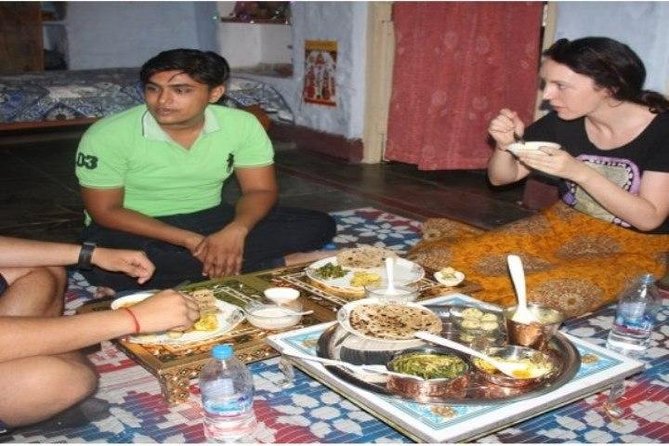
This class is ideal if you:
- Want a hands-on way to learn Rajasthani vegetarian cooking, especially breads and lentils
- Like asking questions and getting personal coaching, not just following along
- Want a food activity that ends with you eating what you made, indoors and relaxed
- Prefer an evening plan that feels local and home-based
It also works well if you’re traveling as a couple or a small group. One past participant pointed out that kitchen size makes groups of 2 to 4 the sweet spot. So if you’re a larger party, you might want to ask how the session is arranged.
What about someone who wants a lot of sightseeing? This is not that. You’re going to drive from your hotel, cook at the host house, and return. There’s no multi-stop tour built into the 3 hours.
And if you hate being in a home kitchen environment, this may feel too personal. But if you like the human side of travel, that’s exactly what makes it work.
Should you book this Jodhpur private cooking class?
Yes, if your goal is practical cooking skills and a calm, rewarding food experience. I’d book it when:
- You want chai plus chapati practice plus classic vegetarian dishes in one evening
- You value private instruction and clear English explanations
- You want recipes and notes you can actually use later
I would think twice if:
- You’re expecting a big sightseeing day with multiple stops
- You’re coming in with very limited time and can’t slow down to enjoy the class and meal
- Your group size is large, since this home kitchen setup is better for small numbers
If you want a Jodhpur experience that feels like learning from someone local, rather than buying a ticket to a restaurant meal, this hits the mark. The combination of transport, hands-on teaching, and a meal you made yourself is a rare mix for the price.
FAQ
What is the duration of the private cooking class in Jodhpur?
The class lasts 3 hours.
Is the class lunch or dinner, and can I choose the time?
You can choose either lunch or dinner depending on the class time you book.
Is the cooking class private, or is it shared with other people?
It is described as a private group.
What language is the instructor teaching in?
The instructor teaches in English.
Where does the class take place?
You are picked up from your hotel in Jodhpur and driven to the host house for the cooking session.
What is included in the price?
Included items are lunch or dinner as per class time, bottled water, coffee and/or tea, a professional host, the private cooking session, and pick-up and drop-off from the selected hotel.
What if my hotel is on small streets?
If your hotel is on small streets, pick-up and drop-off may be done from the nearest point of the hotel, and Clock Tower is mentioned as an option for pick-up and drop-off.
Is alcohol included?
Alcoholic drinks are not included, but they may be available to purchase.
Where is the meeting point if I am not using hotel pick-up?
The meeting point is opposite Pal Haveli.
Jodhpur, Blue Lanes and a Big Fort


Recently reviewed across Jodhpur
- Jodhpur to Udaipur Drop with Stops at Ranakpur and Kumbhalgarh
★ 5.0 · 10 reviews - Bluecity tour by Mansingh
★ 5.0 · 10 reviews - BlueCity Breakfast Walk
★ 5.0 · 10 reviews - Jodhpur Half Day Heritage Tour
★ 5.0 · 11 reviews - Jodhpur: Private Mehrangarh Fort and Blue City Day Tour
★ 4.0 · 11 reviews - Private Full Day Jodhpur City and Bishnoi Villages Tour
★ 5.0 · 12 reviews
Jodhpur Blue City Tours, compared.
 ★ 5.0Private Jodhpur Blue City Tour with Hotel Pickup and Drop-offFrom $40461 reviews
 ★ 5.0Blue City Heritage Private Walking Tour With Pickup and Drop-OffFrom $11441 reviews
 ★ 5.0Private Jodhpur Blue City Walking Tour with GuideFrom $10321 reviews
 ★ 5.0Jodhpur Blue City Heritage Walking Guided TourFrom $13240 reviews
 ★ 4.8Blue City Heritage Walking Tour With Pick Up & Drop OffFrom $11164 reviews
 ★ 5.0Desert Camel Safari Day Tour In JodhpurFrom $24161 reviews
 ★ 5.0Mehrangarh Fort and Blue City Historic Tour with Local GuideFrom $35134 reviews
 ★ 5.0Jodhpur Overnight Stay in Desert with Camel Safari SRFrom $64126 reviews
Browse the lists this tour appears in