
REVIEW · PRIVATE
Private Delhi Temples and Spiritual Sites 6 Hours Tour
Delhi spirituality in one tight route.
This 6-hour private tour strings together multiple faiths in real, photo-friendly places, from Jama Masjid and two major Sikh gurdwaras to the modern Lotus Temple. I like how the day is built around meaning, not just sightseeing, with a private guide who can explain what you are looking at while you move through crowds and queues.
I also like the practical logistics for a city that can feel like sensory overload: private air-conditioned car with pickup between 8 AM and 10 AM, plus a tuk-tuk ride inside Old Delhi. One thing to keep in mind, though: the schedule is packed, and on busy days you may not get quite every stop listed, especially if timing gets swallowed by entry lines, prayer times, or you slow down for photos.
In This Review
- Key Highlights You’ll Actually Feel
- Why This 6-Hour Mix Works in Delhi
- Pickup, Timing, and How You Start Without Stress
- Old Delhi Beginnings: Red Fort Views and the Mughal Mood
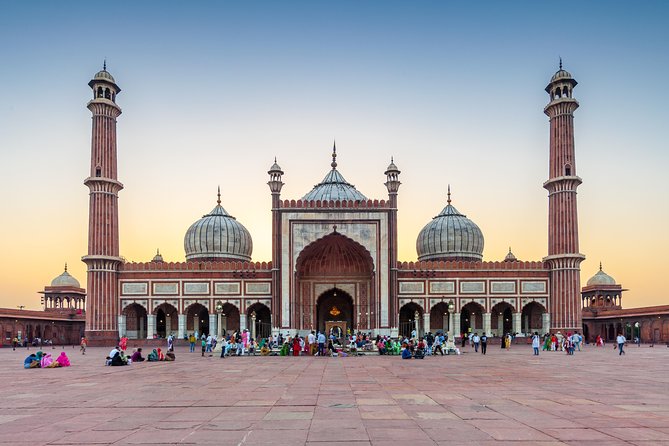
- Stop 1: Jama Masjid, Big Scale and Real Worship
- Gurudwara Sis Ganj Sahib: Sikh History in a Street-Level Setting
- Chandni Chowk Side Stop: A 17th-Century Mosque Landmark
- Khari Baoli Spice Market: Where Smell Becomes the Guide
- Digambar Jain Temple: Quiet Space and a Bird Hospital Twist
- Swaminarayan Akshardham: Modern Big-Scale Hindu Temple, Built 2005
- Gurudwara Bangla Sahib: Langar Energy and Constant Food
- Lotus Temple: The Baha’i Faith and the Taj Mahal Comparison
- Old Delhi to Modern Delhi, All in One Day
- Transportation and the Tuk-Tuk Detail That Helps Photos
- How Guides Make or Break a Spiritual Tour
- What Might Slow You Down (So You Can Plan Like a Pro)
- Best Fit: Who Should Book This Tour
- Should You Book This Private Delhi Temples Tour?
Key Highlights You’ll Actually Feel
- Private guide plus private vehicle so you are not stuck figuring out transport in chaotic traffic
- Old Delhi spice market stop (Khari Baoli) where you can smell spices as you walk, not just read about them
- Multi-faith worship stops in one day (Hindu, Sikh, Muslim, Jain, Baha’i, plus a Christian site option)
- Temples built across eras from Mughal-era Jama Masjid to the 2005 Akshardham and the white marble Lotus Temple
- Comfort-focused rules like taking off shoes and using covered clothing, handled without drama
- High guide satisfaction seen repeatedly in the experience ratings, with guides like Kevin, Javed, Raghuveer Singh Rajawat, Arham, Junaid, Suhani, Kaushal Pandey, Shivam, and Vimal Mathur highlighted for clarity and calm
Shortlisting? Every New Delhi trip below went through the same review.


Why This 6-Hour Mix Works in Delhi
Delhi is not shy about tradition, and it is not shy about crowds either. This tour takes a smarter approach than trying to conquer the whole city. You get a focused loop of worship places in a single day, with time to stop, ask questions, and actually look.
The private setup matters here. With a chauffeur-driven car and a guide who keeps you moving, you spend less time wrangling maps and more time watching real life: worship routines, architecture details, and the small etiquette moments that make a visit feel respectful.
Price-wise, it is positioned as a value option for what you get. At $41 per person for about 6 hours with a private guide, private car, and included admission tickets, it tends to pencil out best when you split costs with family or a small group, or if you are a solo traveler who wants a low-stress day.
Pickup, Timing, and How You Start Without Stress
You can choose a pickup time between 8 AM and 10 AM, and pickup is offered from Delhi, Noida, Gurgaon, Ghaziabad, and Faridabad. You meet your guide, then set off in a private air-conditioned car with a driver.
That early start is not just for convenience. It helps you reach Old Delhi before the crowds become a wall. Even then, be ready for the fact that religious sites can slow things down, especially when there is high foot traffic or when prayers and entry procedures pile up.
Practical tip: carry a valid photo ID on your phone. Some monument entries require it, and the tour instructions are clear about bringing it.
Old Delhi Beginnings: Red Fort Views and the Mughal Mood
The day begins by rolling through Old Delhi with a pass-by of the Red Fort, built by Shah Jahan between 1639 and 1648 and used as a main Mughal residence. You do not just get a pretty photo here. You get context for the whole neighborhood, because Mughal-era power shaped the city layout and the kind of architecture you will keep seeing.
This is one of those moments where a guide earns their keep. Even a quick explanation can make the rest of the day click, since Delhi’s faith sites often sit inside the same historical and cultural geography.
- Old & New Delhi City Tour – Half or Full Day Options Available★ 5.0 · 4,811 reviews
- Taj Mahal Tour from Delhi by Express Train (Viator Award Winner)★ 5.0 · 2,849 reviews
- Same Day Taj Mahal, Fort & Baby Taj Tour from Delhi by Car★ 4.9 · 2,534 reviews
- From Delhi: Taj Mahal and Agra Fort Private Sunrise Tour★ 4.9 · 2,270 reviews
- Sunrise Taj Mahal, Agra Fort & Baby Taj Tour from Delhi by Car★ 5.0 · 2,243 reviews
Stop 1: Jama Masjid, Big Scale and Real Worship
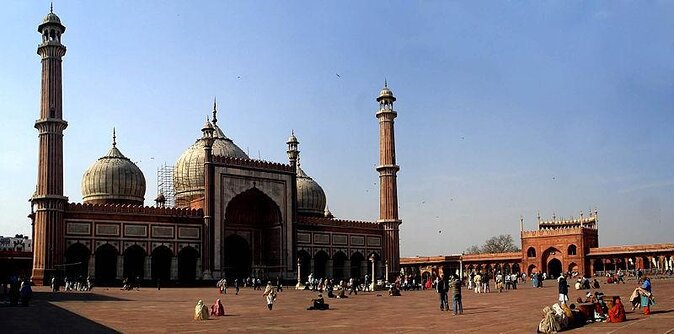
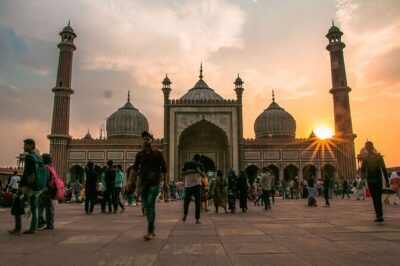
Next up is Jama Masjid, one of Asia’s largest mosques, also linked to Shah Jahan. You get about 30 minutes and an admission ticket is included.
What you should expect is scale. This is the kind of place where your brain keeps trying to take it all in at once. The guide’s job is to help you focus, pointing out architectural features and the practical flow of a mosque visit.
Keep the usual mosque etiquette in mind: dress appropriately, follow entry instructions, and plan for crowd movement. If you are the type who likes to ask questions, bring that energy, because this is one of those stops where your guide can explain what you are seeing without turning it into a lecture.
Gurudwara Sis Ganj Sahib: Sikh History in a Street-Level Setting
Then you head to Gurudwara Sis Ganj Sahib, a prominent Sikh gurdwara in Old Delhi. You will have about 30 minutes, and entry is free.
This stop stands out for its historical anchoring. It is one of the nine Sikh shrines in Delhi that were built after Guru Teg Bahadur. Standing inside a Sikh gurdwara is different from visiting a museum. The atmosphere is calmer than you might expect given the city outside, and the focus is on worship and community.
If you like architecture, pay attention to how the space feels designed for gathering. If you like people watching, this is a good stop. You will see visitors following the rhythm of the place.
Chandni Chowk Side Stop: A 17th-Century Mosque Landmark
The tour also includes a wonderful 17th-century mosque near Chandni Chowk, located at the western end of the oldest bazaar and opposite the Red Fort. The exact details given here are location-based, not name-based, so expect this to be a short, guided look rather than a long sit-down experience.
Why include it? Because it keeps the day from becoming a checklist of only the biggest headline sites. You see how places of worship connect to markets and daily life.
Khari Baoli Spice Market: Where Smell Becomes the Guide
Now for the senses. Khari Baoli is a famous spice market stop, around 10 minutes, and entry is free. The point is not to shop your way through Delhi. The point is to walk, smell, and learn what spices are used for.
A guide can turn this quick stop into something memorable by explaining how spices are used in Indian cooking and why certain scents dominate. It is also a moment where your photos will look more real, because the street activity is part of the scene.
Quick sanity check: 10 minutes is short. If you want to linger, ask your guide early. They can adjust timing if the schedule allows.
Digambar Jain Temple: Quiet Space and a Bird Hospital Twist

Next comes the Digambar Jain Temple, with about 20 minutes and free entry. What makes this stop special is the connection to a charitable hospital for birds.
This is one of those “blink and you miss it” details that makes Jainism feel less abstract. You can see compassion expressed in practical form, and your guide can explain the basics of Jain beliefs in a grounded way, since the site itself gives you something tangible to point to.
Expect a quieter tone compared with the spice streets. Shoes-off rules likely apply, and covered clothing matters too.
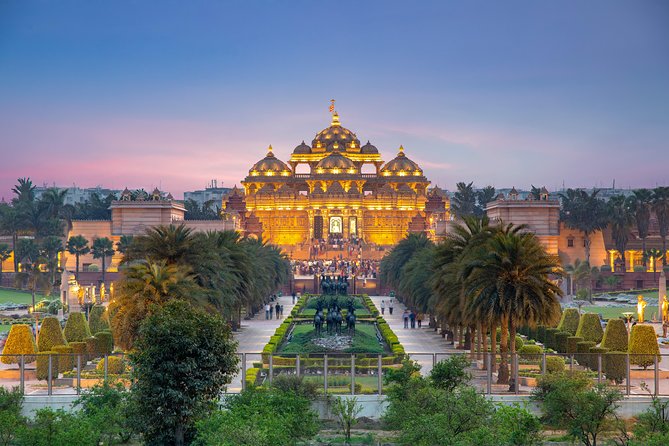
Swaminarayan Akshardham: Modern Big-Scale Hindu Temple, Built 2005
The tour includes Swaminarayan Akshardham, one of the biggest Hindu temples. You will have about 1 hour, and entry is free for this tour.
This place was built in 2005, and the instructions specifically mention an idol of Swaminarayan Akshardham surrounded by precious and semi-precious stones. That description matters because it tells you what to look for: light, materials, and the way the design supports a ceremonial feel.
Because it is big and popular, you may spend more time moving than standing still. Still, this is an excellent stop if you want visual impact without needing a long travel day. It also serves as a “modern contrast” to the older Mughal and Sikh sites.
Note: this temple is closed on Monday. On Mondays, the tour swaps it out for another option (Iskcon temple and Shri KalkaJi Temple), which can change the feel of the day.
Gurudwara Bangla Sahib: Langar Energy and Constant Food
Another major Sikh shrine follows: Gurudwara Bangla Sahib. The tour allots about 1 hour, free entry.
You get two layers of meaning here. First, it started as a bungalow of an Indian ruler, then transformed into a religious place. Second, it is built in the 1780s and is known for serving food through langar 24*7.
If you have never experienced a Sikh langar setup, you will likely notice how this is more than charity. It is community structure. It is also a practical lunch moment inside a faith space, and the tour includes a stop for lunch afterward.
Lotus Temple: The Baha’i Faith and the Taj Mahal Comparison
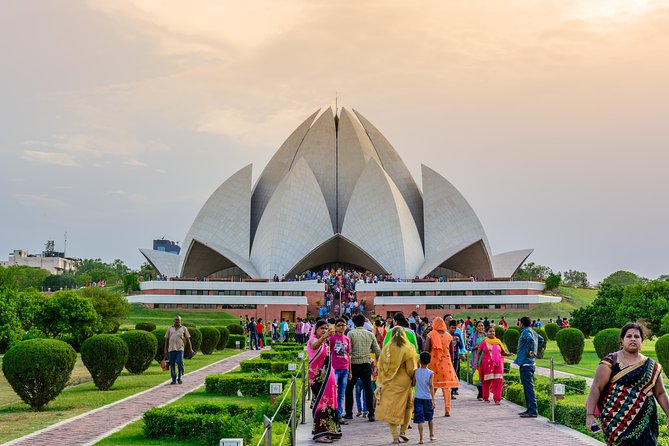
The final centerpiece is Lotus Temple, associated with the Baha’i faith. You get about 30 minutes, free entry.
It is described as a white marble masterpiece, often compared to the Taj Mahal. Even if you are not buying comparisons, the shape does the work for you. The temple’s lotus-inspired form gives you easy photo angles, and it is visually calming compared with the intense street scenes earlier.
Dress and footwear rules still matter here. Be ready to take shoes off and follow the site instructions so you do not lose time.
Like Akshardham, Lotus Temple is closed on Monday. On Monday schedules, the tour uses the alternative temples mentioned earlier, so plan your expectations based on the day of week.
Old Delhi to Modern Delhi, All in One Day
What I like most about the route is how it keeps changing gears. You start with Mughal-era power (Red Fort pass-by), then hit major Islamic worship (Jama Masjid). You shift into Sikh history and community spaces (Sis Ganj Sahib and Bangla Sahib), then move to Jain spirituality with a bird-care mission. Then you jump to modern Hindu monument scale at Akshardham, and end with the clean, modern Baha’i aesthetic of Lotus Temple.
That variety is not random. It helps you understand that Delhi is a meeting place of faiths with shared street geometry. The same city block energy shows up again and again, but with different meanings.
Transportation and the Tuk-Tuk Detail That Helps Photos
This is a private tour with a private air-conditioned car and a tuk-tuk ride in Old Delhi included. In a city like Delhi, that matters because some areas are easiest on foot or short rides, where you can access street corners without fighting every traffic jam.
The driver is also part of the “calm factor,” and several reviews emphasized careful driving and smooth movement. If you are a first-time visitor, this is a big deal. You can focus on sights instead of scanning for the next turn like you are navigating a video game.
How Guides Make or Break a Spiritual Tour
One theme shows up again and again: the guide quality. Names like Kevin (praised for excellent English and strong knowledge), Javed (called out for navigating diverse sites and guiding a great spice market walk), Raghuveer Singh Rajawat (noted for calm energy and flexibility), Arham (praised for in-depth descriptions and interactive style), Kaushal Pandey (highlighted for making a solo woman traveler feel safe), and Junaid (mentioned for seamless navigation and temple customs) show up as standout guiding styles.
Here is why that matters for you: spiritual sites can feel like visual puzzles if you do not know what you are looking at. A good guide will tell you what is important, what to notice, and what to do to be respectful, so the day feels coherent rather than scattered.
Also, several guides were noted as taking extra photos for people, and helping with comfort and questions on the spot. If you like photos, ask your guide early to help you capture each stop without turning the visit into a rushed sprint.
What Might Slow You Down (So You Can Plan Like a Pro)
This is a tight schedule. Even though the tour is designed to cover many sites, the time window is limited, and real-world delays happen.
Be ready for:
- Entry lines or slower movement in crowded areas
- Temple rules like taking shoes off, covered clothing, and walkthrough time
- Sunday or holiday foot traffic, which can stretch a “30 minute stop”
The good news is that the tour is flexible in practice, and multiple reviews mention guides adjusting timing and even adding alternatives when a preferred place was closed. Still, set the expectation that you are doing a “best-of circuit,” not a slow meditation day.
Best Fit: Who Should Book This Tour
This tour is a good match if you want:
- A first Delhi day that covers major faith landmarks without planning chaos
- A private guide who can explain what you are seeing as you go
- A mix of iconic architecture and local street atmosphere (especially the spice market)
It is also a strong choice for solo travelers who value safety and structure. Reviews specifically mention solo women feeling comfortable and protected, which is a practical consideration when you are moving through busy Old Delhi.
If you want a very relaxed pace, consider that the day is packed. You can still enjoy it, just be aware you will be moving between sites and following temple entry rules.
Should You Book This Private Delhi Temples Tour?
Book it if you want a smart, guided sampler of Delhi’s worship culture, with private transport and ticketed stops, and you like the idea of learning as you walk. The value is strongest for couples and families, but solo travelers also benefit because you skip the figuring-out phase.
Skip or adjust expectations if you want a slow, deep, hours-long visit at just one site. This tour is designed for coverage, and Delhi’s crowds can compress time.
If you are going on a Monday, double-check your expectations for Akshardham and Lotus Temple being closed, since the itinerary swaps to other temples like Iskcon and Shri KalkaJi. That change can still be excellent, just different from the headline route.
In short, this is a practical way to see Delhi’s major spiritual landmarks in one coordinated day, and with guides like Kevin, Javed, Arham, Junaid, and Kaushal Pandey frequently praised for clarity, calm, and responsiveness, you are in good hands.
Recently reviewed across New Delhi
- Golden Triangle – Delhi Agra and Jaipur
★ 5.0 · 10 reviews - Taj Mahal & Agra Tour by Indian Bullet Train All Inclusive
★ 4.5 · 10 reviews - Private Tour in Mehrauli Archaeological Park & Qutub Minar
★ 5.0 · 10 reviews - Old & New Delhi Tour
★ 5.0 · 10 reviews - From Delhi : Taj Mahal & Agra Fort Tour by Luxury Express Train
★ 5.0 · 10 reviews - Delhi Shopping Tour: Top Bazaars, Crafts & Souvenir Finds
★ 5.0 · 10 reviews
Private, compared.
 ★ 4.9Taj Mahal & Agra Private Day Trip with TransfersFrom $43,181 reviews
 ★ 4.9Taj Mahal and Agra Fort Private Sunrise TourFrom $592,270 reviews
 ★ 5.0Old & New Delhi Private Tour – Half or Full Day (Rated Excellent)From $202,226 reviews
 ★ 4.9Private Full Day Sightseeing Tour By Car with GuideFrom $41,839 reviews
 ★ 5.0Taj Mahal and Agra Private Car Tour from Delhi with 5* LunchFrom $331,633 reviews
 ★ 4.9Private Taj Mahal and Agra Tour by Express TrainFrom $751,605 reviews
 ★ 4.9Skip-the-Line Taj Mahal & Agra Fort Private TourFrom $71,546 reviews
 ★ 5.0Private Sunrise Taj Mahal Trip from Delhi all InclusiveFrom $801,537 reviews