

REVIEW · GOLDEN TRIANGLE TOURS
12 Days Golden Triangle With Udaipur Jodhpur Jaisalmer Pushkar
North India has a way of sticking to your memory. This 12-day private route strings together Delhi, Agra, Jaipur, Udaipur, Jodhpur, Jaisalmer, and Pushkar with local guides and UNESCO hits so you are not just rushing between photos. I like that it keeps the pace relaxed enough to linger at key stops, from Gurudwara Bangla Sahib to the Taj Mahal viewpoints.
Two things I really like: you get private, guided sightseeing in each city, not a one-size-fits-all bus shuffle, and you also get meaningful flexibility with the day’s flow, like having time in places such as Chandni Chowk and the option to skip Bagore Ki Haveli Museum if you want. The route also builds in smart Taj Mahal timing with both a sunset-view moment and an early visit for sunrise.
One possible drawback to flag up front: the base price does not include monument entrance fees or lunch and dinner, so your daily spending will depend on what you choose to enter, especially at major sites like Qutub Minar, Agra Fort, and the forts and havelis across Rajasthan.
In This Review
- Key highlights that make this trip tick
- A calm start in Delhi, Gurudwara Bangla Sahib and Old Delhi energy
- Delhi’s UNESCO stack, Qutub Minar, Lotus Temple, and Jama Masjid
- Agra without the rush, expressway travel and two Taj Mahal moments
- Beyond Taj, Agra Fort and Fatehpur Sikri and a stop at Chand Baori
- Jaipur highlights with Amber Palace, City Palace, and Jantar Mantar
- Udaipur’s slower rhythm, markets, Lake Pichola, and flexible museum time
- Jodhpur and Mehrangarh, fort museums and the Blue City approach
- Jaisalmer’s living fort, ornate havelis, and Gadisar Lake
- Pushkar’s Brahma Temple and Brahma Ghat, a different kind of spiritual focus
- Price and logistics, what $720 covers and what you will still pay for
- Who this tour suits best, and who might want a different fit
- Should you book this 12-day Golden Triangle plus Rajasthan and Pushkar?
Key highlights that make this trip tick

- Taj Mahal timing, sunset and sunrise so you can chase light and smaller crowds
- Private guides in every city for context, not just a checklist of monuments
- Comfort-first transport with an air-conditioned private vehicle and driver throughout
- Taj Mahal battery bus ride included from parking up to the monument area
- Rajasthan variety in one line from Jaipur’s astronomy to Jaisalmer’s living fort and desert safari
- Flexible stops where you can shorten a museum visit if it is not your style
Golden Triangle itineraries, three to eight days
A calm start in Delhi, Gurudwara Bangla Sahib and Old Delhi energy
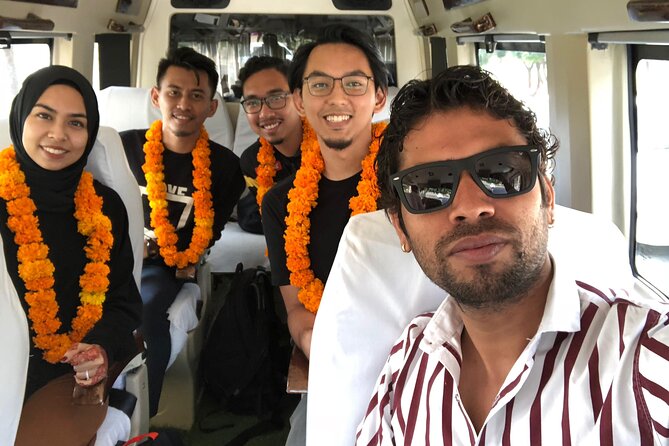
Day 1 begins at Gurudwara Bangla Sahib, one of the most peaceful stops in Delhi. It is known for the story that in 1664 the eighth Sikh Guru visited during a time of illness and helped people by distributing water from the tank during epidemics. Even if you care more about architecture and atmosphere than history, this is a good way to reset your senses after travel.
Then the trip moves on to Delhi’s big cultural contrasts. You go from monumental Islamic architecture to a modern spiritual landmark, and finally into Old Delhi’s market lanes. I like how the plan does not force you to choose between history and everyday life, you get both, and you have time blocks that feel realistic rather than frantic.
Practical tip: Delhi’s traffic can change your plans quickly. Since you are traveling with a private vehicle and driver, you are in a better position to handle the city’s mood swings than if you were relying only on public transport.
Delhi’s UNESCO stack, Qutub Minar, Lotus Temple, and Jama Masjid
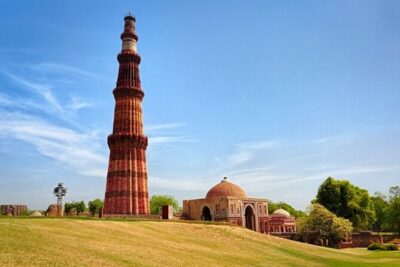
Delhi gets a full day of major landmarks, and the order matters because it helps you avoid burnout. You start with Qutub Minar, a UNESCO World Heritage site and a 73-meter tall minaret built in 1193. It is the kind of structure that makes you look up automatically. Admission is not included, so check what you will pay at the gate, then budget time for the queue if it happens.
Next up is Lotus Temple, built in 1986 and famous for its flower-like shape. It is open to everyone regardless of religion, which is a rare, welcoming detail and a nice contrast after the heavy stonework of the older monuments. This stop is short, so you get the impact without eating your whole day.
From there you bounce into modern and everyday Delhi with India Gate, a war memorial and also a popular picnic spot. It is free, and it is a good pause when you want space to breathe, plus it gives you a sense of how public life centers around landmarks in this city.
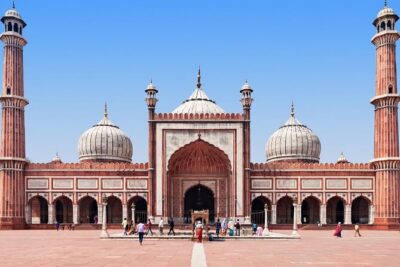
Then you move to Jama Masjid, built by Mughal Emperor Shah Jahan between 1650 and 1656. It is one of the largest mosques in India, and the scale can feel dramatic. After that, the tour includes Agrasen Ki Baoli, a stepwell designated a protected monument. These stepwells are often short stops but very photogenic, and they show you another side of how older Delhi was designed around water.
You close with Humayun’s Tomb, a Mughal-era masterpiece commissioned in 1558, and then with Chandni Chowk, Old Delhi’s shopping lanes. That market stop is longer, and it is where the trip becomes more than sightseeing. You can pick up spices, dried fruit, silver jewelry, and textiles, but I suggest treating the market like a sensory walk rather than a strict shopping mission. The value here is in soaking up the pace and patterns of local life.
Agra without the rush, expressway travel and two Taj Mahal moments
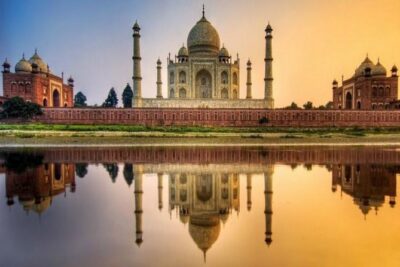
Agra is reached via the Yamuna Expressway, a long drive that helps you cover distance efficiently. Then you arrive for an evening Taj Mahal experience from a sunset-view spot across the river, designed to offer views away from the busiest areas. This is one of the smartest ways to see Taj Mahal because you get the postcard silhouette without having to fight for a front-row position for hours.
From there, you add the Baby Taj, known as Itmad-ud-Daula, a Mughal mausoleum built between 1622 and 1628. It is often overlooked compared to the main Taj complex, but it is detailed and photogenic, and the stop is shorter, which helps you keep energy for later.
Next, you visit Mehtab Bagh, a garden area across from Taj Mahal. It is meant as a quieter oasis between major monuments, so you can sit, look at the river, and reframe what you just saw. Even if you are not a garden person, the timing makes it easier to appreciate how the Taj sits within the landscape.
The next morning repeats the Taj Mahal experience with a sunrise visit. Sunrise at Taj Mahal is not just a romantic idea. It is also a practical strategy for cooler temperatures, calmer viewing, and a different mood in the marble. This tour builds in a bonus: it includes a battery bus ride to and from the Taj Mahal parking lot up to the monument area. That matters. It saves walking and helps with the early-morning logistics when lines and crowds start forming.
The blue city, three more ways
- Private Golden Triangle Tour With Jodhpur From Delhi★ 5.0 · 22 reviews
- 5-Night Private Rajasthan Tour from Delhi Including Jaipur, Jodhpur and Udaipur★ 4.5 · 15 reviews
- 7 Day Delhi Agra Jaipur Jodhpur Udaipur Tour-Taj Mahal At Sunrise★ 5.0 · 15 reviews
- 10-Day Private Golden Triangle Tour With Jodhpur Udaipur Pushkar★ 5.0 · 15 reviews
- 7-Day Private Tour: Delhi, Agra, Jaipur, Jodhpur and Udaipur from Delhi★ 5.0 · 12 reviews
Beyond Taj, Agra Fort and Fatehpur Sikri and a stop at Chand Baori
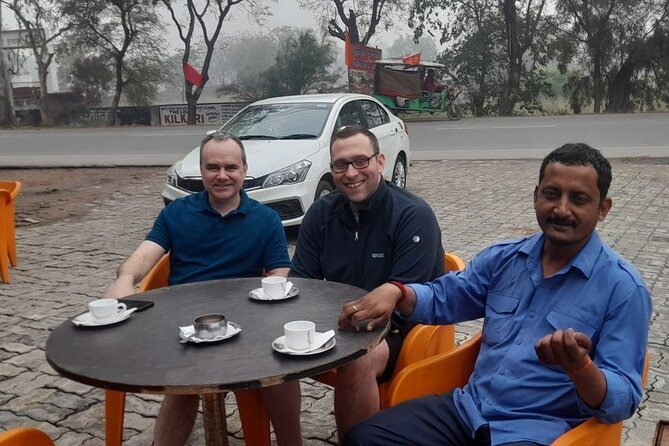
The plan does not treat Agra as only Taj Mahal, and that is a big win. You also get Agra Fort, a massive Mughal fort built with red sandstone, with palaces inside including Diwan-i-Aam and more. It is admission not included, but the payoff is scale plus variety. You get a sense of how power was staged, defended, and lived.
Then you head toward Fatehpur Sikri, the City of Victory built in the late 16th century by Emperor Akbar, and used as the capital of the Mughal Empire for about a decade. The complex is big enough that it rewards having a guide, because details that look random to you will click into place with context.
Finally, the trip includes Chand Baori near Abhaneri, one of the most impressive stepwells in India, with the remarkable idea of extending about 30 meters into the ground. This is where the day can feel long, so plan for it like a photo-and-walk stop rather than a casual sit-down lunch kind of moment. Also, admission is not included, so budget for it.
When you arrive in Jaipur, the goal is simply to check in and reset. A long day like this is exactly why the private format helps you. You are not hunting for connections or shifting between local transportation systems late in the day.
Jaipur highlights with Amber Palace, City Palace, and Jantar Mantar
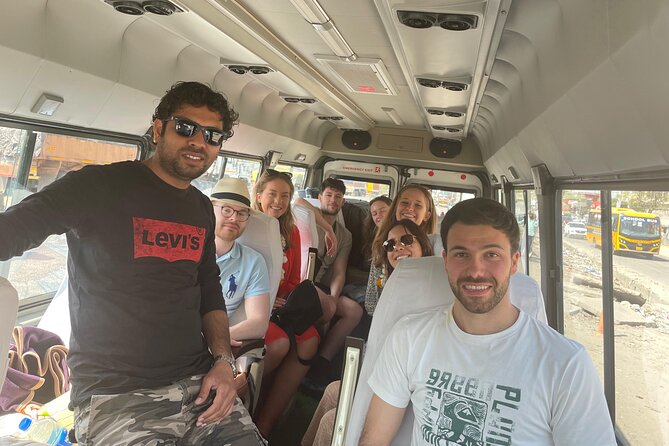
Jaipur gets a structured, classic sightseeing day that still keeps room to breathe. You start with Panna Meena ka Kund, a stepwell located near Amber Fort. Even though the stop is brief, it is a strong introduction to Rajasthan’s water-smart architecture.
Next is Amber Palace, the former capital of Rajasthan until 1728. You get a guided two-hour tour of the palace areas, which usually means less time just staring and more time understanding why the palace is designed the way it is. Admission is not included, so confirm what is payable and arrive ready to show tickets or pay at the counter.
You also stop at Jal Mahal for a photo opportunity. It is a palace in the middle of Man Sagar Lake. You will not usually spend a long time here, but it is one of those views that makes the day feel instantly more cinematic.
Then you hit City Palace, built in 1721. You spend about an hour walking its halls and courtyards. The palace includes collections like weapons, guns, sedan chairs, and tiger cages, so it is not only pretty, it is also a window into how royal life displayed power.
After that, Jantar Mantar comes in. It is a UNESCO World Heritage site built in 1734, known for nineteen architectural astronomical instruments created by the Rajput king Sawai Jai Singh II. If astronomy and math make your eyes glaze over, you can still enjoy this stop as an experiment in how people measured the sky. A guide helps a lot here because you start recognizing patterns instead of just seeing metal and stone.
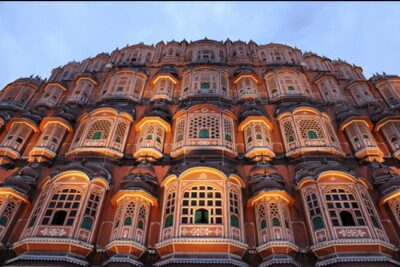
You also see Hawa Mahal, the Palace of Breeze, a five-storey pyramidal facade built from red and pink sandstone. The design is part of why it is famous, and it is a quick stop that breaks up the heavier palace time.
The day finishes with Albert Hall Museum, the oldest museum of Rajasthan. It is short, so it works as an optional final chapter rather than a commitment that swallows your day.
Udaipur’s slower rhythm, markets, Lake Pichola, and flexible museum time

Travel day to Udaipur starts early. After breakfast, you drive into Udaipur, check in, and then the plan leaves you room to explore the local markets and choose dinner. I like this part because Udaipur is where you can start shifting from monument mode into city-life mode, and the tour does not over-prescribe your evening.
Udaipur’s standout sightseeing day includes Lake Pichola with a boating option. You can take a private boat ride around the lake, with stops near Jagmandir Palace island. Even with a short boat time, the lake view changes how you experience the palaces and temples, because everything sits differently from water level.
Then you move to City Palace on the bank of Pichola. It is a two-hour visit here, and you get views plus collections including weapons and royal artifacts. Jagdish Temple follows. It is located in the City Palace complex, and it is built in Indo-Aryan style. This is one of those stops that feels “real” because it is not just built for tourists, you can often sense how daily spiritual life continues around historic structures.
Finally, Bagore Ki Haveli Museum is included with guided and private transportation. There is a useful option built into the day: if you do not want the stop, you can say no and move on. That kind of flexibility is worth paying attention to, because it helps you steer your energy level instead of sticking to a fixed schedule.
Jodhpur and Mehrangarh, fort museums and the Blue City approach
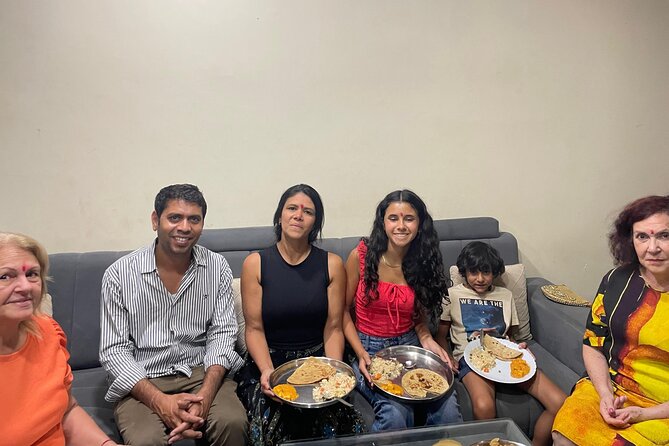
The Jodhpur day starts with an early drive and then a quick orientation to the blue city. You check in, and then the driver takes you to the Clock Tower area and local markets. The Clock Tower is built during the reign of Maharaja Sardar Singh, so it is not just a random landmark, it is rooted in the city’s royal timeline. This is a low-pressure first day in Jodhpur, which matters because you will want energy for the heavier fort visit the next day.
Your Jodhpur highlight day focuses on the big three: Mehrangarh Fort, Umaid Bhawan Museum, and Jaswant Thada. Mehrangarh is a former palace turned museum, set on a rocky outcrop that overlooks the walled city. You get a two-hour window, which is enough time to see weapons, paintings, and elaborate royal palanquins.
Umaid Bhawan Museum gives you a different angle. You see it as the royal Jodhpur palace museum built with dun-colored, golden-yellow sandstone. That visual material contrast is interesting because it makes the city’s architecture feel like it evolved in layers.
Jaswant Thada is next, a marble cenotaph and mausoleum for the kings of Marwar. It is a short stop, but it is the kind of memorial that gives you space for quiet photos and a pause between the heavier fort structures.
Then you shift toward Jaisalmer in the evening. The day includes a desert safari experience in the Thar desert along with an overnight stay in a hotel. This is a key emotional shift in the route. One day you are inside stone power centers, and the next you are moving into desert time.
Jaisalmer’s living fort, ornate havelis, and Gadisar Lake
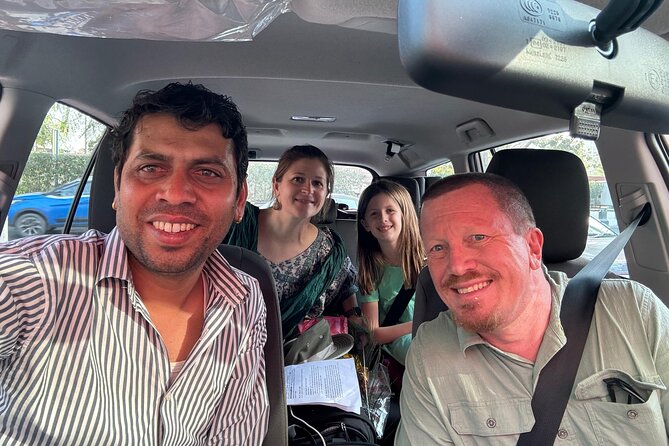
Jaisalmer earns its nickname in how it looks and how it feels. Your first big stop is Jaisalmer Fort, often described as a living fort where locals still reside within the fort walls. This is admission not included, so again, plan for extra costs at major sites.
Then you explore the city’s haveli culture. You visit Kothari’s Patwaon-ki-Haveli, known for intricate stonework and jaalis, followed by Salim Singh-ki-Haveli built in 1815 by Salim Singh, and then Nathmal Ji Ki Haveli. Each has its own facade personality, so it is not just repetition. If you like architecture, you will enjoy how the details change between buildings.
You also stop at Gadisar Lake, built by Raja Rawal Jaisal and later reconstructed by Maharawal Gadsi Singh in 1367 AD. This one is free on the plan and works as a calmer counterweight to the forts and carved stone havelis. It is short, but it gives you a break before the final push to Pushkar.
Pushkar’s Brahma Temple and Brahma Ghat, a different kind of spiritual focus
Pushkar is where the trip stops feeling like a landmark ladder and starts feeling more like a local ritual circuit. You arrive, check in, and then visit Brahma Temple, known for being one of the few places dedicated to Lord Brahma and famous for its architecture and mythology. It is a 30-minute visit with free admission on the plan.
Then you have Pushkar Lake and Brahma Ghat. The plan includes a focus on prayers and tribute rituals for happiness and the dead souls, and it also mentions that Brahma Ghat is famous for photography and blessing rituals. This is not a stop that feels like a museum. It is more about observing and respecting a living tradition.
Finally, you head back to New Delhi for the end of the trip, with an enroute drive time of about five hours. That last transfer is long, so I suggest keeping your travel day light and keeping your camera and water handy.
Price and logistics, what $720 covers and what you will still pay for
At $720 per person for a 12-day private tour, the big value is in the support system. You get private, air-conditioned vehicle transport with a driver, hotel or airport pickup and drop-off, and sightseeing with private local guides across multiple cities. You also get nine nights of accommodation if you book the option that includes hotels, plus daily breakfast for those nights.
What is not included is equally important. Monument entrance fees are not included. Lunch and dinner are not included either. That means your final out-of-pocket can rise quickly if you plan to enter every paid site and eat full meals away from your hotel. Still, the structure can make your spending predictable because you can choose where you want to pay for entries.
One other practical plus: you are traveling as a private group, so you are not stuck with random pacing. Vehicle size changes with group size, from a 4-seater sedan for 1 to 2 people up to a 10-seater minivan for 5 to 10 people. That affects comfort. Fewer passengers usually means easier conversation and fewer waiting moments.
On the comfort side, bottled mineral water is included during journeys, and the plan emphasizes personal care and attention. In feedback I reviewed, the standouts were drivers described as punctual and professional, including names like Surendra, Vinod, and Maan. Those details matter because India’s road timing can be tricky, and a confident driver makes the whole trip feel easier.
And yes, there is free cancellation up to 24 hours before the experience starts for a full refund, which lowers your risk if your plans shift.
Who this tour suits best, and who might want a different fit
This tour is a strong fit if you are a first-time visitor and want the North India highlights without the stress of sorting transport and guides city by city. It is also ideal if you like structure but still want a few flexible moments, like optional museum time and free exploration pockets in places such as Udaipur markets.
I would also say it works well for travelers who care about context. Having local guides for each city turns monuments into stories instead of stand-alone pictures. In feedback, people repeatedly highlighted how guides were professional and how the whole experience felt organized and hassle-free.
If you are the type who loves slow travel, you might find a few days packed with major sites, especially the Agra-to-Jaipur day that includes Fatehpur Sikri and a longer detour to Chand Baori. You might still love it, but go in knowing you will walk and look a lot.
If you are on a tight food budget, remember lunch and dinner are not included. If you want a fully all-inclusive price, you may need to adjust expectations or budget for daily meals and paid admissions.
Should you book this 12-day Golden Triangle plus Rajasthan and Pushkar?
If your priority is to see the classics with private guides, comfortable transfers, and smart Taj Mahal timing, I think this tour makes a lot of sense. The $720 price feels more reasonable when you factor in private transport, guide-led sightseeing across many cities, and nine nights with breakfast if you choose the hotel-included option.
Book it if:
- You want Taj Mahal, plus major UNESCO sites across Delhi, Agra, and Jaipur
- You like having a driver and guide handle the messy parts of logistics
- You want the Rajasthan contrast arc, from Jaipur palaces to Udaipur lakes to Jaisalmer sand
Consider a different option if:
- You want a fully all-inclusive package with meals and all entrances included
- You prefer fewer stops per day and more downtime
Bottom line: for first-time visitors, this is a practical way to get depth without feeling lost, and it keeps the journey comfortable enough that you can focus on the places themselves.
Udaipur, On and Around the Water





Jodhpur, Blue Lanes and a Big Fort

The Golden Triangle, Longer and Shorter




Recently reviewed across New Delhi
- Golden Triangle – Delhi Agra and Jaipur
★ 5.0 · 10 reviews - Taj Mahal & Agra Tour by Indian Bullet Train All Inclusive
★ 4.5 · 10 reviews - Private Tour in Mehrauli Archaeological Park & Qutub Minar
★ 5.0 · 10 reviews - Old & New Delhi Tour
★ 5.0 · 10 reviews - From Delhi : Taj Mahal & Agra Fort Tour by Luxury Express Train
★ 5.0 · 10 reviews - Delhi Shopping Tour: Top Bazaars, Crafts & Souvenir Finds
★ 5.0 · 10 reviews
Golden Triangle Tours, compared.
 ★ 5.03-Days Private Golden Triangle Tour: Delhi, Agra & Jaipur by CarFrom $1271,098 reviews
 ★ 5.03-Day Delhi, Agra and Jaipur Private Tour – India Golden TriangleFrom $110812 reviews
 ★ 5.0Four-Day Private Luxury Golden Triangle Tour to Agra and Jaipur From New DelhiFrom $160807 reviews
 ★ 5.05 Nights 6 Days Private Golden Triangle Tour – Delhi Agra JaipurFrom $240574 reviews
 ★ 5.04 Days Golden Triangle TourFrom $146499 reviews
 ★ 5.0Private Car and Drive for Golden Triangle (4N/5D)From $167451 reviews
 ★ 5.0Private Golden Triangle Tour Delhi Agra Jaipur ( Top Rated )From $148436 reviews
 ★ 5.03-Day Private Luxury Golden Triangle Tour to Agra and Jaipur From New DelhiFrom $164424 reviews
Browse the lists this tour appears in