
REVIEW · GOLDEN TRIANGLE TOURS
8 Days Private Luxury Golden Triangle Tour with Udaipur & Pushkar
Eight days, five cities, zero guesswork. This private luxury route strings together door-to-door transport and optional hotel stays, so you spend less time figuring out logistics and more time at the sights. I also like how the plan mixes headline icons with hands-on moments in Delhi.
My favorite part is the double-dose Taj Mahal timing, including a sunset-view stop in Agra plus a sunrise visit later. I’m also a fan of the private local guides you get for most sightseeing, which helps you read what you are seeing instead of just snapping photos.
The main thing to consider is costs beyond the package: many monument entrances are not included, and that can add up if you plan to go inside everything.
In This Review
- Key Things That Make This Tour Work
- How This 8-Day Golden Triangle Plus Udaipur and Pushkar Is Built
- Day 1 in Delhi: Qutub Minar, Old Delhi Mosques, and Markets With Real Energy
- Driving to Agra: Yamuna Expressway Time and a Fort-Based Reality Check
- Day 3 Agra at Sunrise: Taj Mahal Twice Makes the Trip Worth It
- Jaipur Day 4: Amber Fort First, Then City Palace, Jantar Mantar, and Hawa Mahal
- Day 5 Udaipur Arrival: Your First Lakeside Check-In Day
- Day 6 Udaipur by Water: Lake Pichola, City Palace, and a Temple Stop
- Day 7 Pushkar: Arrival Into a Temple Town Mood
- Day 8 Pushkar Sacred Stops, Then Back to Delhi
- Price and Logistics: What You Pay For, and What You Still Need to Budget
- Who This Tour Fits Best (and Who Might Prefer Something Else)
- Should You Book This 8-Day Private Luxury Route?
- FAQ
- Are hotels and breakfast included?
- Which Taj Mahal visit times are included?
- Are monument tickets included?
- What transport will I have between cities?
- Do I get a guide in Pushkar?
- What is the cancellation timeline?
Key Things That Make This Tour Work
- Private driver and air-conditioned vehicle between cities, including pickup from Delhi airport
- Two Taj Mahal experiences, one tied to sunset views and one for sunrise
- Guided sightseeing in most stops, so you’re not just following signs
- Hotel option with daily breakfast, which makes early mornings easier
- Skip-flexibility at Bagore Ki Haveli, if you’d rather move on
Golden Triangle itineraries, three to eight days
How This 8-Day Golden Triangle Plus Udaipur and Pushkar Is Built
This itinerary is designed for people who want the north India classics without the stress. You cover Delhi, Agra, Jaipur, then continue to lakeside Udaipur and the pilgrimage town of Pushkar, all with a driver and local guides at most sights.
Instead of hopping trains or renting cars, you ride in a comfortable private vehicle from point to point. You’ll also have included water during journeys, plus pickup and drop-off via the hotel or the airport depending on your start.
You’ll still want to plan for a full, active schedule. Even with private transport, the days are packed, especially in Delhi and Jaipur, so this is best if you enjoy seeing a lot and you are okay with downtime being mostly in the car.
Day 1 in Delhi: Qutub Minar, Old Delhi Mosques, and Markets With Real Energy
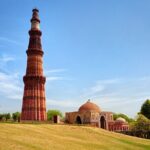
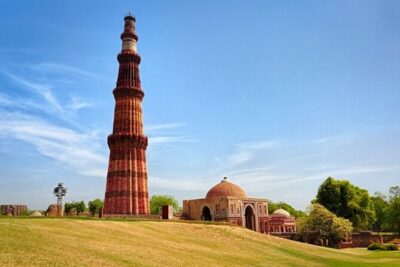
Delhi day is split between standout monuments and the texture of Old Delhi. You start at Qutub Minar, a tall UNESCO World Heritage site tied to the Delhi Sultanate era. It’s an easy first stop because it is an iconic object you can orient around fast.
Next comes the Lotus Temple, known for its flower-like design and an open-door vibe, with free entry and a calm interior space. Then you pass by India Gate, a war memorial that also functions like a classic picnic hangout, which is a nice reminder that monuments live in everyday life here.
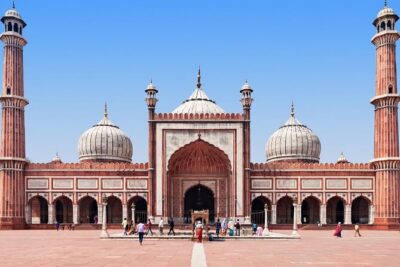
From there, you shift into Mughal-era landmarks. You’ll visit Jama Masjid, one of the largest mosques in India, built in the mid-1600s. You also visit Humayun’s Tomb, another major Mughal structure that gives you a feel for how Persian-influenced design spread through Delhi.
The Old Delhi experience lands hard in Chandni Chowk. You get an hour in a market area loaded with spices, dried fruit, jewelry, saris, oils, and sweets, plus side streets that feel tight, busy, and very local. You then round off with spiritual stops: Gurudwara Bangla Sahib and Agrasen ki Baoli (a protected stepwell monument).
Two things I really like about this Delhi setup. First, it includes both modern-era landmarks like Lotus Temple and historic layers like Humayun’s Tomb and Jama Masjid. Second, the day ends with places that are more about atmosphere than checkboxes, so your photos actually match your day.
One practical note: some stops list admission tickets as not included. Some others are free, but you should assume you will pay entry fees at least a few times if you want to go inside every monument.
Driving to Agra: Yamuna Expressway Time and a Fort-Based Reality Check

Day 2 begins after breakfast and checkout, then you head for Agra using the Yamuna Expressway. The value here is simple: you trade public transit planning for a predictable ride with a driver. When your next days depend on early access to famous sites, that predictability matters.
In Agra you start with Agra Fort, a massive Mughal fortress complex made with red sandstone. It’s the kind of place where the scale hits you after you walk in and realize this wasn’t just a palace, it was a political machine. The stop notes tickets not included, so budget for it if you want full access.
Then you go to Itmad-ud-Daula, often called the Baby Taj. It is smaller than the main Taj Mahal story, but that is part of its appeal. It lets you appreciate how marble and refined design transition from earlier sandstone styles toward the look you later associate with the Taj Mahal.
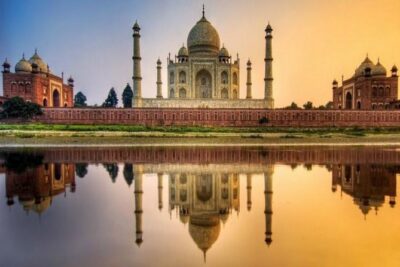
After that, you visit Mehtab Bagh, a garden area across the river with views toward the Taj Mahal. It functions like a pressure-free photo window, and it can help you understand the Taj’s placement in the landscape.
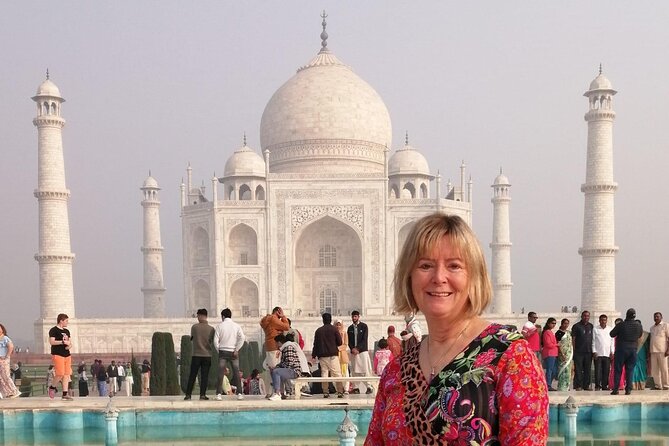
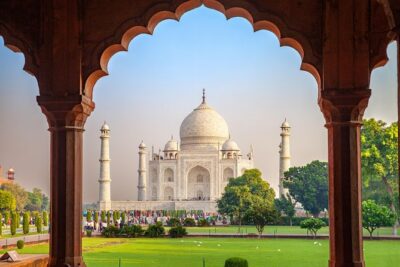
Finally, you do the Taj Mahal with a sunset-view point plan. The itinerary specifically frames it as a good spot to see the Taj Mahal away from the densest crowd levels, which is exactly what you want if you’re tired of elbow-to-elbow tourism.
More of Udaipur and its lakes
- 12 Days Golden Triangle With Udaipur Jodhpur Jaisalmer Pushkar★ 5.0 · 17 reviews
- 8 Days Delhi Agra Ranthambore Udaipur Jaipur Delhi Tour(Taj, Tigers & Lakes)★ 5.0 · 16 reviews
- 5-Night Private Rajasthan Tour from Delhi Including Jaipur, Jodhpur and Udaipur★ 4.5 · 15 reviews
- 7 Day Delhi Agra Jaipur Jodhpur Udaipur Tour-Taj Mahal At Sunrise★ 5.0 · 15 reviews
- 10-Day Private Golden Triangle Tour With Jodhpur Udaipur Pushkar★ 5.0 · 15 reviews
Day 3 Agra at Sunrise: Taj Mahal Twice Makes the Trip Worth It
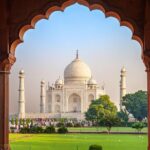
Day 3 is where this tour earns its keep. You return to Taj Mahal for sunrise, again with a dedicated visit. Seeing it in the morning light changes the marble feel, and it turns the same building into a different experience.
This is also the day you visit Fatehpur Sikri, Akbar’s City of Victory. It’s a big complex with a cohesive architectural style and major structures like the Jama Masjid inside the site. If you like understanding empires through buildings, this stop is one of the best “why it mattered” moments.
Then you head to Chand Baori in Abhaneri, one of India’s most dramatic stepwells. The stop describes it as extending about 30 meters into the ground, which is hard to fully grasp until you are there. Stepwells are not only about water access, they show engineering and social design in a single structure.
You end the day arriving in Jaipur, where you check in and overnight. Long travel days like this are where private transport earns its keep, because you’re not trying to coordinate arrivals and ticket lines while your energy is running low.
Jaipur Day 4: Amber Fort First, Then City Palace, Jantar Mantar, and Hawa Mahal
Jaipur day is classic “one city, many masterpieces.” After breakfast you visit Panna Meena ka Kund, a stepwell near the fort. It’s short, but it prepares your eye for how much Rajasthan’s architecture mixes water, function, and dramatic geometry.
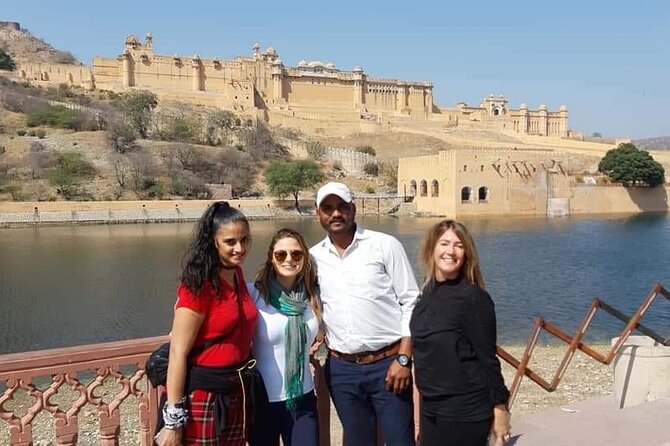
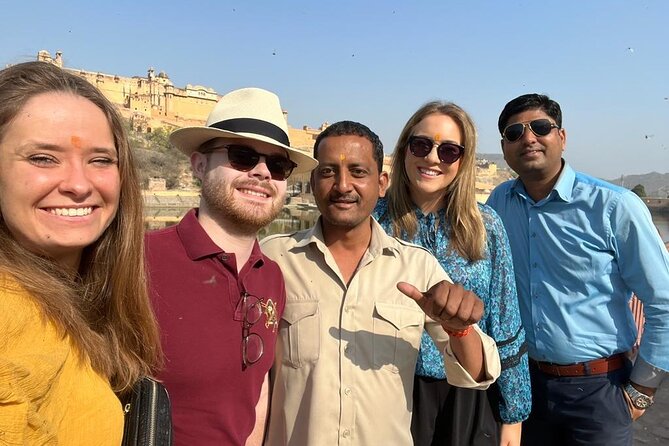
Then you go to Amber Palace for a guided tour of its palaces, squares, and monuments. The description notes it was built by Raja Man Singh I and includes ramparts, gates, and an ornamental water setting by Maota Lake. This stop works well for photography because you get both structure and scenic context.
You also get a photo stop at Jal Mahal, the palace that sits in Man Sagar Lake. It is brief by design, which is smart if you want the view without turning the day into an endless detour.
Next is City Palace of Jaipur, with about an hour to explore. It functions as a museum today, and it still connects to the royal family through continued residence in part of the palace. That blend of museum and living heritage tends to make the place feel more real than a locked-off attraction.
You then visit Jantar Mantar, a UNESCO World Heritage site with nineteen astronomical instruments built for observation with the naked eye. If you have ever wondered how pre-electric societies tracked time and the sky, this is where the answer becomes physical.
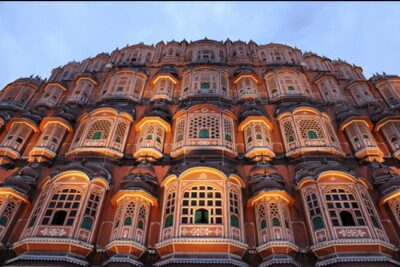
The day continues with Hawa Mahal (Palace of Wind), a five-storey pyramidal facade built in 1799. After that you do Albert Hall Museum briefly, which is helpful if you want one last cultural anchor without extending the day too far.
In Jaipur, the pace is still full, but it is structured. You’re not wandering, you’re moving in a logical route with guides assigned to key stops. That reduces wasted time and helps you stay oriented.
Day 5 Udaipur Arrival: Your First Lakeside Check-In Day
Day 5 is an arrival day in Udaipur, with a long chunk of time. You check in to your hotel, then you have the rest of the day open for your own rhythm.
This is a smart break in the middle of a road-focused tour. After back-to-back monument-heavy days, Udaipur’s slower tempo feels like you’re shifting gears. It also sets you up for Day 6, where the views and boats matter more.
Day 6 Udaipur by Water: Lake Pichola, City Palace, and a Temple Stop
Udaipur is built around Lake Pichola. The itinerary includes sightseeing and mentions the option for a private boat ride around the lake, with a stop near Jagmandir Palace island. Even if you skip extra add-ons, the time here helps you understand why Udaipur’s identity is tied to water.
Next you visit City Palace of Udaipur, positioned along the lake. The stop description highlights views from the palace and an interior collection that can include weapons, guns, sedan chairs, tiger cages, and paintings. It also mentions that the royal family still resides in a portion of the palace, which makes it feel active rather than frozen in a display case.
You then visit Jagdish Temple. It sits in the City Palace complex, and the description notes an Indo-Aryan style. Even if you are not religious, temples often do a better job than monuments of showing how people live their faith in daily space.
Finally you reach Bagore Ki Haveli. The itinerary suggests a guided stop plus private transport, and it explicitly gives you permission to say no and skip to the next attraction. That flexibility is rare on tours like this, and it matters if you get museum fatigue.
If you like food, art, and craftsmanship, Udaipur is the best place to slow down and linger. Just don’t expect the itinerary to turn into a beach vacation, it stays sightseeing driven.
Day 7 Pushkar: Arrival Into a Temple Town Mood
Day 7 brings you to Pushkar and overnight stays. You get a long open block of time, which helps because Pushkar works best when you have a little freedom to wander at your own pace.
Even though the itinerary is light on Day 7 details, the town’s rhythm matters. You can focus on walking, shopping, and soaking in the religious atmosphere before the key temple and ghat stops on Day 8.
Day 8 Pushkar Sacred Stops, Then Back to Delhi
Day 8 starts with Brahma Temple, described as the one famous for Brahma in the world. The visit is short, about thirty minutes, but it is the named focal point for Pushkar here.
Next you go to Pushkar Lake at Brahma Ghat. The stop description mentions prayers offered by family people for happiness and tribute for the dead souls. It also notes Brahma Ghat is good for photography and blessings rituals, which is a helpful framing for what you will likely see.
After that, you drive back to Delhi. The ride time listed is about five hours enroute, with the full drive to return described as around six hours. This is the last push of the road trip, so it helps if you pack light and keep essentials easy to grab.
Price and Logistics: What You Pay For, and What You Still Need to Budget
At about $428.58 per person for an 8-day private luxury-style circuit, you are paying for a lot of “invisible work.” That includes private vehicle transport, a driver, hotel nights if you choose the hotel-included option, and private local guides for most sightseeing.
You also get some direct value touches. The included battery bus ride around the Taj Mahal parking area to the monument area can save time and walking hassle. Bottled mineral water during journeys is a small comfort that becomes meaningful on long drives.
The potential downside is that monument admission tickets are not included, and the tour notes this in multiple stops. So even though some attractions are free, you should still expect extra cash for entrances where it says not included.
Also pay attention to the guide line item: Pushkar guide is listed as not included. That doesn’t mean you won’t get help in Pushkar, but it does mean you should ask what guidance is covered for the Pushkar portions versus what is an extra cost.
On the ground, the quality signal from past trips is strong. In the feedback you provided, people praised the drivers for safety and helpfulness, including Maan and Vinod. Others highlighted guides like Anil in Agra and named organizers connected with Gopal. That pattern matters because this tour is driver- and guide-heavy. Private logistics only work well when the humans behind them are reliable.
One more thing to ask about upfront, based on comments you included: some bookings through this provider appear to add extra activities like a Jaipur leopard safari or a cooking class at the organizer’s home. Those are not listed in the included section for this specific itinerary, so treat them as optional add-ons you may be able to arrange, not guaranteed inclusions.
Who This Tour Fits Best (and Who Might Prefer Something Else)
This is ideal for couples, solo travelers, and families who want the Golden Triangle highlights plus two extra destinations, without doing the planning math. You’ll like it most if you value private transport and guided stops, because that is what keeps the route smooth.
It can also suit first-timers to India. The itinerary concentrates on major sites and uses a logical route with scheduled visits, which makes it easier to feel confident. One review detail also echoed the theme of feeling safe with the driver and clear communication, which is a big deal on a road trip like this.
If you hate early starts, crowded monument queues, and nonstop movement, you may find the pace intense. This is still a sightseeing itinerary, not a slow travel loop.
Should You Book This 8-Day Private Luxury Route?
I’d book it if your priority is maximum famous-sights time with minimal logistics stress. The combination of Taj Mahal twice, guided stops across Delhi, Agra, and Jaipur, and the addition of Udaipur and Pushkar makes this feel like more than a cookie-cutter Golden Triangle.
I would hesitate if you have a strict budget for entrance fees, because many major monuments list tickets as not included. Also, if you want a lighter day schedule, you might compare alternatives where each city gets fewer stops.
If you do book, I’d ask two simple questions right away:
1) Which monument tickets are you planning to handle versus which you expect me to pay on site?
2) For Pushkar, what exactly is included in guidance, given that Pushkar guide is listed as not included?
FAQ
Are hotels and breakfast included?
The package includes 7-nights accommodation if you book with the option that includes hotels. It also includes daily hotel breakfast when you choose the hotel-inclusive option.
Which Taj Mahal visit times are included?
The itinerary includes a sunset view point visit in Agra and a sunrise visit at Taj Mahal on the next day.
Are monument tickets included?
Monuments tickets are listed as not included. Some stops are free, but many are marked as admission tickets not included.
What transport will I have between cities?
You get private, air-conditioned transport with a driver. The car type depends on group size: a 4-seater sedan for 1-2 people and a 6-seater MPV for 3-4 people.
Do I get a guide in Pushkar?
The included details say all sightseeing with private local guides, but the not included section specifically lists Pushkar guide as not included, so you should confirm what guidance is covered for Pushkar.
What is the cancellation timeline?
You can cancel up to 24 hours in advance for a full refund. If you cancel less than 24 hours before the start time, the amount paid will not be refunded.
Pushkar and Ajmer, More Routes




Udaipur, On and Around the Water



The Golden Triangle, Longer and Shorter



Recently reviewed across New Delhi
- Golden Triangle – Delhi Agra and Jaipur
★ 5.0 · 10 reviews - Taj Mahal & Agra Tour by Indian Bullet Train All Inclusive
★ 4.5 · 10 reviews - Private Tour in Mehrauli Archaeological Park & Qutub Minar
★ 5.0 · 10 reviews - Old & New Delhi Tour
★ 5.0 · 10 reviews - From Delhi : Taj Mahal & Agra Fort Tour by Luxury Express Train
★ 5.0 · 10 reviews - Delhi Shopping Tour: Top Bazaars, Crafts & Souvenir Finds
★ 5.0 · 10 reviews
Golden Triangle Tours, compared.
 ★ 5.03-Days Private Golden Triangle Tour: Delhi, Agra & Jaipur by CarFrom $1271,098 reviews
 ★ 5.03-Day Delhi, Agra and Jaipur Private Tour – India Golden TriangleFrom $110812 reviews
 ★ 5.0Four-Day Private Luxury Golden Triangle Tour to Agra and Jaipur From New DelhiFrom $160807 reviews
 ★ 5.05 Nights 6 Days Private Golden Triangle Tour – Delhi Agra JaipurFrom $240574 reviews
 ★ 5.04 Days Golden Triangle TourFrom $146499 reviews
 ★ 5.0Private Car and Drive for Golden Triangle (4N/5D)From $167451 reviews
 ★ 5.0Private Golden Triangle Tour Delhi Agra Jaipur ( Top Rated )From $148436 reviews
 ★ 5.03-Day Private Luxury Golden Triangle Tour to Agra and Jaipur From New DelhiFrom $164424 reviews
Browse the lists this tour appears in