

REVIEW · GOLDEN TRIANGLE TOURS
5-Days Private Luxury Golden Triangle Tour Agra Jaipur New Delhi
Your Golden Triangle, handled for you. This private 5-day plan strings together Delhi, Agra, and Jaipur with local guides, private transfers, and a vehicle that keeps the pace sane. I love the day-by-day structure, including Taj Mahal sunrise and a sunset viewpoint that aims for calmer viewing. The main tradeoff: monument entrance tickets are not included, so you will want to budget for them up front.
The best part for me is how the logistics fade into the background. You get pickup and drop-off, bottled water each day, and English-speaking guides for the sightseeing blocks. In Delhi and Jaipur, the itinerary also mixes big-ticket landmarks with smaller stops that make the trip feel more like a guided walk through real places than a checklist.
One thing to consider is the rhythm. You will have early starts for sunrise, plus long transfer days between cities. If you are sensitive to driving time or prefer slow travel, you may want to go in with the right expectations and keep your energy for the sites that matter most to you.
In This Review
- Key highlights you’ll actually feel
- Price and logistics: what $205.72 per person really covers
- Day 1 in Delhi: Tombs, the Minaret, and Old Delhi by Rickshaw
- Humayun’s Tomb, the Mughal warm-up
- Qutub Minar, UNESCO and seriously tall
- Red Fort, the long reign in stone
- Lotus Temple, a calm pause
- Jama Masjid and India Gate, then Old Delhi texture
- What to watch for on Day 1
- Day 2 to Agra: Forts, the Baby Taj, and a sunset Taj viewpoint
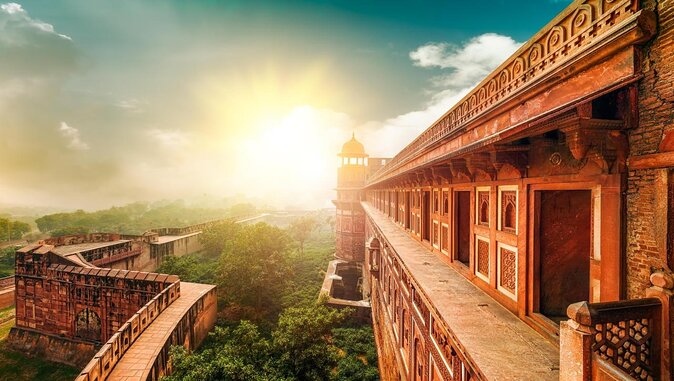
- Agra Fort, Akbar’s red sandstone power base
- Mehtab Bagh, the garden across the river
- Itmad-ud-Daula, the Baby Taj
- Taj Mahal Sunset View Point, two hours of golden light
- Day 3: Sunrise Taj Mahal plus Fatehpur Sikri and Chand Baori
- Taj Mahal at sunrise, the iconic moment
- Fatehpur Sikri, City of Victory
- Chand Baori, the stepwell detour that works
- Arrive in Jaipur and check in
- Day 4 Jaipur: Amber Palace, Jal Mahal photos, and Jantar Mantar
- Panna Meena ka Kund, near Amber Fort
- Amber Palace, royal power on a hill
- Jal Mahal, the lake photo stop
- City Palace, ceremonial seat of the Maharajas
- Jantar Mantar, the UNESCO science set
- Hawa Mahal and Albert Hall Museum, finishing touches
- Day 5 in Jaipur and the drive back to New Delhi
- Birla Mandir Temple, white marble latticework
- Monkey Temple, Galtaji
- Return to New Delhi and end at the meeting point
- Where this private Golden Triangle tour shines
- Best for couples, small groups, and comfort-first travelers
- Best for first-timers who want structure
- Tickets, early mornings, and how to keep the trip smooth
- Should you book this 5-day private Golden Triangle?
- FAQ
- Where does the tour start and end?
- Is this a private tour?
- Are hotel stays included?
- Does the tour include pick-up and drop-off?
- Are entrance fees included?
- Is there an English-speaking guide?
- What meals and drinks are included?
- Will I need to buy tickets on my own?
Key highlights you’ll actually feel
- Private car with your own driver keeps you flexible and cuts down on hassle
- Local guides every day means you understand what you are seeing, not just where to take photos
- Taj Mahal twice, once at sunrise and once at sunset viewpoint
- Old Delhi rickshaw ride adds street-level texture to the first day
- Jaipur sightseeing built around UNESCO Jantar Mantar plus Amber Palace and City Palace
- Entrance fee help from your guide so you avoid line chaos
Golden Triangle itineraries, three to eight days
Price and logistics: what $205.72 per person really covers
At about $205.72 per person, the value here is mostly about what is bundled: private transportation, private local guides, and support at the start and end. You are not relying on public transit between cities, and you are not sharing sightseeing explanations with strangers.
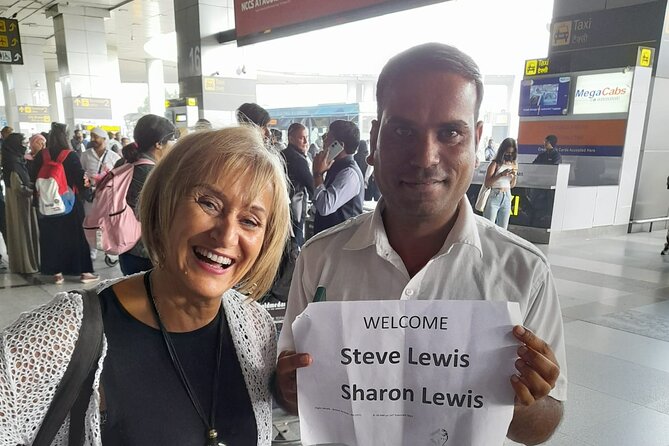
A big chunk of the comfort is the private, air conditioned car with driver plus hotel or airport pick-up and drop-off. That matters on this route because the Golden Triangle has traffic, security lines, and real distances. Having someone handle driving so you can focus on timing and photos is the difference between a smooth trip and a tiring one.
The other core value is guidance. The tour includes sightseeing with private local guides and an English-speaking guide (and you can request another language through special requirements). If you care about context, this setup turns each stop into something you can follow.
Now for the catch: monument entrance fees are not included. The tour notes an entrance ticket budget of about $90.00 per person for all cities. Some sights in the plan are listed as free, but many of the big names are ticketed. If you hate pay-at-the-gate surprises, plan for it early.
Day 1 in Delhi: Tombs, the Minaret, and Old Delhi by Rickshaw
Delhi day is a classic Mughal-to-modern mix, and it is efficient without feeling like a blur. The stops land in an order that works geographically, and it gives you both grand monuments and street-level atmosphere.
Humayun’s Tomb, the Mughal warm-up
Humayun’s Tomb is your first big Mughal stop. It was commissioned by Humayun’s first wife and chief consort, Empress Bega Begum, in 1569-70, and it was designed by Mirak. This matters because it is not just a pretty landmark. It is a foundation stone for how later Mughal tomb architecture developed.
You are scheduled about 1 hour, which is enough to look around and take in the layout without feeling rushed. Entrance ticket is not included on the itinerary, so factor that into your day plan.
More of New Delhi, monument by monument
- Old & New Delhi City Tour – Half or Full Day Options Available★ 5.0 · 4,811 reviews
- Old & New Delhi Private Tour – Half or Full Day (Rated Excellent)★ 5.0 · 2,226 reviews
- Old & New Delhi Full or Half Day Sightseeing Tour★ 5.0 · 1,900 reviews
- Delhi: Old and New Delhi Guided Full or Half-Day Tour★ 5.0 · 976 reviews
- Old & New Delhi Private City Tour – Traveler’s Choice (Top Rated)★ 5.0 · 746 reviews
Qutub Minar, UNESCO and seriously tall
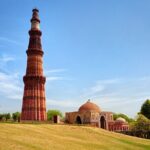
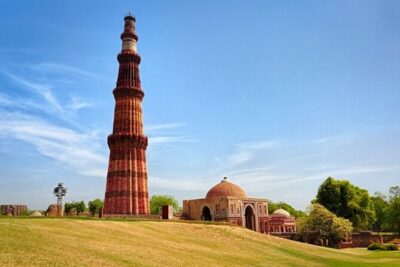
Next is Qutub Minar in the Qutub complex, a UNESCO World Heritage Site. It is a minaret about 73 meters tall, and the height tells you right away this was built for lasting impact.
You get about 30 minutes here. That is short, but Qutub Minar works well as a focused stop because it is so visually dominant. It is also one of the places where a guide can point out the details you might miss if you just rush for the best angle.
Red Fort, the long reign in stone
Then comes Red Fort, a historic fort that served as the main residence of Mughal emperors for nearly 200 years, until 1856. The tour gives it about 1 hour. Even if you do not go deep into museums, the fort walls and scale help you feel what power looked like in that era.
Entrance ticket is not included, so you may want to keep some patience for security and ticket purchasing. The tour says your guide helps you buy entrance fees so you do not have to wait in queues, which is a practical lifesaver.
Lotus Temple, a calm pause
After the harder-edged history, you get Lotus Temple, a Bahá’í House of Worship dedicated in December 1986. It is known for the flowerlike shape. The itinerary lists about 30 minutes, and it is free.
This is a good reset spot. Even if you are not into religious architecture, the clean geometry gives your brain a break from carvings and forts.
Jama Masjid and India Gate, then Old Delhi texture
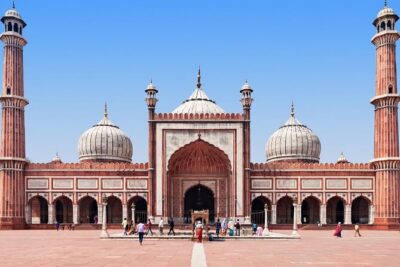
The day continues with Jama Masjid, listed as free, and then India Gate, also free. Jama Masjid is described as one of the largest mosques in Delhi. India Gate is a war memorial near Rajpath dedicated to the soldiers of British India who died in wars, and it doubles as a common picnic spot.
Finally, you end with Old Delhi rickshaw ride, around 1 hour, framed around Chandni Chowk markets. The description focuses on spice, dried fruit, silver jewelry, and colorful saris. This is where Delhi feels less like sightseeing and more like city life.
What to watch for on Day 1
Delhi can throw off your timing with traffic and crowds. The plan helps, but wear shoes you can walk in, bring sunglasses, and keep water on hand. The tour includes mineral water daily, which helps.
Day 2 to Agra: Forts, the Baby Taj, and a sunset Taj viewpoint
Day 2 is mostly about getting to Agra and hitting the best visual range of the Mughal story: fort, gardens, smaller mausoleum, and then Taj at sunset viewpoint.
After breakfast, you check out and drive via an expressway to Agra. The itinerary does not lock in exact drive time, and it notes transfer timing is approximate due to traffic. So think of this as a day where you are traveling for a big reason, then switching into sightseeing mode.
Agra Fort, Akbar’s red sandstone power base
Agra Fort is a massive fort in red sandstone, created under Mughal Emperor Akbar. The tour gives about 1 hour and notes it includes beautiful palaces such as halls like Diwan-e-Aam and private chambers (the description references Diwan E Aam and Khas). Entrance ticket is not included.
This stop is worth it even if you only have limited time because it helps you understand Taj Mahal as part of a bigger court world, not as a lone monument in the spotlight.
Mehtab Bagh, the garden across the river
Next is Mehtab Bagh, a restored garden linked with Babur, described as an oasis for tourists visiting Taj. It is scheduled for 30 minutes, and entrance ticket is not included.
If you like photos, this stop gives you a break from fort textures and offers river and garden framing. If photos are not your thing, use the time for shade, water, and a breather.
Itmad-ud-Daula, the Baby Taj
Then comes Itmad-ud-Daula, often called the Baby Taj. It is a Mughal mausoleum built between 1622 and 1628. The tour allots about 1 hour, and tickets are not included.
This is one of those stops that grows on you. It is smaller than Taj, but the detail is the point. It also sets up what you will notice later at the Taj Mahal entrance complex.
Taj Mahal Sunset View Point, two hours of golden light
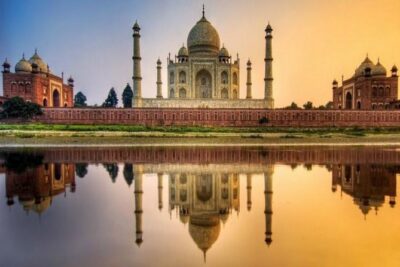
Day 2 ends with Taj Mahal Sunset View Point, described as a great spot to view Taj Mahal across the river away from the crowd, during sunset. You get about 2 hours.
Entrance ticket is not included on that item, and the tour wording emphasizes viewpoint viewing rather than an extended Taj interior visit. For many people, this is a smart strategy. You still get the mood and silhouette, and you avoid some of the heaviest congestion.
Day 3: Sunrise Taj Mahal plus Fatehpur Sikri and Chand Baori
Day 3 is the “worth the early start” day. You get Taj Mahal at sunrise, then a strong cultural detour before Jaipur.
After Taj at sunrise, the plan continues to Fatehpur Sikri and then to Chand Baori, a stepwell. You then arrive in Jaipur and check in overnight.
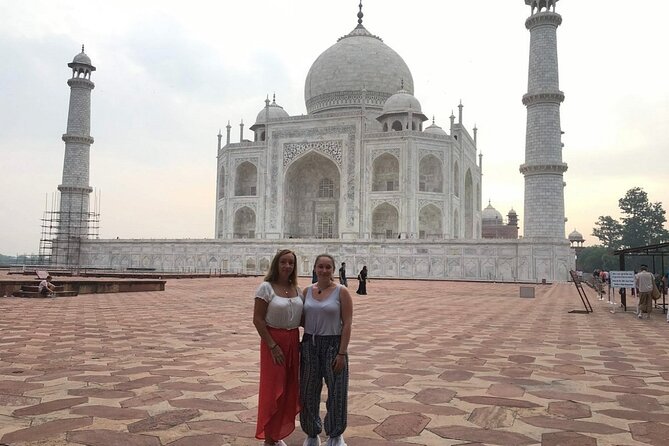
Taj Mahal at sunrise, the iconic moment
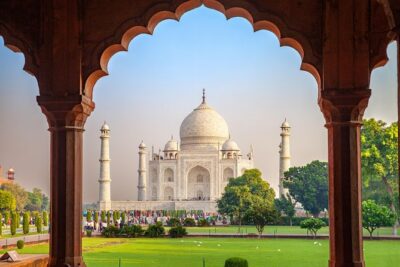
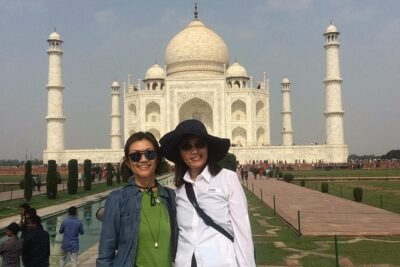
The itinerary lists Taj Mahal sunrise for about 2 hours. It describes Taj as an ivory-white marble mausoleum commissioned in 1632 by Shah Jahan.
Sunrise matters because the light changes fast and the air can feel cooler. It also fits the tour’s idea of giving you multiple Taj experiences: one at sunrise and one at sunset viewpoint. You can compare how the same marble looks under different conditions.
Fatehpur Sikri, City of Victory
Then you head to Fatehpur Sikri, also called City of Victory. It was built in the late 16th century by Emperor Akbar, and it served as the Mughal capital for about a decade. The stop is about 1 hour, and it is listed as free.
Even if you only have a short time, this is an important stop because it shows the Mughal world beyond single monuments. It is a whole built complex shaped by imperial ambition.
Chand Baori, the stepwell detour that works
After Fatehpur Sikri, you visit Chand Baori, a stepwell in the village of Abhaneri. It is scheduled for 30 minutes, and tickets are not included.
This is a clever break from palace and tomb focus. Stepwells are architecture made for water and daily life. You get a different kind of “how did they do this” moment.
Arrive in Jaipur and check in
The itinerary then schedules Jaipur arrival with a 5-hour block before hotel check-in. The exact drive time is not pinned, but it is enough to plan dinner and downtime once you reach the city.
Day 4 Jaipur: Amber Palace, Jal Mahal photos, and Jantar Mantar

Jaipur day is big on classic sights, but the order gives you a logical flow. You start near Amber, then move into central Jaipur for royal and scientific highlights.
Panna Meena ka Kund, near Amber Fort
You begin with Panna Meena ka Kund, a stepwell near Amber Fort. The tour lists it at 15 minutes and free.
This is a quick stop, but it is useful. It gives you context for the water systems that supported the hill forts and palaces.
Amber Palace, royal power on a hill
Next is Amber Palace, with about 2 hours. It is described as the capital of Rajasthan until 1728 and built by Raja Man Singh I. Tickets are not included.
Amber Palace is the kind of place where you benefit from a guide, because there is a lot going on in the palaces, squares, and monuments. Two hours is a good length for walking slowly, reading key features, and not just sprinting between viewpoints.
Jal Mahal, the lake photo stop
Then you visit Jal Mahal, the palace described as floating on Man Sagar Lake, for about 15 minutes. Entrance ticket is not included.
This is a “get the shot, then move on” stop. If the palace is crowded or the light is off, 15 minutes keeps you from losing the entire afternoon.
City Palace, ceremonial seat of the Maharajas
Next is Maharaja’s City Palace for about 1 hour. The description says it was the administrative and ceremonial seat of the Maharaja and constructed in 1721.
This stop helps connect Jaipur’s royal heritage to what you see later in the street layout. If you like architecture, one hour is enough to get a strong overview with a guide.
Jantar Mantar, the UNESCO science set
Then comes Jantar Mantar, a UNESCO World Heritage Site built in 1734. It features a collection of nineteen architectural astronomical instruments built by Sawai Jai Singh II.
You get about 1 hour, and tickets are not included. This is one of the places where guides can make a big difference. Without explanation, it can feel like a strange mix of towers. With context, it becomes how they tracked time and sky patterns.
Hawa Mahal and Albert Hall Museum, finishing touches
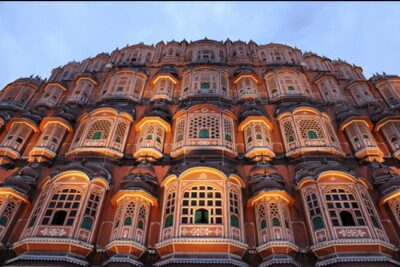
After Jantar Mantar, you stop at Hawa Mahal, the Palace of Breeze. It is described as a five-storey pyramidal-shaped monument made of red and pink sandstone, with about 30 minutes.
Then you finish with Albert Hall Museum for about 15 minutes, described as the oldest museum in Rajasthan and the State Museum of Rajasthan.
Day 4 ends with enough variety that you do not feel stuck in a single theme. Forts, palaces, science, and photo moments keep it from becoming repetitive.
Day 5 in Jaipur and the drive back to New Delhi
Day 5 is designed as a lighter final day in Jaipur, then a return drive to New Delhi. It is also built around two temple visits that are listed as free.
Birla Mandir Temple, white marble latticework
You start with Birla Mandir, described as special for its intricate latticework in white marble. It is dedicated to Lord Vishnu. The stop is about 30 minutes and free.
This is a peaceful closing contrast to the royal palaces of earlier days. Even if you are not religious, the architecture and quiet flow make it a good last morning stop.
Monkey Temple, Galtaji
Next is the Monkey Temple, also known as Galtaji, with about 30 minutes, free. It is described as having three sacred pools of water and being surrounded by monkeys.
This is a place where you follow the rules. Keep your hands close, stay aware around the pools, and do not treat it like a theme park. The point is the temple and the atmosphere.
Return to New Delhi and end at the meeting point
After Jaipur, you drive back to New Delhi, scheduled as about 5 hours, and the trip ends with drop-off at the airport, hotel, or another desired location in the city. The tour says it ends back at the meeting point.
Where this private Golden Triangle tour shines
This tour fits best when you want the big North India names without turning your vacation into project management.
Best for couples, small groups, and comfort-first travelers
Because it is private and includes a dedicated driver plus private local guides, it suits people who like control over pace. If your group has different interests, guides can still focus on the main stops while letting you spend a little more time on what matters to you.
Also, the tour uses twin-sharing rooms as the default setup, with triple-sharing for three people unless you request two rooms with an extra charge. That detail matters when you are comparing total cost.
Best for first-timers who want structure
You get a clear plan for each day, with sunrise and sunset Taj moments. If you only have a short time in India, that structure is a big deal.
Tickets, early mornings, and how to keep the trip smooth
Entrance fees are the one line item you need to plan for. The tour estimates $90.00 per person for entrance tickets across all cities, and it also lists several free stops like Lotus Temple, Jama Masjid, India Gate, Fatehpur Sikri, Jal Mahal viewpoint time, and more.
Your guide helps you buy entrance fees, so you are not standing around waiting in lines. Still, bring a little patience mindset. Monument sites in India can be crowded even on well-run days.
For the sunrise Taj Mahal, be ready for an early start. The tour does not give exact sunrise time, but sunrise is the priority. If you hate early wake-ups, you may feel that Day 3 is the hardest day physically.
Should you book this 5-day private Golden Triangle?
I would book it if you want a private, guided, comfort-forward Golden Triangle that covers the classics in a way that minimizes logistics headaches. The biggest selling points are the private transportation, local guides, and the two Taj Mahal experiences, sunrise plus sunset viewpoint.
Skip it or adjust expectations if you have a strict budget for only included costs. Entrance tickets are not included, and the listed $90 estimate means you should plan for extra spending. Also, this is a route with city-to-city driving, so it is not the kind of slow, rest-heavy trip where you stay put in one place for days.
If you want a well-organized plan where someone else handles driving, timing, and explanations, this is the kind of Golden Triangle tour that makes the trip feel easier from day one.
FAQ
Where does the tour start and end?
It starts at Indira Gandhi Intl Airport, New Delhi and ends back at the meeting point, with drop-off options at the airport, hotel, or another desired location in the city.
Is this a private tour?
Yes. It is a private tour/activity, and only your group will participate.
Are hotel stays included?
Accommodation for 4 nights is included only if you book the option including hotels. The tour also mentions optional upgrades for accommodation.
Does the tour include pick-up and drop-off?
Yes. Hotel or airport pick-up and drop-off are included.
Are entrance fees included?
No. Entrance fees for monuments are not included. The tour lists an entrance fee estimate of $90.00 per person for all cities.
Is there an English-speaking guide?
Yes. The guide is listed as English-speaking, and you can request another language by using special requirements when booking.
What meals and drinks are included?
Daily hotel breakfast is included if you book the hotels option. The tour also includes complementary mineral water per day. Other meals are not included.
Will I need to buy tickets on my own?
Your guide will help you buy entrance fees at monuments, so you should not have to wait in queues just to purchase tickets.
The Pink City, More Reviewed Days





New Delhi Landmarks Worth the Morning



The Golden Triangle, Longer and Shorter

Recently reviewed across New Delhi
- Golden Triangle – Delhi Agra and Jaipur
★ 5.0 · 10 reviews - Taj Mahal & Agra Tour by Indian Bullet Train All Inclusive
★ 4.5 · 10 reviews - Private Tour in Mehrauli Archaeological Park & Qutub Minar
★ 5.0 · 10 reviews - Old & New Delhi Tour
★ 5.0 · 10 reviews - From Delhi : Taj Mahal & Agra Fort Tour by Luxury Express Train
★ 5.0 · 10 reviews - Delhi Shopping Tour: Top Bazaars, Crafts & Souvenir Finds
★ 5.0 · 10 reviews
Golden Triangle Tours, compared.
 ★ 5.03-Days Private Golden Triangle Tour: Delhi, Agra & Jaipur by CarFrom $1271,098 reviews
 ★ 5.03-Day Delhi, Agra and Jaipur Private Tour – India Golden TriangleFrom $110812 reviews
 ★ 5.0Four-Day Private Luxury Golden Triangle Tour to Agra and Jaipur From New DelhiFrom $160807 reviews
 ★ 5.05 Nights 6 Days Private Golden Triangle Tour – Delhi Agra JaipurFrom $240574 reviews
 ★ 5.04 Days Golden Triangle TourFrom $146499 reviews
 ★ 5.0Private Car and Drive for Golden Triangle (4N/5D)From $167451 reviews
 ★ 5.0Private Golden Triangle Tour Delhi Agra Jaipur ( Top Rated )From $148436 reviews
 ★ 5.03-Day Private Luxury Golden Triangle Tour to Agra and Jaipur From New DelhiFrom $164424 reviews
Browse the lists this tour appears in