

REVIEW · AGRA FORT AND BABY TAJ TOURS
Agra Fort: Guided UNESCO Heritage Walking Tour
Agra Fort moves fast, but it matters. This 1-hour guided walk helps you read the fort like a story, not a pile of stone, with stops at the big ceremonial halls and the places tied to the Shah Jahan versus Aurangzeb drama. I especially love the tight pacing and the way guides point out photo-ready details like jharokhas, marble carvings, and the right viewpoints. The main thing to plan for is that the fort is huge, with uneven surfaces and a lot of walking even in an hour.
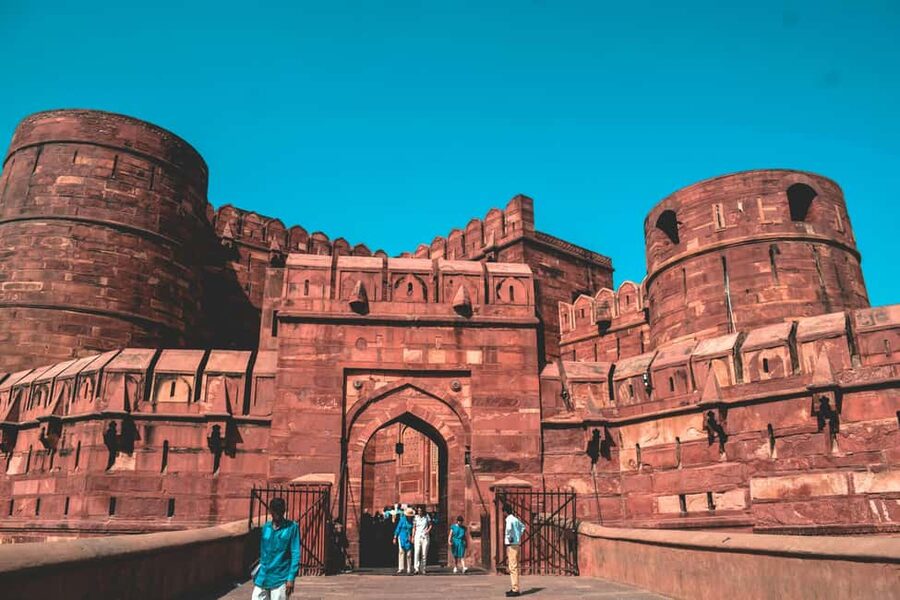
You’ll start through the Amar Singh Gate, the sole entry for visitors, then follow ramparts and gateways while your guide explains how this Mughal stronghold could act like a fortress and a palace at the same time. Expect English or Hindi interpretation in a private group format, so you can ask practical questions and get corrections fast when you are aiming your camera. One possible drawback is that transfers are not included, so you’ll want to already know how you are getting to and from the fort.
If you want a solid Agra day plan, this tour pairs well with the Taj Mahal, which is about 2.5 km away. It is not trying to cover everything inside Agra Fort. It focuses on the most meaningful rooms and the sights that make the fortress feel human.
In This Review
- Key highlights worth your time
- Why Agra Fort in 1 hour is a smart way to start
- Amar Singh Gate, bag checks, and how to get the most out of your time
- Diwan-i-Am: where Mughal court life becomes visible
- Diwan-i-Khas and Jahangiri Mahal: private power and mixed styles
- The Shah Jahan imprisonment story, plus Musamman Burj
- Mirrored palace and Anguri Bagh: where photos actually work
- A good guide is also crowd control and safety
- Price and value: what $6 buys you in real terms
- Fit it with your Taj Mahal plan, not against it
- What I’d bring, and what to expect on your walk
- Should you book this Agra Fort guided walking tour?
- FAQ
- How long is the Agra Fort guided walking tour?
- Where does the tour start, and how will I meet the guide?
- What’s included in the price?
- What languages are available for the live guide?
- Is photography allowed inside Agra Fort?
- What should I bring for the tour?
Key highlights worth your time
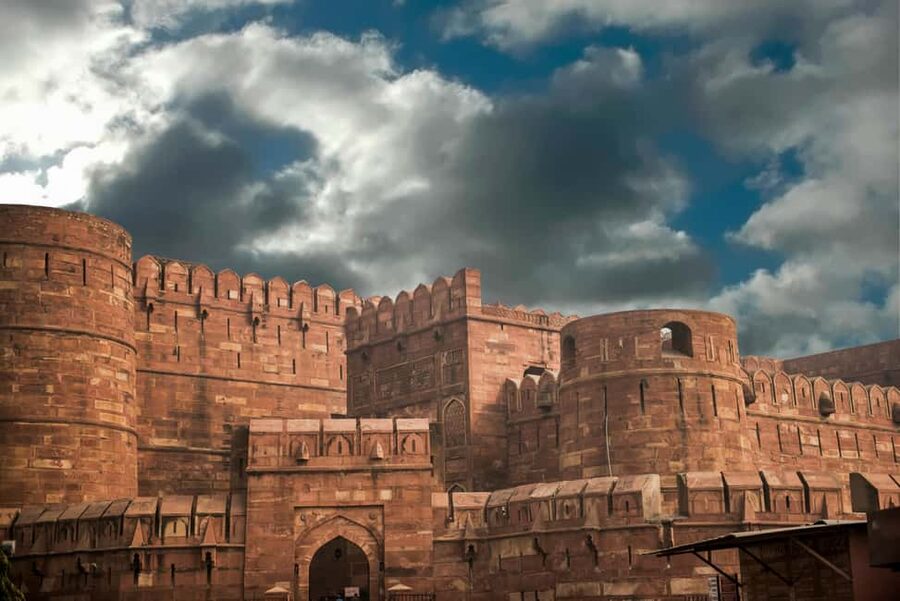
- Amar Singh Gate start: the only public entry, so you get oriented right away.
- Diwan-i-Am and Diwan-i-Khas: you learn what court life looked like, not just what buildings are called.
- Jahangiri Mahal: a quick look at how Mughal design mixes with other styles.
- Shah Jahan’s prison link: you see the place tied to Aurangzeb’s confinement story.
- Mirrored palace and Anguri Bagh: photo stops that feel like stepping into a scene.
- Musamman Burj viewpoint: the bittersweet Taj Mahal connection, plus a memorable pause.
Agra beyond the Taj: more reviewed stops


Why Agra Fort in 1 hour is a smart way to start
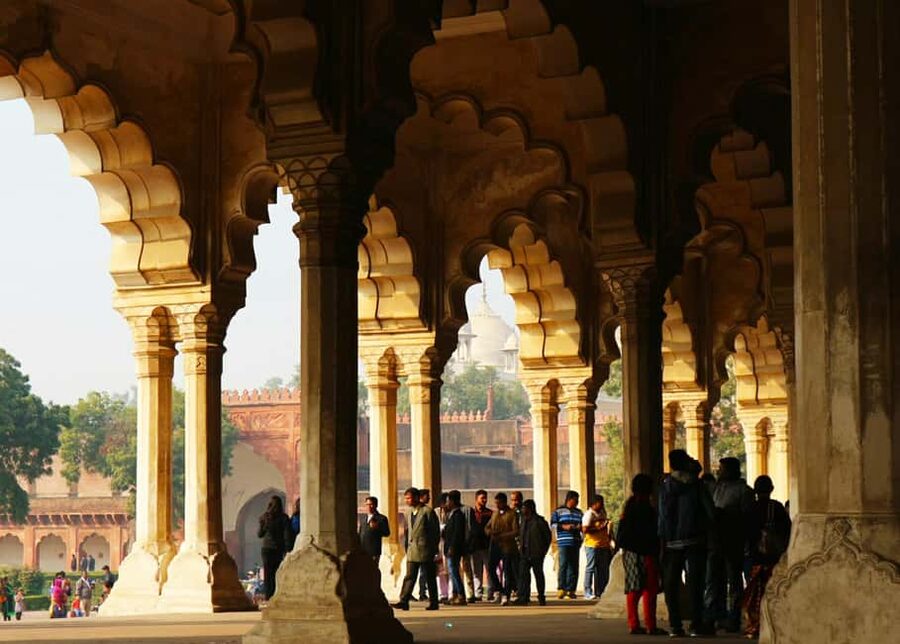
Agra Fort can feel like a maze if you wander on your own. The walls are dramatic, but without context you can miss why the spaces matter. A guided hour gives you the big narrative beats first, then the standout architectural details, so the fort starts making sense quickly.
This is also a good “value per minute” experience. At about $6 per person for a guided visit, you are paying for interpretation and orientation more than for logistics. And because it is private, you are not stuck listening to someone else’s pace or waiting for a slow group to finish a single photo.
I like that the tour is built for focus. You do not need to do the full marathon inside the fort complex to get something meaningful. You also walk away with names, functions, and a sense of scale that helps when you revisit later or compare it to other Mughal sites.
Amar Singh Gate, bag checks, and how to get the most out of your time
Your tour begins at Amar Singh Gate, listed as the sole entry for visitors. That is useful because many forts have multiple approaches, and arriving at the right entrance saves you time and confusion. It also means your guide can get you moving quickly past the first bottlenecks.
Plan for bag checks at the entrance. Keep your bag small and skip anything you can’t carry through securely. You should wear comfortable shoes because the fort has uneven surfaces and there is a lot of walking concentrated into short distances.
One practical tip that shows up in the feedback is that a good guide helps you avoid delays near the entrance area. In particular, some guides were praised for staying alert to the entrance-zone chaos, including people trying to interrupt your route for photos or attention. That matters because in a one-hour tour, five minutes of unnecessary back-and-forth is real time lost.
Diwan-i-Am: where Mughal court life becomes visible
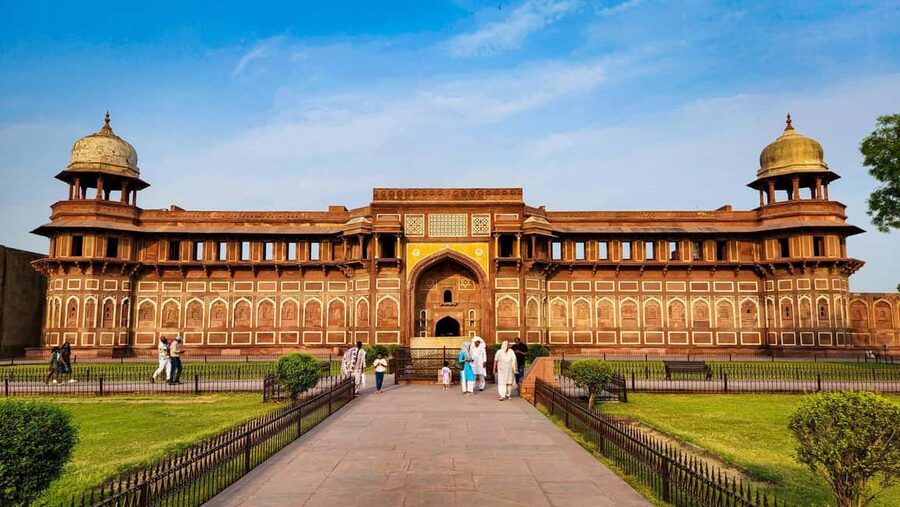
A lot of fort tours stop at walls and gates. This one pushes into Diwan-i-Am, a key space tied to public audience and court activity. Even if you do not memorize every detail, you can feel the purpose of the room. The architecture is made for presence, viewing, and status.
As you stand in or near the ceremonial zones, your guide helps you connect design choices to Mughal governance. You learn why courts were built with sightlines in mind and how power displayed itself through setting and movement. It is the kind of explanation that turns a room into a moment.
I also like that the pace is built to keep your attention. You get stops long enough to understand what you are looking at, but not so long that your legs take over. That makes the hour feel efficient without rushing the story.
- Agra: Taj Mahal & Mausoleum Skip-the-Line Tour with Options★ 4.9 · 456 reviews
- Private Guided Tour of Agra★ 5.0 · 420 reviews
- Taj Mahal, Agra Fort, Baby Taj & Mehtab Bagh Private City Tour★ 5.0 · 391 reviews
- Taj Mahal Skip-the-Line Guided Tour with Optional Add-ons★ 5.0 · 385 reviews
- Agra : Private Sunrise Taj Mahal & Agra City Tour★ 5.0 · 367 reviews
Diwan-i-Khas and Jahangiri Mahal: private power and mixed styles
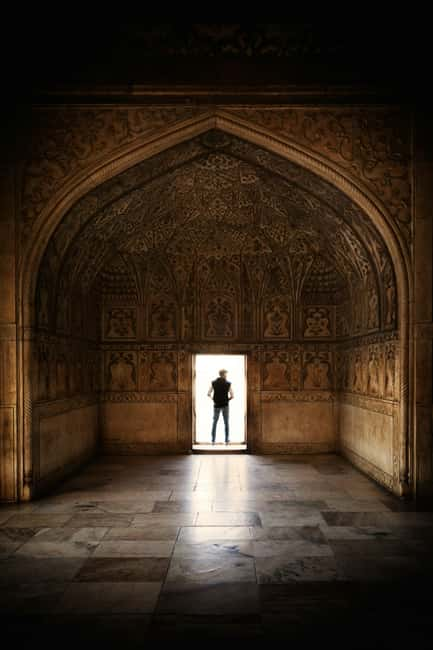
Next up is Diwan-i-Khas, the more private counterpart to the public audience space. The value here is perspective. Your guide can show you how Mughal architecture reflects who is allowed inside, and how the same empire can switch from public spectacle to controlled intimacy.
Then comes Jahangiri Mahal, where the tour gives you a chance to notice stylistic blending. The fort’s palaces blend Rajput, Persian, and Islamic influences, which is not just trivia. It helps explain why Mughal art feels both imperial and local at the same time. You start seeing patterns rather than isolated decorations.
If you care about details, this is where you’ll appreciate the guide pointing out items like Mughal arches, jharokhas, and marble carvings. These are the elements that make photos look like more than snapshots. You’re not just taking a picture of a building. You’re capturing the parts that show craftsmanship.
The Shah Jahan imprisonment story, plus Musamman Burj
One of the most emotionally loaded stops on this tour is the spot tied to Shah Jahan’s imprisonment by his son Aurangzeb. Even when you keep your expectations grounded, the story gives the fort a sharper edge. Suddenly you are not only looking at imperial architecture. You are seeing the setting of a personal political rupture.
From there, the tour often builds toward Musamman Burj, where Shah Jahan spent his final days and could gaze toward the Taj Mahal. This is one of those moments where the explanation matters as much as the view. The site connection turns the Taj Mahal into a narrative destination, not just a separate landmark across town.
If access allows you to step into specific viewpoints or zones, you’ll likely get the best light and angles there. Even when you cannot linger, you come away with a mental map: the fort’s power spaces, the confinement story, and the Taj Mahal connection all linked together in your head.
Mirrored palace and Anguri Bagh: where photos actually work
The tour includes a stop for the mirrored palace if it is accessible. The mirrored spaces are memorable because they show how Mughal design used reflection to create a sense of extra space and glow. For photography, it helps because it gives you texture and highlights, not only plain stone.
Then there is Anguri Bagh, the geometric gardens. These gardens were enjoyed by Mughal queens, and the geometry is the point. When you understand that the layout is intentional, the visuals go beyond pretty. They become a design language, with paths that guide you like lines on a map.
You will also get practical photo guidance from your guide. In the feedback, people highlighted that guides like Shahid Khan and Gagan helped them take better pictures at the best spots, and they knew where to stand for both the fort details and the Taj Mahal angles. That is not a small thing. In Agra, the best photo location can change within minutes depending on crowd movement and the way people block sightlines.
A good guide is also crowd control and safety
A fort visit in Agra has energy. You’ll see vendors, attention seekers, and people who want your time. In the feedback, guides were praised for being patient, clear about where to meet, and active about keeping the group safe and on track.
One standout detail from the written experiences is that guides sometimes helped people with real-world timing. For example, Gagan was described as arriving on time, communicating clearly on where and when to meet, and even waiting when visitors were really late. That kind of reliability reduces stress fast, especially when you are juggling a short itinerary.
Another theme is help with the weekend rush. Shahid Khan was praised for navigating the crowds and helping with skipping queues where required. Even if queue rules vary day to day, the takeaway for you is simple: bring your questions to the guide early, and follow their instructions on movement. It saves time and keeps your hour productive.
Price and value: what $6 buys you in real terms
Let’s talk value, because this tour is priced to be doable. At around $6 per person, you are not paying for private luxury. You are paying for a guided hour that connects the major areas of Agra Fort to a coherent story.
The key value points you should care about are:
- You get interpretation for Diwan-i-Am, Diwan-i-Khas, and the palaces, so names turn into meaning.
- You get help focusing your limited time on the most important spots, including the Shah Jahan versus Aurangzeb storyline.
- You get photo guidance that improves results without needing extra time.
You should also understand what is not included. Transfers are not included, so plan your own way to reach the fort. This matters because your “real cost” is not only the tour price. It is also time spent getting there and back, and that can make or break your day plan.
Fit it with your Taj Mahal plan, not against it
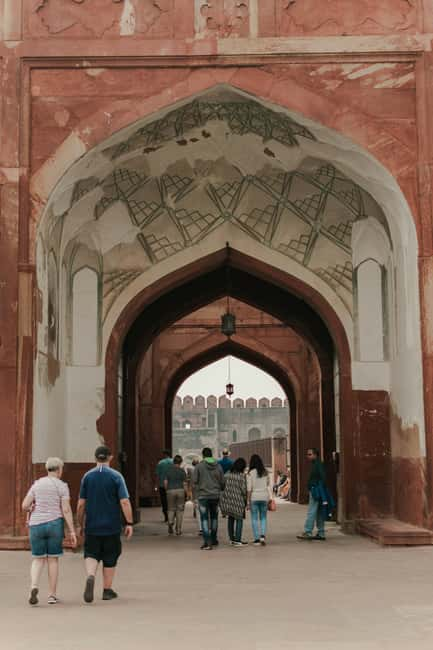
This tour is only 1 hour, and that is intentional. Agra Fort and the Taj Mahal are close, about 2.5 km apart. If you want the classic Agra day that includes both, this tour can act like a perfect warm-up.
I like pairing them because the stories talk to each other. Agra Fort sets up the Mughal court world and the political tension around Shah Jahan. Then the Taj Mahal becomes not just a monument, but the emotional endpoint of that same story.
Plan your pacing. With a short fort tour, you will likely have more energy for Taj Mahal lighting and photo angles afterward. Also, because photography rules can vary by site, follow your guide’s instructions on where tripods or drones may be limited. The data here says photography is allowed, but drones and tripods are usually prohibited without special permission.
What I’d bring, and what to expect on your walk
You should bring comfortable shoes and a camera. That sounds basic, but it is exactly the kind of practical pairing that prevents a bad experience. Uneven surfaces and lots of steps are not the place for thin-soled shoes or brand-new sneakers.
Also expect bag checks. Keep your items simple so you do not waste time at security. If you want extra flexibility, you can also use the guide’s messaging contact one day before your tour, so you have the meeting details ready before you arrive in Agra.
Finally, remember the fort is huge. The point of the guided hour is not to cover everything. It is to hit the most meaningful parts, so you leave with a working understanding of what you saw.
Should you book this Agra Fort guided walking tour?
If you want a quick, focused way to understand Agra Fort and leave with names, story beats, and photo-worthy viewpoints, I think this is a strong booking. The standout reasons are the 1-hour format, the private group feel, and the guide support that shows up in the feedback, including clear communication, patience, good photo help, and crowd navigation.
You might skip it or choose a different option if you hate walking on uneven surfaces or if you want a long, slow, unhurried explore with no guide structure. In that case, you may prefer a longer self-paced visit or a full half-day plan.
My simple decision rule: if you are planning a same-day Taj Mahal visit and you want the fort to make emotional and architectural sense, book it. It is one of those tours where the value is not the building itself, it is the way the guide turns the building into a story you can remember.
FAQ
How long is the Agra Fort guided walking tour?
The tour lasts 1 hour, so it is designed to cover the key areas without turning into a long marathon.
Where does the tour start, and how will I meet the guide?
You start at Amar Singh Gate, which is listed as the sole entry for visitors. You will receive the guide’s contact details from the local service provider via WhatsApp (or by email if you do not use WhatsApp) one day before the tour.
What’s included in the price?
The tour includes a guided tour of Agra Fort. Transfers are not included.
What languages are available for the live guide?
The live tour guide is available in English and Hindi.
Is photography allowed inside Agra Fort?
Photography is allowed, but drones and tripods are usually prohibited without special permission.
What should I bring for the tour?
Bring comfortable shoes because the fort has uneven surfaces and lots of walking, and bring a camera if you want photos.
Agra Fort and Baby Taj, More Visits


Recently reviewed across Agra
- Agra : Best Evening Street Food & Local Bazar Tour in Agra.
★ 4.5 · 10 reviews - Agra City Cultural Walk
★ 5.0 · 10 reviews - Agra: Taj Mahal and Mausoleum Tour with Skip-the-Line Entry
★ 5.0 · 10 reviews - Skip-the-Line Taj Mahal VIP Entrance Tour
★ 5.0 · 11 reviews - Same Day Agra Tour By Gatimaan Express Train from delhi
★ 5.0 · 11 reviews - Taj Mahal visits with Licensed Guide with Entry Assistance
★ 5.0 · 11 reviews
Agra Fort and Baby Taj Tours, compared.
 ★ 5.0Same Day Taj Mahal, Agra Fort & Baby Taj Tour from Delhi by CarFrom $624,304 reviews
 ★ 5.0Full Day Taj Mahal, Agra Fort & Baby Taj Tour from Delhi by CarFrom $623,647 reviews
 ★ 4.9Same Day Taj Mahal, Fort & Baby Taj Tour from Delhi by CarFrom $502,534 reviews
 ★ 4.9Taj Mahal and Agra Fort Private Sunrise TourFrom $592,270 reviews
 ★ 5.0Sunrise Taj Mahal, Agra Fort & Baby Taj Tour from Delhi by CarFrom $622,243 reviews
 ★ 4.9Taj Mahal Sunrise, Baby Taj & Agra Fort Day TourFrom $102,020 reviews
 ★ 4.9Skip-the-Line Taj Mahal & Agra Fort Private TourFrom $71,546 reviews
 ★ 5.0Taj Mahal, Agra Fort, Baby Taj Tour from Delhi by Superfast TrainFrom $751,494 reviews
Browse the lists this tour appears in