
REVIEW · GOLDEN TRIANGLE TOURS
Private 6-Day Ranthambhore Tiger Tour including Delhi, Agra and Jaipur
That first tiger call in Ranthambore is the main event.
This tour is interesting because it strings together UNESCO heavy-hitters and a real wildlife reserve, while you travel in a private, air-conditioned vehicle that helps you dodge the chaos of public transport. I like that you get focused time on the Golden Triangle classics, and I also love the way the safari mornings and afternoons give you two shots at tiger sightings with an English-speaking naturalist. One possible drawback to keep in mind: the Taj Mahal sunrise and the tiger experience depend on real-world conditions (weather and wildlife), so you are paying for access and expert guiding, not a guaranteed animal sighting.
If you want the highlights without planning every turn, this is a smart way to do it. You’ll still cover a lot of ground, but the pacing is built around major sights, reasonable driving blocks, and planned guided time. Also, if you happen to get a guide like Mahesh Kumar (mentioned in past feedback), you’re likely to feel like you understand what you’re looking at, not just where to stand for photos.
Key points at a glance
- Two safari drives at Ranthambore with a naturalist, using shared jeep/canter, not random self-planning.
- Sunrise Taj Mahal visit plus battery bus/golf cart from parking, which saves real walking time early.
- UNESCO-packed route across Delhi, Agra, and Jaipur (Humayun’s Tomb, Qutub Minar, Agra Fort, Taj Mahal, Jantar Mantar).
- Strategic stops outside the Golden Triangle bubble, including Keoladeo Ghana bird sanctuary and Chand Baori stepwell.
- Comfort-first logistics with private AC transport and professional guides at each sightseeing block.
- No tiger guarantee, but your chances improve with two proper park sessions.
In This Review
- Why This Delhi-Agra-Jaipur Plus Ranthambore Route Works
- Day 1 in Delhi: Tombs, Towers, Temples, and the Big Government Buildings
- Day 2 in Agra: Taj Mahal at Sunrise and the Forts Around It
- Day 3 from Agra Toward Ranthambore: Keoladeo Birds and Chand Baori Stepwell
- Day 4 Tiger Reserve Reality Check: Two Safaris in Shared Jeep/Canter
- Day 5 Jaipur Arrival: City Palace, Jantar Mantar, and Birla Mandir
- Day 6 Amber Fort and Jaipur Photo Stops Before Returning to Delhi
- Price and Value: What $701.41 Per Person Buys You
- Small Things That Can Affect Your Experience
- Who This Tour Fits Best
- Should You Book This Private Tiger and Golden Triangle Tour?
- FAQ
- Is this tour private?
- What time does pickup start and where?
- Does the price include entrance fees?
- How many tiger safaris are included at Ranthambore?
- Is a tiger sighting guaranteed?
- Does the tour include Taj Mahal sunrise?
- What meals are included?
Why This Delhi-Agra-Jaipur Plus Ranthambore Route Works
This is one of those trips that makes sense if you like two things: big-name sites and a real shot at seeing wildlife in its own habitat. You get UNESCO landmarks in Delhi and Agra, the most famous monument on the planet in the best light, then a jump to Ranthambore Tiger Reserve where tigers are the point.
For me, the key value is not just “you see a lot.” It’s the way the schedule reduces decision fatigue. You’re not juggling tickets, timing, and transport between cities. Your days are anchored by guided stops, and the drives are planned so you can recover on the road instead of spending half the day negotiating buses and taxis.
Golden Triangle itineraries, three to eight days
Day 1 in Delhi: Tombs, Towers, Temples, and the Big Government Buildings
Day 1 starts with a pickup at 9:00 am from Delhi, Gurugram (Gurgaon), or Noida, then you roll into Delhi sightseeing. The first big win here is that you’re visiting the major monuments early enough to avoid some of the heaviest crowds later.
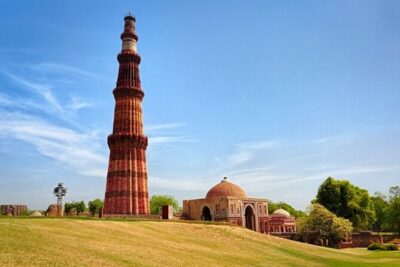
Humayun’s Tomb is a perfect opener. It’s UNESCO-listed and often feels like a blueprint for later Mughal architecture. You’ll get the story of how the Mughals used symmetry, gardens, and geometry to turn a tomb into a statement. Next up is Qutub Minar, also UNESCO-listed. That tower is dramatic in person, even if you’ve seen photos before.
Then you shift gears to Gurudwara Bangla Sahib. It’s a striking white-marble gurdwara with golden domes, and it gives you a calmer, more human-scale stop compared with the marble-and-minaret monuments. After that, India Gate is a quick but meaningful pause. It’s a war memorial with a massive presence, and it helps you understand Delhi’s 20th-century layer.
The tour also includes a drive-by or viewpoint experience around the Parliament area, with a stop tied to the 1947 transfer of power, plus a look at Rashtrapati Bhavan, the President’s House. These aren’t “wander for hours” stops, but they add context for how the modern capital sits on top of older eras.
Later, you drive about three hours to Agra and check into your hotel. It’s a good setup for tomorrow, since Agra is where the trip’s most famous sunrise moment is waiting.
Day 2 in Agra: Taj Mahal at Sunrise and the Forts Around It
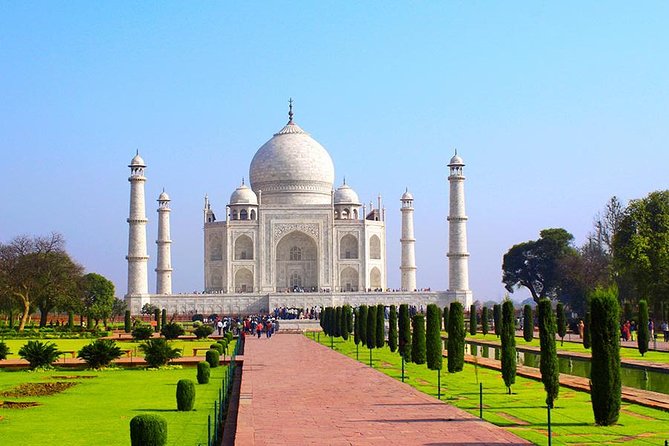
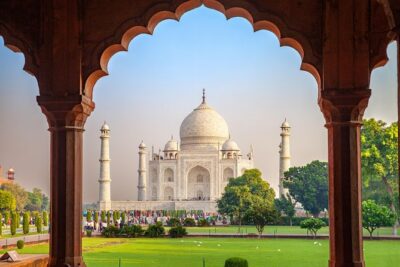
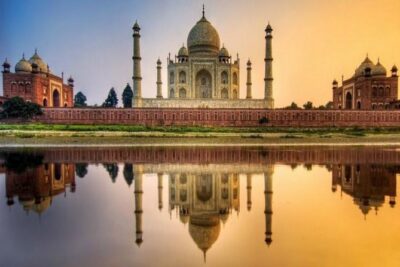
Day 2 is your Agra centerpiece. You start with a sunrise visit to the Taj Mahal, UNESCO-listed and widely considered the world’s most recognizable monument for a reason. Sunrise matters because the light is softer and the crowds tend to be lower. That said, the tour notes that the Taj Mahal sunrise visit is subject to clear weather, so if skies don’t cooperate, your experience can shift.
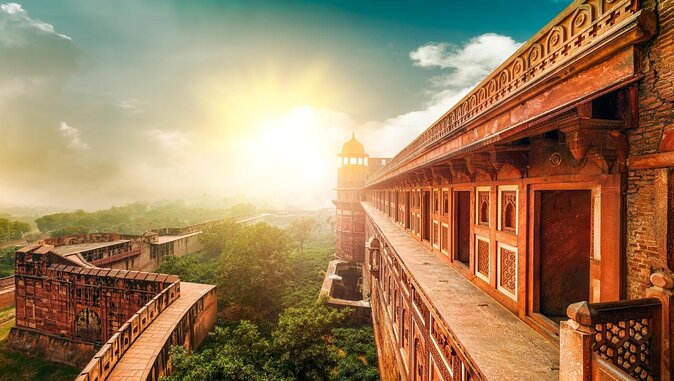
Next is Agra Fort, another UNESCO highlight. This is more than scenery. It’s where power was run from, and you’ll likely notice how the fort blends defense architecture with imperial-level aesthetics. After that, you visit Itmad-ud-Daula, often called the Baby Taj. The name is a little misleading because it’s not a smaller version of the Taj Mahal. It’s its own delicate, detailed tomb that makes you appreciate the finesse of Mughal design.
Then there’s Mehtab Bagh, a photo tour viewpoint for seeing the Taj Mahal from across the Yamuna. The idea is to get a different perspective without fighting the heaviest foot traffic. It’s especially satisfying if you like comparing angles and noticing how the gardens frame the marble dome.
One practical detail that helps: the tour includes battery bus/golf cart return ride from Taj parking. Taj days in India can be long on your feet. This little inclusion can save energy for photos and for actually enjoying the monument instead of marching.
Day 3 from Agra Toward Ranthambore: Keoladeo Birds and Chand Baori Stepwell
Day 3 is a smart change of pace. Instead of another Agra round, you go for scenery and wildlife-adjacent culture as you travel toward Ranthambore.
First stop is Keoladeo National Park in Bharatpur, a UNESCO World Heritage site and one of India’s top bird sanctuaries. This isn’t a “look at one thing” stop. You’ll see why this place matters for birds and why it’s famous among nature lovers. It’s a great way to get your brain into wildlife mode before tiger season begins.
Then you head to Chand Baori in Abhaneri. This is the stepwell everyone remembers when they travel with camera phones fully charged. It’s about water collection from long ago, but what you experience is pure geometry: deep steps, repeating patterns, and a cool-feeling space even when the sun is hot.
Later you arrive at Ranthambore Tiger Reserve in the evening. That evening arrival gives you a buffer day before your safaris start. And honestly, it helps mentally because tiger days require patience, not just stamina.
Jaipur, a few more ways to see it
- Jaipur Day Trip from Delhi by Car or Train – All Inclusive★ 5.0 · 663 reviews
- Jaipur City Private Day Tour from Delhi by Car – All Inclusive★ 5.0 · 589 reviews
- Private Golden Triangle Tour Delhi Agra Jaipur ( Top Rated )★ 5.0 · 436 reviews
- 3-Day Private Luxury Golden Triangle Tour to Agra and Jaipur From New Delhi★ 5.0 · 424 reviews
- 4-Days Private Golden Triangle Tour: Delhi, Agra & Jaipur by Car★ 5.0 · 406 reviews
Day 4 Tiger Reserve Reality Check: Two Safaris in Shared Jeep/Canter
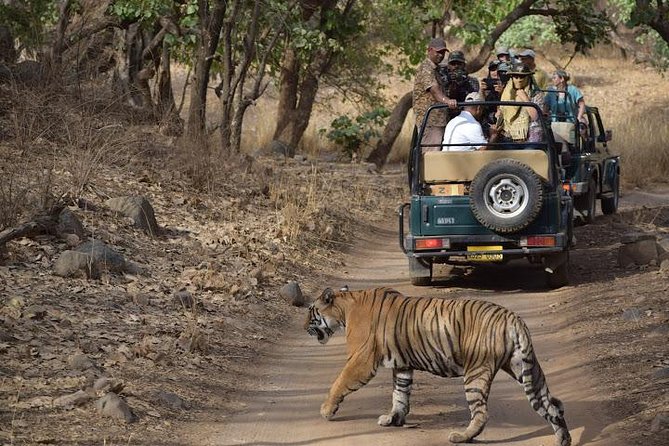
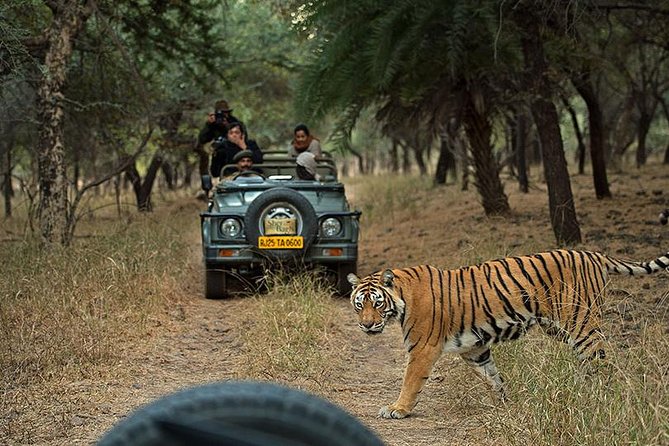
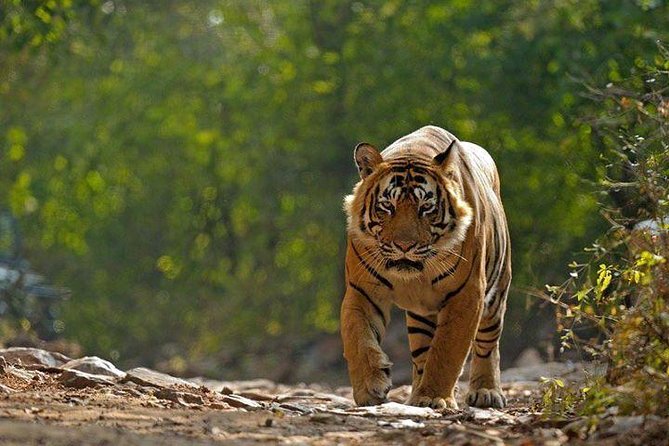
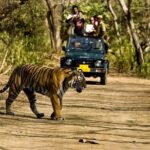
Day 4 is the big wildlife day, with both a morning and an afternoon safari in Ranthambore National Park. The tour includes morning and afternoon Jungle safaris and uses a shared jeep/canter, which is typical for this kind of reserve. The shared part matters because it’s usually the only way to make the park entry system work smoothly across a group.
You’ll drive through the reserve in search of tigers, but the tour is honest: there’s no guarantee. That’s not a sales trick, it’s just how wildlife works. Still, the safari format, timing, and the on-the-ground guidance are what you’re paying for, and your chances are better when you do two sessions instead of one.
The tour also includes an English-speaking naturalist during safaris. This is one of the most underrated inclusions. When you’re in a moving vehicle with other safari-goers, it’s the naturalist who helps you spot signs, read the terrain, and understand what you are seeing. Even if the tiger is elusive, you usually come away with better wildlife awareness, like how animals use cover and how the reserve layout affects sightings.
One key tip from the tour guidance is about clothing: wear colors that blend in, like khaki, brown, or olive green. It’s not about fashion. It’s about animal comfort and not introducing unnecessary bright colors into the environment.
Also note the backup plan: if shared jeep isn’t available, you’ll use a shared canter (20-seater van). That can feel different than a jeep, mainly because visibility and movement can change a bit. But the core safari experience remains.
Day 5 Jaipur Arrival: City Palace, Jantar Mantar, and Birla Mandir
After breakfast you check out from Ranthambore Jungle Resort and drive about three hours to Jaipur, the Pink City. Jaipur is where the trip shifts from wildlife patience to fort-and-palace energy. You’ll feel the temperature, the architecture, and the vibe change right away.
You start with the City Palace, a royal residence complex with courtyards, gardens, and buildings from different eras. This is one of those places where a guide helps a lot because you can otherwise miss the point of the mix. You’re looking at the evolution of royal power, not just one “pretty palace.”
Next comes Jantar Mantar, the observatory site with geometric structures used to track celestial movement. It’s UNESCO-listed, and the real fun is seeing how those shapes link to measurement, not just decoration. It’s a good stop if you like science-y travel stops where the facts make the visuals click.
Then you visit Birla Mandir Temple, built in white marble at the base of Moti Dungri hill. It’s free to enter, and the intricate latticework is the reason people remember it. It also offers a quieter spiritual contrast to the big-ticket royal monuments.
Day 6 Amber Fort and Jaipur Photo Stops Before Returning to Delhi
Day 6 begins at Amber Fort, pronounced “amer.” This fort rises from a rocky mountainside and feels like it owns the landscape. You’ll see classic Rajput architecture and get a strong feel for why forts were both defense and political theater.
The tour notes elephant/jeep ride at Amber Fort is not included. That means you might choose a ride add-on if you want help going up, but don’t expect it to be built into the price. If you prefer walking at your own pace, you may be fine without it.
You then do a photo stop at Jal Mahal, the Water Palace. It’s near the cenotaphs of the maharanis and sits beautifully in the water of Man Sagar. This is a snapshot moment more than a full deep visit, so use it for photos and to orient yourself for the rest of the day.
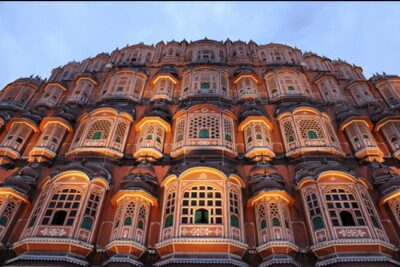
Another photo stop follows at Hawa Mahal, the Palace of Wind. That honeycombed facade is instantly recognizable, and you’ll understand how the building design ties to windows and airflow long before you ever read about it.
Finally, you visit Monkey Temple (Galtaji Temple), also known as the Abode of Monkeys. It has three sacred pools of water and is surrounded by two granite cliffs. It’s a fun last cultural stop, and it adds something different from the fort-and-palace theme.
After sightseeing, you drive back to New Delhi, Gurugram, or Noida, around five hours depending on traffic. It’s a long wrap-up day, but it keeps the trip neat and avoids forcing extra hotel nights.
Price and Value: What $701.41 Per Person Buys You
At about $701.41 per person, this trip is not a “cheap and cheerful” bargain. What you are paying for is time, organization, and included costs that add up quickly in India.
Here’s what makes the value feel real:
- Private air-conditioned transport across multiple cities. That’s a major comfort and time-saver compared with piecing together trains and local rides.
- Professional local guides for all sightseeing blocks, so you spend your energy actually looking and understanding.
- Entrance fees for the listed monuments and Ranthambore. In India, tickets can multiply fast when you hit multiple UNESCO sites.
- Two Ranthambore safaris with an English-speaking naturalist.
- Hotel nights (five nights on twin sharing when booked with the hotel option).
- Key meals included: lunch, five breakfasts, and two dinners, plus bottled water.
If your alternative is self-planning a Golden Triangle plus booking Ranthambore separately, costs often creep upward. The real advantage is that your schedule is managed so you don’t lose half your day sorting tickets, drivers, and timing.
Still, keep expectations grounded. The trip is intense. You are moving daily. If you want a slow, sit-and-stare vacation, this won’t match your pace.
Small Things That Can Affect Your Experience
A few parts of this tour are tied to conditions you cannot control:
- Taj Mahal sunrise depends on clear weather.
- Tiger sightings are not guaranteed, and safari drives are still the nature of the reserve.
- Safari vehicles can vary between shared jeep and shared canter depending on availability.
On the logistics side, the tour is noted as vegetarian-option friendly, so you can request that in advance. Also, you’ll want your passport details ready because the tour says passport info is required at booking and a current valid passport is needed on travel day.
One more timing note: if you travel around New Year or Christmas, the tour says mandatory gala dinners on those dates are not included and may be charged at the hotel. If you book close to those dates, it’s worth checking so you aren’t surprised by an extra hotel charge.
Who This Tour Fits Best
This tour fits best if you:
- Want a private, guided approach rather than public transport juggling.
- Like seeing UNESCO sites but don’t want to spend days researching them.
- Are tiger-leaning, meaning you can handle patience and you understand wildlife has off days.
- Prefer a structured schedule with hotel nights included, not a build-your-own trip.
It may feel like a lot of walking at monuments, and the tour asks for moderate physical fitness. If you’re comfortable with daily sightseeing and some steps, you’ll likely do well.
Should You Book This Private Tiger and Golden Triangle Tour?
Book it if your priority is a smooth, guided mix of India icons and a real wildlife reserve, without the stress of planning the moving parts. The two safari sessions plus expert naturalist time are the real draw. And if you love that Golden Triangle style of travel, the UNESCO focus gives you a strong hit list.
Skip it if you want maximum freedom and minimal structure, or if you’re the type who needs guaranteed outcomes. The tiger part is nature, not a timed show.
If you’re okay with weather and wildlife being unpredictable, this is a strong value way to combine Delhi, Agra, Jaipur, and Ranthambore in six days.
FAQ
Is this tour private?
Yes. It is a private tour/activity, and only your group will participate.
What time does pickup start and where?
Pickup is offered from your chosen place in New Delhi, Gurugram (Gurgaon), or Noida, starting at 9:00 am.
Does the price include entrance fees?
Yes. Entrance fees for the mentioned monuments and Ranthambore National Park are included.
How many tiger safaris are included at Ranthambore?
You get a morning and an afternoon safari at Ranthambore Tiger Reserve in a shared jeep/canter.
Is a tiger sighting guaranteed?
No. The tour does not guarantee tiger sighting since you are visiting a jungle, not a zoo.
Does the tour include Taj Mahal sunrise?
Yes, there is a sunrise visit to the Taj Mahal, but it is subject to clear weather conditions.
What meals are included?
Lunch is included, with five breakfasts and two dinners as specified in the itinerary. Vegetarian option is available if you advise at booking.
Tiger Country, More Safaris




The Pink City, More Reviewed Days





The Golden Triangle, Longer and Shorter

Recently reviewed across New Delhi
- Golden Triangle – Delhi Agra and Jaipur
★ 5.0 · 10 reviews - Taj Mahal & Agra Tour by Indian Bullet Train All Inclusive
★ 4.5 · 10 reviews - Private Tour in Mehrauli Archaeological Park & Qutub Minar
★ 5.0 · 10 reviews - Old & New Delhi Tour
★ 5.0 · 10 reviews - From Delhi : Taj Mahal & Agra Fort Tour by Luxury Express Train
★ 5.0 · 10 reviews - Delhi Shopping Tour: Top Bazaars, Crafts & Souvenir Finds
★ 5.0 · 10 reviews
Golden Triangle Tours, compared.
 ★ 5.03-Days Private Golden Triangle Tour: Delhi, Agra & Jaipur by CarFrom $1271,098 reviews
 ★ 5.03-Day Delhi, Agra and Jaipur Private Tour – India Golden TriangleFrom $110812 reviews
 ★ 5.0Four-Day Private Luxury Golden Triangle Tour to Agra and Jaipur From New DelhiFrom $160807 reviews
 ★ 5.05 Nights 6 Days Private Golden Triangle Tour – Delhi Agra JaipurFrom $240574 reviews
 ★ 5.04 Days Golden Triangle TourFrom $146499 reviews
 ★ 5.0Private Car and Drive for Golden Triangle (4N/5D)From $167451 reviews
 ★ 5.0Private Golden Triangle Tour Delhi Agra Jaipur ( Top Rated )From $148436 reviews
 ★ 5.03-Day Private Luxury Golden Triangle Tour to Agra and Jaipur From New DelhiFrom $164424 reviews
Browse the lists this tour appears in