
REVIEW · GOLDEN TRIANGLE TOURS
Private 4-Day Golden Triangle Tour with Ranthambore Tiger Safari
Four days, three cities, one safari day. This private Golden Triangle adds real variety, from an Old Delhi rickshaw ride to a sunrise Taj Mahal and a Ranthambore tiger safari, with your guide and driver staying with you the whole time. The main tradeoff is the geography, you will spend a lot of hours in the car between stops.
I like how this tour is built for people who want structure without feeling rushed. You can also tweak the plan after booking, and you get hotel options (3, 4, or 5-star) with breakfasts, so you can match comfort level to budget.
Just keep in mind that monument entry fees are not included, and Taj Mahal has a closure day. That means you may spend extra on tickets, and the order of cities may shift if you start on the wrong day.
In This Review
- Key highlights worth noticing
- Private feels like the point, not a marketing slogan
- Old Delhi by rickshaw: Jama Masjid, Chandni Chowk, and the walk-through feel
- Getting to Agra: why the drive is part of the deal
- Sunrise Taj Mahal and Agra Fort: timing plus storytelling
- Ranthambore transition day: hotel comfort and tiger-country positioning
- Safari morning at Ranthambore: shared jeep or canter, and real expectations
- Jaipur in one compact loop: Panna Meena ka Kund to Hawa Mahal
- Price and what your $230 buys, plus the entry-fee reality
- Who should book this, and who might not love it
- Should you book this Golden Triangle with Ranthambore?
- FAQ
- Is pickup included?
- What is included in the tour price?
- Are entrance fees for monuments included?
- Which major sights have tickets not included?
- Is Taj Mahal open every day?
- What happens if my tour starts on Thursday?
- What safari vehicle will I ride in?
- How long is the Ranthambore safari?
- When do you return to Delhi on the final day?
Key highlights worth noticing
- Old Delhi rickshaw ride right in the historic lanes
- Taj Mahal sunrise focus with guided time inside the monument
- Private local guides throughout for each sightseeing day
- Ranthambore tiger safari by shared jeep or canter based on availability
- Hotel dinner included once, plus breakfast every morning
- Flexibility option to add, remove, or swap monuments after booking
Golden Triangle itineraries, three to eight days
Private feels like the point, not a marketing slogan
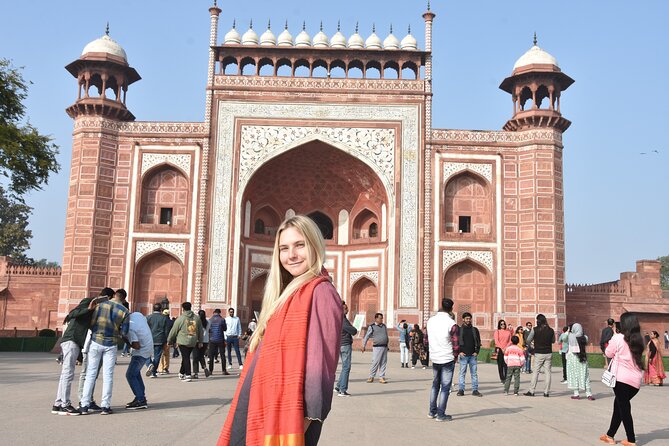
This is a private setup, meaning it’s just your group and you’re not sharing a guide with a random crowd. Your driver and guide stay with you from the moment you’re picked up, which matters in India where traffic can turn a simple plan into a stress test. You’ll also get an air-conditioned vehicle, and the car type is matched to group size (sedan for 1 to 2, Innova for 3 to 5, larger van for bigger groups).
One reason this tour works well is the guide helps you move smoothly through the day. The experience includes assistance with buying entrance tickets so you don’t have to stand in lines hunting for the right desk or the right window. And because guides vary in style, it helps to know that names like Aamir, Shan, Ali, and Riyaz come up often for clear explanations, patience with foreigners, and safety-first pacing.
The tradeoff is that you’re “contained” in the plan. If you’re the kind of traveler who loves drifting off alone, you’ll need to use the customization option, or speak up whenever you want extra time at a stop.
Old Delhi by rickshaw: Jama Masjid, Chandni Chowk, and the walk-through feel
Your first day is where Old Delhi grabs your attention. You start at Jama Masjid, a major Mughal-era mosque built by Shah Jahan in the mid-1600s. Since monument entry is not included, plan for an extra ticket cost if you want to go inside rather than just view from outside.
Next is Chandni Chowk, the famous Old Delhi market area with spices, dried fruits, silver jewelry, and saris. The time slot is short, so you’re not going to shop your way through history. Think of it as a fast, sensory orientation, with a guide helping you spot what’s worth your time.
Then comes the moment many people remember: a rickshaw ride in historic Old Delhi. It’s included and timed for about 30 minutes, so you get the “old streets” experience without turning it into a half-day detour.
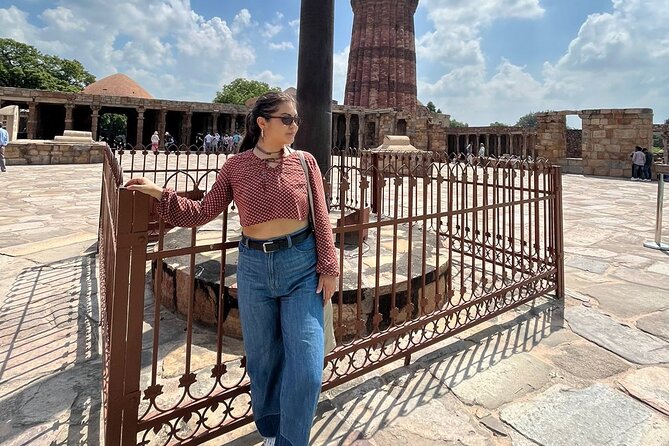
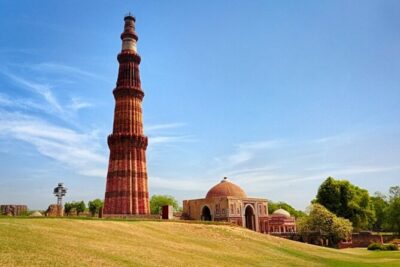
After that, you’ll sweep through key landmarks. You get a brief stop at Red Fort (listed as free for admission on this plan), plus Qutub Minar, which is UNESCO-listed and has a not-included entrance fee. You’ll also stop at Lotus Temple (free), India Gate (free), and Agrasen ki Baoli (free), plus exterior/photo stops for Parliament House and Rashtrapati Bhavan.
Two practical notes. First, comfy walking shoes are a must, because Old Delhi involves uneven sidewalks and short transfers between clustered sights. Second, the plan has specific closure rules: Red Fort and Lotus Temple are listed as closed on Mondays, and in that case you visit Gurudwara Bangla Sahib instead.
Getting to Agra: why the drive is part of the deal
After a lunch break at a nearby restaurant, you take the highway route toward Agra. The travel time listed is about 3 hours, and that time matters because Golden Triangle days are rarely “one city per day” in the way you’d hope. You’ll be in the car, and your experience will either feel smooth or long depending on how your driver handles traffic and how the day is paced.
This is one area where the feedback is strongly positive. Drivers such as Amar and Bilal come up in the past experiences as people who keep things safe and steady through chaotic roads. Since your guide is with you, you’re not just strapped into a transfer, you’re still getting small context and timing help so the day doesn’t feel like random waiting.
Once you reach Agra, the schedule is generous in a simple way: check in, then the rest of the day is free. If you want to wander a bit near your hotel, test local snacks, or just recover, you’ve got room to do it. Your hotel options in Agra include 3-star and 4-star choices listed on the tour, with breakfast included.
My advice for this “in-between” day phase: treat it like a buffer. You’re doing sunrise Taj the next morning, so don’t plan a big second-activity night unless you truly enjoy walking.
Other tiger drives, sightings and all
- Private 4-Day Golden Triangle Tour with Ranthambore Tiger Safari★ 5.0 · 248 reviews
- Private 5-Day Ranthambhore Tiger Tour from Delhi including the Taj Mahal, Agra and Jaipur★ 5.0 · 197 reviews
- 4 Day Golden Triangle with Ranthambore Tiger Safari Tour from Delhi★ 5.0 · 110 reviews
- From Delhi : 6 Days Delhi, Jaipur, Agra & Ranthambore By Car★ 5.0 · 73 reviews
- 4-Day Private Delhi, Agra & Jaipur with Ranthambore Tiger Safari★ 5.0 · 71 reviews
Sunrise Taj Mahal and Agra Fort: timing plus storytelling
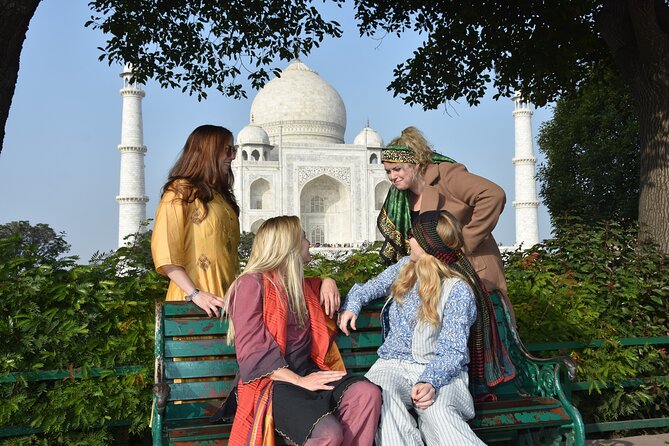
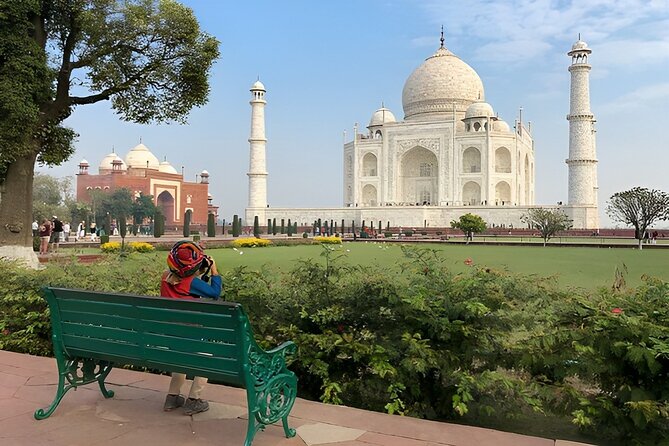
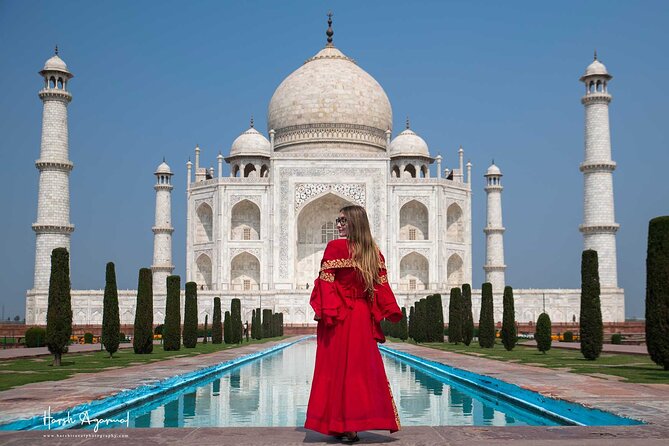
Day two starts with one of the biggest reasons people choose this itinerary: the sunrise Taj Mahal. You’ll rise early, then your guided sightseeing time is planned for about 2 hours inside the monument, with the overall Taj Mahal block listed at about 3 hours. Entrance tickets are not included, so you’ll want to budget for monument entry on top of the tour price.
Why sunrise is such a big deal in practice is simple: you’re more likely to get calmer light, better photos, and a more focused visit before the crowds swell. The guided part is what helps you “read” the building, not just look at it. Guides named Shan and others are specifically called out for making the storytelling engaging, with safety emphasized during the day.
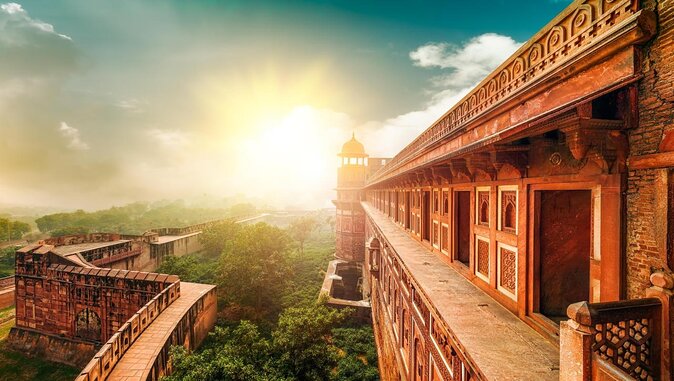
After Taj, you move to Agra Fort, another UNESCO World Heritage site with guided time around 1 hour. Again, entrance is listed as not included on this plan. This is where the tour shifts from iconic postcard beauty to a sense of power and defense. It’s also a good contrast to Taj Mahal because it changes the vibe from romantic to strategic.
One schedule warning you should know: Taj Mahal is closed on Fridays. If you start on Thursday, the itinerary order shifts so you don’t lose Taj to the closure. That means the cities may play out in a different order than what you see for other start days.
Ranthambore transition day: hotel comfort and tiger-country positioning
After Agra, you head toward Ranthambore. The plan has an arrival and check-in style block, and the day is otherwise free, so you’re not trying to cram sightseeing into a long travel day. There’s an overnight stay in Ranthambore with hotel options listed (3-star and 4-star choices) and breakfast included.
Even with a free afternoon, there are a few things to understand about how the safari is arranged. Ranthambore safari zone assignments are based on availability since safari operations are managed by the government. That means you’re not guaranteed a specific zone in advance, and your “tiger odds” depend on where the government assigns access that day.
You’ll also have dinner included one time at your hotel. It’s a small thing, but it helps because after a travel day, the last thing you want is to hunt for a safe meal option. If you’re traveling with kids or anyone who gets tired easily, this is one of the quiet benefits of bundling food and transfers into the same package.
Think of this day as your reset before safari morning. Sleep, eat early, and try to keep your evening calm so the next day feels exciting instead of exhausted.
Safari morning at Ranthambore: shared jeep or canter, and real expectations
The safari is the centerpiece day. You wake up early and head to Ranthambore National Park for a shared jeep or canter safari. The time in the park is planned for about 2 to 3 hours, with a trained guide.
Vehicle choice matters. The plan says they always try to book a shared jeep first, but if there aren’t enough jeeps available, you may go by shared canter. A canter is larger, which usually means less flexibility with movement and sometimes a less personal feel for spotting wildlife, even though you still get the same goal: seeing tigers.
On guidance language, the details are specific and you should read them closely. The safari guide for Ranthambore is said to be English speaking, but there is also a note that government-appointed guides can have limited English fluency. In real terms, expect enough English for key explanations and spotting guidance, but don’t assume you’ll get fluent, long-form wildlife lectures.
The other reality check is the tiger factor. No tour can guarantee a tiger sighting, and that’s true even with the best management. What this part of the tour does well is giving you the correct structure, the right timing, and the right kind of vehicle access so you can focus on the moment instead of logistics.
If you care about photo and viewing comfort, the earlier you manage your expectations about vehicle differences, the more enjoyable the safari tends to be.
Jaipur in one compact loop: Panna Meena ka Kund to Hawa Mahal
Jaipur is where the pace shifts from “long travel, big monuments” to “lots of named stops in a dense sightseeing day.” On day three, you arrive, check in, and then you have a rest-of-day break.
Then comes day four. You start with Panna Meena ka Kund, a stepwell that’s listed as free. It’s a good early stop because it feels quiet and off the main postcard track.
After that, you hit Amber Fort, which is UNESCO World Heritage listed, but entrance tickets are not included. Amber Fort is the grand set piece, with ornate interiors and panoramic views from the hillside approach. The listed time is about 2 hours, so you’ll see major sections rather than wandering for an entire day.
Next is Jal Mahal, the lake palace setting in Man Sagar Lake. The stop is about 30 minutes and is listed as free for admission. This is one of those “quick, look, then move” stops. Don’t expect it to be a deep museum visit, it’s about the setting and photos.
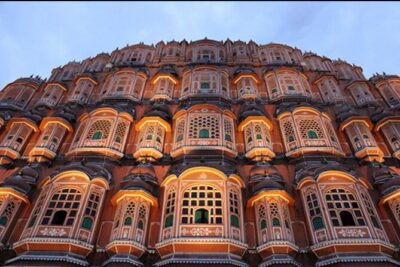
Then the plan continues with City Palace, Jantar Mantar, and Hawa Mahal. City Palace is listed with not-included entrance, and Jantar Mantar is also not included, but both are UNESCO World Heritage. Jantar Mantar ties to the Rajput king Sawai Jai Singh II and his astronomical instruments, and it’s an easy place to understand how Jaipur blends science, power, and design. Hawa Mahal is free and timed at about 30 minutes, so you’ll mainly see the famous façade and viewpoints from the outside and nearby areas.
You end with Gaitore Ki Chhatriyan, described as a royal crematorium with detailed Rajput architecture. That finale is a nice shift from tourist-heavy icons to a more reflective, architecturally focused stop.
Price and what your $230 buys, plus the entry-fee reality
At $230 per person, this is priced like a complete “planning package,” not just transportation. The tour includes private air-conditioned transport with a driver, guides for sightseeing, 3 nights accommodation with breakfast (for the hotel option you choose), the Old Delhi rickshaw ride, the Ranthambore tiger safari in shared jeep or canter, and one dinner at the hotel.
The main extra cost you must account for is monument entrance fees. The plan states monument entry fees of $180 per person are not included. That means your true on-the-ground spending can be closer to $410 per person before you add personal extras.
You also need to understand what changes if you select the no-hotel option. The plan says if you book Tour Price without Hotels, you can book any hotel in cities of stay, and the first night is in Agra and the second night is in Jaipur. That can be a smart move if you already have preferred hotels or a loyalty program you want to use.
Value-wise, this tour tends to be worth it if you want a guided route with private logistics. If you’d rather build your own trip and you’re comfortable managing tickets, timing, and transit alone, you might find cheaper ways to do Golden Triangle. But you’d likely lose the “guide with you all day” structure that makes the long days feel manageable.
Who should book this, and who might not love it
This tour is a good match for first-timers who want a clear route through Delhi, Agra, and Jaipur, plus a safari day that’s handled for you. It’s also a solid fit for families and small groups who value safety and smooth logistics, and who would rather spend energy looking at monuments than figuring out what to do next.
You’ll probably enjoy it most if you like guided storytelling. Guides are repeatedly praised for making sites make sense, not just naming them. If you can handle early mornings, you’ll also be happy with the sunrise Taj Mahal approach.
You might want to skip or reconsider if you hate car time. One of the clearest cautions is that distances between places are big and you’ll spend a lot of the day in transit. Also, if you have a tight budget, the entry fees on top of the tour price add a meaningful amount.
Finally, factor in the Taj closure day. If you start on a Friday, you’ll need the itinerary adjustment, so check your start date before you commit.
Should you book this Golden Triangle with Ranthambore?
Book it if you want a high-structure India experience: private guides, private transfers, and a safari plan built around government-run access. The sunrise Taj Mahal timing plus the guided time inside is a strong combo, and the Old Delhi rickshaw ride gives you a real “arrival into the culture” moment on day one.
Don’t book it if your top priority is minimal driving, or if you strongly dislike paying separate entrance fees. And do double-check your start day. Taj Mahal closure can shift city order, and you’ll want that resolved before you get attached to a fixed plan.
If you do book, ask your operator one simple question when you confirm: can you share which monuments are expected to be ticketed for your exact travel dates? That helps you avoid surprises and keeps the trip feeling like value, not a post-booking add-on.
FAQ
Is pickup included?
Pickup is offered, and the guide and driver are with you throughout the tour.
What is included in the tour price?
The tour includes private transport in an air-conditioned vehicle with a driver, 3 nights accommodation with breakfasts (based on your selected hotel option), sightseeing with private local guides, an Old Delhi rickshaw ride, tiger safari at Ranthambore in a shared jeep or canter, and dinner once at the hotel. Fuel surcharge and service charges are also included.
Are entrance fees for monuments included?
No. Monument entry fees are not included, and the stated cost is $180 per person.
Which major sights have tickets not included?
Tickets are listed as not included for Jama Masjid and Qutub Minar (Day 1), Taj Mahal and Agra Fort (Day 2), and Amber Fort, City Palace, and Jantar Mantar (Day 4).
Is Taj Mahal open every day?
No. Taj Mahal remains closed on Friday.
What happens if my tour starts on Thursday?
If you start on Thursday, the itinerary order changes to Delhi, Jaipur, Ranthambore, Agra, then Delhi, so you avoid losing Taj Mahal to the Friday closure.
What safari vehicle will I ride in?
You ride in a shared jeep if available. If shared jeeps are not available, the plan says a shared canter will be used instead.
How long is the Ranthambore safari?
The safari time in the park is planned for about 2 to 3 hours.
When do you return to Delhi on the final day?
On the 4th day, you return to Delhi around 9 pm. If you prefer a different arrival time, you can inform the operator to adjust the schedule.
Tiger Country, More Safaris



The Golden Triangle, Longer and Shorter




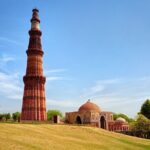
Recently reviewed across New Delhi
- Golden Triangle – Delhi Agra and Jaipur
★ 5.0 · 10 reviews - Taj Mahal & Agra Tour by Indian Bullet Train All Inclusive
★ 4.5 · 10 reviews - Private Tour in Mehrauli Archaeological Park & Qutub Minar
★ 5.0 · 10 reviews - Old & New Delhi Tour
★ 5.0 · 10 reviews - From Delhi : Taj Mahal & Agra Fort Tour by Luxury Express Train
★ 5.0 · 10 reviews - Delhi Shopping Tour: Top Bazaars, Crafts & Souvenir Finds
★ 5.0 · 10 reviews
Golden Triangle Tours, compared.
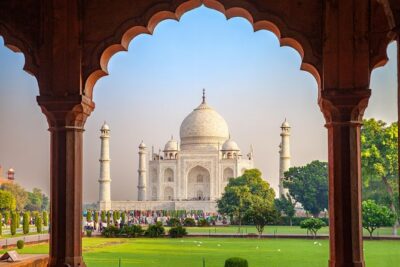 ★ 5.03-Days Private Golden Triangle Tour: Delhi, Agra & Jaipur by CarFrom $1271,098 reviews
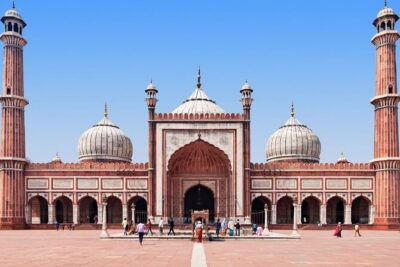 ★ 5.03-Day Delhi, Agra and Jaipur Private Tour – India Golden TriangleFrom $110812 reviews
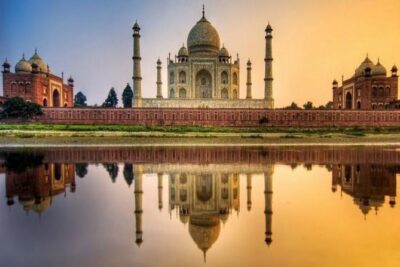 ★ 5.0Four-Day Private Luxury Golden Triangle Tour to Agra and Jaipur From New DelhiFrom $160807 reviews
 ★ 5.05 Nights 6 Days Private Golden Triangle Tour – Delhi Agra JaipurFrom $240574 reviews
 ★ 5.04 Days Golden Triangle TourFrom $146499 reviews
 ★ 5.0Private Car and Drive for Golden Triangle (4N/5D)From $167451 reviews
 ★ 5.0Private Golden Triangle Tour Delhi Agra Jaipur ( Top Rated )From $148436 reviews
 ★ 5.03-Day Private Luxury Golden Triangle Tour to Agra and Jaipur From New DelhiFrom $164424 reviews
Browse the lists this tour appears in