
REVIEW · PRIVATE
Private Tour of Step well, Modhera Sun Temple & Patola saree weaving by car
Seven levels, one unforgettable heritage day. This private car tour strings together Rani ki Vav and the Sun Temple at Modhera, plus Patola weaving in Patan, with lunch and a real guide so the day feels organized. I especially like the generous wandering time at each site, and I like how the explanations turn architecture into something you can actually picture.
The tradeoff is simple: the day runs about 10 hours and the drives can be long, around 2 to 3 hours each way. If you dislike sitting in a car for most of the day, this may feel like a lot.
In This Review
- Key highlights you should care about
- A full-day car tour that keeps the focus on monuments
- Rani ki Vav: the queen-powered stepwell that feels engineered, not just old
- Modhera Sun Temple: Bhimadeva I, year 1026, and the river setting
- Patan Patola weaving: one saree, four weavers, about 100 days
- How the day pacing works: time blocks, lunch, and your energy
- Price and value: why $150 can make sense on this route
- Who this tour fits best, and who should rethink it
- Should you book this private Stepwell, Sun Temple, and Patola tour?
- FAQ
- What time does the tour start, and how long is it?
- What are the main stops on this tour?
- Is lunch included?
- Are admission tickets included for the sights?
- What is included in the price, and is dinner provided?
- Is this a private tour?
- What is the cancellation policy?
Key highlights you should care about
- Door-to-door private transportation to avoid taxis and public buses on a long day trip
- Rani ki Vav gets real time, with 2 hours on site to take in the seven-story stepwell
- Modhera Sun Temple context, built in 1026 on the banks of the Pushpavati River by Bhimadeva I
- Patan Patola weaving is slow craft, where one saree takes four weavers over about 100 days
- Lunch included, so you do not spend the day hunting for food between monuments
- Guides named Sanket, Anand, and Bhupendra Oza come up often for clear explanations and careful care
Shortlisting? Every Ahmedabad trip below went through the same review.
A full-day car tour that keeps the focus on monuments
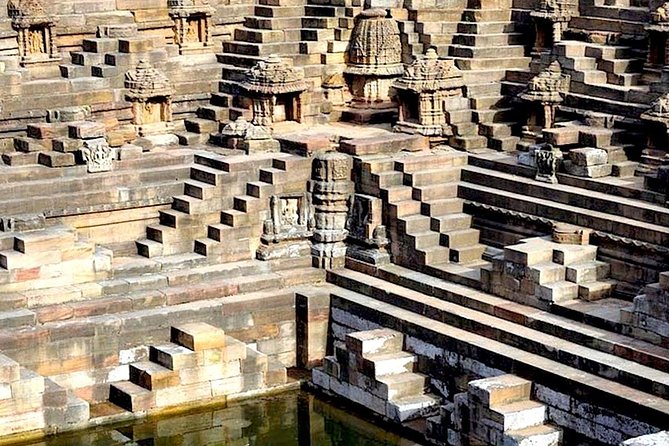
This is the kind of day trip you take when you want more than a quick photo stop. You get a private car and guide, which matters on this route because you are leaving Ahmedabad for the day and you will otherwise burn time on local transport and negotiations.
I like that the tour is set up to be low stress. You start at 8:00 am, you spend dedicated blocks at each major site, and your guide is there to connect the dots between Gujarati power, religion, and craft. The structure is also flexible enough for small adjustments, which is a real practical benefit when you are traveling with your own pace, energy level, and interests.
From a value standpoint, it is not just “transport plus tickets.” Admission tickets are included at the stops, and lunch is included too. That means you can actually plan your day around the sights instead of budgeting on the fly.
One more thing I appreciate is the format: private means only your group participates. No wandering around in a crowd, no waiting for stragglers while your allotted time at the stepwell or sun temple ticks away. If you enjoy history when it is explained in plain language, this is a strong fit.
Rani ki Vav: the queen-powered stepwell that feels engineered, not just old
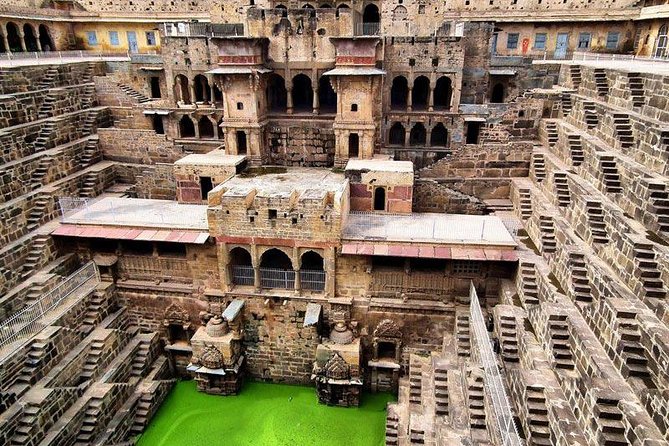
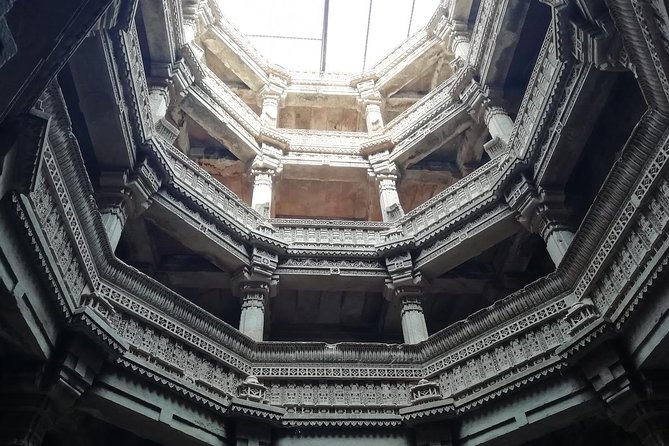
Rani ki Vav is the place that makes you pause and look up, even if you think you have “seen” stepwells before. This is a memorial built the other way around from what you might expect: a king commissioned it, but it was built by his queen as the remembrance. That twist gives the site a story you can feel as you walk down through the levels.
You get 2 hours here, which is enough time to slow down. The stepwell is described as seven storied, and it is also recognized as a world heritage sight, so it is not treated like a minor stop. You can take your time with the architecture, look at the layout as a whole, and then zoom in on details as your guide explains what you are looking at.
What I find especially valuable is how a stepwell becomes more than a water hole. It is part engineering, part social space, part public statement. Even if you only remember one idea from this stop, I think it should be this: water management and monumental design were connected in Gujarati history.
What could be a drawback? Stepwells are stairs. If you are sensitive to uneven stone steps or you prefer minimal walking, you should pace yourself and plan for slower movement. Two hours is generous, but it is also enough time that you will feel it if you rush.
Modhera Sun Temple: Bhimadeva I, year 1026, and the river setting
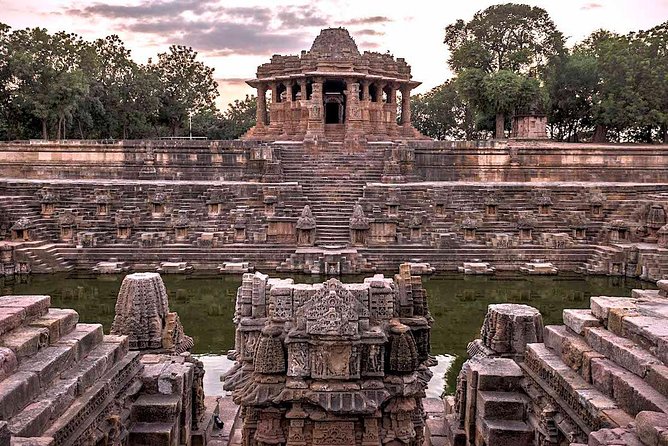
After Rani ki Vav, the day shifts from a queen’s engineering statement to a sun-worship design from the Solanki dynasty. The Sun Temple at Modhera is a classic example of why temple sites are worth more than quick sightseeing.
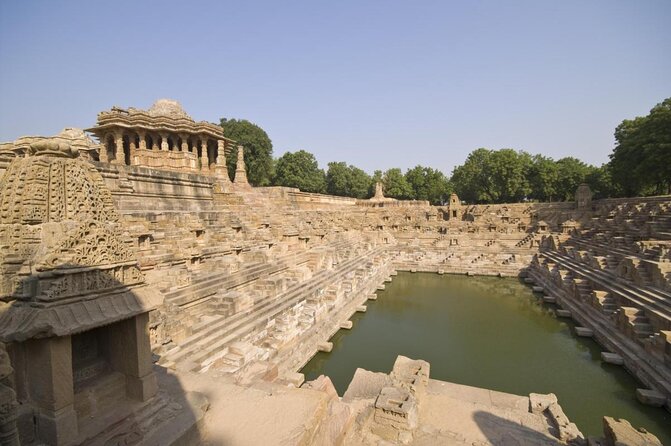
You get 2 hours at this stop, and the details matter. The temple is from the 11th century, built in 1026 by Bhimadeva I of the Solanki dynasty. It was built for the Sun God, and it stands on the banks of the Pushpavati River. That combination, religion plus specific geography, is exactly why your guide matters. You are not just looking at stone, you are seeing how the setting shaped the whole concept.
This is also a good place to adjust your expectations. You might arrive thinking you will spend the time staring at sculptures. Instead, you should pay attention to structure and layout: the way the temple communicates with light and the way the design organizes space. When a guide explains what the builders intended, you start noticing alignments and the logic behind the design.
One practical consideration: Modhera is an outdoor site, so plan for sun and warmth depending on the season. You will likely want a hat, sunscreen, and a steady water habit. The upside is that the open-air setting also helps you understand the monument in context, not just as an indoor artifact.
Patan Patola weaving: one saree, four weavers, about 100 days
Patan is where the tour becomes hands-on in a way monuments cannot. Instead of stone and geometry, you focus on textile craft. The Patola saree is described as “magic in action,” but the real wow factor is the time commitment behind each piece.
You will visit Patan and see weavers, with about 1 hour at this stop. The key detail to remember is that a single Patola saree is made by four weavers over a long period, about 100 days. That slow, team-based process is a huge contrast to today’s quick fashion cycles.
Even in one hour, you should be able to connect what you see to the work involved. Your guide can help you understand the logic of the craft, and you get a glimpse of how coordinated effort creates the final pattern. If you have ever wondered how a complex repeating design survives years of tradition, this is the clearest answer on the day.
Could you feel shortchanged with only 1 hour? It depends on you. If you love textile history and you want to ask lots of questions, the stop can feel brief. The good news is that you can ask your guide to focus your time, since the tour can be customized to your needs.
How the day pacing works: time blocks, lunch, and your energy
This is built as a full-day outing, about 10 hours total. That includes travel time between Ahmedabad and the other towns. Based on past experiences on this route, expect long driving stretches, often around 2 to 3 hours each way. That sounds intense, but it is also the reason you can see three major cultural stops in one day without the hassle.
Here is the pacing in practical terms:
- Stop 1 at Rani ki Vav is 2 hours, with the admission ticket included.
- Stop 2 at the Sun Temple at Modhera is another 2 hours, with admission included.
- Stop 3 in Patan is about 1 hour at the Patola weaving heritage area, with admission included.
Lunch is included. For many people, this is the make-or-break detail. When lunch is not included, you end up splitting the day into awkward gaps and rushed meals. Here, you can keep your schedule calmer, and the guide can help with timing so you do not feel like you are sprinting between sites.
Customizing is also part of the appeal. If you care more about architecture than textiles, or you want extra time to wander at one stop, you can likely shape the day. The private setup makes that easier than group tours.
My advice: treat the day like a heritage marathon, not a relaxed stroll. Comfortable shoes matter at stepwell sites, and you will want a simple packing kit: water, sun protection, and anything you need to stay comfortable in an outdoor setting.
Price and value: why $150 can make sense on this route
At $150 per person, this tour is not the cheapest way to do a day trip. But value is about what is inside the price, and what kind of time you buy back.
You are paying for:
- private transportation for the day
- a guide
- lunch
- admission tickets at each stop
- a mobile ticket for the tour
Add up what that would cost separately, and the price becomes more reasonable. Also, you are not just buying convenience. You are buying interpretation, so you spend less time guessing what you are seeing.
The private guide also adds an intangible value. When you hear the stories behind the architecture, you stop treating sites like checkboxes. That is why so many people highlight guide quality, including named guides like Sanket, Anand, and Bhupendra Oza. Guests often call out that their guides explained things clearly and adapted to interests, and that kind of attention makes the monuments land better.
There is also a practical safety angle. A driver in a private car reduces the stress of navigating long stretches and coordinating transport across towns. For many travelers, that is worth real money on its own.
If you want the best value, this is a smart choice when:
- you are short on time in Ahmedabad
- you care about culture and history, not only landmarks
- you prefer guided context
- you do not want to spend your day planning logistics
If you are the kind of traveler who wants to roam independently with no schedule, you may prefer renting your own transport or using local buses. But if that sounds like more work than fun, the structure here is a strong deal.
Who this tour fits best, and who should rethink it
This tour is ideal if your travel style is “I want to understand what I am looking at.” The combination of Rani ki Vav, Modhera Sun Temple, and Patola weaving gives you a full cultural triangle: engineering and royal memory, religious architecture in a specific river setting, and living craft.
It also fits solo travelers. A private setup can be less stressful than joining a group, and the guide can pace the day around you. The same is true for couples who want one focused day rather than half-days of scattered sightseeing.
It is also a strong option for anyone who hates decision fatigue. You start at 8:00 am, you have clear stop time blocks, lunch is handled, and admission is included. You can simply show up and let the route do the work.
Who might skip it? If you have very limited endurance for long drives and you dislike spending most of the day in a car, the 10-hour schedule will be the biggest downside. The route is also not designed for a quick in-and-out visit. This is a full day commitment.
If you are traveling with someone who needs frequent breaks or has mobility concerns around stairs, plan extra care at Rani ki Vav. The tour time at each stop is generous, but stepwell stairs will still be part of the experience.
Should you book this private Stepwell, Sun Temple, and Patola tour?

I think you should book it if you want a smooth cultural day trip that actually explains what you are seeing. The mix of world heritage stepwell engineering, a specific 1026 temple built by Bhimadeva I, and a craft that takes four weavers and about 100 days per saree is a satisfying trio. Add in lunch and included admission, and the day feels complete rather than patched together.
Book it confidently if you like guided interpretation, comfortable pacing, and not having to solve transport puzzles. I would also book it if you are traveling solo and you want the day to feel safe, organized, and guided by a professional, attentive driver and guide team.
Skip it only if long driving hours are a dealbreaker for you or if your ideal day is minimal structure. For most people coming through Ahmedabad who want real Gujarati culture beyond the city, this private day trip delivers strong value for the effort you put in.
FAQ
What time does the tour start, and how long is it?
The start time is 8:00 am and the duration is about 10 hours.
What are the main stops on this tour?
You visit Rani ki Vav, the Sun Temple at Modhera, and Patan for Patola saree weaving.
Is lunch included?
Yes, lunch is included on this full-day tour.
Are admission tickets included for the sights?
Yes, admission tickets are included for each stop listed.
What is included in the price, and is dinner provided?
Included are private transportation, lunch, and the guide. Dinner is not included.
Is this a private tour?
Yes, it is a private tour/activity, and only your group participates.
What is the cancellation policy?
You can cancel for a full refund up to 24 hours before the experience’s start time. Free cancellation is available, but cancellations within 24 hours of the start time are not refunded.
Recently reviewed across Ahmedabad
Private, compared.
 ★ 4.9Taj Mahal & Agra Private Day Trip with TransfersFrom $43,181 reviews
 ★ 4.9Taj Mahal and Agra Fort Private Sunrise TourFrom $592,270 reviews
 ★ 5.0Old & New Delhi Private Tour – Half or Full Day (Rated Excellent)From $202,226 reviews
 ★ 4.9Private Full Day Sightseeing Tour By Car with GuideFrom $41,839 reviews
 ★ 5.0Taj Mahal and Agra Private Car Tour from Delhi with 5* LunchFrom $331,633 reviews
 ★ 4.9Private Taj Mahal and Agra Tour by Express TrainFrom $751,605 reviews
 ★ 4.9Skip-the-Line Taj Mahal & Agra Fort Private TourFrom $71,546 reviews
 ★ 5.0Private Sunrise Taj Mahal Trip from Delhi all InclusiveFrom $801,537 reviews