
REVIEW · HIMACHAL HILL STATION TOURS
Shimla Private Guided Walk Tour exploring the colonial trails
One hill city, one great walk, lots to notice. A private guided stroll like this is an easy way to understand Shimla’s British-era layout and power centers without getting lost. I like the local guide angle, especially when stories connect places such as Railway Board Building and Bantony Castle to everyday city life, and I like the slow pace that gives you time to pause and take photos. The main drawback to plan for: many stops are view-from-the-outside because admission is not included.
You start at Christ Church and end at the Indian Institute of Advanced Study (IIAS), so you get a clean one-way route, not a “circle back” experience. The guide speaks English, Hindi, and Pahari, and the tour is built for real conversation, including local gossips that make the landmarks feel more human. If you want to spend time inside every landmark, this tour may feel a bit like city sightseeing from the edges, not a museum run.
In This Review
- Key points to know before you go
- Why Shimla’s colonial trails make sense on foot
- Starting at Christ Church, a landmark with an easy welcome
- Ridge Road and Scandal Point, where you learn the city’s layout fast
- The red brick BSNL Telegraph Office, and why 1922 matters
- Bantony Castle and Kali Bari Temple, where colonial stops meet local identity
- Railway Board Building, cast iron and steel, built to resist fire
- Gorton Castle and CPWD Office, heritage craft and early administration roots
- Vidhan Sabha Chowk and the Oberoi Cecil, old and new meet on the same route
- The All India Radio connection and ending at IIAS
- Price and value: what $16.67 really buys
- Who this private colonial walk suits best
- Practical tips so you have an easy, enjoyable walk
- Should you book this tour?
- FAQ
- How long is the Shimla private guided colonial trails walk?
- Where does the tour start and where does it end?
- How much does the tour cost per person?
- Is this a private tour?
- What languages does the guide speak?
- Is admission included for the stops?
- Do I need a printed ticket?
- What is the cancellation policy?
Key points to know before you go
- Private guide, local languages: English, Hindi, and Pahari spoken during the walk.
- One-way colonial route: Christ Church to IIAS in about 2 hours.
- Big colonial names, small details: you’ll spot castles, civic buildings, and old communications infrastructure.
- Designed for easy first orientation: Ridge, Mall connections, and key landmarks line up logically.
- Outside viewing at many stops: admission is not included for several listed sites, so don’t expect interior visits.
- Past-to-present storytelling: you’ll hear how the city’s British-era institutions connect to what’s there now.
Other hill station stays reviewed

Why Shimla’s colonial trails make sense on foot
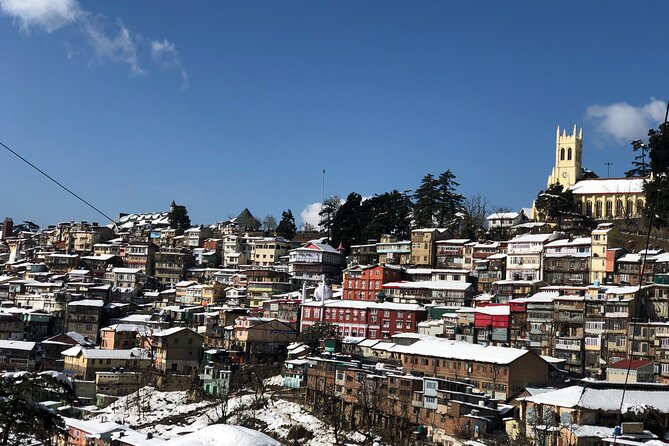
Shimla can feel like a place you either rush through or you miss. A guided walk keeps you moving, but it also forces the city to reveal itself in order. Instead of trying to memorize streets from a map, you follow a route through the places that shaped administration, communication, and social life.
This tour works well because it’s short, private, and story-led. At $16.67 per person for about a 2-hour walk, you’re not paying for a full day of transport or museum time. You’re paying for someone local to point out what matters, and to connect the dots between British-era buildings and the present-day city.
And you do not need to be a hardcore history person. The best part is how the guide ties facts to scene-setting: why a building was made the way it was, what role the area played, and how the city’s identity developed block by block.
Starting at Christ Church, a landmark with an easy welcome
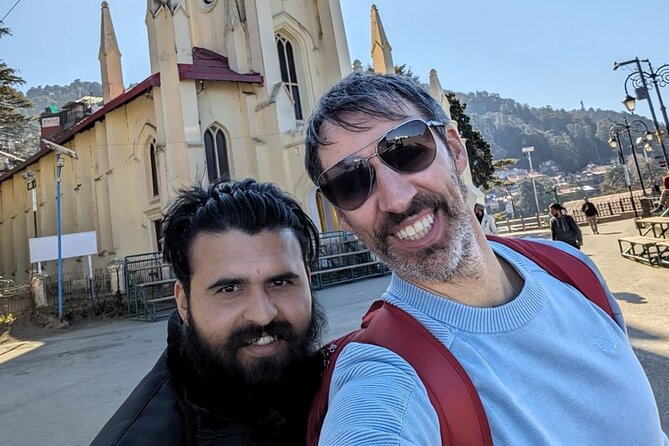
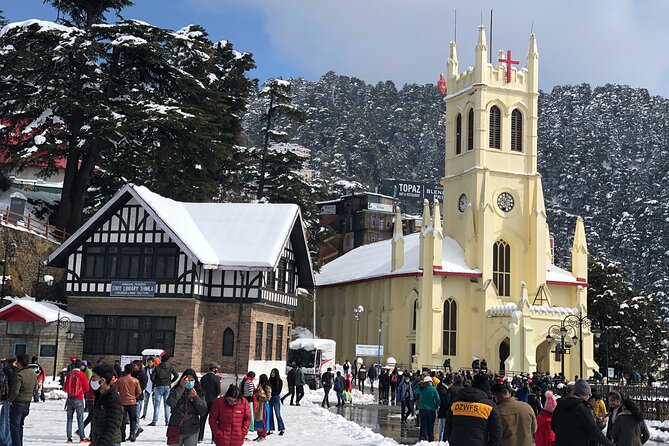
The tour begins outside Christ Church on the Ridge area side. It matters because Christ Church is described as the second oldest church in North India after St John’s Church in Meerut. That gives you a helpful anchor right away: you’re not just strolling past pretty architecture, you’re starting at one of the older spiritual and community landmarks of the hill station.
Worship here is conducted in Hindi and English, which is a nice reminder that Shimla’s colonial-era institutions didn’t just stay frozen in time. If you’re the kind of traveler who likes to get a quick “what is this place?” orientation before wandering off on your own, this opening stop does that job.
No admission ticket is listed here, so you should expect to look around from outside and let the guide do the talking. Also, if you want a strong start for pictures, this is a good moment to get a few establishing shots before the route moves into civic and heritage buildings.
Ridge Road and Scandal Point, where you learn the city’s layout fast
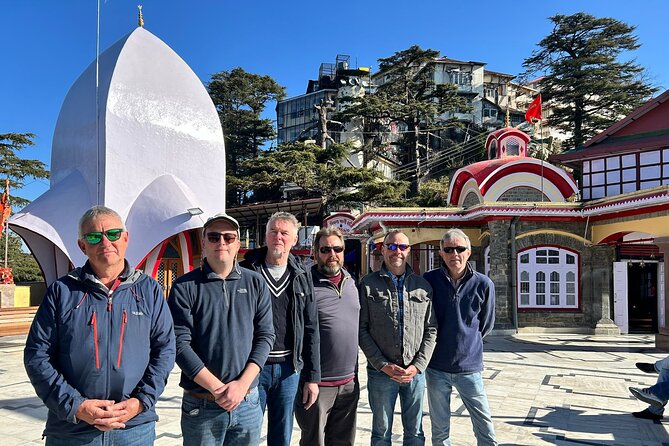
From Christ Church, you’ll move to the Ridge, a large open space located in the center of Shimla. This is one of those places where the city plan becomes visible. You can feel how the Ridge works as a hub, and why roads connecting major areas would naturally funnel people toward this kind of open civic zone.
Next is Scandal Point, where the Mall Road joins Ridge Road on the west side. Even if you have only a day in Shimla, these two stops help you understand the mental map. Ridge is the center, the Mall connects busy strolling and shops, and Scandal Point marks the junction where foot traffic likely changed direction depending on the hour and the mood.
In practical terms, this part of the walk is also a breather. It gives you a sense of space before you shift into narrower heritage stretches and buildings with more specific historical roles.
The red brick BSNL Telegraph Office, and why 1922 matters
One of the most concrete “colonial tech” moments on the route is the BSNL Office Shimla. It’s the red brick Telegraph Office designed by Scottish architect Scott Begg in 1922. That single sentence tells you why this stop is worth attention: it’s not just a random old building, it’s part of the communications backbone that helped run a far-flung hill station.
You’ll also see this place from outside, since admission is listed as not included. But that doesn’t make the stop pointless. With a guide, exterior features become clues. Look at the brickwork feel, the heritage look, and the way the building sits along the Mall Road, because that location tells you how communications and administration were placed where people and movement already were.
This stop is a good example of what you’re really buying with a guided walk: someone gives you the “why,” not just the “what.” You’re learning to read the city like a document.
Bantony Castle and Kali Bari Temple, where colonial stops meet local identity
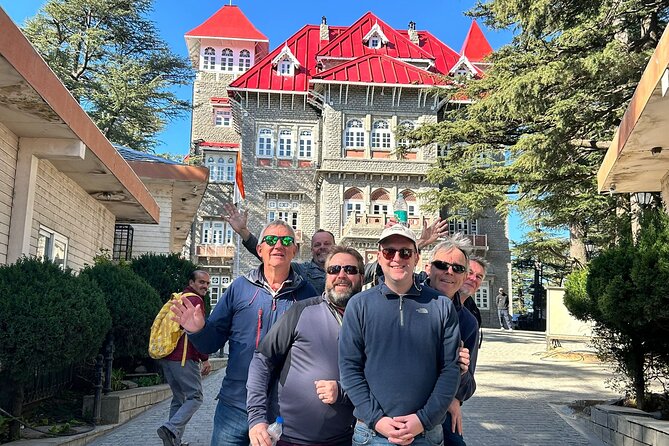
Bantony Castle is next, described as located on Kalibari Road, just a few meters away from Scandal Point. It was the summer palace of the Maharaja of Sirmaur and was built in the 19th century. That timeline is part of the appeal. The route is often framed as colonial trails, but Shimla’s story is not only about Britain. You see how local princely power and summer residence culture also shaped buildings and prestige.
Then the walk hits Kali Bari Temple on Bantony Hill. This is the place where you learn an origin story for the city name. The temple is dedicated to Shyamala, the fearsome reincarnation of Goddess Kali, and the guide explains that Shimla is named after this devotion.
This pairing is smart. You can stand with your brain in “heritage mode” for Bantony Castle, then switch to “belief and place-name mode” at Kali Bari. The contrast helps the city feel real instead of staged.
One practical note: admission is listed as free at Kali Bari. Still, the tour format indicates you may not go far inside depending on how the guide keeps the pace and what’s needed. So think of it as a guided stop for viewing, context, and quick temple appreciation rather than a long devotional visit.
Railway Board Building, cast iron and steel, built to resist fire
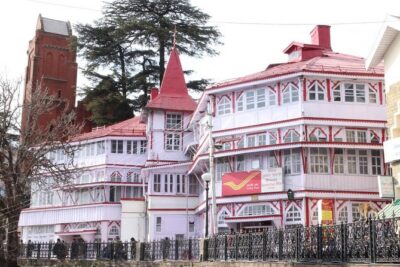
If you’re the kind of person who cares about details like materials and design intent, the Railway Board Building is a highlight. It was constructed in 1896 and is described as the first of its kind in India. The building is made predominantly out of cast iron and steel and was designed to be resistant to fire, with materials imported from Glasgow.
That’s a lot of engineering history packed into a short stop. You’ll probably notice the building’s structure feel from the outside, and the guide will help you understand why that matters in a hill station. Fire safety and fire-resistant materials were not “nice to have.” In older cities, fire risks could be catastrophic, so design choices like this were practical decisions.
Admission is listed as not included, so you should expect outside viewing. This is one of those moments where the tour earns its value anyway. You’re learning what you’re looking at, and why it looks the way it does.
Gorton Castle and CPWD Office, heritage craft and early administration roots
Next up is Gorton Castle, listed as a heritage monument with a blending of innovative minds and intelligent craftsmanship. That language is general, but the point for you is that this isn’t presented as a faceless building. The guide will frame it as a crafted legacy, which makes your photos come out better because you know what to look for.
Then you’ll reach CPWD Office. The backstory is specific: in 1819, Lieutenant Ross, the Assistant Political Agent in the Hill States, set up a wood cottage in Shimla. Three years later, his successor, Charles Pratt Kennedy, built the first pucca house.
This is a key shift in the tour from “landmark aesthetics” to “administrative evolution.” You’re seeing how the hill station grew from early structures to more permanent ones, and how official work shaped the built environment. If you like timelines, this is one of the stops that makes the route feel coherent.
Admission isn’t included for these stops, so again, you’ll view from the outside and let the guide interpret.
Vidhan Sabha Chowk and the Oberoi Cecil, old and new meet on the same route
At Vidhan Sabha Chowk, you’ll learn what the Himachal Pradesh Legislative Assembly is: a unicameral legislature for the state. This is a present-day civic stop, but it still fits the colonial trail theme. It shows how institutional space in Shimla continues to matter, even as governments change.
Not far along, the route passes The Oberoi Cecil, described as a historic luxury hotel in Shimla. Even without going inside, this stop is useful. Hotels at this kind of landmark location often sit where visitors and officials once moved through, and they tend to carry the “continuity of prestige” idea in a modern form.
These stops help you avoid the trap of thinking history is only about old buildings. It’s also about how the same areas keep staying important for public life and visitors.
The All India Radio connection and ending at IIAS
Mid-route, the walk mentions the All India Radio Centre setup in 1955 in Shimla. That’s another layer beyond the 19th century British-era theme. It shows how the hill station continued to attract national institutions, not only colonial ones.
The tour ends at the Indian Institute of Advanced Study (IIAS). This is a research institute in Shimla, set up by the Ministry of Education, Government of India, in 1964 and started functioning on 20 October 1965. The guide will drop you outside the main entrance.
For many people, ending at IIAS makes the route feel complete, because it connects Shimla to a forward-looking institution rather than stopping at old monuments. The final minutes also tend to be a good time to ask questions, grab one last photo, and decide which area you want to explore on your own next.
Price and value: what $16.67 really buys
At $16.67 per person for about 2 hours, this private guided walk is positioned as a high-value “orientation and storytelling” option. You are not paying for museum entries, because admissions for several stops are listed as not included. You are paying for a local expert who can translate the city’s signals into meaning.
Here’s what you actually get value from:
- A private group experience (only your group participates), which usually means you can ask more follow-up questions.
- Multilingual guide support (English, Hindi, and Pahari), which makes explanations clearer and helps the tour feel more personal.
- A focused route that hits major colonial-era and heritage points without wasting time backtracking.
- Local gossips and conversation, which is often what makes a short tour feel memorable rather than forgettable.
Also, the route is executed as a one-way walk from Christ Church to IIAS. That matters because one-way routing saves energy. You’re not planning a transportation puzzle mid-walk.
If you’re traveling on a tighter budget but still want a guide, this is one of the better deals I’ve seen for meaningful city context. Just go in with the right expectation: it’s a guided walk, not an attractions ticket package.
Who this private colonial walk suits best
This tour is a great match if you want:
- A first-time Shimla orientation in a short window
- A history-and-architecture route that stays human through storytelling
- A scenic walking pace with time to stop and look
It’s also a good choice for solo travelers, because the private format makes it easier to connect with the guide and ask questions without competing for attention. And if you’re the type who likes local conversation, you’ll probably enjoy the “fun and local gossips” approach that keeps the walk from turning into a lecture.
On the other hand, if your dream Shimla day includes entering every major building, reading long plaques, and spending hours inside, you might feel limited. Again, many listed places are outside views due to admissions not included.
Practical tips so you have an easy, enjoyable walk
- Bring comfortable walking shoes. It’s a walking tour, and you’ll want stability for photo pauses.
- Plan your schedule around a 2-hour window. It’s short enough that you can add it near your first day, and long enough to get real direction on where to wander next.
- Use the mobile ticket. That’s how you’ll access the experience.
- Expect outside viewing at several heritage and civic stops. If you want to go inside later, you can always plan that on your own after the walk.
- If you’re running late to the meeting point, you can hope for patience, and you should send a message or communicate if possible. The guides on this style of tour generally understand arrival stress.
Should you book this tour?
Yes, if your goal is to understand Shimla quickly and comfortably, with a guide who can connect British-era institutions, communications buildings, royal-era residences, and present-day civic sites into one readable route. It’s also a smart buy if you value conversation and want the walk to feel like you’re spending time with a local rather than following a rigid script.
If you want lots of inside-the-building time and ticketed museum experiences, you may prefer a different format that includes admissions. For most people, though, this private one-way colonial trails walk hits the sweet spot: short, focused, and full of details you can carry into the rest of your Shimla days.
FAQ
How long is the Shimla private guided colonial trails walk?
The tour lasts about 2 hours.
Where does the tour start and where does it end?
It starts at Christ Church, Shimla, and ends at the Indian Institute of Advanced Study (IIAS), with the guide dropping you outside the main entrance.
How much does the tour cost per person?
The price is $16.67 per person.
Is this a private tour?
Yes. It is a private tour/activity, and only your group will participate.
What languages does the guide speak?
The guide speaks local English, Hindi, and Pahari.
Is admission included for the stops?
No. Admission is not included unless it is listed as free. The tour also indicates that travelers will not enter attractions where admission is not included.
Do I need a printed ticket?
No. The tour uses a mobile ticket.
What is the cancellation policy?
You can cancel for a full refund up to 24 hours before the experience start time. If you cancel less than 24 hours before, the amount paid is not refunded.
More Himachal Hill Stations
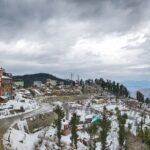

Recently reviewed across Shimla
- Discover the Colonial Trails of Shimla- Guided Walking Tour
★ 4.9 · 10 reviews - Private tour of Shimla city & Kufri
★ 5.0 · 11 reviews - Shimla: Guided Walk Tour-Heritage, Culture & Colonial Trail
★ 4.7 · 28 reviews - Guided Heritage Walk Tour in Shimla
★ 5.0 · 40 reviews
Himachal Hill Station Tours, compared.
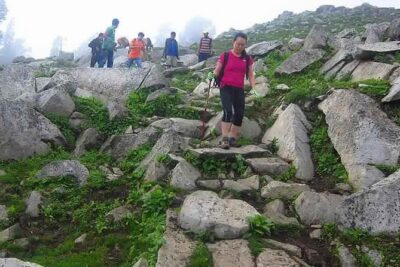 ★ 5.0Hiking Day Tour to Triund from DharamshalaFrom $3175 reviews
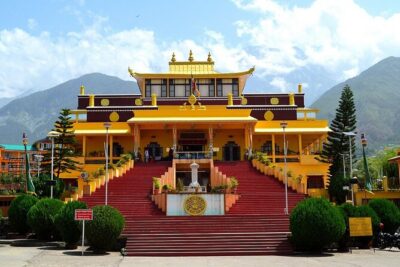 ★ 5.0Private 6 hrs Mcleodganj & Dharamshala City TourFrom $4565 reviews
 ★ 5.0Shimla Manali PackageFrom $25057 reviews
 ★ 5.0Amritsar Dalhousie Dharamshala 6 Days TourFrom $35855 reviews
 ★ 5.0Unique Shimla and Manali tourFrom $25047 reviews
 ★ 5.0Guided Heritage Walk Tour in ShimlaFrom $3140 reviews
 ★ 5.0Private 7 Days Shimla Manali Hill Stations Tour From ChandigarhFrom $45030 reviews
 ★ 4.7Shimla: Guided Walk Tour-Heritage, Culture & Colonial TrailFrom $1628 reviews
Browse the lists this tour appears in