
REVIEW · TAJ MAHAL TOURS AND TICKETS
Taj Mahal Handicraft Walk: Explore True India with Artisans
Taj Mahal is gorgeous. The crafts behind it are practical.
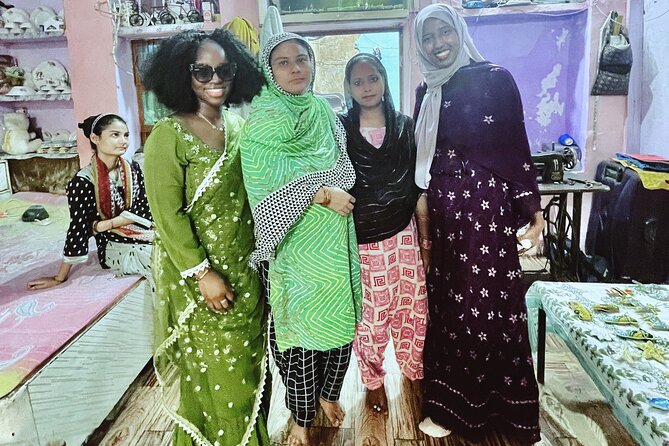
This 2-hour walk around the Taj Mahal area helps you step away from the big crowds and into working handicraft workshops and homes. You’ll learn how artisans make everything from zardozi gold embroidery to marble inlay, and you’ll also see everyday life in Agra in 17th-century lanes.
What I like most is the focus on real processes, not just souvenir talk. You also get smart options for timing and pickup, including private car or tuk tuk, so you can fit it after a Taj Mahal visit without wrestling with logistics. One thing to consider is that it depends on good weather, so plan for heat or rain and be ready to reschedule if conditions are rough.
In This Review
- Key Highlights You Should Care About
- Why This Taj Mahal Handicraft Walk Works So Well After the Main Monument
- Getting There: Orchid Retreat Start Point and Pickup Choices
- What’s Included (and What’s Not) so You Can Budget Cleanly
- Zardozi Gold Embroidery Workshop Near the Taj Area
- Marble Inlay (Pietra Dura) and the Taj Mahal Connection
- 17th-Century Lanes: Fresh Flower Garlands and Body Jewelry
- Marble Prachinkari: A Three-Generation Workshop Linked to Inlay Work
- Household Carpetmaking and How Designs Evolve
- Photos, Souvenirs, and Getting Better Value Than Store Shopping
- Group Size, Tour Style, and How It Feels During the Walk
- Is It Worth $15.88? My Practical Value Take
- Who Should Book This Agra Handicraft Walk
- Should You Book This Taj Mahal Handicraft Walk or Skip It?
- FAQ
- How long is the Taj Mahal Handicraft Walk?
- Where does the tour start?
- Is pickup available?
- Is transportation included in the price?
- What’s included in the tour?
- What crafts and places are visited during the walk?
- Are there multiple tour times?
- Do I need to bring an entry ticket to the workshops?
- What if the weather is bad?
Key Highlights You Should Care About

- Workshops tied to Taj Mahal crafts, including zardozi (gold embroidery) and marble inlay (pietra dura)
- Household visits where people make flower garlands and body jewelry, giving you a true local snapshot
- Historical craft connections, including how pietra dura was linked to the Taj era and how prachinkari connects back to inlay work
- Flexible tour times during the day, so you can coordinate with your Taj Mahal ticket and energy level
- Away-from-the-crowd walking routes that make it easier to take photos and ask questions
- Value-for-money at $15.88 per person, with the guide and artisan home entry included
Still choosing your Taj Mahal ticket? Compare these



Why This Taj Mahal Handicraft Walk Works So Well After the Main Monument
After you’ve seen the Taj Mahal, your brain starts asking a better question: how did all this detail get made? That’s where this walk delivers. You’re not just looking at beauty. You’re watching how people produce it, with tools, hands, and methods that still feel handmade.
I also like the pacing. It’s long enough to learn real craft names and see multiple techniques, but short enough to keep it enjoyable. At roughly 2 hours, it fits naturally into a day in Agra when you want one “wow” site plus a second experience that feels more human.
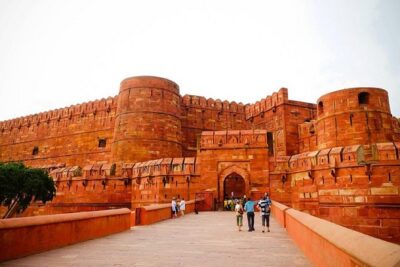
One more practical benefit: the Taj area can be chaotic. This walk is designed to help you stroll near the Taj Mahal area without the thickest tourist crush, so conversations and photos feel easier.
Getting There: Orchid Retreat Start Point and Pickup Choices
The tour starts at The Orchid Retreat, Plot No 28, Taj Nagri Phase 1, Taj East Gate Road, Shilpgram Rd, Taj Nagari Phase 1, Telipara, Agra, Uttar Pradesh 282006, India. It ends back at the meeting point, which makes the return simple.
You’ll usually have options:
- Pickup offered by private car or tuk tuk
- Or you can choose tour only if you’re already positioned nearby
The experience is also set up so you can coordinate better with your day. It runs at several tour times throughout the day, and you’ll receive confirmation at booking.
If you are planning to go after Taj Mahal, this matters. You can time your handicraft walk for a calmer moment, rather than forcing it to fit whatever time the Taj crowd is peaking.
What’s Included (and What’s Not) so You Can Budget Cleanly
For $15.88 per person, you get more than just a guide walking beside you. What’s included is:
- A tour guide
- Entry to artisans homes
What’s not included:
- Private transportation
So the value equation is simple. If you take the pickup, you’re paying for convenience. If you already have a local ride or you’ll meet on your own, you can keep costs down and still get the key benefit: access to working spaces and homes.
This also explains why the price feels low compared to many “culture” tours. The real cost is the access, the human interaction, and the time spent guiding you through crafts that usually happen behind doors.
- Agra: Taj Mahal & Mausoleum Skip-the-Line Tour with Options★ 4.9 · 456 reviews
- Private Guided Tour of Agra★ 5.0 · 420 reviews
- Taj Mahal, Agra Fort, Baby Taj & Mehtab Bagh Private City Tour★ 5.0 · 391 reviews
- Taj Mahal Skip-the-Line Guided Tour with Optional Add-ons★ 5.0 · 385 reviews
- Agra : Private Sunrise Taj Mahal & Agra City Tour★ 5.0 · 367 reviews
Zardozi Gold Embroidery Workshop Near the Taj Area
One of your first craft stops is an older zardozi workshop around the Taj Mahal area. Zardozi is gold embroidery, and it’s not the quick kind of decoration you do on a factory timeline. Here, you learn the craft’s history briefly and then focus on the details and intricacies of the workmanship.
What I think you’ll gain from this stop is pattern recognition. Once you see how embellishment is built stitch by stitch, the Taj Mahal’s decorative elements stop looking like “just decoration.” They become a design system made by people who knew how to plan, measure, and execute with precision.
Practical tip: take your time during explanations. If you ask about materials and the method used for the embroidery work, you’ll usually understand more than you expect from a short visit.
Marble Inlay (Pietra Dura) and the Taj Mahal Connection
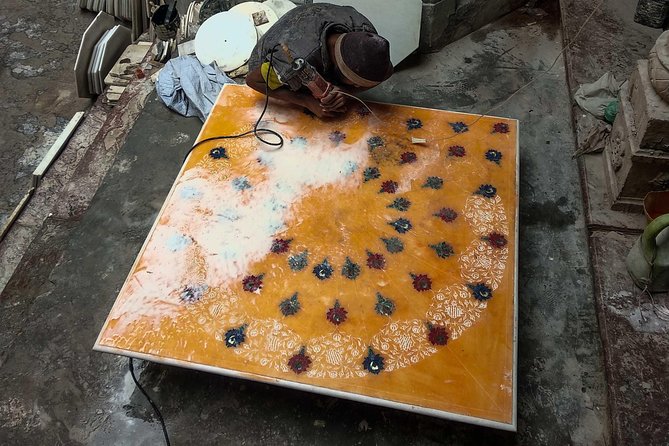
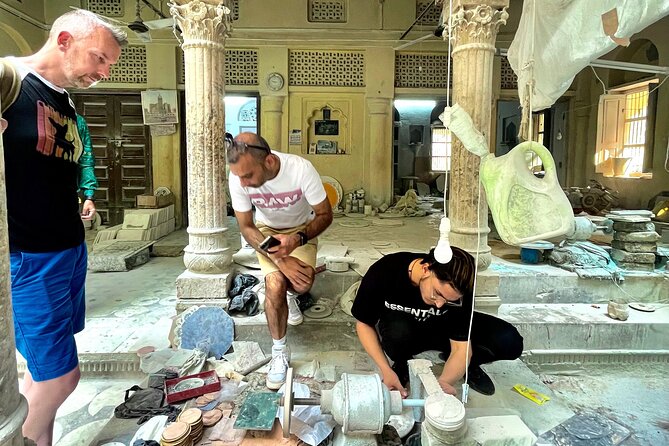
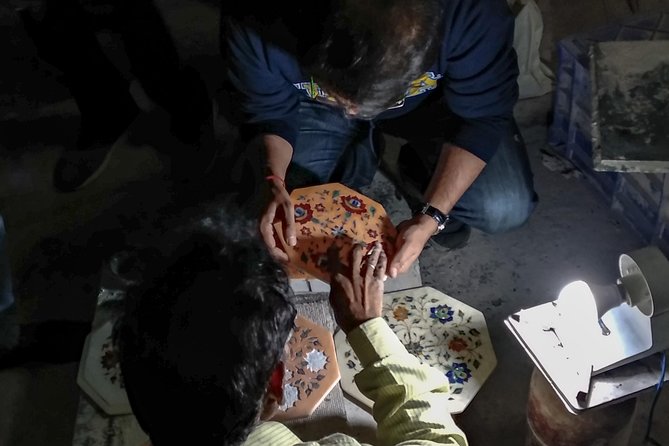
Next is a workshop for marble inlay, also called pietra dura. This is where the Taj Mahal link becomes more than a marketing line. The artisans explain how the craft started in connection with the Taj era and how it flourished over time.
Even better, the artisans here are described as descendants of artisans associated with the Taj Mahal’s creation. That’s a big deal because it puts lineage behind the skill. You’re not just learning a technique. You’re seeing how a craft line gets passed down and kept alive.
What to watch for:
- How the marble pieces fit together with careful precision
- How designs transfer from ideas to layout to final inlay work
If you’re the type who likes to understand craftsmanship rather than just collect pictures, this is the portion that will likely feel most meaningful.
17th-Century Lanes: Fresh Flower Garlands and Body Jewelry
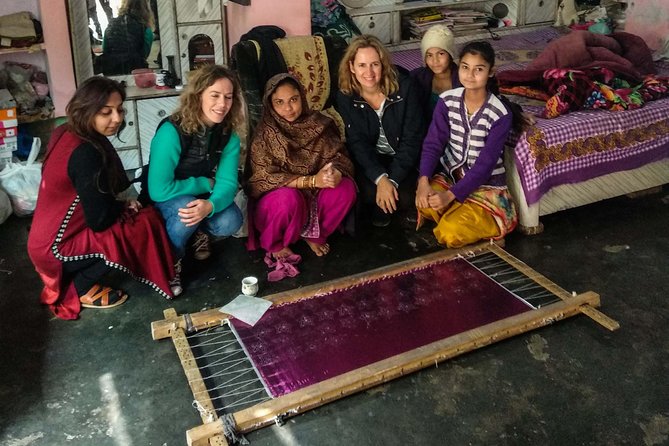
You’ll walk down older lanes near the Taj Mahal area and visit households where people make garlands and body jewelry from fresh flowers. This stop is less about “materials and tools” and more about daily life.
The explanation includes how the use of fresh flowers has changed over time and how that shift affected the industry. That gives you a reality check, because modern demand and changing customs always reshape what small workshops do.
Photo note: the sights here can be colorful, and the lighting can be variable outdoors. If you want good pictures, keep your camera ready but don’t rush the moment. Ask before taking close shots, especially in home settings.
Marble Prachinkari: A Three-Generation Workshop Linked to Inlay Work
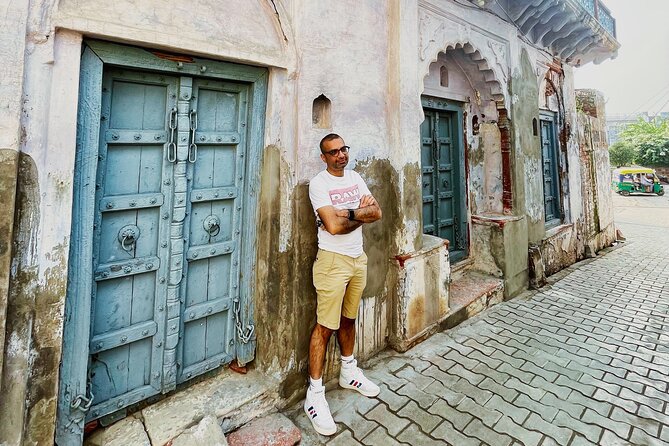
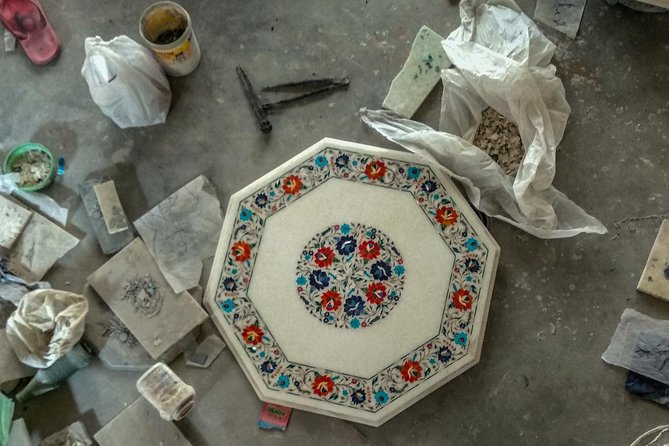
Another craft stop focuses on marble prachinkari, described as a workshop with a three-generation setup. You’ll get a brief explanation of what prachinkari is and how it connects to pietra dura.
This is one of those stops where you leave with a bigger mental map. Instead of treating each craft as separate, you start seeing relationships between techniques. You also get to experience how families keep specialized skills going when the world is moving fast.
If you’re wondering whether a short walk can teach you real craft context, this is part of the answer. Small explanations here help you understand why Agra’s decorative arts matter as a system.
Household Carpetmaking and How Designs Evolve
You’ll also get a look at carpetmaking at home. This isn’t a factory tour. It’s household art, with an explanation of how present-day designs evolved through cross-community influence.
For many visitors, carpetmaking can feel like “pattern appreciation.” This part adds the human story behind the pattern choices. You start to see design as something shaped by trade, culture mixing, and the way artisans adapt what they learn into what they produce now.
If you like shopping, this is where you’ll likely feel the most informed. You’ll understand that design changes for reasons, not random style trends.
Photos, Souvenirs, and Getting Better Value Than Store Shopping
The walk is built for two goals: learning and buying wisely. You’ll have chances to take photos, and you’ll also be in places where souvenirs make more sense because you understand how they were made.
The experience highlights that you can buy handicrafts at better prices than in typical stores. I’d treat that as a reminder to do two things:
- Ask questions about the craft and what you’re looking at
- Compare what you see in workshops, not just a single kiosk
Also, go with a clear expectation. Some items are small and easy to take home. Others are more delicate or require careful packing. If you buy, plan how you’ll transport it before you commit.
Group Size, Tour Style, and How It Feels During the Walk
This is listed as a private tour/activity, meaning only your group participates. That usually makes it easier to ask questions and get personal attention, especially in home workshops where crowd behavior can make things awkward.
Duration stays around 2 hours, and the route is designed for walking. Comfortable shoes help. Also, if you’re sensitive to heat, choose a tour time that feels realistic for your body.
There are also notes that pickup communication is clear in advance, and guides are punctual. If your guide is named Arhaan, that name has shown up with strong praise for friendly, clear communication and on-time arrival, plus the idea of a few extra explanations during the walk. Even if your guide is someone else, you can still expect the experience to be guided and structured.
Is It Worth $15.88? My Practical Value Take
At $15.88 per person for a guided, access-based craft walk, I’d call it strong value, especially compared to standard sightseeing. You get:
- A guided path through multiple crafts
- Entry to artisan homes
- Local interactions tied to specific techniques, including pietra dura and zardozi
Your main “cost” beyond the ticket is your time and walking comfort. If you already booked Taj Mahal, this works like a second layer of the same day. You’ll leave with more understanding than you’d get from another quick stop, and you’ll have a better basis for shopping.
If you hate walking or you want only monumental sights with zero interaction, you might find this less your style. But if you enjoy crafts, people, and context, this is priced to be a no-brainer.
Who Should Book This Agra Handicraft Walk
This tour is ideal for you if:
- You want to see Taj Mahal arts from the source
- You like working hands and real workshops
- You’re interested in zardozi, marble inlay, and related crafts
- You want a calmer Taj area experience without fighting the thickest crowds
It’s also a good match if you’re traveling with someone who wants to shop thoughtfully. You’ll understand what you’re buying, not just chase souvenirs.
It’s not the best fit if you want a strict museum-style experience or if you dislike walking in older lanes.
Should You Book This Taj Mahal Handicraft Walk or Skip It?
I’d book it if your Taj Mahal day feels like it needs a second act. This walk turns the Taj story into a crafts story, and it does it with access to homes and workshops instead of generic explanations. The price is low enough that you are not taking a big financial risk, and the format is compact enough that it won’t hijack your schedule.
Skip it only if:
- You cannot handle walking in local lanes
- Weather is likely to be poor on your day, and you don’t want to reschedule
- You prefer sightseeing with minimal interaction
If you’re in Agra for Taj Mahal anyway, this is one of the easiest add-ons that actually changes what the monument means to you.
FAQ
How long is the Taj Mahal Handicraft Walk?
It runs for about 2 hours.
Where does the tour start?
The start point is The Orchid Retreat, Plot No 28 Taj Nagri Phase 1, Taj East Gate Road, Shilpgram Rd, Telipara, Agra, Uttar Pradesh.
Is pickup available?
Yes. Pickup is offered by private car or tuk tuk, or you can choose tour only.
Is transportation included in the price?
No, private transportation is not included.
What’s included in the tour?
You get a tour guide and entry to artisans homes.
What crafts and places are visited during the walk?
You’ll visit a zardozi gold embroidery workshop, a marble inlay (pietra dura) workshop, households making fresh flower garlands and body jewelry, a three-generation marble prachinkari workshop, and a household carpetmaking area.
Are there multiple tour times?
Yes, there are several tour times throughout the day.
Do I need to bring an entry ticket to the workshops?
The tour includes entry to artisans homes.
What if the weather is bad?
This experience requires good weather. If it is canceled due to poor weather, you’ll be offered a different date or a full refund.
The Taj Mahal, More Reviewed Tours


Recently reviewed across Agra
- Agra : Best Evening Street Food & Local Bazar Tour in Agra.
★ 4.5 · 10 reviews - Agra City Cultural Walk
★ 5.0 · 10 reviews - Agra: Taj Mahal and Mausoleum Tour with Skip-the-Line Entry
★ 5.0 · 10 reviews - Skip-the-Line Taj Mahal VIP Entrance Tour
★ 5.0 · 11 reviews - Same Day Agra Tour By Gatimaan Express Train from delhi
★ 5.0 · 11 reviews - Taj Mahal visits with Licensed Guide with Entry Assistance
★ 5.0 · 11 reviews
Taj Mahal Tours and Tickets, compared.
 ★ 5.0Same Day Taj Mahal, Agra Fort & Baby Taj Tour from Delhi by CarFrom $624,304 reviews
 ★ 5.0Full Day Taj Mahal, Agra Fort & Baby Taj Tour from Delhi by CarFrom $623,647 reviews
 ★ 4.9Taj Mahal & Agra Private Day Trip with TransfersFrom $43,181 reviews
 ★ 5.0Taj Mahal Tour from Delhi by Express Train (Viator Award Winner)From $752,849 reviews
 ★ 4.9Same Day Taj Mahal, Fort & Baby Taj Tour from Delhi by CarFrom $502,534 reviews
 ★ 4.9Taj Mahal and Agra Fort Private Sunrise TourFrom $592,270 reviews
 ★ 5.0Sunrise Taj Mahal, Agra Fort & Baby Taj Tour from Delhi by CarFrom $622,243 reviews
 ★ 4.9Taj Mahal Sunrise, Baby Taj & Agra Fort Day TourFrom $102,020 reviews
Browse the lists this tour appears in