
REVIEW · FOOD & DRINK
Tea Tasting Session at India’s oldest tea boutique : Sancha Tea Boutique
Tea tasting in Jaipur, minus the guesswork. At Sancha Tea Boutique, I like the way the tasting leads you through Darjeeling across seasons, plus black teas from Darjeeling, Assam, and Sikkim, with masala chai built in. After the sit-down, you can browse the shop’s huge range of Indian teas to keep exploring your favorites.
The possible drawback is simple: the session runs about 1 hour, so you’ll want to arrive ready to taste, not chat for long. The shop is open from 12:00 PM to 6:00 PM, so it works best as a midday or afternoon stop.
Good news, it’s a small group, capped at 10 travelers, and you get a mobile ticket. It also ends back at the same meeting point, so you do not have to puzzle out your next move.
In This Review
- Key things to know before you go
- Entering Sancha Tea Boutique on Jaipur’s MI Road
- How the 1-hour tea tasting actually plays out
- Darjeeling across spring, summer, and autumn, same bush, different cup
- Black tea from Darjeeling, Assam, and Sikkim
- Masala chai and how spices change the tea experience
- The learning piece: history of Indian tea
- Browsing 100+ Indian teas, with your brain already warmed up
- Price and value: what $10.67 buys you in real terms
- Meeting point, timing, and how to choose the right slot
- Who this Jaipur tea tasting is perfect for
- When you might skip it
- Should you book Sancha Tea Boutique in Jaipur?
- FAQ
- Where is Sancha Tea Boutique located in Jaipur?
- How long is the tea tasting session?
- What teas are included in the tasting?
- Are you able to browse the tea shop during or after the tasting?
- Is this a small group experience?
- What are the opening hours for the shop?
- What is the cancellation policy?
Key things to know before you go
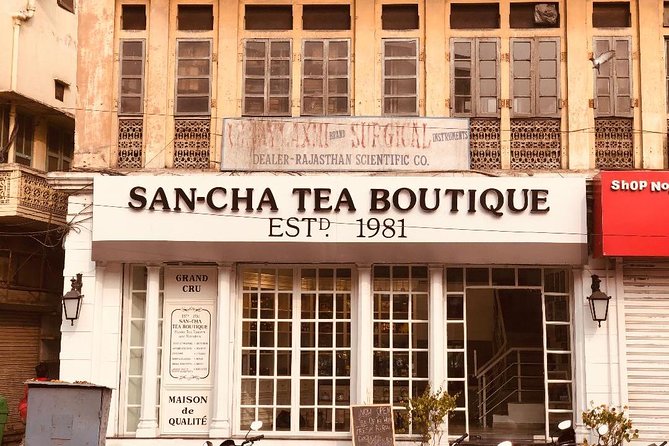
- India’s oldest tea shop chain experience at Sancha Tea Boutique on MI Road
- Darjeeling tea in three seasons (spring/first flush, summer, autumn) tied to terroir
- Black tea from Darjeeling, Assam, and Sikkim, plus masala chai
- History of Indian tea in a format that stays practical and easy to follow
- Small group size (max 10) for more personal attention during tastings
- Browse time after tasting at a store with 100+ types of Indian tea
Shortlisting? Every Jaipur trip below went through the same review.



Entering Sancha Tea Boutique on Jaipur’s MI Road
Jaipur is full of sensory stuff. This is one of the rarer stops where the “show” is in your cup.
Sancha Tea Boutique is on MI Road, near Lassiwala, with the address listed around Mirza Ismail Rd, Panch Batti, and Jayanti Market. It is a straightforward drop-in, and the location is described as near public transportation. If you are already spending time in central Jaipur, this fits nicely as a quiet reset.
What I like right away is the concept of a tea boutique that behaves like a tasting room, not a sales counter with samples. The session is designed to teach you what you are tasting and why it changes, then let you shop with clarity.
How the 1-hour tea tasting actually plays out
This is a 1-hour experience, booked for a chosen day and time. You start at Sancha Tea Boutique and the activity ends back at the meeting point. It is offered as a small group tasting with a maximum of 10 travelers, which matters, because you tend to get more back-and-forth instead of hearing tea facts through a crowd.
The structure is clear: you taste, you learn, then you taste again. You also get time after the guided part to browse the shop’s inventory.
The tea lineup is built around three “layers,” and you’ll feel the logic as the tasting moves:
- Start with black teas from famous Indian tea regions
- Then focus on Darjeeling across different seasons
- Finish with masala chai and take that knowledge into the store
If you have ever been overwhelmed by tea shelves, this is the opposite of that. The tasting gives you a mental framework, so shopping afterward feels like matching flavors instead of guessing.
Darjeeling across spring, summer, and autumn, same bush, different cup
The star of this session is the Darjeeling tea taught through three seasons. You taste Darjeeling spring (the listing calls out first flush), summer, and autumn. The key lesson is that you are not just sampling different teas by name, you are seeing how the same tea bush can produce noticeably different flavors across the year.
The way the session explains it is tied to terroir in Darjeeling. In plain terms, terroir is the combination of where the tea grows and how the season shapes what happens in the plant and the leaf. Different growth conditions influence character, aroma, and the way the tea feels on your tongue.
Here is why this part is so useful for you as a buyer: after tasting season-to-season, you can ask for the type that matches your mood. Want something that feels brisk and lively? You will have a reference point. Want something that tastes rounder or heavier? You can connect it to a specific season tasting rather than a marketing word.
It also helps for friends or family who think tea is all the same. When you experience one tea origin changing by season, it clicks fast.
- Full-Day Jaipur Private Sightseeing Tour by Car with Guide★ 5.0 · 472 reviews
- Pink City Cooking Class★ 5.0 · 452 reviews
- Private Elephant Sanctuary★ 5.0 · 390 reviews
- Private Full Day Jaipur Sightseeing Tour By Tuk Tuk★ 5.0 · 382 reviews
- Private Guided Half Day Tour Jaipur★ 5.0 · 371 reviews
Black tea from Darjeeling, Assam, and Sikkim

Beyond Darjeeling, the tasting covers black tea from Darjeeling, Assam, and Sikkim. The listing says these are selected by the shop’s Master Tea Taster, which signals that the session is meant to be curated for learning, not just variety for variety’s sake.
Each region is a different tea story. Even without fancy jargon, you can expect the cup to behave differently across the regions. That difference is exactly what you want in a tasting, because it teaches you to notice more than just “strong versus weak.”
Also, black tea is the base for much of what you will see in India. Learning it first gives you a stepping stone. If later you feel curious about green, white, or oolong, you are not starting from zero.
This is one of the most praised parts of the experience for a reason: you leave with a clearer sense of how Indian tea regions show up in flavor, not just geography.
Masala chai and how spices change the tea experience
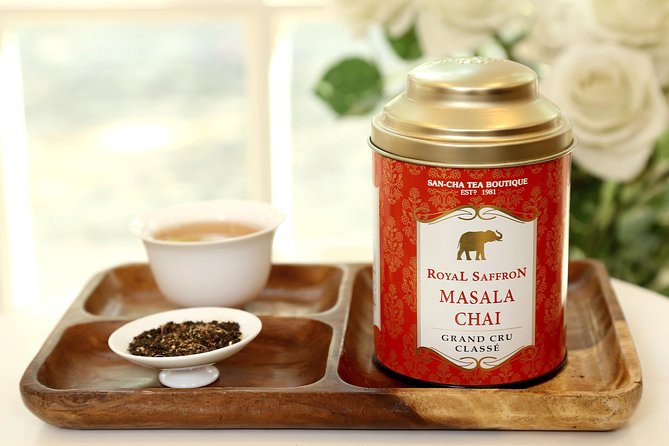
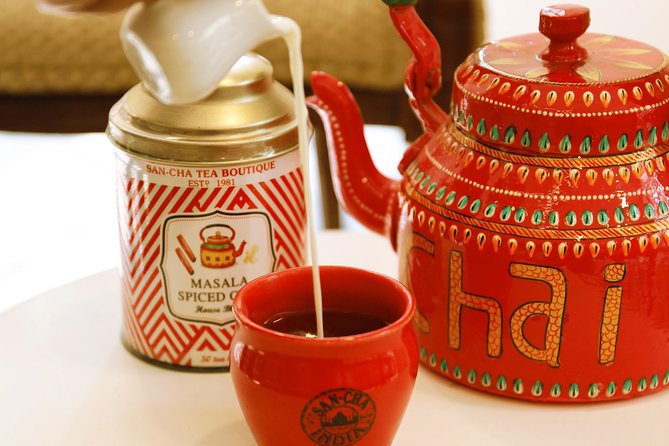
Masala chai is included as part of the tasting, which is smart. Chai can be polarizing if you only ever encounter it as something sweet, syrupy, and uniform. Here, it sits in a guided session where you can compare it to the black teas you just tasted.
Why that matters: masala chai is often treated like a separate drink category. In reality, it is black tea plus spices plus method. When you taste it after learning the black tea base, you can separate what comes from tea and what comes from spices.
You also pick up a cultural context. The experience includes the history of Indian tea, so masala chai does not feel like a random dessert-like stop. It becomes part of the larger story of how tea became a daily drink in India.
If you are traveling with kids, this is usually the moment that makes the experience feel fun rather than overly academic. And if you are not a tea person, masala chai can be your gateway cup.
The learning piece: history of Indian tea
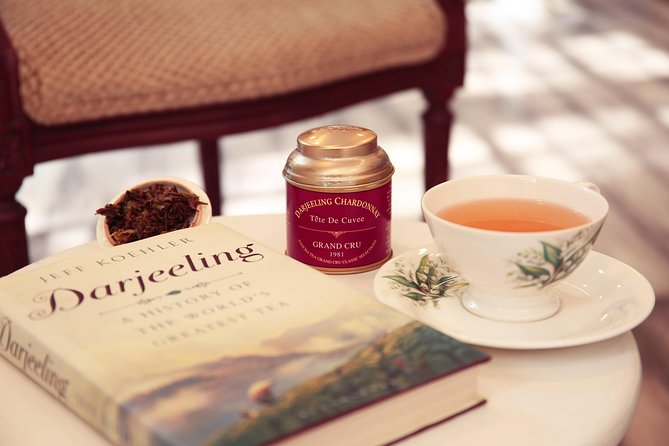
The listing includes the history of Indian tea as a segment of the session. This matters because most tea tastings stop at flavor notes. Here, you get a sense of how tea culture developed and why the regions matter.
I appreciate this approach because it avoids two extremes. It does not talk only about abstract “tea appreciation,” and it does not turn into a dry lecture either. You get enough context to understand what you are tasting, and then you can make choices in the shop afterward without feeling lost.
The best part for practical travelers is that you are not expected to memorize facts. The session helps you build a simple mental map: region, season, and style.
Browsing 100+ Indian teas, with your brain already warmed up
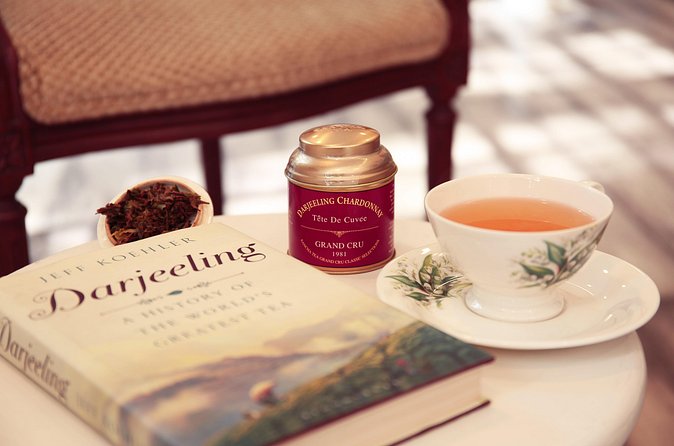
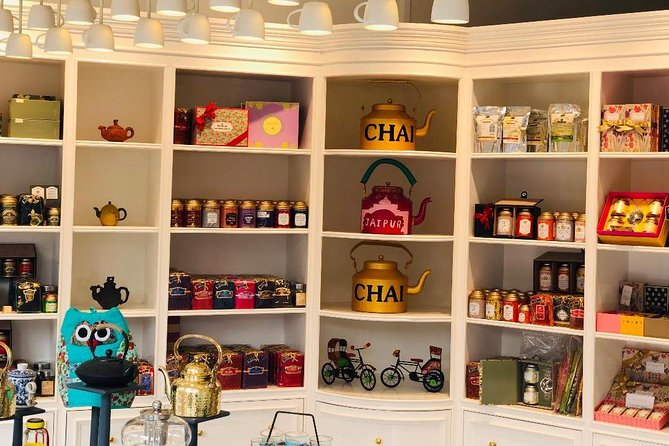
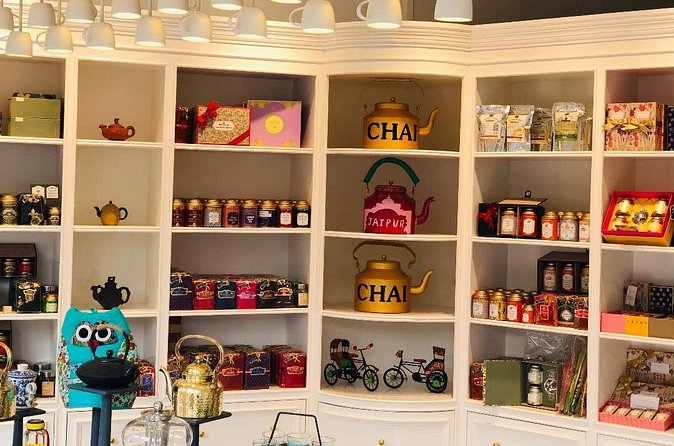
After the tasting, you can browse the shop’s selection of 100+ types of Indian tea, including black, green, white, and oolong. This is where the value gets real, because it turns your tasting from a one-time event into a shopping trip you can actually use.
Here is how I’d approach the browsing time if you want to get the best results:
- Start with what you liked most in the tasting, then ask for close matches
- If you liked the season-based Darjeeling lesson, look for other Darjeeling offerings and compare their seasonal style
- If masala chai was your favorite, focus on black teas that might work well in spiced brews
You can also take advantage of the fact that you tasted first. When someone shows you a tea that sounds similar, you will be able to notice differences faster. That makes the store feel less like a maze and more like a set of informed options.
One more nice touch from the experience: some visitors note that there may be a small gift at the end. Even if that varies, it fits the boutique vibe of the place.
Price and value: what $10.67 buys you in real terms
The price listed is $10.67 per person, with an experience duration of about 1 hour. That is not a huge budget, especially for a guided tasting with multiple teas, plus masala chai and learning time.
The value comes from two things:
1) You get a guided comparison between regions and Darjeeling seasons, which saves you trial-and-error later.
2) The tasting tees you up to shop from a large catalog. If you buy even one or two tins you actually enjoy, the cost can feel small.
Also, because it is a small group capped at 10, you are more likely to get attention and enough time to ask questions. For a short experience, that’s a big deal.
If you are on a tight schedule in Jaipur, the one-hour length is a practical advantage. You can fit it between busier activities without wrecking your day.
Meeting point, timing, and how to choose the right slot
You meet at SANCHA Tea Boutique, MI Road, near Lassiwala, listed around Mirza Ismail Rd and Panch Batti area. The shop’s opening hours are listed as 12:00 PM to 6:00 PM. So, your best play is booking a slot that keeps you from rushing.
The experience uses a mobile ticket, and confirmation is provided at the time of booking. The listing also notes that it is typically booked about 6 days in advance on average, so if you are visiting during a busy period, plan ahead.
A small practical note: because the tasting is about an hour, arrive with enough time to settle in. You do not want to feel like you are starting late and missing the early cups.
Who this Jaipur tea tasting is perfect for
This is one of those experiences that works across ages and preferences, as long as you are open to tasting and comparing.
It is a good fit if you:
- Like learning through hands-on sampling
- Want a calmer indoor activity in Jaipur’s daily pace
- Enjoy tea culture and want a focused introduction
- Travel with kids, because masala chai helps the experience feel approachable
It is also a solid pick if you are the type who buys gifts. If someone in your life is a tea fan, the shop’s variety and the tasting-led education make it easier to buy something that matches a taste profile.
When you might skip it
You might consider skipping if you hate structured experiences that move on a set timetable. This session is about tasting and learning in a tight window, and it does not aim to be a long casual hangout.
You might also skip if your goal is only sightseeing and you want zero shopping time. The experience includes a browse period, and the location is a boutique by design.
Finally, if you are expecting a massive, behind-the-scenes tea factory tour, this is not that. It is a boutique tasting. Think tasting room, not production line.
Should you book Sancha Tea Boutique in Jaipur?
I think this is worth booking if you want a fun break that also sharpens your ability to choose good tea. For around $10.67, you get multiple regional black teas, Darjeeling across three seasons, masala chai, and a bit of tea history, all in a small group.
If you plan to buy tea when you travel, do it after this tasting. It makes the shopping feel intentional. If you just want to taste and leave, it still works because the session is short and focused.
One last practical tip: pick a time slot that lines up with your energy level. This is best when you can pay attention to aromas and aftertaste instead of rushing to your next activity. If you do that, you’ll come away with a clearer palate and a suitcase that is a little more interesting than usual.
FAQ
Where is Sancha Tea Boutique located in Jaipur?
The tasting starts at SANCHA Tea Boutique on MI Road (Mirza Ismail Rd), near Lassiwala, in the Panch Batti and Jayanti Market area of Jaipur, Rajasthan, India.
How long is the tea tasting session?
The duration is about 1 hour.
What teas are included in the tasting?
You’ll taste black tea from Darjeeling, Assam, and Sikkim, Darjeeling tea across three seasons (spring/first flush, summer, and autumn), plus masala chai.
Are you able to browse the tea shop during or after the tasting?
Yes. After the tasting, you can browse a store with more than 100 types of Indian tea, including black, green, white, and oolong.
Is this a small group experience?
Yes. The experience has a maximum of 10 travelers.
What are the opening hours for the shop?
The listed opening hours are Monday through Sunday from 12:00 PM to 6:00 PM.
What is the cancellation policy?
You can cancel for a full refund up to 24 hours before the experience start time, with free cancellation allowed up to that point.
Recently reviewed across Jaipur
- 6-Night Royal Rajasthan: Private Tour from Jaipur, India
★ 5.0 · 10 reviews - Jaipur Nahargarh Sunset and Night Lights Tour
★ 5.0 · 10 reviews - Jaipur Full Day Heritage of Pink City Tour By Tuk Tuk With Chai
★ 5.0 · 10 reviews - Private Jaipur Sightseeing Tour by Tuk-Tuk
★ 5.0 · 10 reviews - Explore Jaipur at Night with Patrika Gate
★ 5.0 · 10 reviews - Jaipur walking tour.
★ 5.0 · 10 reviews
Food & Drink, compared.
 ★ 5.0Old Delhi Food, Heritage&Cultural Walk with Rickshaw ride to Masterji Kee HaveliFrom $52742 reviews
 ★ 4.9Street Food and Night Markets TourFrom $13719 reviews
 ★ 5.0Old Delhi Street Food TourFrom $40497 reviews
 ★ 5.0Delhi Food Walk: Rickshaw Ride, Street Eats & Market TourFrom $40401 reviews
 ★ 5.0Old Delhi Street Food Tour – Explore Spices in Chandni ChowkFrom $34334 reviews
 ★ 5.0Bengali Nights Kolkata Food Tour with 13+ TastingsFrom $39325 reviews
 ★ 5.0Old Delhi Food-Spice Market-Temples Tour Soon Featured on NETFLIXFrom $49304 reviews
 ★ 5.0Chandni Chowk Delhi Food Tour with 15+ TastingsFrom $39285 reviews
Browse the lists this tour appears in