
REVIEW · OLD DELHI AND CHANDNI CHOWK TOURS
Old Delhi Food, Heritage&Cultural Walk with Rickshaw ride to Masterji Kee Haveli
Old Delhi can feel like controlled chaos. This tour turns that energy into a guided food and culture route that makes sense fast. You start in Old Delhi with a local story-teller and walk the lanes and bazaar edges where real shopkeepers still work their trade.
I especially like the way the experience is built around food you can trust: safe street-food tastings plus breakfast, then lunch or dinner depending on the time slot. I also like the rickshaw break, because your legs will still be happy after hours of Old Delhi walking.
One thing to consider: the area is active and slightly strict on dress. If you want the smoothest visit to the haveli, plan for modest clothing and possibly taking off footwear.
In This Review
- Quick hits: what makes this Old Delhi walk work
- Why this Old Delhi food and haveli combo is such a smart mix
- Meeting in Old Delhi: where the day begins (and why it matters)
- Stop 1: Old Delhi lanes, bazaar life, and the haveli meal at Masterji Kee Haveli
- Stop 2: Khari Baoli spice market, and why it hits your senses fast
- Rickshaw rides: saving your legs without losing the street view
- Food and timing: snacks, breakfast, and lunch or dinner
- Shopping in the bazaar: what you can buy, and how to keep it sane
- Price and value: is $52.73 actually fair for this route?
- Who this Old Delhi walk suits best
- Practical tips before you go, so the day feels smooth
- Should you book this Old Delhi Food, Heritage & Cultural Walk with Rickshaw ride to Masterji Kee Haveli?
- FAQ
- How long is the Old Delhi Food, Heritage & Cultural Walk with Rickshaw ride to Masterji Kee Haveli?
- What food is included on the tour?
- Is the tour a small group?
- Does the tour include rickshaw rides?
- Where do I meet and where does the tour end?
- Is hotel pickup included?
- What should I wear for Old Delhi and the haveli visit?
Quick hits: what makes this Old Delhi walk work
- Small group size (max 8) means you get personal attention instead of trailing behind a crowd
- Masterji Kee Haveli visit gives you a look at a private mansion where a single family has lived for generations
- Khari Baoli spice market is a 17th-century wholesale maze for spices, nuts, herbs, rice, and tea
- Cycle or electric rickshaw rides save your feet during heavy lane-walking
- Food plan includes snacks plus breakfast plus lunch or dinner so you are not hunting meals in the middle of the day
Deeper into Old Delhi and the Chowk
Why this Old Delhi food and haveli combo is such a smart mix
This isn’t a generic sightseeing loop. It is a food-led heritage walk designed to connect the dots between Delhi’s religions, trade, and everyday street life.
You get a guided route through Old Delhi lanes and markets, plus a stop at a spice market that is practically made for smelling everything. Then you switch gears for something quieter and more human: a visit to Masterji Kee Haveli, an older private mansion still lived in by one family. That contrast is a big part of why the experience feels memorable.
The other quiet win is pacing. You are walking, but you also get rickshaw time to rest. That matters because Old Delhi is not about standing still at a viewpoint. It is about moving through dense streets where you will notice details up close, from shop signs to how vendors explain their goods.
Meeting in Old Delhi: where the day begins (and why it matters)
You meet at Ajmere Gate Road, Bazar Sirkiwalan, Chawri Bazar, Old Delhi. The tour ends at Hamdard Building on Asaf Ali Road, near Chandni Chowk. You may get a coordinated drop back near the start point, or the team may help coordinate your return to your car if you are using your own transport or Uber.
This is not a door-to-door hotel pickup tour, so you will want to plan how you reach Ajmeri Gate. The tour suggests using the Yellow Line Metro (then walking or short taxi distance from the metro to the meeting point) or using Uber. For first-time Delhi visitors, that simple approach is usually less stressful than trying to drive into the lanes and then doing a last-minute scramble.
If you are coming by car, they ask that your driver contact the tour leader. That one step can save you from the classic Delhi scenario of arriving in the wrong lane and waiting while everyone is trying to figure out where everyone is.
Stop 1: Old Delhi lanes, bazaar life, and the haveli meal at Masterji Kee Haveli
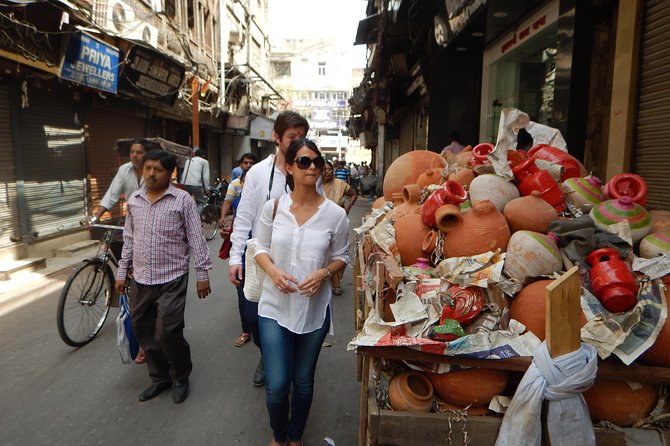
The first major block is an Old Delhi cultural walk run by locals living in the area. This part is about watching the city at work, not just collecting photos. You walk through bazaar areas, you interact with business owners, and you get an explanation of how shop life has continued across generations. That is where the history starts to feel real, because you see people doing the same kind of trading day after day.
A key feature here is the haveli visit. Masterji Kee Haveli is described as an old private mansion in the old city where a single family has lived for generations. You are not just looking from outside. You experience the space in a more intimate way, and the tour includes a traditional home-cooked complimentary meal.
Food in a lived-in home changes your whole understanding of what you are eating. In the bazaar, street food is about speed and flavor. In the haveli, the meal can feel more grounded in routine and family cooking. That is why the home setting is one of the most praised parts of the experience.
From the reviews, I keep noticing the same theme tied to guides and dining. People singled out guides like Varun and Vivian for expert navigation and storytelling, and they also mentioned private, gracious dinner service tied to the haveli experience. The takeaway for you is simple: if you want Old Delhi in a personal, human way, this is the moment that delivers.
Practical consideration: Old Delhi is more conservative, and you may need to follow house rules. The tour suggests modest dress, and you might have to take off footwear for the home visit, though it depends on the host’s rules for that area.
- Old & New Delhi City Tour – Half or Full Day Options Available★ 5.0 · 4,811 reviews
- Taj Mahal Tour from Delhi by Express Train (Viator Award Winner)★ 5.0 · 2,849 reviews
- Same Day Taj Mahal, Fort & Baby Taj Tour from Delhi by Car★ 4.9 · 2,534 reviews
- From Delhi: Taj Mahal and Agra Fort Private Sunrise Tour★ 4.9 · 2,270 reviews
- Sunrise Taj Mahal, Agra Fort & Baby Taj Tour from Delhi by Car★ 5.0 · 2,243 reviews
Stop 2: Khari Baoli spice market, and why it hits your senses fast
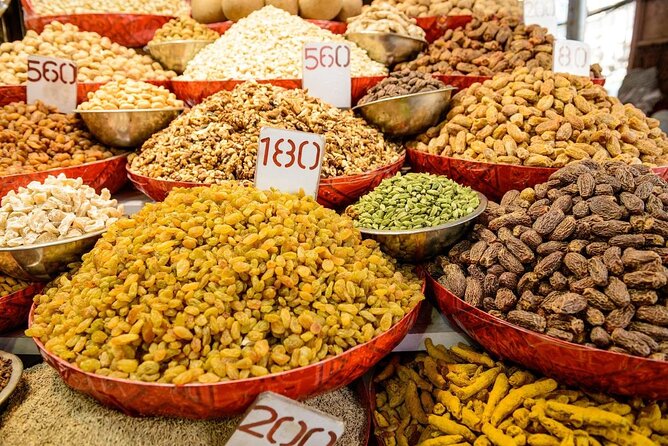
After the haveli portion and walking, you head to Khari Baoli, the spice market stop. This is described as Asia’s largest wholesale spice market, and it has been operating since the 17th century. The market is located at the western end of Old Delhi.
What you do here is not just “see spices.” You walk a street market where the goods are stacked and sold at wholesale scale. That means you can notice how spices and dried ingredients are displayed like raw materials of daily cooking, not just packaged tourist souvenirs.
Khari Baoli is also about your senses taking the lead. Expect strong smells, lots of texture, and a scene built for trading. You will see spices, nuts, herbs, and food products like rice and tea being sold. The tour includes admission ticket free for this stop, and the whole thing runs about 30 minutes.
The drawback risk here is also obvious: it can be overwhelming if you are sensitive to crowds or strong smells. If you know you get overstimulated in markets, wear a cap for sun protection and take short breaks when your guide gives you a moment. With the small group size, you are less likely to feel trapped in the flow.
Rickshaw rides: saving your legs without losing the street view
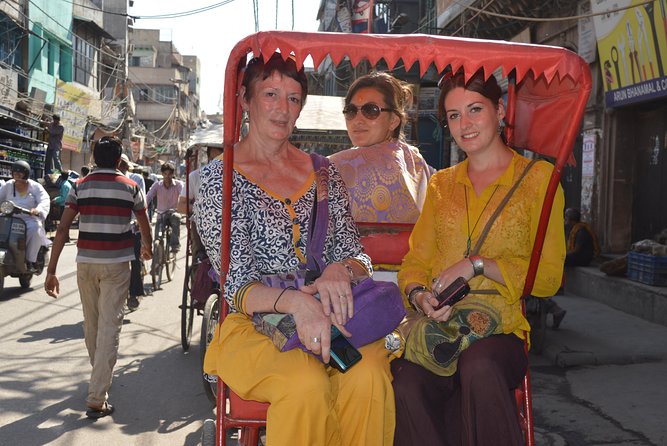
Old Delhi walking is not a casual stroll. You will cover lanes and bazaar paths that are compact and uneven. That is exactly why the tour includes cycle or electric rickshaw rides.
The rickshaw part is a genuine value add, not just a fun photo stop. It lets you rest while still staying close to the street scenes you came for. You can keep moving through the neighborhood without doing the full “walk until you cannot move” routine.
The reviews also mentioned multiple vehicle experiences like rickshaw and tuk-tuk style rides, which fits what the tour description promises with cycle or electric rickshaws. For you, that means if you have limited mobility or you are traveling with kids, this tour can be more doable than a long walking-only food tour.
Food and timing: snacks, breakfast, and lunch or dinner
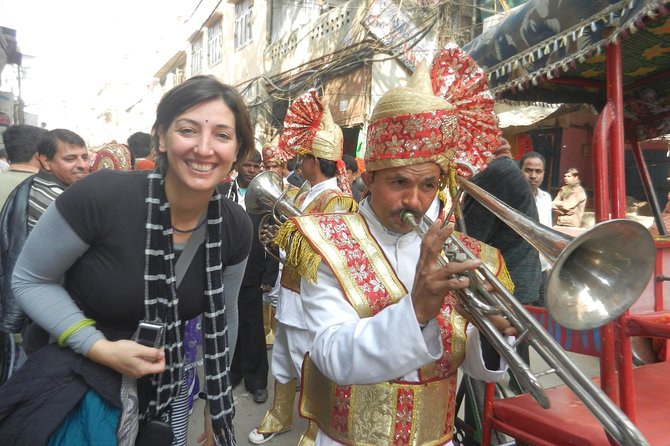
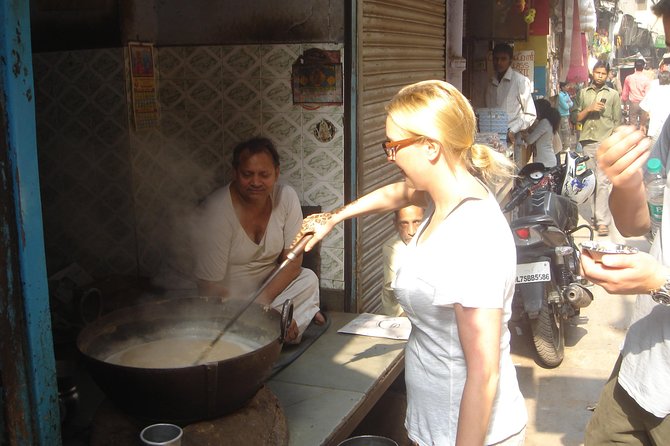
Food is not random here. The tour includes snacks, plus breakfast, and then either lunch or dinner depending on when your tour starts. You also get safe street food tasting, bottled water, and a coffee or tea option.
There is also a seasonal drink detail: during summer, they mention fresh lemon juice (as lemonade). This matters because Old Delhi sun can feel like it is doing overtime.
Here is how you should think about the tasting pace: do not force it. The tour feeds you across the route, so treat each street-food stop like a sampling station, not a full meal. If you try to eat everything at every stop, you will feel stuffed before you reach the spice market.
The most meaningful value is variety. You are getting street food flavors, plus a more formal home-cooked meal in the haveli. That mix is usually what separates a good food tour from a forgettable one: it shows you different food cultures within the same neighborhood.
Shopping in the bazaar: what you can buy, and how to keep it sane
This tour includes time for shopping for Indian souvenirs in the bazaar area. You will be walking alongside active shops, so you will naturally see jewelry, small goods, and spice-related products.
A smart way to shop here is to treat the guide as your filter. With a local, you can ask what is actually common in the area, what is a reasonable purchase, and what you might want to skip if it looks like a mass-produced tourist item. The route also includes jewelry area time mentioned in reviews, which suggests you get some variety beyond spices.
Keep expectations realistic. Old Delhi shopping is not like a mall. It is negotiations, crowd flow, and lots of options. The small group size helps, because you are not racing against dozens of people at once.
Price and value: is $52.73 actually fair for this route?
The price is $52.73 per person, and it is described as lasting about 4 hours. You typically book around 21 days in advance on average, and the tour is capped at 8 travelers.
At first glance, you might wonder if that is high for a walking and food experience. The value comes from the combination:
- You are paying for a local friend and story-teller plus guiding through tight lanes
- You get multiple food elements (snacks, safe street tastings, breakfast, and lunch or dinner)
- You get transport help (cycle or electric rickshaw rides) so you spend less energy and time
- You also get a specific heritage access: the Masterji Kee Haveli visit plus the complimentary home-cooked meal
- Khari Baoli is included as a spice market stop, described as ticket-free
In other words, you are not just paying to walk around. You are paying for curated access and for feeding you in a structured way. If you are the type of traveler who hates wasting time finding meals and then guessing what’s safe to eat, this structure is exactly what you want.
Who this Old Delhi walk suits best
This tour fits you if you want Old Delhi through food and daily life, not through a checklist of monuments. It is also a strong choice if you appreciate guides who can explain what you are seeing as you go.
From the reviews, it clearly works for families too. One family mentioned kids around 9 and 10 enjoying the street food tastings and learning about Hindu, Muslim, and Sikh cultures and the history behind Old Delhi. If you travel with kids, the rickshaw breaks and the meal planning are the practical benefits.
It may be less ideal if you want a completely relaxed day with minimal crowd contact. Old Delhi is active. You should also consider modest dress needs before booking if you are sensitive to dress rules or house visit requirements.
Practical tips before you go, so the day feels smooth
A few things will help you get more out of the experience:
- Dress modestly, and for ladies, bring a scarf if possible (shoulders covered, legs covered at least to the knee)
- Bring a cap for sun protection
- Be ready to remove footwear if the host requires it
- If someone tries to claim a government office or says areas are closed due to demonstrations, follow the guide’s direction and do not get pulled into side stories. The tour warns that there are imposters and only one official government tourist office at Janpath Road
- Use Metro Yellow Line or Uber to reach Ajmeri Gate side, since the meeting point is central but not “front door easy”
Also note the tour says they do not want tipping. That is a cultural detail that matters. If you want to honor their request, just skip tips even if you feel like you should.
Should you book this Old Delhi Food, Heritage & Cultural Walk with Rickshaw ride to Masterji Kee Haveli?
I think you should book if you want Old Delhi food plus a real heritage stop, and you like your guide to explain what you are eating and seeing as you move. The haveli component at Masterji Kee Haveli is the standout value piece, and the rickshaw breaks make the 4-hour format feel realistic.
You might skip it if you want a purely high-speed highlights tour, or if you prefer less sensory intensity in markets like Khari Baoli. Also, if modest dress or house-entry rules are a dealbreaker, plan ahead.
If you are choosing only one Old Delhi experience and you care about both tastes and stories, this is the one that most directly balances culture, food, and access.
FAQ
How long is the Old Delhi Food, Heritage & Cultural Walk with Rickshaw ride to Masterji Kee Haveli?
It runs about 4 hours (approx.).
What food is included on the tour?
The tour includes snacks, breakfast, and either lunch or dinner depending on your tour timing. It also includes safe street food tastings.
Is the tour a small group?
Yes. It has a maximum of 8 travelers.
Does the tour include rickshaw rides?
Yes. You get cycle or electric rickshaw rides to give your feet a rest.
Where do I meet and where does the tour end?
You start at Ajmere Gate Rd, Bazar Sirkiwalan, Chawri Bazar, Old Delhi. The tour ends at Hamdard Building, Asaf Ali Rd, Kalyanpura, Chandni Chowk. The team may coordinate drop-off options depending on your plans.
Is hotel pickup included?
No. Hotel pickup and drop-off can be organized for an additional cost, paid directly.
What should I wear for Old Delhi and the haveli visit?
The tour recommends modest clothing, with shoulders and legs covered for women, and carrying a scarf if possible. It also suggests bringing a cap for sun protection. You might need to remove footwear for the house visit, so check with your host or guide.
Still in Old Delhi? Keep Going





Recently reviewed across New Delhi
- Golden Triangle – Delhi Agra and Jaipur
★ 5.0 · 10 reviews - Taj Mahal & Agra Tour by Indian Bullet Train All Inclusive
★ 4.5 · 10 reviews - Private Tour in Mehrauli Archaeological Park & Qutub Minar
★ 5.0 · 10 reviews - Old & New Delhi Tour
★ 5.0 · 10 reviews - From Delhi : Taj Mahal & Agra Fort Tour by Luxury Express Train
★ 5.0 · 10 reviews - Delhi Shopping Tour: Top Bazaars, Crafts & Souvenir Finds
★ 5.0 · 10 reviews
Old Delhi and Chandni Chowk Tours, compared.
 ★ 5.0Old & New Delhi City Tour – Half or Full Day Options AvailableFrom $384,811 reviews
 ★ 5.0Old & New Delhi City Tour – Choose Half or Full Day ExperienceFrom $384,513 reviews
 ★ 5.0Old & New Delhi Private Tour – Half or Full Day (Rated Excellent)From $202,226 reviews
 ★ 5.0Old & New Delhi Full or Half Day Sightseeing TourFrom $241,900 reviews
 ★ 5.0Old and New Delhi Guided Full or Half-Day TourFrom $20976 reviews
 ★ 5.0Old & New Delhi Private City Tour – Traveler’s Choice (Top Rated)From $13746 reviews
 ★ 5.0Full-Day Private Old and New Delhi Combo TourFrom $20625 reviews
 ★ 5.0Old Delhi Bike TourFrom $30616 reviews
Browse the lists this tour appears in