
REVIEW · GOLDEN TRIANGLE TOURS
10 Day Private Luxury Golden Triangle with Khajuraho and Varanasi
Five cities, one smooth plan.
This 10-day private luxury circuit is a great way to see major UNESCO stops with local guides and still keep a comfortable pace, not a sprint. I especially like the way it mixes Delhi and Jaipur big-ticket landmarks with Taj Mahal at sunrise and then carries you on to Khajuraho and Varanasi. One thing to plan for up front: monument entrance tickets are not included, so you will want to budget for those.
Because it is private, you travel with a dedicated driver in a private, air-conditioned vehicle and you get pick-up and drop-off. You also get small but real comforts along the way, like bottled mineral water during journeys and a battery bus ride to and from the Taj Mahal parking area up to the monument.
One more practical note: hotel rooms are generally twin-sharing, and if you are traveling as a group of three, triple-sharing is the default unless you pay an additional charge to switch to two rooms.
In This Review
- Quick, useful highlights before you go
- How the route works: Delhi, Jaipur, Agra, Khajuraho, Varanasi
- Delhi days 1-2: Bangla Sahib, Qutub Minar, Jama Masjid, and Old Delhi markets
- Jaipur and the Amer-to-temple arc: palaces, Jantar Mantar, and Hawa Mahal views
- Stepwells, Fatehpur Sikri, and the drive into Agra
- Taj Mahal sunrise and Agra Fort: early start, big payoff
- Khajuraho temples after the 7-hour transfer: Chandela stonework
- Varanasi along the Ganges: Kashi Vishwanath, Sarnath, and Ganga Aarti
- Budget, comfort, and what is actually included
- Should you book this 10-day private Golden Triangle with Khajuraho and Varanasi?
- FAQ
- How long is the 10 Day Private Luxury Golden Triangle with Khajuraho and Varanasi?
- Where does the tour start and where does it end?
- Is this a private tour?
- What transportation do we use during the tour?
- What is included in the price?
- Are monument entrance tickets included?
- Are meals included besides breakfast?
- Does the tour include a guide for the sightseeing?
- How are hotel rooms assigned?
- Is free cancellation available?
Quick, useful highlights before you go
- Private AC driver and local guides each city: You spend less time figuring things out, more time walking through the sites.
- Taj Mahal sunrise timing plus guided interior time: You get the early start built in, and a guide for context inside the monument.
- Khajuraho temple focus: You get dedicated time for Chandela temples like Lakshmana and Kandariya Mahadev.
- Varanasi rituals included with good viewing: Ganga Aarti is on the schedule with best view from your seat.
- Battery bus access at the Taj Mahal: Built-in help for the parking-to-monument stretch.
- Daily breakfast included: Makes long sightseeing days easier to manage without hunting for breakfast.
Golden Triangle itineraries, three to eight days
How the route works: Delhi, Jaipur, Agra, Khajuraho, Varanasi
This is a classic North India route, but the big twist is that it does not stop at the Golden Triangle. You also add Khajuraho for temple architecture and Varanasi for riverfront spiritual life, which turns your trip into a true contrast of styles and eras.
The flow makes sense. You start in Delhi, move into Jaipur, then head to Agra for the Taj Mahal and Mughal-era highlights. After that, you travel onward to Khajuraho and finally to Varanasi, where the schedule shifts from grand monuments to temples and the Ganges River experience.
In real life, this kind of route is all about timing and fatigue management. A private vehicle helps a lot, especially on the longer transitions like Khajuraho to Varanasi, where the drive is about 400 km and takes around 7 hours. The tour also builds in hotel check-ins on arrival days, so you are not just bouncing around endlessly on a bus.
Delhi days 1-2: Bangla Sahib, Qutub Minar, Jama Masjid, and Old Delhi markets
Delhi is split into two full highlight days, and you feel it immediately. Day 1 leans spiritual and historic, then Day 2 leans UNESCO and Mughal Delhi, with a stroll through Old Delhi’s shopping streets.
Start with Gurudwara Bangla Sahib. Even if you are not deeply religious, the story connected to the tank and the 17th-century Sikh Guru visit gives you a meaningful frame for what you are seeing. It also has that calm, welcoming feel you want when a trip starts.
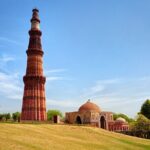
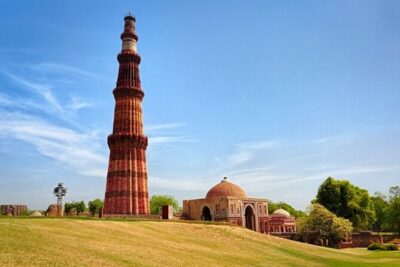
Next comes Qutub Minar, a UNESCO World Heritage site and a major landmark on the Delhi skyline. The tour notes its 73-metre height and its construction in 1193 under Qutub-ud-din Aibak. Then you pivot to the Lotus Temple, famous for its flower-like shape and built in 1986, with the important detail that it is open to everyone regardless of religion.
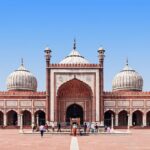
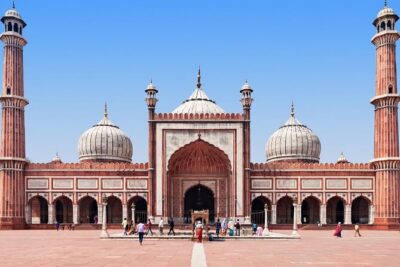
From there, you hit landmarks that are easy to miss when you only see photos. India Gate is a war memorial and also a familiar picnic spot, so it is part of daily city life. Parliament House adds another layer with its design referencing the Ashoka Chakra theme. Jama Masjid (built 1650 to 1656 under Shah Jahan) is the kind of place where scale hits you as much as history does.
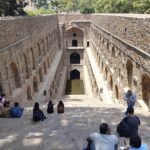
You also get a bonus mix of “small but memorable” stops. Agrasen Ki Baoli is a protected stepwell site, and Humayun’s Tomb is a Mughal landmark commissioned in 1558 by Empress Bega Begum. Day 1 ends in Chandni Chowk, where spices, dried fruit, silver jewelry, and narrow lanes make Old Delhi feel real fast. If you like sensory travel, this is a strong finish.
Jaipur and the Amer-to-temple arc: palaces, Jantar Mantar, and Hawa Mahal views
Jaipur is where the trip really leans into Rajasthan style, from palace power to astronomy, and then into everyday temple and market mood.
You begin with a quick city introduction on Day 3 with Monkey Temple (Galtaji) and Birla Mandir. Galtaji is known for its complex layout and sacred pools, and it is also called the Abode of Monkeys, so expect lively energy around the site. Birla Mandir stands out for its white marble latticework and its dedication to Vishnu, which makes it a good palate cleanser between big palace stops.
The following day’s plan is designed to feel like a highlight loop. You start at Amber Palace, with a two-hour tour of palaces, squares, and monuments. Then you get Jal Mahal, the water palace in Man Sagar Lake. Even though the palace itself may not be the main thing you stare at for a long time, the setting is the point, especially when you understand it as Rajput culture tied to water.
After that comes Jantar Mantar, a UNESCO World Heritage site built in 1734 by Sawai Jai Singh II. It is all about architectural astronomy instruments, and you will want to slow down a bit here, because the value is in the explanations from your local guide. Then you move into City Palace, which functioned as the administrative and ceremonial center of Jaipur, originally constructed in 1721.
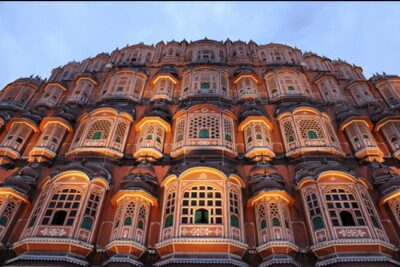
Finally, you get the face of Jaipur in architecture form. Hawa Mahal is five storeys, a pyramidal shape made with red and pink sandstone, and the look is instantly recognizable. The day ends with Albert Hall Museum, described as Rajasthan’s oldest museum, which is perfect if you want a bit of cultural context after all the outdoor monuments.
Practical note: these sites stack up quickly, so you will appreciate having a private guide and schedule rather than trying to string them together yourself.
More time on the Varanasi ghats
- Delhi Agra Jaipur & Varanasi Tour – Taj Mahal & Ganga Aarti★ 5.0 · 50 reviews
- 7-Day Golden Triangle & Varanasi Tour from Delhi with Guide★ 5.0 · 38 reviews
- 9 – Days Private Golden Triangle Tour with Khajuraho & Varanasi★ 5.0 · 22 reviews
- 6-Day Private Tour of Delhi, Agra, Jaipur, and Varanasi from Delhi★ 5.0 · 19 reviews
- 8-Day Private Luxury Golden Triangle With Spiritual Varanasi Tour★ 5.0 · 17 reviews
Stepwells, Fatehpur Sikri, and the drive into Agra
Day 5 is a “between-cities with meaning” day, and it works because it includes two very different kinds of historical spaces.
First, Chand Baori. This stepwell extends about 30 metres into the ground, and the tour frames it as one of the largest and deepest in India. Stepwells are one of those places where the structure does the storytelling. You are not just looking, you are understanding how people moved through water, shade, and architecture.
Next is Fatehpur Sikri, described as Akbar’s late 16th-century City of Victory, and the empire’s capital for about a decade. The main value here is seeing a planned complex that feels like a whole world, not just one monument. With your guide, it is easier to connect the dots between buildings and the bigger Mughal story.
Then you arrive in Agra and check into your hotel, with the rest of the day at leisure. That downtime matters. Agra can feel intense once you start Taj and fort time, so you will be grateful for the chance to reset.
Taj Mahal sunrise and Agra Fort: early start, big payoff
This is the day people remember, and the schedule makes it practical.
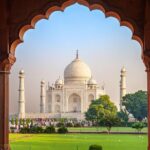
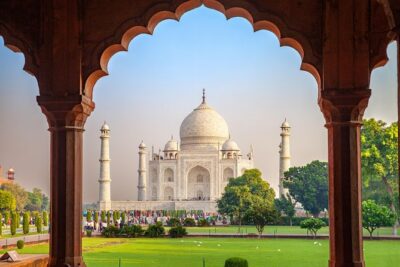
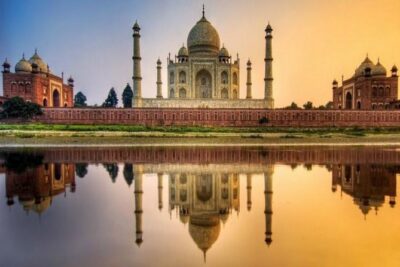
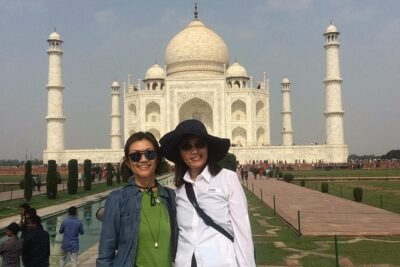
You start with Taj Mahal at sunrise. The tour includes a guided tour inside for about two hours, with the core story presented: a tomb built by Mughal Emperor Shah Jahan in 1630 to enshrine his beloved. The “sunrise plus guide” combo is smart because the monument can be photograph-friendly, but context is what turns it from a postcard into an experience you can explain to friends.
A practical help is included: a battery bus ride up to the Taj Mahal monument from the parking area and back again. That saves you from a long walk at the times when you are likely dressed for cool morning air.
After Taj, you visit Agra Fort, another UNESCO World Heritage site tied to Mughal power, described here as the main residence of the Mughal emperor. You also get Itmad-ud-Daula, known as Baby Taj, a mausoleum in Agra that includes gardens and multiple structures around the main building. Baby Taj is a good contrast to the Taj Mahal, because you see detail without the same level of overwhelming scale.
Tip for your own planning mindset: if you are going to feel “Taj overload,” this is where it helps that the day includes forts and a second mausoleum. It balances the emotional hit with variety.
Khajuraho temples after the 7-hour transfer: Chandela stonework
Khajuraho is a shift from riverfront spirituality and imperial grandeur into temple sculpture and architecture. You travel from Agra toward Khajuraho and check into your hotel, with the day structured to let you settle before temple time takes over.
Day 7 focuses on the key temples, and it gives you a clear idea of what to look for. Lakshmana Temple is described as built by Chandela ruler Yashovarman in the 10th century, and the idol is Vaikuntha, with a sculpture featuring three heads and four arms. That specific detail matters because it guides where you look, instead of just treating the site like more stonework.
Then you visit Kandariya Mahadev Temple, described as designed and built by Chandela king Vidyadhara in the early 11th century. The tour also notes the context of earlier invasions that affected the region, which helps explain why these monuments feel so determined and monumental.
The final part of Day 7 includes additional Khajuraho Temples time for a longer visit. If you want your brain to rest a little, this is a good place to do it by slowing down and letting the carvings and layout do the talking.
One more practical angle: Khajuraho is famous, so you might find it feels busy at peak hours. The tour’s pacing, with guided stops, keeps it from feeling like a chaotic rush.
Varanasi along the Ganges: Kashi Vishwanath, Sarnath, and Ganga Aarti
Varanasi is where the trip changes atmosphere. After breakfast on Day 8, you drive to Varanasi, about 7 hours and 400 km, then check into your hotel. Day 9 is where the spiritual rhythm becomes the main event.
You begin with Kashi Vishwanath Temple, described as a riverside temple to Shiva, known for its gold-plated spire and a sacred well. That gold-plated element is a visual anchor, but what makes it meaningful is the riverside setting and the feeling that the temple is part of daily life.
Next is Sarnath, visited around noon. It is a significant Buddhist pilgrimage site, known as the place where Buddha first preached the Dharma after enlightenment. The tour includes time to explore ancient ruins of monasteries, which makes the site feel grounded in place rather than just symbolic.
Then comes the heart of the city. You walk along the Ganges River, described as a mesmerizing journey through spiritual and cultural heritage. It is a good time to slow down, because you are not just moving from one ticketed entry point to another.
Finally, you experience Ganga Aarti in the evening, with the best view from your seat. This is the kind of scheduled moment that is hard to get right on your own. Having it built into the day means you can plan around it rather than scrambling when the light and crowd energy shift.
Day 10 ends simply. After breakfast, you check out and get drop-off anywhere you desire in Varanasi.
Budget, comfort, and what is actually included
At around $623.07 per person for the 10-day private luxury plan, the value is less about being cheap and more about what you do get without extra planning stress. You have private AC transportation, private local guides for sightseeing, hotel pick-up and drop-off, and daily hotel breakfast.
Here is the key included bundle that affects your wallet and your day:
- Private air-conditioned vehicle with driver
- All sightseeing with private local guides
- Daily hotel breakfast (9)
- Battery bus ride to and from Taj Mahal parking
- Bottled mineral water during journeys
- Hotel or airport pick-up and drop-off
- Personal care and attention
What you should budget separately:
- Monument entrance tickets, since tickets are not included
- Meals, since only breakfasts are included
- Tips for driver and guide (not included)
- Laundry and personal expenses
Room setup is also worth noting. Rooms are generally twin-sharing, and if you book for three people, triple-sharing is the default unless you pay extra to request two rooms.
Vehicle size is handled by group size: a 4-seater sedan for 1 to 2 people, a 6-seater wagon for 3 to 4, and a 10-seater minivan for 5 to 10. That detail matters for comfort, especially when you are traveling with luggage.
If you like knowing what you will pay later, this tour is pretty clear about its main omissions.
Should you book this 10-day private Golden Triangle with Khajuraho and Varanasi?
I think this is a strong fit if you want a first-time-friendly North India route that hits the big UNESCO names and still adds two standout chapters, Khajuraho and Varanasi. You will like it most if you value private guides, a dedicated driver, and a schedule that gives you time to see things without feeling constantly rushed.
Book it if:
- You want Delhi, Jaipur, Agra, Khajuraho, and Varanasi in one trip
- You prefer a private setup over trains and daily logistics
- You would rather pay for the convenience than spend time researching each stop
Consider another option if:
- You do not want to handle entrance tickets and meals on your own
- You prefer a slower pace with more free time in each city, since this route packs in a lot of landmarks
If you want a memorable mix of imperial monuments, temple architecture, and Ganges ritual life, this tour is a practical way to get there.
FAQ
How long is the 10 Day Private Luxury Golden Triangle with Khajuraho and Varanasi?
The tour is approximately 10 days.
Where does the tour start and where does it end?
It starts in New Delhi, and it ends with drop-off at your desired location in Varanasi.
Is this a private tour?
Yes. It is private, and only your group participates.
What transportation do we use during the tour?
You travel in a private air-conditioned vehicle with a driver. For groups of 1 to 2 it is a 4-seater sedan, for groups of 3 to 4 it is a 6-seater wagon, and for groups of 5 to 10 it is a 10-seater minivan.
What is included in the price?
Included features cover hotel or airport pick-up and drop-off, transport by private AC vehicle with driver, all sightseeing with private local guides, daily hotel breakfast (9), battery bus ride to and from the Taj Mahal parking area up to the monument, bottled mineral water during journeys, and personal care and attention.
Are monument entrance tickets included?
No. Monument entrance tickets are not included.
Are meals included besides breakfast?
No. Meals are not included, other than daily hotel breakfast.
Does the tour include a guide for the sightseeing?
Yes. The tour includes all sightseeing with private local guides.
How are hotel rooms assigned?
Rooms are generally twin-sharing. For bookings of 3 people, triple-sharing is provided by default, and if you prefer 2 rooms there is an additional charge.
Is free cancellation available?
Yes. You can cancel up to 24 hours in advance for a full refund. If you cancel less than 24 hours before the experience’s start time, the amount paid is not refunded.
The Ghats at Varanasi, More Reviews

The Golden Triangle, Longer and Shorter


Recently reviewed across New Delhi
- Golden Triangle – Delhi Agra and Jaipur
★ 5.0 · 10 reviews - Taj Mahal & Agra Tour by Indian Bullet Train All Inclusive
★ 4.5 · 10 reviews - Private Tour in Mehrauli Archaeological Park & Qutub Minar
★ 5.0 · 10 reviews - Old & New Delhi Tour
★ 5.0 · 10 reviews - From Delhi : Taj Mahal & Agra Fort Tour by Luxury Express Train
★ 5.0 · 10 reviews - Delhi Shopping Tour: Top Bazaars, Crafts & Souvenir Finds
★ 5.0 · 10 reviews
Golden Triangle Tours, compared.
 ★ 5.03-Days Private Golden Triangle Tour: Delhi, Agra & Jaipur by CarFrom $1271,098 reviews
 ★ 5.03-Day Delhi, Agra and Jaipur Private Tour – India Golden TriangleFrom $110812 reviews
 ★ 5.0Four-Day Private Luxury Golden Triangle Tour to Agra and Jaipur From New DelhiFrom $160807 reviews
 ★ 5.05 Nights 6 Days Private Golden Triangle Tour – Delhi Agra JaipurFrom $240574 reviews
 ★ 5.04 Days Golden Triangle TourFrom $146499 reviews
 ★ 5.0Private Car and Drive for Golden Triangle (4N/5D)From $167451 reviews
 ★ 5.0Private Golden Triangle Tour Delhi Agra Jaipur ( Top Rated )From $148436 reviews
 ★ 5.03-Day Private Luxury Golden Triangle Tour to Agra and Jaipur From New DelhiFrom $164424 reviews
Browse the lists this tour appears in