
REVIEW · GOLDEN TRIANGLE TOURS
7-Days Private Golden Triangle with Pushkar Yoga Spiritual Tour
Seven days, four cities, one steady plan.
This private Golden Triangle with Pushkar yoga is built for first-timers who want the big landmarks plus a spiritual stop, without the constant guesswork. You’ll move between Delhi, Agra, Jaipur, and Pushkar with a dedicated driver and private local guides at each city’s stops.
I especially like that the sightseeing is paced so you can linger at places like Gurudwara Bangla Sahib and then shift to UNESCO sites the same day. I also like the balance, ancient monuments in the morning and the Pushkar Lake area plus temple visits and yoga later.
One thing to plan for: monument entrance tickets are not included, so you’ll want to budget extra for Delhi, Agra, and Jaipur sites.
In This Review
- Key highlights worth your attention
- Private Golden Triangle With Pushkar Yoga, and what that means for you
- Day 1 in Delhi: Gurudwara Bangla Sahib for a calm start
- Day 2 Delhi route: Qutub Minar, Lotus Temple, India Gate, Jama Masjid, and old-city steps
- Chandni Chowk: the shopping-market stop that actually changes the feel
- Agra Day 3: Taj Mahal sunset viewpoint, plus Agra Fort and Baby Taj
- Agra Day 4: sunrise Taj, then Fatehpur Sikri and Chand Baori before Jaipur
- Jaipur Day 5: Jal Mahal photos, City Palace, Jantar Mantar, and Hawa Mahal
- Pushkar Day 6 and Day 7: Brahma Temple, Pushkar Lake rituals, and yoga
- Transportation, comfort, and the costs you should plan for
- Should you book this 7-day Golden Triangle plus Pushkar yoga tour?
- FAQ
- Where does the tour start?
- How long is the tour?
- Is this a private tour?
- Are monument entrance tickets included?
- Are hotel stays included?
- Is airport pickup and drop-off included?
- What yoga is included?
- How do room sharing arrangements work?
- Can I cancel for free?
Key highlights worth your attention

- Private driver, private local guides across all cities, so you are not bouncing between strangers
- Airport pickup and drop-off included, which makes day one far less stressful
- Battery bus ride for Taj Mahal up and back from the parking area
- Pushkar yoga classes added to the classic Golden Triangle route
- Bottled mineral water during journeys and comfortable A/C transport
- Hotels with daily breakfast included when you select accommodation
Golden Triangle itineraries, three to eight days
Private Golden Triangle With Pushkar Yoga, and what that means for you
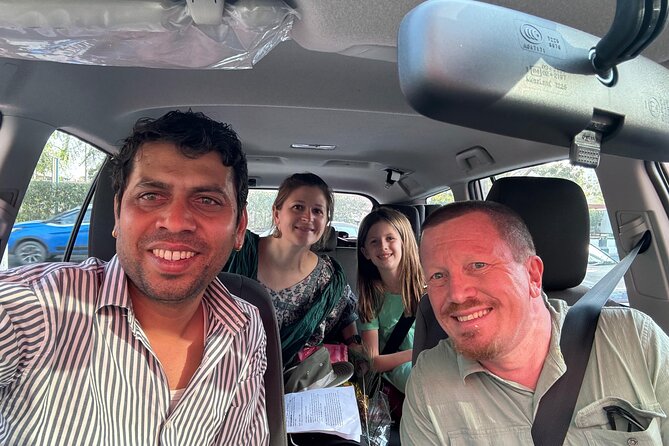
This is a private, 7-day route that strings together Delhi, Agra, Jaipur, and Pushkar, the “classic” North India circuit, but with breathing room. You’re not stuck in a group timetable. You get a car, a driver, and guided visits, so you can ask questions and adjust on the fly when roads or queues get annoying.
The Pushkar part is what makes it more than just another Golden Triangle loop. You’ll spend time around the Brahma Temple and the Pushkar Lake area, and you’ll also do yoga sessions in Pushkar (with another yoga class before you head back to Delhi on the last day). If you want your trip to feel like a story, not a checklist, this structure helps.
Price-wise, $324 per person can feel like “is that too much?” until you notice what’s included: private A/C transport with a driver, airport transfers, guides for sightseeing, 6 nights of accommodation with daily breakfast (if you choose hotels), and the battery bus support for Taj Mahal logistics. The main extra cost is monument entrance tickets.
Day 1 in Delhi: Gurudwara Bangla Sahib for a calm start
Your first stop is Gurudwara Bangla Sahib, a Sikh gurdwara with a well-known story tied to the year 1664. The site remembers an 8th Sikh Guru visit during a time of epidemics, when water from the tank was used to help those affected. It’s a powerful way to start a trip in India, not with monuments, but with a living place of worship and community.
You’ll have around 30 minutes here, and admission is free. That short time window is smart. It gives you the feel of the space, without burning half a day on one stop when you still have Delhi’s larger sights coming.
Practical tip: dress respectfully and be ready for security checks. Also, keep in mind this is an active religious site, so some areas may have rules about movement and photography that can vary by moment.
Day 2 Delhi route: Qutub Minar, Lotus Temple, India Gate, Jama Masjid, and old-city steps
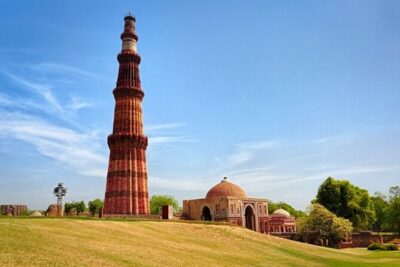
Delhi day is where the tour stacks UNESCO and “big first sight” energy. You begin with Qutub Minar, a UNESCO World Heritage site and a 73-metre tall five-storey tower. The construction is credited to Qutub-ud-din Aibak in 1193, and it is often discussed in relation to Minaret of Jam design influence.
Next comes the Lotus Temple, known for its flower-like architecture and the fact that it is open to everyone regardless of religion. Expect about 30 minutes, and since it’s free admission, it’s a good use of time if you want a strong architectural contrast to Qutub Minar.
Then you hit India Gate, a war memorial near Rajpath, and it’s also a known picnic spot. After that, you stop at Parliament House (Sansad Bhavan), which is described as circular in concept, based on the Ashoka Chakra form. This portion is more about seeing the country at the national level, then switching right back into older Delhi.
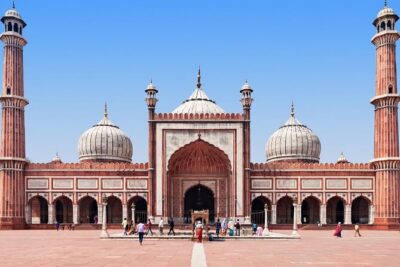
The afternoon leans religious and historical with Jama Masjid, built by Mughal Emperor Shah Jahan between 1650 and 1656. You’ll also visit Agrasen Ki Baoli, a protected stepwell monument. These step wells are not just pretty. They explain how water systems shaped city life.
Finally, you end with Humayun’s Tomb (about an hour). It’s Mughal in spirit and scale, and it works well as a transition between the older monument styles you’re seeing and the maze of Old Delhi markets you’ll visit later.
Pushkar and Ajmer, more options
- 12 Days Golden Triangle With Udaipur Jodhpur Jaisalmer Pushkar★ 5.0 · 17 reviews
- Golden Triangle India: 5-Day Delhi, Agra, Jaipur & Pushkar Tour★ 5.0 · 16 reviews
- 8 Days Private Luxury Golden Triangle Tour with Udaipur & Pushkar★ 5.0 · 15 reviews
- 10-Day Private Golden Triangle Tour With Jodhpur Udaipur Pushkar★ 5.0 · 15 reviews
Chandni Chowk: the shopping-market stop that actually changes the feel
After the major landmarks, you get about one hour in Chandni Chowk, in the heart of Old Delhi. This is not a quick photo pull-off. It’s a busy shopping area with narrow lanes and lots of small stalls.
You’ll see stalls selling spices, dried fruit, silver jewelry, saris, and even smaller essentials like essential oils. For many first-timers, this is the moment when the trip stops feeling like museums and starts feeling like a place where everyday life and history overlap.
Tip: wear comfortable shoes, because you’ll likely move through uneven pavement and crowded walkways. If you enjoy photography, go slowly and let the lanes reveal themselves instead of trying to “cover it all.”
Agra Day 3: Taj Mahal sunset viewpoint, plus Agra Fort and Baby Taj
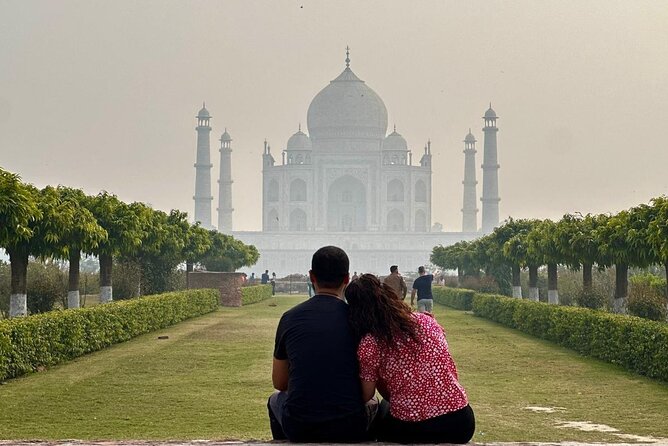
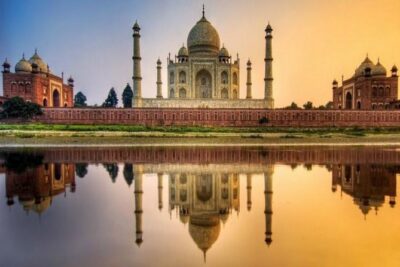
Your drive from Delhi to Agra is listed at about 222 km, around 4 hours. After checking into your hotel, you start with Taj Mahal Sunset View Point, described as a good place to see the Taj Mahal across the river while avoiding the thickest crowds. That matters, because Taj Mahal works differently at sunset. The marble tones shift, and the light turns architecture into something more emotional.
You’ll have about 1 hour at this viewpoint, and admission tickets are not included. Then you move to Agra Fort, a UNESCO site tied to Mughal emperors like Akbar and Shah Jahan. Agra Fort can feel like a “where did the power live” companion to the Taj, so it’s worth your time.
Next is Itmad-ud-Daula, also called the “Baby Taj.” You get about an hour here, and it’s a great way to see a finer, smaller-scale Mughal mausoleum after the massive Taj experience. In other words, it’s variety, not repetition.
Agra Day 4: sunrise Taj, then Fatehpur Sikri and Chand Baori before Jaipur
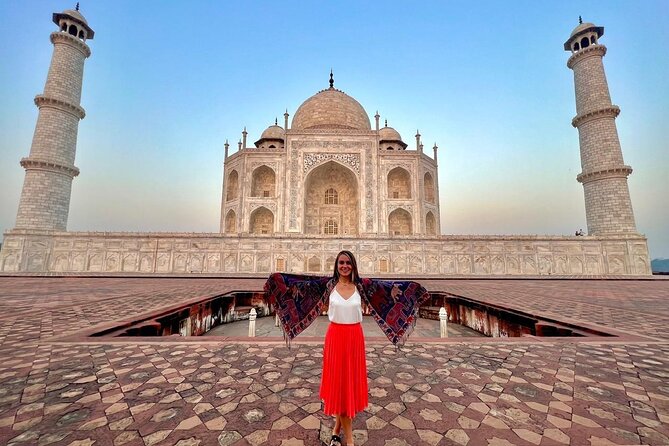
Day 4 pushes deeper into the Taj Mahal experience. You’ll see the Taj Mahal with sunrise, and you’ll have around 2 hours at the site. Admission tickets are not included, but the good news is your plan includes a battery bus ride to and from the Taj Mahal monument area from the parking lot. That saves time and energy at one of India’s most traffic-heavy sights.
Then it’s on to Fatehpur Sikri, also known as the City of Victory, built in the late 16th century by Emperor Akbar. You’ll have about 1 hour here, and it gives you a broader view of Mughal power beyond just Agra and the Taj.
After that you stop at Chand Baori in Abhaneri, a massive stepwell that extends about 30 metres into the ground. This is one of those sites where the geometry hits you instantly. It’s quick too, at around 30 minutes, which keeps the day from running away from you.
You then arrive in Jaipur and check in for the night. The shift from Agra’s Mughal monumental focus to Jaipur’s Rajput-era visual style is part of the fun of this tour.
Jaipur Day 5: Jal Mahal photos, City Palace, Jantar Mantar, and Hawa Mahal

Jaipur day mixes “icon views” with places that explain how the city was designed.
You start with Panna Meena ka Kund, a stepwell near Amber Palace. It’s short at about 15 minutes and free, but it sets the stage for how water and architecture worked together in Rajasthan.
Then you go to Jal Mahal, a palace in the middle of Man Sagar Lake. You’ll get a photo opportunity, around 15 minutes. This is a great stop if you like skyline views and soft pastel colors, because Jaipur rewards even short pauses.
Next is Maharaja’s City Palace, where you spend about an hour. It’s originally the administrative and ceremonial seat, so you’re not just looking at buildings. You’re looking at how rulers organized both power and ritual in one complex.
You also visit Jantar Mantar, a UNESCO World Heritage site and a collection of architectural astronomical instruments built in 1734 by Sawai Jai Singh II. You get about an hour, and this is where Jaipur feels different from the Mughal sites you saw earlier. It’s Rajput science made visible.
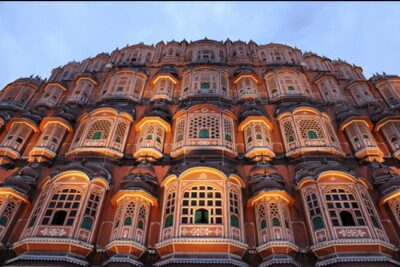
Finally, you see Hawa Mahal, the Palace of Winds. It’s described as five storeys of pink and red sandstone, shaped as a pyramid. That gives you the “only-in-Jaipur” facade moment many people come for, and you’ll have about an hour here.
Pushkar Day 6 and Day 7: Brahma Temple, Pushkar Lake rituals, and yoga
This is the slower, more spiritual portion. You drive from Jaipur to Pushkar, listed at about 142 km, around 3 hours. After you check in to your hotel, you head to Brahma Temple. The tour description emphasizes why Brahma has only one temple dedicated to him in the world, and you’ll also learn about the site’s architecture and mythology. You’ll have about 30 minutes here, with free admission.
Then comes Pushkar Lake and the Brahma Ghat area. The focus shifts to rituals: family people offering prayers for happiness and honoring the dead souls. The stop is around 30 minutes and is designed for photography and the atmosphere around blessings rituals.
What I like about the Pushkar design is that the yoga isn’t tacked on as a random extra. It sits inside the religious landscape. Even if you’re not deeply spiritual, yoga in Pushkar can feel like a reset after days of strong monument concentration.
On the last day, after breakfast, you’ll enjoy a yoga class again before the drive back to Delhi, which is listed at about 5 hours.
Transportation, comfort, and the costs you should plan for
This tour is set up as a private ride in an air-conditioned vehicle with a driver. The car size depends on group size: a 4-seater sedan for groups of 1 to 2, a 6-seater wagon for 3 to 4, and a 10-seater minivan for 5 to 10. That matters if you care about having space for cameras, water bottles, and quick bathroom breaks.
Support details that make a difference: airport pickup and drop-off are included, and bottled mineral water is provided during journeys. You’ll also receive mobile tickets. The Taj Mahal experience has another logistics boost: the battery bus ride from parking up to the monument area and back.
Now the budget reality check. Monument entrance tickets are not included, and you should also expect to pay driver and guide tips plus any laundry and personal expenses. Travel insurance and flights or train tickets are not included either. If you like to plan budgets tightly, ask your operator (Golden Triangle Tours India) for a rough estimate of entrance fees before you lock in your payments.
One more practical note from the way rooms are described: rooms are generally twin-sharing. If you book as three people, rooms may be triple-sharing by default. If three guests prefer two rooms instead, there is an additional charge.
Should you book this 7-day Golden Triangle plus Pushkar yoga tour?
I’d book it if you want a private, guided route that hits the major landmarks in Delhi, Agra, and Jaipur, then gives you a meaningful Pushkar finish with yoga and temple-lake rituals. It’s especially good for first-timers who want structure, airport support, and the ability to ask questions without hunting down local guides city by city.
I would not book it if you hate extra planning around ticket costs. Since entrance tickets are not included, you’ll need to budget beyond the base price. Also, you’re doing a lot of ground coverage in a short time, including two longer drives (Delhi to Agra and Jaipur to Pushkar), so it helps if you’re okay with being in a car.
If you do book, prepare a simple “ticket budget” and wear comfortable walking shoes for Chandni Chowk and the monument zones. And keep your expectations clear: this tour is designed for highlights plus spiritual calm, not for deep, slow stays in every single site.
FAQ
Where does the tour start?
The tour starts at Indira Gandhi Intl Airport, New Delhi, India.
How long is the tour?
It is listed as 7 days (approx.).
Is this a private tour?
Yes. It is a private tour/activity, and only your group will participate.
Are monument entrance tickets included?
No. Monument entrance tickets are not included.
Are hotel stays included?
Yes, 6-nights accommodation with daily breakfast is included if you choose the option including hotels.
Is airport pickup and drop-off included?
Yes, airport pick-up and drop-off are included.
What yoga is included?
Yoga classes are included in Pushkar, and on the last day you will enjoy the yoga class before driving back to Delhi.
How do room sharing arrangements work?
Rooms are generally provided on a twin-sharing basis. For a booking of 3 people, rooms are generally provided on triple-sharing basis by default, and extra charges apply if 3 guests prefer 2 rooms.
Can I cancel for free?
Free cancellation is available. You can cancel up to 24 hours in advance for a full refund.
Pushkar and Ajmer, More Routes




The Golden Triangle, Longer and Shorter




Recently reviewed across New Delhi
- Golden Triangle – Delhi Agra and Jaipur
★ 5.0 · 10 reviews - Taj Mahal & Agra Tour by Indian Bullet Train All Inclusive
★ 4.5 · 10 reviews - Private Tour in Mehrauli Archaeological Park & Qutub Minar
★ 5.0 · 10 reviews - Old & New Delhi Tour
★ 5.0 · 10 reviews - From Delhi : Taj Mahal & Agra Fort Tour by Luxury Express Train
★ 5.0 · 10 reviews - Delhi Shopping Tour: Top Bazaars, Crafts & Souvenir Finds
★ 5.0 · 10 reviews
Golden Triangle Tours, compared.
 ★ 5.03-Days Private Golden Triangle Tour: Delhi, Agra & Jaipur by CarFrom $1271,098 reviews
 ★ 5.03-Day Delhi, Agra and Jaipur Private Tour – India Golden TriangleFrom $110812 reviews
 ★ 5.0Four-Day Private Luxury Golden Triangle Tour to Agra and Jaipur From New DelhiFrom $160807 reviews
 ★ 5.05 Nights 6 Days Private Golden Triangle Tour – Delhi Agra JaipurFrom $240574 reviews
 ★ 5.04 Days Golden Triangle TourFrom $146499 reviews
 ★ 5.0Private Car and Drive for Golden Triangle (4N/5D)From $167451 reviews
 ★ 5.0Private Golden Triangle Tour Delhi Agra Jaipur ( Top Rated )From $148436 reviews
 ★ 5.03-Day Private Luxury Golden Triangle Tour to Agra and Jaipur From New DelhiFrom $164424 reviews
Browse the lists this tour appears in