
REVIEW · BANGALORE AND MYSORE TOURS
Bangalore: Walking Tour of Fort, Palaces, and Market
Old Bangalore smells like flowers and breakfast. I love how this walk strings together the origins of Bengaluru through the Fort and Tipu Sultan’s Summer Palace, and I love the masala dosa and filter coffee stop that makes the history real, not just facts. Many groups are guided by locals such as Deepti, Sushma, or Ruchira, and you can feel the difference when your guide talks with pride about the city you’re standing in.
One thing to plan for: you spend time in busy market lanes where crowds and heat can build fast, especially on weekends and around festivals.
Key points at a glance
- Old Bangalore on foot for about 3 hours, with a small group capped at 10
- South Indian vegetarian breakfast or snack as part of the tour
- KR Market experience, including the sights and smells of a major flower market in Asia
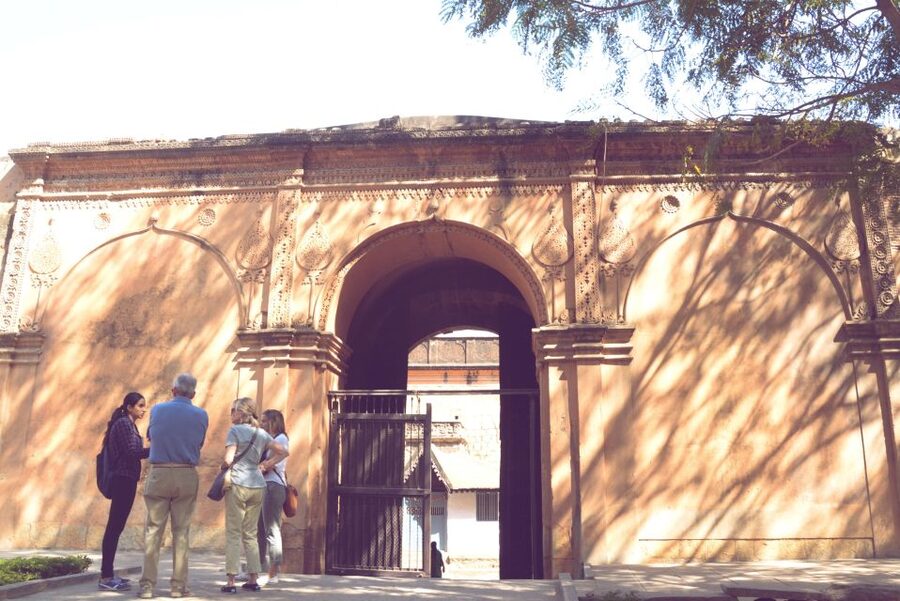
- Bangalore Fort ruins and Tipu Sultan’s Summer Palace exterior, with context on Mysore rulers and the British
- English-speaking live guide with real personal stories about city life
- Finish with help to get back by taxi or public transport
In This Review
- Starting at State Bank of India and Getting Oriented Fast
- Fort Ruins and the Story of Bengaluru’s Earlier Power
- Navigating KR Market, One of Asia’s Biggest Flower Hubs
- The South Indian Breakfast Stop That Actually Changes the Mood
- Summer Palace of Tipu Sultan, Outside Views and Key Details to Notice
- What to Wear and Bring for 3 Hours of Old Bangalore Walking
- Small Group, English Guide, and the City-Life Stories That Make It Feel Personal
- Price and Value: Why $43 Can Make Sense for Old Bangalore
- Who This Tour Fits, and Who Might Want to Skip It
- Should You Book This Old Bangalore Walking Tour?
- FAQ
- How long is the Bangalore walking tour?
- How much does the tour cost?
- What is included in the tour price?
- Is hotel pickup and drop-off included?
- Where do we meet the guide?
- Is the guide available in English?
- Do I need to pay an entrance fee for the Summer Palace?
- What should I bring and wear?
- Is the tour suitable for pregnant women?
- Can I cancel for a refund?
Starting at State Bank of India and Getting Oriented Fast
This tour is designed to get you oriented in Old Bangalore quickly. You meet at the entrance gate of the meeting building, with the landmark as the State Bank of India on Kempegowda Road. It’s easy to reach by Uber or public transport, so you avoid the common first-day Bangalore scramble of figuring out where to start.
From there, you walk into the older parts of the city and the guide sets the tone right away. The goal is not just to point at sights, it is to help you understand how Bengaluru took shape, from earlier rulers through later British influence. You’ll be moving at a comfortable walking pace for around 3 hours, and because it is a small group, you are not stuck waiting behind a large crowd.
Practical note: you will be in narrow, active streets. That makes the history feel close, but it also means comfortable shoes matter.
Bangalore and Mysore, more picks
Fort Ruins and the Story of Bengaluru’s Earlier Power
The center of the tour’s storytelling is the Bangalore Fort area. You learn about the Fort built in the 1700s, and the guide connects what you see on the ground to what the city used to be like during the era of South rulers. One reason I like this stop is that it feels like a living lesson in how power and planning shaped neighborhoods.
You also get context on the Mysore rulers and the British, which helps you place Bangalore in the wider regional timeline. This tour is a good fit if you want the city explained in plain language, with the guide linking each stop so your brain can keep track.
What to watch for: ruins can look quiet from one angle, but a good guide helps you “read” the space. In past groups, guides such as Deepti and Sushma have been praised for building the story in a way that stays connected stop by stop, with clear direction and patient pacing if the group is slower.
Navigating KR Market, One of Asia’s Biggest Flower Hubs
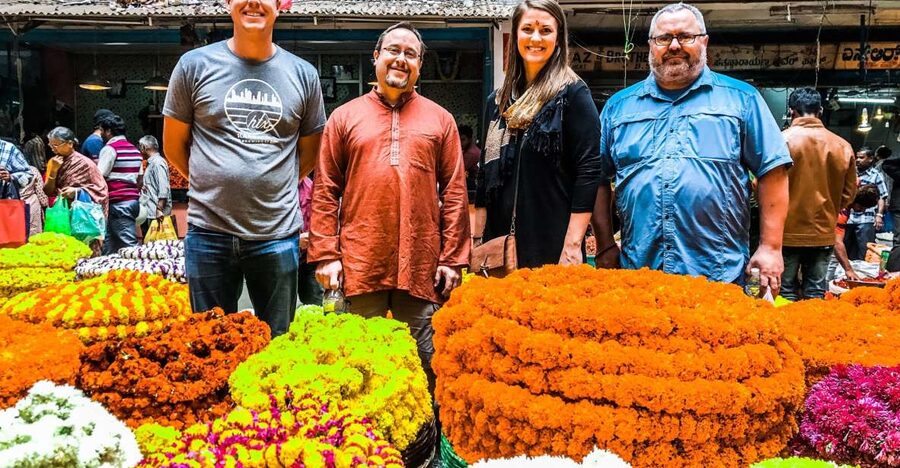
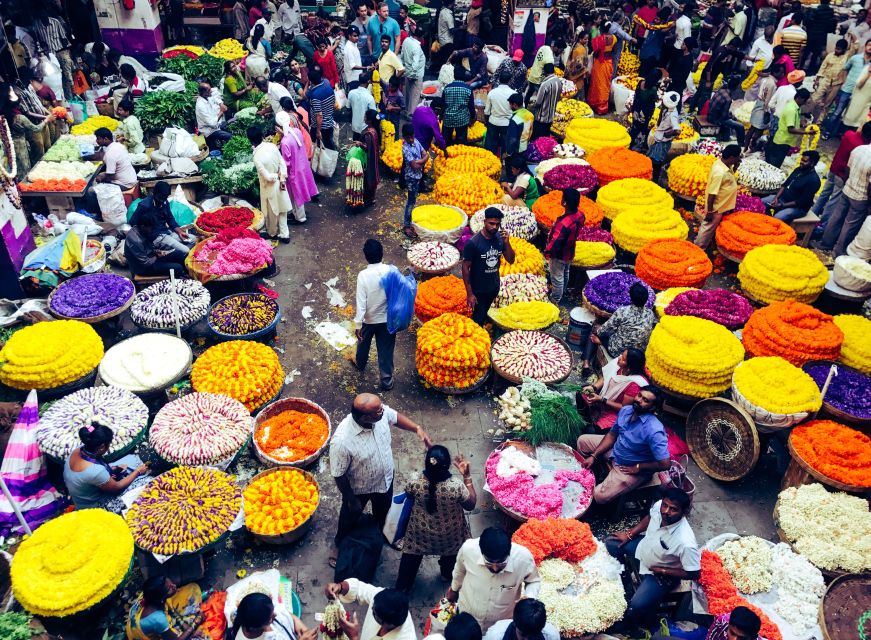
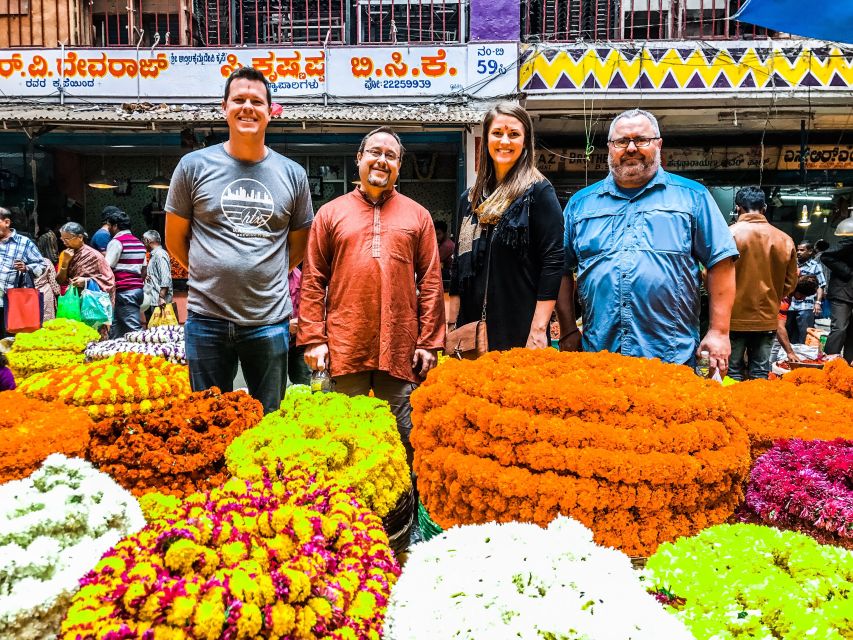
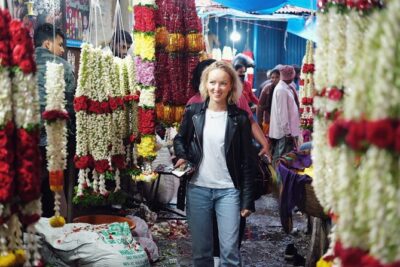
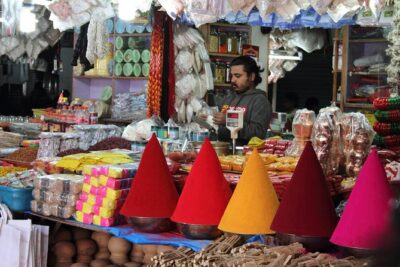
Then comes the sensory heart of Old Bangalore: KR Market. This is described as the largest flower market in Asia, and the point of the stop is to experience it the way a local would. Expect colors, movement, and that unmistakable flower-market smell that hits as soon as you step into the lanes.
This portion is valuable because it shows you the city’s everyday economy, not just monuments. Markets are where you see how people actually live and trade, and KR Market is one of the most obvious “pulse points” in this area.
Since it is also a busy market zone, plan your expectations. The tour notes that it gets busier during festivals and on weekends. If you are the type who gets stressed by crowds, go easy on your phone photography, and keep your focus on the experience rather than trying to capture everything.
Tip from practical reality: you are walking through a market area, so carrying a mask can be a smart call. The tour specifically recommends bringing one, especially since you pass through a spice market.
The South Indian Breakfast Stop That Actually Changes the Mood
After you’ve been walking and listening, the tour shifts to food. The vegetarian breakfast or snack is built into the experience, and it is not an afterthought. Depending on the starting time, you may have locals’ favorites like masala dosa along with South Indian filter coffee.
This matters for two reasons. First, dosa and filter coffee are a quick route into South Indian flavors. Second, the food stop gives you a reset, so the next parts of the walk feel easier rather than rushed.
From what people consistently describe, the food stop is often praised not only for taste but for comfort and cleanliness. Some groups mention a fuller spread beyond dosa, like wada, chai, and sweet treats. Even if your day is simpler, expect it to be a real local meal, not a generic tourist plate.
If you have dietary restrictions, the tour states vegetarian options, so it is a good sign for many visitors. Still, if you have specific needs, you should confirm with the operator before you go.
- Mysore tour from Bangalore by tourism ministry approved company★ 5.0 · 226 reviews
- Bengaluru Pete City Market Half-Day Walking Tour★ 5.0 · 163 reviews
- Experience Bangalore – City Tour, Authentic Food & market (Food/Culture/History)★ 5.0 · 156 reviews
- Tipu Palace + Koté Vishnu + Fort + KR Market + Jain Temple = Bengaluru Pété Walk★ 5.0 · 150 reviews
- Same Day Taj Mahal/Agra Tour From Bangalore with Return Flight★ 5.0 · 144 reviews
Summer Palace of Tipu Sultan, Outside Views and Key Details to Notice
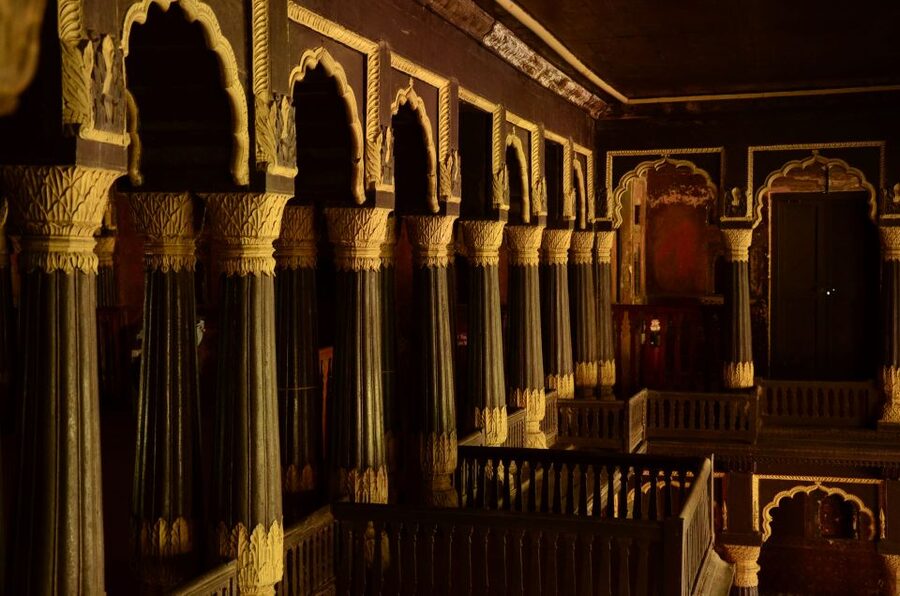
Your final major landmark is outside the Summer Palace of Tipu Sultan. The walk ends there, at the exterior. You can choose to go inside, and that is where the tour’s single monument fee note matters: there is an entrance fee of 250 rupees per person if you decide to enter. If you skip it, you still get the architectural experience from the outside.
This is one of the most interesting contrast points on the route. The tour highlights teak wood columns and the Indo-Islamic influence seen in the frescoes. Even if you are not a design nerd, those details help you see the building as a cultural statement, not just a stop on a list.
The practical angle is that you are walking at street level most of the time, then suddenly you are confronted with a place shaped by craft and symbolism. The guide’s job here is to point out what you might otherwise miss, especially the Indo-Islamic blending.
Also keep in mind that you may encounter places of worship during the tour. The guidance is clear: footwear has to be taken off in temples or other places of worship. Plan for that so you are not fumbling in the heat.
What to Wear and Bring for 3 Hours of Old Bangalore Walking
This tour is only 3 hours, but you are working inside real city conditions. The basics the tour asks for are practical and worth following.
Bring:
- Comfortable shoes
- Water bottle
- Umbrella and sunglasses
Wear modest clothing that covers your knees and shoulders. That guideline is not just etiquette, it also helps you feel at ease when you move through temple areas and traditional neighborhoods.
Because the route includes crowded market sections, the tour also recommends carrying a mask, particularly with spice market portions. Even if you usually skip masks, this is one of those “better safe than sorry” moments.
Weather reality: Bangalore can be bright and hot. Umbrella and sunglasses help you stay comfortable enough to focus on the story your guide is telling, rather than on sun and glare.
Small Group, English Guide, and the City-Life Stories That Make It Feel Personal
This is a small-group tour limited to 10 participants, and the guide is live and speaks English. That combination is what keeps the experience from turning into a passive sightseeing line. It is not just history in the abstract, it is history tied to street corners, market behavior, and local daily life.
What people consistently liked is the way guides tell the story across multiple stops. Deepti, Sushma, and Ruchira come up repeatedly in accounts, and the common thread is clear: the guide builds connections so you understand why one place matters right after you see it.
You should also expect the guide to adapt to the group. One reason this tour is a strong first step for many visitors is that it gives you city context quickly, so you can make better choices later on your own. In past experiences, guides also made space for conversation that reached beyond Bangalore, including how different visitors connect it to home.
When you finish, the guide helps you get back by taxi or find public transport, so you do not end your day standing around wondering what comes next.
Price and Value: Why $43 Can Make Sense for Old Bangalore
At about $43 per person for a 3-hour walk, the value comes from three parts.
First, you pay for guided interpretation. Walking Old Bangalore without context can leave you staring at interesting buildings and missing the “why.” The tour is built around explaining origins of the city through Fort and Summer Palace references, with ties to Mysore rulers and British presence.
Second, you get vegetarian food included: a breakfast or snack, often masala dosa and filter coffee. For many visitors, that alone is a meaningful part of the day, and it turns the tour into a more complete experience than a standard walking pass.
Third, you get access to market immersion. KR Market is a sensory experience that is hard to appreciate fully on your own. The guide helps you navigate the busiest parts without losing the thread.
What is not included is also important to know. Entrance fees are not included for monuments. Specifically, if you want to go inside the Summer Palace, budget an additional 250 rupees per person. That said, the walk ends outside, so you can still enjoy the exterior details without paying.
Overall, if you want a focused intro to Old Bangalore with food and a local story voice, this price is reasonable for what you get.
Who This Tour Fits, and Who Might Want to Skip It
This tour is a walking experience. It is not listed as suitable for pregnant women. If that applies to you or you are managing mobility limits, you will likely find the market and street conditions tough.
This tour is a great match if you:
- Want an organized way to understand Bengaluru’s older neighborhoods
- Enjoy food that is tied to place, not just “a meal stop”
- Like market experiences where you can smell and see what locals are doing
- Prefer a small group and an English-speaking guide
If you hate crowds or get overwhelmed in narrow market lanes, go in with realistic expectations. The tour itself flags that it becomes busier during festivals and weekends, so you can plan your clothing, hydration, and energy accordingly.
Should You Book This Old Bangalore Walking Tour?
I’d book this if you want a tight 3-hour format that combines Fort ruins context, KR Market immersion, and a real South Indian vegetarian food break. It is especially useful if you are early in your India trip and you want a fast, local-feeling foundation for where to go next.
Skip it only if crowds and street density are a dealbreaker for you, or if the walking does not work for your body. If you do book, show up with comfortable shoes, dress modestly, bring water, umbrella, and sunglasses, and keep a mask handy for the spice market areas.
Bottom line: this tour is designed to help you see Bangalore as a living city, not a checklist.
FAQ
How long is the Bangalore walking tour?
The tour lasts about 3 hours.
How much does the tour cost?
The price is listed as $43 per person.
What is included in the tour price?
A guided tour and a vegetarian South Indian breakfast or snack are included.
Is hotel pickup and drop-off included?
No, hotel pickup and drop-off are not included.
Where do we meet the guide?
Meet at the entrance gate of the building. The landmark is the State Bank of India on Kempegowda Road.
Is the guide available in English?
Yes, the live tour guide is English-speaking.
Do I need to pay an entrance fee for the Summer Palace?
The tour ends outside the Summer Palace, but there is an entrance fee of 250 rupees per person if you choose to go inside.
What should I bring and wear?
Bring comfortable shoes and water. Wear modest clothes that cover your knees and shoulders, and bring an umbrella and sunglasses.
Is the tour suitable for pregnant women?
No, the tour is not suitable for pregnant women.
Can I cancel for a refund?
Yes, free cancellation is available up to 24 hours in advance for a full refund.
Bangalore and Mysore, More Picks

Recently reviewed across Bangalore
- Private same day Taj Mahal tour from Banglore
★ 5.0 · 10 reviews - Pete City Walk
★ 5.0 · 10 reviews - Explore Bangalore’s Wild Side – An Exclusive Bannerghatta Safari!
★ 5.0 · 10 reviews - Bangalore The original Pub crawl Tour
★ 5.0 · 10 reviews - The story of Tipu Sultan, an immersive walking tour in Bangalore
★ 5.0 · 11 reviews - Private South Indian Cooking Class in Bangalore with a Local
★ 5.0 · 11 reviews
Bangalore and Mysore Tours, compared.
 ★ 5.0Discover Bangalore Through the Ages — Guided Tour with LunchFrom $115417 reviews
 ★ 5.0Best of Mysore, UNESCO Somnathpur Temple & Srirangapatna Day TourFrom $139384 reviews
 ★ 5.0(Mysuru) Mysore Day Out – A Royal Experience Private Tour from BangaloreFrom $125302 reviews
 ★ 5.0Bangalore city tour with English guide & multi language supportFrom $115268 reviews
 ★ 5.0Mysore tour from Bangalore by tourism ministry approved companyFrom $130226 reviews
 ★ 5.0Bengaluru Pete City Market Half-Day Walking TourFrom $60163 reviews
 ★ 5.0Experience Bangalore – City Tour, Authentic Food & market (Food/Culture/History)From $65156 reviews
 ★ 5.0Tipu Palace + Koté Vishnu + Fort + KR Market + Jain Temple = Bengaluru Pété WalkFrom $33150 reviews
Browse the lists this tour appears in