
REVIEW · BANGALORE AND MYSORE TOURS
Bengaluru Pete City Market Half-Day Walking Tour
Bengaluru can feel fast and chaotic, so I like tours that slow you down and explain what you are seeing. This half-day walk ties together Tipu Sultan’s Summer Palace, a major Hindu temple, and the KR Market market maze, then finishes with South Indian food and hands-on artisanal work.
Two things I really love: the chance to watch silk weaving and jewelry-making up close, and the way the day balances monuments with daily life in the pete market lanes. One drawback to plan for is that you will be walking through busy areas and eating spots can be simple, so it helps to be comfortable in crowded streets and to come prepared.
In This Review
- Key points at a glance
- Tipu Sultan’s Summer Palace, Indo-Islamic details in an easy start
- Kote Venkataramana Temple: Hindu rituals you can watch, not just read about
- Bangalore Fort stop: a quick stronghold story with real structure
- KR Market: flowers, spices, and the pace of everyday buying
- Nagarathpete breakfast: dosas, chutney, and a calm break from the crowd
- Silk weaving and jewelry workshops: the craft part most tours skip
- The walking pace, timing, and how to plan your morning
- Price and value: what $60 buys in a market-focused morning
- Guides make the difference: names you can spot in the reviews
- What to wear, what to bring, and how to avoid discomfort
- Should you book the Bengaluru Pete City Market walking tour?
Key points at a glance
- Small-group feel (max 15 per booking) keeps the walk manageable and question-friendly
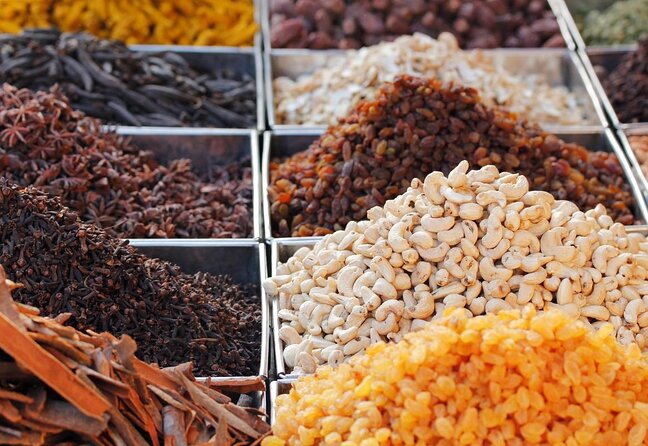
- KR Market focus goes beyond browsing, with flowers, fruit, and spice energy you can actually follow
- Breakfast is real Bangalore food, not a tourist-only setup
- Artisan workshops show silk work and jewelry craft in practical, observable steps
- Monuments are the context, so the market stops make more sense
Bangalore and Mysore, more picks
Tipu Sultan’s Summer Palace, Indo-Islamic details in an easy start
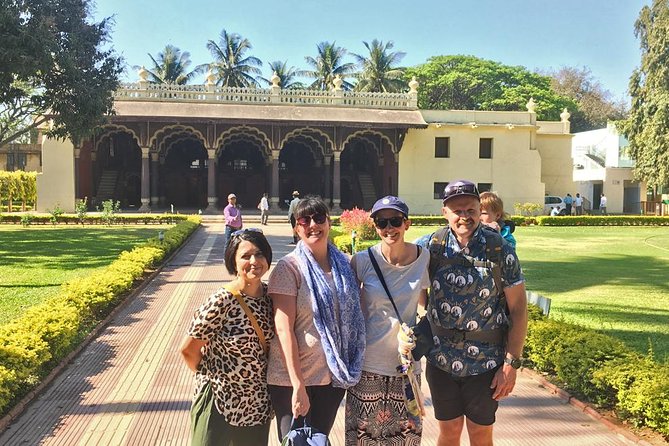
You begin at Tipu Sultan’s Summer Palace, and that opening sets the tone. Even if palaces are not usually your thing, this one is eye-catching because it sits in the story of Bangalore’s historic power shifts, including the ruler who resisted colonial rule.
The palace visit is timed at about an hour, which is just enough to get oriented without feeling rushed. Your guide frames what you are looking at, then you move on. The best part of starting here is that it gives you a reference point for the city’s older identity, before you trade marble floors for market lanes.
Practical note: plan to stand and look around in sun and shade. Wear clothes you can move in, and keep your camera ready for close-up architecture moments.
Kote Venkataramana Temple: Hindu rituals you can watch, not just read about
Next is Kote Venkataramana Temple, described as a 15th-century architectural gem tied to powerful regional dynasties. What makes this stop work on a walking tour is the attention to how temple spaces function day to day.
You get a guided explanation of the rituals and the significance of Hindu deities. Even if you are not deeply religious, the guide helps you connect symbols and practice to what you are seeing in front of you. It is a short stop, about 30 minutes, so the goal is understanding, not trying to cover everything.
One consideration: temples ask for respectful behavior and modest clothing. The tour suggests you cover your knees and shoulders, so do that from the moment you meet. It is an easy way to avoid feeling awkward and to keep the visit smooth.
Bangalore Fort stop: a quick stronghold story with real structure
You then walk to Bangalore Fort, with about 15 minutes set aside for the stronghold story. It is described as an 18th-century site with formidable walls, bastions, and even dungeons, which gives you a different side of Bangalore than the markets.
This is not a long museum-style stop. Instead, think of it as a story bridge. The guide points out what fortifications are meant to do, then you get a feel for why the area matters. You also learn how conflicts shaped the built environment, so later market activity feels less random.
Because the fort time is brief, do not expect huge photo sessions. Use the time to listen, look at structure, and ask questions. If you like history that connects to street layout, this stop is a nice punch of context.
- Mysore tour from Bangalore by tourism ministry approved company★ 5.0 · 226 reviews
- Bengaluru Pete City Market Half-Day Walking Tour★ 5.0 · 163 reviews
- Experience Bangalore – City Tour, Authentic Food & market (Food/Culture/History)★ 5.0 · 156 reviews
- Tipu Palace + Koté Vishnu + Fort + KR Market + Jain Temple = Bengaluru Pété Walk★ 5.0 · 150 reviews
- Same Day Taj Mahal/Agra Tour From Bangalore with Return Flight★ 5.0 · 144 reviews
KR Market: flowers, spices, and the pace of everyday buying
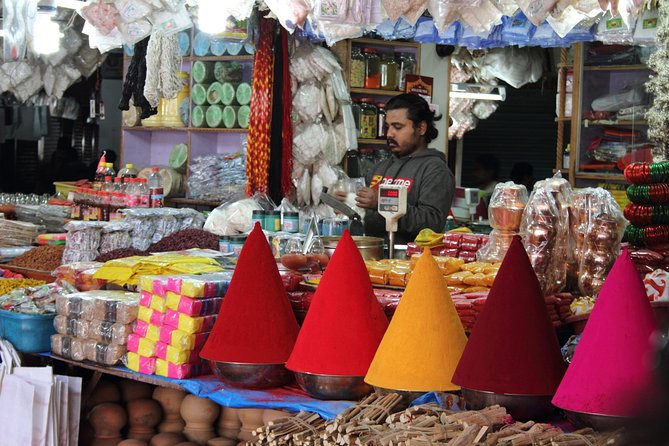
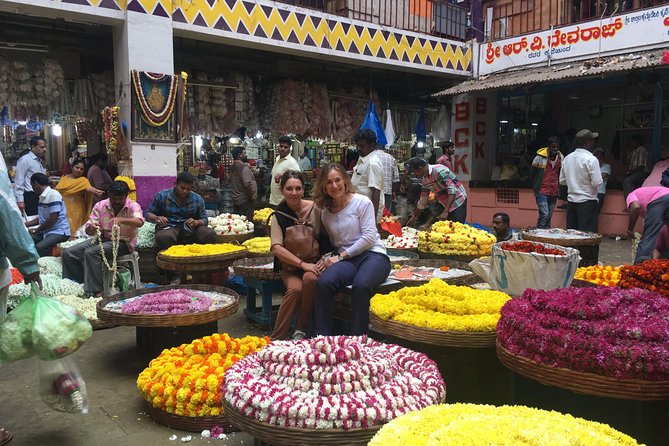
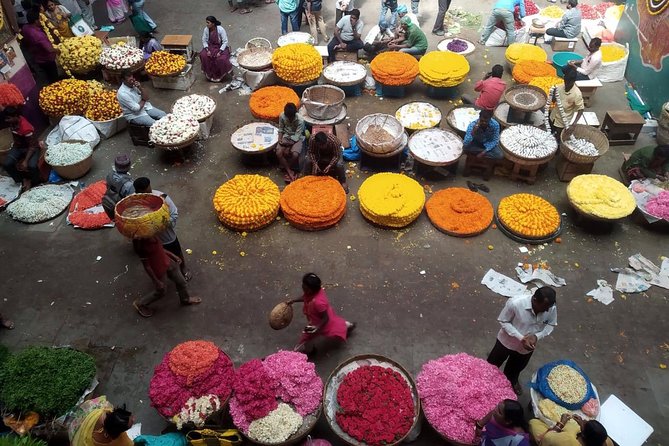
KR Market is the star for a lot of people, and for good reason. It is one of Asia’s largest flower and spice markets, and you feel that scale immediately. The tour sets aside about an hour here, including guided walking and time to take in what vendors are doing.
I like that KR Market is not presented as a pretty backdrop. It is functional. You see how flowers move, how spices look when they are displayed in quantity, and how vendors talk and negotiate in the middle of the rush. This is exactly the kind of place where a guide adds real value, because you can understand what you are seeing instead of just getting swept along.
If you have dietary limits, this is not a place where you will be offered a buffet of random samples. But it is a strong stop for sensory understanding. One review even mentioned seeing cows around, which is a reminder that market life here is not staged for tourists.
Tip for your comfort: expect heat, noise, and dense foot traffic. Bring sunglasses if you use them, and keep water in reach when you can.
Nagarathpete breakfast: dosas, chutney, and a calm break from the crowd
After the market walking, the tour shifts gears with breakfast in the Nagarathpete area. You get about 45 minutes here, and it is built around a traditional South Indian style meal.
From the information provided, the focus is on crisp dosas and tangy chutneys, served at an iconic restaurant in the market district. I like this part because it is not just food. It is your chance to slow down, sit, and refuel before you head into workshops.
One important practical point shows up in a review: the eating area can feel sparse. That means you should dress with comfort in mind and plan to handle simple surroundings. Also, bring your own water if you know you run thirsty in the morning walk rhythm.
Your guide also helps you navigate what to order and how it fits into local eating customs, so you do not feel stuck translating a menu.
Silk weaving and jewelry workshops: the craft part most tours skip
The last major segment takes you to small-scale jewelry and silk weaving workshops in Nagarathpete. This is about 45 minutes, and it is one of the most praised parts of the experience.
This stop matters because you see the work behind what you often just buy later. You are not just looking at finished products. You get a glimpse into how artisans create intricate designs that support Bangalore’s textile and jewelry economy. Even if you do not purchase anything, watching the process gives you a new respect for what goes into the threads and details.
In past guest feedback, people called out the flower market and silk process as highlights, and some specifically noted silk-making and silk dyeing or weaving components. That aligns with the idea that this is a practical craft visit, not a sales-only storefront.
A smart way to use this time: ask simple questions as you watch. How long does a step take? What materials are used? What is hardest about the craft? A good local guide can translate and keep the conversation respectful of the workshop pace.
The walking pace, timing, and how to plan your morning
This is listed as a half-day tour of about 5 hours, starting at 8:30 am. The stop timings add up neatly: palace around an hour, temple around 30 minutes, fort around 15 minutes, KR Market around an hour, breakfast around 45 minutes, and workshops around 45 minutes. That totals about 4 hours and 45 minutes, with walking time between stops filling out the rest.
The itinerary is set up so you alternate between sensory areas (market and temple visuals), listening areas (palace and fort context), and sit-down time (breakfast). That balance is why it works for first-timers. You do not get stuck in one kind of environment for too long.
Crowd management is part of the plan too. The group is small, with up to 15 people per booking and a maximum of 16 travelers. In practice, that means you can hear your guide, move as one unit, and ask follow-up questions without feeling like you are competing with the entire sidewalk.
Price and value: what $60 buys in a market-focused morning
At $60 per person, this is not a bargain-basement walking tour. But you do get multiple value components baked in.
First, entry fees to monuments are included. Second, your guide is present for the entire structured walk, with English speaking hosting. Third, brunch and coffee or tea are included, so the tour is not just sightseeing, it is also a planned meal.
That meal component matters in Bangalore mornings. Markets are where you want energy, and skipping breakfast can turn a food stop into a scramble. Here, breakfast is scheduled as part of the itinerary, and it is clearly a highlight, with many strong comments around dosas.
Finally, the workshop time gives you something many free or low-cost tours do not: you witness craft work tied to silk and jewelry making. If you are the kind of traveler who buys things because you understand the process, this is the part that justifies the price more than the palace photos do.
Guides make the difference: names you can spot in the reviews
This tour has a 5-star average and a 99% recommendation rate, which usually means consistency, and in this case the guides seem to be the big driver.
You will see many names show up in the feedback, including Ajith and Pancham, Gladys, Midhu, Pallavi, Preetam, Sandra, Pooja, Abhishek, and Aarti. People specifically praised how hosts handled questions, explained significance of what you see, and guided navigation through the markets.
Even better, some reviews mention a guide trainee accompanying the walk, which often helps with attention to smaller group needs. In plain terms, you get a human behind the information, not just a route map.
If you book, a good mindset helps: come with curiosity. Ask about what vendors do, what the palace represents, and what craft steps you are watching. You will get more out of the time you are spending on foot.
What to wear, what to bring, and how to avoid discomfort
The tour recommends attire that covers knees and shoulders due to cultural sensitivity at the attractions you visit. That is easy guidance, and it keeps you comfortable in temples and respectful in sacred spaces.
Bring practical items for a market morning:
- Comfortable walking shoes
- Sun protection (morning sun still happens)
- Water, especially if you know you get thirsty in crowd heat
If you like taking photos, keep your camera accessible, because KR Market and the palace are both good for quick visual moments. Also, keep your phone charged, since you will likely want to reference what your guide points out while you walk.
Should you book the Bengaluru Pete City Market walking tour?
Book this tour if you want a smart mix of Bangalore landmarks plus market life, without spending your whole day in one kind of place. It is especially worth it if you care about food, you like hands-on craft watching, or you want a guide to translate what KR Market is really doing.
Skip it if you dislike walking through busy, active streets or if you want only major tourist sights with minimal crowd contact. The best version of this experience comes from being okay with the “real” parts of a market district.
For most visitors, though, this is a strong half-day way to get your bearings. You get monuments for context, KR Market for energy, breakfast for local taste, and silk and jewelry workshops for the craft reason behind what you might otherwise just shop for.
Bangalore and Mysore, More Picks

Recently reviewed across Bangalore
- Private same day Taj Mahal tour from Banglore
★ 5.0 · 10 reviews - Pete City Walk
★ 5.0 · 10 reviews - Explore Bangalore’s Wild Side – An Exclusive Bannerghatta Safari!
★ 5.0 · 10 reviews - Bangalore The original Pub crawl Tour
★ 5.0 · 10 reviews - The story of Tipu Sultan, an immersive walking tour in Bangalore
★ 5.0 · 11 reviews - Private South Indian Cooking Class in Bangalore with a Local
★ 5.0 · 11 reviews
Bangalore and Mysore Tours, compared.
 ★ 5.0Discover Bangalore Through the Ages — Guided Tour with LunchFrom $115417 reviews
 ★ 5.0Best of Mysore, UNESCO Somnathpur Temple & Srirangapatna Day TourFrom $139384 reviews
 ★ 5.0(Mysuru) Mysore Day Out – A Royal Experience Private Tour from BangaloreFrom $125302 reviews
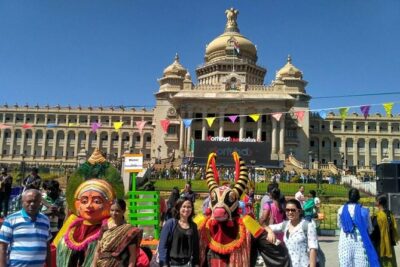 ★ 5.0Bangalore city tour with English guide & multi language supportFrom $115268 reviews
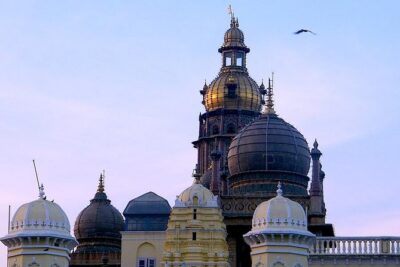 ★ 5.0Mysore tour from Bangalore by tourism ministry approved companyFrom $130226 reviews
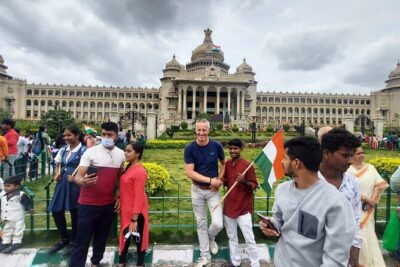 ★ 5.0Experience Bangalore – City Tour, Authentic Food & market (Food/Culture/History)From $65156 reviews
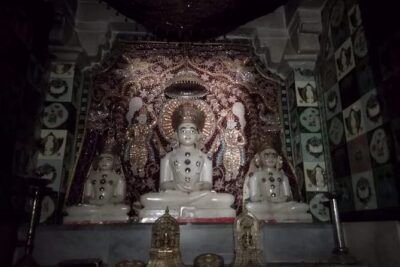 ★ 5.0Tipu Palace + Koté Vishnu + Fort + KR Market + Jain Temple = Bengaluru Pété WalkFrom $33150 reviews
 ★ 5.0Same Day Taj Mahal/Agra Tour From Bangalore with Return FlightFrom $653144 reviews
Browse the lists this tour appears in