
REVIEW · BUDDHIST PILGRIMAGE TOURS
Bodhgaya Day Tour (Hotel Pickup)
One day in Bodh Gaya can feel like a whole life story. This private tour strings together the top Buddhist and Hindu sacred stops around town, with flexible time at each place and hotel pickup so you can focus on seeing, not planning. It’s a solid value at about $32 for roughly 8 hours, especially if you want a smooth route through Mahabodhi Temple, major monasteries, and Vishnupad Temple.
I really like the practical pacing, you choose how long to linger at each stop instead of getting herded past everything. I also like the small comforts, including bottled water and a mobile ticket, which help on a long temple day. And in the most positive feedback, punctual hotel pickup and drivers who do not rush show up again and again, with names like Bablu (Bablu Kuma) and drivers such as Harinder mentioned for helpful, patient service.
One thing to consider: this tour may not include a formal guide in the way you might expect. If you’re counting on guided narration inside each temple, double-check what’s included before you go, since one unhappy experience complained about getting no guide on arrival.
In This Review
- Quick hits you should know before you go
- Bodh Gaya in One Day, without the guessing game
- Pickup, private group, and what you’re really paying for
- Mahabodhi Temple: the stop that sets the mood
- Great Buddha Statue to Metta Buddharam: quick stops with purpose
- Thai Monastery and Royal Bhutan Monastery: architecture you can spot fast
- Indosan Nippon Japanese Temple: modern Bodh Gaya in miniature
- Sujata Kuti: the story behind the sweetness
- Vishnupad Temple and Mangla Gauri: where religions overlap
- Vishnupad Temple, on the banks of the Phalgu River
- Mangla Gauri Temple, a Shakti Peetham stop
- Timing, heat, and how to actually enjoy the day
- The guide question: punctual, patient service versus guide expectations
- Who should book this Bodh Gaya day tour
- Should you book this tour?
- FAQ
- How long is the Bodhgaya Day Tour with hotel pickup?
- Does the tour include hotel pickup in Bodhgaya?
- Is this tour private?
- What major stops are included on the itinerary?
- Are admission tickets included or free?
- Is bottled water provided?
- What are the operating hours for this experience?
- What is the cancellation policy?
- What happens if weather is poor?
Quick hits you should know before you go
- Hotel pickup and a private route: you go as a personal group, not with strangers piling in.
- Your time, your pace: the schedule leaves room to slow down at the places that matter to you.
- Bottled water is included: helpful for the walking and heat between sites.
- Most admissions are free, with two paid stops: Vishnupad Temple and Mangla Gauri Temple have admission included, while others list free entry.
- A mix of Buddhist monasteries and key Hindu sites: you’ll see how layered Bodh Gaya can feel.
- Route flexibility can happen: at least one request-led swap showed up in feedback, like replacing Hindu-temple time with the Dungeshwari caves.
Other stops on the Buddhist circuit
Bodh Gaya in One Day, without the guessing game
Bodh Gaya is one of those places where your brain keeps saying, wait, we’re seeing all of this today? That’s exactly what this day tour is built for. You start with pickup, then move through a cluster of famous stops that are all tied to Bodh Gaya’s spiritual map.
The big win is focus. Instead of trying to stitch together tuk-tuks, temple opening times, and who goes where, you get a planned loop. You also keep a personal level of control, because the tour offers the ability to choose how long you spend at each stop. That matters here, since some places invite quiet time and others are better for a quick circuit.
Another nice touch is that the tour is priced like a straightforward local day outing, not a premium, all-day guide package. At around $32 for about 8 hours, it’s aimed at value and convenience, especially if you’re comfortable moving through religious sites at your own rhythm.
Pickup, private group, and what you’re really paying for
Let’s talk value in plain terms. At this price point, you’re not buying luxury. You’re buying transport between the main sights, plus a mobile ticket, plus included bottled water, plus the convenience of hotel pickup.
This is listed as a private tour/activity, meaning only your group participates. In practice, that often translates into fewer delays, less waiting on other people, and easier decision-making when you want to stay longer at Mahabodhi Temple or cut a stop short.
The schedule is also long enough to absorb the real world. Temple days have small delays: people entering and exiting, security checks, crowds, and the simple fact that you might want to take a few minutes to just look. The roughly 8-hour duration gives you slack to do that.
One caution from the experience mix: some travelers assume a guide will be present for explanations at every temple. The itinerary you have here does not clearly state a guide is included, and at least one strongly negative account centered on showing up without a guide. The operator later clarified that a guide is not included and that this is not where the product promises guided services.
So here’s my practical advice: if you want a guided deep explanation inside each site, message ahead and confirm whether a guide will join you, and what level of guiding you should expect.
Mahabodhi Temple: the stop that sets the mood
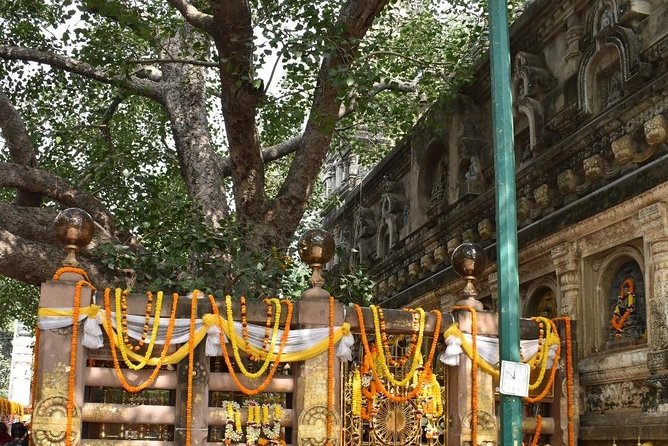
If you’re going to Bodh Gaya, Mahabodhi Temple is the center of gravity. This tour starts there for a reason, and the time allowance reflects its importance: about 1 hour 30 minutes. It’s a UNESCO World Heritage Site and marks the place where the Buddha is said to have attained enlightenment.
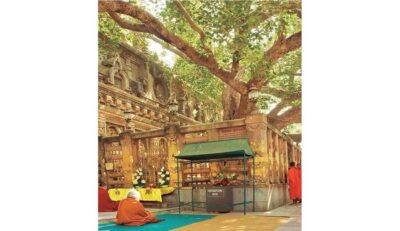
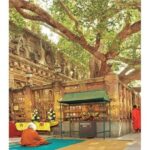
What makes Mahabodhi Temple special is not just the building. It’s the living focus of the story around it, including the Bodhi Tree inside the temple complex. That inner courtyard space changes the feel of the day. You go from moving through town to standing in a place that has a long spiritual reputation.
Plan for a slow approach. Even with a defined stop time, you’ll want to leave room for moving through the areas, taking in the details, and pausing when it feels right. Also note the itinerary lists admission for Mahabodhi Temple as free, which helps keep the day affordable.
Possible drawback: this is the most “must-see” site, so it can be busy. If crowds stress you out, treat the visit like a guided breathing exercise for your senses. Arrive with patience. The point is not to race, it’s to understand why people keep coming back.
Great Buddha Statue to Metta Buddharam: quick stops with purpose
After Mahabodhi, you shift into “see it, absorb it, move on” mode. This helps you keep energy for the later monasteries and the more distinct Hindu temple sites.
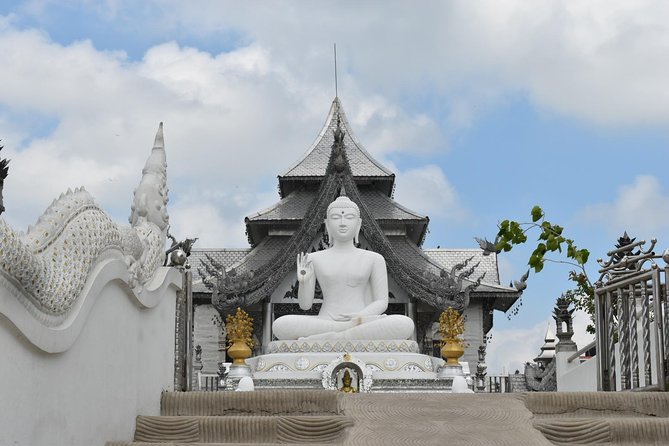
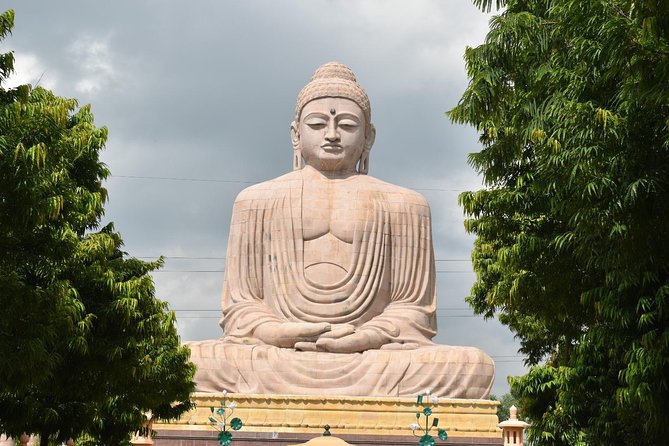
Great Buddha Statue comes next, with a 30-minute stop and free entry. The statue is a major pilgrimage marker on Bodh Gaya routes, and it’s described as 19.507 m (64 ft) tall in a seated meditation pose. Seeing it in open air gives you a different perspective than the temple interior you just visited. It’s like changing camera angles on the same story.
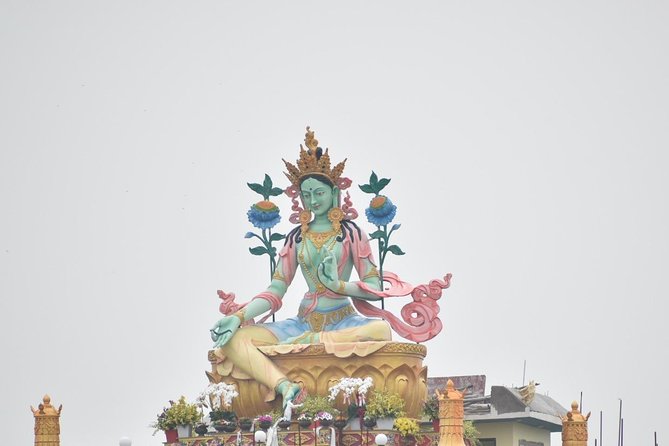
Then comes Metta Buddharam Temple, listed for about 30 minutes. This stop is more about aesthetics and sculptural atmosphere. The description calls it one of the most beautiful temples in Bodh Gaya, with impressive design and sculptures. Translation: bring your eyes, not just your feet.
Why these stops work on this itinerary:
- They keep momentum without packing you into back-to-back hours of standing.
- They offer different visual styles, so the day doesn’t blur together.
Thai Monastery and Royal Bhutan Monastery: architecture you can spot fast
Monasteries are where Bodh Gaya starts to feel like an international spiritual crossroads. This tour hits several, and each one has a clear identity.
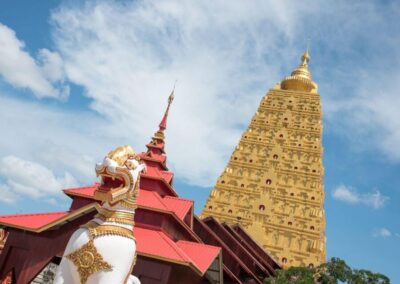
Thai Monastery is a 15-minute stop with free entry, located centrally in Bodh Gaya. Short time here usually means you’ll focus on the exterior look, the layout, and the first moments inside. This is one of those stops where you get the vibe quickly.
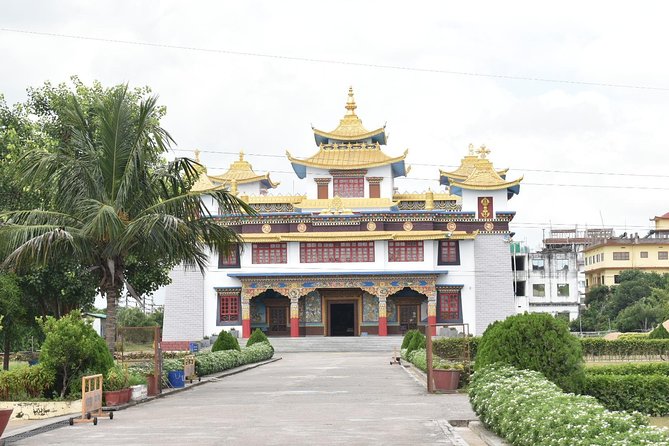
Next, Royal Bhutan Monastery for about 20 minutes, also free. The description says it was believed to be built by the King of Bhutan, in the name of Lord Buddha. The key thing for you is the art and work quality, since the itinerary notes that the monastery showcases intricate artwork.
Even though these are shorter stops, they help you connect the dots. You start noticing how different Buddhist communities express faith through design. If you like architecture and symbols, this portion of the day is a pleasant payoff.
Indosan Nippon Japanese Temple: modern Bodh Gaya in miniature
After the Bhutan stop, you’ll move to Indosan Nippon Japanese Temple with a 20-minute visit window and free entry. This one is described as a popular shrine in Bodh Gaya, built in 1972.
That year matters in a subtle way. It signals that Bodh Gaya’s religious landscape is not only ancient, it continues to grow and add new expressions. The temple is often a photographic stop, and it tends to be a calm pocket compared with the biggest sites.
At this point in the day, I’d suggest keeping your visit practical. Look around, take a few photos if allowed, then give yourself permission to move on. Don’t try to “solve” every temple detail in one go.
Sujata Kuti: the story behind the sweetness
Now the tour turns to a different kind of significance. Sujata Kuti is listed for about 1 hour and free entry. The description connects the spot to a moment in the Buddha’s life story: Sujata is said to have offered the Buddha sweet curd and rice.
A full hour is a strong hint that this stop is meant to be more than a quick glance. You’ll likely want time to read the context, walk through the area, and soak in the narrative meaning.
If you enjoy religious storytelling, this is the kind of stop that makes the temples feel connected rather than just separate buildings. It also provides a break in rhythm. After statues and monasteries, Sujata Kuti gives you a more narrative experience.
Vishnupad Temple and Mangla Gauri: where religions overlap
The late part of the itinerary includes two key Hindu sites, and this is where Bodh Gaya becomes more complicated in the best way.
Vishnupad Temple, on the banks of the Phalgu River
Vishnupad Temple is scheduled for about 30 minutes. Admission is listed as included. The description identifies it as an ancient Hindu temple dedicated to Lord Vishnu, located on the banks of the Phalgu river.
The belief attached to the site ties back to a story where Vishnu is said to have left his mark. Even if you don’t follow the Hindu story line closely, you’ll still feel how sacred the place is for visitors.
Practical note: religious sites can have varying access rules, and one piece of feedback described a situation where a visitor was unable to do certain Hindu-temple parts and the tour team adjusted, swapping to the Dungeshwari caves instead. That suggests the operator may try to accommodate special constraints on request.
Mangla Gauri Temple, a Shakti Peetham stop
Next is Mangla Gauri Temple, again about 30 minutes, with admission listed as included. The description places it under Shakti Peetham traditions and notes it’s mentioned in multiple scriptures.
This stop is a nice contrast to the earlier Buddhist-focused sites. It also gives you a sense of how local devotion in Bodh Gaya pulls multiple religious streams into the same geography.
Timing, heat, and how to actually enjoy the day
An 8-hour temple day is not a museum sprint. It’s a slow walk with lots of moments where you’ll want to stop.
Here’s how I’d handle it so you don’t end the day cranky:
- Keep a steady rhythm: spend the maximum time at the two places that matter most to you, then treat the shorter stops as quick visual checkpoints.
- Use the free time wisely: when a stop feels meaningful, stay, when it doesn’t, move. The tour’s structure supports that flexibility.
- Hydration matters: bottled water is included, but you’ll still want to sip consistently, especially between sites.
Also remember, Bodh Gaya’s schedule is weather dependent. The tour requires good weather, and if it’s canceled due to poor conditions, you’re offered a different date or a refund. That’s important if you’re traveling during monsoon season or heavy rain periods.
The guide question: punctual, patient service versus guide expectations
One of the most useful parts of the feedback is what it tells you about service style.
On the positive side, punctual pickup is highlighted. People also talk about drivers who do not rush. Names like Harinder and Asela appear in the compliments for waiting while the visitor finished at each stop. On the guiding side, one comment described a guide named Bablu who had limited English, but still provided an excellent tour and took the time needed at Mahabodhi and surrounding areas.
Now the tricky part: the negative account centered on a perceived mismatch between what was paid for and what arrived on the day. The operator response clarified that this tour does not include a guide and that it is not mentioned in the product. In other words, you should treat this as primarily a transport and sightseeing route, not a guaranteed guide-led lecture series.
So before you book, do this simple check: confirm whether any guide is included with your specific booking. If it’s not included, ask what you can expect for on-site explanations. If you need a true guided experience, you might want to arrange a separate guide for the temples.
Who should book this Bodh Gaya day tour
This tour fits best if you want:
- A structured route through key sights without planning every turn.
- Private pacing for your group, so you control how long to stay.
- A mix of Buddhism-focused sites plus major Hindu sites like Vishnupad and Mangla Gauri.
- A reasonable day price with water included and most admissions free.
It’s also a good fit if you like religious travel but don’t need constant narration. If you’re the type who enjoys reading signs, watching ceremonies from the edges, and letting the place speak, this itinerary gives you that space.
You might skip it or adjust expectations if:
- You specifically want an included, ongoing guide for deep explanations at each stop.
- You need full flexibility to remove or replace stops beyond what you request.
- You have mobility constraints that make repeated temple walking hard, since the itinerary includes several locations across Bodh Gaya.
Should you book this tour?
My take: this is a strong value if your goal is “see the main sites without hassle.” The included bottled water, hotel pickup, and private group setup make it feel like a practical day out rather than a cramped group tour.
The biggest decision point is not the sights, it’s expectations about guidance. If you’re okay with a driver-led sightseeing route and you’re happy to use your own curiosity at each temple, you’ll likely enjoy how efficiently the day flows. If you want a guide, confirm it upfront so there’s no surprise.
If you want a safe bet, plan your day around Mahabodhi Temple and Sujata Kuti as your anchor stops. Treat the monasteries and statue as rhythm makers, then finish with Vishnupad and Mangla Gauri if you’re up for the religious overlap.
FAQ
How long is the Bodhgaya Day Tour with hotel pickup?
The tour is listed as approximately 8 hours.
Does the tour include hotel pickup in Bodhgaya?
Yes. Hotel pickup is included.
Is this tour private?
Yes. It’s described as a private tour/activity, with only your group participating.
What major stops are included on the itinerary?
The itinerary includes Mahabodhi Temple, Great Buddha Statue, Metta Buddharam Temple, Thai Monastery, Royal Bhutan Monastery, Indosan Nippon Japanese Temple, Sujata Kuti, Vishnupad Temple, and Mangla Gauri Temple.
Are admission tickets included or free?
Many stops list admission as free, including Mahabodhi Temple, Great Buddha Statue, Metta Buddharam Temple, Thai Monastery, Royal Bhutan Monastery, Indosan Nippon Japanese Temple, and Sujata Kuti. Vishnupad Temple and Mangla Gauri Temple list admission as included.
Is bottled water provided?
Yes. Bottled water is included.
What are the operating hours for this experience?
The tour is listed as running Monday through Sunday from 6:00 AM to 9:00 PM.
What is the cancellation policy?
Cancellation is free if you cancel at least 24 hours in advance of the experience start time. If you cancel less than 24 hours before, the amount paid is not refunded.
What happens if weather is poor?
The experience requires good weather. If it’s canceled due to poor weather, you’ll be offered a different date or a full refund.
The Buddhist Circuit Continues
Recently reviewed across Bodh Gaya
- Varanasi to Bodhgaya : A day trip of Enlightment exploration
★ 4.9 · 19 reviews - Full-Day Private Guided Bodhgaya Tour with Pick Up
★ 5.0 · 20 reviews
Buddhist Pilgrimage Tours, compared.
 ★ 5.03 Hour Walking Tour of Buddhism in SarnathFrom $33160 reviews
 ★ 4.9Full-day private Varanasi tour with AC car, boat & SarnathFrom $61103 reviews
 ★ 4.7Varanasi & Sarnath: Full-Day Tour with Ganges Boat RideFrom $5587 reviews
 ★ 4.8Buddhist Kanheri Caves with Golden Pagoda TempleFrom $2847 reviews
 ★ 5.0Mumbai Kanheri Caves & Golden Pagoda – A Buddhist SettlementFrom $2328 reviews
 ★ 5.010 Hours Morning Ganges Tour including Sarnath and Ganga ArtiFrom $6426 reviews
 ★ 5.0Private Kanheri- Buddhist Cave TourFrom $8524 reviews
 ★ 4.8Varanasi to Bodhgaya: A Day of Spiritual ExplorationFrom $9222 reviews
Browse the lists this tour appears in