
REVIEW · BUDDHIST PILGRIMAGE TOURS
3 Hour Walking Tour of Buddhism in Sarnath
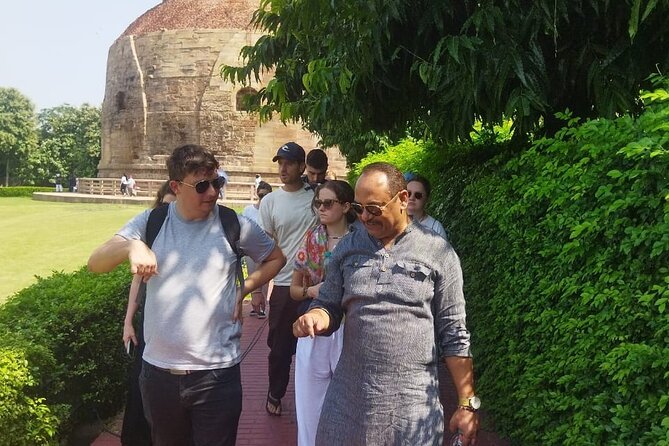
Sarnath gives you Buddhism in tight, walkable form. This 3-hour private experience is built around Dhamekh Stupa and the nearby museum visit, so you see the major sights without wasting time. I especially like how it’s structured for history and spirituality in a small window, and the visit to the Ashok Pillar at the museum gives you an easy way to connect ancient symbolism to modern India.
One thing to plan for: this tour needs good weather, so if conditions are rough, you may need to switch dates or adjust your expectations.
In This Review
- Key highlights you will feel right away
- Sarnath in 3 hours: what you really squeeze in
- Dhamekh Stupa: the story place you can picture
- Museum stop: the Ashok Pillar connection you can use
- Mulagandhakuti Vihara Temple: a later layer with meaning
- Walking the ruins, temples, stupas, and monuments
- A quick reality check: why pacing matters
- Private tuk tuk from Varanasi: logistically low stress
- Price and value: is $33.55 reasonable?
- The guide makes it: humor plus clear English
- Who this tour suits best (and who might skip it)
- Practical tips for your 3-hour Sarnath walk
- Should you book this Sarnath walking tour?
- FAQ
- What is the duration of the 3 Hour Walking Tour of Buddhism in Sarnath?
- Where does the tour start and end?
- Is pickup included?
- Is the tour private?
- Does the tour include admission tickets?
- What ticket type is used?
- What happens if the weather is poor?
Key highlights you will feel right away
- Dhamekh Stupa first, the anchor stop tied to the story of Buddha’s first sermon
- Ashok Pillar with the four guardian lions, plus context you can actually use
- Museum time included, so the ruins do not stay confusing blobs of stone
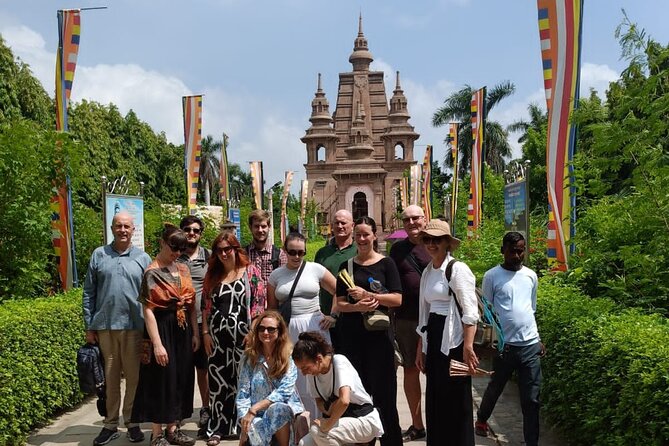
- Mulagandhakuti Vihara Temple, linked with a temple built by the Sri Lankan Mahabodhi Society
- Private tour format, meaning your guide can pace things for your group
- Roundtrip tuk tuk from Varanasi, so your day does not depend on local transport
Other stops on the Buddhist circuit
Sarnath in 3 hours: what you really squeeze in
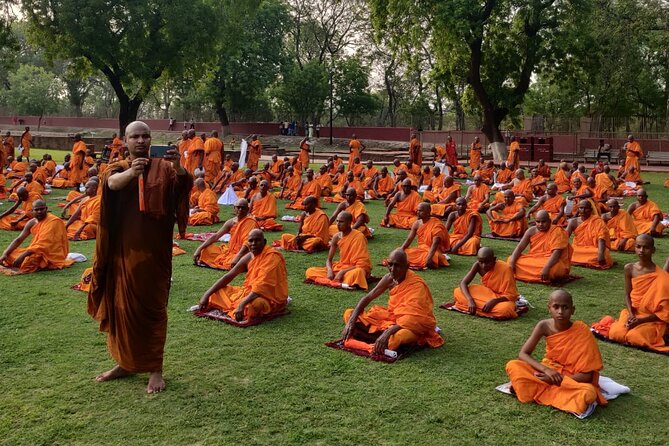
Sarnath is only about 10 km from Varanasi, but it feels like a different world the moment you start walking around. This tour is designed for people who want depth without turning the day into a full-day marathon. In about 3 hours, you focus on the core religious and historical ideas of the area: the Buddhist sites tied to Buddha’s life, and the learning tradition that grew here over centuries.
I like that this is a walking tour, not a quick drive-by. You get time to look at how the buildings sit in the landscape, and you can ask questions while you’re moving. That matters in Sarnath, because the stones and monuments can look similar if you only see them for a minute. A guide helps you connect what you are seeing with why it mattered.
Also, the private setup means the day stays more personal. Your group only participates, so you are not stuck following a rushed crowd pace. If you are a solo traveler, that can be a relief. One person specifically highlighted a guide named Shyam as both humorous and easy to follow in English, which is exactly what you want when you have limited time and big concepts to understand.
Dhamekh Stupa: the story place you can picture
The heart of this tour is Dhamekh Stupa, Sarnath’s best-known landmark. It’s famous as the place connected to the tradition of Gautama Buddha delivering his first sermon after enlightenment. Even if you already know the basic outline of Buddhist history, standing near Dhamekh Stupa helps the story land in a physical way.
Around it, you also see the broader Sarnath setting: ruins, a temple area, and the sense of an ancient complex that served as a major center of study. Sarnath was a renowned school of learning from the 6th century BC to the 12th century AD. That time span is huge, and it explains why you see layered remains rather than a single, clean historical snapshot.
What I like about starting here is that it sets a clear theme. You are not just collecting photos. Your guide can anchor the walking route to the big idea that Sarnath was both sacred and intellectual, a place where teachings traveled through study as much as through devotion. If you care about spirituality but also about how history develops, this framing helps you make sense of the stones you are looking at.
Museum stop: the Ashok Pillar connection you can use
A major bonus is the museum visit paired with the Stupa area. One of the standout pieces is the Ashok Pillar, famous for the four guardian lions. You will hear how these lions became part of independent India’s national emblem. That is a small detail, but it is a strong payoff: you leave Sarnath with a symbol that shows up far beyond religious context.
If you like museum objects because they turn history into something concrete, this stop is worth your time. The pillar is not just a statue to glance at. It ties ancient craftsmanship to a modern national identity, and your guide can help you connect why that continuity matters.
- The Ultimate 1 Day in Varanasi – How to Spend 13 Hours – Private Guided Tour★ 5.0 · 295 reviews
- A Journey of A lifetime★ 5.0 · 272 reviews
- Varanasi: Hidden Secrets of Vibrant Tradition (Guided Tour)★ 4.9 · 176 reviews
- Private Heritage and Spiritual Walk Tour – Varanasi Kashi★ 5.0 · 172 reviews
- 3 Hour Walking Tour of Buddhism in Sarnath★ 5.0 · 160 reviews
Mulagandhakuti Vihara Temple: a later layer with meaning
After the Dhamekh Stupa area and the museum, you spend time around other important temple sites connected to Sarnath’s Buddhist traditions. One temple highlighted here is the Mulagandhakuti Vihara Buddhist Temple, built in 1931 by the Sri Lankan Mahabodhi Society.
This kind of detail is why I think this tour works for curious travelers. You are not only seeing medieval remnants or ancient ruins. You are also seeing how communities kept the Sarnath story alive and continued building religious spaces long after the early centuries. The temple is connected to the tradition of where Buddha spent time, so it functions like a living interpretation of the sacred landscape, not just a reconstruction.
Even when the structure itself is newer than the ruins, it helps you understand how sacred places keep evolving. People adapt sites to their own era’s needs, while still aiming at the same spiritual memory. If you enjoy that blend of old and newer reverence, this is a good stop.
Walking the ruins, temples, stupas, and monuments
The tour is about seeing Sarnath at a walking pace, which changes the experience in a practical way. With a guide, you can notice how the site is laid out, how different structures relate to each other, and how pathways guide you through the sacred space.
Sarnath is known for ancient ruins, temples, stupas, and monuments, and this walking format makes all of that easier to sort in your mind. You are not trying to memorize a list. You are moving between points, learning what each one contributes, and getting a sense for how the whole area once functioned as a center of faith and teaching.
A quick reality check: why pacing matters
Three hours is not long, so your time has to be spent well. The best part of this tour is that it focuses on the major, high-meaning stops rather than spreading you too thin. You get the anchor landmark at the start, then you build understanding with the museum and temple visits, and finally you take in the broader complex elements on foot.
The main drawback, from a practical standpoint, is that walking will be part of the experience. The good news is that most travelers can participate, and the tour is designed around a half-day pace. The other point is weather. Because the tour requires good weather, you may want to keep your clothing and plans flexible, especially if you are visiting during harsher conditions.
Private tuk tuk from Varanasi: logistically low stress
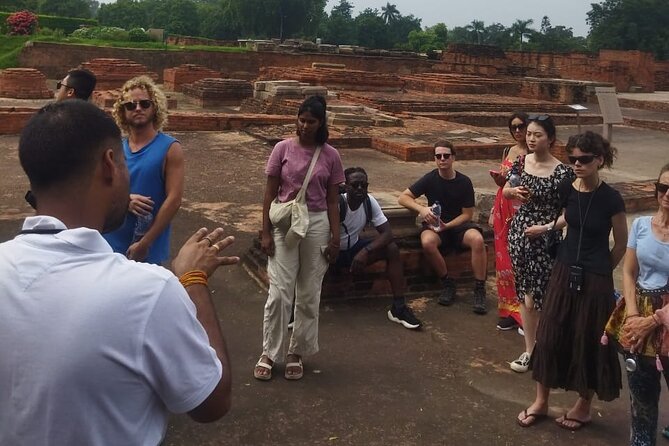
One of the most valuable parts of this experience is that transportation is handled for you. You get roundtrip tuk tuk transport from Varanasi, which means you are not coordinating a patchwork of local rides and timing.
The meeting point is clearly set: JHV Mall, The Mall Rd, Varanasi cantonment, Varanasi, Uttar Pradesh 221002, India. The tour also ends back at the meeting point. That matters more than people think. When your return is pre-planned, you are free to spend your attention on Sarnath instead of doing mental math about how you will get back.
Pickup is offered, and there is also a mobile ticket. Both are small conveniences, but together they reduce friction when you are traveling through a busy city. If you like to start your day with less hassle, this format is a solid fit.
Also, the site is easily reachable from Varanasi, about 10 km away. That short distance helps keep the day focused on the walking and viewing rather than long transit time.
Price and value: is $33.55 reasonable?
At $33.55 per person, the price might look simple on paper, but the value depends on what is included and how much it saves you. Here, you are paying for a private guide experience, a guided walking route, and roundtrip tuk tuk transport from Varanasi. You are also getting admission ticket coverage as part of the experience.
When tours include transport and entry, you remove common hidden costs. More importantly, you remove common time costs. In places like Varanasi and Sarnath, saving time is not just about convenience. It is about keeping your energy for the sights that matter most.
This tour is a strong value if you fall into any of these categories:
- You want a guide to interpret Buddhist art and sacred sites without guessing
- You prefer private pacing over group herding
- You want transport solved so you can spend the half-day actually looking
If you are the kind of traveler who enjoys doing sites independently, you might not need a guide. But if you want meaning, and you only have a few hours, this is one of those prices that feels fair because you are not paying extra for logistics you can avoid.
The guide makes it: humor plus clear English
One of the best signals for this tour is how people describe the guide experience. A review shared that the guide, Shyam, was knowledgeable and humorous, and that his English was easy to follow for a Japanese solo traveler. That detail matters because Sarnath is not just scenic. It is layered. Without good explanation, you can leave with good photos and not much understanding.
So what should you look for in your own guide experience? You want someone who can:
- Explain why Dhamekh Stupa matters in the Buddha story
- Connect the museum pieces to larger themes
- Help you distinguish ruins, temples, and stupas by purpose, not just by shape
Based on the way Shyam was described, this tour is likely to deliver that kind of clear, friendly narration. Add the private tour format, and you get more room for questions and pacing that works for your group.
Who this tour suits best (and who might skip it)
This is a smart choice if you love history and spirituality and you want both within a short half-day. The balance here is key. You are not only sitting and listening. You are walking a route that keeps the story grounded in real places.
You will likely enjoy this most if you:
- Have limited time in Varanasi and want a high-meaning Sarnath visit
- Prefer a private experience over crowded group tours
- Like guides who explain ideas in straightforward English
- Want a structured visit that includes the key sacred and interpretive stops
You might consider skipping or comparing options if:
- You strongly dislike walking at outdoor sites, since the tour is a walking format
- Weather is uncertain for your travel dates, since good weather is required
Practical tips for your 3-hour Sarnath walk
You do not need a complicated plan to enjoy this tour, but a few practical choices will help.
First, dress for warmth and walking. Even if the day is mild, Sarnath is outdoors and you will be outside while moving between ruins and temples. Wear comfortable shoes you can walk in confidently.
Second, bring something simple for water and basic comfort. It is a short tour, but you are still outside for a few hours.
Third, treat Dhamekh Stupa and the museum time like your priority. If you rush, you miss the point. This tour’s whole value is interpretation, especially around the Dhamekh Stupa story and the Ashok Pillar symbolism.
Finally, if you care about getting the most out of your guide, come with one or two questions. For example, ask how Sarnath became a center of learning for centuries, or how modern national symbolism connects to older Buddhist heritage. Those kinds of questions match what this tour is set up to explain.
Should you book this Sarnath walking tour?
I think this is a strong booking if you want a focused, meaningful Sarnath visit without logistics headaches. The big wins are the Dhamekh Stupa anchor stop, the Ashok Pillar museum connection to modern India, and the private pace with a guide like Shyam who is described as humorous and easy to understand.
The main caution is weather. If it is not good, plan for changes, because this tour requires good conditions. Also, since it is a walking tour, pack for comfort.
If you are in Varanasi for a short time and want to understand Sarnath beyond surface sightseeing, this tour is built for you. It is also a good value because it pairs guiding, transport, and entry coverage into one tidy half-day block.
FAQ
What is the duration of the 3 Hour Walking Tour of Buddhism in Sarnath?
It runs for about 3 hours.
Where does the tour start and end?
The tour starts at JHV Mall, The Mall Rd, Varanasi cantonment, Varanasi, and it ends back at the meeting point.
Is pickup included?
Pickup is offered.
Is the tour private?
Yes, it is private, and only your group participates.
Does the tour include admission tickets?
Admission ticket is included.
What ticket type is used?
You can use a mobile ticket.
What happens if the weather is poor?
The experience requires good weather, and if it is canceled due to poor weather, you will be offered a different date or a full refund.
The Buddhist Circuit Continues


Recently reviewed across Varanasi
- Varanasi: Sunrise Boat Tour and Heritage Walk with transfers
★ 5.0 · 10 reviews - Varanasi Mysteries Walk: A Journey through Life and Death
★ 5.0 · 10 reviews - Omvity’s Full-Day Varanasi Tour: Sunrise Boat to Sunset Aarti
★ 5.0 · 10 reviews - Cycle of Life, Death & Rebirth (2 Hours Guided Walking Tour)
★ 4.5 · 10 reviews - Varanasi: Private Heritage Walking Tour & Sunrise Boat Ride
★ 4.9 · 11 reviews - Varanasi: Ganga Arti Evening Light Ceremony on the Main Ghat
★ 4.1 · 11 reviews
Buddhist Pilgrimage Tours, compared.
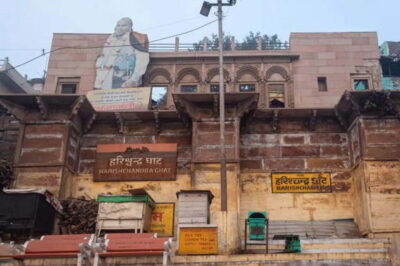 ★ 4.9Full-day private Varanasi tour with AC car, boat & SarnathFrom $61103 reviews
 ★ 4.7Varanasi & Sarnath: Full-Day Tour with Ganges Boat RideFrom $5587 reviews
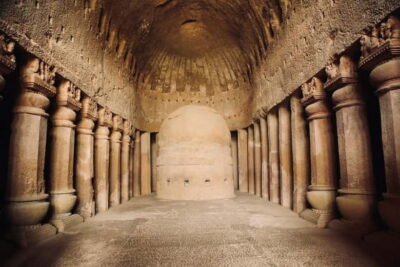 ★ 4.8Buddhist Kanheri Caves with Golden Pagoda TempleFrom $2847 reviews
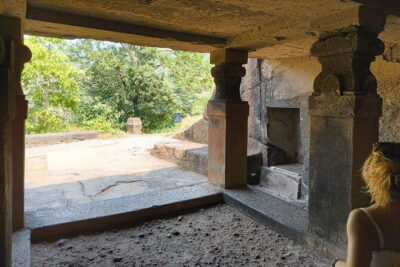 ★ 5.0Mumbai Kanheri Caves & Golden Pagoda – A Buddhist SettlementFrom $2328 reviews
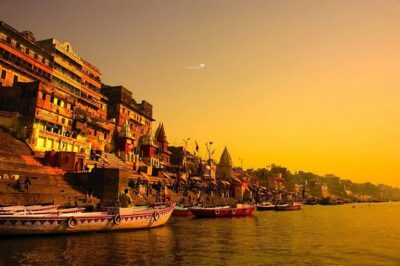 ★ 5.010 Hours Morning Ganges Tour including Sarnath and Ganga ArtiFrom $6426 reviews
 ★ 5.0Private Kanheri- Buddhist Cave TourFrom $8524 reviews
 ★ 4.5Bodhgaya Day Tour (Hotel Pickup)From $3223 reviews
★ 5.0Mumbai Kanheri Caves & Golden Pagoda – A Buddhist SettlementFrom $3422 reviews
★ 4.5Bodhgaya Day Tour (Hotel Pickup)From $3223 reviews
★ 5.0Mumbai Kanheri Caves & Golden Pagoda – A Buddhist SettlementFrom $3422 reviews
Browse the lists this tour appears in