
REVIEW · GOLDEN TRIANGLE TOURS
Golden Triangle 6 Days
Delhi to Jaipur in six days sounds like a lot, but it’s built for people who want the big sights without wrestling transport. I like that you get hotel pickup and drop-off plus guided commentary, so you spend less time guessing and more time seeing. I also like that skip-the-line privileges at many stops help you keep the day moving. One thing to consider: monument entrance fees are not included, so you’ll still need to budget for tickets once you reach each site.
If you’re aiming for the Golden Triangle highlights, this is the kind of plan that keeps your logistics simple. You’re covering Delhi’s Mughal-era monuments, Agra’s Taj Mahal morning, and Jaipur’s Rajasthan showpieces with one consistent flow of transport across cities. The group pace can feel energetic, especially in Delhi, where crowds and traffic are part of the experience.
This works best if you want structure (a set order of sights) and if shared hotels won’t bother you. If you prefer slow days, deep wandering, and lots of free time, you might feel the schedule is tight.
In This Review
- Key highlights worth noting
- Why the Golden Triangle Works So Well in 6 Days
- Day 1 in Delhi: Airport pickup and a smooth landing
- Day 2 in Delhi: Qutub Minar, Humayun’s Tomb, Red Fort, Jama Masjid, Lotus Temple
- Qutub Minar and the UNESCO complex
- Humayun’s Tomb
- Red Fort and Old Delhi energy
- Jama Masjid
- Lotus Temple
- Day 3 Agra: Agra Fort and Mehtab Bagh’s Taj view
- Day 4: Sunrise-style Taj Mahal plus Fatehpur Sikri
- Day 5 Jaipur icons: Amber Palace to Jal Mahal
- Amber Palace
- City Palace of Jaipur
- Jantar Mantar
- Hawa Mahal
- Jal Mahal
- Getting along with traffic: the driver and guide advantage
- Skip-the-line perks, but plan for tickets
- Value at $544.27: what you’re paying for (and why it can make sense)
- Where the schedule might feel tight
- Shared hotels and comfort: what to expect
- Day 6 wrap-up: Jaipur to Delhi by road or flight
- Should you book this Golden Triangle 6 Days tour?
- FAQ
- Which cities does the Golden Triangle 6 Days tour include?
- How long is the tour and how many nights are included?
- Is hotel pickup and drop-off included?
- Do you get a guide and skip-the-line access?
- Are monument entrance fees included?
- What meals are included?
- Is this tour private, and what is the cancellation window?
Key highlights worth noting
- Five shared nights with breakfast keeps your lodging and meals handled
- Hotel pickup and drop-off removes the hardest part of planning in three cities
- Local guide on every leg helps you understand what you’re looking at
- Skip-the-line privileges at many stops can cut down the worst waiting
- All transportation between Delhi, Agra, and Jaipur is included
- Day 4 sunrise Taj Mahal timing gives you a classic best-practice moment
Shortlisting? Every Chandigarh trip below went through the same review.



Why the Golden Triangle Works So Well in 6 Days

The Golden Triangle is popular for a reason: three cities, one story arc. Delhi gives you the capital’s layered past and present. Agra is the Mughal-era spotlight, and Jaipur delivers Rajasthan’s fort-and-palace identity in a way that’s easy to recognize.
Six days is a sweet spot for first-timers. You get the headline monuments you came for, but you also still have time to connect the dots. With a guide and set transportation, you’re not burning your day on ticket lines, finding entrances, or negotiating rides between neighborhoods.
The tradeoff is that it’s not a “hang out” trip. Expect to move. If you like your travel with a schedule, this style fits well. If you hate rushing, plan on taking quieter moments when you can, like brief stops for a snack or tea between major sights.
Day 1 in Delhi: Airport pickup and a smooth landing
Your first day is practical: the driver picks you up from the airport and transfers you to a Delhi hotel. That matters more than you might think. After a flight, the last thing you want is figuring out public transport, distance, or where to stand to hail a car.
Once you’re checked in, the day is basically an overnight reset. You’re not hit with a full agenda right away, which helps you handle jet lag or travel fatigue without feeling like you missed the best parts.
If you’re sensitive to first-day stress, this is a good approach. It’s also useful if you want an easier night before you tackle a dense day in Delhi the next day.
Day 2 in Delhi: Qutub Minar, Humayun’s Tomb, Red Fort, Jama Masjid, Lotus Temple
Delhi day is about scale and variety. You’re covering a UNESCO site, major Mughal tomb architecture, the Mughal fort powerhouse, one of India’s largest mosques, and a modern spiritual landmark.
- 5 Day Golden Tingle Luxury Private Tour with Guide★ 5.0 · 10 reviews
Qutub Minar and the UNESCO complex
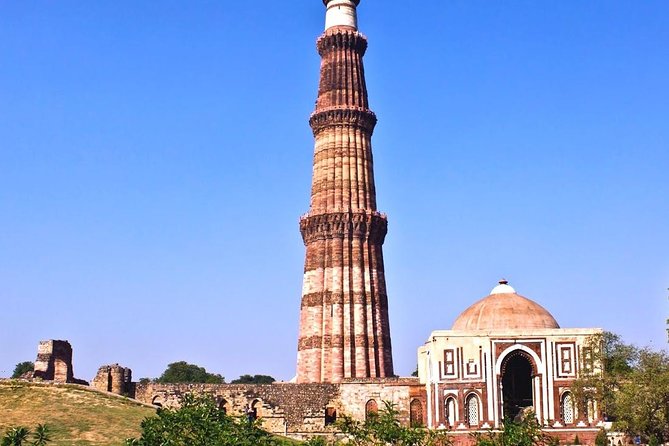
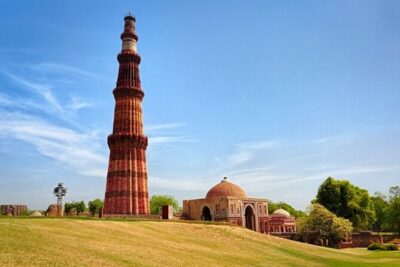
Qutub Minar is the tapering tower that anchors the Qutb complex. It’s listed as a 73-metre tall five-story minaret, and you’ll feel why it’s famous the moment you see it up close. Plan for walking and time on site, and expect that this stop pairs well with your guide’s explanations because the complex has layers.
One note: admission tickets are not included here, so you’ll want to have money or a payment option ready before you arrive.
Humayun’s Tomb
Humayun’s Tomb is the Mughal emperor’s tomb, commissioned in 1569 to 1570. This is one of those sights where a guide helps you notice what makes it important historically and architecturally, especially if you’re comparing it to other Mughal-era tombs you’ll see later.
The payoff is atmosphere. You’re not just looking at a single building; you’re looking at the idea of royal power translated into stone and gardens.
Red Fort and Old Delhi energy
The Red Fort is a Mughal fort built in the mid-17th century by Shah Jahan. It’s typically a big draw, and the visit duration is set at about an hour. That means you’ll get the essentials, not endless wandering.
If you want slower exploring, you might want to save extra time later. For this tour, the guide and the schedule keep it focused, and that’s part of the value.
Jama Masjid
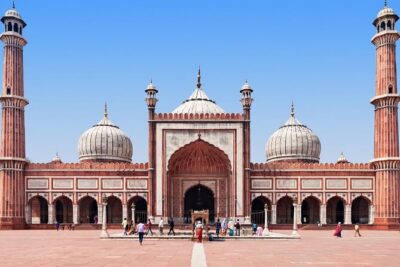
Jama Masjid is one of the largest mosques in Delhi. It’s described as built by Shah Jahan, and it’s a shorter stop on the day, around 30 minutes.
This is also where you’ll feel the living city around you. Even with a fast stop, you’ll likely notice crowds, movement, and everyday religious life nearby.
Lotus Temple
The Lotus Temple, dedicated in 1986, is modern and distinctive, designed with a flowerlike shape. It’s a quick stop at about 30 minutes, which makes it a good palate cleanser after older Mughal monuments.
It’s also a nice reminder that Delhi isn’t only ancient. You’re ending the day with a place that feels contemporary and open.
Day 3 Agra: Agra Fort and Mehtab Bagh’s Taj view
Agra Fort is your first stop. It was the main residence of Mughal emperors until 1638, when the capital shifted to Delhi. That time period matters because it explains why Agra’s fortification and court buildings look the way they do.
Then you head to Mehtab Bagh, often described as an excellent Taj Mahal viewing spot. You get about an hour here, which is a realistic amount of time for taking in the view and walking the gardens at a comfortable pace.
Why this combination works: the fort gives you Mughal power in defense and administration form, while Mehtab Bagh sets you up for the next day’s Taj Mahal experience. If you’re the type who enjoys visual building toward a highlight, this pairing makes the Taj day feel earned.
Day 4: Sunrise-style Taj Mahal plus Fatehpur Sikri
This is the day most people remember. The tour schedules an early visit for Taj Mahal, specifically around sunrise timing or after breakfast, described as the best time to visit. That’s a smart idea because light changes quickly, and early hours can mean a calmer start compared with later crowds.
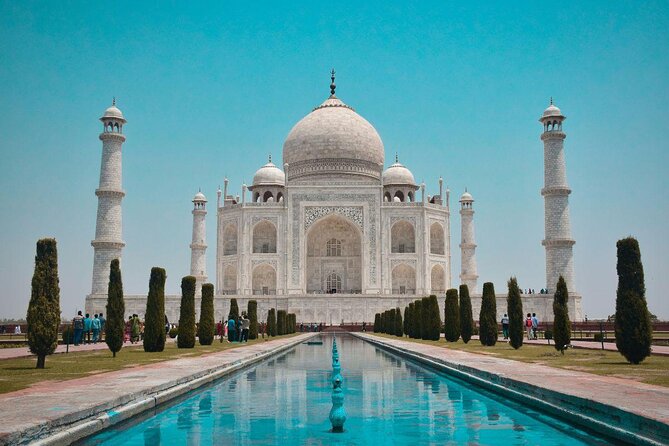
Taj Mahal is built by Mughal Emperor Shah Jahan in memory of Mumtaj, completed between 1631 and 1653. Two hours is enough time to see it properly without turning it into a sprint. With a guide, you’ll likely get help reading the marble, the layout, and the symbolism that makes this monument more than just a photo stop.
After Taj Mahal, you travel back and then depart Agra for Jaipur, with a stop at Fatehpur Sikri. Fatehpur Sikri is described as Akbar’s dream capital. Admission here is listed as free, which is a nice bonus in a day that includes a major paid highlight.
Fatehpur Sikri also works as a bridge between cities. You leave Agra feeling like you didn’t just see one landmark, you traced the larger Mughal story that connects multiple places.
Day 5 Jaipur icons: Amber Palace to Jal Mahal
Jaipur on this tour is packed with recognizably “Jaipur” sights. You’ll hit the fort, the city’s royal core, a remarkable astronomical observatory, the signature palace façade, and even a palace on a lake.
Amber Palace
Amber Palace (Amer Fort) sits about 11 kilometers from Jaipur. It’s one of the most famous forts of Rajasthan, and it’s also your first big Jaipur architecture stop, around two hours.
This is where you see how Rajasthan royalty lived and projected authority. It’s also a stop where timing matters for comfort, since you’ll be walking through spaces that can get hot depending on the season.
City Palace of Jaipur
The City Palace sits at the center of Jaipur’s planned city grid. Jaipur is described as the first planned city of medieval India, divided into nine blocks, with the royal palace at the center. You get about an hour here.
This stop is ideal if you want context. It helps you understand why Jaipur looks the way it does, not just what the buildings look like.
Jantar Mantar
Jantar Mantar is a collection of nineteen architectural astronomical instruments built by Sawai Jai Singh II, founder of Jaipur. The stop is set at about 45 minutes.
This is a great “wait, that’s science?” kind of moment. It turns the trip from only visual sightseeing into something more intellectual, in a way that’s still very watchable.
Hawa Mahal
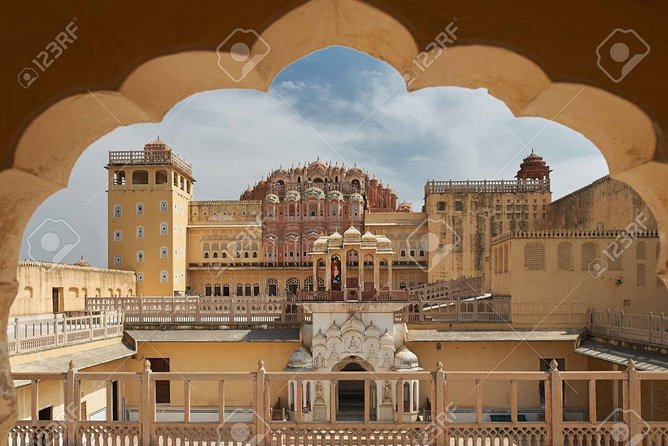
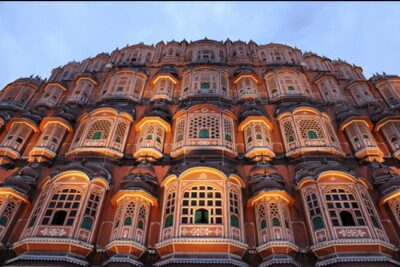
Hawa Mahal, the Palace of Wind, is built with red and pink sandstone and sits along the edge of the City Palace extending to the zenana. It’s only about 30 minutes on the schedule.
You’ll still get the key view, but if you’re fascinated by façades and narrow-window design, you might want extra time later. On this tour, it’s more of a highlight stop than a deep study.
Jal Mahal
Jal Mahal, meaning Water Palace, sits in the middle of Man Sagar Lake. It’s a short 15-minute stop, with admission listed as free.
Think of this as a quick photo and perspective moment. It gives Jaipur a softer, watery angle after the fort and palace intensity.
Getting along with traffic: the driver and guide advantage
The biggest quality-of-life win on this tour is how it handles movement between sites. In Delhi and Agra especially, traffic can be chaotic. A well-run driver can turn a stressful day into something manageable.
In the feedback tied to this tour style, drivers like Surendra are repeatedly praised for being careful behind the wheel and for English communication that helps you feel less lost. Another name that comes up is Sumit, also described as kind and informative. When you see that pattern across different trips, it suggests the service focus is real: people care about making the day work for you.
Your local guide is the other half. The itinerary is not just a list of names. You’ll get commentary that helps you interpret what you’re standing in front of, from Mughal tomb design to what Jaipur’s observatory is doing.
One more practical benefit: when you’re moving city to city, having a guide and driver reduces the mental load. You’re not bouncing between apps, tickets, and directions, and that matters when you want to enjoy the day rather than solve it.
Skip-the-line perks, but plan for tickets
The tour includes skip-the-line privileges at many stops, which can be a big time saver. In real life, “skip-the-line” often means you still follow an entry process, but you’re not stuck in the longest queues.
What you should know upfront: monument entrance fees are not included. That means you might still pay at the gate for several sights, depending on the site rules.
The best approach is to treat this tour like a package of logistics plus guide time, not a fully ticketed pass. Budget for entrance fees so the day stays stress-free.
Value at $544.27: what you’re paying for (and why it can make sense)
At $544.27 per person, you’re not just buying admission. You’re buying the structure: five shared nights with breakfast, a guide, pickup and drop-off, and transport across Delhi, Agra, and Jaipur.
If you tried to build this trip alone, you’d spend time on at least three hard parts:
- coordinating car and driver time between cities
- figuring out guides for each major stop
- handling the “where do we go next” problem during busy days
This tour bundles those moving pieces so you can focus on sights.
Is it the cheapest way? It might not be. But it’s often good value if you want a smooth experience and don’t want to spend your vacation turning into a travel planner.
Also, the “private tour” part matters. You’re with your own group, not forced into random pairings, and that usually makes the day feel more comfortable, especially in traffic.
Where the schedule might feel tight
Because you’re covering so many major sights, there’s less room for wandering off-plan. Some stops are around 30 minutes, like Jama Masjid and Lotus Temple. That doesn’t mean they’re not worth it. It just means you’ll likely see the essentials rather than spending half a day exploring every corner.
Delhi is also naturally intense. You’ll be out in city energy, and even with a guide, you’ll move faster than you might on a slower itinerary.
If you want to shop, linger, or take long breaks, plan those around the edges of the day, not in the middle of the set stops.
Shared hotels and comfort: what to expect
You get five nights of shared accommodations with breakfast. Shared can mean different room setups depending on your group size, and you should be ready for that.
The good news is that meals and lodging are handled, so you’re not hunting for food after long sightseeing blocks. The included breakfast is listed as 4 breakfasts, so you’ll want to confirm how the first and last days are handled in practice for your dates.
For packing, think practical. You’ll be doing fort and monument walking, likely in warm conditions at some point. Comfortable shoes and a light layer help, and bring sun protection because Jaipur and Agra days can be bright.
Day 6 wrap-up: Jaipur to Delhi by road or flight
Your final day is departure from Jaipur to Delhi. The plan notes about 5 hours of driving, and it also gives you the option to take a flight from Jaipur if your schedule allows.
This flexibility is useful. If your flight timing needs it, you’re not locked into one transportation method.
The main takeaway: this isn’t a “stay in Jaipur late” finale. It’s a trip that ends with getting you to your next step smoothly.
Should you book this Golden Triangle 6 Days tour?
Book it if you want the Golden Triangle at a fast, organized pace with pickup, drop-off, transport, and a guide doing the hard work. It’s especially good for first-timers who want the major landmarks without turning every day into logistics.
Skip it or adjust expectations if you want long unscheduled time, slow museum-style browsing, or you don’t like a tight schedule. Some stops are short by design, and Delhi in particular can feel like a “see it, then move on” day.
If you do book, I’d recommend you budget for monument entrance fees and keep your mindset flexible. You’ll get the big sights in a way that’s easier than doing it solo, and the early Taj timing plus the guide context makes the whole week feel purposeful rather than just rushed.
FAQ
Which cities does the Golden Triangle 6 Days tour include?
The tour focuses on the Golden Triangle cities of Delhi, Agra, and Jaipur.
How long is the tour and how many nights are included?
The duration is approximately 6 days, with five nights of shared accommodations.
Is hotel pickup and drop-off included?
Yes. Hotel pickup and drop-off are included, including an airport pickup on Day 1 to transfer you to a Delhi hotel.
Do you get a guide and skip-the-line access?
Yes. A local guide is included, and the tour offers skip-the-line privileges at many stops.
Are monument entrance fees included?
No. Monument entrance fees are not included.
What meals are included?
Breakfast is included four times in the package.
Is this tour private, and what is the cancellation window?
This is a private tour/activity, meaning only your group participates. Free cancellation is available if you cancel up to 24 hours in advance for a full refund.
Recently reviewed across Chandigarh
- 5 Day Golden Tingle Luxury Private Tour with Guide
★ 5.0 · 10 reviews - 2 days Tour – Delhi Local and Sunrise Agra ( Tajmahal Tour )
★ 5.0 · 14 reviews - Golden Triangle 6 Days
★ 5.0 · 22 reviews - Private 7 Days Shimla Manali Hill Stations Tour From Chandigarh
★ 5.0 · 30 reviews - The Hipster Chandigarh Architecture History Tour
★ 5.0 · 54 reviews
Golden Triangle Tours, compared.
 ★ 5.03-Days Private Golden Triangle Tour: Delhi, Agra & Jaipur by CarFrom $1271,098 reviews
 ★ 5.03-Day Delhi, Agra and Jaipur Private Tour – India Golden TriangleFrom $110812 reviews
 ★ 5.0Four-Day Private Luxury Golden Triangle Tour to Agra and Jaipur From New DelhiFrom $160807 reviews
 ★ 5.05 Nights 6 Days Private Golden Triangle Tour – Delhi Agra JaipurFrom $240574 reviews
 ★ 5.04 Days Golden Triangle TourFrom $146499 reviews
 ★ 5.0Private Car and Drive for Golden Triangle (4N/5D)From $167451 reviews
 ★ 5.0Private Golden Triangle Tour Delhi Agra Jaipur ( Top Rated )From $148436 reviews
 ★ 5.03-Day Private Luxury Golden Triangle Tour to Agra and Jaipur From New DelhiFrom $164424 reviews
Browse the lists this tour appears in