
REVIEW · WORKSHOPS
Hands-on Block Printing Workshop
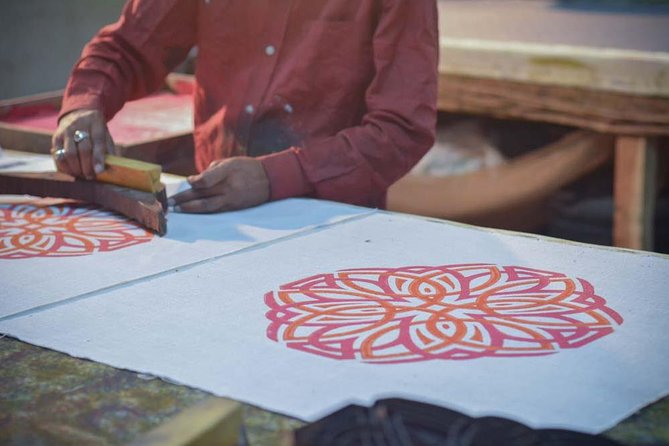
Wood blocks, bold patterns, calm hands. In this Rajasthan workshop, you jump into block printing right away and learn how to build a design step by step. I love that you create a wearable result, a Pico stitch scarf or sarong, not just a souvenir photo.
My other favorite part is the hands-on, small-group pace, limited to 10 people, so you get real support while you print. One drawback to consider: the whole experience is only 2 hours, so if you want to go super deep into carving or perfecting every technical detail, plan to practice again later on your own.
This is the kind of activity that feels both creative and oddly steady. You leave with something you can actually wear, and you come away with new respect for the process.
In This Review
- Key things I’d circle before you go
- Block Printing in Rajasthan, With Real Technique And Real Results
- What You’ll Make in 2 Hours: Pico Stitch Scarf Or Sarong
- The Terms That Actually Help You Design: Gad, Rekh, Datte
- Layering With Water-Based Pigments, Not Guesswork
- Picking Your Design From Sanganeri-Inspired Options
- The Hands-On Part: Printing Practice And Instructor Help
- Studio Setup And Timing: How The 2 Hours Feels
- Price And Value At $24: Why It’s A Fair Deal
- Who Should Book This Workshop (And Who Might Want To Skip)
- Should You Book? My Practical Recommendation
- FAQ
- How long is the hands-on block printing workshop?
- How much does it cost?
- What do I get to take home?
- What will I learn during the workshop?
- How big is the group?
- What languages are used by the instructor?
- Are materials provided?
- Do I need to bring anything?
- Is there a cancellation option if my plans change?
- Can I book without paying right away?
Key things I’d circle before you go
- Small group limit (10 max) means more time with the instructor and less waiting your turn
- Gad, Rekh, Datte basics give you a practical design framework, not random stamping
- Water-based pigments + layering help you make patterns that look intentional, not accidental
- Sanganeri-inspired design choices let you steer your scarf or sarong toward your taste
- Next to a working unit you can watch pros at work while you learn
Shortlisting? Every Jaipur trip below went through the same review.



Block Printing in Rajasthan, With Real Technique And Real Results
Block printing in Rajasthan isn’t just about pretty patterns. It’s a practical craft, built on repeatable steps: set up the design, choose pigments, apply the print, and layer carefully. In a short workshop format, that structure is a gift. You get enough time to feel the method, not just memorize it.
The workshop also makes a smart choice about where you learn. You start with the ideas behind the craft, then you quickly move into doing. That’s why the final result feels like your piece, even though the tools are traditional and guided.
What makes this class especially rewarding is the end product. You’re not leaving with a “maybe it will turn out” tote bag. You’re making a scarf or sarong using the Pico stitch result, so the activity lands as wearable art.
And yes, there’s something meditative about printing. One participant described the repetitive rhythm as satisfying, and that matches how block printing works when you slow down and focus on alignment.
What You’ll Make in 2 Hours: Pico Stitch Scarf Or Sarong
The most important practical detail is also the easiest to plan around: you’ll finish with a Pico stitch scarf or sarong. That matters because it turns your 2 hours into a complete craft experience. You’re not paying for time in a classroom, you’re paying for an outcome you can use.
Your piece comes from a mix of your choices and the workshop’s design library. You pick from intricate patterns inspired by Sanganeri prints, then apply your layout to the fabric. The process is guided, so you don’t need prior art experience. You just need willingness to try, accept small mistakes, and keep printing.
Also, the studio setup helps the experience feel grounded. One review noted the class is next to a small factory so you can watch professionals at work. That background context makes your own block printing feel less like a craft game and more like a real-world skill.
The time is tight, so expect a focused pace. You will learn enough to create something you like, but you won’t have hours to experiment with dozens of variations. If you love the first print you do, you’ll probably want more time. That’s not a flaw, it’s the nature of a 2-hour workshop.
The Terms That Actually Help You Design: Gad, Rekh, Datte
One of the clever parts of the workshop is that it gives you a design language. Instead of saying, “Pick a pattern,” you learn a basic system for how designs are built. That turns your scarf from random stamping into structured artwork.
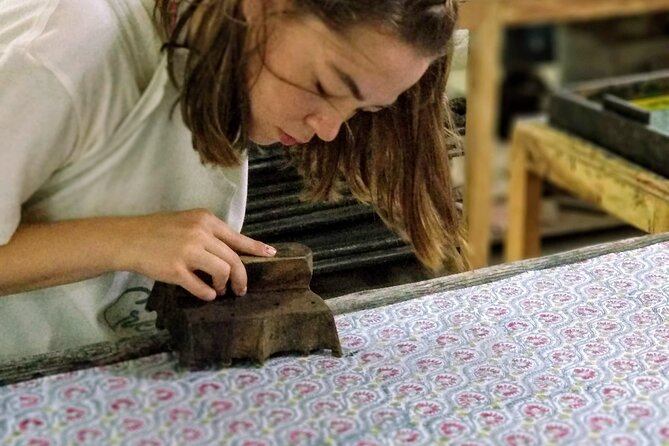
You’re introduced to Gad (Ground), the base areas of a motif. Then you learn about Rekh (Outline), the lines and edges that define shape. Finally you work with Datte (Filler), which adds spacing and detail so the whole print doesn’t look empty.
This matters for your final look. When you understand what each layer does, you can make choices that feel intentional. You can also adjust if a color looks off. Instead of panicking, you know where the design can be refined with another pass or a different filler.
Even better, the instructor support makes these terms usable. Reviews highlighted encouragement and patience from the team, including Mohit, Vivek, and Aftab. That helps because block printing has a learning curve, even when you’re guided.
If you’re the type of person who likes “rules,” you’ll probably enjoy this class. It gives just enough structure to let your creativity work.
- Full-Day Jaipur Private Sightseeing Tour by Car with Guide★ 5.0 · 472 reviews
- Pink City Cooking Class★ 5.0 · 452 reviews
- Private Elephant Sanctuary★ 5.0 · 390 reviews
- Private Full Day Jaipur Sightseeing Tour By Tuk Tuk★ 5.0 · 382 reviews
- Private Guided Half Day Tour Jaipur★ 5.0 · 371 reviews
Layering With Water-Based Pigments, Not Guesswork
In block printing, layering is where the magic happens, and it’s also where things can get messy fast if you don’t have a method. This workshop teaches you how to layer a motif design or create an all-over design using water-based pigments.
You learn to apply the print in stages. That means you’re not trying to put everything down at once. You build the design, then add the next layer, then refine with filler or outlines. The result is that your scarf looks planned, even if your first few prints feel clumsy.
Color mixing is another big part of the experience. You’ll experiment with mixing and matching colors to create dynamic patterns. This is where your personal taste shows. Maybe you love bold contrasts. Maybe you prefer softer tones. The class framework supports both.
And because pigments are water-based, the process stays within a beginner-friendly zone. You’re still working carefully, but you’re not dealing with fumes or complicated chemical steps that could overwhelm a first-timer.
One review used the word meditative to describe the experience, and I get why. When you’re repeating a careful motion and checking your layers, your brain shifts from “Am I doing this right?” to “Okay, this is coming together.”
Picking Your Design From Sanganeri-Inspired Options
Your design choices are not just a checkbox. You get to select from intricate patterns inspired by Sanganeri prints, which are known for detailed, repeat-friendly motifs. That detail level is perfect for a workshop, because even small changes in spacing and color can make a big difference in the final look.
You also get access to designs from a signature fabric collection, with availability for Elevate as noted in the activity details. Practically, what that means for you is options. You’re less likely to end up with a pattern you don’t love.
Once you pick your design, you apply it to create your one-of-a-kind scarf or sarong. The key is that your final piece reflects your choices in more than one way. It’s not just the motif. It’s also how you layer it, and how you handle color placement.
One of the happiest surprises for first-timers is realizing how much control you have while still being guided. Your instructor support helps you keep alignment and progress, but you still make the creative calls.
The Hands-On Part: Printing Practice And Instructor Help
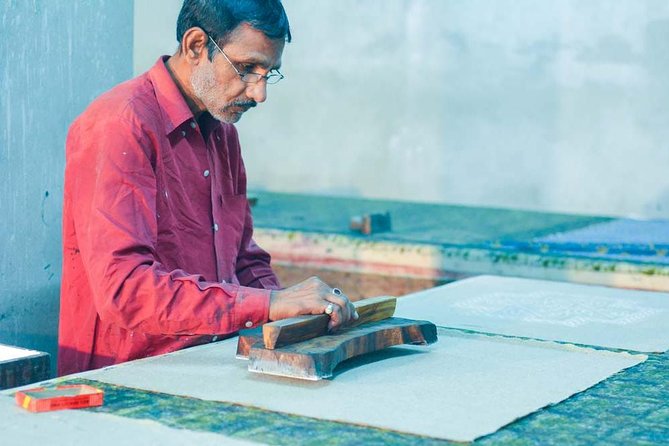
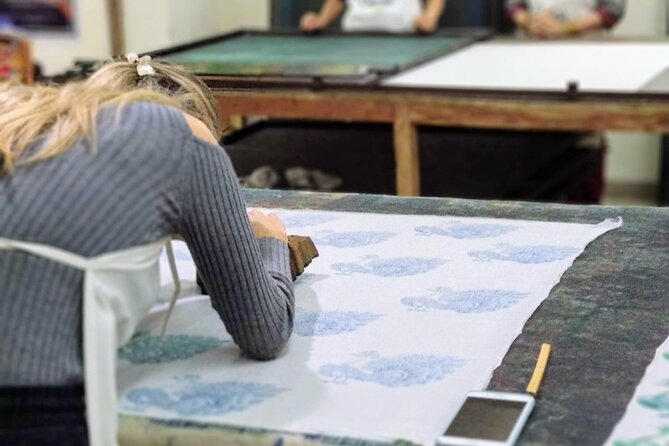
This workshop is straightforward: you print. You practice using wooden blocks and experiment with different color combinations and layering techniques. The class doesn’t ask you to be an expert right away. It asks you to be curious and a bit patient.
Because the group is limited to 10 participants, the instructors can circulate and help when you need it. That matters a lot in block printing, where small adjustments can affect how clean your lines look.
Support comes in multiple forms. One person mentioned Mohit and Vivek specifically and praised the expert guidance. Another mentioned Aftab as patient and kind, including help fixing mistakes. That detail is important because mistakes are part of learning. You want the class to treat them as normal, not as failure.
You should also expect that the studio feels “alive.” With the class near a small factory, you can see the pros at work while you learn. That visual background is useful. It keeps the craft grounded in real production, not just a one-off activity.
If you care about meeting people, you’ll likely enjoy the social feel. Reviews described it as hands-on and sociable, which makes sense because you’re doing the same activity at the same table pace.
Studio Setup And Timing: How The 2 Hours Feels
Timing is everything in a craft class. Two hours can feel generous or rushed depending on how the session is structured. Here, the workshop starts with an introduction to block printing and cultural significance, then moves into tools and materials, then gets you printing quickly.
The session flow is built to reduce frustration. You learn the tools and techniques before you’re asked to apply them creatively. That order is a big reason beginners leave with satisfaction.
In real life, expect the first part to teach you what you’re doing, and the second part to be where you make your choices and practice. The last stretch is where you focus on your final scarf or sarong layout and get it to a result you’re happy to wear.
A small group also affects timing. When you’re not waiting behind bigger crowds, you stay in the creative zone. You don’t lose momentum, and you can ask questions while you’re still in the same step of the process.
Because the language options are English and Hindi, you can also follow instructions clearly. If you’re not fluent in either, you might still manage with gestures and visual cues, but you’ll have the best experience if you’re comfortable following basic spoken guidance.
Price And Value At $24: Why It’s A Fair Deal
At $24 per person for a 2-hour workshop, the value depends on what you walk away with, and here you walk away with a wearable piece. The price includes the materials you need, including wooden blocks, pigments, and fabrics, plus the finished Pico stitch scarf or sarong.
That makes the cost easier to justify than many “activity + souvenir” experiences. You’re not buying a small trinket that happens to be handmade. You’re paying for instruction, time, and crafting materials, and you get a useful output.
Also consider your time. In one afternoon, you learn a technique that normally takes much longer to master. Even if you don’t become an expert, you get the fundamentals, plus the confidence to continue at home or try again later.
The small group limit helps value too. You’re paying for a class size that supports guidance, not just a room full of people following along with minimal help.
If you’re on a tight travel budget, you’ll probably appreciate that the price is fixed and the outcome is clear. If you’re comparing it to shopping, you’re paying for an experience that makes something personal.
Who Should Book This Workshop (And Who Might Want To Skip)
This workshop fits well if you want an authentic, hands-on Rajasthan experience that goes beyond sightseeing. It’s also a great fit for solo travelers, because the class structure naturally brings people together around the same project.
It’s especially worth it if you like crafts, pattern design, or anything involving repeated motion and careful attention. People describe it as meditative, and if that sounds good to you, you’ll likely feel the benefits quickly.
You might think twice if you’re expecting a full-day art masterclass. The time is short, and the workshop focus is on block printing and creating a finished scarf or sarong. If your dream is to carve blocks from scratch, ask ahead before booking so you don’t leave with the wrong expectations.
You should also plan clothing appropriately. You’ll want comfortable clothes suitable for a hands-on workshop. Fabric printing can get messy, even when you’re careful.
Finally, if you’re someone who gets anxious about making mistakes, it may still be a good experience, as long as you’re open to help. Reviews highlight patient support from the team, including Aftab, plus expert guidance from Mohit and Vivek.
Should You Book? My Practical Recommendation
Yes, I’d book this workshop if you want a creative break in Rajasthan that ends with something you can wear. The big reasons are simple: you get real technique (Gad, Rekh, Datte and layering), strong instructor support in a small group, and a clear finished product in only 2 hours.
You’ll probably enjoy it most if you’re curious and you like making choices about pattern and color. If you go in expecting a quick intro followed by guided printing, you’ll get exactly what you came for.
If you’re the kind of traveler who loves watching artisans at work, you’ll appreciate the studio setup near a small factory, where professionals are producing while you learn. That context adds meaning to your own prints.
If you want a souvenir that feels personal, this is one of the better ways to spend time. If you want a long, in-depth deep craft education, add another practice session later or consider a longer workshop elsewhere.
FAQ
How long is the hands-on block printing workshop?
It runs for 2 hours.
How much does it cost?
The price is $24 per person.
What do I get to take home?
You get a Pico stitch scarf or sarong included with the experience.
What will I learn during the workshop?
You’ll learn block printing basics, including the history and cultural significance, the tools and materials, and techniques like layering designs with water-based pigments.
How big is the group?
The group is limited to 10 participants.
What languages are used by the instructor?
Instruction is available in English and Hindi.
Are materials provided?
Yes. You’re provided with all necessary materials, including wooden blocks, pigments, and fabrics.
Do I need to bring anything?
Wear comfortable clothing suitable for a hands-on workshop.
Is there a cancellation option if my plans change?
Yes, you can cancel up to 24 hours in advance for a full refund.
Can I book without paying right away?
Yes. You can reserve now and pay later.
Recently reviewed across Jaipur
- 6-Night Royal Rajasthan: Private Tour from Jaipur, India
★ 5.0 · 10 reviews - Jaipur Nahargarh Sunset and Night Lights Tour
★ 5.0 · 10 reviews - Jaipur Full Day Heritage of Pink City Tour By Tuk Tuk With Chai
★ 5.0 · 10 reviews - Private Jaipur Sightseeing Tour by Tuk-Tuk
★ 5.0 · 10 reviews - Explore Jaipur at Night with Patrika Gate
★ 5.0 · 10 reviews - Jaipur walking tour.
★ 5.0 · 10 reviews
Workshops, compared.
 ★ 5.0Pink City Cooking ClassFrom $27452 reviews
 ★ 5.05 Senses Tour – Old + New Delhi, Workshops, Lunch all inclusiveFrom $137386 reviews
 ★ 5.0Five Course Cooking Class & MealFrom $60250 reviews
 ★ 5.0Veg and Non veg : Private Cooking Class in Delhi home (7 meal)From $47226 reviews
 ★ 5.0Indian Cooking Class in an Authentic Local Home – Learn 6 DishesFrom $50195 reviews
 ★ 5.0Durga Cooking ClassFrom $15159 reviews
 ★ 5.0Private Guided Cooking Workshop Experience in JodhphurFrom $36158 reviews
 ★ 5.0Traditional miniature painting class at Pacific ArtFrom $29149 reviews
Browse the lists this tour appears in