
REVIEW · KASHMIR AND SRINAGAR TOURS
Kashmir Great Lakes Trek
Your trek starts with tea and a mountain plan.
This private Kashmir Great Lakes Trek strings together high passes, alpine lakes, and a Hindu pilgrimage stop at Naranag, with an English-speaking guide and a logistics team that handles most of the heavy lifting. You sleep in mountain camps, then you reset in Srinagar with a deluxe houseboat or hotel.
What I really like is that the package is built for your time on the trail, not just the walking. You get all the tents and sleep gear, plus cooking support and trekking permits, and you only carry what you truly need for the day.
One thing to keep in mind: the route reaches very high elevations, with passes around 4,180m, so this is for people with moderate fitness and a weather window that cooperates.
In This Review
- Key things to know before you go
- A private Sonamarg to Naranag trek, guided end to end
- Price and value: what $112 really buys
- Getting to the trail: Srinagar pickup and your first campsite at Sonamarg
- Nichnai day: rising from 2,610m to the pass and onward
- Vishansar Lake and Nichnai Pass: the 4,080m moment
- Gadsar Lake via Gadsar Pass: longer walking and higher stakes
- Satsar and the rhythm-building mid-trek
- Toward Gangabal Lakes via Zajibal Pass: the high pass, then the payoff
- Final day to Naranag: descending, temple arrival, then Srinagar again
- Camps, food, and comfort: how the included support affects your day
- Guides, safety, and the little service touches that matter
- Weather timing: when this feels easiest
- Who this trek fits best, and who might want a different option
- Should you book Kashmir Great Lakes Trek?
- FAQ
- Where do I start, and where do I end?
- Is this trek private or shared with other people?
- How is accommodation handled during the trek?
- What trekking gear is included?
- Do I carry all the heavy gear myself?
- What meals are included on the trek?
- Which lakes and temple stops are included?
- Do I need a passport for this trek?
- Is travel insurance included, and are tips included?
Key things to know before you go
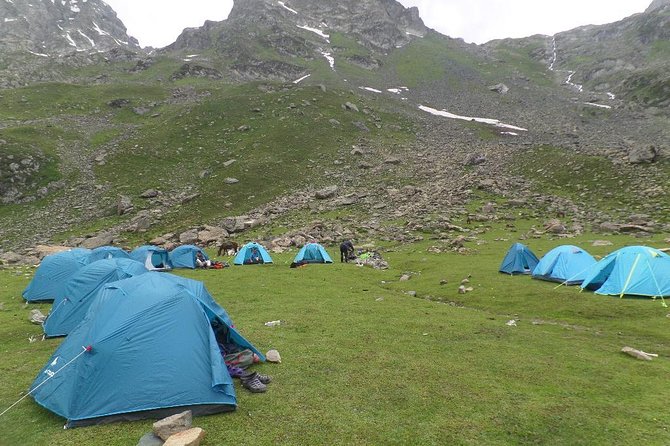
- Private trek with your own guide, so the pace and safety choices can match your group.
- Horses offload your gear, and you carry only a day pack (so the hike feels manageable).
- Permits and trekking gear included, including tents, sleeping bags, mats, and poles.
- Stove-cooked vegetarian meals with full-board mountain camp support.
- Trek returns to Srinagar with one deluxe night in a houseboat or hotel.
More of Srinagar and the valley
A private Sonamarg to Naranag trek, guided end to end
This trek is designed as a true “with us” experience, not a do-it-yourself route. You start in Srinagar, ride to Sonamarg, then spend multiple nights in tented camps along a classic Great Lakes style corridor, finishing with a trek down toward Naranag and then a return to Srinagar.
The standout is the combination of a personal guide and a route that does not require you to negotiate everything alone. Even if you are comfortable hiking, you still benefit from someone who understands timing, weather risk, and how to keep the group moving safely. If you care about getting local context, the guides named in past group stories, including Wajid, Ali, Mudasir, and the broader team support mentioned by Mehraz, point to a service culture that focuses on comfort and safety.
You should also know that this is not pitched as a luxury camping trip. You are trading fancy bedding for big views and a practical base camp system. If you want a soft landing between hard days, you do get that in Srinagar with one deluxe night on Dal Lake via houseboat or in a hotel.
Price and value: what $112 really buys
At about $112 for an approximately 8-day trek, the value comes from how much is bundled. The biggest “cost pressure” on treks is usually logistics: transportation, permits, and on-trail support. Here, you get private transportation, trek and wildlife permits, and the essentials that can cost a lot if you rent them separately.
You also get a full support crew model that many independent hikers underestimate:
- tents, sleeping bags, mats, blankets
- trekking poles
- cooking utensils and an LPG stove for meals
- bottled water plus coffee and tea
- offloading by horses so your legs are doing hiking work, not hauling work
So yes, the price is striking. But it also hints at how the experience stays affordable. Expect basic camp comfort, not private-room upgrades every night. The deluxe part is mainly in Srinagar, with one night of houseboat or hotel, and the rest is mountain camps.
If you like structure and hate scrambling for gear, this pricing model is a win. If you want to choose every detail yourself and bring your own kit, you may feel like you are paying for services you would handle alone.
Getting to the trail: Srinagar pickup and your first campsite at Sonamarg
Day one is all about transition. You start with pickup from Srinagar and then cover about 100 km to Sonamarg in roughly 3 hours. The idea is simple: arrive with time to settle, then hike lightly into your first camp.
Sonamarg sits around 2,610m, and you begin by camping on the Sind riverbank. The day is paced with transport plus tea and dinner, so you are not immediately thrown into a long climb on day one. You do not need perfect trail legs yet, just the mindset to start slowly and stay hydrated.
This is also where private organization matters. You are not trying to find the right van, the right driver, or the right permits at the last second. You get moving at 8:00am, and the trail starts on schedule.
If you arrive in Srinagar the day before, that extra cushion can help your energy. The route assumes you can start early and be ready to go.
- Amazing Kashmir Tour – 03 Nights & 04 Days★ 5.0 · 127 reviews
- Private Kashmir Family 7-Day Tour★ 5.0 · 122 reviews
- Fascinating Kashmir 4 Nights / 5 Days★ 5.0 · 112 reviews
- Private Sedan Cab to and from Srinagar Airport and Dal Lake★ 5.0 · 46 reviews
- 6 Days Private Tour in Kashmir★ 4.5 · 31 reviews
Nichnai day: rising from 2,610m to the pass and onward
After your first night, the trek pushes into the core high-country rhythm. Day two moves from roughly 2,610m up to around 3,450m. The hiking distance is about 11 km, with an approximate 7-hour day.
This is the kind of day where trekking poles and pacing make a big difference. You get poles as part of the included kit, and your guide can keep the group from sprinting early and then paying for it later. That matters more as altitude rises.
You’ll also notice how the itinerary sets up for tomorrow. Day two ends at the Nichnai area, setting you up for the next day’s lake-and-pass combination. When you plan your effort, think of Nichnai as a high base, not just a campsite stop.
Vishansar Lake and Nichnai Pass: the 4,080m moment
Day three is where the elevation profile really starts to feel serious. You hike about 12 km in around 7 hours, moving from roughly 3,450m to around 3,650m, and the route goes over Nichnai Pass at about 4,080m.
That pass is the kind of point where you can feel the air thin and your breathing change. It is not just a numbers game. If your group tends to walk fast, you may want to ask your guide to slow the pace through the steepest bits so nobody spikes too early.
This day also includes Vishansar Lake, which is one of the emotional payoff points on the route. Lakes at this altitude feel different from “viewpoints.” You get a sense of the water lying in the middle of the mountains, not sitting on a side valley you can easily reach by road. Your camp life also becomes more real here. The higher you get, the more the day feels like it belongs to the mountain.
If your timing is right, the sunrise factor can be a real thing. Past groups have shared moments like early light around big peaks, including references to Harmukh in the context of sunrise views. No guarantee, of course, but it’s a good reason to keep your mornings calm and not rush inside right away.
Gadsar Lake via Gadsar Pass: longer walking and higher stakes
Day four is a longer day at about 14 km and around 8 hours. You shift from about 3,650m down slightly toward 3,550m, but the hike climbs to Gadsar Pass around 4,180m.
This is your second major pass day, and it is typically the point where people feel the difference between “I can hike” and “I can hike well at altitude.” You do not need to be an elite trekker. But you do need to keep effort steady. Your guide’s job is not just telling you where to step, it is making sure the group handles the high crossing without panicking or overreaching.
You end at Gadsar Lake, another high-altitude water stop. The value of these lake days is that they give your body a reason to keep going, and they give you a place to pause and take in how the region changes by altitude. On lake days, the wind often behaves differently than on slopes, so pack behavior matters, especially if your clothes get damp from exertion.
Satsar and the rhythm-building mid-trek
By day five, you hike about 9 km in around 5 hours, moving from approximately 3,550m down to around 3,460m. This is a shorter day on paper, but it still helps your body adjust after two hard pass days.
You are hiking from Gadsar onward toward Satsar. These “mid-circuit” days matter because they let you recover just enough to handle the next push toward the Gangabal Lakes.
This is also where trekking habits pay off. If you keep a steady snack rhythm and hydrate through the day, you will feel more human for the later segments. If you try to power through hunger, the altitude can make that strategy backfire.
Toward Gangabal Lakes via Zajibal Pass: the high pass, then the payoff
Day six goes back up in seriousness. You hike around 11 km in about 6 hours, roughly from 3,650m to about 3,580m, and you cross Zajibal Pass at around 4,080m.
This is a familiar pattern: pass, then lake payoff. But each pass day feels different depending on weather and how your legs respond after day four and five. This is the point where I think your mental attitude matters as much as your physical conditioning.
After the pass, you reach the Gangabal Lakes area, which is one of the headline moments on this trek. Lakes in this part of Kashmir tend to feel like the terrain is telling you to slow down. Even in a busy day schedule, you usually get time to regroup and appreciate the view before heading onward.
A small but real comfort factor: your camp setup and meal rhythm are included, and you are not forced to improvise. That may sound basic, but at altitude it protects energy and helps you sleep.
Final day to Naranag: descending, temple arrival, then Srinagar again
Day seven brings the big change: you hike about 15 km for around 6 hours, descending from roughly 3,580m down to about 2,250m. After reaching the Naranag area, you drive back toward Srinagar.
The “why” here is simple. You get your lake days and pass challenges up high, then you shift into a lower-altitude feel on the way out. That makes the ending smoother, and it gives you a more humane final day than if the itinerary stayed high right to the finish.
You also reach Naranag, including the Naranag Temple stop. That adds a cultural dimension to the end of the trek. You’re not only walking through wilderness, you’re arriving at a pilgrimage site that local communities recognize.
Day eight wraps up with breakfast and then transport for drop-off at Srinagar airport or the bus stand, with a short drive within the city.
After a trek like this, the first shower and warm bed in Srinagar tends to feel like the best “view” of the trip.
Camps, food, and comfort: how the included support affects your day
This trek is practical about comfort. You get tented accommodation for six nights and full-board meals. Food is stove-cooked vegetarian, with breakfast, lunch, dinner, plus tea or coffee as part of the camp rhythm.
Your kitchen support is included: cooking utensils and an LPG stove. That matters because it keeps meal times predictable. At altitude, predictability reduces stress, and stress is the enemy of good walking.
You also get sleep system gear: tents, sleeping bags, and mats. Blankets are included too. In other words, you are not expected to bring cold-weather bedding unless you choose to add your own personal layer.
One more smart detail: bottled water is included, which can help on trek days where refilling is not your job.
The tradeoff is that your comfort is functional. Your camp night is a recovery session, not a spa. If you’re the type who needs quiet, private space, tent camping may test your patience. If you accept the mountain rhythm, you’ll likely find the simplicity freeing.
Guides, safety, and the little service touches that matter
This is a private tour, so you avoid the “wait for the slowest group member” problem. Your guide works around your pace, and that can help on pass days when you want steady effort more than speed.
Safety shows up in how the trek is framed. Permits are included, first aid is included, and you are paired with a guide. In group stories, Wajid gets praise for professionalism and attention to safety and comfort, and Ali is singled out for taking care of a family while guiding the trail.
Even if you do not know your exact guide ahead of time, the pattern is clear: this operator builds the experience around staff who manage the trail, not people who just lead and disappear. That difference is noticeable when weather changes quickly or when the group needs a reset.
If you value human organization, also look for the team support around Srinagar and the base. Airport pickup and the drive to Sonamarg come as part of private transportation, and the staff roles mentioned by name, like Shakeel as a driver and Mehraz in team coordination, suggest they care about getting you started smoothly.
Weather timing: when this feels easiest
This trek depends on weather. The route requires good conditions, especially for high passes.
You’ll get the best experience when daylight and weather line up so you can cross passes without rushing. Past group timing preferences lean toward early March and April, described as good for the crossing conditions. Monsoon time is described as difficult for crossings, especially with boulder sections. Late season can also work, since an October trek had good weather even when it was considered late.
So your takeaway is not a calendar date you can blindly trust. It is that conditions matter. If you book in shoulder windows with a reasonable chance of clear weather, you reduce the odds of a stressful crossing.
Also, pack for temperature swings. Even when the daytime hiking feels manageable, mornings and evenings at camp can feel cold quickly at these altitudes.
Who this trek fits best, and who might want a different option
This works best for you if:
- you have moderate fitness
- you want a guided, private experience with permits and gear included
- you like camping in the outdoors but still want strong logistics support
- you want lake scenery plus a cultural endpoint at Naranag Temple
You might want to reconsider if:
- you struggle with altitude hikes and are not comfortable maintaining a steady pace for 6 to 8 hour walking days
- you expect hotel comfort every night, because six nights are tented mountain camps
- you need private bathroom facilities and quiet from early evening onward, since mountain camp realities can be basic
This is not a short stroll. But it is also not pitched as extreme alpinism. The structure is what makes it realistic: horses offload heavy gear, meals are scheduled, and your guide manages the pass days.
Should you book Kashmir Great Lakes Trek?
I think you should book it if you want a well-supported private trek where the company handles the hard parts: permits, tents, sleep gear, stove meals, and offloading by horses. At around $112, the value is strong because you get transportation, one deluxe Srinagar night, and a complete on-trail setup. This is a good pick when you want to focus on hiking and enjoying the lakes and passes without turning the trip into a gear project.
Skip or switch if you cannot handle high-altitude hiking around 4,080m to 4,180m, or if your travel style demands private lodging every night. If the weather window is poor, the passes will not feel fun, and you’ll want a plan that respects that.
If you fit the moderate fitness profile and you’re excited about real mountain camping, this trek is a clear yes.
FAQ
Where do I start, and where do I end?
You start in Srinagar at 8:00am and you’re transported to Sonamarg. On the last day, you return to Srinagar and can be dropped at the airport or the bus stand.
Is this trek private or shared with other people?
It’s a private tour, meaning only your group participates.
How is accommodation handled during the trek?
You get six nights in tented mountain camp accommodation. You also get one night in a deluxe houseboat or hotel in Srinagar.
What trekking gear is included?
Included gear covers tents, sleeping bags, mats, blankets, and trekking poles. Cooking support is also included, including cooking utensils and an LPG stove.
Do I carry all the heavy gear myself?
You carry a day pack, while horses handle offloading of the main trekking gear. Horses are included for offloading, with day packs excluded.
What meals are included on the trek?
Meals are full-board, including breakfast, lunch, and dinner, plus tea and/or coffee. The meals are vegetarian and stove-cooked.
Which lakes and temple stops are included?
The route includes stops at Vishansar Lake, Gadsar Lake, and Gangabal Lake, and it ends at Naranag Temple.
Do I need a passport for this trek?
Yes. A current valid passport is required on the day of travel, and passport details are needed at booking.
Is travel insurance included, and are tips included?
Travel insurance is not included. Tips for local staff and guides are also not included.
Srinagar and the Valley, More Days


Recently reviewed across Srinagar
- Kashmir Ladakh Tour
★ 5.0 · 12 reviews - Srinagar Splendors: A Private City Tour
★ 4.5 · 12 reviews - The Best Monsoon Trek: Kashmir Great Lakes
★ 5.0 · 26 reviews - 6 Days Private Tour in Kashmir
★ 4.5 · 31 reviews - Private Sedan Cab to and from Srinagar Airport and Dal Lake
★ 5.0 · 46 reviews - Fascinating Kashmir 4 Nights / 5 Days
★ 5.0 · 112 reviews
Kashmir and Srinagar Tours, compared.
 ★ 5.0Kashmir Family Tour – 07 Days Includes Accommodation and Private TransportFrom $900164 reviews
 ★ 5.06 Days Private Tour in Kashmir ValleyFrom $522140 reviews
 ★ 5.0Private 5-Day Charming Kashmir Package Tour from SrinagarFrom $510138 reviews
 ★ 5.05-Days Kashmir tour includes Accommodation and Private TransportationFrom $560134 reviews
 ★ 5.0Amazing Kashmir Tour – 03 Nights & 04 DaysFrom $650127 reviews
 ★ 5.0Private Kashmir Family 7-Day TourFrom $635122 reviews
 ★ 5.0Fascinating Kashmir 4 Nights / 5 DaysFrom $306112 reviews
 ★ 5.0Private Sedan Cab to and from Srinagar Airport and Dal LakeFrom $1746 reviews
Browse the lists this tour appears in