
REVIEW · CITY TOURS
Agra 101 City Walk
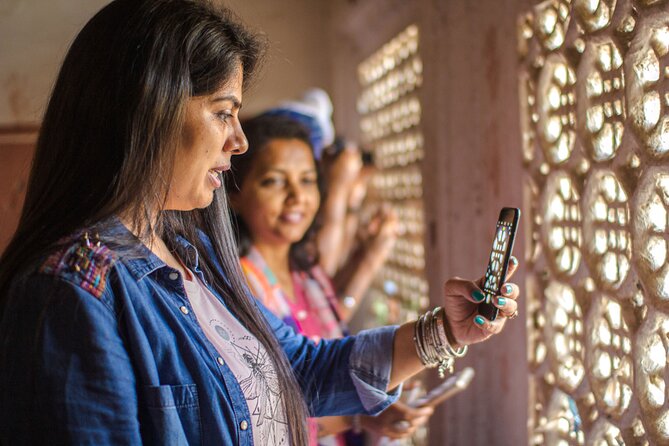
Agra changes when you walk its old streets. This private Agra 101 City Walk trades cars for feet, so you get a close-up feel for everyday lanes, not just famous monuments. I like that your guide stays hands-on with photo help and a steady flow of stories as you move.
My other favorite part is the way the route mixes lively markets with calm, low-key views, including a panoramic rooftop stop. One thing to consider is that this is still a walking tour, and you will climb up at least a rooftop, so plan for some stairs and heat.
In This Review
- Key highlights worth planning for
- Why this 3-hour walking tour feels better than racing sights in Agra
- Starting at Jama Masjid, then turning toward Rawatpara’s spice lanes
- Fuvara and the 18th-century homes you can actually see from inside
- Gudri Mansoor Khan, the courtesan-market past, and why the street matters
- Rawat Para Road rooftop views and meeting people at street level
- Kala Mahal and Mirza Ghalib’s birthplace in Rawatpara
- Price and value: what $41.12 gets you in the real world
- The guide factor: photo help, storytelling, and names to remember
- What to expect from the route, step by step
- Who should book this, and who should think twice
- Should you book the Agra 101 City Walk?
- FAQ
- Where does the Agra 101 City Walk start and end?
- How long is the tour?
- Is it a private tour?
- What are the main stops on the walk?
- What is included in the tour?
- Do you pay admission fees at the stops?
- What time does it run, and what is the cancellation window?
Key highlights worth planning for
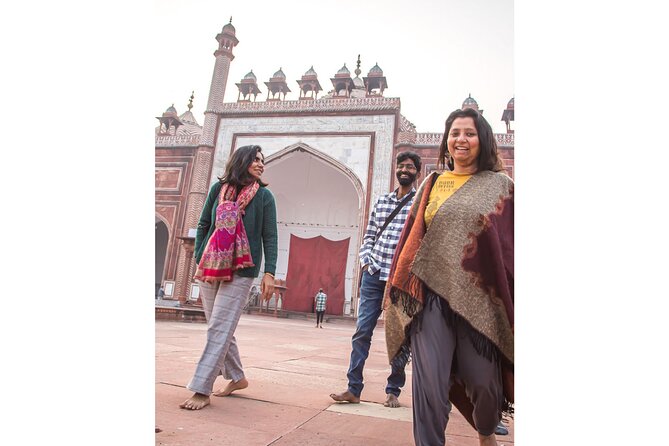
- Photo-friendly pacing with a guide who helps you frame shots as you go
- Jama Masjid start and finish, making it easy to anchor your day
- Rawatpara spice market and the 15th-century trade vibes
- 18th-century buildings and house visits in Fuvara and nearby areas
- Rooftop panoramic view from a local home area
- Kala Mahal and Mirza Ghalib’s birthplace connection
Shortlisting? Every Agra trip below went through the same review.


Why this 3-hour walking tour feels better than racing sights in Agra

Agra can be a bit of a blur if you only do the big-ticket stops. This walk gives you a different rhythm. You move through neighborhoods on foot, so the city feels lived in, not staged for tourists.
At about 3 hours, it’s long enough to see multiple sides of Agra, but short enough that you won’t feel cooked after. You also get a private setup, which matters because you can pause for photos, ask questions, or slow down when the streets get busy.
And yes, you get to cover history without it turning into a lecture. The guide’s job here is to connect places to stories you can actually picture while standing in the lane.
Starting at Jama Masjid, then turning toward Rawatpara’s spice lanes
The walk begins at Jama Masjid, Agra, where your guide meets you and explains how the walk will work. This is a useful start because it sets your expectations, especially if you’re trying to understand Agra beyond the Taj Mahal.
Stop 1 is the Jama Masjid area itself, with about 20 minutes there. You’ll step into the mosque, and the guide starts building the city picture right away. It’s a strong opening because you’re starting at a religious landmark people still use, not just a photo backdrop.
Then the route heads to Rawatpara, a 15th-century spice market. You spend roughly 30 minutes in this area, including time for medieval temples, a rooftop climb, and spice-focused talk. This stop works well if you like food culture and trade history. Spices are not just aromas here, they are a map of how Agra’s past moved through streets and hands.
A possible caution: markets are crowded and energetic. If you don’t love tight spaces, keep a little extra patience in your day.
Fuvara and the 18th-century homes you can actually see from inside
Next comes Fuvara, with about 40 minutes. You start by passing the historic walled city area where 18th-century buildings still show up. Then you go beyond the street view, entering certain homes and temples to look from the inside.
That inside access is the point of this whole experience. From the outside, you see facades. From the inside, you get a sense of scale and everyday life. Even brief visits change the way you understand what you’re looking at.
You also visit an old marble shop along the way. That detail helps connect Agra’s identity with the materials and crafts people are surrounded by, not only what monuments are made of.
What I like about this portion is the mix of “stop and look” moments with “walk and talk” moments. You don’t just file past buildings. You get time to understand why these spots exist and how they fit into Agra’s larger story.
- Agra: Taj Mahal & Mausoleum Skip-the-Line Tour with Options★ 4.9 · 456 reviews
- Private Guided Tour of Agra★ 5.0 · 420 reviews
- Taj Mahal, Agra Fort, Baby Taj & Mehtab Bagh Private City Tour★ 5.0 · 391 reviews
- Taj Mahal Skip-the-Line Guided Tour with Optional Add-ons★ 5.0 · 385 reviews
- Agra : Private Sunrise Taj Mahal & Agra City Tour★ 5.0 · 367 reviews
Gudri Mansoor Khan, the courtesan-market past, and why the street matters
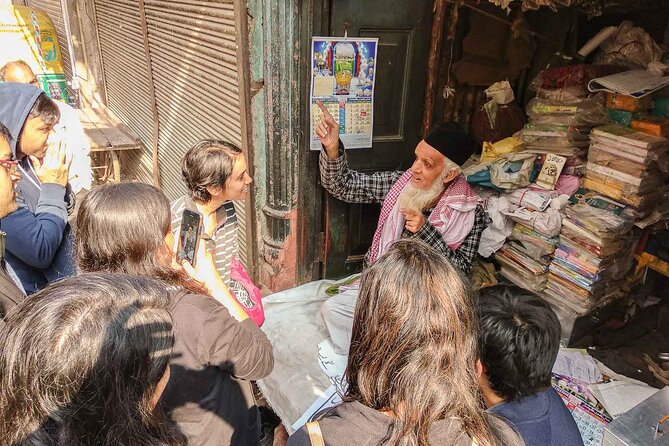
Stop 4 is called Police Station Gudri Mansoor Khan, and it’s a clever pivot from “pretty sights” into “how cities work.” The guide frames this area as part of the erstwhile courtesan market within the fort city, with history shared at each stop.
You spend around 20 minutes here. Even though it’s tied to a modern building, the value is in the context: you walk the street and learn how the city’s social life changed over time.
This is the kind of stop that rewards curiosity. If you ask good follow-up questions, you’ll walk away with a sharper sense of how Agra’s neighborhoods had roles, reputations, and rhythms long before today’s traffic and signage.
If you prefer only architectural highlights, this could feel a bit more story-heavy than photo-heavy. But for many visitors, it’s the most “real city” moment on the walk.
Rawat Para Road rooftop views and meeting people at street level
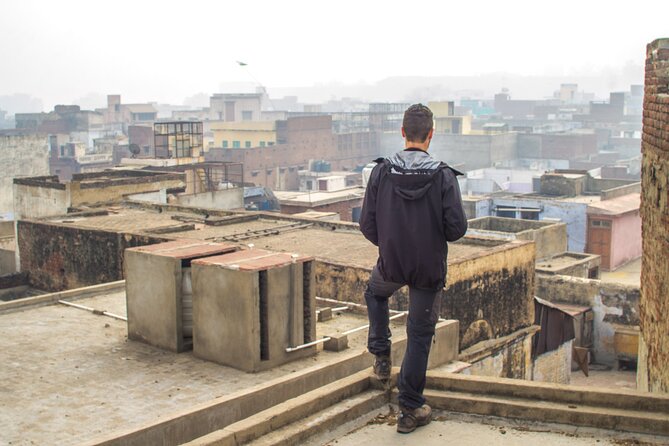
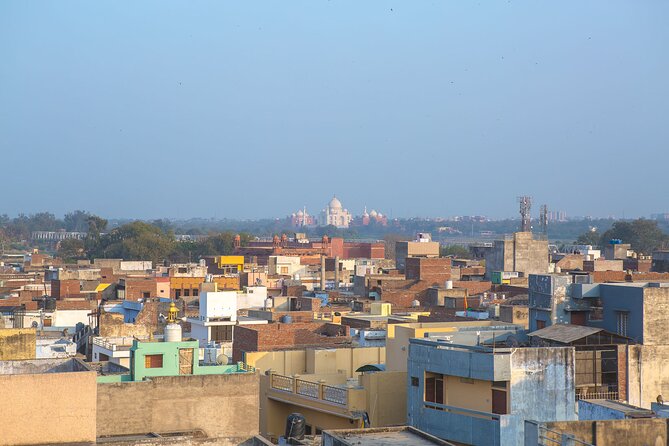
Stop 5, Rawat Para Road, lasts about 30 minutes. This is where the tour leans into viewpoints. You enter a 15th-century locality and climb the rooftop of a local home for a panoramic view of the city.
Rooftop time is one of those travel moments that pays off. From above, you stop thinking in single buildings and start seeing the whole street web. It also gives you a fresh set of angles for photos, especially if you’ve spent the day earlier dealing with crowds at major sights.
This stop also includes interaction elements, like talking about how people live here and meeting local people along the way. That’s where the walking format helps again. In a car, you see streets pass. On foot, people notice you more, and your guide can help translate what you’re seeing into something meaningful.
One practical note: rooftop views mean you should wear comfortable shoes and be ready for uneven steps. If you’re traveling with knee issues, consider this before booking.
Kala Mahal and Mirza Ghalib’s birthplace in Rawatpara
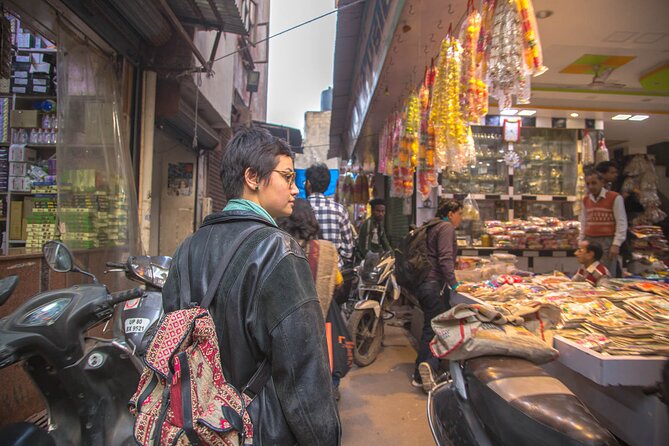
The walk loops back into Rawatpara for stop 6, another 30 minutes. Here you visit Kala Mahal, which is connected to Mirza Ghalib, the famous Urdu poet, as his birthplace.
You also look at 18th-century bungalows in this area, with a focus on their facades. This is a great pairing: a literary anchor plus visible architecture. Instead of “Ghalib was born here,” you get to stand in the area and see the setting that helped shape the city’s cultural footprint.
This portion tends to land well for visitors who want history that feels human. Poetry and place belong together in Agra, and a city lane around a specific birthplace gives you that connection fast.
Finally, you end back at Jama Masjid at stop 7, with about 10 minutes to wrap up and return to the starting meeting point.
Price and value: what $41.12 gets you in the real world
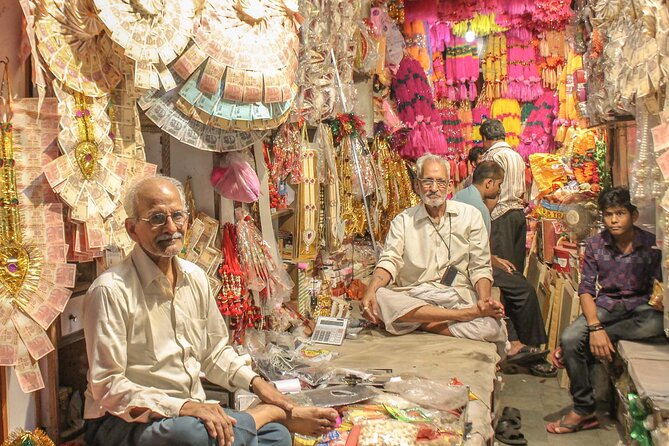
At $41.12 per person for about 3 hours, this walking tour is priced like a city experience, not a museum ticket. It’s also typically booked around 10 days in advance, which tells you it’s a popular way to add texture to an Agra trip.
Here’s what you actually get for your money:
- A private guide and a pace you can control
- A route that includes multiple named stops, not a vague stroll
- Local snacks included, which is a big deal in street-level travel
- Admission tickets free at the listed stops
- A mobile ticket (easy to show on the day)
The big value is the time in the neighborhoods. You’re paying for access to stories, photo support, and guided navigation through areas you might not choose on your own, especially after you’ve already seen the headline monuments.
Could you do parts of this by yourself? Sure. But getting the right order of sights, knowing where the rooftop view fits, and having someone explain why Rawatpara and Fuvara matter saves you energy and makes the day click faster.
If your trip budget is tight, this is one of those “spend for better understanding” purchases.
The guide factor: photo help, storytelling, and names to remember
One theme shows up again and again: the guide doesn’t just talk, they help you see. The tour includes photo help so you’re not stuck asking strangers or missing your best angle.
In particular, guides connected with this walk such as Tahir, Arhaan, and Kaleem are associated with a storytelling style that keeps things clear and personal. You also hear about how guides help people avoid common frustrations, like standing in the wrong spot for a view or losing the flow in crowded areas.
You’ll feel the difference in a walking tour. If your guide is good, you stop treating the city like a checklist. You start treating it like a place you can understand in a few hours.
And since it’s private, you can ask direct questions as you go. That’s where walking beats browsing.
What to expect from the route, step by step
Here’s the practical shape of your day:
- Meet at Jama Masjid and get a quick plan
- Walk into mosque space and start city stories
- Move into Rawatpara for spice-market energy, temples, and rooftop time
- Head toward Fuvara, including views of 18th-century buildings and short inside visits
- Continue to Gudri Mansoor Khan area for social history context
- Go up again at Rawat Para Road for a panoramic rooftop view and local interactions
- Return to Rawatpara for Kala Mahal and Mirza Ghalib’s birthplace connection
- Finish back at Jama Masjid
It’s not a marathon. It’s a guided “see and understand” loop built around neighborhoods.
Who should book this, and who should think twice
This is a strong choice if you:
- Want to see Agra beyond the usual monument triangle
- Like markets, street-level culture, and food aromas
- Enjoy guided storytelling tied to specific places
- Want photo support so you get better shots without fuss
You might think twice if:
- You dislike walking or climbing rooftops
- You want zero neighborhood texture and only major landmarks
- Your schedule needs a car-only approach, because this experience is designed around walking
Good news: the experience notes say most travelers can participate, and it allows service animals. Also, it’s near public transportation, which can help you plan your day when you’re moving between Agra highlights.
Should you book the Agra 101 City Walk?
If your Agra trip feels too centered on big sights, book this. The route is built to show you the city’s texture, especially through spice lanes, house-and-temple glimpses, and a panoramic rooftop you don’t get from a standard bus stop.
I’d especially recommend it if you want a guided way to understand why areas like Rawatpara, Fuvara, and Kala Mahal matter. For the price, the snack inclusion and the fact that entrance tickets are listed as free at the stops make it feel like a fair deal, not a gimmick.
If you’re fit for a few hours of walking and you don’t mind rooftop steps, this is one of the most practical ways to leave Agra feeling like you actually saw the city, not just photographed it.
FAQ
Where does the Agra 101 City Walk start and end?
The walk starts at Jama Masjid, Agra, Uttar Pradesh 282003, India and ends back at the same meeting point.
How long is the tour?
The experience is listed at about 3 hours.
Is it a private tour?
Yes. It’s a private tour/activity, and only your group participates.
What are the main stops on the walk?
The route includes Jama Masjid, Rawatpara (spice market), Fuvara, Police Station Gudri Mansoor Khan, Rawat Para Road (rooftop view), Kala Mahal in Rawatpara, and then back to Jama Masjid.
What is included in the tour?
The tour includes local snacks. It also includes a guide who can help with photos during the walk. A mobile ticket is used.
Do you pay admission fees at the stops?
The listed stops show admission ticket free, so you are not expected to pay separate admission fees at those points.
What time does it run, and what is the cancellation window?
It runs Monday through Sunday from 8:00 AM to 5:00 PM. Free cancellation is available if you cancel up to 24 hours in advance for a full refund.
Recently reviewed across Agra
- Agra : Best Evening Street Food & Local Bazar Tour in Agra.
★ 4.5 · 10 reviews - Agra City Cultural Walk
★ 5.0 · 10 reviews - Agra: Taj Mahal and Mausoleum Tour with Skip-the-Line Entry
★ 5.0 · 10 reviews - Skip-the-Line Taj Mahal VIP Entrance Tour
★ 5.0 · 11 reviews - Same Day Agra Tour By Gatimaan Express Train from delhi
★ 5.0 · 11 reviews - Taj Mahal visits with Licensed Guide with Entry Assistance
★ 5.0 · 11 reviews
City Tours, compared.
 ★ 5.0Old & New Delhi City Tour – Half or Full Day Options AvailableFrom $384,811 reviews
 ★ 5.0Old & New Delhi City Tour – Choose Half or Full Day ExperienceFrom $384,513 reviews
 ★ 5.0Spiritual City Walking Tour-THE Pushkar RouteFrom $6907 reviews
 ★ 5.0Old & New Delhi Private City Tour – Traveler’s Choice (Top Rated)From $13746 reviews
 ★ 5.0Jaipur City Private Day Tour from Delhi by Car – All InclusiveFrom $10589 reviews
 ★ 4.8Full Day City Highlights Day Tour & Ganges CruiseFrom $61520 reviews
 ★ 4.8Full-Day City Tour with Car, Guide & Skip-the-LineFrom $9512 reviews
 ★ 5.0Private Old and New Delhi City Full Day or Half Day TourFrom $21469 reviews
Browse the lists this tour appears in