
REVIEW · PUSHKAR AND AJMER TOURS
Spiritual City Walking Tour-THE Pushkar Route
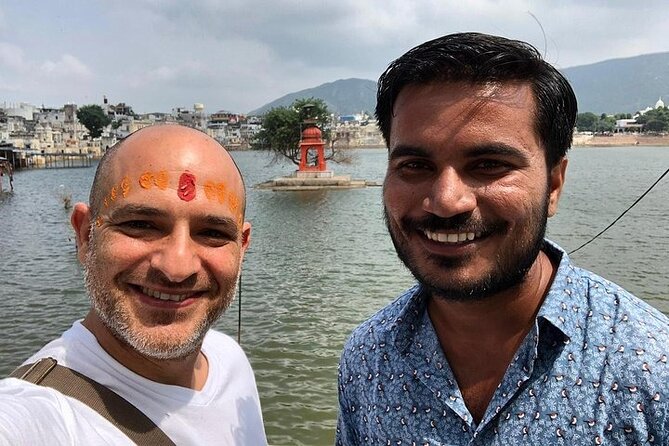
Pushkar feels sacred even before you start walking. This short, guided route threads Sikh and Hindu landmarks into one easy stroll, with temple details, lake-side prayers, and time to look around without rushing. I like that you get real context from your guide, not just photo stops.
Two things I especially enjoyed: the breakfast Malpua and masala tea breaks that make the walk feel grounded in local life, and the fact that the route stays compact enough to finish while the light and crowds are still manageable. One thing to consider is that this is mostly a city and temple walk, not a full food tour, and extra holy rituals or ceremonies are a choice and may add cost.
In This Review
- Key things I’d circle before you go
- Why Pushkar’s temple route works best on foot
- Your local guide, and what the questions are really for
- Starting with Gurudwara Sahib, and why that first stop sets the mood
- Varaha Temple: a tall landmark with a specific story
- Old Rangji Temple (Rama Vaikuntha Temple): architecture you can actually study
- Atamteshwar Mahadev Mandir: the “oldest Shiva” idea and a full family statue
- Brahma Temple: why one temple matters in the world
- The Pushkar Lake and Brahma Ghat: prayer, photography, and the feeling of continuity
- A break with lemon ginger honey, and how it keeps the tour comfortable
- Gau Ghat and Halwai Gali: the oldest ghat angle plus sweet-street energy
- Breakfast, chai, and why the included food fits the theme
- Price and what $6.76 really buys you
- Logistics that matter in Pushkar
- Who should book this Pushkar Route walk
- Should you book this spiritual walk?
- FAQ
- How long is the Pushkar spiritual walking tour?
- What sites does the tour include?
- Is pickup offered?
- Is there an admission fee included?
- What food and drink are included?
- Does the tour include holy rituals or ceremonies?
- Are tickets digital?
- How big is the group?
- What if the weather is poor?
- Is free cancellation available?
Key things I’d circle before you go
- Small group (up to 6) means you can actually ask questions while walking
- Sikh to Shiva to Brahma in one route, so you learn how these traditions coexist in Pushkar
- Three temples plus the lake and ghats, so you see both worship spaces and the water symbolism
- Masala tea in a claypot and Malpua sweeten the experience between stops
- Camera lockers are included, which helps if you’re traveling with extra gear
- Optional ceremony choices are not included, so decide ahead of time how involved you want to be
Pushkar and Ajmer, more options
Why Pushkar’s temple route works best on foot
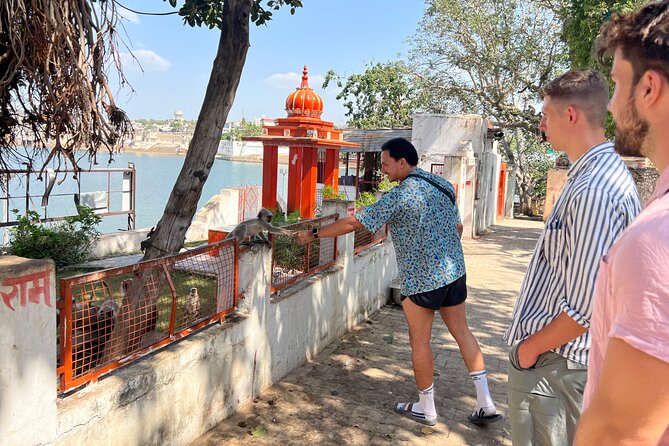
Pushkar’s best views are the ones you reach slowly. Narrow lanes, rooftop glimpses, and temple courtyards only make sense when you’re walking, not hopping in and out of vehicles. On this route, you’re guided through the parts of town that pilgrims and locals treat like everyday life.
The tone is spiritual, but the pace is practical. You’re out for about 1 to 3 hours, which is long enough to understand the main places, short enough that you can still enjoy Pushkar on your own afterward.
Your local guide, and what the questions are really for
This experience leans on a local guide who explains the meaning behind what you’re seeing. I like that the tour frames the sites through religion and community, including how Pushkar matters to both Sikhs and Hindus. In the best moments, you stop at a doorway, then your guide connects it to the bigger story of worship.
English is commonly mentioned in feedback, and that matters here. When you can follow the explanation while you’re standing in front of the shrine, the visit clicks fast instead of feeling like a blur of architecture.
You’ll also feel the group size at work. With a maximum of 6 people, the tour doesn’t turn into a line where you only catch fragments. You can ask practical questions like what you should notice in the carvings or why a ghat matters.
Starting with Gurudwara Sahib, and why that first stop sets the mood
The tour begins at Gurudwara Sahib, where your guide explains Sikh religion and Pushkar’s importance for the Sikh community. Even if you came for temples, this opener helps you understand why Pushkar feels like a shared spiritual map.
It also trains you to look differently. At first, you’re not just scanning for landmarks, you’re learning how different faiths express devotion in their own way. The Gurudwara stop runs about 30 minutes, and admission is free.
- Walking Sightseeing Tour – The Shine Pushkar★ 5.0 · 64 reviews
- Evening Walking tour with Fire Ceremony – The Pushkar Route★ 5.0 · 35 reviews
- From Jaipur : Private Ajmer Pushkar Tour by Cab★ 4.5 · 29 reviews
- Dhiraj’s painting classes and art workshop★ 5.0 · 24 reviews
- Full Day Spiritual Tour of Ajmer & Pushkar-The Pushkar Route★ 5.0 · 12 reviews
Varaha Temple: a tall landmark with a specific story
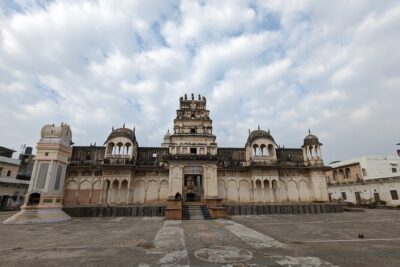
Next comes the Varaha Temple, tied to the legend of the boar incarnation. This one is especially memorable because of its scale and age claims in the tour framing: the structure reaches about 150 feet, and the present statue was set up in 1784.
Your guide also points out the style. The temple is described as built of heavy stone and plaster in a typical Rajasthani haveli feel, and it sits inside a walled temple compound. The visit lasts about 25 minutes, and the admission is included.
Why it’s worth your time: this is where you start noticing that Pushkar’s temples are not uniform. Each shrine has its own design language, and your guide helps you read the differences instead of treating them as background.
Old Rangji Temple (Rama Vaikuntha Temple): architecture you can actually study
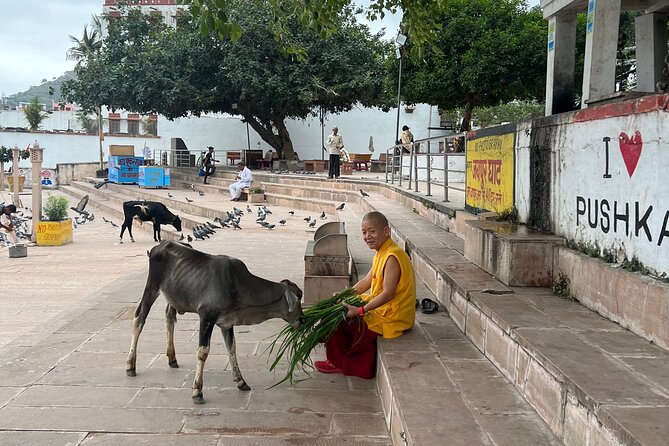
After Varaha, you head to Old Rangji Temple, also known as the Rama Vaikuntha Temple. This is associated with Vishnu, and the emphasis here is on craftsmanship and architecture.
The tour gives you time to see the temple as a heavy-stone structure with strong Rajasthani styling. The stop is shorter, about 15 minutes, but it’s enough if you focus on details your guide mentions, like how the workmanship reflects the temple’s identity. Admission is included.
A small practical tip: keep your phone camera handy, but don’t spend the whole stop photographing. A few minutes of looking first makes the explanation land.
Atamteshwar Mahadev Mandir: the “oldest Shiva” idea and a full family statue
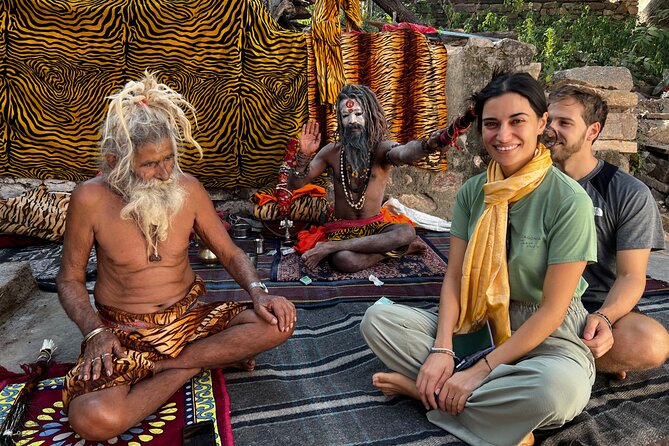
Then you move to Ati Prachin Shri Atamteshwar Mahadev Mandir, dedicated to Lord Shiva. This shrine is presented as the town’s oldest Shiva temple, and the guide points out a Shiva statue that includes his “complete family.”
The stop runs about 25 minutes, and admission is free. If you’re the type who likes meaning over just marble, this is a good moment to slow down and ask what makes this temple’s representation distinctive.
Brahma Temple: why one temple matters in the world
Your next big highlight is the Brahma Temple. Here the tour focuses on a common and specific point of pride: Brahma is said to have only one temple in the world of this kind, and Pushkar’s is the named destination.
You’ll also get the mythology and architecture tied to why people keep coming back. This stop is about 30 minutes, and admission is free.
I like this part because it’s not just “look at the building.” It’s “why this building exists,” which is exactly what makes pilgrimage sites more than sightseeing.
The Pushkar Lake and Brahma Ghat: prayer, photography, and the feeling of continuity
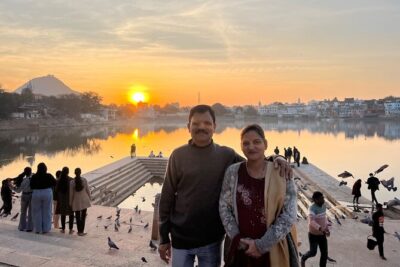
After Brahma Temple, you head toward Pushkar Lake and the ghat area connected with worship and remembrance. The route names Brahma Ghat, where family members offer prayers for happiness and perform tributes for departed souls.
The guide frames this as a living practice, not a reenactment for visitors. Expect about 30 minutes for this lake-side portion, and it’s positioned as a great area for photography as well.
Then the walk continues to Brahma Ghat again as you transition into a short refreshment break. It’s a good flow: worship space, then a pause, then more looking and learning.
A break with lemon ginger honey, and how it keeps the tour comfortable
At Brahma Ghat, you’ll head to a nearby spot called Alka Rooftop Restaurant. The included refreshment is described as a cup of lemon ginger honey, paired with a view of the market area.
This matters on a walking tour because temples and ghats can be warm and busy. A short sit-down drink turns the rest of the route from “I’m tired” into “I can keep going.”
Gau Ghat and Halwai Gali: the oldest ghat angle plus sweet-street energy
The final stop is Gau Ghat, described as the oldest ghat among Pushkar’s 52 ghats and also known as Gandhi Ghat. You get about 15 minutes here, and admission is included.
One reason this last stop sticks is the nearby street energy, Halwai Gali, known for sweet bakers and confectioners. Even if you do not stop for snacks beyond what’s included, the atmosphere helps you end on a more everyday note instead of a purely ceremonial one.
Breakfast, chai, and why the included food fits the theme
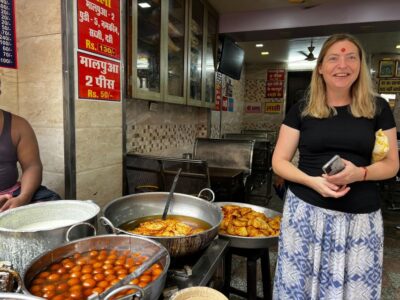
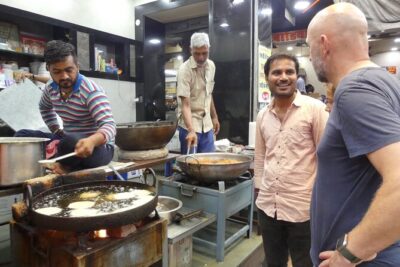
The tour does include breakfast Malpua, described as a traditional Pushkar sweet: pancakes coated in sugar syrup, made with curd and spices, plus khoya and dried milk solids, topped with nuts. That’s the kind of local ingredient story you only get if someone is guiding you through what people actually eat.
For drinks, you’re served a special masala tea in a claypot, highlighted for taste with cardamom and ginger. The Malpua and chai timing also makes sense for a short tour, because you’re not waiting until the end when you might already be running out of time.
If you’re hungry, plan a simple rhythm. The included items cover breakfast plus tea and the named refreshment, but foods and drinks are not included otherwise.
Price and what $6.76 really buys you
At $6.76 per person, this feels like one of the best-value ways to learn Pushkar’s spiritual logic without buying a full-day ticket. You’re paying for guided time, multiple religious sites, and included entrance fees at several stops, plus the breakfast and chai setup.
Here’s what I’d call out as “you get more than you pay for” value:
- Hotel pickup and drop off are offered
- Entrance fees are included for key temples
- You get a structured walk that would be hard to piece together on your own
- The group stays small (max 6), which keeps your questions relevant
The main value risk is expectations. If you expect a long, guided, detailed food crawl or a tour that includes everything you might want to buy or try, it’s safer to treat this as a spiritual sightseeing walk with a couple of included tastes.
Logistics that matter in Pushkar
You’ll want to plan for walking in a busy religious town. Even though the tour time is short, the route moves through temple compounds and ghat areas where crowds and respectful behavior matter.
The tour offers pickup and drop off, and you’ll get a mobile ticket. Lockers are provided for cameras and bigger languages (likely meaning larger items), which is a smart touch if you’re carrying gear and don’t want it underfoot.
The experience also notes that good weather is required. If conditions are poor, you might be offered a different date or a refund, so keep an eye on skies when you book.
Who should book this Pushkar Route walk
Book it if you want:
- A guided way to understand Pushkar’s Hindu and Sikh context
- A compact tour that hits major temples plus the lake and ghats
- Included chai and Malpua that turn the walk into a real taste of local life
- A small group where you can ask questions while standing in front of shrines
Skip it or pick a different style if you mainly want:
- A long food experience with many meals
- A strictly non-religious sightseeing route (this is explicitly spiritual, including optional ceremony choices)
Also, if you’re sensitive about participating in religious settings, decide how you want to engage. The tour can be educational and observational, but it’s built around places people worship.
Should you book this spiritual walk?
I’d book this if you want the fastest honest way to get your bearings in Pushkar’s spiritual layout. The combination of temples, lake-side ghats, and real explanation by a local guide is the core win, and the included masala tea and Malpua are not just add-ons, they help you experience the town like a visitor would who’s there for more than photos.
Just keep your expectations lined up with a city walk. Treat it as a short guided cultural route with a couple of included tastings, and you will feel like your money and time were well spent.
FAQ
How long is the Pushkar spiritual walking tour?
The duration is listed as about 1 to 3 hours.
What sites does the tour include?
You visit Gurudwara Sahib, Varaha Temple, Old Rangji Temple (Rama Vaikuntha Temple), Ati Prachin Shri Atamteshwar Mahadev Mandir, Brahma Temple, Pushkar Lake area around Brahma Ghat, Gau Ghat, and you stop at a restaurant near Brahma Ghat for a refreshment.
Is pickup offered?
Yes. Hotel pickup and drop off are included.
Is there an admission fee included?
Entrance fees are included for the tour. Some stops note free admission while others are marked as included.
What food and drink are included?
You receive traditional breakfast Malpua and a special masala tea served in a claypot. At the Brahma Ghat area, lemon ginger honey is also included.
Does the tour include holy rituals or ceremonies?
Charges of holy rituals and ceremonies are not included, as they depend on travelers’ choices.
Are tickets digital?
Yes, the tour uses a mobile ticket.
How big is the group?
The tour has a maximum of 6 travelers.
What if the weather is poor?
The experience requires good weather. If it is canceled due to poor weather, you will be offered a different date or a full refund.
Is free cancellation available?
Yes. You can cancel up to 24 hours in advance for a full refund.
Pushkar and Ajmer, More Routes



Recently reviewed across Pushkar
- Full Day Spiritual Tour of Ajmer & Pushkar-The Pushkar Route
★ 5.0 · 12 reviews - Fullday pushkar tour from jaipur with guid+camel/jeep safari
★ 4.4 · 12 reviews - Dhiraj’s painting classes and art workshop
★ 5.0 · 24 reviews - From Jaipur : Private Ajmer Pushkar Tour by Cab
★ 4.5 · 29 reviews - Evening Walking tour with Fire Ceremony – The Pushkar Route
★ 5.0 · 35 reviews - Walking Sightseeing Tour – The Shine Pushkar
★ 5.0 · 64 reviews
Pushkar and Ajmer Tours, compared.
 ★ 5.0Afternoon Walk Tour with Sunset & Fire Ritual -The Pushkar RouteFrom $7119 reviews
 ★ 4.9Evening Walking Tour with Fire Rituals-The Pushkar RouteFrom $6108 reviews
 ★ 5.0Spiritual Walking tour with Puja Ceremony -The Pushkar RouteFrom $6101 reviews
 ★ 5.0Walking Sightseeing Tour – The Shine PushkarFrom $564 reviews
 ★ 4.5Pushkar Day Trip from Jaipur – Private Car, Safari, Guide & LunchFrom $5845 reviews
 ★ 5.0Evening Walking tour with Fire Ceremony – The Pushkar RouteFrom $835 reviews
 ★ 4.5Private Ajmer Pushkar Tour by CabFrom $1229 reviews
 ★ 5.0Experience Private Food And Culture Walk-The Pushkar RouteFrom $1526 reviews
Browse the lists this tour appears in