
REVIEW · CHENNAI AND MAHABALIPURAM TOURS
British Architecture Walk in Chennai by Wonder tours
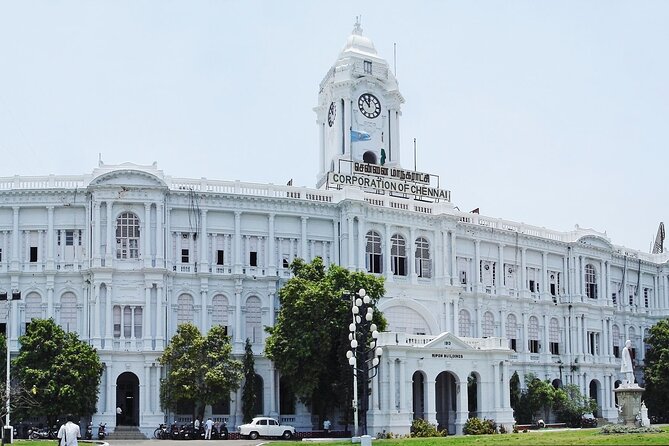
British Chennai hides in plain sight, and this walk links it brick by brick. You’ll move through British-era landmarks that blend British and local design, from the Central Railway Station area to the University of Madras.
I especially like the quality of the guide. Several recent groups praised guides like Rajesh and Nanda for friendly, clear explanations, which makes the architecture feel human instead of just old stone. I also like that the tour includes a local snack and coffee or tea, plus admission tickets at multiple stops, so you’re not constantly hunting down extras.
One consideration: there’s no hotel pickup or drop-off, so you’ll start at the Greater Chennai Corporation Office and end back there. Also, it’s about 3 hours, so you get good highlights, not a slow, museum-depth day.
In This Review
- Key highlights worth your time
- Price and what you actually get for $49 in Chennai
- Where you start, how the walk flows, and why it helps
- Ripon Building: the Lord Ripon connection and local craftsmanship
- Chennai Central Railway Station: Gothic Revival that still works today
- Southern Railway Headquarters: Indo-Saracenic style and a 1921 finish
- Victory War Memorial: from Cupid’s bow to World War I commemoration
- Fort St George and St Mary’s Church: colonial power with an old Anglican heartbeat
- Napier Bridge: the Chennai media symbol and a 1943 public opening
- University of Madras: porticos, halls, and a classic institutional look
- The guides make the architecture make sense
- Timing, pace, and who this walk fits best
- What’s included, what to plan for, and small gotchas
- Should you book British Architecture Walk in Chennai with Wonder tours?
- FAQ
- How long is the British Architecture Walk in Chennai?
- How much does it cost per person?
- Where does the tour start and end?
- Is there a mobile ticket?
- What is included in the price?
- Are admission tickets included for the stops?
- Is hotel pickup and drop-off provided?
- Are camera or video fees included?
- Is it a private tour?
- What is the cancellation policy?
Key highlights worth your time

- Ripon Building and the local self-government story tied to Lord Ripon
- Gothic Revival Chennai Central Railway Station with details from 1873 onward
- Indo-Saracenic Southern Railway Headquarters completed in 1921
- World War I memorial moments at the Victory War Memorial
- Napier Bridge as a Chennai media symbol, opened to the public in 1943
More Chennai days and shore temple runs
Price and what you actually get for $49 in Chennai
For $49 per person, this is priced like a proper city walk, not a sightseeing buffet. You’re paying for a local guide, admission tickets at the listed landmarks, and included taxes. On top of that, you get a local snack and coffee or tea, which helps when you’re moving between stops for about 3 hours.
That bundle matters in Chennai. Many independent stop-hops turn into a long chain of small add-ons and last-minute ticket scrambling. Here, the structure is simpler: walk, learn, enter key places, and keep going.
Where the value might feel different is if you want lots of sit-down time at each site. This tour is built for efficient viewing and explanation. If your ideal day is slow and deep, you may want to add a follow-up visit to the one place that really grabs you.
Where you start, how the walk flows, and why it helps
The tour starts at the Greater Chennai Corporation Office, 53 Raja Muthiah Rd, Periamet, and it ends back at the meeting point. It’s near public transportation, which is a big deal for a walk that depends on timing and city crossings.
Because it’s a private tour format, your group stays together, and that makes the pacing more controllable. You also get a mobile ticket, which is handy when you’re managing city plans on a phone.
The route is smart for getting your bearings fast. You begin with landmark civic and transit architecture, then move toward institutions, memorial space, and finally educational power at the University of Madras. In other words, you’re walking through the city’s “who runs things” story, written in stone and arches.
Ripon Building: the Lord Ripon connection and local craftsmanship
Ripon Building is a short stop, about 15 minutes, but it sets a theme right away. It’s designed by G.S.T. Harris and built by Loganatha Mudaliar, and it’s named after Lord Ripon, a Governor-General of British India known as the father of local self-government.
What I like about starting here is how it reframes “British rule” as a system that tried to reshape local governance. You’re not just seeing buildings. You’re seeing labels, politics, and power written into architecture.
In practical terms, treat this as your warm-up stop. Take a few minutes to notice the building’s proportions and details, then let the guide connect those choices to the era’s goals. If you’re the kind of person who likes a story thread, this is the place to catch it early.
- Georgetown heritage walking tour in Chennai about the founding of Chennai★ 5.0 · 144 reviews
- Mahabalipuram Private tour from Chennai by car with guide and lunch by Wonder★ 5.0 · 137 reviews
- Mahabalipuram walking tour by tourism ministry approved company★ 5.0 · 102 reviews
- Chennai Walking Tour ( 2 hours guided tour)★ 3.8 · 85 reviews
- Sowcarpet Street Food Walking Tour in Chennai with guide★ 5.0 · 83 reviews
Chennai Central Railway Station: Gothic Revival that still works today
Next is Chennai Central Railway Station, and it’s the kind of landmark you can’t ignore. It handles more than 350,000 passengers every day, so you’re not viewing a dead monument. You’re watching architecture in action.
The station was built in 1873 in Gothic Revival style by British architect George Harding, and it was modified by Robert Chisholm later on. That Gothic Revival style is why the station feels dramatic, even if you’re only catching it from the sidewalk.
Here’s the value for you: rail stations are often the first contact point for a city. When you understand the design language of the station, you understand how the British-era city tried to present itself, both as modern infrastructure and as something that should look impressive.
This stop is about 30 minutes and includes an admission ticket. Use that time to look for how the building’s form guides people. Even a brief internal view can help you connect the exterior style to what people experience on a daily basis.
Southern Railway Headquarters: Indo-Saracenic style and a 1921 finish
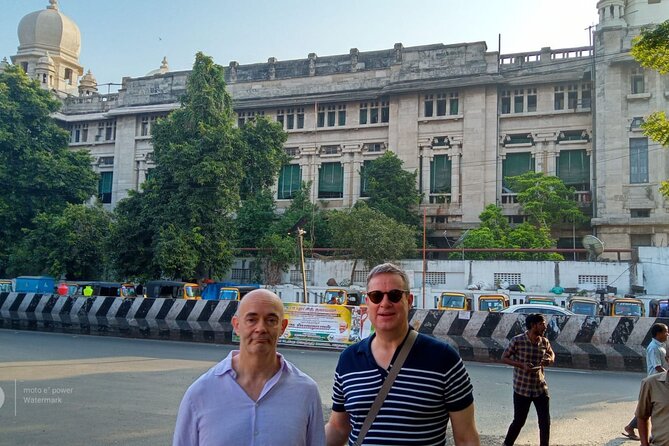
The walk then heads to the Southern Railway Headquarters, about 15 minutes. This is where the city starts showing its design negotiation between influences.
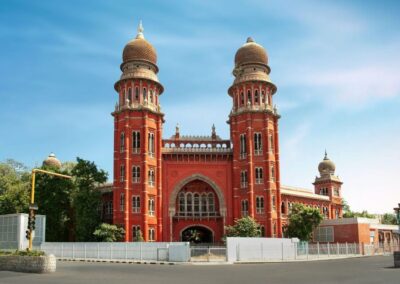
The building is in the Indo-Saracenic style, designed by N. Grayson and built by Samynada Pillai, completed in 1921. Indo-Saracenic is a phrase you’ll hear in India a lot, but it usually means more than decoration. It’s a way of blending local and imported design signals into one official-looking structure.
Why this stop is worth your attention: it helps you spot patterns. You start realizing that British-era Chennai wasn’t only one style. It was a mix, a compromise, and sometimes a flex. The guide’s explanations, especially from the friendly guides like Rajesh and Nanda, are often what make those style shifts feel clear.
If you’re the type who gets frustrated by vague cultural terms, you’ll likely appreciate the guided link between style and purpose here: this isn’t just pretty design, it’s administration and prestige housed in a recognizable architectural language.
Victory War Memorial: from Cupid’s bow to World War I commemoration
At the Victory War Memorial, you get a longer pause, about 30 minutes. The memorial was formerly called Cupid’s bow, and it later became known as the Victory War Memorial to commemorate the victory of the Allied Armies during World War I (1914 to 1918).
I like memorial stops because they slow the story down. Even if you’re focused on architecture, a memorial forces you to consider why the built environment needs to remember.
Also, names matter. Cupid’s bow suggests something more playful in earlier identity. Then the shift to World War I commemoration shows how meanings can be reassigned through time, politics, and public narrative.
This stop includes an admission ticket. Use it to connect physical structure to the emotional job it does for the city.
Fort St George and St Mary’s Church: colonial power with an old Anglican heartbeat
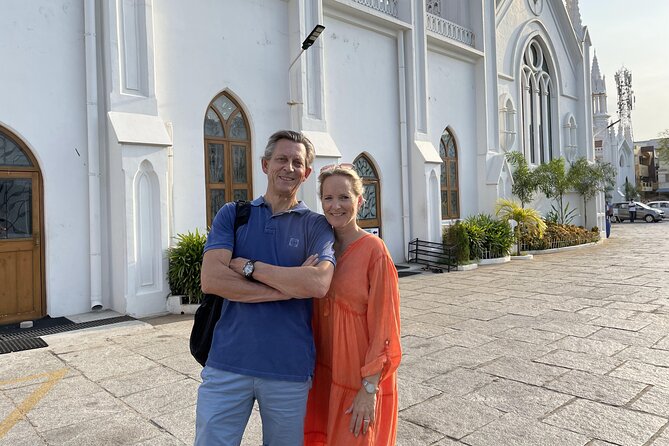
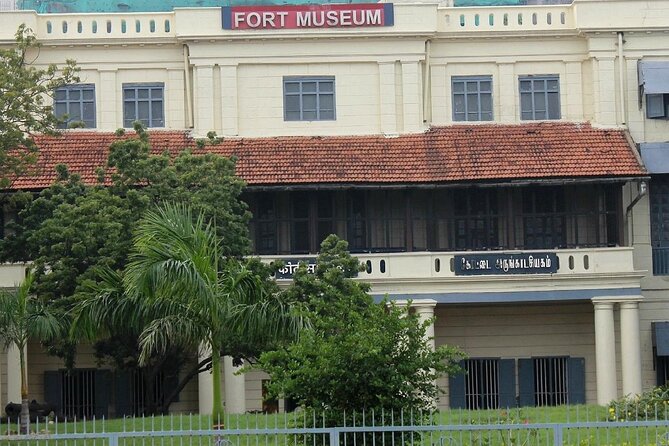
Fort St George takes about 30 minutes and includes St Mary’s Church, the oldest Anglican Church of India, plus a small museum with colonial relics.
This part of the walk is one of the biggest “meaning per minute” sections. Forts are the simplest way to picture authority. They’re walls around decision-making. Add the church, and suddenly you have the spiritual lane of colonial life, not just the military one.
St Mary’s Church being the oldest Anglican church in India makes it more than a photo stop. It’s a landmark that connects British religious presence to a longer timeline in the region.
The museum is a practical bonus if you want texture beyond building exteriors. Even a short museum visit helps you understand what people carried into colonial administration, not just what they built.
If you only care about exterior architecture, you might rush this stop. I’d still suggest giving it full time. The contrast between church space and fort space is often what makes the story land.
Napier Bridge: the Chennai media symbol and a 1943 public opening
Napier Bridge is only about 15 minutes, but it’s a clever palate cleanser between bigger institutions. The bridge was broadened and converted into a concrete structure, and it was opened to the general public in July 1943.
Napier Bridge is often used by media to represent Chennai. That alone makes it useful in your visit. You’re not just seeing it once. You’re learning why it became a visual shorthand.
Here’s the practical take: learn to look at bridges as infrastructure storytelling. They show priorities: movement, trade routes, and urban expansion. This one has a specific conversion story from its earlier form to a concrete public bridge in 1943, and it helps you connect the city’s architecture to modern development.
If you’re hoping for dramatic close-up detail, you might want more time. But as a short walk-through stop, it works well and keeps the route flowing.
University of Madras: porticos, halls, and a classic institutional look
The tour finishes at the University of Madras, with about 30 minutes at the site. This building was constructed between April 1874 and 1879.
You’ll be able to notice key elements: a convocation hall, porticos, a parapet, meeting halls, and a library. The Senate House is described as the administrative center of the University of Madras, and that matters because you’re finishing at a place meant to shape minds and policy.
Why this ending feels satisfying: you begin with transport and governance signals, then you move through memorial and colonial power, and you land on education as an enduring institution. It’s the arc from control to instruction.
This stop includes an admission ticket, so if you want a final chance to slow down and absorb details, aim your attention here. It’s also a good place to ask your guide one last question, since the group is gathered and the tour rhythm is calmer.
The guides make the architecture make sense
The biggest common praise across the guides is simple: they were friendly and explained the history clearly. Rajesh and Nanda come up repeatedly, with people highlighting great explanation about British colonial background and strong professionalism.
That matters because architecture tours can easily turn into a facts-only slideshow. When the guide connects design to decisions, you end up remembering the building shapes and the reasons behind them.
You’ll likely notice this in how the walk links stop to stop. Instead of isolated monuments, the tour builds a pattern: rail and public buildings, official authority and religious presence, memorial space, infrastructure identity, and education power.
It’s also a comfort factor. A friendly guide can keep you moving at the right pace, especially when stations and forts feel like they have their own momentum.
Timing, pace, and who this walk fits best
This is about a 3-hour walking experience, with multiple stops ranging from 15 to 30 minutes each. That pacing is best for people who want a full route without spending the whole day on their feet.
It also says most travelers can participate, which points to a generally manageable format. Still, it’s a city walk. Plan for sustained walking time and frequent transitions between busy areas.
This tour tends to suit:
- You if you love architecture and want the British-era story in a tight loop
- You if you like guided context more than reading plaques on your own
- You if you have limited time in Chennai but still want meaningful landmarks
- You if you enjoy photos, since you pass through visually recognizable structures like Central Station and Napier Bridge
It may not suit you as well if you want long stays inside every building. This is more about seeing and understanding the highlights than spending half a day in one place.
What’s included, what to plan for, and small gotchas
The tour includes:
- Local guide
- Local snack and coffee or tea
- All taxes, fees, and handling charges
- Admission tickets at the listed stops
- Mobile ticket
- Group discounts (availability depends on your booking)
It does not include:
- Porterage and tips
- Camera and video camera fees
- Other incidental charges
- Hotel pickup and drop-off
For practical planning, the lack of hotel pickup means you’ll need to get to the meeting point on your schedule. And if you plan to film or take equipment-level photos, ask in advance about camera or video fees, since those are not included.
Should you book British Architecture Walk in Chennai with Wonder tours?
I’d book this if you want a structured, high-value introduction to British-era Chennai that mixes design, institutions, and public memory. The included admission tickets, the snack and coffee or tea, and the route that strings together Central Railway Station, rail headquarters, Fort St George, Napier Bridge, and the University of Madras make it feel like a real plan, not just a casual stroll.
I’d think twice if you want long, slow museum time or if you’re not comfortable meeting at a set city location without hotel pickup. Also consider that camera or video fees can add costs if you’re bringing gear.
If you like architecture that has a job to do in everyday life, this walk hits the sweet spot. You’re not only looking at buildings, you’re seeing how they still function in the city’s rhythm.
FAQ
How long is the British Architecture Walk in Chennai?
The tour lasts about 3 hours.
How much does it cost per person?
The price is $49 per person.
Where does the tour start and end?
It starts at the Greater Chennai Corporation Office at 53 Raja Muthiah Rd, Periamet, Chennai, and it ends back at the same meeting point.
Is there a mobile ticket?
Yes, the tour includes a mobile ticket.
What is included in the price?
Included items are a local guide, local snack and coffee or tea, and all taxes, fees, and handling charges.
Are admission tickets included for the stops?
Yes, admission tickets are included for the listed stops.
Is hotel pickup and drop-off provided?
No, hotel pickup and drop-off are not included.
Are camera or video fees included?
No, camera and video camera fees are not included.
Is it a private tour?
Yes, it is a private tour/activity, meaning only your group participates.
What is the cancellation policy?
This experience is non-refundable and cannot be changed for any reason. If you cancel or request an amendment, the amount you paid is not refunded.
Chennai and the Shore Temples




Recently reviewed across Chennai
- Colonial Charm & Cultural Treasures Chennai Sightseeing Tour
★ 4.0 · 10 reviews - Chennai & Mahabalipuram day trip with private car, Lunch & Guide
★ 5.0 · 10 reviews - Mahabalipuram walking tour by certified travel company
★ 5.0 · 10 reviews - Explore Chennai City Tour with Guide, Lunch, and Local Highlights
★ 5.0 · 10 reviews - British Architecture Walk in Chennai by Wonder tours
★ 5.0 · 10 reviews - St Thomas Trail in Chennai by Wonder tours
★ 4.5 · 11 reviews
Chennai and Mahabalipuram Tours, compared.
 ★ 5.0Mahabalipuram tour by Tourism Ministry approved companyFrom $115405 reviews
 ★ 5.0Gods of Mylapore walking tour- tourism ministry approved companyFrom $40267 reviews
 ★ 5.0Mahabalipuram & Kanchipuram by tourism ministry approved companyFrom $135264 reviews
 ★ 5.0Chennai tour in car with guide-winner of traveller’s choice awardFrom $80258 reviews
 ★ 5.0Georgetown heritage walking tour in Chennai about the founding of ChennaiFrom $50144 reviews
 ★ 5.0Mahabalipuram Private tour from Chennai by car with guide and lunch by WonderFrom $89137 reviews
 ★ 5.0Mahabalipuram walking tour by tourism ministry approved companyFrom $50102 reviews
 ★ 3.8Chennai Walking Tour ( 2 hours guided tour)From $1485 reviews
Browse the lists this tour appears in