
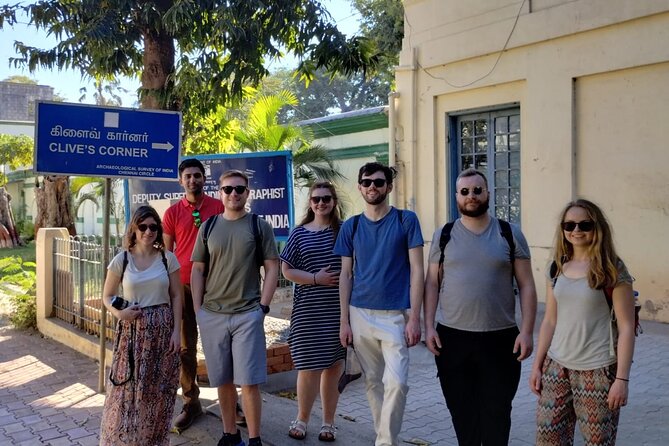
REVIEW · CHENNAI AND MAHABALIPURAM TOURS
Georgetown heritage walking tour in Chennai about the founding of Chennai
George Town tells Chennai’s origin story on foot. This heritage walk ties the streets of the old port district to the founding era, so you’re not just seeing landmarks, you’re hearing how they fit together from the first English settlement onward. I especially like the way Fort St George’s museum puts the East India Company era into plain context, and I like the small-group size (up to 15) that helps you actually ask questions.
One possible drawback: you’ll be outdoors for much of the 3-hour route, and the operator notes good weather is important. If it is hot or rainy, plan to handle it, and be ready for at least one indoor museum stop.
In This Review
- Key highlights you’ll feel on the walk
- A 3-hour loop through Chennai’s founding district
- Why George Town started as an English settlement (and why it still matters)
- Pickup, pace, and group size: the practical side
- Fort St George museum: where the East India Company story becomes real
- St Mary’s Church: the oldest Anglican church in India
- George Town and old lighthouse sites: trade depended on navigation
- Dare House and Parrys Company: commerce meets architecture
- Madras High Court: a Queen Victoria decree with a 1914 impact
- Armenian Church: the refugee trade story of silk, spices, and gems
- Price and value: what $50 gets you in George Town
- Who this walking tour is best for
- Smart tips before you go
- Should you book this Georgetown heritage walk?
- FAQ
- How long is the Georgetown heritage walking tour in Chennai?
- What does the tour cost?
- Is pickup available?
- How big is the group?
- Do any stops include admission tickets?
- Is a mobile ticket used?
- What if the weather is bad or I need to cancel?
Key highlights you’ll feel on the walk
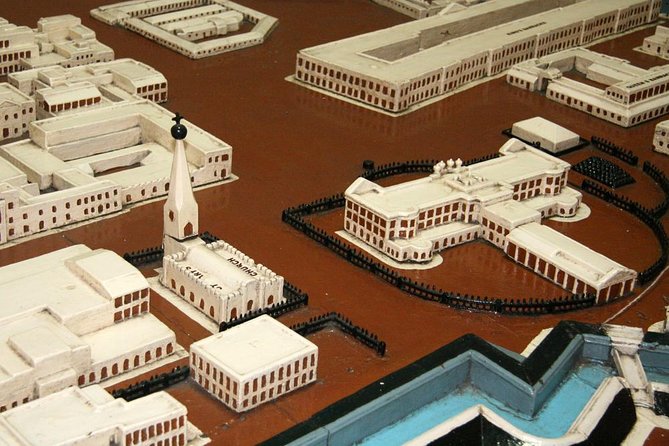
- Fort St George museum time with admission included, built from the early English fortress story
- St Mary’s Church, including a visit to the oldest Anglican church in India
- George Town and old lighthouse sites, tied to the East India Company navigation era
- Dare House and Parrys Company headquarters, with an art deco building and a trader founder named Thomas Parry
- Madras High Court narration and 1914 WWI attack context, from a Queen Victoria-era court
- Armenian Church and refugee trade history, including silk, spices, and gems tied to Armenian merchants
More Chennai days and shore temple runs
A 3-hour loop through Chennai’s founding district

Chennai’s George Town is the part of the city that started as a practical meeting point. It was where ships arrived, goods moved, and different communities built lasting footprints. This walk keeps that idea front and center by taking you from the early English fortress area to the legal and religious landmarks that later shaped the city.
The format is built for people who like a guide translating big history into street-level meaning. You get a local guide, and the pace is designed for a true walking experience, not a bus-and-picture tour. With a maximum of 15 travelers, it still feels personal, and you are less likely to get lost in the shuffle if you want clarification on a story.
Why George Town started as an English settlement (and why it still matters)
George Town’s story begins in the 17th century, when the English settlement took root as Chennai formed around its port role. The walking route is basically a timeline you can touch. You start at Fort St George, an early symbol of European power in the region, then move through churches and commercial buildings that show how the settlement grew into a diverse trading neighborhood.
The big value here is the way the guide connects history to purpose. Fort St George is not only a building, it is a statement about how the East India Company established control. St Mary’s Church is not only architecture, it is evidence of how religious life traveled with merchants and settlers. Madras High Court later shows how imperial-era authority was formalized and how global conflict reached a local landmark in 1914.
If you like history that feels grounded in real places, this tour gives you that. You’ll walk away with a clearer sense of why George Town developed the way it did, not just what the sites are named today.
Pickup, pace, and group size: the practical side
This is a short, manageable tour at about 3 hours. Pickup is offered, which matters in Chennai, where getting from one pocket of the city to another can easily eat up your time.
Group size is capped at 15, which is ideal for a heritage walk. You can hear the guide’s explanation without fighting noise, and the guide can adjust if your group has more interest in religion, commerce, or military history.
The route also works for most travelers. That does not mean it is effortless, it means it is paced for typical visitors. Comfortable shoes help. You will be walking through areas that are active city streets, and you will want to be ready to pause for photos and short explanations.
- Georgetown heritage walking tour in Chennai about the founding of Chennai★ 5.0 · 144 reviews
- Mahabalipuram Private tour from Chennai by car with guide and lunch by Wonder★ 5.0 · 137 reviews
- Mahabalipuram walking tour by tourism ministry approved company★ 5.0 · 102 reviews
- Chennai Walking Tour ( 2 hours guided tour)★ 3.8 · 85 reviews
- Sowcarpet Street Food Walking Tour in Chennai with guide★ 5.0 · 83 reviews
Fort St George museum: where the East India Company story becomes real
You kick off at Fort St George, described as the first English fortress built in 1644 by the East India Company. Then you spend about 30 minutes at the museum inside the fort, with an admission ticket included.
What I like about this stop is that the museum gives you a bridge. You can stand outside and see the fort as a structure, but the museum is what helps you understand the logic behind British dominance, and how a trading company became a governing presence. The fort is also one of those places where you can feel how early power worked: you’re looking at a site designed for authority, not just defense.
How to get the most from it:
- Pay attention to how the museum frames British control, because that becomes the background for later stories on courts and conflict.
- If you are more of a question person than a reader person, use the museum time to ask your guide how the fort relates to the rest of George Town.
One note: if you already spent the afternoon in another museum, you might feel museum time is a lot. The tour does include at least one ticketed indoor visit, so build your day around that.
St Mary’s Church: the oldest Anglican church in India
Next you visit St Mary’s Church, the oldest Anglican church in India. The stop is about 15 minutes, and admission is free.
This is a quick, meaningful pause. The tour highlights the church’s connection to the Last Supper theme, which gives you something to focus on besides just the exterior or general age. Even if you are not religious, churches like this are still cultural documents. They show what faith communities brought with them and how that shaped early settlement life.
Because the stop is short, go in with one goal: look for the details your guide points out, then absorb the overall sense of continuity. You will feel how George Town kept layers from different eras, side by side.
George Town and old lighthouse sites: trade depended on navigation
The walk then moves through George Town, including a look at old lighthouse sites that were functional during the East India Company period. Admission is free, and this stop is around 15 minutes.
Lighthouses are easy to overlook because they look straightforward. But this stop helps you understand the port reality: the entire settlement economy depended on ships finding safe routes. A lighthouse is practical technology, and in a trading district, practical technology becomes power. It keeps commerce flowing and reduces risk in busy waters.
If you like maritime history, this is the moment where you can connect the dots between the European settlement and the daily logistics of getting goods in and out.
Dare House and Parrys Company: commerce meets architecture

Stop 4 is Dare House #234, about 15 minutes, with admission free. The building is described as iconic and art deco, but the real draw is its history as the headquarters of Parrys Company.
The tour links Parrys Company to Thomas Parry, a Welsh free merchant of Chennai. That detail matters because it personalizes trade. Instead of treating commerce as an abstract force, you get a name and a human origin story behind a major business presence.
What to watch for here:
- The contrast between art deco style and older port-era roots. It shows how George Town kept evolving after the founding era.
- Your guide’s explanation of how merchant networks shaped the city layout. Even a quick stop can clarify how business buildings fit into the neighborhood.
Madras High Court: a Queen Victoria decree with a 1914 impact
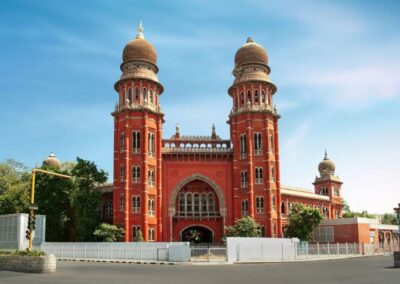
You then reach Madras High Court, a stop of about 30 minutes with admission included. The court was set up in 1862 by decree from Queen Victoria, and it continues to serve the state of Tamil Nadu today.
That is the big time-jump in one place: from 17th-century settlement beginnings into Victorian-era institutions that still function. The tour also narrates events in 1914 during World War I, including an attack on the building by German forces.
This is one of the stops where you can feel how global events get local quickly. A high court is supposed to represent law and stability. Hearing about the 1914 attack context makes the building’s role more complicated and more human. It also helps you understand that George Town was not isolated. It was plugged into an international world.
How to make it click:
- Treat this as both architecture and story. Let the date references and the WWI framing sit in your head, because they connect back to the port and trading links that started the city’s early connections.
Armenian Church: the refugee trade story of silk, spices, and gems
The final stop is the Armenian Church, about 30 minutes, with admission included. Before you enter, the tour passes the street where Armenian refugees set up trade for silk, spices, and gems roughly 300 years ago. Then you visit the Armenian Church for an immersive experience, guided by the context your local guide provides.
This is the part of the tour that often gives people the emotional connection. The English settlement story is only one thread. The Armenian merchant story adds another, showing how George Town became a trading neighborhood through many kinds of migration and exchange.
If you want a fuller picture of why the port district felt international even early on, this is a key stop. Trade items named in the tour framing are not random. Silk, spices, and gems were the kinds of goods that made long-distance routes worthwhile. This tells you why an Armenian community could grow and why their church mattered as a community center, not just a building.
Price and value: what $50 gets you in George Town
At $50 per person for about 3 hours, you are paying for guided context and a tight route through multiple major stops. The value improves because several visits have admission included, not just a walk-by explanation. Fort St George includes a museum ticket, Madras High Court includes admission, and the Armenian Church includes admission.
You also get free-access stops along the way, like St Mary’s Church, the George Town lighthouse sites, and Dare House. That mix matters. You are not spending the entire time paying entry fees, but you are still getting meaningful indoor time at major landmarks.
Small-group size (up to 15) is another part of the value equation. A bigger crowd can turn a heritage walk into a slow shuffle. Here, the format supports clearer listening and more personal guidance.
If you are the kind of traveler who likes to understand why places exist, not just where they are, this is a fair price for the time, the access, and the guidance.
Who this walking tour is best for
This walk is a strong match if:
- You love history and want it tied to specific buildings in one compact route
- You like port-city stories, where trade, law, and religion overlap
- You prefer small groups so you can keep up with the guide’s explanations
- You want an easy way to orient yourself in Chennai’s George Town area
It is also a good fit if you want a guided overview that does not require heavy planning. With pickup offered and a straightforward start and end around the port and George Town, you can focus on the story.
Smart tips before you go
A few practical moves will help you enjoy the experience more:
- Wear comfortable shoes for a 3-hour walk in city streets.
- Bring water, especially if the day is warm. The tour needs good weather, but Chennai can still be hot even on clear days.
- If you care most about one theme, tell your guide early. This tour is designed to share stories about founding and evolution, so a quick signal helps the narration match your interests.
Also, since the tour uses a mobile ticket, make sure you have your device charged and ready to show it.
Should you book this Georgetown heritage walk?
Yes, I think you should consider booking it if you want a compact, story-driven introduction to Chennai’s origins in George Town. The standout strength is how the route connects major landmarks into a coherent founding narrative, from Fort St George into institutions like Madras High Court and onward to community history at the Armenian Church.
Book it especially if you value clear guidance, good pacing, and a small group. The guide’s English is highlighted as excellent in feedback, and the overall experience has a very high recommendation rate with a top rating, which aligns with the tour design.
Skip it if you dislike walking outdoors for extended stretches or you already plan multiple museum stops that same day, because at least one museum visit is part of the core experience.
FAQ
How long is the Georgetown heritage walking tour in Chennai?
It lasts about 3 hours.
What does the tour cost?
The price is $50.00 per person.
Is pickup available?
Yes, pickup is offered.
How big is the group?
The tour has a maximum of 15 travelers.
Do any stops include admission tickets?
Yes. Fort St George, Madras High Court, and the Armenian Church include admission tickets. St Mary’s Church, George Town, and Dare House have admission free.
Is a mobile ticket used?
Yes, the tour includes a mobile ticket.
What if the weather is bad or I need to cancel?
The experience requires good weather. If it is canceled due to poor weather, you are offered a different date or a full refund. Cancellation is free up to 24 hours in advance for a full refund.
Chennai and the Shore Temples



Recently reviewed across Chennai
- Colonial Charm & Cultural Treasures Chennai Sightseeing Tour
★ 4.0 · 10 reviews - Chennai & Mahabalipuram day trip with private car, Lunch & Guide
★ 5.0 · 10 reviews - Mahabalipuram walking tour by certified travel company
★ 5.0 · 10 reviews - Explore Chennai City Tour with Guide, Lunch, and Local Highlights
★ 5.0 · 10 reviews - British Architecture Walk in Chennai by Wonder tours
★ 5.0 · 10 reviews - St Thomas Trail in Chennai by Wonder tours
★ 4.5 · 11 reviews
Chennai and Mahabalipuram Tours, compared.
 ★ 5.0Mahabalipuram tour by Tourism Ministry approved companyFrom $115405 reviews
 ★ 5.0Gods of Mylapore walking tour- tourism ministry approved companyFrom $40267 reviews
 ★ 5.0Mahabalipuram & Kanchipuram by tourism ministry approved companyFrom $135264 reviews
 ★ 5.0Chennai tour in car with guide-winner of traveller’s choice awardFrom $80258 reviews
 ★ 5.0Mahabalipuram Private tour from Chennai by car with guide and lunch by WonderFrom $89137 reviews
 ★ 5.0Mahabalipuram walking tour by tourism ministry approved companyFrom $50102 reviews
 ★ 3.8Chennai Walking Tour ( 2 hours guided tour)From $1485 reviews
 ★ 5.0Sowcarpet Street Food Walking Tour in Chennai with guideFrom $4583 reviews
Browse the lists this tour appears in