
REVIEW · HIMACHAL HILL STATION TOURS
Guided, India’s Own Mini Tibet Mcleodganj- Culture Tour
McLeod Ganj is small, but it packs big meaning. This 3 to 4 hour guided culture walk helps you understand what you are seeing in Dharamsala’s Tibetan exile community, with a local English speaking guide and short stops at key places. I like the fact that you get bottled water and you are not stuck in a huge group, so you can actually ask questions.
You’ll visit major spiritual and cultural landmarks, including the Dalai Lama Temple complex (Tsuglag Khang), plus the Tibetan library and museum. The one real drawback is that some entry fees are not included, so budget extra for the Tibet Museum, the Library of Tibetan Works and Archives, and Men-Tsee-Khang.
If you want a practical way to orient yourself fast, this tour is built for that. You also get a chance to meet the kind of guide who can connect dots, and one name that keeps coming up is Arjun Malik, praised for his Buddhism and Tibetan culture knowledge and for being helpful and flexible.
In This Review
- Key highlights you will feel in real time
- Why McLeod Ganj’s Tibetan sites feel different with a guide
- Price and value: $31 for a focused cultural circuit
- Time, pacing, and how the 3 to 4 hours work on foot
- Stop 1: Kalachakra Temple inside Thekchen Choumlling complex
- Stop 2: Tsuglag Khang, the Dalai Lama’s temple complex (and Tsuglag Khang rules)
- Stop 3: Library of Tibetan Works and Archives, what you are supporting by visiting
- Stop 4: Tibet Museum near Tsuglag Khang, where the story becomes tangible
- Stop 5: Men-Tsee-Khang, Tibetan medical tradition in a charitable setting
- The Nechung Monastery mention, and how to treat it in your planning
- What I’d do to get the most from short stops
- Is this tour worth it for you?
- Should you book this McLeod Ganj culture tour?
- FAQ
- Where does the tour start and end?
- How long is the Guided, India’s Own Mini Tibet McLeodganj Culture Tour?
- What is included in the price?
- Are entrance fees included?
- Is lunch included?
- Do I need hotel pickup or drop off?
- How big are the groups?
- Is the tour refundable if I cancel?
Key highlights you will feel in real time
- Small group size up to 15, which makes the walk feel personal instead of rushed
- Tsuglag Khang orientation, so you know what you are looking at before you move on
- Library of Tibetan Works and Archives context on preservation and learning, not just photos
- Tibet Museum stops near the Dalai Lama Temple complex, so the story stays cohesive
- Men-Tsee-Khang visit ties Tibetan culture to healthcare and charity, not only religion
- Bottled water provided, a simple comfort in hill-town walking
Other hill station stays reviewed
Why McLeod Ganj’s Tibetan sites feel different with a guide
McLeod Ganj looks like a mountain town from a distance. Up close, it is also the seat of the Tibetan government in exile, led by the Dalai Lama, who lives here. That reality changes how you read the streets, monasteries, prayer rituals, and the steady flow of pilgrims.
A guided mini tour matters because Tibetan cultural sites have layers. Without context, you can end up doing the classic tourist math: I saw a temple, I took a photo, I moved on. With a good guide, you start noticing what is functional, what is symbolic, and what local people are actually practicing day to day.
This is especially true at Tsuglag Khang, the best-known place on the list. It is among the world-renowned religious centers, and it draws Buddhist pilgrims throughout the year. Even in a short visit, your guide can help you understand why the place is visited and how the complex works.
Price and value: $31 for a focused cultural circuit
At $31 per person, this feels like a budget-friendly way to cover several top sites in one go. The real value is not the price tag alone, it is what is bundled in: an English speaking local guide, a walking tour, and a water bottle.
Here is the key thing to plan for. Entry fees for three stops are not included, and they total ₹150 per person for the Tibet Museum, the Library of Tibetan Works and Archives, and Men-Tsee-Khang. So your realistic total is $31 plus those site fees, plus your own food budget since lunch is not included.
In return, you get an efficient route that saves you from figuring out timing and ordering all these places yourself. You also avoid the common problem of spending your first hour in McLeod Ganj trying to orient, then discovering too late that you ran out of energy for the museum side of the day.
Time, pacing, and how the 3 to 4 hours work on foot
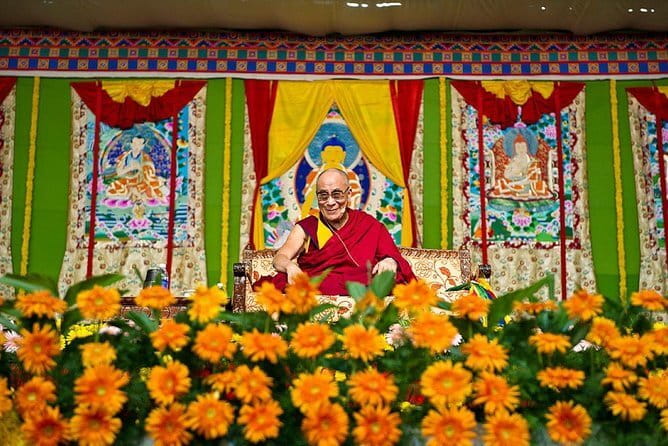
The tour runs about 3 to 4 hours, and you are walking between stops. The itinerary is built around short, meaningful time blocks, with stop durations ranging from 15 to 30 minutes. That pacing is great if you want variety without burning out.
Group size is capped at a maximum of 15 people, which helps a lot on crowded temple grounds. You will still need to accept that popular sites can be busy, but a smaller group makes it easier to regroup and ask quick questions without yelling over the crowd.
Two practical notes based on what is included and not included:
- There is no pick up and drop off from your hotel, so you should plan to start and end on your own at the meeting spot.
- You will end back at the same meeting point, so you do not need to worry about getting stranded at the far end of town.
You start at Main Square in McLeod Ganj. If you are using a map app, treat Main Square as your anchor point so the rest of the day stays simple.
- Triund Trek★ 4.5 · 27 reviews
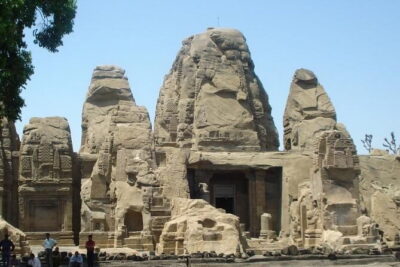
- Historical Tour including Unesco Kangra fort & Rock cut temple from Dharamshala★ 5.0 · 27 reviews
- Tea Top Adventure Activities★ 5.0 · 21 reviews
- Hiking Day Tour to Triund from Dharamshala★ 5.0 · 20 reviews
- Guided, India’s Own Mini Tibet Mcleodganj- Culture Tour★ 5.0 · 17 reviews
Stop 1: Kalachakra Temple inside Thekchen Choumlling complex
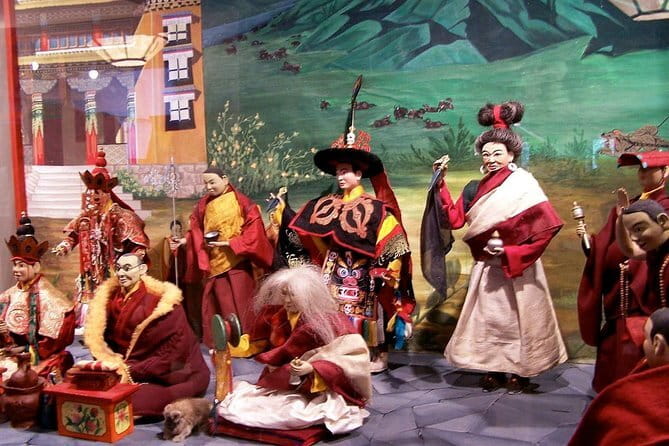
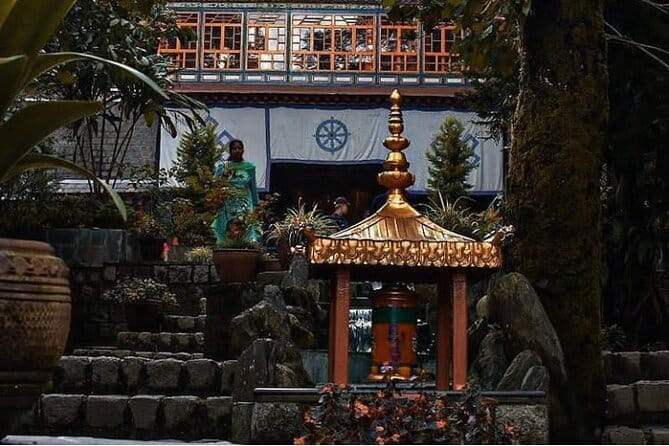
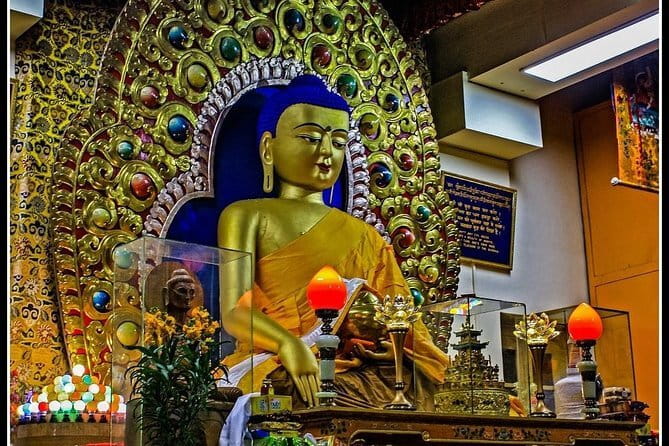
You begin with the Kalachakra Temple, located inside the larger Thekchen Choumlling temple complex. This matters because you are not just visiting one building. You are entering a temple ecosystem, and the complex also houses the Namgyal monastery.
Kalachakra is a name you will hear around Tibetan Buddhism, and even a brief stop can help you connect it to what you see in the architecture and religious routines around you. In a short 15 minute block, the goal is orientation: where you are, what the complex represents, and what kinds of practices you may notice as you walk deeper into the area.
The only drawback here is the time. If you want a slow, quiet sit-down prayer break, 15 minutes can feel short. Think of this first stop as your warm-up, setting your eyes and ears for the more famous complex that comes next.
Stop 2: Tsuglag Khang, the Dalai Lama’s temple complex (and Tsuglag Khang rules)
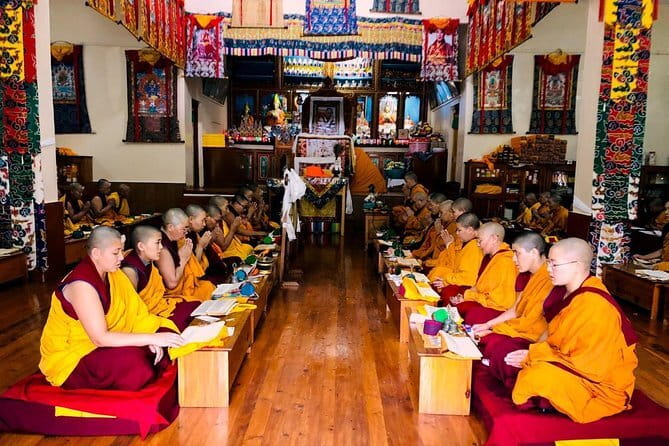
Tsuglag Khang, also known as the Dalai Lama Temple complex, is home for His Holiness the Dalai Lama. It is also one of the world-renowned religious centers, and pilgrims show up throughout the year.
This is the stop that usually gives people their biggest emotional punch. The buildings are only part of it. The atmosphere, the movement of pilgrims, and the visible devotion are what make it feel alive.
With a guide, you get more than a checklist. Your guide can point out what you should be paying attention to during your time inside the complex, so you do not just wander. That is especially useful because the complex can be busy, and it is easy to get turned around if you are trying to read everything at your own pace.
Admission fees are not included for this stop in the way the tour specifies them, but you should always be prepared for the possibility that rules can change. The safest approach is to keep your schedule flexible and listen to your guide’s instructions on the ground.
Stop 3: Library of Tibetan Works and Archives, what you are supporting by visiting
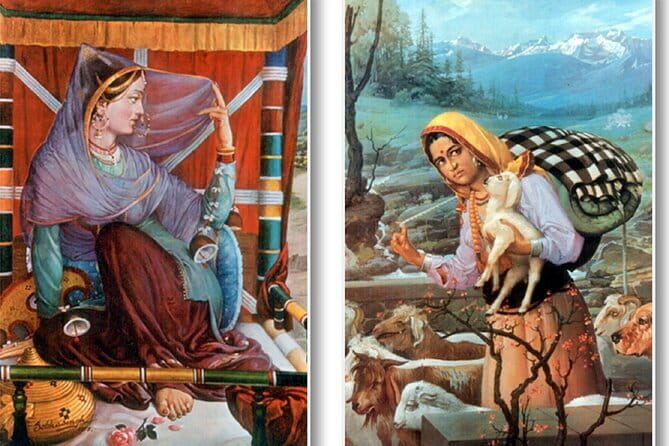
Next is the Library of Tibetan Works and Archives (LTWA). This is one of those places where the value is not loud. It is quiet importance.
LTWA was founded by Tenzin Gyatso, the 14th Dalai Lama on 11 June 1970. Even if you only have about 15 minutes, a guide can help you see why a library like this is more than a collection. It is preservation. It is education. It is keeping culture and learning accessible for future generations.
If you love books, scripts, or handwritten knowledge, you will probably enjoy this stop more than you expect. Even if you are not a book person, you might find it meaningful because you can physically connect the idea of Tibetan culture with the act of saving it.
As with the tour’s other longer admission sites, this stop has an entry fee included in the separate total you need to budget for, since it is part of the ₹150 per person ticket group.
Stop 4: Tibet Museum near Tsuglag Khang, where the story becomes tangible
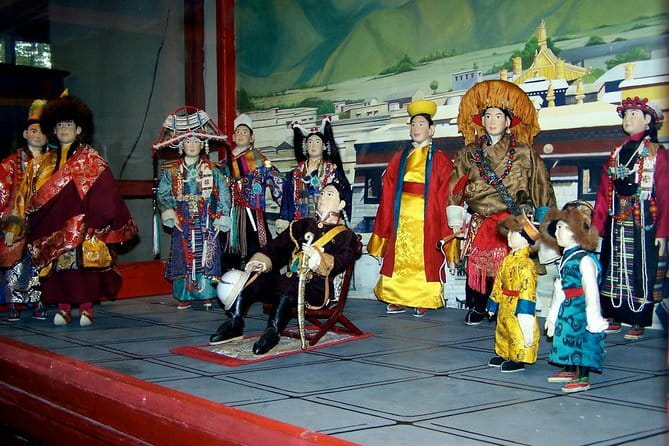
The Tibet Museum is the official museum of the Central Tibetan Administration’s Department of Information and International Relations. It is located near the main temple of the 14th Dalai Lama, Tsuglag Khang.
That location is not random. It keeps your experience from feeling like disconnected stops. You move from a sacred complex into a museum that offers institutional context. If you want to understand what you are seeing in McLeod Ganj beyond spirituality, this is where the picture gets clearer.
Your guided time here is about 20 minutes. That is enough to get the theme, not enough to read every sign like a graduate seminar. The smart move is to let your guide steer you toward the key sections based on your interests, then you can choose what to linger on.
The museum also helps you understand that Tibetan culture in exile is not only about temples. It includes information, governance, and international relations, all aimed at keeping identity intact and known.
The ticket fee for the Tibet Museum is included in that separate ₹150 per person group, so plan to pay on site.
Stop 5: Men-Tsee-Khang, Tibetan medical tradition in a charitable setting
The final stop is Men-Tsee-Khang, also known as the Tibetan Medical and Astro Institute. It is a charitable institution based in Dharamsala, Himachal Pradesh, and it was founded by the 13th Dalai Lama in Lhasa in 1916.
This stop is a helpful counterweight to a day that can otherwise feel only religious. Tibetan medicine is part of culture too, and the fact that the institute is charitable changes how you interpret what you see. You are not just visiting an attraction. You are seeing a real system linked to community care.
Your time here is about 30 minutes, which gives you a bit more breathing room than the earlier stops. If you are curious about how Tibetan traditions connect health, astrology, and spiritual practice, this is the moment to ask your guide what to look for, because the institute name hints at more than one focus.
This stop is also in the entry-fee group for the ₹150 total per person.
The Nechung Monastery mention, and how to treat it in your planning
The tour description also calls out Nechung Monastery as part of the broader Tibetan cultural sights you will learn about. Even when exact stop timing can vary day to day, you should treat the Nechung mention as a clue about the tour’s intent: it is not only temple-photo time.
So if you care about the story behind institutions and spiritual roles, keep your questions ready. If your guide mentions Nechung during the walk, lean into it. Ask what it represents, how it connects to Tibetan governance and religious practice, and what you should notice during visits.
This tour is short enough that a guide’s commentary can make or break how connected you feel to the day, and the Nechung reference signals that connection is part of the design.
What I’d do to get the most from short stops
This tour is paced for efficiency. That is not a flaw, it is the point. You will not have hours inside any one site, so you need a plan for what to prioritize.
Here is how to make it feel satisfying instead of superficial:
- Pick one stop as your anchor. For most people, it is Tsuglag Khang. For others, it could be LTWA or Men-Tsee-Khang.
- Keep questions small and specific. Ask what a site is for, who uses it, and what to notice. Guides can answer fast when you ask targeted questions.
- Wear comfortable shoes. You are doing a walking tour, and McLeod Ganj is hilly.
- Be ready for crowds at the most famous places. If you feel rushed, let your guide move you into a better viewing spot rather than fighting the flow.
Also, if you can, bring a calm mindset. Temples and pilgrimage sites are active spaces. When you treat them that way, your experience gets better, even when the schedule is tight.
Is this tour worth it for you?
This tour fits best if you want a guided McLeod Ganj orientation rather than a DIY temple hop. It is a smart choice when you are short on time, new to Tibetan culture, or you want the background that makes the sites make sense.
It is especially appealing if you value small group attention. A max group size of 15 means you are less likely to feel like one face among many. And the water bottle is a small detail that keeps the day from feeling like constant self-management.
If you are the type who wants to sit quietly for a long prayer session, you might feel the short stop durations are limiting. In that case, use the tour as your starter, then return to your favorite place for deeper time on your own.
One more reason I’d call it a strong value: the guide quality. The name Arjun Malik shows up in the feedback with a reputation for strong Buddhism and Tibetan culture knowledge, plus a helpful, flexible approach. In a short tour, that kind of guide can turn a checklist day into a meaningful one.
Should you book this McLeod Ganj culture tour?
I would book it if you want a focused, guided introduction to Tibetan cultural life in Dharamsala, and you like getting context fast. For $31, you are paying for a guide, a walking route, and the structure to cover major sights in a half-day window.
Just go in with two expectations set: you will likely pay an extra ₹150 per person for ticketed stops, and you will not have lunch or hotel pick up. If that fits your day plan, you will probably come away feeling you understand what you saw.
If your schedule is fragile, keep one more practical thing in mind: the experience is listed as non-refundable and cannot be changed if you cancel.
FAQ
Where does the tour start and end?
It starts at Main Square, McLeod Ganj, Himachal Pradesh 176215, and it ends back at the same meeting point.
How long is the Guided, India’s Own Mini Tibet McLeodganj Culture Tour?
The duration is about 3 to 4 hours.
What is included in the price?
Included are an English speaking local guide, a walking tour, and a water bottle.
Are entrance fees included?
No. Entrance fees for the Tibet Museum, the Library of Tibetan Works and Archives, and Men-Tsee-Khang are ₹150.00 per person.
Is lunch included?
No, lunch is not included.
Do I need hotel pickup or drop off?
Pick up and drop off from your hotel are not included.
How big are the groups?
This tour has a maximum of 15 travelers per booking.
Is the tour refundable if I cancel?
No. The experience is non-refundable and cannot be changed for any reason.
More Himachal Hill Stations
Recently reviewed across Dharamsala
- Snowline Trek
★ 4.5 · 11 reviews - Guided Day Hike to Guna Devi Temple from Mcleodganj
★ 5.0 · 12 reviews - Historical Tour, Kangra fort &Rock cut temple from Dharmasla
★ 4.7 · 12 reviews - Indrahar Pass Trek with Manu Adventures India
★ 4.5 · 13 reviews - Guided Kora Circuit & Walking Tour Around McLeod Ganj
★ 5.0 · 15 reviews - Guided, India’s Own Mini Tibet Mcleodganj- Culture Tour
★ 5.0 · 17 reviews
Himachal Hill Station Tours, compared.
 ★ 5.0Hiking Day Tour to Triund from DharamshalaFrom $3175 reviews
 ★ 5.0Shimla Private Guided Walk Tour exploring the colonial trailsFrom $1666 reviews
 ★ 5.0Private 6 hrs Mcleodganj & Dharamshala City TourFrom $4565 reviews
 ★ 5.0Shimla Manali PackageFrom $25057 reviews
 ★ 5.0Amritsar Dalhousie Dharamshala 6 Days TourFrom $35855 reviews
 ★ 5.0Unique Shimla and Manali tourFrom $25047 reviews
 ★ 5.0Guided Heritage Walk Tour in ShimlaFrom $3140 reviews
 ★ 5.0Private 7 Days Shimla Manali Hill Stations Tour From ChandigarhFrom $45030 reviews
Browse the lists this tour appears in