
REVIEW · HISTORICAL TOURS
Old city heritage walk and local life experience
Udaipur feels different on side streets. This old city heritage walk guides you through temple lanes, lake ghats, and working neighborhoods, with local guide Manish pointing out what most visitors miss.
I love how the route links everyday life to the city’s architecture, from havelis and wall paintings to the residential quarters where people still live. I also love the hands-on rhythm of markets and crafts, where you’ll see leaf-based plates, clay and metal utensil making, and you’ll finish with chai, snacks, and sweets.
One possible drawback: this is a walk with market steps and tight streets, so you’ll want comfortable shoes and a steady walking pace.
In This Review
- Key highlights you will care about
- Entering Udaipur the way locals live it
- Meeting at Jagdish Temple stairs, then easing into temple lanes
- Lake sights and ghats, with a local rhythm to the route
- Havelis outside, and why their design mattered
- Wall paintings: neighborhood stories on home walls
- Vegetable market, then grocery and spice shopping streets
- Craft communities: leaf plates, clay bowls, metal utensils, bamboo baskets
- Traditional snacks, masala chai making, and tasting
- Wedding market walk: how arranged marriages are approached
- Why the guide, Manish, changes the whole experience
- Price and value: what $9 gets you in Udaipur
- Who should book this walk, and who might prefer something else
- Should you book this Udaipur old city heritage walk?
- FAQ
- Where does the old city heritage walk start?
- What is included in the $9 per person price?
- What languages does the guide speak?
- What kind of walk should I expect?
- Do I need to pay right away?
- What is the cancellation policy?
Key highlights you will care about

- Starts at Jagdish Temple stairs, then threads into quieter temple lanes
- Lake ghats viewpoints built into the walk, not just a photo stop
- Havelis and wall paintings explained in plain language and local context
- Market time to taste, with visits to vegetable, grocery, and spice areas
- Craft communities at work, including leaf plates, clay bowls, metal pots, and bamboo baskets
- Wedding market walk, with insight into how arranged marriages are approached
Shortlisting? Every Udaipur trip below went through the same review.


Entering Udaipur the way locals live it
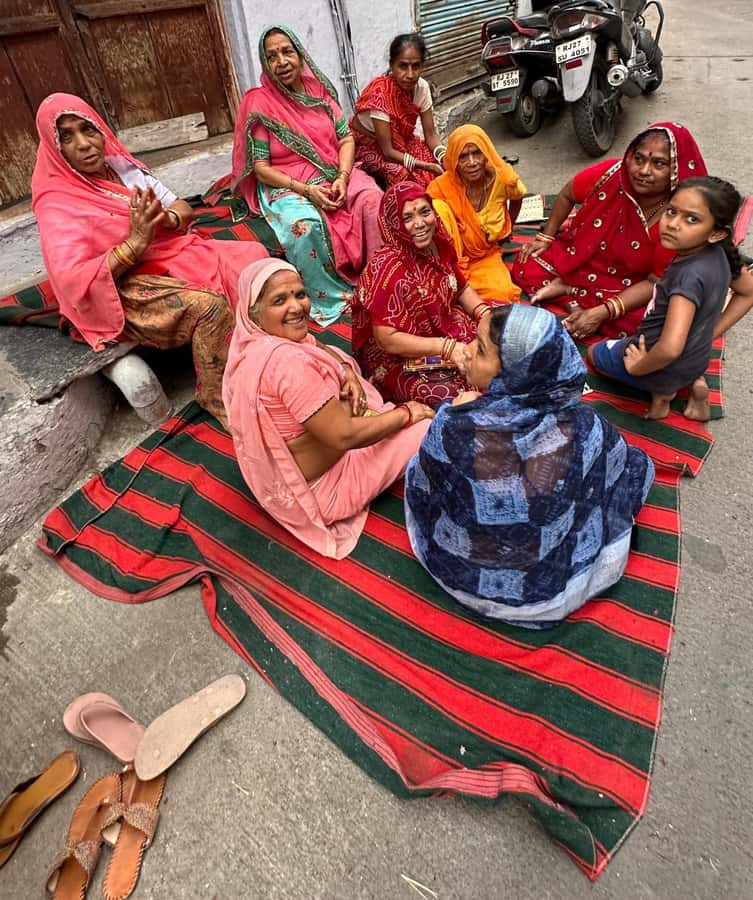
Udaipur’s postcard version is the lake and the palaces. This walk gives you the street-level version, the one where you can feel how the city actually functions. You’re guided through old temple lanes, then into residential streets, then into the kinds of bazaars people use every day.
What makes this experience especially worthwhile is the way the guide ties things together. You’re not just collecting sights. You’re learning the logic behind them: why certain buildings were built the way they were, how homes were decorated, and what kinds of trades still matter in the old city.
And because it’s guided, you’re less likely to get stuck walking in circles. Manish’s focus is on showing you corners you’d struggle to find alone, while still keeping the pace realistic.
Meeting at Jagdish Temple stairs, then easing into temple lanes
The walk starts at the stairs of Jagdish Temple. That’s a smart starting point, because you’re already in a high-energy cultural zone before you drift into quieter streets.
From there, you’ll move through the old temple lanes, and the experience quickly shifts from landmark tourism to neighborhood flow. You’ll see the lake direction and get a sense of how the city’s sacred and everyday spaces interconnect.
Practical tip: plan to be a little flexible with time. In older city areas, the street layout and crowd flow can affect pacing, and the best walks keep moving without rushing.
Lake sights and ghats, with a local rhythm to the route
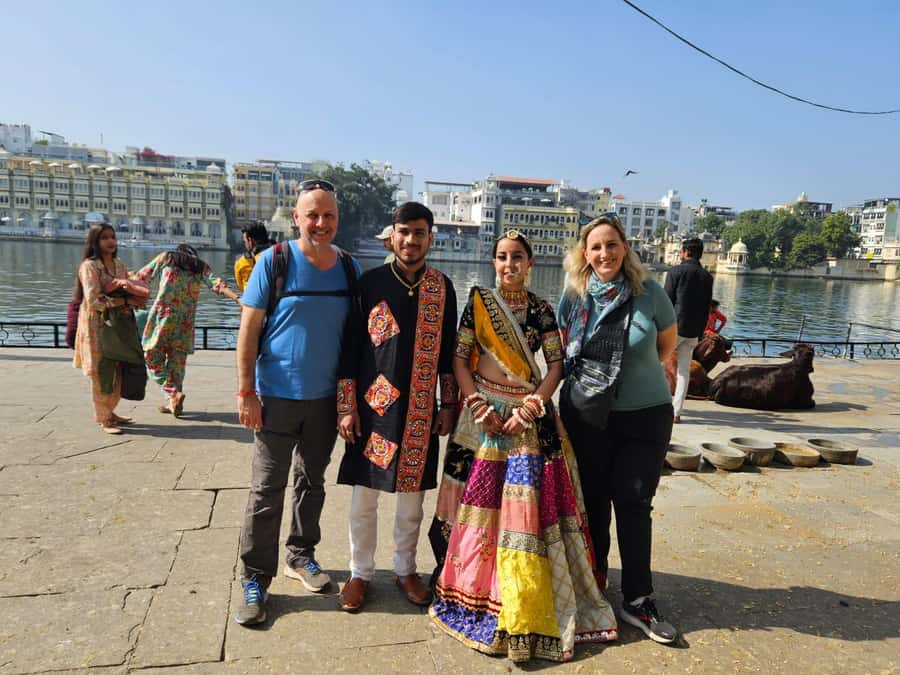
One of the nicest parts is that lake viewpoints and ghats are not saved for later. They show up early in the walk, when you’re still building your mental map of Udaipur.
Even if you’ve already seen photos of Lake Pichola, it’s different when you see the ghats as part of the walk, with the city’s daily movement around them. You start to understand how water sits at the center of life here, not only as scenery.
If you’re sensitive to strong sun or heat, it’s wise to bring a bit of shade cover. The walk includes walking in open areas around the lake approach points, so plan accordingly.
- Udaipur: Full Day Private City Tour with Optional Boat Ride★ 4.7 · 130 reviews
- Kumbhalgarh & Ranakpur Day Trip from Udaipur with Guide and Lunch★ 5.0 · 125 reviews
- Udaipur Sightseeing Tour★ 5.0 · 122 reviews
- Udaipur Sightseeing Tour By Car With Guide★ 5.0 · 113 reviews
- Private Udaipur Sightseeing Tour by Tuk-Tuk or Car with Driver★ 5.0 · 112 reviews
Havelis outside, and why their design mattered
You’ll spend time around havelis, seeing them from the outside while learning how they were used and why they were important in earlier times. This is one of those topics that becomes way more interesting once you’re shown what to look for.
Instead of vague descriptions, the guide explains the architecture in practical terms, tied to daily life. You’ll likely notice details more clearly after hearing why certain features were built the way they were.
If you enjoy architecture, you’ll appreciate that this isn’t a lecture. It’s a walking conversation. You move past the buildings, then you learn what you’re looking at, and it actually sticks.
Wall paintings: neighborhood stories on home walls
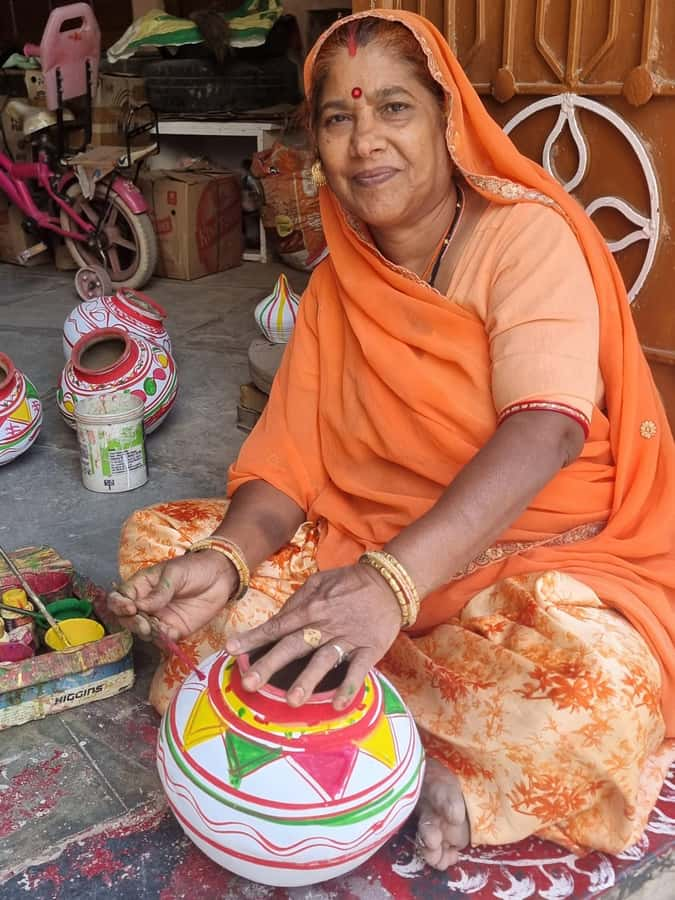
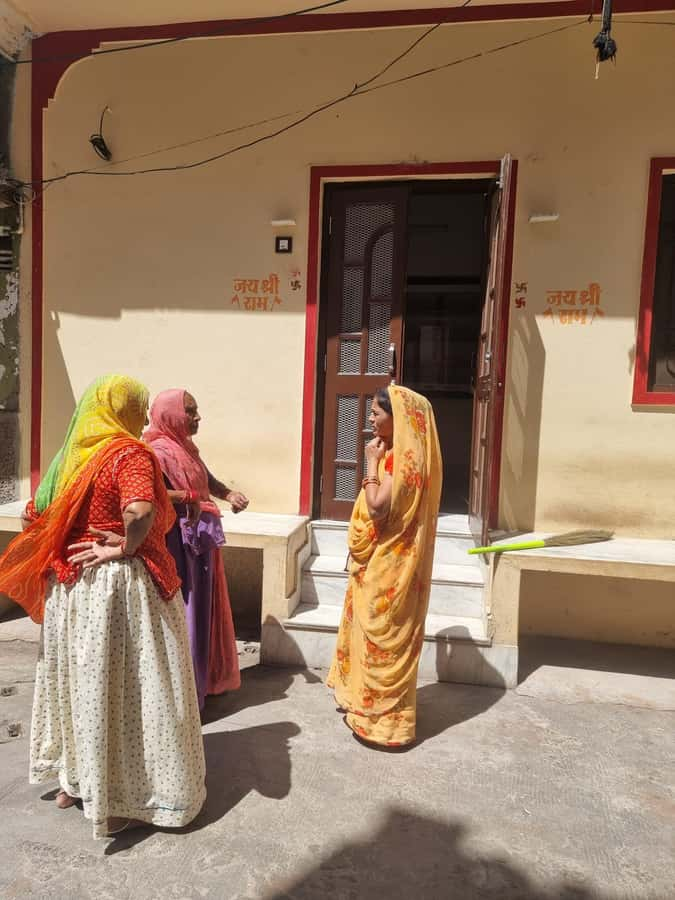
Along the residential streets, you’ll also see wall paintings made on the walls of homes. These aren’t just decoration. They reflect local aesthetics, values, and a kind of visual storytelling that belongs to the neighborhood.
This part feels meaningful because it’s personal scale art. Big palace murals can be impressive, but home paintings show how culture lives at street level. You also get context from the guide on what you’re seeing, which helps you avoid treating it like random wallpaper.
For photographers: you may find the best angles are along the street edges rather than straight-on from the center of the walkway. Keep it respectful, especially near homes.
Vegetable market, then grocery and spice shopping streets
The walk gets very practical with market stops. You’ll visit a vegetable market and then head into grocery and spice areas.
This is where Udaipur becomes tangible. You get to see the variety of produce, the way goods are displayed, and how spices and staples fit into everyday routines. Even if you don’t plan to buy anything, these stops teach you how people shop here, and that changes how you read a city when you return later on your own.
Also, expect smells. Spices are part of the experience whether you’re into cooking or not. If you have allergies or sensitivities, it’s worth knowing that the route includes spice zones.
Craft communities: leaf plates, clay bowls, metal utensils, bamboo baskets

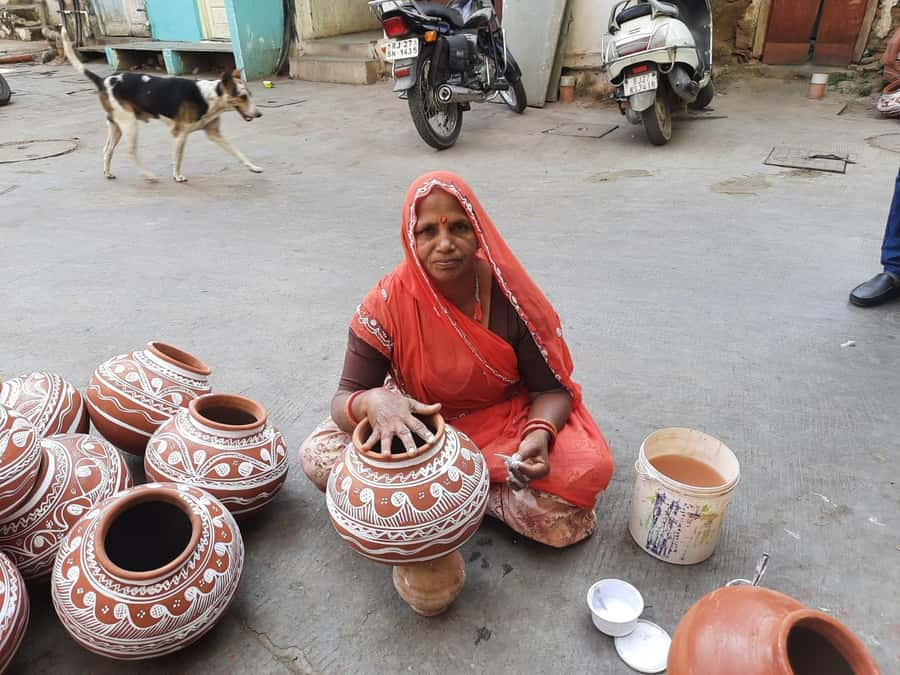
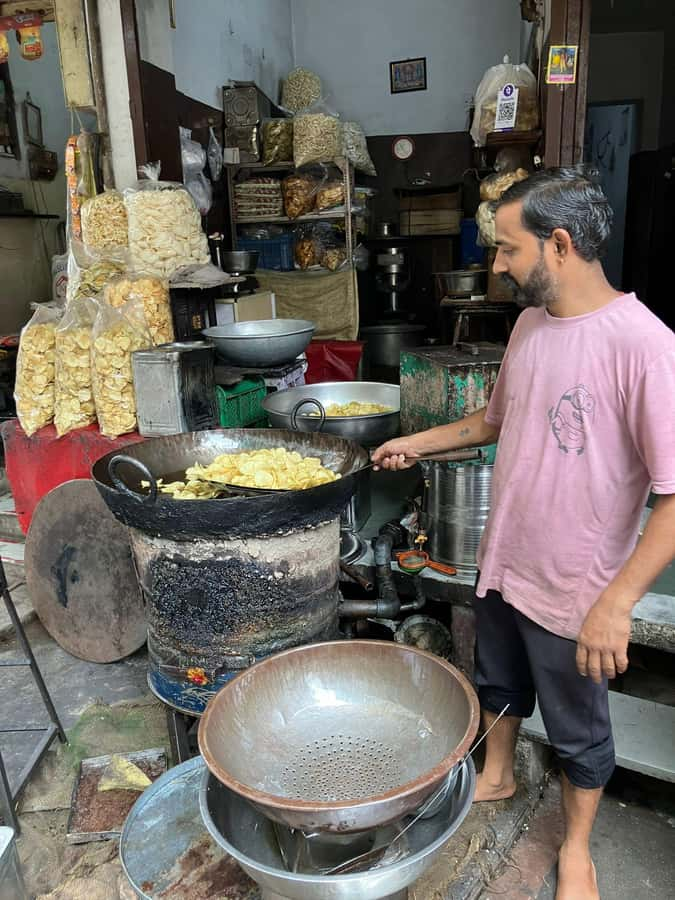
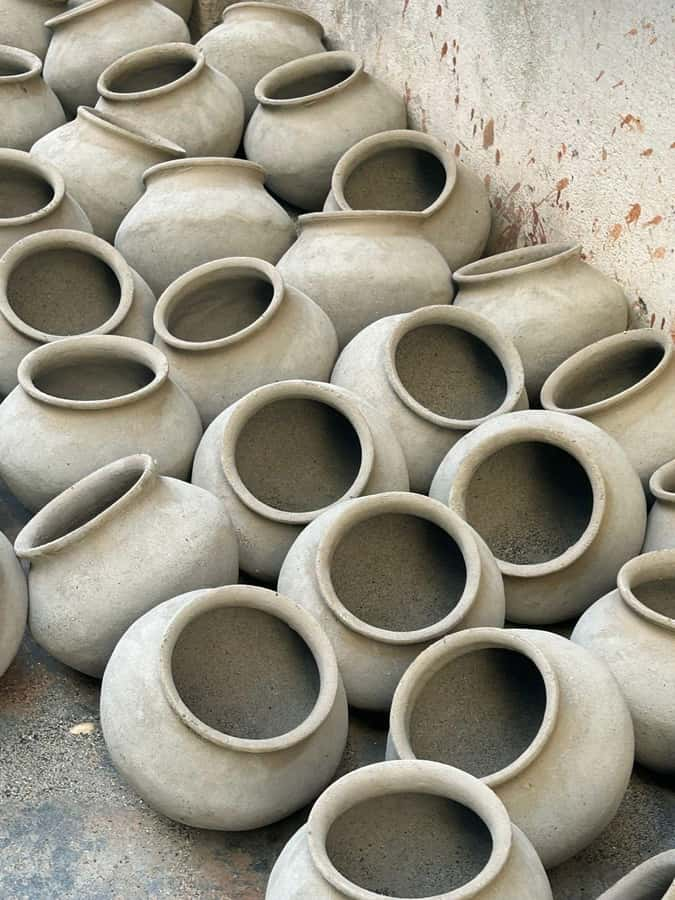
One of the most impressive sections is the craft work. You’ll visit communities involved in clay products, and you’ll see traditional plates and bowls made using tree leaves.
Then you’ll move into metal pot and utensil making by hand, and you’ll also see bamboo baskets making processes. These stops turn the old city from a visual theme into an economy you can understand.
Why it’s valuable: you see how skills survive. Instead of only admiring finished objects, you get to watch the process. That makes the work feel real, and it helps you understand why certain neighborhoods attract specific crafts.
What to watch for as you walk:
- how artisans explain the purpose of what they’re making
- how materials are handled (clay, metal, bamboo)
- how leaf-based tableware ties into local food habits
This section is also where a good guide really matters. Manish’s strength is connecting craft work back to local life, so you don’t just witness steps, you understand the point.
Traditional snacks, masala chai making, and tasting
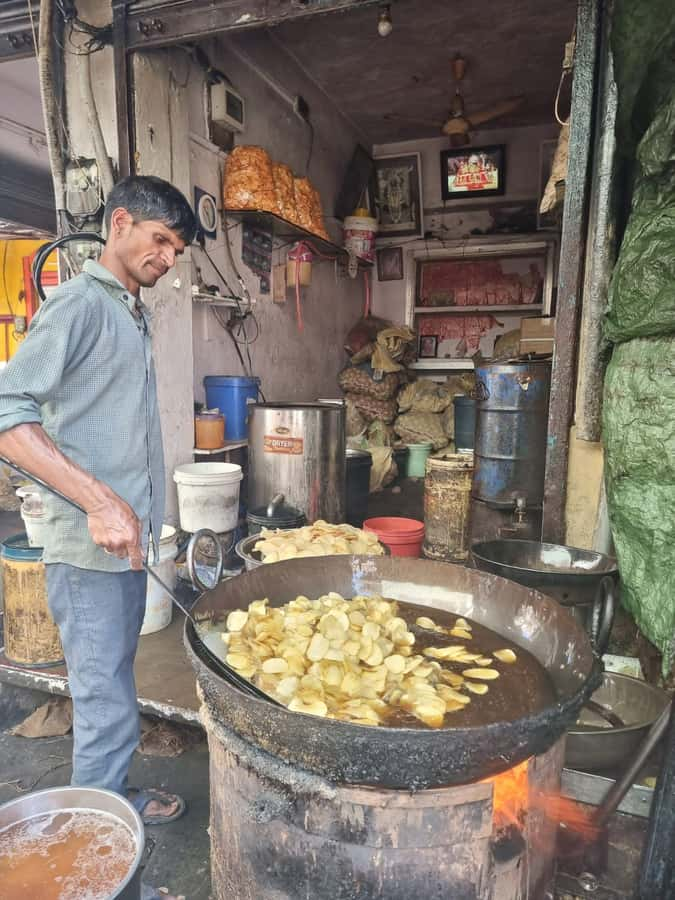
Food is a major highlight, and not only as a reward at the end. You’ll try local snacks and you’ll also do masala chai making with tea tasting.
Tea culture is more than caffeine here. It’s a social rhythm. Seeing the chai process adds context that you won’t get from buying a cup and moving on. You learn how tea fits into the day, and tasting it during the walk makes it feel like part of the story, not a separate activity.
You’ll also have famous sweets tasting. This is a good way to understand the sweetness styles people expect in Rajasthan, and it gives you something memorable to connect back to later when you’re shopping or eating on your own.
If you’re trying to keep food choices simple, tell the guide what you prefer at the snack and sweets moments. The plan includes tea and local snacks, but you can still manage what you eat.
Wedding market walk: how arranged marriages are approached
One of the listed highlights is a look at how arranged marriages are done. During the traditional wedding market walk, the guide shares cultural context about the process and how it plays out locally.
Even if you’re not directly interested in wedding customs, this section helps you understand social life in Udaipur beyond temples and shopping. It also explains why certain markets exist and why they matter to families.
Important mindset: treat this as cultural information, not a spectacle. When your guide frames it in terms of local expectations and how arrangements work, the experience becomes educational instead of intrusive.
Why the guide, Manish, changes the whole experience
The biggest theme in the overall feedback about this walk is the quality of the guidance. Manish is described as personable and helpful, and he’s focused on showing the corners of Udaipur that you would not naturally find on your own.
His explanations tend to cover multiple angles at once: history and architecture, plus the lives of craftsmen and workers you meet along the route. That combination is what makes the walk feel cohesive. You’re not only collecting stops. You’re building a clearer picture of how Udaipur functions.
Also, a walk like this works best when the guide keeps the questions coming. If you like asking why something is designed a certain way, or how a craft connects to daily life, this format rewards that curiosity.
Price and value: what $9 gets you in Udaipur
At about $9 per person, this walk is strong value, mainly because it bundles several things that add up on their own.
You get:
- an in-person guide (not a self-guided route)
- drinking water
- tea and tasting
- local snacks
- access to multiple market and craft stops, which usually means time and planning
The real value is not only the snacks. It’s the fact that you’re getting guided context for havelis, wall paintings, and artisan work. Those are the kinds of experiences where a good guide saves you time and turns curiosity into understanding.
If you’re on a budget but still want an authentic street-level Udaipur day, this is the kind of activity that can fit neatly into your schedule. It’s also a smart early-trip choice, because you’ll pick up a mental map and local references that make the rest of your days easier.
Who should book this walk, and who might prefer something else
This walk is a great fit if you:
- want old-city streets plus real daily markets
- enjoy learning how crafts work, not just seeing products
- like food experiences like chai making and sweets tasting
- want cultural context about customs, including wedding traditions
It may be less ideal if you:
- have limited ability to walk for a while or handle stairs and tight streets
- need fully accessible, flat routes (the plan emphasizes walking through old city lanes and market areas)
- dislike market noise, smells, or close-quarters crowds
The good news is that the activity includes water and tea, so you’re not walking into an all-day grind without support.
Should you book this Udaipur old city heritage walk?
Yes, if you want a guided walk that connects architecture, crafts, markets, and culture into one smooth day. The price is low, the inclusions are practical, and the guide style makes the city feel navigable and understandable.
I especially recommend booking this early in your stay. Once you’ve seen how Udaipur’s neighborhoods, bazaars, and artisan communities fit together, you’ll notice far more on your later walks.
If you’re choosing only one guided experience in Udaipur, this is a strong candidate, because it doesn’t just show sights. It teaches you how the old city works.
FAQ
Where does the old city heritage walk start?
The meeting point is the stairs of Jagdish Temple. The activity ends back at the same meeting point.
What is included in the $9 per person price?
The experience includes drinking water, tea, an in-person guide, and local snacks.
What languages does the guide speak?
The guide speaks English and Hindi.
What kind of walk should I expect?
This is a walking experience through old city lanes, market areas, and neighborhoods. The organizer asks you to wear comfortable outfits and footwear suitable for walking.
Do I need to pay right away?
You can reserve your spot with a reserve & pay later option, meaning you pay nothing today.
What is the cancellation policy?
You can cancel up to 24 hours in advance for a full refund.
Recently reviewed across Udaipur
- Private Walking Tour of Udaipur with a Professional Guide
★ 5.0 · 10 reviews - Private Day Tour Of Kumbhalgarh Fort & Wildlife Sanctuary From Udaipur
★ 4.5 · 10 reviews - Equestrian Escape: Horse Safari Adventure
★ 5.0 · 10 reviews - Udaipur Private Half/Full Day Sightseeing Tour by Car+Guide
★ 4.8 · 11 reviews - Full-Day Private Udaipur Three wheeled Tuk Tuk Sightseeing
★ 5.0 · 11 reviews - Highlights of Udaipur : A Private Guided tour
★ 5.0 · 11 reviews
Historical Tours, compared.
 ★ 5.0Old Delhi Food, Heritage&Cultural Walk with Rickshaw ride to Masterji Kee HaveliFrom $52742 reviews
 ★ 5.0Blue City Heritage Private Walking Tour With Pickup and Drop-OffFrom $11441 reviews
 ★ 4.0Kolkata Heritage Tram TourFrom $60395 reviews
 ★ 5.0Private Heritage Walking Tour in Jaisalmer Fort and Old BazaarFrom $10306 reviews
 ★ 4.8Panaji: Heritage Walk through Goa’s Latin QuarterFrom $12291 reviews
 ★ 5.0Old Delhi Heritage Walking TourFrom $13247 reviews
 ★ 5.03-hour Old Delhi Heritage Walking tour with Rickshaw RideFrom $7240 reviews
 ★ 5.0Jodhpur Blue City Heritage Walking Guided TourFrom $13240 reviews
Browse the lists this tour appears in