

REVIEW · OLD DELHI AND CHANDNI CHOWK TOURS
Full-Day Private Old and New Delhi Combo Tour
Eight hours, two Delhis, one smart plan. This full-day private combo tour strings together the big hitters of Old and New Delhi with a guide handling the flow, so you spend less time figuring out transport and more time seeing the sights. I like the mix of UNESCO sites and street-level Delhi energy, and you get comfort built into the plan with a private air-conditioned vehicle plus pickup and drop-off.
The best part is how the itinerary can be adjusted to your pace, so you can linger where you care and skim what you do not. One consideration: if you visit on a Monday, Lotus Temple is closed, so the day may feel a bit different than you imagined.
In This Review
- Key highlights in plain terms
- Why the Old and New Delhi combo makes sense
- The real value: a private car for Delhi traffic
- Old Delhi: Jama Masjid, Chandni Chowk, and Khari Baoli
- Red Fort and Humayun’s Tomb, two Mughal statements
- New Delhi icons: India Gate, Rashtrapati Bhavan, Parliament House
- Lotus Temple and Qutub Minar: quiet awe, then scale
- Pacing, guide style, and the flexibility that matters
- Included versus not included: what you should plan for
- How much you should expect to walk and heat through
- Best for whom, and when to choose something else
- Should you book this Delhi Old and New combo tour?
- FAQ
- How long is the full-day combo tour?
- Does the tour include hotel pickup and drop-off?
- Is it a private tour or a group tour?
- Are entrance fees included?
- Is food included in the price?
- What about camera fees?
- Is Lotus Temple open every day?
- Is cancellation free?
Key highlights in plain terms

- Private guide + private vehicle means you do not waste time or wait on other people
- Old Delhi market time includes a rickshaw or tuk-tuk ride through Chandni Chowk and the spice area
- UNESCO hits on one route with Humayun’s Tomb and Qutub Minar plus major Mughal-era landmarks
- New Delhi landmarks without stress so you can see India Gate, Rashtrapati Bhavan, and Parliament House even with traffic
- Flexibility built in so you can customize the pace and skip or adjust where needed
- Value for the cost with transport, guide, and key entrance fees included in the all-inclusive option
More of New Delhi, monument by monument
Why the Old and New Delhi combo makes sense
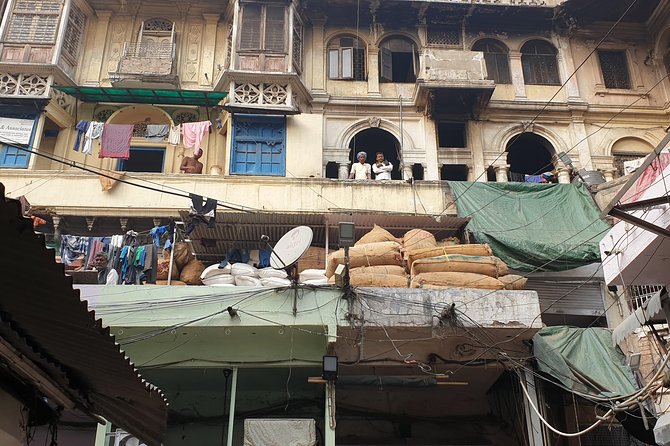
Delhi is huge, and its contrasts are the point. This tour tackles that reality by grouping the Ottoman-like spice-and-mosque world of Old Delhi with the formal avenues of New Delhi in one continuous day plan.
What makes it feel efficient is that you are not just hopping from landmark to landmark. You are moving with a driver who handles the traffic and drop-offs, while a guide keeps the story straight, points out architecture details you would likely miss, and helps you decide where to spend your extra minutes.
I especially like that it is a private tour, not a shuffle through a checklist. That matters in Delhi, where even a short detour can become a time sink.
The real value: a private car for Delhi traffic
Delhi traffic is not subtle. A private, air-conditioned vehicle changes the whole experience because you can stay comfortable between stops, rather than burning energy on transit.
You also get more control over timing. The day runs about 8 hours, and it can flex a little depending on what you want to emphasize. In feedback for this tour style, people consistently praise guides for being professional and calm, and drivers for navigating busy streets with confidence, without acting like the day is a race.
If you want an experience that feels organized but still personal, this setup is a strong match. It is also a good fit for solo visitors who want history and culture explained, while still feeling supported on the road.
Old Delhi: Jama Masjid, Chandni Chowk, and Khari Baoli
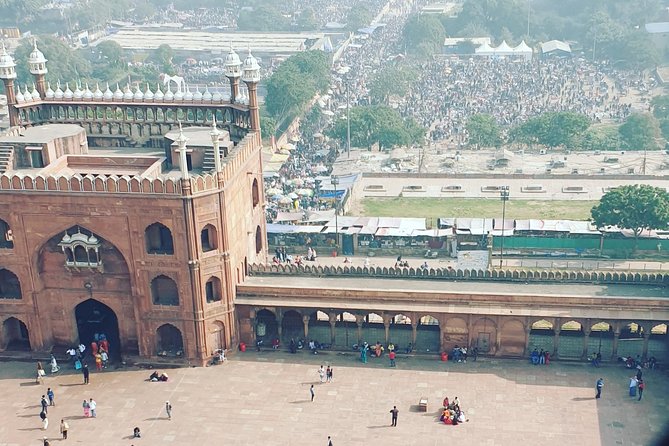
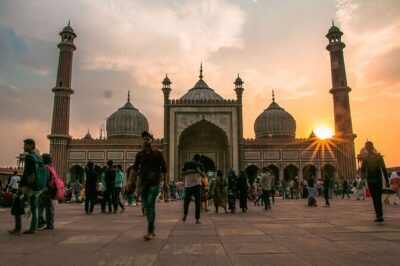
Old Delhi is where Delhi gets loud. You will start at Jama Masjid, the largest mosque in India, with a courtyard that can hold 25,000 devotees. The guide’s job here is not just facts, it is context: this mosque began in 1650 under Mughal Emperor Shah Jahan, and seeing it in person is a reminder that Mughal power was expressed through grand civic buildings, not just palaces.
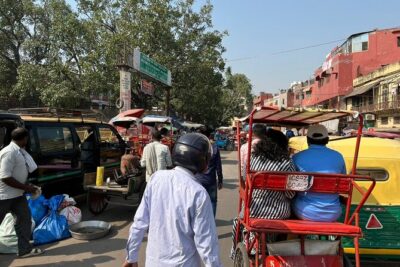
After that, you move into the famous Chandni Chowk area. This is one of Old Delhi’s oldest and busiest streets, and it is exactly the kind of place you should see with a plan, even if your feet do most of the work. A stop like this works best when you give yourself permission to slow down for sensory details, not just photos.
Then comes Khari Baoli, the spice market area that food lovers often treat like a mission. You will spend time here for herbs and spices, and it is a real contrast to the stone scale of the mosque. In feedback, people mention the rickshaw or tuk-tuk ride through the spice area as a highlight, with the experience described as fragrant and thrilling. It is not for people who hate congestion, but if you can handle crowds for an hour, it is memorable.
Practical tip: if you plan to buy spices or snacks, bring small cash and expect that bargaining may happen. If you do not want to shop, just say so early. A good guide will keep you moving.
Deeper into Old Delhi and the Chowk
- Old & New Delhi Private City Tour – Traveler’s Choice (Top Rated)★ 5.0 · 746 reviews
- Old Delhi Food, Heritage&Cultural Walk with Rickshaw ride to Masterji Kee Haveli★ 5.0 · 742 reviews
- Full-Day Private Old and New Delhi Combo Tour★ 5.0 · 625 reviews
- Old Delhi Bike Tour★ 5.0 · 616 reviews
- Old Delhi Street Food Tour★ 5.0 · 497 reviews
Red Fort and Humayun’s Tomb, two Mughal statements
The tour then balances Old Delhi’s grand fort presence with the calm geometry of a garden-tomb.
You get a look at the Red Fort, built in 1648 by Shah Jahan. Historically, it served as the emperor’s residence for about two centuries, until 1857. Even without getting lost in dates, the fort’s style and layout help you understand how the Mughals used architecture to project authority, order, and permanence.
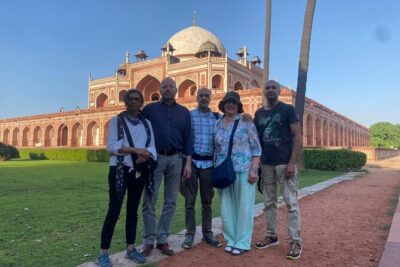
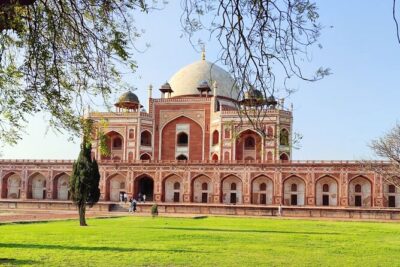
Next is Humayun’s Tomb, a UNESCO World Heritage Site declared in 1993. It is known as the first garden-tomb on the Indian subcontinent, and seeing it helps you grasp how gardens were designed as part of royal mausoleums, not just decoration. In a single day, the contrast is useful: Red Fort feels like power in stone, while Humayun’s Tomb feels like power filtered through symmetry and landscape design.
A small warning you will appreciate later: Humayun’s Tomb is popular, and the experience can get warm fast. Your private car helps between stops, and a guide who knows the flow can help you avoid wasting time when crowds stack up.
New Delhi icons: India Gate, Rashtrapati Bhavan, Parliament House

Once you shift into New Delhi, the feel changes. You will pass or stop near major civic landmarks, including India Gate, plus the Rashtrapati Bhavan area and Parliament House.
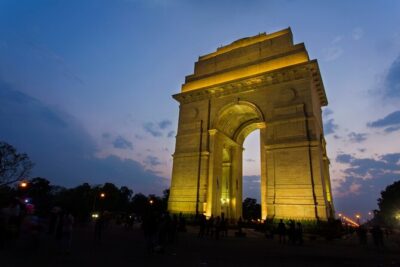
India Gate is a 42 meter archway-like memorial in the middle of a crossroad. It was built in memory of 70,000 India soldiers killed in World War I. It is one of those places where a guide’s narration matters. Without context, it is just a big monument in traffic. With context, it becomes a clear symbol of how modern India remembers global conflict and its own role.
Nearby, Rashtrapati Bhavan is the official residence of the President of India, and Parliament House is the center of the country’s legislative process, a bicameral system with the Rajya Sabha and the Lok Sabha. You may not get the same kind of in-depth access you would at museums, but even seeing the layout and the scale of these government buildings helps you understand why New Delhi’s planning feels so formal.
Photo note: people in the feedback often mention guides spotting good angles and coaching phone photography. If you care about pictures, ask your guide where to stand before you start shooting. A small reposition can make your photo look ten times better.
Lotus Temple and Qutub Minar: quiet awe, then scale
The last part of the day leans into awe, with two very different kinds of beauty.
First is the Lotus Temple. It is built in 1986 out of white marble and has nine pools around the petals that reflect natural light. It is a peaceful-feeling stop compared to the earlier market and mosque energy. One important consideration: it is closed on Mondays, so plan your day around that or be ready for a swap in timing.
Then you head to Qutub Minar, a 73 meter tower and the tallest brick minaret in the world. It was built in 1193 by Qutub-ud-din Aibak after the defeat of Delhi’s last Hindu kingdom, and it is also recognized by UNESCO. This is the kind of structure that makes you understand scale in a new way. Up close, the details feel sharper than you expect, and you start seeing how power was written into design.
In a full-day format, these two stops serve a purpose. They slow you down after the intensity of Old Delhi, and they end the day on something you can keep thinking about later.
Pacing, guide style, and the flexibility that matters
This tour’s reputation is strongly tied to the human factor: guides who can explain clearly and drivers who can handle the roads without drama.
A guide like Asim (and others in the same team style) is repeatedly praised for communication, answering questions, and tailoring the day to interest and comfort level. Some feedback also mentions that the guide asks what you enjoy, then adjusts the route and the time spent at each stop. That is not small. In Delhi, “the right amount of time” is often the difference between a great day and a rushed blur.
You will also appreciate that feedback notes the day does not feel like constant sprinting. People describe a smooth flow and enough flexibility to spend time where they actually want it.
One caution, based on real experience shared for this tour format: there can be pressure to stop at an artisan shop and buy items. If shopping is not your thing, tell your guide early, and ask them to keep your time tight. That one decision can protect the rest of your day.
Included versus not included: what you should plan for
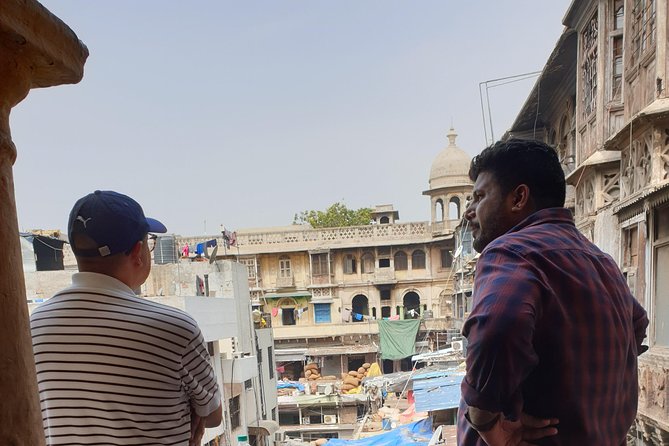
This is where value gets real.
Your tour includes hotel pickup and drop-off, transport by an air-conditioned private vehicle, a professional English-speaking guide, and a private tour experience. There is also a rickshaw or tuk-tuk ride in the Old Delhi area.
Entrance fees are said to be included if an all-inclusive option is booked. Some key sights in the day list are marked as admission free, while others are included, so it helps to confirm how your specific booking handles tickets. What is not included is camera fees for still and video equipment, and of course food and drinks. Tips and gratuities are also not included.
Practical budget move: carry some cash for snacks, chai breaks, and water. Many people end up pleased when the day includes at least one refresh stop, and it is easier than waiting until you are exhausted and hangry.
How much you should expect to walk and heat through
Even with a private car, this is a full-day route. Expect some walking in marketplaces and between monuments, and expect crowds at the big sites like Jama Masjid and Qutub Minar.
Delhi heat can hit hard. The tour helps with air-conditioned rides between stops, but you still need your own basics: water, sun protection, and comfortable shoes. If you are sensitive to heat or crowds, ask your guide to prioritize shade breaks and shorter market loops.
Also keep in mind that some stops can feel dense on certain days. A guide who is used to Delhi will help you time the visit better, but you still want to be mentally ready for busy streets, especially in Old Delhi.
Best for whom, and when to choose something else
This combo tour is ideal if you have limited time and you want the headlines of Delhi without spending days planning routes. It is especially good for first-timers who want both the historic power of Mughal-era sites and the formal layout of New Delhi’s government and memorial landmarks.
It also fits people who want a private day because you can control the pace. Solo visitors, including someone on a first trip to India, have highlighted feeling comfortable and supported due to good guide communication and calm driving.
If you want a slow, museum-heavy deep dive, a one-day format may feel too packed. You might get more out of splitting Old Delhi and New Delhi across two separate days, especially if you love markets and architecture equally. But if your goal is to see the main sights in one go, this is a strong option.
Should you book this Delhi Old and New combo tour?
Yes, book it if you want a smart, structured day that mixes major UNESCO sites and iconic landmarks, without dealing with Delhi traffic on your own. The private vehicle, pickup and drop-off, English-speaking guide, and Old Delhi rickshaw or tuk-tuk ride make it good value at around $20 per person, especially compared to paying separately for transport and guided explanations.
Do not book (or do not do it on Monday) if Lotus Temple matters to your schedule, because it is closed on Mondays. Also, if you strongly dislike shopping stops, message your guide in advance so your time stays focused on monuments and markets.
If you like your sightseeing organized, with room to adjust and ask questions, you will probably feel like this day hits the right notes of Delhi. Tell your guide what you care about most, stand where they suggest for photos, and keep your water bottle close, and you will have a memorable, well-run overview of the city.
FAQ
How long is the full-day combo tour?
It runs about 8 hours, and the itinerary is described as a suggested 8-9 hours depending on how the day goes and what you choose to prioritize.
Does the tour include hotel pickup and drop-off?
Yes. Hotel pickup and drop-off are included.
Is it a private tour or a group tour?
It is a private tour/activity. Only your group participates.
Are entrance fees included?
Entrance fees are included if the all-inclusive option is booked. Some stops are listed as admission free, and others show admission included.
Is food included in the price?
No. Food and drinks are not included.
What about camera fees?
Still and video camera fees are not included.
Is Lotus Temple open every day?
No. Lotus Temple is closed on Mondays.
Is cancellation free?
Cancellation is free. You can cancel up to 24 hours in advance for a full refund.
Still in Old Delhi? Keep Going





New Delhi Landmarks Worth the Morning

Recently reviewed across New Delhi
- Golden Triangle – Delhi Agra and Jaipur
★ 5.0 · 10 reviews - Taj Mahal & Agra Tour by Indian Bullet Train All Inclusive
★ 4.5 · 10 reviews - Private Tour in Mehrauli Archaeological Park & Qutub Minar
★ 5.0 · 10 reviews - Old & New Delhi Tour
★ 5.0 · 10 reviews - From Delhi : Taj Mahal & Agra Fort Tour by Luxury Express Train
★ 5.0 · 10 reviews - Delhi Shopping Tour: Top Bazaars, Crafts & Souvenir Finds
★ 5.0 · 10 reviews
Old Delhi and Chandni Chowk Tours, compared.
 ★ 5.0Old & New Delhi City Tour – Half or Full Day Options AvailableFrom $384,811 reviews
 ★ 5.0Old & New Delhi City Tour – Choose Half or Full Day ExperienceFrom $384,513 reviews
 ★ 5.0Old & New Delhi Private Tour – Half or Full Day (Rated Excellent)From $202,226 reviews
 ★ 5.0Old & New Delhi Full or Half Day Sightseeing TourFrom $241,900 reviews
 ★ 5.0Old and New Delhi Guided Full or Half-Day TourFrom $20976 reviews
 ★ 5.0Old & New Delhi Private City Tour – Traveler’s Choice (Top Rated)From $13746 reviews
 ★ 5.0Old Delhi Food, Heritage&Cultural Walk with Rickshaw ride to Masterji Kee HaveliFrom $52742 reviews
 ★ 5.0Old Delhi Bike TourFrom $30616 reviews
Browse the lists this tour appears in