
REVIEW · GOA BEACHES AND HERITAGE
Old Goa: Walking Tour of Heritage Churches
Old Goa comes alive faster on foot. This Old Goa heritage churches walking tour turns Portuguese-era monuments into real stories, with a guide who mixes facts, local perspective, and personal anecdotes into an easy 2.5-hour loop.
Two things I really love: you get close to the big sights, like the Church of St. Francis of Assisi with its frescoes, and you also get the larger meaning behind the architecture, not just a checklist of buildings. The stop at Se Cathedral and the walk onward to Bom Jesus make the scale feel tangible, not abstract.
One consideration: the churches have dress codes and photography inside may be restricted, so plan your outfit and be ready to follow the guide’s call on photos.
In This Review
- Key highlights you will actually care about
- Entering Old Goa’s church circuit, Portuguese heritage on the ground
- Starting at Viceroys Arch: where your walk makes sense
- Church of St. Catherine: Portugal arrives, and locals connect the dots
- Passing Old Goa ruins and walking toward Se Cathedral
- Se Cathedral: why Asia’s largest church scale feels different in person
- Church of St. Francis of Assisi frescoes: art that tells the saint’s story
- Basilica of Bom Jesus: St. Francis Xavier and the feeling of arrival
- The included refreshing drink, and why it matters in Goa heat
- Price and value: why $12 works for what you get
- Guides you will remember: calm storytelling, clear answers
- Practical side of the walk: shoes, clothing, pacing, and photos
- Who should book this Old Goa heritage church tour
- Quick decision guide: should you book it?
- FAQ
- Where is the meeting point for the Old Goa walking tour?
- How long is the tour?
- How much does the tour cost?
- Is there an English-speaking guide?
- Is a refreshing drink included?
- What about hotel pickup or drop-off?
- Do I need to worry about dress codes?
- Are photos allowed inside the churches and museums?
- How big is the group?
- Is the tour suitable for infants or toddlers?
- Is insurance included?
Key highlights you will actually care about
- Small group size (10 max): easier questions and a less rushed pace around the churches
- Portuguese legacy explained simply: including why locals describe the area as the Rome of the East
- Iconic stops with context: St. Catherine, Se Cathedral, St. Francis of Assisi frescoes, and Bom Jesus
- Included refreshing drink: usually ice-cold and non-alcoholic, like coconut water or lime soda
- Real guide storytelling: multiple guides on recent tours were praised for calm, engaging narration and side anecdotes
- Optional add-ons nearby: your guide may point out extra ruins you can visit after the main walk, like St Augustine’s
More of Goa, sand and stone
Entering Old Goa’s church circuit, Portuguese heritage on the ground
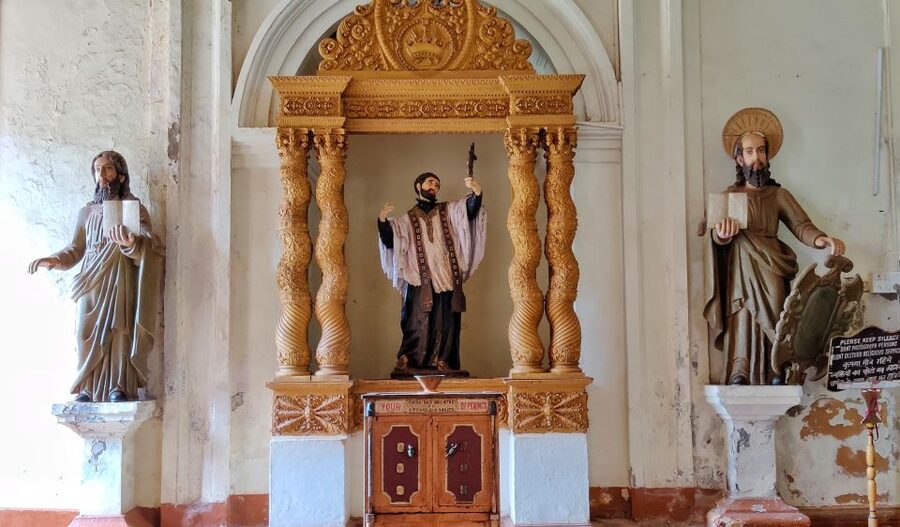
Old Goa can feel like a museum yard, but this tour keeps it human. You are walking through working sacred spaces and historic landmarks while your guide connects them to Portuguese rule in India, and to what that power meant for religion, art, and everyday life. That is the difference between seeing buildings and understanding why they look the way they do.
The route also avoids the usual “race to ten stops” problem. With a small group capped at 10, you can ask questions without feeling like you are interrupting. Guides named across recent groups, including Yashasvi, Vimala De Souza, Pawan Gorantla, Santoshi, and Sejal, were repeatedly described as attentive storytellers who make the history feel spoken, not recited. If you like your walking tours with a relaxed rhythm, this setup fits.
And you are not just looking at Portuguese churches for Portuguese churches’ sake. The tour frames them inside Goa’s longer story, including Old Goa’s time as a former capital, and the way the Portuguese presence reshaped the region. That gives you a clearer mental map by the time you reach the grand scale of Se Cathedral.
Starting at Viceroys Arch: where your walk makes sense

You meet at Viceroys Arch in Old Goa, and you should arrive about 10 minutes early. This matters more than it sounds. Not because you will be stuck waiting, but because the meeting point is your first “orientation moment,” and you want a calm start before you head into the church zone.
From here, your guide sets the tone. You begin by admiring the impressive buildings around the area, then you get the bigger context: Old Goa’s role in the Portuguese era and why this stretch became such an important religious center. Many people visit churches in Goa, but few get the underlying story at the start. This tour does that early, which makes the rest of the route click.
Also, because the meeting point is described as easily accessible by taxi, it is a practical choice if you are staying in North Goa and want a straightforward midday or afternoon plan.
Church of St. Catherine: Portugal arrives, and locals connect the dots
One of the first emotional turns on this walk is the Church of St. Catherine. This stop is not only about the building itself. It is about the moment the Portuguese presence becomes part of the landscape.
Your guide traces the arrival of the Portuguese in India and explains how they referred to the region as the Rome of the East. That phrase is more than a catchy line. It helps you see why architecture and religious institutions mattered so much to the Portuguese in Goa. When you hear that framing while you are standing in the church environment, you start noticing details with a different lens.
This is also the kind of stop where your guide’s personal anecdotes can make a difference. Several recent guides were praised for adding local perspective and side stories, so you might hear explanations that are not the standard museum label style. That is what turns a historic stop into a conversation.
- Goa: Dudhsagar Waterfall, Jeep Safari and Spice Plantation★ 3.4 · 43 reviews
- Goa: Spice Plantation Tour and Traditional Local Lunch★ 4.3 · 32 reviews
- Panjim: Guided Walk Tour of Portuguese-Influenced Goa★ 4.6 · 26 reviews
- Goa: Old Goa and Divar Island E-Bike Tour with Snacks★ 4.7 · 25 reviews
- Panaji: Fontainhas Neighborhood Cultural Guided Walking Tour★ 4.7 · 20 reviews
Passing Old Goa ruins and walking toward Se Cathedral

Between St. Catherine and Se Cathedral, you also pass ruins of Old Goa. That is important. Ruins can either feel like empty space or like evidence. Here, your guide helps you read them as part of the story of Old Goa’s rise and transformation over time.
As you move toward Se Cathedral, the tour shifts from origin to impact. The Portuguese-era religious presence is already in view, but now you are approaching its biggest statement.
If you enjoy big architecture, you will feel it before you even reach the main church area. The walk positions you so that by the time Se Cathedral comes into view, it looks less like one church and more like a whole complex of religious ambition.
Se Cathedral: why Asia’s largest church scale feels different in person
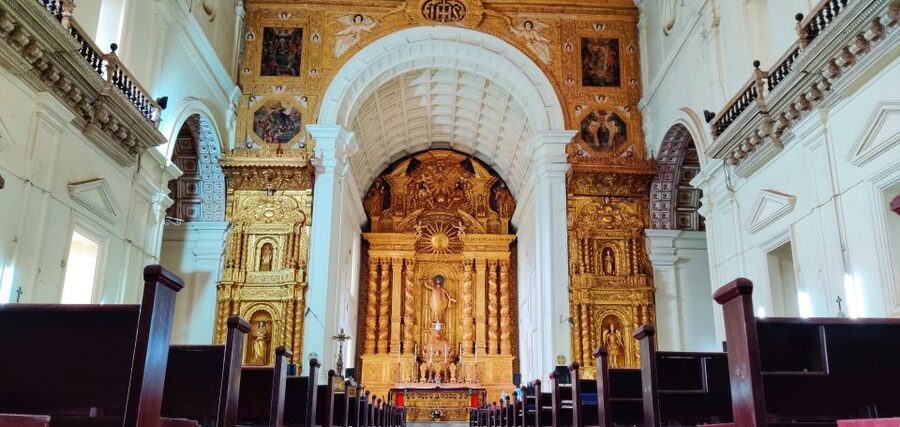
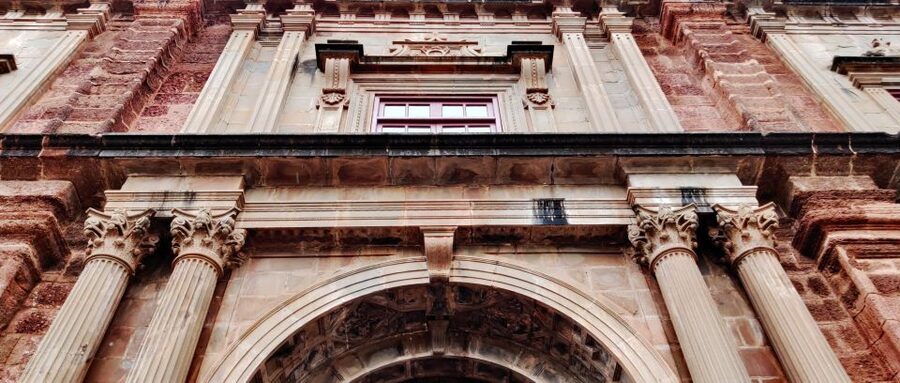
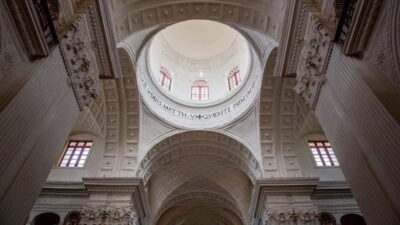
Se Cathedral is described as the largest church in Asia, and standing near it after hearing the Portuguese context can be a surprise in a good way. On this walk, you are not just ticking off a “big church” photo. You are seeing how scale changes the feeling of a place.
Your guide helps you connect the dots between the size of the church, the role of Christianity in Portuguese Goa, and the idea of Old Goa as a religious capital. That kind of explanation makes you slow down naturally, especially if you like architecture or want to understand why certain religious spaces were built to dominate a skyline.
A practical note: this is a walking tour. Even though the total time is listed as 2.5 hours, your pace depends on how long you pause for details and questions. If you like to take your time, this tour supports it, mainly because the group size is capped.
Church of St. Francis of Assisi frescoes: art that tells the saint’s story
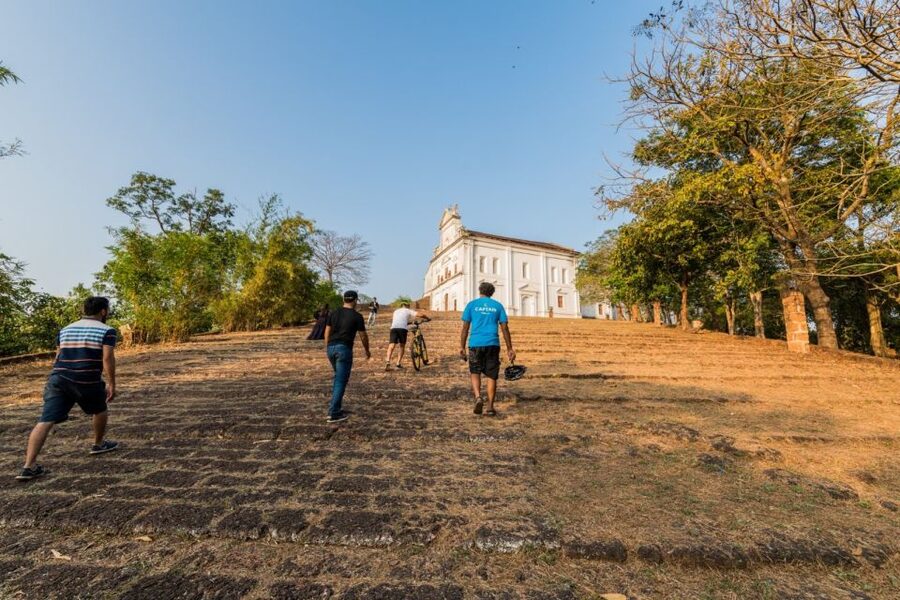
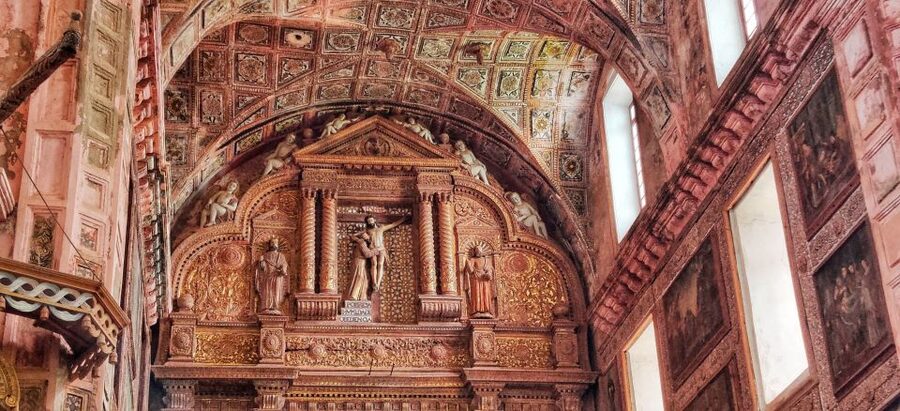
The tour’s spiritual and visual centerpiece for many people is the Church of St. Francis of Assisi. Here, you get the chance to see decorative frescoes that depict the life of the patron saint.
This is where I think the guide work really matters. Frescoes are not always easy to “read” on your own, especially if you do not know the story being shown. But with a guide narrating what you are looking at, the artwork stops feeling random. You start seeing scenes as a sequence, with meaning behind the details.
If you are the type who wants more than a quick glance, this is your moment. The frescoes give you a natural reason to slow your eyes down, and a guide can point out what to look for so you get more out of the time inside.
One more practical point: photography inside churches and museums may be restricted. If you are unsure, ask your guide before you try. That advice is worth following. It helps you avoid an awkward moment, and it keeps the tour moving smoothly.
Basilica of Bom Jesus: St. Francis Xavier and the feeling of arrival
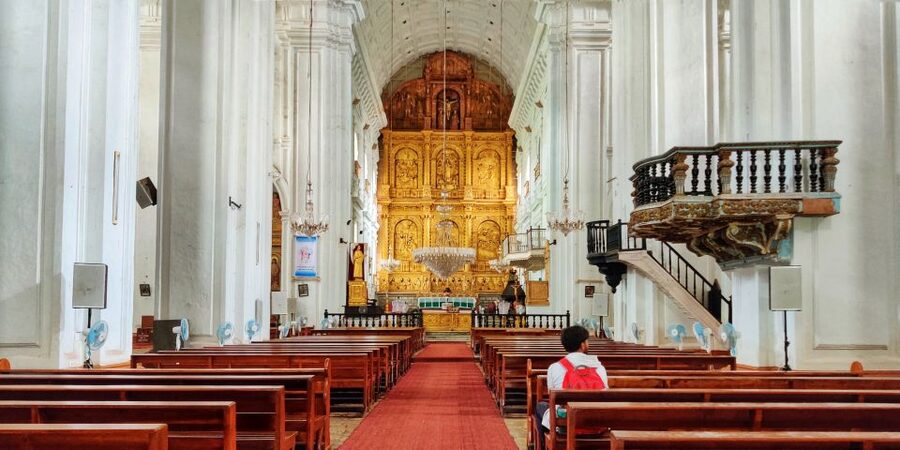
The walk ends at the Basilica of Bom Jesus, which houses the remains of St. Francis Xavier. Even if you know the name already, standing in the space helps the significance land in a different way. This is the stop where “Portuguese heritage” stops being purely historical and becomes a living religious destination.
Your guide ties the route together here. You have already heard about the Portuguese influence and the religious ambition of the era. Now you are inside a site tied directly to one of the major figures connected to the spread of Christianity in the region.
Your time here also depends on what is happening in the basilica. One recent experience included a St. Francis Xavier exposition event, and the guide helped with the best way to see the relics. Since events can vary, the safest approach is to listen closely to what your guide suggests once you are on site.
The included refreshing drink, and why it matters in Goa heat

This tour includes a healthy refreshing drink, described as non-alcoholic. That sounds basic until you are walking in Goa in the warmer hours. Small comfort breaks change the whole tone of a walking tour.
Recent participants mentioned a coconut drink stop and also an ice-cold fresh lime soda mid-way. If you are sensitive to heat, this included pause is more than a perk. It gives you a moment to reset your energy so you can enjoy the churches instead of just enduring them.
You should still bring water if you personally run hot, but having a planned refresh keeps the rhythm of the walk steady.
Price and value: why $12 works for what you get
At $12 per person for 2.5 hours, this is one of those “small cost, big payoff” tour options, mainly because the guide time and small-group format are doing real work for you.
You get:
- an English-speaking guide
- a small group limited to 10
- a structured walk connecting multiple major churches
- an included non-alcoholic drink
If you were to do this on your own, you would either miss the narrative thread or spend a lot of time reading on your phone. Here, your guide does the linking, adds local perspective, and points out what matters inside the churches. For a first-time visit to Old Goa’s heritage zone, that is value.
Also, multiple recent reviews praised the guides for being generous with explanations and for making the walk feel light and engaging, even when the subject is heavy. That combination, history plus pacing, is hard to replicate independently.
Guides you will remember: calm storytelling, clear answers
The most praised part across the recent tour experiences is not a single monument. It is the guide delivery.
You will hear examples of what that means in practice:
- Yashasvi was described as a wonderful storyteller, very informative, and relaxed.
- Pawan was repeatedly praised for knowledge plus a friendly, patient style, and for making it easy to follow the stops.
- Vimala De Souza and Santoshi were praised for attentiveness and for making each stop feel like a journey through time.
- Sejal stood out for clear English and for being able to answer questions.
- In smaller groups, one experience turned into an intimate walk with just the participant and their guide, and the guide even helped arrange a taxi back afterward.
That pattern matters for you. If you care about learning, you will enjoy the way your guide answers questions and adds context beyond what you would find in a quick guidebook scan.
Practical side of the walk: shoes, clothing, pacing, and photos
This is a walking tour, so start with the basics:
- wear comfortable shoes
- wear comfortable clothes
Then plan for the church rules. The churches have dress codes. You are requested to cover your knees and shoulders. If you show up in shorts or a tank top, you may be able to make adjustments, but it is better to avoid the stress by dressing correctly from the start.
Photography is another practical issue. Photography inside churches and museums may be restricted, so ask your guide if you are unsure.
Time-wise, it is 2.5 hours. That is long enough to cover multiple major sites, and short enough that it still works as a half-day plan when you have a busy Goa itinerary.
And yes, Goa weather can be dramatic. One recent group ran into torrential rain about 45 minutes into the tour and could not finish the full route as scheduled. If you are booking for the rainy season, pack a light rain layer or a compact umbrella so you can stay comfortable if the sky changes mid-walk.
Who should book this Old Goa heritage church tour
This tour is a great fit if:
- you want Portuguese heritage explained in plain language while you walk
- you like churches, art, and architecture but want context
- you value small-group attention
- you prefer guides who tell stories and answer questions calmly
It may be less ideal if:
- you are traveling with infants and toddlers (the tour is not recommended for them)
- you cannot comfortably follow dress code rules (knee and shoulder coverage is required)
- you need guaranteed photo access inside every church (restrictions may apply)
Quick decision guide: should you book it?
If you are doing Old Goa for the first time, I would book it. The combo of multiple landmark churches plus a guide who turns Portuguese-era details into understandable stories is exactly what gives a walking tour its value.
Choose it especially if you want more than “pretty buildings.” This is the kind of walk where you come away with a clearer sense of why the Portuguese made Goa a major religious center, what Se Cathedral’s scale communicates, and how frescoes can tell a saint’s story.
If you already know a lot about Portuguese Goa and you mainly want photos, you might still enjoy it, but the strongest advantage here is guided context. For most people, that is the difference between a short visit and a memorable afternoon.
FAQ
Where is the meeting point for the Old Goa walking tour?
The meeting point is Viceroys Arch, Goa (Velha Goa, Goa 403110, India). Arrive about 10 minutes before the start time, and it is easily accessible by taxi.
How long is the tour?
The tour duration is 2.5 hours.
How much does the tour cost?
The price is $12 per person.
Is there an English-speaking guide?
Yes. The tour includes an English-speaking guide.
Is a refreshing drink included?
Yes. A healthy refreshing drink is included, and it is non-alcoholic.
What about hotel pickup or drop-off?
Hotel pickup and drop-off are not included.
Do I need to worry about dress codes?
Yes. The churches have dress codes, and you are requested to cover your knees and shoulders.
Are photos allowed inside the churches and museums?
Photography inside churches and museums may be restricted. If you are unsure, ask your tour guide before taking photos.
How big is the group?
The group is small, limited to 10 participants.
Is the tour suitable for infants or toddlers?
No. The tour is not recommended for infants and toddlers.
Is insurance included?
Insurance is not included.
More of Goa, Beach and Basilica





Recently reviewed across Goa
- Panaji: Fontainhas Neighborhood Cultural Guided Walking Tour
★ 4.7 · 20 reviews - Goa: Old Goa and Divar Island E-Bike Tour with Snacks
★ 4.7 · 25 reviews - Panjim: Guided Walk Tour of Portuguese-Influenced Goa
★ 4.6 · 26 reviews - Goa: Spice Plantation Tour and Traditional Local Lunch
★ 4.3 · 32 reviews - Goa: Dudhsagar Waterfall, Jeep Safari and Spice Plantation
★ 3.4 · 43 reviews - Goa: Private Full-Day Sightseeing Highlights Tour
★ 4.7 · 52 reviews
Goa Beaches and Heritage, compared.
 ★ 4.8Panaji: Heritage Walk through Goa’s Latin QuarterFrom $12291 reviews
 ★ 4.5Private Beach Photoshoot in North Goa by Professional PhotographerFrom $8078 reviews
 ★ 4.7Private Full-Day Sightseeing Highlights TourFrom $7152 reviews
 ★ 3.4Dudhsagar Waterfall, Jeep Safari and Spice PlantationFrom $3243 reviews
 ★ 4.3Spice Plantation Tour and Traditional Local LunchFrom $6032 reviews
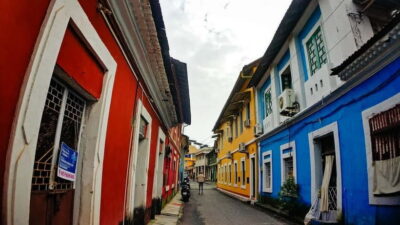 ★ 4.9Panaji: Heritage Walking Tour in Fontainhas Latin QuarterFrom $1031 reviews
 ★ 3.7Goa Street Food Crawl: Authentic Food Tasting ExperienceFrom $2829 reviews
 ★ 4.9Goa Shore Excursions: Highlights of GoaFrom $6029 reviews
Browse the lists this tour appears in